REVIEW · TOURS
Kathmandu: A Day Tour of Buddhist Stupas
Two stupas, one revealing Kathmandu morning. This five-hour private tour brings you to Swayambhunath, the Monkey Temple, and Boudhanath Stupa, two of Kathmandu’s most important Buddhist sites. I like the chance to see both places in one well-planned outing, and I like that a private English-speaking guide can adjust the pace and answer questions. The main point to check is the cost of entry, since the details say heritage tickets are included but also list entry fees as extra.
The tour also includes hotel pickup and drop-off, transport by car or local taxi, bottled water, and masks. That makes the $17 price look very good, especially if you want an easy introduction to Kathmandu without arranging transport between the sites yourself.
Guide Pranav receives especially warm praise for his patience, flexibility, and clear explanations of Buddhism, local myths, gods, and traditions. The experience is not designed for wheelchair users, people with visual impairments, pregnant women, or anyone needing a stroller, and Swayambhunath’s stairs can make the visit tiring.
In This Review
- Key Points to Know Before You Go
- Why These Two Stupas Belong on the Same Morning
- Swayambhunath: Hilltop Views and Monkeys
- Boudhanath: Walking the Kora Around the Great Stupa
- What the Guide Adds to the Visit
- Lunch Near Boudhanath: A Local Meal at Your Own Cost
- Five Hours, Transport, and Pickup Details
- Is $17 a Fair Price?
- Who Should Book This Buddhist Stupa Tour?
- My Verdict on the Kathmandu Stupa Tour
- FAQ
- How long does the Kathmandu Buddhist stupa tour last?
- Which sites are included?
- Is hotel pickup and drop-off included?
- Is lunch included in the price?
- What language does the guide speak?
- Is the tour accessible for wheelchair users?
Key Points to Know Before You Go
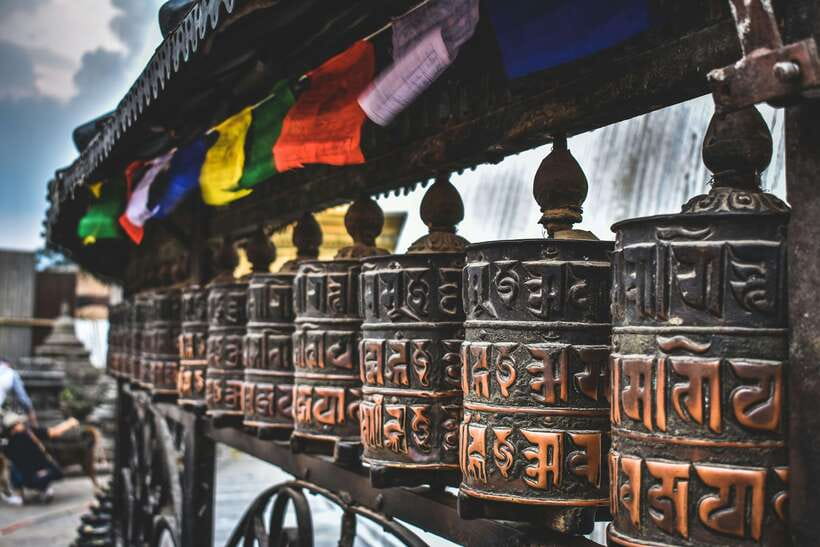
- Swayambhunath gives you the best city view: The hilltop temple offers broad views across the Kathmandu Valley, along with prayer wheels, monkeys, and old stone steps.
- Boudhanath feels calmer and more focused: You can walk a kora around one of the world’s largest Buddhist stupas while watching monks and devotees follow their daily practices.
- A private guide changes the experience: You can stop for questions, set a comfortable pace, and ask for more detail about Nepalese Buddhism and local stories.
- Lunch adds a useful local pause: Dal bhat, momo, and other Nepali dishes are part of the planned experience, though food is not included in the price.
- The $17 fare offers strong value: Hotel transport, a private guide, water, and site visits are listed, but confirm exactly which entrance fees are covered.
- Expect walking and stairs: This is a sightseeing walk, not an accessible tour. Bring your passport or ID card and wear practical shoes.
Why These Two Stupas Belong on the Same Morning
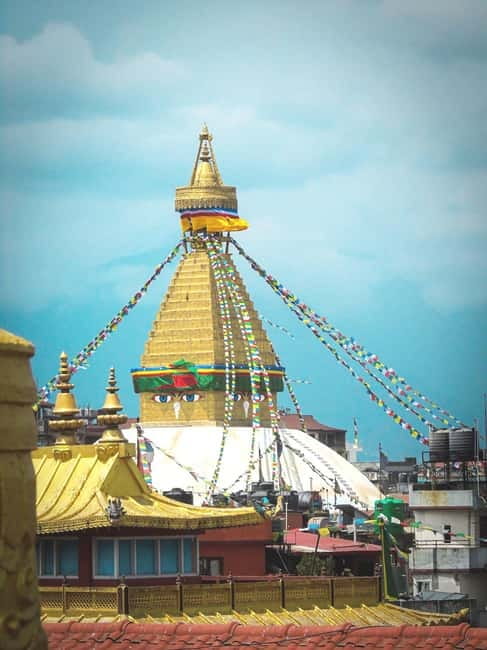
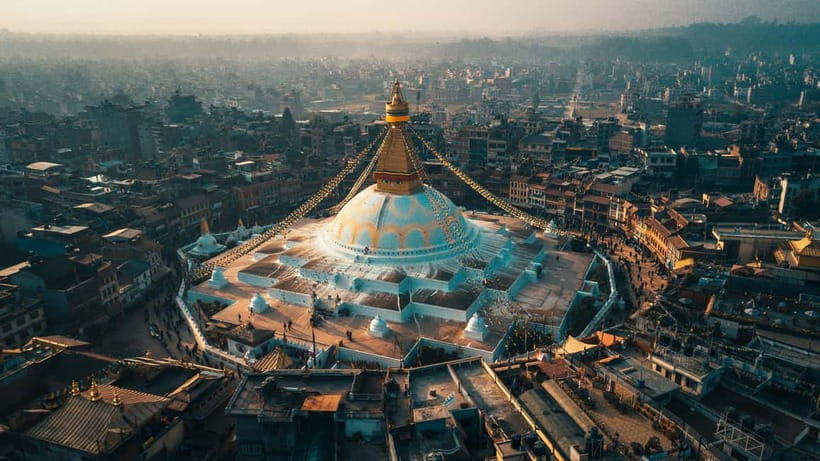
Swayambhunath and Boudhanath show two different sides of Buddhist life in Kathmandu. The first sits high above the city and mixes religious activity with open views, monkeys, stairways, and a sense of movement. The second surrounds you with a more concentrated Buddhist setting, where the large white dome, prayer wheels, monasteries, and steady circular walking create a quieter rhythm.
Seeing both in one half-day gives you useful contrast. At Swayambhunath, you look outward over Kathmandu. At Boudhanath, you spend more time looking inward, following the route around the stupa and noticing the devotional actions of the people around you.
I would not treat this as a full study of Buddhism. Five hours is enough for an introduction, not a complete lesson in doctrine, art, or Nepalese religious life. Still, with a good guide, the tour can give you a solid framework for understanding what you see during the rest of your time in Kathmandu.
A short list of alternatives around Kathmandu
- Everest Base Camp Trek – 14 Days
★ 5.0 · 1,499 reviews - Private Kathmandu Sightseeing Tour | UNESCO World Heritage sites
★ 5.0 · 756 reviews - Everest Base Camp Helicopter Tour landing at Everest View Hotel
★ 5.0 · 668 reviews
Swayambhunath: Hilltop Views and Monkeys
The first major stop is Swayambhunath Temple, often called the Monkey Temple. The visit lasts about an hour and a half, including time for photographs, sightseeing, walking, and the guide’s explanation of the site.
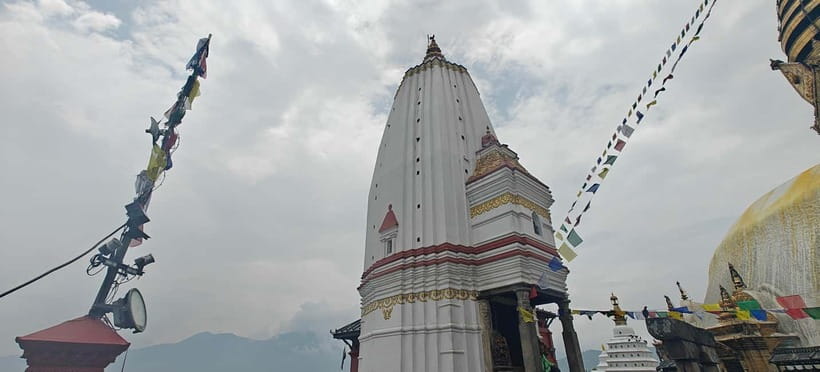
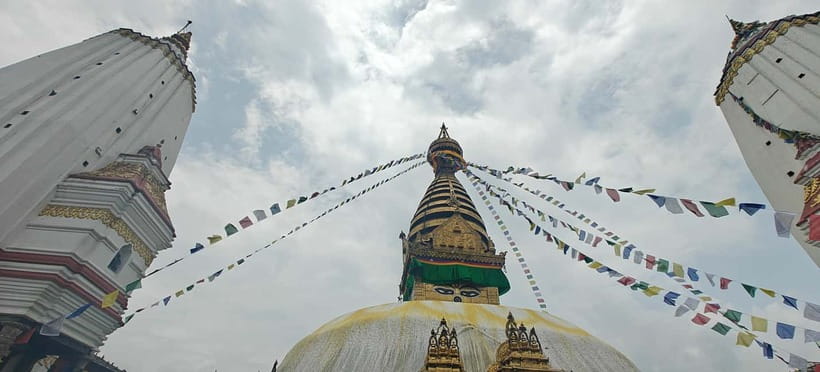
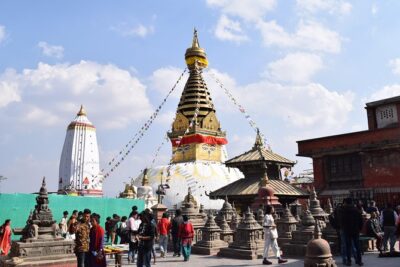
The setting is a major part of the appeal. The temple sits on a hill, so you get panoramic views across the Kathmandu Valley. The morning timing is particularly sensible. Sunrise light can make the golden spire look striking, while the cooler air is more comfortable for walking up the old stone steps.
You can expect prayer wheels, sacred structures, and monkeys moving around the complex. The monkeys are entertaining, but they are still wild animals. Keep your belongings close and avoid offering them food. The presence of monkeys gives the site its familiar nickname, but the temple is much more than a quick photo stop.
The stairs are also important to consider. The tour information does not give a precise step count or a detailed route, but it does describe a walk through the hilltop temple area. If you have knee problems, limited balance, or difficulty with uneven surfaces, this may be the harder half of the day.
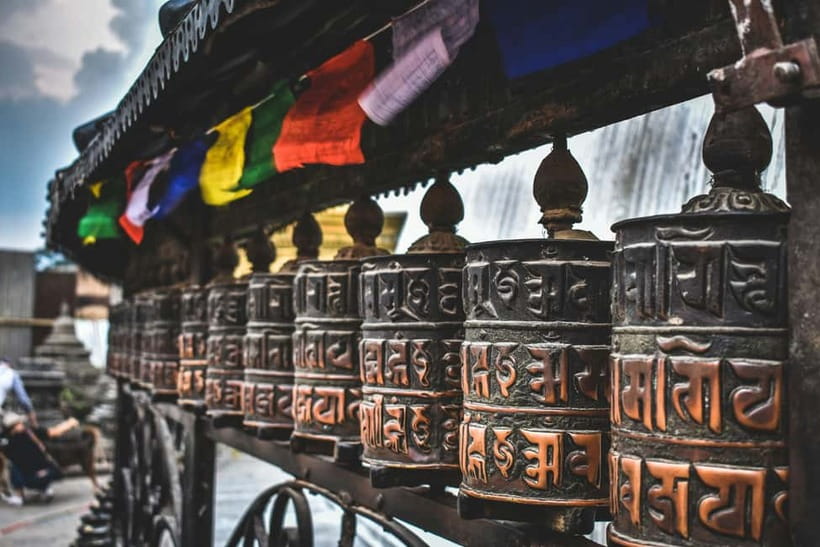
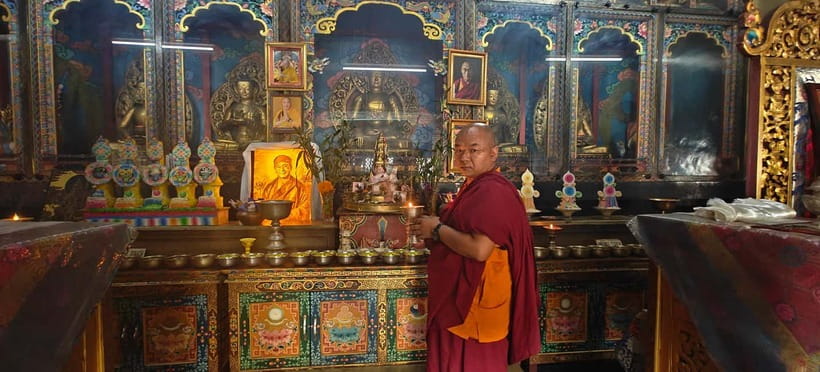
Your guide can help connect the objects around you with Buddhist practice. Prayer wheels, flags, shrines, and the stupa are not simply decoration. They are part of a living religious place, and explanations can help you recognize the difference between a monument viewed from the outside and a place still used for prayer.
The best way to approach Swayambhunath is to leave room for pauses. Stop for the view. Watch the prayer wheels turn. Notice how the city spreads below the hill. You do not need to rush through every corner to get value from the visit.
Boudhanath: Walking the Kora Around the Great Stupa
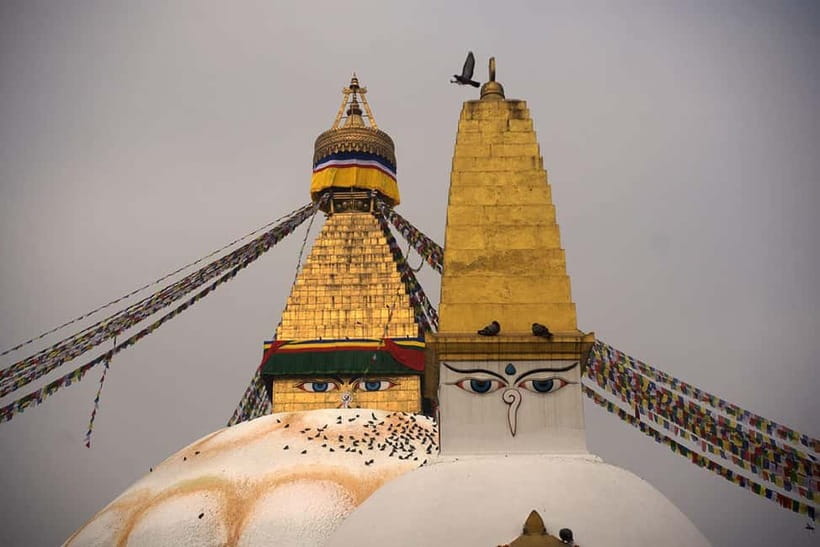
The second stop is Boudhanath Stupa, with about an hour and a half for the visit. This is the heart of the tour for anyone interested in Tibetan Buddhist practice in Kathmandu.
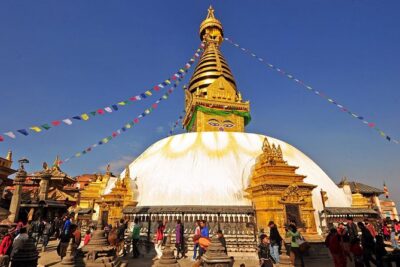
Boudhanath is one of the world’s largest Buddhist stupas. Its scale is easy to appreciate once you begin walking around the dome. The traditional circular walk, known as a kora, lets you follow the same basic movement used by devotees. You can turn prayer wheels as you go and observe the flags and religious activity around the site.
The guide is meant to explain the spiritual meaning of Boudhanath, not simply point out the best photograph. That distinction matters. A large stupa can look impressive while remaining difficult to understand. A clear explanation of why people walk around it, use prayer wheels, or gather near monasteries gives the visit more purpose.
Boudhanath is also connected with Tibetan Buddhist life in Kathmandu. The tour includes time to see Tibetan monasteries and hear about that influence. The information does not promise a monastery ceremony or a meeting with monks, so you should view this as an orientation to the area rather than a guaranteed religious event.
I like the fact that the schedule allows a full ninety minutes here. You can complete the kora, stop for photographs, listen to the guide, and have a little quiet time without reducing the visit to a quick stop beside the dome.
Boudhanath can also be a better place than Swayambhunath for asking detailed questions. The setting naturally encourages conversation about Buddhism, local customs, and the connection between religious practice and ordinary daily life. Guide Pranav is praised for answering questions about Buddhism as practiced in Nepal, as well as sharing myths about local gods and traditions. That kind of conversation is likely to be the tour’s strongest feature.
What the Guide Adds to the Visit
A private guide is valuable here because both stupas can be confusing at first glance. You may see a prayer wheel, shrine, flag, statue, or painted detail without knowing its role. A guide can give you the basic context, then adjust the amount of explanation to your interests.
The available feedback gives a useful picture of Pranav’s guiding style. He is described as kind and patient, with a willingness to explain questions rather than hurry through a script. He also accommodated a change in schedule, which suggests that the private format may offer some flexibility.
That does not mean every booking will have Pranav. The activity lists a professional licensed private guide but does not guarantee a particular guide by name. If having Pranav is important to you, ask the provider before confirming.
The guide speaks English. If you want a specialist lecture on Buddhist philosophy, ask what depth is possible before the tour begins. For most visitors, the practical value will be in learning how to behave respectfully, understanding what you are seeing, and connecting the monuments with Nepalese traditions.
The private group format is another advantage. You are not tied to the questions or pace of a large bus group. If you want more time at Boudhanath and less time on photographs, or the reverse, you can discuss that with the guide. The exact amount of flexibility will depend on traffic, opening arrangements, and your pickup time, but a private format normally makes these conversations easier.
A completely different way to spend the day:
- Half day cooking class in Thamel kathmandu
★ 5.0 · 607 reviews - Everest Base Camp Trekking
★ 5.0 · 485 reviews - Nagarkot Sunrise View and Day Hiking from Kathmandu
★ 5.0 · 471 reviews - Kathmandu: Full Day 7 UNESCO Tour with Lunch – Private/Group
★ 5.0 · 415 reviews
Lunch Near Boudhanath: A Local Meal at Your Own Cost
The planned lunch is near Boudhanath, at a local eatery. This is a useful choice because it gives you a break after visiting the two religious sites and lets the guide continue the conversation in a less formal setting.
Possible dishes include dal bhat and momo. Dal bhat is a familiar Nepalese meal built around rice and lentils, often served with additional vegetables or sides. Momo are dumplings and a popular choice for a quick meal. The exact restaurant and menu are not specified, so you should expect a local dining stop rather than a fixed tasting menu.
Food is not included in the $17 price. Bring money for lunch and any drinks or personal purchases. The guide can share stories about Tibetan Buddhism’s influence in Kathmandu while you eat, but the meal remains your own expense.
This part of the day may be especially useful if you have just arrived in Kathmandu and want a gentle first look at local food. It is also a practical place to ask the questions that come to mind after seeing Boudhanath. Religious sites often make more sense after you have had ten minutes to sit down and discuss them.
Do not expect lunch to be a luxury restaurant experience. The appeal is the local setting and the chance to eat familiar Nepalese food near one of the city’s major Buddhist centers.
Five Hours, Transport, and Pickup Details
The full experience lasts five hours. The listed sightseeing time is about ninety minutes at Swayambhunath and ninety minutes at Boudhanath, leaving the rest for pickup, travel, lunch, and any schedule adjustments.
Hotel pickup and drop-off are included, which is a real benefit in Kathmandu. You do not have to find a taxi, negotiate a route, or work out the order of the two sites yourself. Transport may be by car or local taxi, and the exact starting location depends on the option selected at booking.
There is a small inconsistency in the price details. The inclusions list tickets to heritage sites, while the exclusions list an entry fee. The activity also says you can skip the ticket line. Before paying, ask the provider to confirm whether the $17 covers both site admissions or only transport and guiding. This is the one practical detail I would settle in advance.
The guide may meet you at the monuments, and the guide will contact you using the phone number supplied for the booking. Make sure that number is active and available on the day. Bring your passport or another accepted ID, as requested in the tour information.
The tour includes free mineral water and masks. That is a modest benefit, but useful during a morning of walking and sightseeing.
Is $17 a Fair Price?
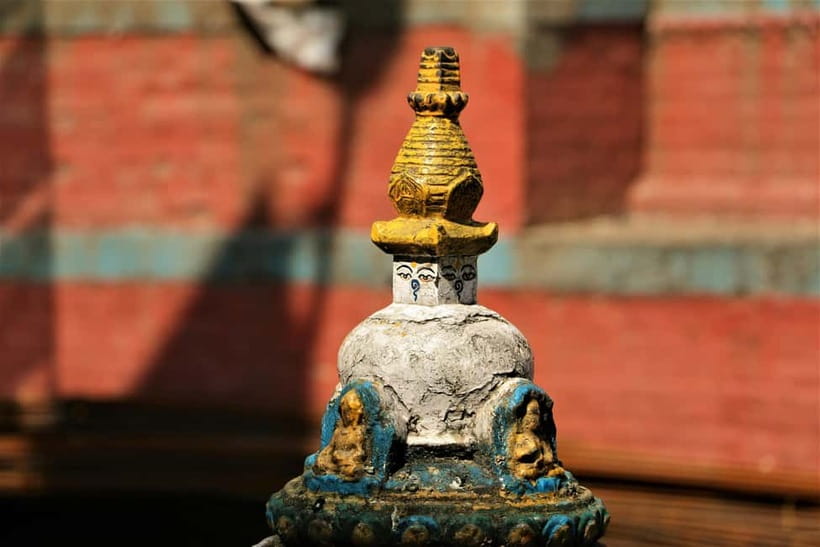
At $17 per person, the tour is priced as an affordable introduction to Kathmandu’s Buddhist sites. The value is strongest if you use the hotel transport, receive a private English-speaking guide, and have the heritage admissions covered as stated in the inclusions.
A private five-hour outing at this price can save you time and reduce the stress of reaching both sites. It also gives you access to explanations that you would not get from simply visiting the stupas on your own.
The value becomes less clear if you must pay separate entrance fees, buy your own lunch, and arrange extra transport beyond the stated pickup and drop-off. None of those costs is unusual, but you should add them to your budget.
For a solo visitor, $17 for a private group may be particularly attractive, provided the price does not rise sharply based on group size or pickup location. For two or more people, the cost becomes even easier to justify because the guide and vehicle serve the group.
The free cancellation policy allows cancellation up to twenty-four hours ahead for a full refund, and the reserve now, pay later option keeps your plans flexible. Those terms are useful if your Kathmandu schedule may change.
Who Should Book This Buddhist Stupa Tour?
I would recommend this tour to first-time visitors who want a clear, structured introduction to Kathmandu’s Buddhist landmarks. It suits you if you prefer asking questions directly, want hotel transport, and enjoy a mix of sightseeing, walking, local food, and conversation.
It is also a good fit if you have limited time. In five hours, you see two major sites rather than spending half a day working out taxis and directions.
You may prefer another option if you want a long, specialist study of Buddhist art or philosophy. The experience is an overview, and the exact depth will depend on your guide and your questions.
It is not suitable for wheelchair users, people with visual impairments, pregnant women, or anyone who cannot manage walking and uneven steps. Baby strollers are not allowed, and alcohol or drugs are prohibited, including alcoholic drinks in the vehicle.
Wear comfortable shoes and modest clothing suitable for religious sites. Keep your schedule a little flexible, especially if you want time for questions or lunch.
My Verdict on the Kathmandu Stupa Tour
Book this if you want an affordable, private introduction to two of Kathmandu’s most important Buddhist sites. The combination of Swayambhunath’s hilltop views, Boudhanath’s circular walk, local food, and a patient English-speaking guide gives the half-day real substance.
The strongest reason to choose it is the guide-led conversation. Pranav’s patience and ability to explain Buddhism, myths, and local traditions received the clearest praise, although you should confirm who will lead your booking if that matters to you.
Before you commit, clarify the entrance-fee wording. If admission is covered as stated, $17 is excellent value. If it is not, the tour can still be worthwhile, but you should calculate the full cost first.
FAQ
How long does the Kathmandu Buddhist stupa tour last?
The tour lasts five hours, including visits to Swayambhunath and Boudhanath, transport, and the planned lunch stop.
Which sites are included?
The tour visits Swayambhunath Temple, also called the Monkey Temple, and Boudhanath Stupa in Kathmandu.
Is hotel pickup and drop-off included?
Yes. Hotel pickup and drop-off are included, although the exact starting location depends on the option selected.
Is lunch included in the price?
No. Food and personal expenses are not included. Lunch near Boudhanath may include dal bhat, momo, and other Nepalese dishes.
What language does the guide speak?
The live tour guide speaks English, and the experience is offered for a private group.
Is the tour accessible for wheelchair users?
No. The tour is listed as unsuitable for wheelchair users, visually impaired people, pregnant women, and baby strollers. It includes walking at both Buddhist sites.
New in the Kathmandu listings
- Traditional Momo Making Class★ 5.0 · 10 reviews
- Kathmandu: Ancient City Kirtipur & Pharping Monastery Tour★ 5.0 · 2 reviews
- Women Empowerment Project(Nepali cooking class & jewelry workshop★ 5.0 · 15 reviews
- Kathmandu to Pokhara Premium sofa bus ticket★ 4.0 · 17 reviews
- 7-Day Langtang Valley Trek from Kathmandu★ 5.0 · 1 review
- Kathmandu 2 Nights 3 Days Chitwan Jungle Safari Tour★ 5.0 · 9 reviews
- Yoga Experience Day Trip with Private Transfer From Kathmandu★ 4.0 · 2 reviews
- Wildlife Adventure in Chitwan Nepal★ 4.0 · 4 reviews
Tours, compared.
Private Kathmandu Sightseeing Tour | UNESCO World Heritage sites
Read our review →
Everest Base Camp Helicopter Tour landing at Everest View Hotel
Read our review →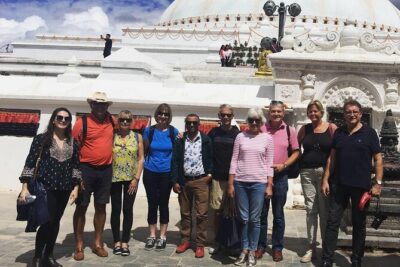
Full Day 7 UNESCO Tour with Lunch – Private/Group
Read our review →
Full Day Top 4 UNESCO Tour with Lunch – Private/Group
Read our review →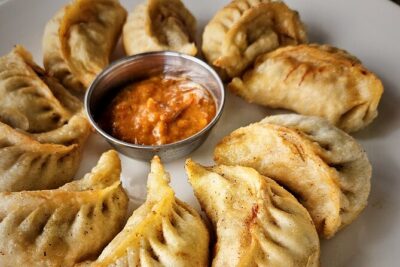
Full-Day 7 UNESCO Tour with Lunch – Private/Group
Read our review →