
REVIEW · CITY TOURS
Kathmandu City Sightseeing Bus tour (5 Sights)
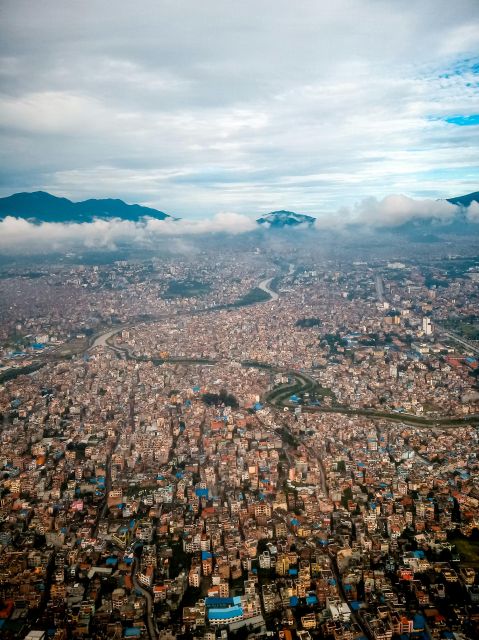
Kathmandu reveals itself one shrine at a time. I like this $16 shared bus tour because it links five major religious and heritage sites in one day, including Pashupatinath, Boudhanath, Swayambhunath, Guheswori, and Budhanilkantha. I also like the easy pickup and drop-off service, which saves you from arranging several taxis in Kathmandu traffic.
The main caution is important: this is a budget transport service, not a full guided tour. The tour operator manages the group and can provide basic facts, but detailed explanations are not guaranteed. One English-speaking passenger reported a 30-minute delay and very little English commentary, so you should book this for access and convenience first, sightseeing instruction second.
In This Review
- Key points to know before booking
- What the $16 price really buys you
- Meeting opposite Hotel Malla in Thamel
- Pashupatinath, where the Bagmati carries the city’s faith
- Guheswori Temple and the quieter spiritual pause
- Boudhanath and the great white stupa
- Swayambhunath, the hilltop Monkey Temple
- Budhanilkantha and the reclining Vishnu image
- How much information will you receive?
- Shared transport, delays, and group comfort
- What to bring for a smoother day
- Who will get the most from this Kathmandu tour?
- Should you book the five-sightseeing-stop bus?
- FAQ
- What time does the Kathmandu sightseeing bus tour start?
- Where is the meeting point?
- Can the bus arrive late?
- Which sites does the tour visit?
- Is a professional tour guide included?
- Are entrance fees included in the price?
- What should I bring?
- Can I cancel the booking?
Key points to know before booking
- Five important stops in one day: Visit Pashupatinath, Guheswori, Boudhanath, Swayambhunath, and Budhanilkantha without arranging separate rides.
- Low price, limited guiding: The $16 fee covers shared transport and tour management, but not entry tickets, meals, or a professional guide.
- Meet opposite Hotel Malla: Arrive around 10:45 am, fifteen minutes before the planned 11:00 am departure.
- Traffic can change the schedule: The bus may arrive late, especially in Kathmandu traffic, although the reporting time remains the same.
- Several visits involve walking: Comfortable shoes matter, particularly at Swayambhunath, where ancient steps lead up the hill.
- Best for independent sightseers: You will get more from the day if you already know a little about Nepalese Hindu and Buddhist traditions.
What the $16 price really buys you
At $16 per person, this is one of the cheaper ways to connect several major sites around Kathmandu. The value comes from transport, fuel, taxes, service charges, pickup, and drop-off. If you were arranging separate taxis to five locations, the cost and hassle could quickly pass the tour price.
The price does not include entrance fees, food, drinks, or a detailed guide. That difference matters. You are paying for a seat on a shared bus and someone to keep the day moving, not for a private cultural lesson.
The experience provider is Holyland Adventure Tours and Travels Pvt Ltd. A tour operator accompanies the group and manages the stops. That person may explain basic details, point out the sites, and tell you how long you have, but the service description clearly says this person is not a tour guide.
I would treat this as a practical sightseeing shuttle with a human coordinator. That is a fair deal if your priority is seeing the main places. If you want stories about temple design, religious symbolism, and local customs at each stop, budget for a separate guide or prepare by reading beforehand.
A short list of alternatives around Kathmandu
- Everest Base Camp Trek – 14 Days
★ 5.0 · 1,499 reviews - Private Kathmandu Sightseeing Tour | UNESCO World Heritage sites
★ 5.0 · 756 reviews - Everest Base Camp Helicopter Tour landing at Everest View Hotel
★ 5.0 · 668 reviews
Meeting opposite Hotel Malla in Thamel
The meeting point is on the road opposite the main entrance of Hotel Malla in Thamel, Kathmandu. You are advised to arrive by 10:45 am for the planned 11:00 am departure.
This is one detail I would take seriously. The location has signage and a representative should be present to help passengers, but the meeting point has not always felt perfectly clear. Give yourself extra time to find the correct side of the road and confirm that you are waiting in the right place.
The bus may arrive late because of traffic. The stated departure time is around 11:00 am, but the operator asks you to keep the reporting time fixed. In practical terms, arrive early and expect some flexibility. Kathmandu roads can turn a short drive into a slow one, and a shared bus cannot move as quickly as a taxi.
The day begins late enough for a relaxed breakfast, but the schedule may run into the afternoon and beyond. Bring water, any medication you need, and a little patience.
Pashupatinath, where the Bagmati carries the city’s faith
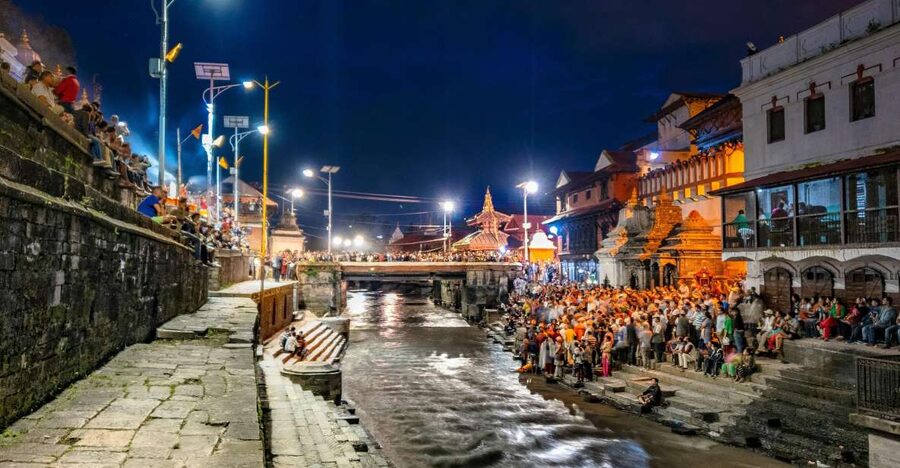
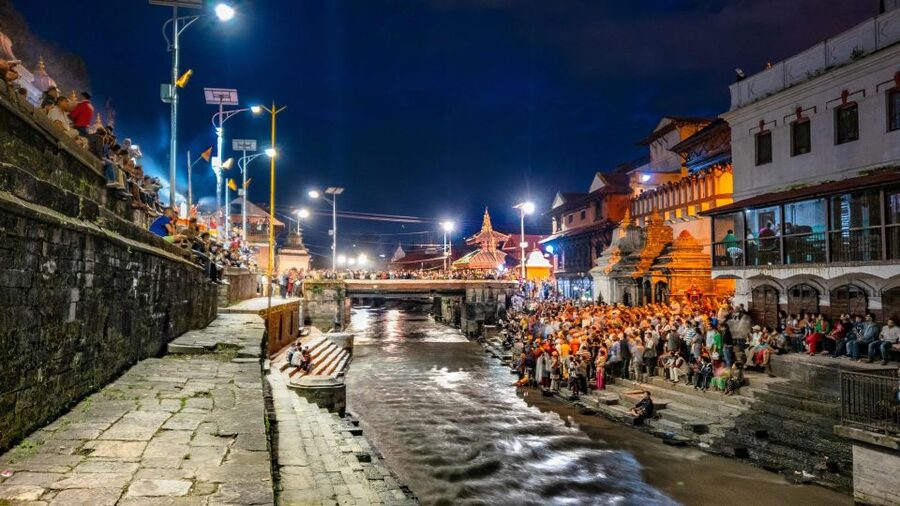
Pashupatinath Temple is the emotional center of the tour for many people. Set beside the Bagmati River, this major Hindu temple complex is filled with shrines, ritual activity, and centuries-old religious practice.
Non-Hindu visitors cannot enter the main temple, but you can still see much of the surrounding complex and observe activity from permitted areas. The point is not simply to photograph a famous building. Pashupatinath is an active place of worship, so quiet behavior and respectful clothing are essential.
The tour description includes the possibility of seeing sacred rituals and the Aarti ceremony. Timing is important here. Religious activity follows its own schedule, and traffic or the order of the bus route may affect exactly what you see. Do not book this outing expecting a guaranteed ceremony at a precise hour.
Look closely at the smaller shrines and the carved details around the complex. The main temple gets most of the attention, but the surrounding area helps you understand how Hindu worship works in everyday life.
This stop can feel intense rather than polished. That is part of its value. You are seeing a living religious center, not a quiet museum.
Guheswori Temple and the quieter spiritual pause
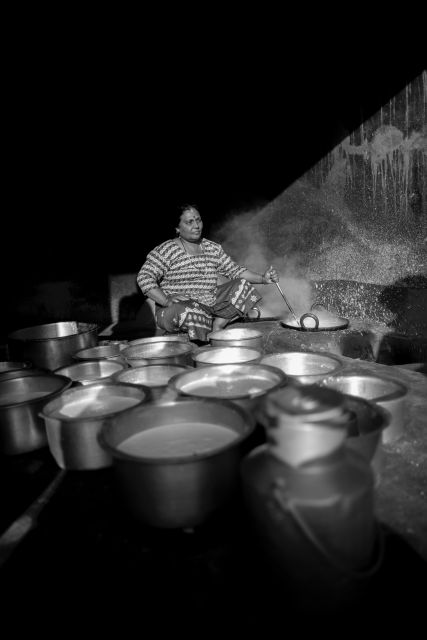
Guheswori Temple is close to Pashupatinath, making it a logical second stop. Dedicated to the goddess Guheswori, the temple offers a more focused visit after the larger Pashupatinath complex.
The setting provides a change of pace. Instead of moving through a broad collection of shrines, you spend time with one sacred site and its rituals. The architecture and calm atmosphere give you another view of Nepal’s religious life.
As with Pashupatinath, respectful conduct matters. Some areas may have restrictions for non-Hindu visitors, and the experience is best approached as observation rather than inspection. Follow the operator’s instructions and avoid treating active worship as a performance.
Because the two temples are close together, this part of the day should feel connected. You see how several sacred sites can form one religious district, rather than five unrelated attractions scattered around a city.
A completely different way to spend the day:
- Half day cooking class in Thamel kathmandu
★ 5.0 · 607 reviews - Everest Base Camp Trekking
★ 5.0 · 485 reviews - Nagarkot Sunrise View and Day Hiking from Kathmandu
★ 5.0 · 471 reviews - Kathmandu: Full Day 7 UNESCO Tour with Lunch – Private/Group
★ 5.0 · 415 reviews
Boudhanath and the great white stupa
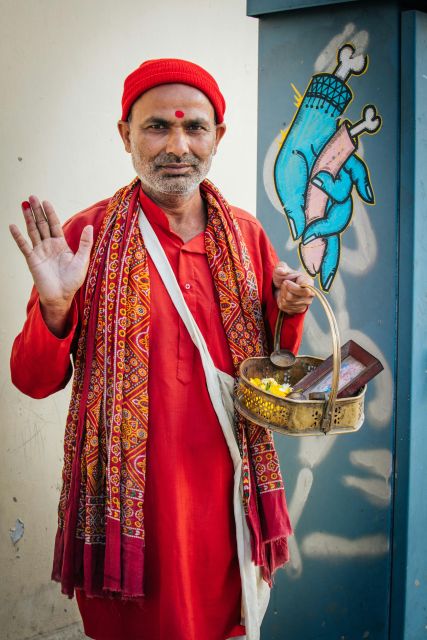
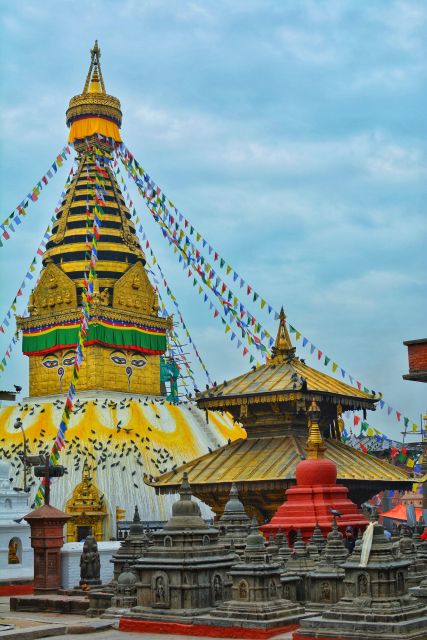
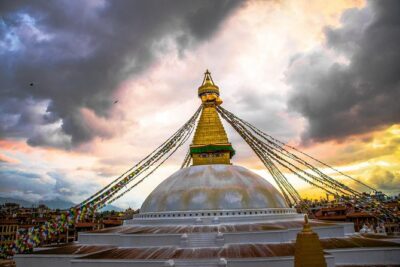
Boudhanath Stupa brings a sharp change in mood and tradition. The huge Buddhist monument is surrounded by monasteries, shops, prayer flags, incense, and the steady movement of people walking around its base.
The usual local practice is to circumambulate the stupa clockwise. You can turn prayer wheels as you walk and take in the painted eyes of the Buddha watching over the square. The monument’s mandala shape is easier to appreciate from above, but even at ground level its scale is striking.
This is one of the strongest stops for independent exploration. Once the coordinator tells you where to meet and how long you have, you can spend your time looking at the shrine, walking the circuit, or observing the surrounding Tibetan Buddhist community.
Do not rush your photographs. The prayer flags, monastery roofs, butter lamps, and white dome create plenty of visual detail, but Boudhanath is more than a picture stop. It remains a place of prayer and pilgrimage.
You should also expect commercial activity around the stupa. Shops and restaurants are part of the area, but they can make the visit feel less secluded than a remote monastery. That contrast is useful: Boudhanath shows faith operating in the middle of city life.
Swayambhunath, the hilltop Monkey Temple
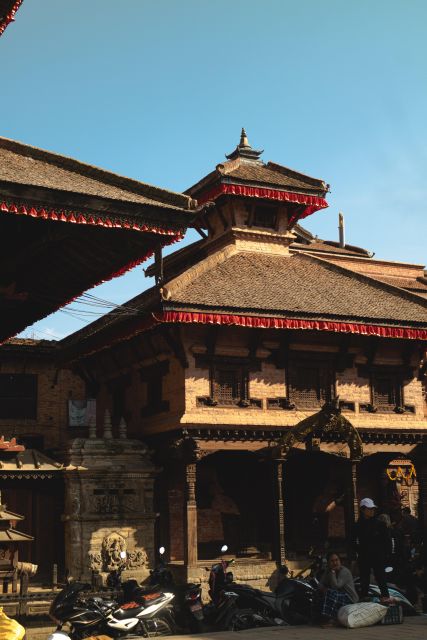
Swayambhunath Stupa is reached by ancient steps and is commonly called the Monkey Temple. The climb provides a physical break from the bus and a fine view across the Kathmandu Valley.
This is the stop where footwear and mobility matter most. Comfortable shoes are not optional if you want to enjoy the ascent. The tour is not considered suitable for people with mobility impairments, and the steps may be difficult for anyone who is unsteady or uncomfortable with hills.
At the top, you will find Buddhist symbols, prayer flags, prayer wheels, and the familiar Buddha eyes. Hindu and Buddhist elements share the site, reflecting the close connection between the two traditions in Kathmandu.
The views are a major reward, although weather and city conditions affect visibility. Bring a camera, but keep it secondary to taking in the hilltop setting and the ritual activity around the stupa.
The monkeys are part of the site’s character, but do not assume they are harmless pets. Keep your belongings secure and follow sensible distance. The supplied information does not promise a specific monkey encounter, so think of the name as a local nickname, not a wildlife tour.
Budhanilkantha and the reclining Vishnu image
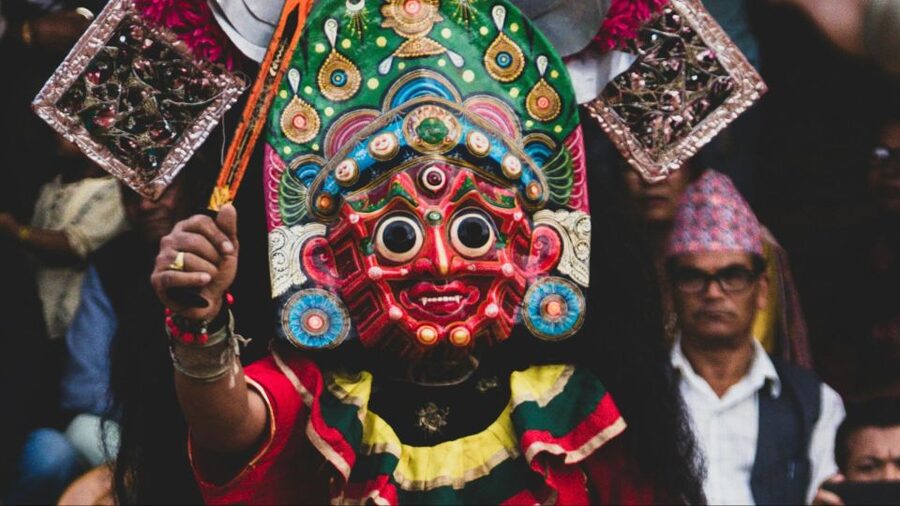
The final stop is Budhanilkantha, known for its large reclining statue of Vishnu. The figure is carved from a single stone and rests in a pond, creating one of the day’s quietest scenes.
After several major temples and stupas, this visit offers a calmer finish. The water around the statue adds to the sense of stillness, while the craftsmanship gives you a chance to focus on Nepalese religious art.
The site is different from Swayambhunath and Boudhanath in scale and setting. You are not looking across a large hilltop complex or circling a vast stupa. Instead, the statue draws attention through its position in the pond and its peaceful expression.
As at the other religious sites, dress and behavior should be respectful. The tour gives you access to a broad range of Nepalese spiritual traditions in one day, but it does so through short visits. Take a moment to notice the contrast between each place rather than trying to collect five photographs and move on.
How much information will you receive?
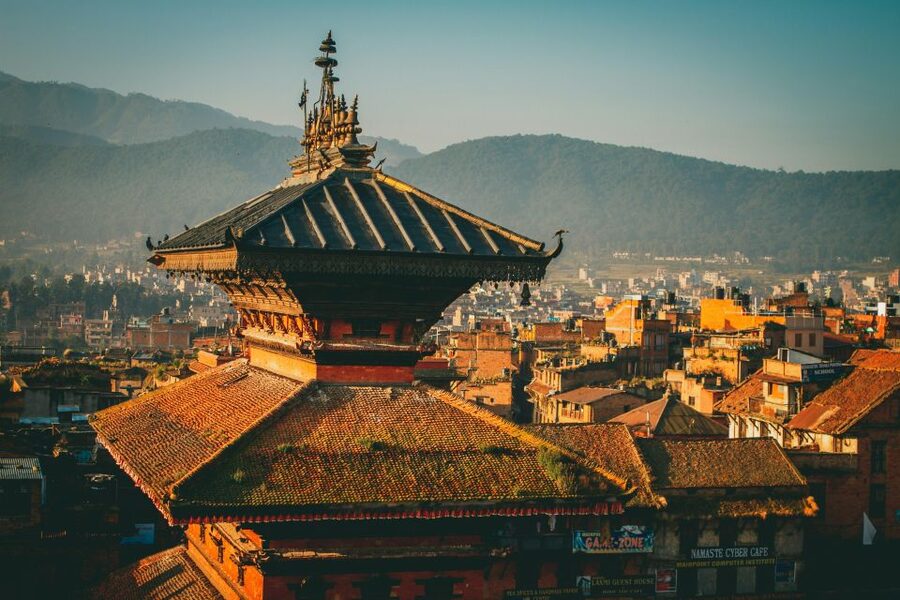
This is the biggest question for English-speaking passengers. The service description promises basic information, not detailed guiding. That means you may be told where you are, how long you have, and when to return to the bus.
One passenger reported that the guide mainly addressed the Nepalese and Indian passengers in a local language, while the English-speaking group received very little background. Another passenger praised a guide for being attentive, friendly, and helpful. Those accounts suggest that the quality of spoken explanation can vary by group and by day.
I would not book this tour solely because it promises cultural interpretation. Bring a guidebook, download notes in advance, or arrange a private guide if context is central to your trip. You can still have a good day with the bus service, but you may need to supply the history yourself.
The tour operator’s role is mainly organizational. That is useful in a busy city, especially when several sites are involved, but it is not the same as having a trained guide beside you at every shrine.
Shared transport, delays, and group comfort
This is a shared bus tour, so you will not control the route or departure times. The group may include Nepalese, Indian, and English-speaking passengers, and the commentary may not be delivered equally in every language.
A delay of about 30 minutes has been reported, and traffic is specifically identified as a reason the bus may arrive late. Build flexibility into your day. Do not schedule a flight, important meeting, or timed evening activity immediately after the tour.
The rules are straightforward: no smoking, alcohol, drugs, intoxicating behavior, loud noise, drinks in the vehicle, or fire. These restrictions are sensible on shared transport, though anyone hoping to eat or drink during the ride should plan ahead.
The tour is not considered suitable for people over 110 kilograms, people with motion sickness, people over 95 years old, or people with mobility impairments. These limits may feel broad, but the combination of a shared vehicle, multiple stops, walking, and possible delays can make the day demanding.
What to bring for a smoother day
Wear comfortable clothes and shoes that can handle temple grounds and the steps at Swayambhunath. Bring a camera, personal medication, and enough money for entrance fees and food.
Entry fees are not included, and the exact total is not stated. Ask the operator about current charges if you need to plan your budget closely. You should also carry water, although drinks are not allowed inside the vehicle according to the rules, so follow the operator’s instructions about when and where to drink.
Dress with religious sites in mind. The information does not prescribe a specific outfit, but modest, comfortable clothing is the sensible choice for Hindu and Buddhist temples.
Keep your meeting instructions handy. On a shared outing, returning to the bus on time matters more than squeezing in one last photograph.
Who will get the most from this Kathmandu tour?
I would recommend this outing to a first-time visitor who wants to cover the city’s main sacred places at a low price. It is also useful if you are staying in Thamel and do not want to negotiate five separate taxi rides.
It suits independent people who are comfortable exploring after receiving basic instructions. You will enjoy it more if you can accept traffic delays, a mixed-language group, and limited commentary.
I would choose another option for a traveler who wants a slow, deeply explained cultural tour. It is also a poor match if you dislike group schedules, need guaranteed departure times, have trouble with steps, or feel unwell on buses.
The strongest praise for this experience centers on the friendly service, helpful organization, and the chance to see Kathmandu’s main monuments at a low cost. The clearest weakness is the uneven English explanation. Keep those two facts in mind and the choice becomes simple.
Should you book the five-sightseeing-stop bus?
Book it if you want maximum coverage for $16 and can accept a basic service. Pashupatinath, Guheswori, Boudhanath, Swayambhunath, and Budhanilkantha give you a broad look at Kathmandu’s Hindu and Buddhist traditions in one day.
Skip it if detailed guiding is essential, or if a delay could disrupt your plans. Arrive at the Hotel Malla meeting point by 10:45 am, prepare for traffic, bring comfortable shoes, and budget separately for entry fees and food.
For the right person, this is a practical introduction to Kathmandu: inexpensive, ambitious, and occasionally rough around the edges.
FAQ
What time does the Kathmandu sightseeing bus tour start?
The bus is planned to leave around 11:00 am Kathmandu local time. You should arrive at the meeting point by about 10:45 am.
Where is the meeting point?
The meeting point is on the road opposite the main entrance gate of Hotel Malla in Thamel, Kathmandu. Look for signage and the tour representative.
Can the bus arrive late?
Yes. Traffic can delay the bus, although the requested reporting time remains 10:45 am.
Which sites does the tour visit?
The tour visits Pashupatinath Temple, Guheswori Temple, Boudhanath Stupa, Swayambhunath Stupa, and Budhanilkantha.
Is a professional tour guide included?
No. A tour operator manages the group and may provide basic information, but a detailed tour guide is not included.
Are entrance fees included in the price?
No. Entry fees, food, and personal expenses are not included in the $16 price.
What should I bring?
Bring comfortable shoes, comfortable clothing, a camera, and any personal medication you need.
Can I cancel the booking?
You can cancel up to 24 hours in advance for a full refund. The tour also offers a reserve-now-and-pay-later option.
New in the Kathmandu listings
- Traditional Momo Making Class★ 5.0 · 10 reviews
- Kathmandu: Ancient City Kirtipur & Pharping Monastery Tour★ 5.0 · 2 reviews
- Kathmandu to Pokhara Premium sofa bus ticket★ 4.0 · 17 reviews
- Women Empowerment Project(Nepali cooking class & jewelry workshop★ 5.0 · 15 reviews
- Yoga Experience Day Trip with Private Transfer From Kathmandu★ 4.0 · 2 reviews
- 7-Day Langtang Valley Trek from Kathmandu★ 5.0 · 1 review
- Kathmandu 2 Nights 3 Days Chitwan Jungle Safari Tour★ 5.0 · 9 reviews
- Wildlife Adventure in Chitwan Nepal★ 4.0 · 4 reviews
City Tours, compared.
Sarangkot Sunrise with Half or Full-Day City Tour
Read our review →
Full Day Kathmandu City Sightseeing Tour of UNESCO Heritage Sites
Read our review →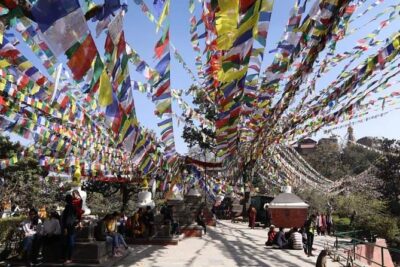
Browse the lists this tour appears in