
REVIEW · CITY TOURS
Kathmandu City Sightseeing Bus Tour
Five sacred sites, one busy morning. This Kathmandu bus tour gives you a useful first look at the valley’s Hindu and Buddhist heart, from the Bagmati River to the hilltop Swayambhunath Stupa. I like the compact six-hour route and the chance to see places that would take much longer to connect by yourself. I also like the low $16 price, which includes transport, pickup, drop-off, taxes, and a tour manager. The main drawback is that the schedule is tight, and entrance fees, food, drinks, and tips cost extra.
The small-group format can make the day easier, especially if you are trying to fit several religious sites into one outing. A group of six was reported on one departure, while the official maximum is 15. I would treat the tour as a practical overview rather than a slow, quiet study of each temple. The stop at Pashupatinath lasts only 45 minutes, while Swayambhunath gets 30 minutes, so you will need to keep moving.
In This Review
- Key points at a glance
- Why this Kathmandu route works well
- Pashupatinath and the Bagmati River
- Guhyeshwari Temple and the Shakti tradition
- Boudhanath Stupa gives you the most time
- Budhanilkanth and the reclining Vishnu image
- Swayambhunath and the 365-step climb
- What $16 really gets you
- Group size, language, and practical timing
- Who should book this tour?
- Should you book it?
- FAQ
- How long does the Kathmandu City Sightseeing Bus Tour last?
- How much does the tour cost?
- Are pickup and drop-off included?
- Where does the tour start?
- What time does the tour start?
- How many people can join the tour?
- Are entrance fees included?
- Are food and drinks included?
- What places does the tour visit?
- Can I cancel for a full refund?
Key points at a glance
- Five major religious sites in about six hours: The route covers Pashupatinath, Guhyeshwari, Boudhanath, Budhanilkanth, and Swayambhunath.
- A strong value at $16: Pickup, return transport, taxes, and a tour manager are included, but entrance fees are not.
- Small group, with a maximum of 15: A past departure had six people, which made moving between sites simpler.
- A useful mix of Hindu and Buddhist traditions: You will see temples, a stupa, shrines, ritual spaces, and sacred riverbank sites.
- Hindi language support may be available: One reported outing had a guide who spoke Hindi, though a specific language guarantee is not provided.
- A morning start: Meet at The Malla Hotel between 10:45 and 11:15 AM, with the tour ending back there.
Why this Kathmandu route works well
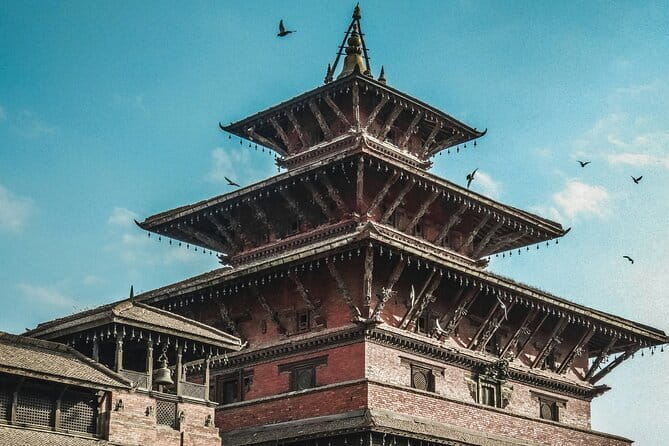
Kathmandu is not a city you understand from one monument. Its sacred places are spread across the valley, and traffic can make short distances feel long. This bus tour solves part of that problem by grouping five important sites into one organized circuit.
I like the balance of Hindu and Buddhist places. Pashupatinath and Guhyeshwari show the valley’s Hindu traditions, Boudhanath offers one of the world’s most important Tibetan Buddhist settings, Budhanilkanth adds a quieter Vishnu shrine, and Swayambhunath brings you to one of Kathmandu’s most recognizable hilltop monuments.
The route is also useful for a first full day in the city. You get a broad sense of how worship works here: prayer, circumambulation, offerings, cremation rites, temple courtyards, monastery life, and sacred images all appear during the day. You will not have much time for each subject, but you will see enough to decide where you want to return on your own.
The timing deserves attention. The tour begins between 10:45 and 11:15 AM and lasts about six hours. That makes it a later morning and afternoon outing, not an early temple visit. I would leave about two extra hours in your wider schedule, since road conditions and movement through the city may affect the day.
A short list of alternatives around Kathmandu
- Everest Base Camp Trek – 14 Days
★ 5.0 · 1,499 reviews - Private Kathmandu Sightseeing Tour | UNESCO World Heritage sites
★ 5.0 · 756 reviews - Everest Base Camp Helicopter Tour landing at Everest View Hotel
★ 5.0 · 668 reviews
Pashupatinath and the Bagmati River
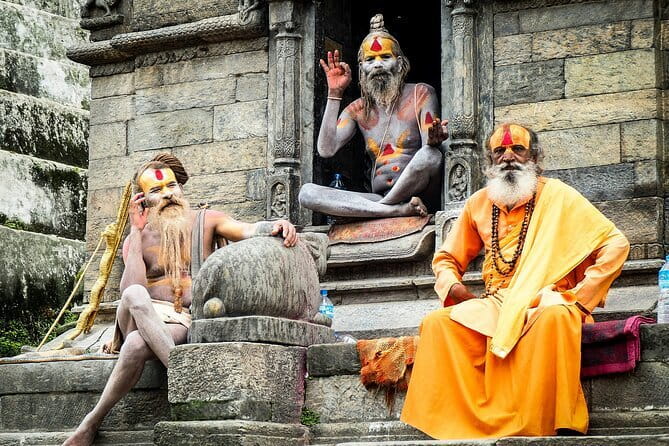
The first major stop is Pashupatinath Temple, one of Nepal’s most sacred Hindu shrines and a UNESCO World Heritage Site. It is dedicated to Lord Shiva and sits beside the Bagmati River, a setting that gives the complex both spiritual weight and a serious, everyday character.
You can expect to see ornate buildings, carved details, pilgrims, and the riverbank cremation ghats. Traditional Hindu funerary rites take place here, so this is not simply a photo stop. I would approach the site with respect, keep your voice low near ritual activity, and follow the guide’s instructions about where you may go.
The scheduled visit is 45 minutes, and admission is not included. That short period is enough for an introduction, but it may feel rushed if you want to examine the architecture or spend time watching ceremonies. The evening Aarti ceremony, performed with oil lamps and ritual music, is specifically associated with the temple, but the tour begins late morning and does not promise an evening visit. Do not book this outing expecting to see the Aarti.
This is one of the most meaningful stops because it presents worship and death side by side. For some people, the cremation area may be emotionally difficult. For others, it provides an honest view of how the sacred and ordinary parts of life meet in Kathmandu.
Guhyeshwari Temple and the Shakti tradition
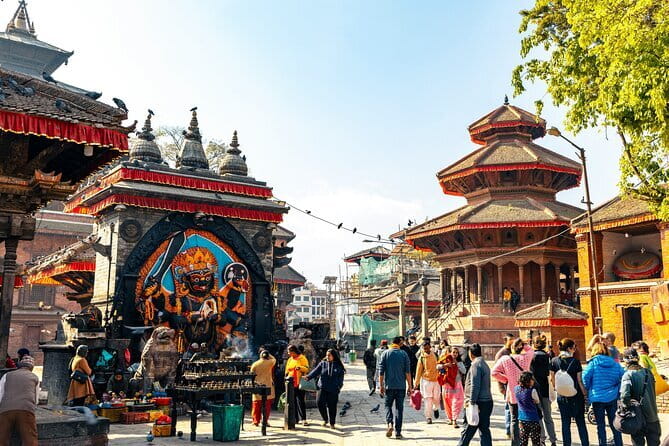
A short 15-minute stop follows at Guhyeshwari Shaktipeeth Temple, near Pashupatinath. The temple honors Goddess Parvati and is regarded as one of the 51 Shakti Peethas, places linked with divine feminine power.
The shrine includes an underground sanctum, where devotees pray and perform rituals. Its flower-filled surroundings and quieter religious setting offer a different mood from the larger Pashupatinath complex.
Fifteen minutes is enough to see the site and receive a short explanation, but not enough for a long visit. Admission is not included, so keep some money available for the day’s paid sites. Guhyeshwari is especially busy during Dashain and Navaratri, according to the tour information, but the tour does not provide a festival calendar or promise special ceremonies.
I see this stop as valuable mainly because it broadens the religious picture. If you only visit the best-known monuments, you can miss the importance of goddess worship in Nepal. Here, the short visit gives you one more piece of that story.
Boudhanath Stupa gives you the most time
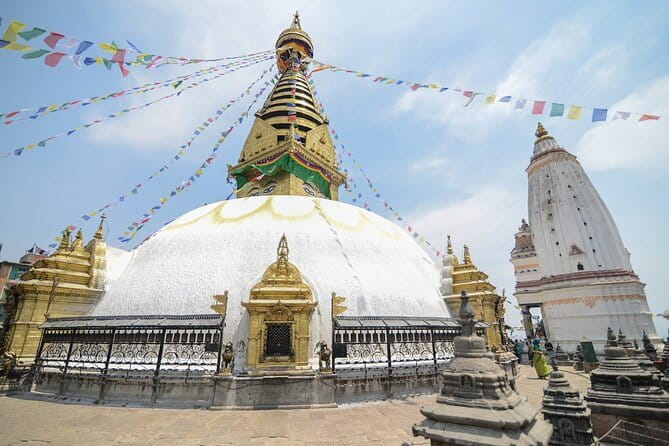
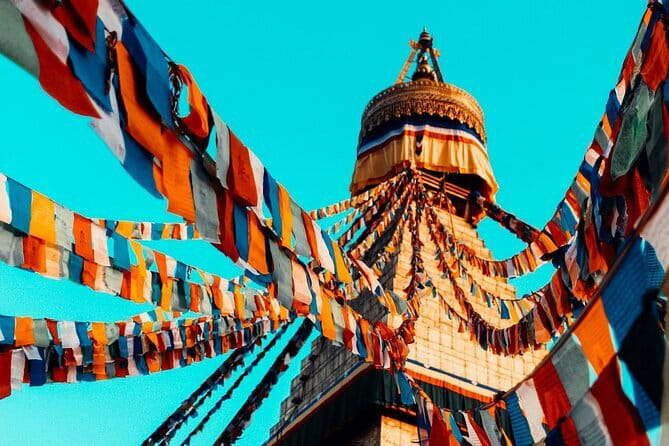
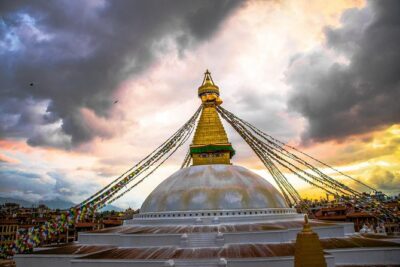
Boudhanath Stupa receives the longest stop, one hour, and that is a sensible choice. This enormous white stupa is one of Kathmandu’s most important Buddhist pilgrimage sites and a UNESCO World Heritage Site.
The central dome and white mandala are surrounded by prayer flags, monasteries, shops, and places to eat. Devotees walk around the stupa while chanting prayers, a practice known as circumambulation. You can use the hour to walk around the monument, watch the steady ritual movement, and take in the surrounding religious community.
I like this part of the schedule because Boudhanath needs time. A quick photograph from a bus window would miss the point. The stupa is not just an isolated monument. It is a working religious center, and the surrounding monasteries and businesses help you understand how worship shapes the neighborhood.
Admission is not included. Food and drinks are also your responsibility, though the area includes eateries. The tour does not specify a meal break, so I would not assume that lunch is built into the schedule. If you need to eat at a particular time, plan accordingly.
Boudhanath may also be the easiest stop for independent wandering, since the central monument gives you a clear point to return to. Still, watch the time. The group will continue after one hour, and the bus will not wait indefinitely for a leisurely café visit.
A completely different way to spend the day:
- Half day cooking class in Thamel kathmandu
★ 5.0 · 607 reviews - Everest Base Camp Trekking
★ 5.0 · 485 reviews - Nagarkot Sunrise View and Day Hiking from Kathmandu
★ 5.0 · 471 reviews - Kathmandu: Full Day 7 UNESCO Tour with Lunch – Private/Group
★ 5.0 · 415 reviews
Budhanilkanth and the reclining Vishnu image
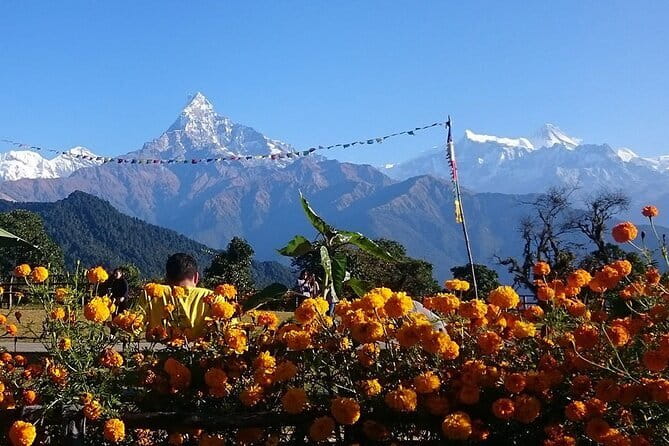
Budhanilkanth Temple takes about 20 minutes and costs nothing to enter. This northern Kathmandu shrine is dedicated to Lord Vishnu and is known for its unusual statue of Vishnu reclining on the cosmic serpent Ananta in a pond.
The image gives the temple its special character. Instead of a tall tower or hilltop stupa, you see a sacred figure lying horizontally on the water. The setting is described as peaceful, with greenery and mountain views adding to the sense of retreat.
Twenty minutes is a brief visit, but the free admission and distinct religious subject make it a worthwhile addition. I would think of this as a focused photo and explanation stop rather than a place for extended exploration. The tour information connects the temple with festivals such as Harishankar and Dashain, although no festival activities are promised during your departure.
This stop also breaks up the large monuments. After the scale of Pashupatinath and Boudhanath, Budhanilkanth offers a smaller setting and a different form of Hindu devotion. If you enjoy religious art and symbolism, the reclining Vishnu image may be one of the day’s most memorable sights.
Swayambhunath and the 365-step climb
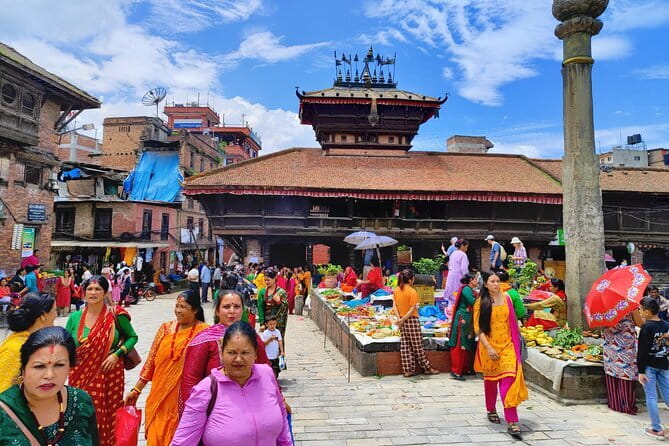
The final site is Swayambhunath, also called the Monkey Temple, a UNESCO World Heritage Site on a hill above Kathmandu. Its stupa has a golden dome and the all-seeing eyes of Buddha, symbols of wisdom and compassion.
The site is reached by 365 steps, and the tour allows about 30 minutes. That timing matters. You need to walk uphill, see the stupa, take in the views of the Kathmandu Valley, and return to the group within half an hour. If you have difficulty with stairs, this may be the most demanding stop of the day.
The temple complex includes shrines, monasteries, and monkeys. The animals are part of the site’s familiar character, but you should still act carefully around them and avoid treating them as pets. The location is important to both Buddhist and Hindu worshippers, which makes it a fitting final stop for a tour that crosses both traditions.
The hilltop view is a major reason to come. You can see the valley from above, though the clarity of the view will depend on conditions. The short visit means you may have to choose between photographs, the stupa, smaller shrines, and the panorama. I would prioritize the main stupa and the view first.
What $16 really gets you
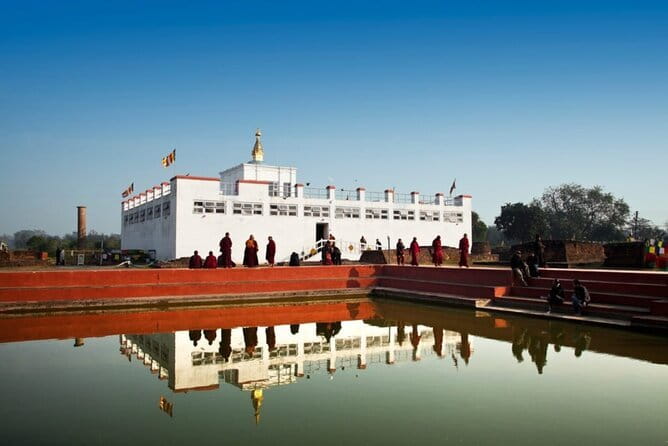
At $16 per person, this is priced as a transport-and-orientation day rather than a premium private tour. You receive pickup and drop-off, applicable taxes, and a tour manager. The official group limit is 15 people, and one earlier outing had only six participants.
That is good value if your alternative is arranging separate rides to five distant religious sites. Kathmandu traffic, unfamiliar roads, and the spread of the monuments can quickly eat up time. The bus lets you concentrate on the places instead of negotiating each transfer.
The low price has clear limits. Entrance fees are not included, and neither are meals, drinks, or tips. Pashupatinath, Guhyeshwari, Boudhanath, and Swayambhunath all list admission as excluded, while Budhanilkanth is free. The final cost will therefore be higher than $16 if you enter the paid sites.
You also should not expect a private pace. The tour has a fixed route and fixed stop lengths. That is useful for seeing a lot, but less useful if you prefer sitting quietly through a ceremony or studying every carving. I would book it for coverage and convenience, not for a slow specialist visit.
Group size, language, and practical timing
Pickup is offered, and the stated starting point is The Malla Hotel on Lekhnath Marg in Kathmandu. The meeting window is 10:45 to 11:15 AM, Monday through Sunday, for the operating period shown from March 19, 2024, through June 18, 2026. The activity ends back at the meeting point.
The tour is near public transportation, and most people can participate. The information does not provide detailed accessibility guidance, so the 365 steps at Swayambhunath are the main physical point to consider.
The guide arrangement is another useful detail. One small-group outing had a Hindi-speaking guide, which could be a real advantage for Hindi-speaking participants. Since no guaranteed guide language is stated, I would confirm your preferred language before booking if that matters to you.
I would also allow extra time around the tour. The operator suggests adding two hours to your schedule. That is sensible in a city where traffic and loading a group can affect a tightly planned afternoon.
Who should book this tour?
I think this tour suits a first-time visitor who wants a broad introduction to Kathmandu’s religious sites without arranging five separate trips. It is also a good match for anyone on a short stay, since the route covers several major places in one outing.
You will probably appreciate it if you value low cost, organized transport, and a small group. The combination of Hindu and Buddhist sites gives you more range than a tour focused on one monument.
I would hesitate if you want long visits, guaranteed access to every interior space, or a relaxed meal stop. The schedule is brisk, and entrance fees are extra. Visitors with limited mobility should also think carefully about the stair climb at Swayambhunath.
Free cancellation is available if you cancel at least 24 hours before the start time. Cancellations within 24 hours are not refunded, and late changes are not accepted.
Should you book it?
Book this Kathmandu city tour if you want maximum coverage for a modest price and prefer someone else to handle the transport. The strongest features are the small-group format, the mix of five important sacred places, and the practical one-day route.
Skip it if your main goal is a quiet, unhurried temple experience. In that case, choose fewer sites and give each one more time. For most first visits, though, this is a sensible way to get oriented, with Boudhanath and Pashupatinath likely to make the biggest impression.
FAQ
How long does the Kathmandu City Sightseeing Bus Tour last?
The tour lasts approximately six hours.
How much does the tour cost?
The listed price is $16 per person.
Are pickup and drop-off included?
Yes. Pickup and drop-off are included, and the activity ends back at the starting meeting point.
Where does the tour start?
The tour starts at The Malla Hotel, Lekhnath Marg, Kathmandu 44600, Nepal.
What time does the tour start?
The stated meeting window is between 10:45 AM and 11:15 AM.
How many people can join the tour?
The maximum group size is 15 people. One reported outing had six participants.
Are entrance fees included?
No. Entrance fees are not included, although Budhanilkanth Temple has free admission.
Are food and drinks included?
No. Food and drinks are not included in the tour price.
What places does the tour visit?
The route visits Pashupatinath Temple, Guhyeshwari Shaktipeeth Temple, Boudhanath Stupa, Budhanilkanth Temple, and Swayambhunath.
Can I cancel for a full refund?
Yes, if you cancel at least 24 hours before the experience starts. Cancellations made within 24 hours are not refunded.
New in the Kathmandu listings
- Traditional Momo Making Class★ 5.0 · 10 reviews
- Kathmandu: Ancient City Kirtipur & Pharping Monastery Tour★ 5.0 · 2 reviews
- Kathmandu to Pokhara Premium sofa bus ticket★ 4.0 · 17 reviews
- Women Empowerment Project(Nepali cooking class & jewelry workshop★ 5.0 · 15 reviews
- 7-Day Langtang Valley Trek from Kathmandu★ 5.0 · 1 review
- Kathmandu 2 Nights 3 Days Chitwan Jungle Safari Tour★ 5.0 · 9 reviews
- Yoga Experience Day Trip with Private Transfer From Kathmandu★ 4.0 · 2 reviews
- Wildlife Adventure in Chitwan Nepal★ 4.0 · 4 reviews
City Tours, compared.
Sarangkot Sunrise with Half or Full-Day City Tour
Read our review →
Full Day Kathmandu City Sightseeing Tour of UNESCO Heritage Sites
Read our review →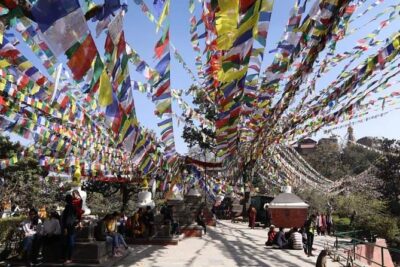
Browse the lists this tour appears in