
REVIEW · CITY TOURS
Kathmandu City Tour: TOP Highlights of the Kathmandu Valley
Three sites, centuries of belief. This private Kathmandu tour links Boudhanath Stupa, Pashupatinath Temple, and Bhaktapur Durbar Square in one well-planned day. I like the private vehicle and hotel pickup, which save you from sorting out Kathmandu traffic on your own. I also like the mix of Buddhist, Hindu, and Newari culture. The main drawback is cost beyond the $39 tour fee: monument tickets add 3,400 Nepali rupees per person, and meals and drinks are not included.
The six-hour schedule is a good introduction to the Kathmandu Valley, though traffic can stretch the outing to five to seven hours. I especially value the flexible pace reported by a guest who traveled with guide Neeraj, along with the friendly, relaxed guiding praised by Renee. You should still expect plenty of walking, stairs, crowds, and sensitive religious settings.
In This Review
- Key points to know before booking
- Why this half-day route works
- Boudhanath Stupa and the rhythm of Buddhist worship
- Pashupatinath Temple beside the Bagmati River
- Bhaktapur Durbar Square and the Newari city
- What the $39 price really covers
- Timing, pickup, and the Kathmandu traffic factor
- Who will get the most from this tour
- Small details that make the day better
- Should you book this Kathmandu tour?
- FAQ
- How long does the Kathmandu City Tour last?
- Which sites are included?
- Is hotel pickup included?
- What type of transportation is provided?
- Is the tour private?
- What language is the tour conducted in?
- Are entrance fees included in the price?
- Are food and drinks included?
- What should I wear and bring?
Key points to know before booking
- Three UNESCO-listed cultural highlights: Boudhanath, Pashupatinath, and Bhaktapur bring together Buddhist worship, Hindu ritual, and Newari art.
- Private transport from your hotel: Pickup is included within Kathmandu’s Ring Road, with a car, van, jeep, Hiace, or bus based on group size.
- The guide shapes the day: An English-speaking guide explains the buildings, rituals, and local customs, rather than leaving you to guess what you are seeing.
- Budget for entrance tickets: The 3,400 Nepali rupee monument fee is separate from the $39 tour price.
- Allow five to seven hours: The advertised duration is six hours, but Kathmandu traffic can change the timing.
- Dress with care: Cover your shoulders and knees, and ask before taking photographs inside religious areas.
Why this half-day route works
Kathmandu Valley can feel like three different worlds packed into one urban area. Buddhist prayer, Hindu cremation rites, royal courtyards, wood carving, and traditional markets all appear on this route.
That variety is the strongest reason to book. You are not spending six hours looking at similar temples. Instead, you get a broad introduction to the valley’s main faiths and architectural traditions, with a guide to explain the differences.
The private format matters in Kathmandu. Roads can be slow, and a group tour with a fixed bus schedule may leave you watching the clock. Here, you travel with your own party and can move at a more comfortable pace. One past guest specifically praised Neeraj for answering questions and adjusting the speed rather than rushing from site to site.
Still, this is not a quiet countryside excursion. You will move through active religious places and busy city streets. If you want long, unhurried time at every shrine, three major stops in six hours may feel tight. If you want a strong first look at Kathmandu’s cultural center, the route is efficient.
A short list of alternatives around Kathmandu
- Everest Base Camp Trek – 14 Days
★ 5.0 · 1,499 reviews - Private Kathmandu Sightseeing Tour | UNESCO World Heritage sites
★ 5.0 · 756 reviews - Everest Base Camp Helicopter Tour landing at Everest View Hotel
★ 5.0 · 668 reviews
Boudhanath Stupa and the rhythm of Buddhist worship
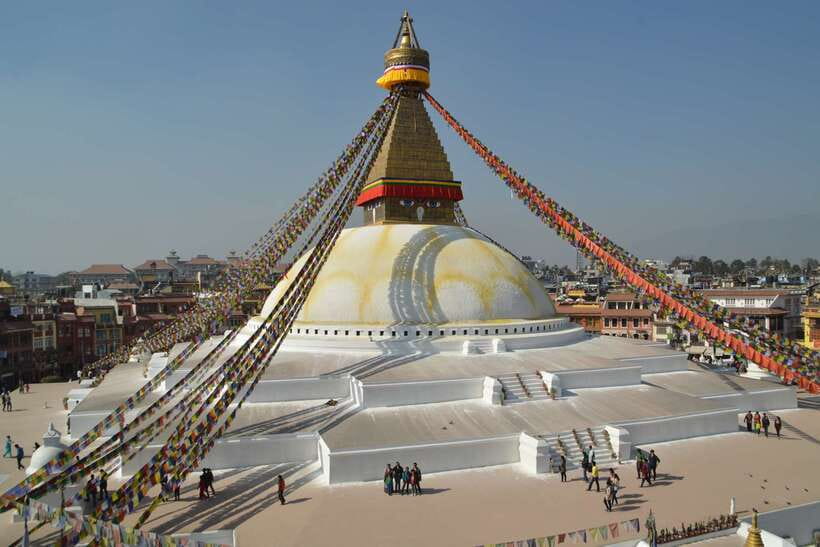
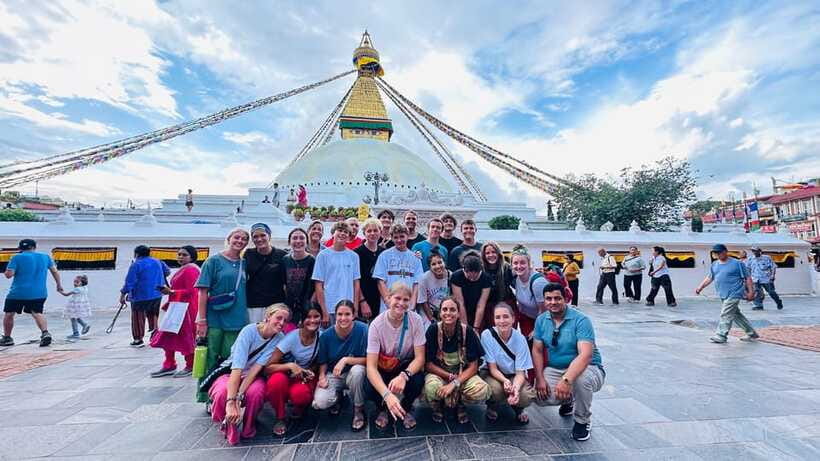
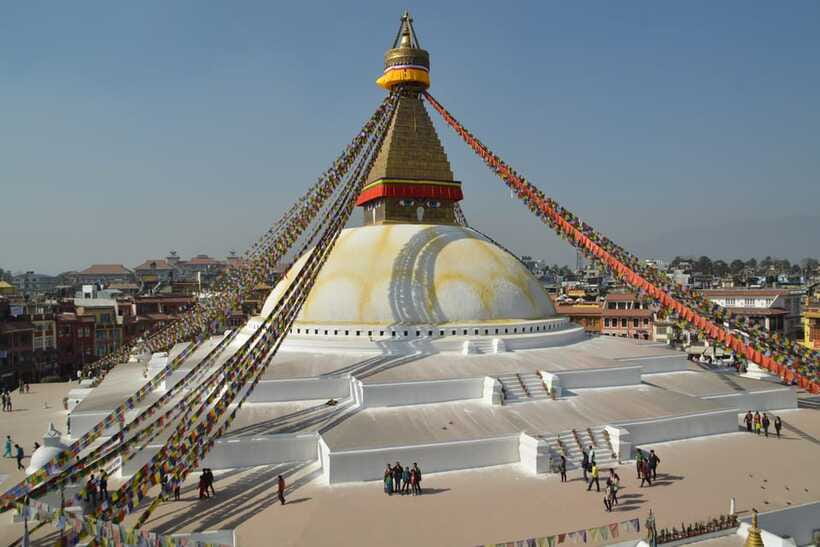
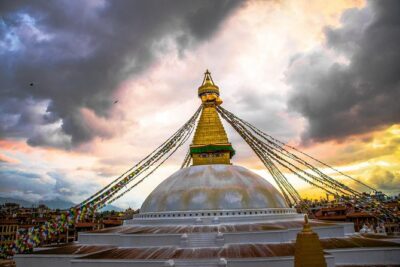
Boudhanath is the tour’s calmest stop. The great white dome, golden spire, painted eyes, prayer wheels, monasteries, and surrounding lanes give the place a strong sense of purpose.
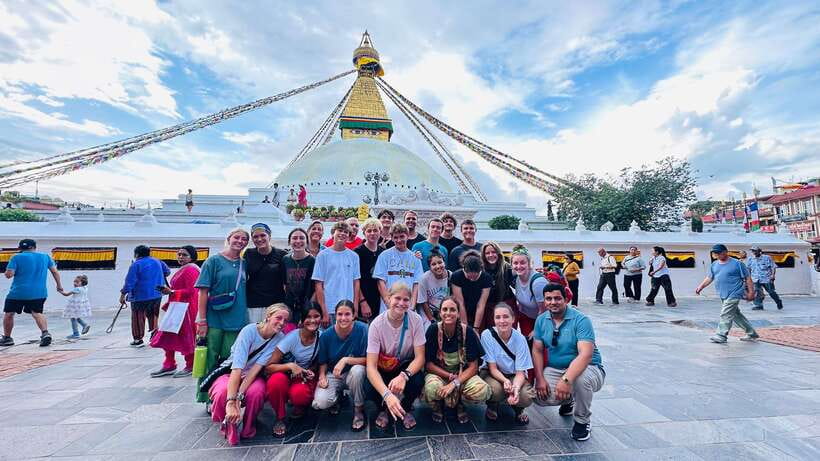
Your guide can help you understand how to walk around the stupa and what the people around you are doing. You may see worshippers turning prayer wheels, moving around the monument, and taking part in daily Buddhist practices. The point is not simply to admire the structure. It is to notice how the stupa functions as a living place of worship.
The scale is impressive. Boudhanath is one of the largest Buddhist stupas in the world, and its central form is easy to recognize from the surrounding area. The white dome and gold-topped tower make it one of Kathmandu’s most memorable sights, but the smaller details are just as worthwhile. Look at the painted eyes, the decorative elements, and the monasteries around the main circle.
This is a good place to slow down and let your guide set the pace. You can take photographs in many outdoor areas, but religious sites have their own rules. Ask before photographing ceremonies, worshippers, or interiors.
The stop also gives you a useful contrast with Pashupatinath. At Boudhanath, the mood centers on prayer and repetition. At the next site, the Bagmati River and Hindu rites create a more solemn setting.
Pashupatinath Temple beside the Bagmati River
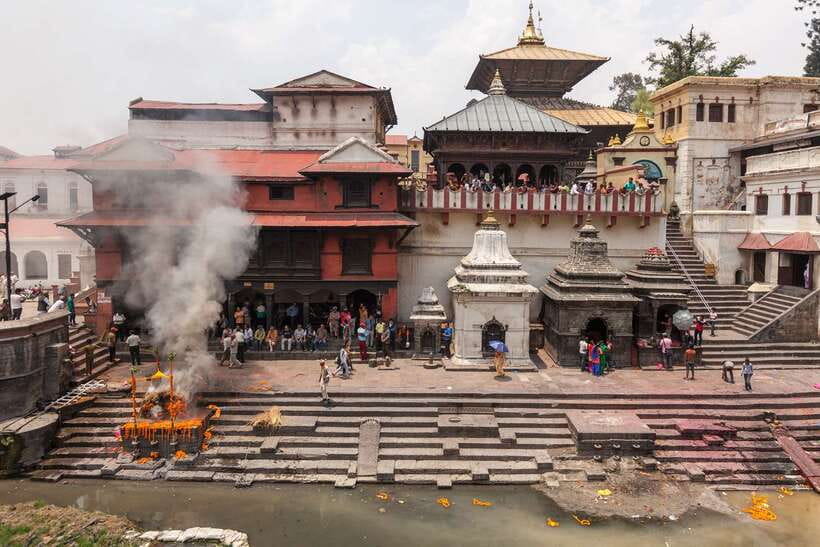
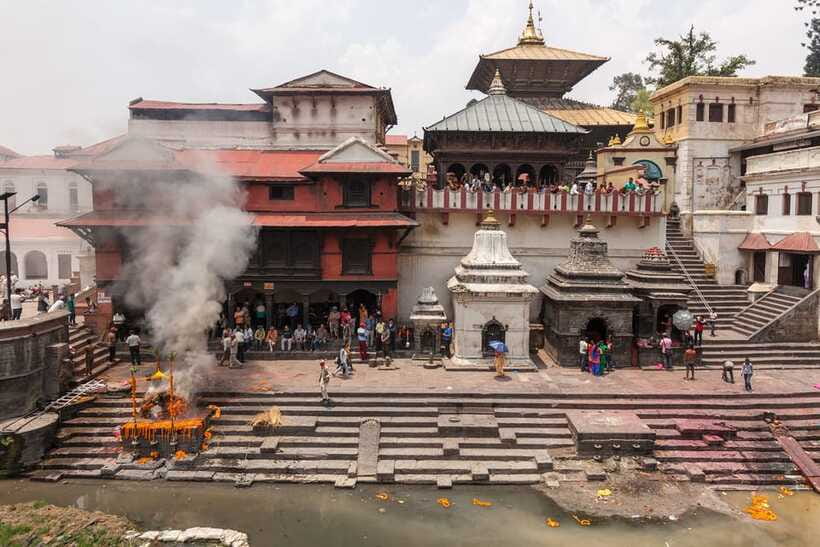
Pashupatinath is Nepal’s most sacred Hindu temple dedicated to Lord Shiva. It sits beside the Bagmati River and is known for its pagoda-style design, golden roofs, and detailed woodwork.
This is the most emotionally powerful part of the tour for many people because religious practice here is closely tied to death and family ritual. Along the riverbanks, you may witness Hindu cremation ceremonies. You can also see other spiritual rites taking place in and around the temple complex.
A guide is particularly useful here. Without context, it can be difficult to understand what is happening, which areas are appropriate for visitors, and how to behave respectfully. Your guide can explain the beliefs connected with cremation and help you observe without treating a private ceremony like a staged performance.
That sensitivity matters. Keep your voice low near ceremonies, follow instructions about where to stand, and ask before using your camera. Photography is often restricted inside temples, and it may be inappropriate around funerals even if you see other people taking pictures.
The architecture deserves attention, too. Look for the layered pagoda roof, carved wooden details, and the way the temple complex relates to the river. Pashupatinath is not just a single building. It is a major religious setting where worship, public life, and death rites occur side by side.
The main limitation is that this stop may not suit everyone. The cremation ceremonies can be confronting, especially if you are unprepared for the directness of the setting. This is not a polished museum visit. It is a working sacred place, and you should approach it with care.
Modest clothing is important. Cover your shoulders and knees, and wear comfortable shoes because the visit includes walking. Sunscreen, a hat, and water are useful in bright weather, while an umbrella or rain gear helps during wet conditions.
Bhaktapur Durbar Square and the Newari city
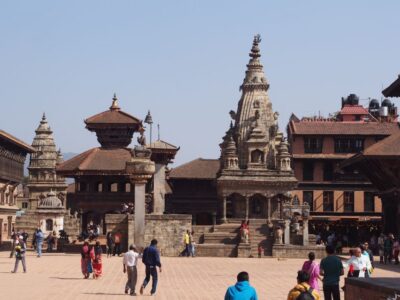
Bhaktapur gives the tour a different character. Instead of focusing mainly on religious ritual, you walk through a preserved medieval city shaped by Newari architecture, craft, and daily life.
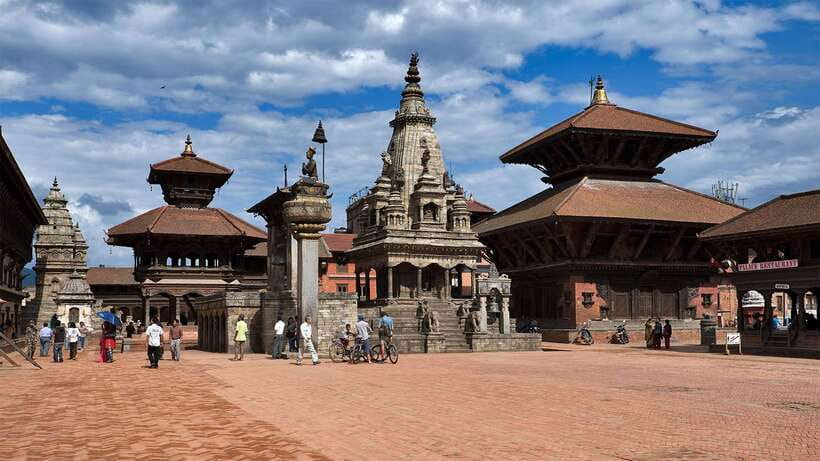
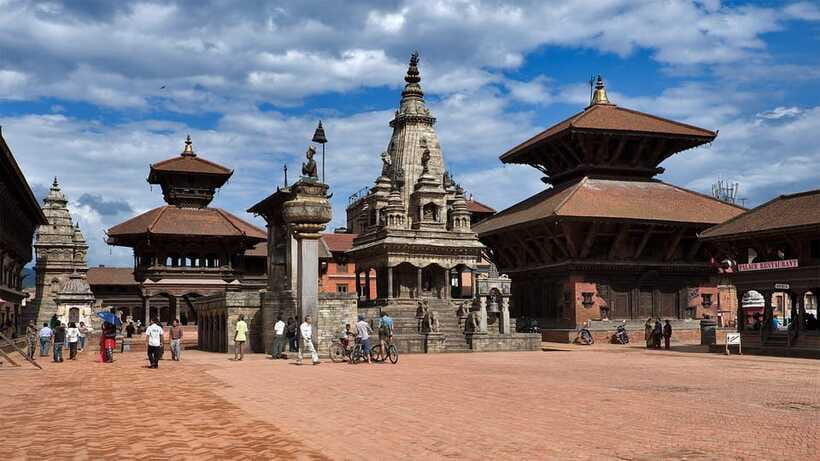
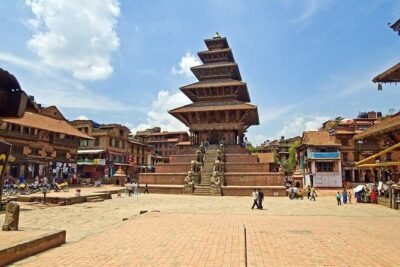
The square is known for the 55-Window Palace, Vatsala Temple, and Nyatapola Temple. Nyatapola is Nepal’s tallest pagoda and one of the clearest examples of Newari building skill. Its height and layered design make it easy to spot, but your guide can draw attention to the carvings, proportions, and details you might otherwise pass without noticing.
Bhaktapur is often described as the City of Devotees, and that name fits the religious buildings and old courtyards. Yet it is not only a collection of monuments. As you walk the cobblestone streets, you may find local artisans, traditional markets, and people using old buildings as part of ordinary life.
That combination is what makes Bhaktapur rewarding. You get impressive architecture, but you also see a city rather than a single landmark. The preserved setting helps you picture how the valley’s historic urban centers were arranged.
The drawback is the walking surface and the number of stairs. One past guest specifically advised wearing running shoes because the day includes walking and steps. Comfortable footwear is not optional if you want to enjoy Bhaktapur rather than spend the final hour thinking about your feet.
Allow time for your guide’s explanations. The 55-Window Palace and temples can look like a parade of ornate facades if you rush. The stories behind the courtyards and the Newari craftsmanship give the stop its meaning.
A completely different way to spend the day:
- Half day cooking class in Thamel kathmandu
★ 5.0 · 607 reviews - Everest Base Camp Trekking
★ 5.0 · 485 reviews - Nagarkot Sunrise View and Day Hiking from Kathmandu
★ 5.0 · 471 reviews - Kathmandu: Full Day 7 UNESCO Tour with Lunch – Private/Group
★ 5.0 · 415 reviews
What the $39 price really covers
At $39 per person, the tour offers fair value if you want private transportation, hotel pickup and drop-off, and an English-speaking guide. You are paying for convenience as much as sightseeing. Kathmandu’s traffic can make independent visits time-consuming, especially when you are trying to connect three major sites.
The price does not include the 3,400 Nepali rupee monument entrance fee per person. That extra charge is significant enough to include in your daily budget. Meals, drinks, and guide tips are also separate.
The private group setup can make the price more appealing for two or more people traveling together. You share the vehicle with your own party, and the transport can be matched to the group size. A small group may use a car, while a larger party may travel by van, jeep, Hiace, or bus.
You should not choose this tour expecting a luxury vehicle or a food-focused outing. The stated value is the route, transport, guide, and time saved. If you already have reliable transport and enjoy planning historic sites yourself, the added cost may be less attractive.
Timing, pickup, and the Kathmandu traffic factor
The day begins with pickup at your hotel within Kathmandu’s Ring Road. Be ready in the lobby at the scheduled time. If your hotel is outside the Ring Road, an additional pickup and drop-off fee may apply.
The advertised duration is six hours, but the practical range is five to seven hours. Traffic is the reason. Kathmandu roads can change the timing, so avoid scheduling an important flight, train, or appointment immediately afterward.
Private transport is provided throughout the tour. The vehicle depends on the size of your group, and the pickup location can be supplied after booking if it is not easy to identify during checkout.
The tour runs in all weather conditions, with changes possible during extreme weather. Bring water, sunscreen, a hat, an umbrella, rain gear, and a camera. Above all, wear shoes suited to cobblestones and stairs.
Who will get the most from this tour
I would recommend this tour for a first visit to Kathmandu, especially if you have only one full day or a short stay. It gives you three major cultural settings without requiring you to arrange transport between them.
It also suits you if you prefer a private day with room to ask questions. The strongest praise attached to this experience focuses on the guide’s manner: informative, polite, relaxed, and willing to match the group’s pace. That can make a large difference at sites where the meaning is not obvious at first glance.
The tour is a good fit for people interested in architecture, faith, photography, and local customs. It is less suitable if you dislike religious ceremonies, cannot manage several hours of walking, or want a slow visit to just one site.
Pregnant women are listed as not suitable for this activity. If mobility, heat, stairs, or long periods on your feet are concerns, ask before booking so you understand what can and cannot be adjusted.
Small details that make the day better
Wear clothing that covers your shoulders and knees. This is both respectful and practical at Pashupatinath and other religious areas.
Keep your camera ready at Boudhanath and Bhaktapur, but do not assume every interior or ceremony can be photographed. Ask your guide first.
Bring a little patience for traffic. The route is well chosen, but Kathmandu does not promise a perfectly timed road journey.
If you want a guide in another language, that may be available for an extra cost. The standard tour is conducted in English.
Cancellation is flexible up to 24 hours before the start for a full refund, and you can reserve now and pay later. Those terms help if your Nepal schedule is still changing.
Should you book this Kathmandu tour?
Book it if you want an efficient, private introduction to Kathmandu Valley and value having a guide explain what you are seeing. Boudhanath offers Buddhist calm, Pashupatinath brings you close to serious Hindu ritual, and Bhaktapur supplies the grand architecture and old-city atmosphere.
Before booking, add the 3,400 Nepali rupee entrance fee, bring money for food and drinks, and prepare for walking and traffic. If you do that, the $39 price is reasonable for a private vehicle, hotel pickup, and three of the valley’s most important sights.
Skip it if you prefer to spend an entire day at one site or if cremation ceremonies would be too difficult for you. For most first-time visitors with limited time, though, this route gives you a clear and memorable introduction to Nepal’s cultural heart.
FAQ
How long does the Kathmandu City Tour last?
The advertised duration is six hours. The actual outing may take five to seven hours because Kathmandu traffic can affect the schedule.
Which sites are included?
The tour visits Boudhanath Stupa, Pashupatinath Temple, and Bhaktapur Durbar Square.
Is hotel pickup included?
Yes. Pickup and drop-off are included for hotels within Kathmandu’s Ring Road. An additional fee may apply for locations outside that area.
What type of transportation is provided?
Transportation is provided by private car, van, jeep, Hiace, or bus, depending on the size of your group.
Is the tour private?
Yes. The activity is arranged for a private group.
What language is the tour conducted in?
The standard tour includes a live English-speaking guide. Guides in other languages may be available for an extra cost.
Are entrance fees included in the price?
No. Monument entrance fees cost 3,400 Nepali rupees per person and are paid separately.
Are food and drinks included?
No. Meals, drinks, and guide tips are not included.
What should I wear and bring?
Wear comfortable walking shoes and modest clothing that covers your shoulders and knees. Bring water, sunscreen, a hat, an umbrella, rain gear, and a camera. Ask before taking photographs inside temples or near ceremonies.
New in the Kathmandu listings
- Traditional Momo Making Class★ 5.0 · 10 reviews
- Kathmandu: Ancient City Kirtipur & Pharping Monastery Tour★ 5.0 · 2 reviews
- Kathmandu to Pokhara Premium sofa bus ticket★ 4.0 · 17 reviews
- Women Empowerment Project(Nepali cooking class & jewelry workshop★ 5.0 · 15 reviews
- 7-Day Langtang Valley Trek from Kathmandu★ 5.0 · 1 review
- Kathmandu 2 Nights 3 Days Chitwan Jungle Safari Tour★ 5.0 · 9 reviews
- Yoga Experience Day Trip with Private Transfer From Kathmandu★ 4.0 · 2 reviews
- Wildlife Adventure in Chitwan Nepal★ 4.0 · 4 reviews
City Tours, compared.
Sarangkot Sunrise with Half or Full-Day City Tour
Read our review →
Full Day Kathmandu City Sightseeing Tour of UNESCO Heritage Sites
Read our review →
Browse the lists this tour appears in