
REVIEW · PASHUPATINATH TEMPLE TOURS
Kathmandu Evening Aarati Tour at Pashupatinath
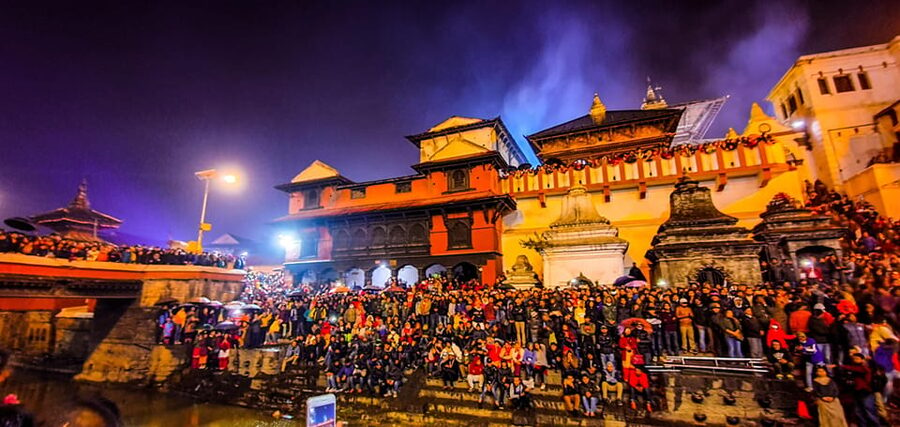
Sacred fire meets the Bagmati River. This four-hour private tour gives you a close look at Kathmandu’s Hindu traditions, from ritual bathing and temple shrines to the evening Aarati prayer ceremony. I especially like the private hotel pickup and the guide’s role in explaining what you are seeing, since Pashupatinath can feel confusing without context. The ceremony itself is the other major draw: lamps, incense, conch shells, bells, and chanting create a powerful evening scene.
The main consideration is that this is a religious site, not a staged cultural show. You may see cremation rituals at the ghats, and the setting can feel intense. Non-Hindus cannot enter the main temple, and the extra entrance fee of about $10 is not included in the $68 tour price.
In This Review
- Key points to know before booking
- Why Pashupatinath matters in Kathmandu
- Hotel pickup and the drive to the temple
- Entering the Pashupatinath complex
- The Bagmati River and ritual bathing
- Arya Ghat and the cremation rituals
- Meeting the Sadhus
- Preparing for the evening Aarati
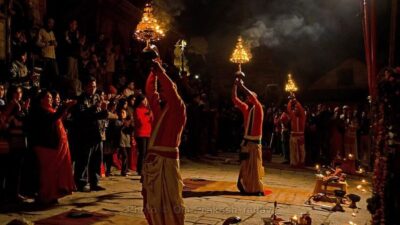
- The Aarati ceremony beside the river
- A quiet walk after the prayers
- Is $68 a fair price?
- Who should book this evening tour?
- Booking advice and final verdict
- FAQ
- How long does the Kathmandu Evening Aarati Tour last?
- What is included in the tour price?
- Is the entrance fee included?
- Can non-Hindus enter the main Pashupatinath Temple?
- What happens during the Aarati ceremony?
- Will I see cremation rituals?
- Can I see Sadhus during the visit?
- What languages does the guide speak?
- Is hotel pickup available?
- What should I bring, and what is not allowed?
Key points to know before booking
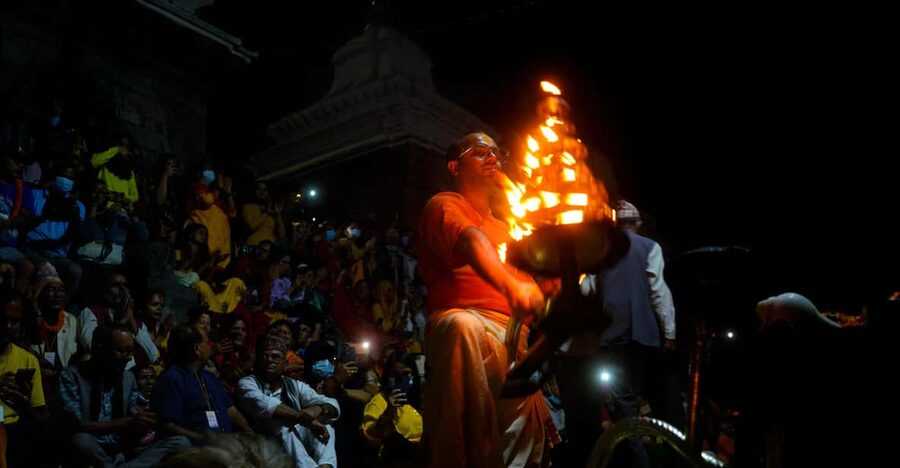
- The evening Aarati is the main event: Priests perform synchronized prayers with oil lamps, incense, and conch shells beside the sacred Bagmati River.
- Pashupatinath is a working religious complex: You may see pilgrims bathing, families carrying out cremation rites, Sadhus, shrines, offerings, and daily worship.
- Your guide adds real value: The tour includes an English or Hindi-speaking guide who explains the temple’s importance and the meaning of the ceremony.
- Non-Hindus cannot enter the main temple: You can explore the wider complex, riverbanks, ghats, and surrounding shrines.
- The $68 cost covers private transport and guiding: Add about $10 for entrance and decide separately if you wish to leave a gratuity.
- The tour suits respectful, mobile visitors: It may not be suitable for people with pre-existing medical conditions, and pets and drones are not allowed.
Why Pashupatinath matters in Kathmandu
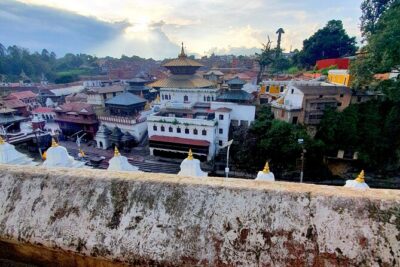
Pashupatinath is one of Kathmandu’s most important Hindu religious sites. The complex sits along the Bagmati River and includes temples, shrines, ashrams, images, and inscriptions built up over many centuries.
You do not need to be Hindu to appreciate the place, but you do need to treat it as a living site of worship. People come here to pray, bathe, make offerings, meet holy men, and perform funeral rites. That makes the visit more serious and more meaningful than a simple monument stop.
I like that the tour begins before the Aarati. You get time to understand the setting first, rather than arriving just as the lamps are lit and trying to work out what is happening. The guide introduces the importance of Pashupatinath during the drive, then adds more detail as you walk through the complex.
More visits to Pashupatinath:
- Kathmandu Spiritual Sites: Bodhnath & Pashupatinath Tour
★ 5.0 · 185 reviews - Kathmandu: Pashupatinath Temple Evening Aarati Tour
★ 5.0 · 36 reviews - Kathmandu: Pashupatinath Temple Aarti Night Tour
★ 4.8 · 29 reviews
Hotel pickup and the drive to the temple
The tour begins with pickup from your Kathmandu hotel in a private car. The driver and guide use your name on a pickup card, which is useful in a city where hotel entrances and traffic can make a meeting point less clear than expected.
The drive is part of the orientation. Your guide explains the significance of Pashupatinath and gives you a basic idea of the Aarati ceremony before you arrive. That preparation matters because the ritual includes several elements at once: lamps, incense, singing, bells, conch shells, and coordinated priestly movements.
The tour lasts about four hours, including the drive, site visit, ceremony, and return to your hotel. Since the starting time changes with availability and sunset, check the exact departure time when booking. The experience is designed for a private group, so you do not have to match the pace of a large tour party.
One useful detail comes from the tour’s sole published experience account. Patrick from Germany arrived late for pickup, but the guide handled the delay calmly and kept the visit on track. That suggests a practical strength of a private tour: the schedule can receive some personal attention instead of treating every small delay as a crisis.
Entering the Pashupatinath complex
Pashupatinath is not one quiet building. It is a wide religious complex along the Bagmati, with the main temple, smaller shrines, images, inscriptions, and spaces used by worshippers and holy men.
The guide leads you through the grounds and explains what you are seeing. This is where the tour earns much of its value. Without help, it is easy to notice the visual drama but miss the religious purpose behind it.
The main temple is dedicated to Lord Shiva. Non-Hindus are not allowed inside, so you should set your expectations before arriving. You can still explore the wider complex and see the surrounding religious life, but the central interior is not part of your visit.
I consider this restriction a minor drawback only if you expect a conventional temple tour. It is not a flaw in the experience. It is part of the rules of a functioning sacred site, and respectful visitors should accept it.
The Bagmati River and ritual bathing
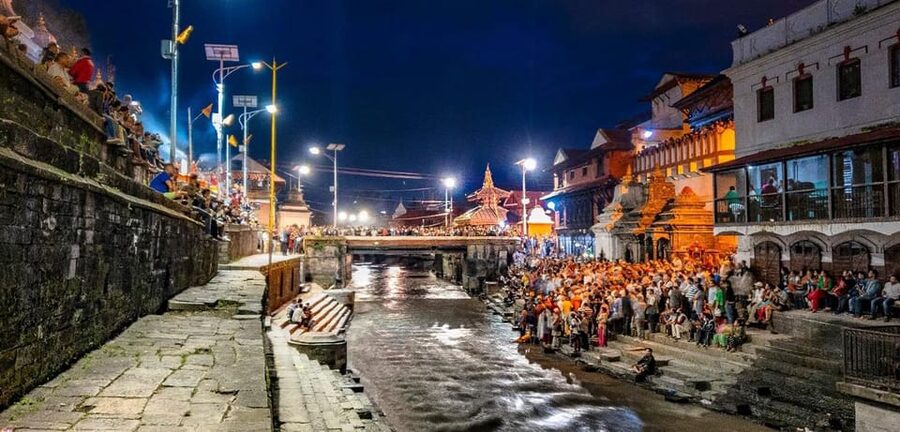
The Bagmati River forms the heart of the visit. Pilgrims take ritual baths in its waters, and the riverbank becomes a place for prayer, preparation, offerings, and observation as evening approaches.
You may see local vendors selling flowers, incense, and other items used in worship. These small transactions help you understand that the ceremony is tied to everyday religious practice, not separated from it for an audience.
The river is also the setting for the Aarati. As daylight fades, the lamps become easier to see, and the relationship between water, flame, prayer, and music grows clearer. I like this gradual change in mood. The tour is not just a quick arrival for a performance, but a walk through the setting as people prepare.
You should dress and behave with care around the river and temples. Keep your attention on the ceremony and avoid treating private religious activity as a photo opportunity. The supplied information does not give detailed photography rules, so your guide is the best person to ask on arrival.
A short list of alternatives around Kathmandu
- Everest Base Camp Trek – 14 Days
★ 5.0 · 1,499 reviews - Private Kathmandu Sightseeing Tour | UNESCO World Heritage sites
★ 5.0 · 756 reviews - Everest Base Camp Helicopter Tour landing at Everest View Hotel
★ 5.0 · 668 reviews - Half day cooking class in Thamel kathmandu
★ 5.0 · 607 reviews
Arya Ghat and the cremation rituals
The walk includes Arya Ghat, described as the most important cremation site on the river. You may see traditional Hindu cremation rituals taking place there.
This can be one of the most affecting parts of the tour. It is also the point where you need the most sensitivity. A cremation is not a display arranged for visitors. Families are carrying out an important religious duty, and you should observe quietly, keep a respectful distance, and follow your guide’s instructions.
The presence of the ghats gives Pashupatinath a serious edge. You are seeing a place where prayer, death, family, and faith share the same riverbank. Some people will find that difficult. If you prefer sightseeing that stays light and cheerful, this may not be the right evening activity.
For many visitors, though, the ghats provide essential context. They show why the Bagmati is more than a scenic river and why Pashupatinath has such importance in Kathmandu’s religious life.
Meeting the Sadhus
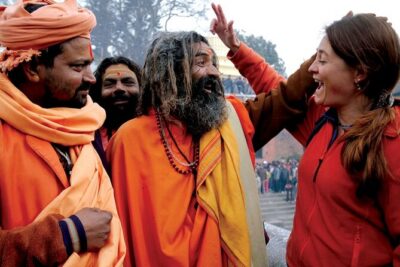
The complex is also associated with Sadhus, Hindu holy men known for their ascetic lives and distinctive appearance. You may see and interact with them during the walk.
The guide can help you understand who they are and how they fit into the religious setting. That explanation is useful because the bright clothing, painted faces, long hair, and calm manner can easily become a quick visual attraction for outsiders.
Approach any interaction with respect. Do not assume that every Sadhu wants to pose for a photograph or talk at length. Ask your guide how to proceed, and remember that you are visiting their religious environment.
This part of the tour adds a human dimension that you would miss by watching only the main ceremony. The Sadhus, pilgrims, vendors, priests, and families all make the complex feel like a working place of worship.
Preparing for the evening Aarati
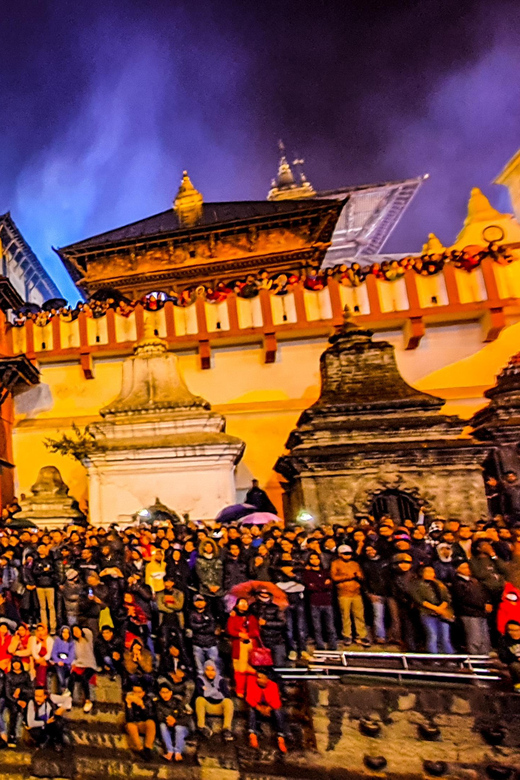
As sunset nears, the atmosphere changes. Priests arrange offerings and light lamps. Bells begin to sound, devotional songs and rhythmic chanting fill the area, and people gather beside the river.
The preparation is worth watching closely. It gives you time to notice the objects used in the ceremony and the order of events before the formal prayer begins. Your guide can explain the purpose of the lamps, incense, and conch shells, which helps you follow the action instead of simply watching a colorful scene.
I particularly like this part because it rewards patience. If you arrive expecting an instant spectacle, you may miss the quieter details that make the ceremony feel real. The fading light, the movement of people, and the first flames on the river all build toward the main prayer.
The setting can be crowded around the ceremony area, although the tour information does not give a group-size limit beyond describing the booking as private. A private group should make the experience easier to manage, but it does not remove the need to stand respectfully among worshippers.
The Aarati ceremony beside the river
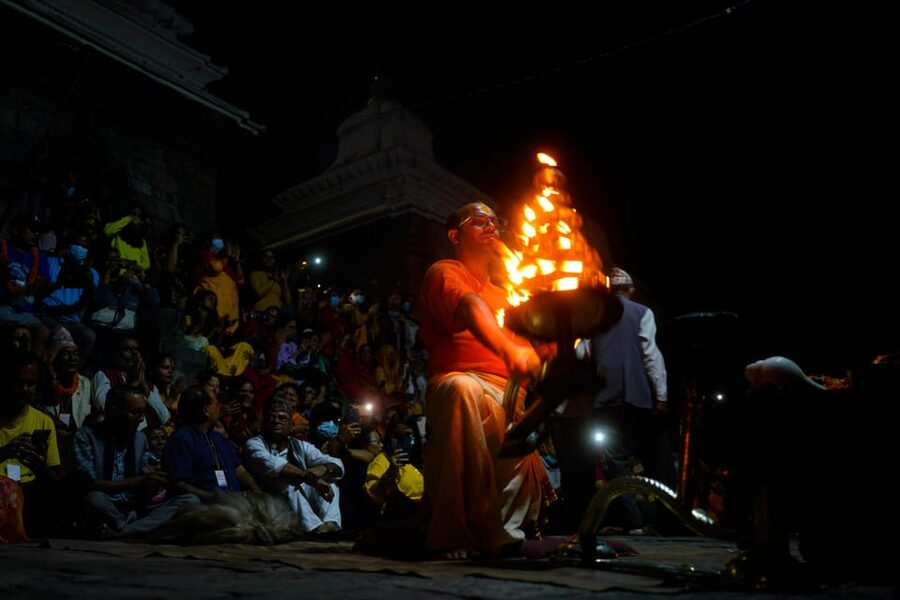
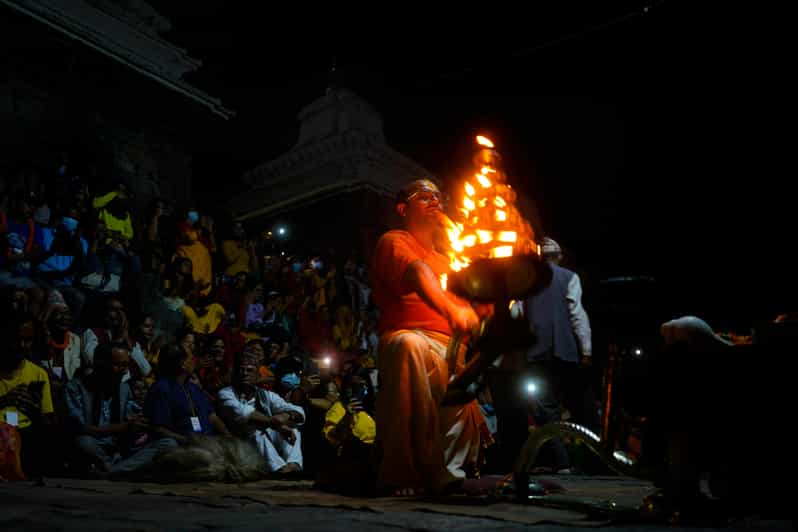
The Aarati begins with priests performing prayers using oil lamps, incense, and conch shells. Their movements are synchronized, while chanting, devotional music, bells, and other ritual sounds fill the space.
The visual focus is the flame. Lamps move in a careful pattern, and their glow reflects against the evening river. The ceremony has a strong rhythm, with sound and motion working together rather than one element dominating the rest.
I can see why the published experience received a five-star rating. Patrick described the ceremony as the highlight of his Kathmandu visit and praised the guide’s explanations before and during the event. That is an important point: the ceremony is likely to be striking on its own, but the meaning becomes clearer when someone explains what you are watching.
You are not required to perform the prayers yourself. You can observe quietly and join the surrounding devotional mood in your own way. If you are respectful and open-minded, the experience can offer a direct connection to Kathmandu’s religious culture without asking you to pretend to be part of a faith that is not your own.
A quiet walk after the prayers
After the Aarati, the tour allows time to reflect and walk around the complex. You may see lamps floating on the Bagmati, adding a softer note after the intensity of the ceremony.
This final walk prevents the evening from ending abruptly. You can take in the lit shrines, the river, and the remaining activity while the guide helps you make sense of what you have seen. The return drive then gives you time to think about the contrast between the ceremony’s public energy and the private rituals taking place nearby.
The tour returns you to your Kathmandu hotel by private car. Hotel drop-off is included, so you do not need to arrange late-evening transport from the temple.
Is $68 a fair price?
The tour costs $68 per person. An entrance fee of about $10 is extra, and gratuity is optional.
That price is easier to justify if you value privacy, transport, and interpretation. You receive hotel pickup and drop-off, a private round-trip car, and an English or Hindi-speaking guide. For a first visit to Pashupatinath, the guide can save you from missing the key areas or misunderstanding what you are seeing.
The value is less obvious if you only want to watch the Aarati and are comfortable arranging your own transport. The tour is not the cheapest way to reach the temple, especially once you add the entrance charge. Its strongest selling point is the combination of a guided temple visit, riverbank walk, cremation ghats, Sadhus, and ceremony in one private evening.
I would view the price as reasonable for someone who wants a managed cultural experience rather than a simple transfer. Patrick’s experience also points to the benefit of a calm guide who can handle a delayed pickup and still protect the main parts of the visit.
Who should book this evening tour?
I would recommend it to first-time visitors to Kathmandu who want help understanding Pashupatinath. It also suits people who prefer a private group, hotel transport, and an English or Hindi-speaking guide.
This is a good choice if you want more than a single ceremony. The walking route adds the Bagmati River, ritual bathing, Arya Ghat, local offerings, temple shrines, and Sadhus before the lamps are raised.
You should think twice if cremation rituals may be upsetting or if you want a purely architectural temple visit. Non-Hindus cannot enter the main temple, and the religious setting calls for quiet, modest, respectful behavior.
The tour is not suitable for people with pre-existing medical conditions, according to the supplied activity information. You must also leave pets and drones at home, and bring a passport or other identification.
Booking advice and final verdict
Book this tour if you want the evening Aarati explained rather than simply viewed. The private car, hotel service, and guide make the visit straightforward, while the walk through Pashupatinath gives the ceremony a proper setting.
I would not book it only for a quick photo stop or if you are uncomfortable being near cremation sites. But for a respectful visitor seeking one of Kathmandu’s strongest cultural experiences, this is a well-planned option. The main ceremony is the reason to go, and the guide’s explanations are what make the four-hour visit feel worthwhile.
FAQ
How long does the Kathmandu Evening Aarati Tour last?
The tour lasts four hours, including hotel pickup, transportation, the visit to Pashupatinath, the Aarati ceremony, and the return to your hotel.
What is included in the tour price?
The price includes hotel pickup and drop-off, a private round-trip car, an English or Hindi-speaking guide, and a private trip.
Is the entrance fee included?
No. The entrance fee is not included and is approximately US$10.
Can non-Hindus enter the main Pashupatinath Temple?
No. Non-Hindus are not allowed inside the main temple, although they can explore the wider complex, riverbanks, ghats, and surrounding shrines.
What happens during the Aarati ceremony?
Priests perform prayers using oil lamps, incense, and conch shells. The ceremony also includes chanting, devotional songs, and bells beside the Bagmati River.
Will I see cremation rituals?
You may see traditional Hindu cremation rituals at the ghats, including Arya Ghat, the most important cremation site described for the tour.
Can I see Sadhus during the visit?
Yes. The tour includes the chance to see and interact with Sadhus, the ascetic holy men associated with the temple complex.
What languages does the guide speak?
The live guide is available in English or Hindi.
Is hotel pickup available?
Yes. Pickup and drop-off are included from hotels in the stated Kathmandu location. The provider uses a name card for pickup.
What should I bring, and what is not allowed?
Bring a passport or ID card. Pets and drones are not allowed on the tour.
New in the Kathmandu listings
- Traditional Momo Making Class★ 5.0 · 10 reviews
- Kathmandu: Ancient City Kirtipur & Pharping Monastery Tour★ 5.0 · 2 reviews
- Kathmandu to Pokhara Premium sofa bus ticket★ 4.0 · 17 reviews
- Women Empowerment Project(Nepali cooking class & jewelry workshop★ 5.0 · 15 reviews
- Yoga Experience Day Trip with Private Transfer From Kathmandu★ 4.0 · 2 reviews
- 7-Day Langtang Valley Trek from Kathmandu★ 5.0 · 1 review
- Kathmandu 2 Nights 3 Days Chitwan Jungle Safari Tour★ 5.0 · 9 reviews
- Wildlife Adventure in Chitwan Nepal★ 4.0 · 4 reviews
Pashupatinath Temple Tours, compared.
Kathmandu Spiritual Sites: Bodhnath & Pashupatinath Tour
Read our review →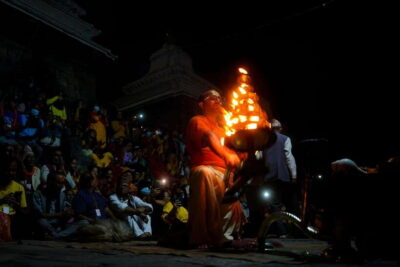
Pashupatinath Temple, Hindu Crematorium and Aarati in-depth Tour
Read our review →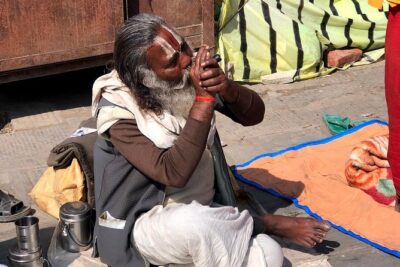
Pashupatinath Evening Aarati: Few Divinely Hours in Kathmandu
Read our review →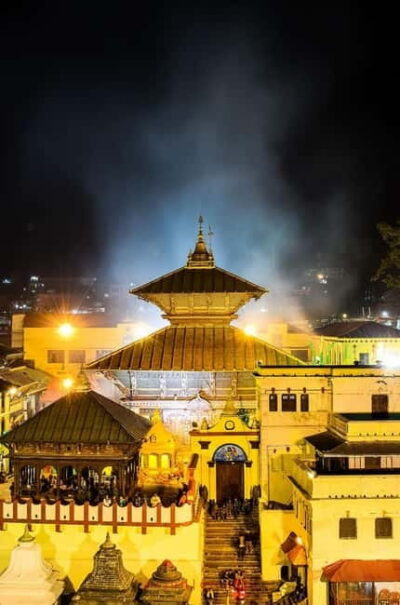
Sacred Pashupatinath: Aarati,Cremation Rites & Boudha Stupa
Read our review →
PashupatiNath and BoudhaNath – Private/Small Group
Read our review →Browse the lists this tour appears in