REVIEW · TOURS
Life and spirituality tour of Kathmandu
Kathmandu reveals itself in layers. This private day tour links four major heritage sites with the living Hindu and Buddhist customs that shape daily life. I like the hotel pickup in a private, air-conditioned vehicle, and I like the chance to explore side streets and courtyards with guides such as Indra, Ripu, Rabi, and Rudi. The main drawback is that entrance fees and lunch cost extra, so the advertised $55 price is not the complete day’s bill.
You should allow six to eight hours, with about two hours each at Kathmandu Durbar Square and Patan Durbar Square, followed by shorter visits to Pashupatinath and Boudhanath. It is a strong choice if you want context, questions answered, and a private pace rather than a quick checklist of monuments. It is less suited to anyone who wants a cheap, all-inclusive outing with no added costs.
In This Review
- Key points about Kathmandu’s spiritual day tour
- Why this tour works for a first full day in Kathmandu
- Kathmandu Durbar Square and the city’s old courtyards
- Patan, the city of fine art
- Pashupatinath Temple and Hindu life beside the river
- Boudhanath Stupa and Kathmandu’s Tibetan Buddhist quarter
- What the guide adds to the experience
- Transport, timing, and physical comfort
- Is $55 a fair price?
- Who should book this Kathmandu experience?
- Booking advice and cancellation terms
- FAQ
- How much does the Life and Spirituality Tour of Kathmandu cost?
- How long does the tour last?
- Does the tour include hotel pickup?
- Is the tour private?
- Which places does the tour visit?
- Are entrance fees included?
- Is lunch included?
- Is the tour wheelchair and stroller accessible?
- What is the cancellation policy?
- Should you book it?
Key points about Kathmandu’s spiritual day tour
- Four major heritage sites in one day: Visit Kathmandu Durbar Square, Patan Durbar Square, Pashupatinath Temple, and Boudhanath Stupa.
- Private hotel pickup: Your guide collects you in Kathmandu and drives you between sites in an air-conditioned vehicle.
- Hindu and Buddhist traditions together: Learn about temple worship, Buddhist pilgrimage, Hindu ascetics, cremation customs, and everyday religious practice.
- More than monument viewing: The route includes old courtyards, back streets, local markets, monasteries, and less-touristed corners around the heritage sites.
- Strong guide-led experience: Guides including Indra, Ripu, Rabi, and Rudi are praised for clear explanations, patience, and personal attention.
- Good value, with caveats: The $55 fee includes transport, bottled water, and a guide, but not admission, lunch, taxes, or tips.
Why this tour works for a first full day in Kathmandu
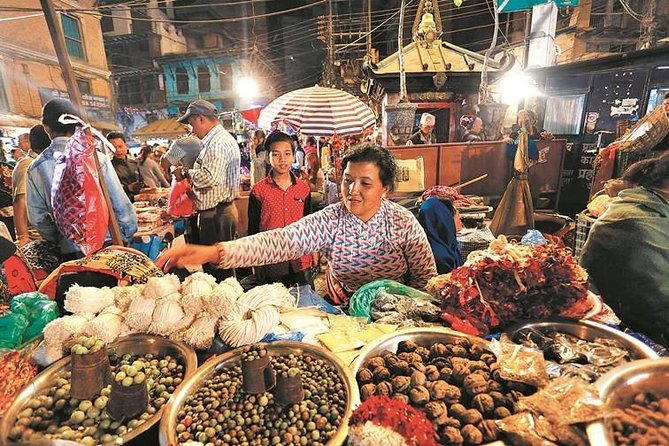
Kathmandu can be confusing at first. Temples, shrines, courtyards, prayer flags, shops, cremation ghats, and sacred images appear around nearly every corner. Without context, you may see plenty but understand little.
This tour gives you a clear way into the city. Instead of treating Hinduism and Buddhism as museum subjects, it presents them as active parts of local life. You hear how people pray, visit temples, honor the dead, follow rituals, and move through sacred spaces.
The private format is important. Only your group participates, so you can ask direct questions and spend more time on subjects that interest you. Guides are described as friendly, patient, and able to explain difficult religious ideas in plain language. Ripu, in particular, is praised for making complex spiritual concepts easy to follow, while Rabi is noted for his calm manner and broad understanding of the city.
The schedule is full but sensible. You receive roughly four hours at the two Durbar Squares, then about two hours combined at Pashupatinath and Boudhanath, with driving time between them. That makes this a serious sightseeing day, not a quick orientation walk.
A short list of alternatives around Kathmandu
- Everest Base Camp Trek – 14 Days
★ 5.0 · 1,499 reviews - Private Kathmandu Sightseeing Tour | UNESCO World Heritage sites
★ 5.0 · 756 reviews - Everest Base Camp Helicopter Tour landing at Everest View Hotel
★ 5.0 · 668 reviews
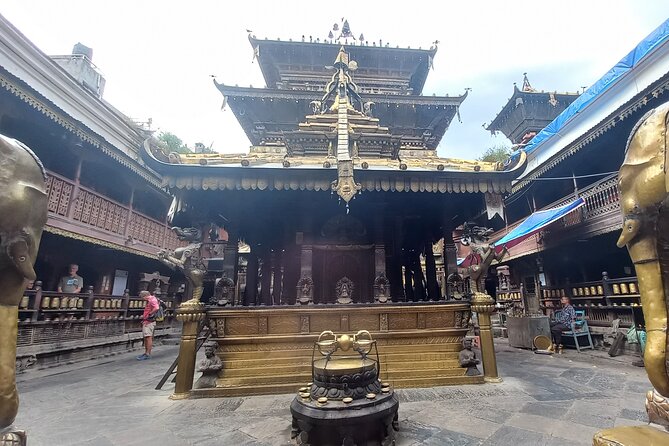
Kathmandu Durbar Square and the city’s old courtyards
The tour begins at Kathmandu Durbar Square, where the focus is not just on large monuments. You walk through older parts of the city and enter courtyards that preserve medieval religious and cultural practices.
The mention of Vastu architecture gives the visit a useful angle. Your guide can explain how buildings and spaces were arranged according to traditional ideas about balance, direction, and sacred purpose. That kind of explanation helps you read the city rather than simply photograph it.
The courtyards are especially valuable because they show how sacred life fits into ordinary neighborhoods. You may find shrines, carved details, and daily activity close together, with no sharp line between a religious site and the surrounding city. The experience is not limited to a grand square. It also includes the quieter passages and less obvious corners nearby.
Plan on about two hours here. That is enough time for a careful walk, though you should be ready for uneven surfaces and a great deal to take in. The tour is listed as wheelchair and stroller accessible, but the broader old-city setting can still require patience. If mobility is a serious concern, discuss the route with the operator before you go.
There is no admission charge listed for this stop, but do not assume that every site on the day is free. The two later religious attractions have separate entrance fees.
Patan, the city of fine art
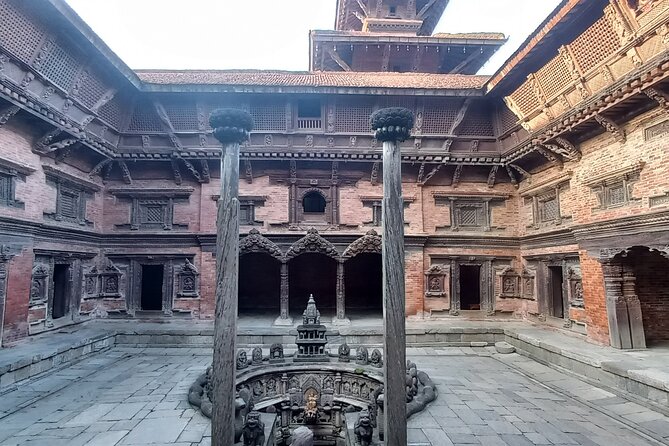
After Kathmandu Durbar Square, you drive to Patan, also called Lalitpur. This city has long been associated with fine art and skilled craft. Its work traveled to India, Tibet, and China during the medieval period, and many people in Patan still practice artisan trades.
That background gives Patan Durbar Square a different feel from Kathmandu Durbar Square. Here, your guide can connect the architecture to the people who made it: metalworkers, woodcarvers, builders, and religious artists. You get a stronger sense that the square is not simply a collection of old buildings. It reflects a living craft tradition.
Two hours is a generous amount of time for Patan. You can look closely at carved windows, temple details, courtyards, and decorative work rather than rushing from one photo stop to another. This is also one of the best places on the route to ask how Hindu and Buddhist symbols appear together in the Kathmandu Valley.
The tour’s value rises here because the guide adds the human side of the architecture. A monument can be impressive for five minutes. An explanation of who built it, why it was shaped that way, and how local craft continues makes the visit easier to remember.
Patan also adds driving time to an already full day. If you have only a short stay in Kathmandu, that is a fair trade. You are giving up time for casual wandering in exchange for a focused visit to one of the valley’s major artistic centers.
Pashupatinath Temple and Hindu life beside the river
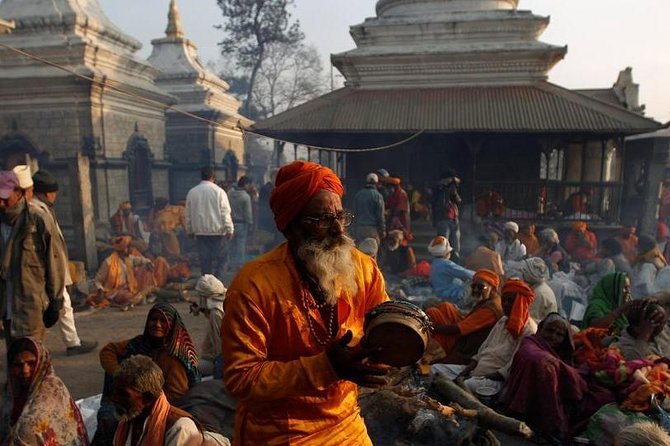
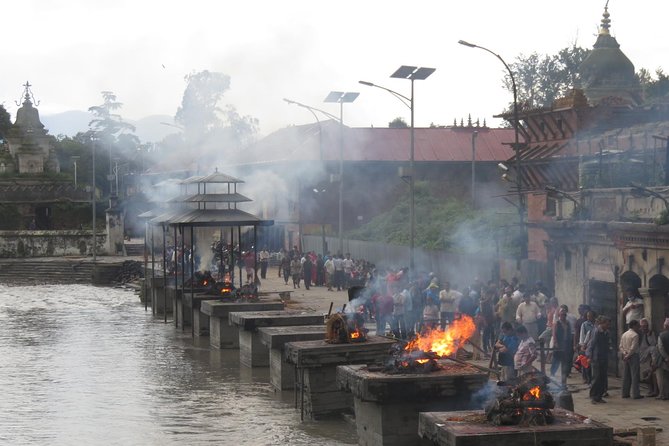
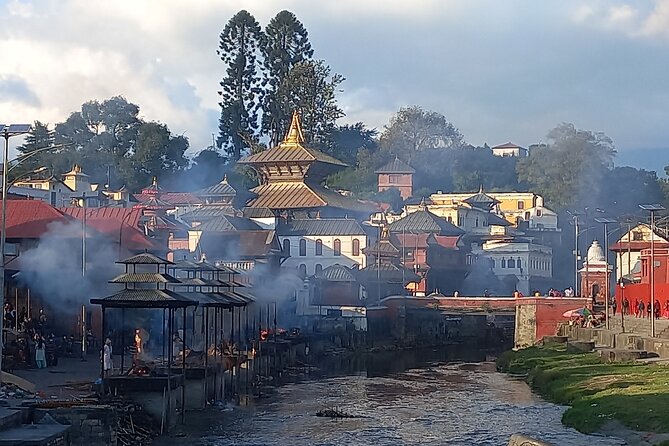
Pashupatinath is the most intense stop on the route. This temple complex is dedicated to Shiva and offers a direct look at Hindu religious practice. The tour includes time to observe devotees, Hindu ascetics called sadhus, astrologers, and open cremation ceremonies.
This is not a polished attraction designed only for sightseeing. It is a functioning sacred place, and the tone matters. Your guide helps explain what you are seeing and how Shiva worship fits into Hindu life. That guidance is valuable because cremation rituals and devotional customs can be difficult to understand from a distance.
You should approach this stop with respect and emotional readiness. The chance to observe an open cremation is a serious cultural experience, not a spectacle. Follow your guide’s instructions about where to stand and how to behave. Avoid treating private grief as a photo opportunity.
The visit lasts about one hour, shorter than the Durbar Square stops but dense with meaning. Admission is not included, so budget separately for the fee. The tour also does not include lunch, taxes, or tips.
Pashupatinath is likely to be the place that stays with you longest. It connects spirituality to the full cycle of life and death in a very direct way. If you prefer only light sightseeing, this stop may feel heavy. If you want to understand how religion functions in Nepal beyond temple decoration, it is essential.
A completely different way to spend the day:
- Half day cooking class in Thamel kathmandu
★ 5.0 · 607 reviews - Everest Base Camp Trekking
★ 5.0 · 485 reviews - Nagarkot Sunrise View and Day Hiking from Kathmandu
★ 5.0 · 471 reviews - Kathmandu: Full Day 7 UNESCO Tour with Lunch – Private/Group
★ 5.0 · 415 reviews
Boudhanath Stupa and Kathmandu’s Tibetan Buddhist quarter
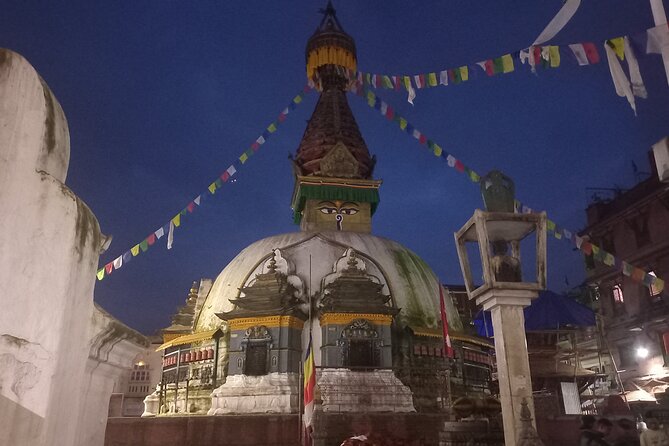
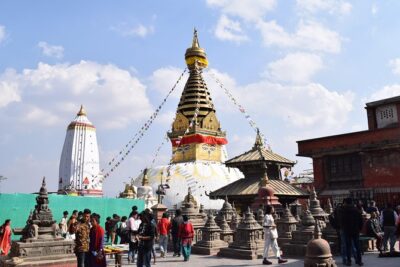
The final stop is Boudhanath, often described as the Little Tibet of Kathmandu. The area is known for its large stupa and roughly 60 Tibetan Buddhist monasteries. Pilgrims from Himalayan villages continue to come here, making the site a place of active devotion rather than a silent monument.
Your guide can explain Buddhist customs and the meaning of the stupa as you walk around it. This is a good counterpoint to Pashupatinath. Earlier, you looked at Hindu worship and funeral practice. Here, you encounter Tibetan Buddhist pilgrimage and monastic life.
The listed visit lasts about one hour. That is enough for an introduction, though you may wish you had more time if you become interested in the monasteries or want to linger around the stupa. Because this is the final major stop, ask your guide your remaining questions before the tour ends.
Boudhanath also helps place Kathmandu within a wider Himalayan world. The connection to pilgrims from mountain communities gives the site a broader reach than the city itself. You are not simply visiting an attractive religious structure. You are seeing one point in a network of Buddhist practice that extends across the region.
Admission is extra here as well. Keep that in mind when comparing the $55 tour price with the final cost.
What the guide adds to the experience
The guide is the heart of this tour. The route covers famous places, but you can visit famous places on your own and leave with a stack of photographs. The guide’s role is to explain the ideas behind the sights and connect them to local life.
Several guides receive especially strong praise for their communication. Indra is described as extremely well informed and willing to answer questions across many subjects. Ripu is noted for explaining Hindu and Buddhist traditions in a way that is easy to understand. Rabi is described as calm, friendly, and well informed about many parts of the city. Rudi is praised as a professional guide with a strong grasp of Buddhism and Hinduism.
You should use the private format to ask questions. This is not the time to nod politely and move on. Ask about the symbols you see, the differences between Hindu and Buddhist practice, the role of monasteries, or the meaning of rituals at Pashupatinath.
The flexible setup also helps if your schedule changes. One guest had to shorten the planned schedule because of a personal scheduling mistake, and the guide adjusted without making the situation difficult. That is a useful sign for anyone with a tight itinerary, although you should still reserve enough time for the full route.
Transport, timing, and physical comfort
Hotel pickup is offered in Kathmandu, which removes one of the day’s biggest hassles. Your guide collects you in a private car, and the vehicle is air-conditioned. Bottled water is included.
The stated operating window is 9:15 AM to 5:15 PM, Monday through Sunday. The tour itself lasts approximately six to eight hours. Since traffic and time at each site can vary, avoid scheduling an important appointment immediately afterward.
The tour is private, so you do not have to match the pace of a large group. That is helpful in hot weather, during long explanations, or when you want to pause at a particularly interesting courtyard.
The experience is listed as wheelchair and stroller accessible, and most people can participate. Still, Kathmandu’s historic areas may include crowded passages, older paving, and uneven walking conditions. The best practical step is to tell the operator about your mobility needs before the day begins so the guide can manage the route appropriately.
Is $55 a fair price?
At $55 per person, the tour offers good value if you want private transport and a full day of guided sightseeing. The fee covers an air-conditioned vehicle, bottled water, and an expert guide. For a private experience visiting four major sites, that is a reasonable starting price.
The key phrase is starting price. Entrance fees are not included. Lunch, taxes, and tips are also separate. If you are comparing this with a self-guided day, add up transport between four locations, the cost of hiring a car, and the value of having someone explain the religious customs.
Group discounts may be available, which can improve the price for a larger party. Because only your group participates, the cost makes the most sense when shared by two or more people who want personal attention.
I would not choose this tour because it is the cheapest way to see Kathmandu. I would choose it because it combines transportation, structure, and interpretation in one day. The value is strongest for a first visit, a short stay, or anyone who wants to understand the city rather than simply pass through it.
Who should book this Kathmandu experience?
You should consider this tour if you want a clear introduction to both Hindu and Buddhist traditions. It suits couples, families, and small private groups that prefer asking questions without a large audience.
It is also a good match for people who enjoy walking through old neighborhoods, local markets, courtyards, and religious sites. The route goes beyond the most obvious tourist viewpoints and tries to show how heritage remains connected to daily life.
You may want a different plan if you dislike religious sites, find cremation ceremonies upsetting, or want a relaxed day with long breaks. The schedule covers a lot of ground, and Pashupatinath can be emotionally demanding.
The tour works especially well early in a Nepal visit. After one day with a guide, you will have more context for the shrines, monasteries, temples, and rituals you encounter elsewhere in the country.
Booking advice and cancellation terms
The experience is often booked about 10 days ahead, so reserving in advance is sensible if your Kathmandu dates are fixed. Confirmation is provided at booking, and mobile tickets are available.
Free cancellation applies if you cancel at least 24 hours before the start time. Cancellations or changes made less than 24 hours before the local start time are not accepted for a refund.
FAQ
How much does the Life and Spirituality Tour of Kathmandu cost?
The listed price is $55 per person. Group discounts are offered, but the exact discount is not specified.
How long does the tour last?
Plan on approximately six to eight hours for the full experience.
Does the tour include hotel pickup?
Yes. You can be collected from your hotel in Kathmandu in a private vehicle.
Is the tour private?
Yes. Only your group participates in the activity.
Which places does the tour visit?
The route includes Kathmandu Durbar Square, Patan Durbar Square, Pashupatinath Temple, and Boudhanath Stupa.
Are entrance fees included?
No. Entrance fees are extra, and the tour price does not include all fees and taxes.
Is lunch included?
No. Lunch is not included in the price.
Is the tour wheelchair and stroller accessible?
Yes. The experience is listed as wheelchair and stroller accessible, and most people can participate.
What is the cancellation policy?
You can cancel at least 24 hours before the experience start time for a full refund. Cancellations or changes made less than 24 hours before the start time are not accepted.
Should you book it?
Book this tour if you want Kathmandu explained through its living religious traditions, not just its monuments. The combination of private transport, four major sites, and guides who can discuss Hindu and Buddhist practice in clear terms gives you a useful first look at the city.
Before booking, set aside money for entrance fees, lunch, taxes, and a tip. Also allow the full six to eight hours and prepare yourself for the serious subject matter at Pashupatinath.
For a first day in Kathmandu, this is a strong choice. It gives you structure without forcing you into a large group, and it leaves you with a better understanding of why the city’s spiritual life is part of its streets, homes, courtyards, and daily routines.
New in the Kathmandu listings
- Traditional Momo Making Class★ 5.0 · 10 reviews
- Kathmandu: Ancient City Kirtipur & Pharping Monastery Tour★ 5.0 · 2 reviews
- Kathmandu to Pokhara Premium sofa bus ticket★ 4.0 · 17 reviews
- Women Empowerment Project(Nepali cooking class & jewelry workshop★ 5.0 · 15 reviews
- 7-Day Langtang Valley Trek from Kathmandu★ 5.0 · 1 review
- Kathmandu 2 Nights 3 Days Chitwan Jungle Safari Tour★ 5.0 · 9 reviews
- Yoga Experience Day Trip with Private Transfer From Kathmandu★ 4.0 · 2 reviews
- Wildlife Adventure in Chitwan Nepal★ 4.0 · 4 reviews
Tours, compared.
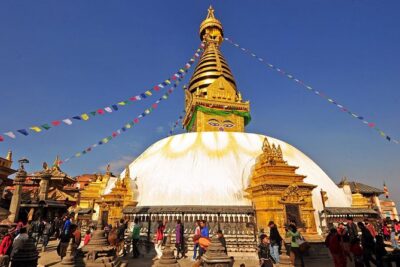
Private Kathmandu Sightseeing Tour | UNESCO World Heritage sites
Read our review →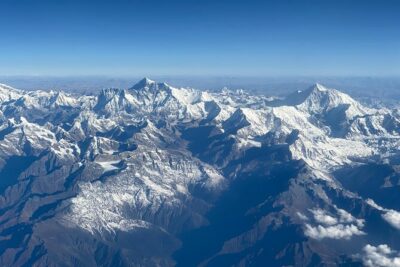
Everest Base Camp Helicopter Tour landing at Everest View Hotel
Read our review →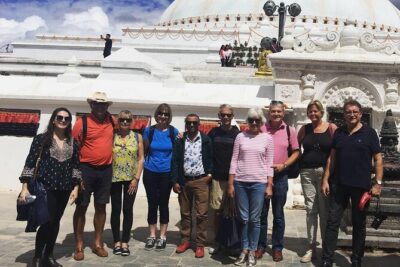
Full Day 7 UNESCO Tour with Lunch – Private/Group
Read our review →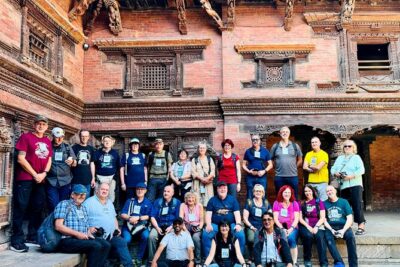
Full Day Top 4 UNESCO Tour with Lunch – Private/Group
Read our review →
Full-Day 7 UNESCO Tour with Lunch – Private/Group
Read our review →