
REVIEW · ANNAPURNA BASE CAMP TREKS
Pokhara: 5-Day Trek to Annapurna Base Camp and Hot Springs
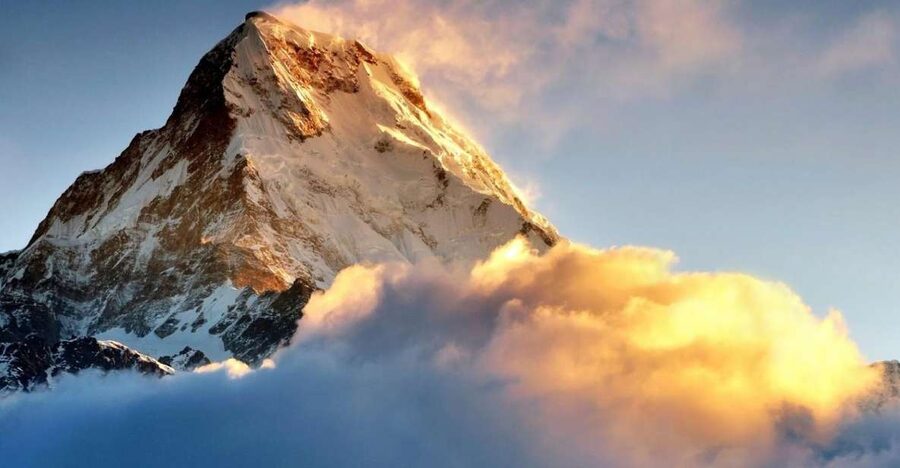
The trail saves its best surprise for the end. This five-day trek from Pokhara to Annapurna Base Camp packs river crossings, villages, forests, glacial views, and a hot-spring stop into a tight Himalayan route. I like the direct access from Lakeside Pokhara and the fact that permits, guide services, transport, and tourist-standard lodge accommodation are arranged for you. I also like the finish at Jhinu Dada, where hot springs give tired legs a welcome break.
The main caution is the schedule. The supplied details contain a clear mismatch: the headline says five days, one description refers to seven days, and the detailed day-by-day plan runs from Pokhara to Sinuwa, Annapurna Base Camp, Sinuwa, Jhinu, and back to Pokhara in five days. Confirm the exact route before paying, especially if you expect a porter, included meals, or a longer version.
For the five-day plan, you should expect long walking days, basic mountain lodges, changing weather, and a serious altitude gain to 4,120 meters. This is not a casual village walk. It is a compact way to reach one of Nepal’s most famous mountain destinations, but you need reasonable fitness, proper shoes, and a flexible attitude.
In This Review
- Key points to know before booking
- What the $206 price really covers
- Day one: Pokhara, Samrung, and Sinuwa
- Day two: Sinuwa to Deurali through forest
- Day three: Deurali to Annapurna Base Camp
- Day four: the hard descent to Sinuwa
- Day five: Jhinu hot springs and return to Pokhara
- The guide can shape the whole experience
- What to pack for five demanding days
- Who should choose this Annapurna trek?
- Should you book it?
- FAQ
- How long is the trek?
- Where does the trek begin?
- Where does the trek finish?
- How high is Annapurna Base Camp?
- Is transport included?
- Are meals included?
- Is a porter included?
- Is accommodation included?
- Is a guide included?
- Is travel insurance included?
Key points to know before booking
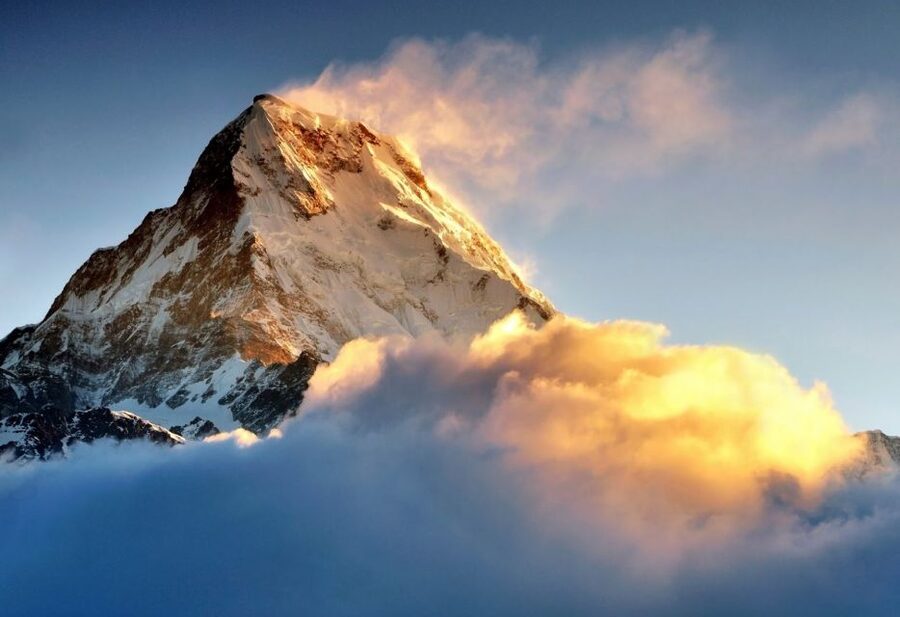
- Annapurna Base Camp reaches 4,120 meters: The highest point comes on day three, so the pace and your response to altitude matter.
- The route begins by shared Jeep: You ride from Lakeside Pokhara toward Jhinu, cutting out part of the old road and saving walking time.
- Jhinu Dada brings the hot springs: The soak comes near the end, after a hard descent and before the final return to Pokhara.
- Guides and permits are included: A government-registered English-speaking guide handles conservation permits and the TIMS permit.
- Porters and meals depend on the package: These are included only with the all-inclusive option, so check the exact booking choice.
- The five-day plan is physically demanding: Day four involves a seven to eight-hour descent from base camp to Sinuwa.
What the $206 price really covers
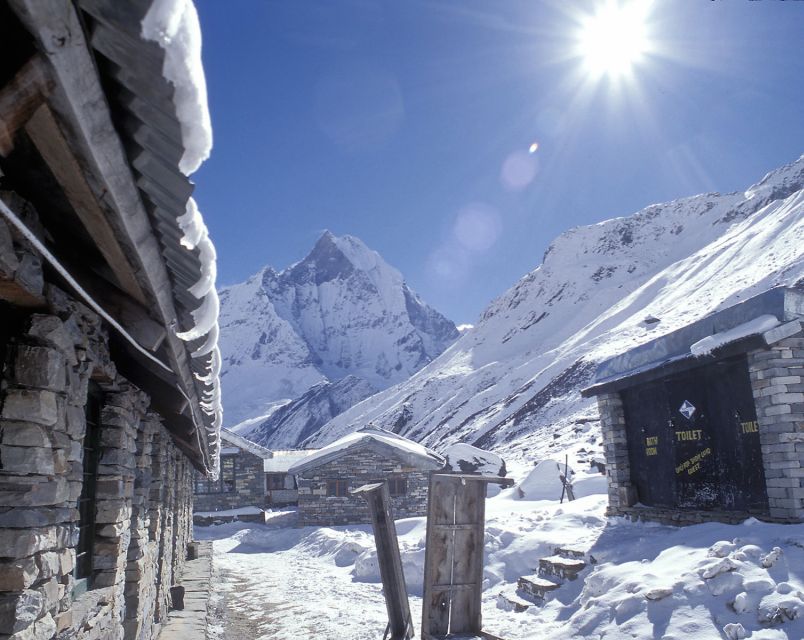
At $206 per person, this trek can offer good value if you want the basic arrangements handled without paying for a large luxury expedition. Hotel pickup and drop-off in Lakeside Pokhara, or from the airport, are included by car. Shared Jeep transport takes you from Pokhara to the road’s end near Jhinu and back again.
The package also includes tourist-standard lodge accommodation, permits, government taxes, service charges, and a professional trekking guide. Guide salary, food, and accommodation are covered. That removes several chores you would otherwise need to manage in Pokhara.
The details become less simple with the budget and all-inclusive choices. Meals are included only with the all-inclusive option. A porter is also included only with that option, while a porter costs extra on the budget plan. Drinks are not included, including hot drinks, cold drinks, and alcohol.
I would compare the final price of both options before booking. If you carry your own pack, the budget choice may suit you. If you want to walk with a light daypack, the all-inclusive option may be worth the added cost. You should also budget for bottled or boiled water, showers, laundry, phone calls, battery charging, bar bills, and personal purchases.
The package is not a full safety net. Travel and rescue insurance are excluded, and the activity specifically recommends buying them. In the Himalayas, that is sensible rather than fussy advice.
More Annapurna Base Camp treks:
- Kathmandu/Pokhara: 5-Day Annapurna Base Camp (ABC) Trek
★ 4.9 · 72 reviews - Private 7 – Day Annapurna Base Camp Trekking
★ 5.0 · 50 reviews - Annapurna Base Camp Trek (8 days)
★ 5.0 · 45 reviews
Day one: Pokhara, Samrung, and Sinuwa
Your guide collects you from your hotel lobby or apartment entrance in Pokhara. You are asked to wait five to ten minutes before the pickup time, which is useful in a city where traffic and meeting points can take a little patience.
The first transport section uses a shared Jeep from Pokhara to Samrung and then toward the trail area near Jhinu. The ride takes about three hours. Shared transport keeps the price down, but it also means the start may feel less private and less controlled than a dedicated vehicle.
From there, you walk for about four hours to Sinuwa, reaching roughly 2,200 meters. The route follows the Modi Khola River and passes small mountain villages. You cross the river and continue toward the settlement of Jhinu Danda before reaching the night’s tea-lodge accommodation according to the longer description, while the detailed five-day schedule lists Sinuwa as the overnight stop.
That conflict matters. The name of the overnight village affects your walking time, lodge arrangements, and the shape of the next morning. Ask the operator to confirm whether your first night is at Jhinu Danda or Sinuwa, and whether Samrung is the actual driving endpoint.
The first day gives you a useful taste of the route. You see farms, river corridors, village paths, and the early lower hills before the trail becomes more demanding. Do not treat the Jeep ride as a full rest day. Four hours of walking after a bumpy drive can still leave you tired.
Day two: Sinuwa to Deurali through forest
Day two is the longest steady climb toward the upper valley. The published plan places you at Deurali, at 3,230 meters, after six to seven hours of walking.
You pass through dense forest and continue along the Modi Khola corridor. The route is known for waterfalls, streams, and changing mountain views. Lower sections feel enclosed by trees, while higher points open toward the surrounding peaks.
The village of Chhomrong is an important waypoint in the route and one of its larger settlements. The broader description places a climb to Chhomrong early in the trek, followed by forest walking and a lodge stay. The detailed schedule instead starts day two from Upper Sinuwa. Again, the names and timing do not line up perfectly, so confirm the actual overnight stops.
This is where a good guide earns the fee. A German booking specifically praised guide Tanka for adjusting the pace to the walkers’ ability, watching their health, and answering questions about animals, nature, and local culture. That is exactly the kind of support you want on a day when altitude begins to matter.
Do not race this section. You gain height quickly, and the forest can make the effort feel easier than it is. Drink regularly, eat even if your appetite drops, and tell your guide if you develop a headache, unusual tiredness, or nausea.
Day three: Deurali to Annapurna Base Camp
The third day is the central prize of the trek. From Deurali, you walk for five to six hours to Annapurna Base Camp, reaching about 4,120 meters.
The route crosses streams and continues toward Machhapuchhare Base Camp. Machhapuchhare, also called Fishtail, is one of Nepal’s most recognizable peaks. The base camp is not the final destination here, but it marks the transition into the upper sanctuary.
From there, the trail enters the area described as Ablation Valley, a hollow corridor between glacier and mountain. You follow the guide through this exposed high section, then cross the hills toward Annapurna Base Camp.
This is the day for warm layers, sun protection, and a slow pace. At high altitude, ordinary tasks take more effort. Your daypack should contain water, sunscreen, sunglasses, a sun hat, spare clothing, and any personal essentials you need close at hand.
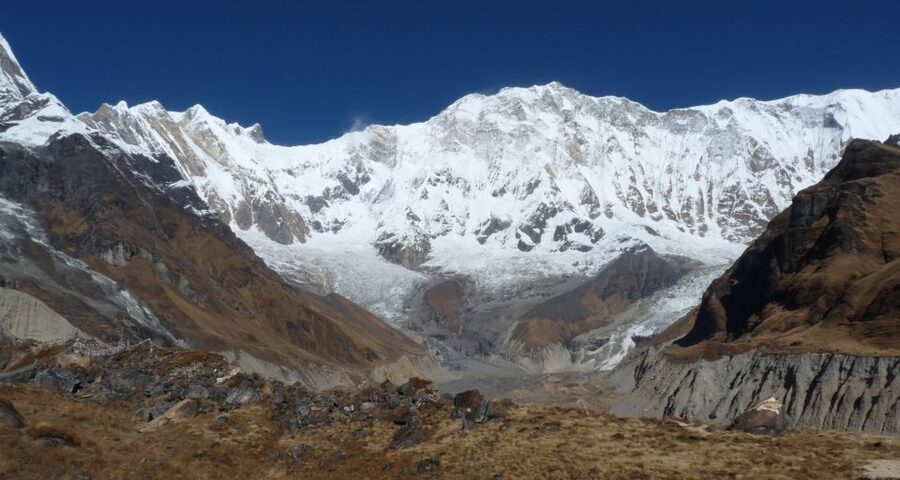
The reward is not just reaching a sign or viewpoint. You are inside a mountain bowl surrounded by major Himalayan peaks and glacial terrain. The exact visibility depends on weather, but the route is designed around broad views of mountains, rivers, waterfalls, and high snowfields.
You spend the night at base camp in a tourist-standard lodge. Accommodation in the mountains is practical rather than polished. Bring toiletries and a change of clothes, but keep expectations modest. The value lies in staying close to the high route, not in hotel-style comfort.
More spa and hot spring stops in Pokhara:
- From Pokhara: 5-Day Annapurna Basecamp Trek with Hot Springs
★ 4.9 · 26 reviews - Pokhara: 7-Day Annapurna Base Camp Trek & Natural Hot Spring
★ 5.0 · 11 reviews - Pokhara: 7-Day Annapurna Base Camp Via PoonHill & Hot Spring
★ 5.0 · 6 reviews - Pkr/Kathmandu: 5-Day Annapurna Base Camp & Hot spring Trek
★ 5.0 · 6 reviews
Day four: the hard descent to Sinuwa
The fourth day reverses much of the climb. The schedule gives seven to eight hours from Annapurna Base Camp to Sinuwa, at about 2,350 meters.
This can be harder than the ascent. Your knees and thighs take repeated impact, and the trail may feel long after the excitement of base camp has passed. The longer route description notes that Bamboo is about 1,600 meters lower than Annapurna Base Camp and warns that the descent can be hard on your knees.
Use trekking poles if you have them, shorten your stride, and take care on steps and uneven sections. This is also a good reason to avoid overpacking. A heavy bag feels much heavier on a long downhill day.
You pass through the only practical exit from the Annapurna Sanctuary and descend toward Bamboo and Sinuwa. The changing vegetation gives you a sense of how quickly altitude shifts in this region. High open ground gives way to forest, streams, and lower valley paths.
The schedule places the night at Sinuwa, while the longer description refers to a night in Bamboo. This is another point to settle in writing before departure. The difference is not minor when you are already facing a seven to eight-hour walking day.
Day five: Jhinu hot springs and return to Pokhara
The final day combines a short morning walk with the most relaxing stop on the route. From Lower Sinuwa, you continue toward Jhinu Dada, passing farmland around the river before returning by Jeep to Lakeside Pokhara.
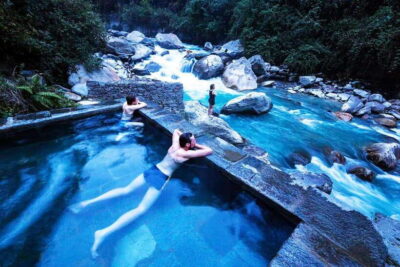
The hot springs are the payoff. After several days of climbing and descending, soaking in Jhinu’s baths gives you time to rest before the vehicle ride. Pack swimwear or a change of clothing where you can reach it, rather than burying it at the bottom of your bag.
The walking section is listed as about four hours, followed by roughly three hours in a Jeep. Roads in the hills can make the return feel longer than the clock suggests. Keep water and snacks accessible, and do not plan an important flight immediately after the stated drop-off unless you have plenty of spare time.
The hot springs also make the finish feel more connected to local village life than a simple roadside pickup. You are not just ticking off a base camp. You are ending with a useful, ordinary pleasure: warm water after a cold, strenuous trek.
The guide can shape the whole experience
The guide is one of the most important parts of this trip. The service is described as an English-language tour with a government-registered trekking guide. Guide salary, accommodation, and meals are included.
Past bookings praised guides for punctuality, humor, safety awareness, and personal attention. Tanka was singled out for adapting each day to the group’s ability and checking on health. Another booking described the guide as making sure each person felt seen rather than simply shepherding a group along.
That is valuable on this route. A guide can help with pace, permits, lodge arrangements, trail decisions, and communication. You should still speak up. A guide cannot manage altitude symptoms or blisters you keep hidden.
If you choose the all-inclusive option, a porter is included. One named porter, Chhabi, was praised for his physical effort and calm manner. Porters carry a major load on steep paths, but you should pack responsibly and respect any stated weight limits.
What to pack for five demanding days
The provided packing advice is practical. Bring:
- Passport or ID card
- Comfortable walking shoes and proper hiking shoes
- Sunglasses and a sun hat
- Sunscreen and insect repellent
- A daypack
- Spare clothing
- Toiletries
I would keep important items in waterproof bags inside the daypack. The route includes rivers, streams, waterfalls, changing weather, and lodge stays, so dry clothing matters.
You also need money for expenses not covered by the package. Plan for drinks, water, showers, laundry, phone calls, battery charging, bar bills, and any extra porter service. A daypack should carry the things you need during the day, even if a porter handles larger luggage.
Pets, weapons, and sharp objects are not allowed. The trip is not suitable for pregnant women or people with heart problems. Anyone with a medical condition should discuss the altitude and walking load with a medical professional before booking.
Who should choose this Annapurna trek?
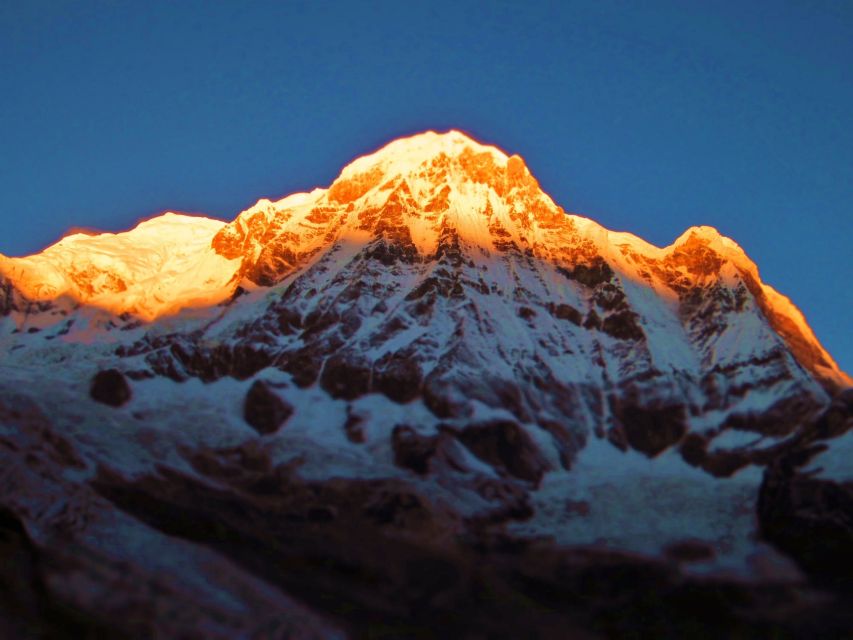
I would recommend it to you if you want a short, organized route to Annapurna Base Camp and you accept basic accommodation and long walking days. The five-day format is useful if your Nepal trip is tight but you still want a serious Himalayan trek.
It suits people who appreciate a guide, prefer not to arrange permits themselves, and want vehicle transfers from Pokhara. It is also a good match if the hot springs appeal as much as the mountain views.
I would be more cautious if you are new to sustained uphill walking, dislike steep descents, or want a relaxed holiday. The fourth day alone can be a test, and the high point reaches 4,120 meters.
The format may also disappoint you if you expect a fixed, polished itinerary with no ambiguity. The supplied information switches between five and seven days and gives different overnight locations in places. That does not automatically make the trip poor, but it means you should ask precise questions before booking.
Should you book it?
Book this trek if you want strong mountain scenery, a guide-led route, and a practical five-day escape from Pokhara for $206, provided the package details are confirmed. The included permits, transport, lodge accommodation, guide services, and taxes give the price solid value.
Before committing, confirm four things: your exact five-day route, the overnight villages, whether meals and a porter are included in your selected option, and the current Jeep schedule. Add travel and rescue insurance, bring money for extras, and prepare for the steep descent.
If you are fit, flexible, and ready for basic lodges, the Annapurna Base Camp and Jhinu hot-spring combination is a sensible choice. If you want slower days or more comfort, seek a longer itinerary instead.
FAQ
How long is the trek?
The activity is sold as a five-day trek. Some supporting details describe a seven-day route, so you should confirm the exact schedule with Welcome Nepal Treks before booking.
Where does the trek begin?
Pickup is provided from any hotel in Lakeside Pokhara or from the airport. The detailed plan begins with a Jeep ride toward Samrung and the trail area near Jhinu.
Where does the trek finish?
The five-day plan returns you to Lakeside Pokhara by Jeep after the final walk from Lower Sinuwa through Jhinu Dada.
How high is Annapurna Base Camp?
Annapurna Base Camp is listed at approximately 4,120 meters.
Is transport included?
Yes. Hotel or airport pickup and drop-off by car are included, along with shared Jeep transport from Pokhara to Jhinu and back.
Are meals included?
Meals are included if you select the all-inclusive option. They are not included with the budget option.
Is a porter included?
A porter is included with the all-inclusive option. The budget option requires an additional porter charge if you need one.
Is accommodation included?
Yes. The package includes private accommodation in tourist-standard lodges.
Is a guide included?
Yes. A professional government-registered trekking guide is included, with English listed as the tour language.
Is travel insurance included?
No. Travel insurance is not included, and travel and rescue insurance is recommended for this activity.
New in the Pokhara listings
- Pokhara: Pokhara Highlights Tour by Bus★ 3.6 · 10 reviews
- Discover Pokhara in Style: Private Vehicle Service with Driver★ 5.0 · 5 reviews
- Private 4 Day Poon Hill Trek from Pokhara★ 5.0 · 16 reviews
- Multi-Day Tour from Pokhara, Poon Hill and Mulde Trek★ 5.0 · 1 review
- Pokhara in 5 Hours: Lake, Museum, Cave, Falls & Pagoda Hill★ 4.5 · 16 reviews
- 4 Day Mardi Himal Base Camp Trek from Pokhara★ 5.0 · 18 reviews
- From Pokhara Full Day Entire Pokhara Tour with Guide★ 5.0 · 1 review
- Ultralight Flight: Into The Heart Of The Mountains (90 min)★ 5.0 · 1 review
Annapurna Base Camp Treks, compared.
Kathmandu to Annapurna Base Camp (ABC) 5-Day Trek
Read our review →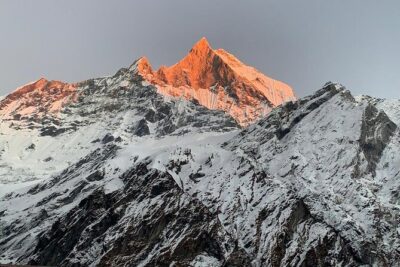
Kathmandu/Pokhara: 5-Day Annapurna Base Camp (ABC) Trek
Read our review →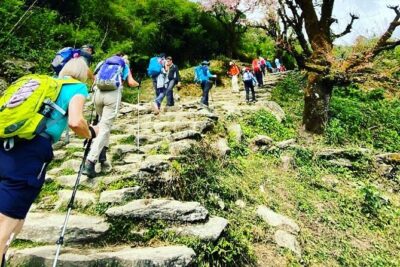
11-Day Hike Tour to Annapurna Base Camp Bliss in Kathmandu
Read our review →Browse the lists this tour appears in