REVIEW · HIKING & TREKKING
Discover Nepal: 12 Day Trekking and Wildlife Expedition
Sunrise, rhinos, and Himalayan villages await. This 12-day Nepal itinerary brings together Kathmandu’s UNESCO sites, Chitwan National Park, Pokhara, and the well-loved Poon Hill trek in one organized trip. I especially like the contrast between canoeing past crocodiles in the Terai and walking through rhododendron forests above Pokhara.
I also like that airport transfers, tourist-bus transport, trekking permits, guides, safari activities, and most accommodation are included. The main consideration is the pace: several long road journeys and three trekking days make this a full schedule, while the 2-star hotels and tourist guesthouses keep comfort practical rather than luxurious.
In This Review
- Five details that shape the experience
- What the $742 price really covers
- Days 1 and 2: First impressions in Kathmandu Valley
- Days 3 and 4: Chitwan’s rhinos, river, and Tharu culture
- Day 5: Chitwan to Pokhara by road
- Days 6 and 7: Nayapul, Ulleri, and Ghorepani
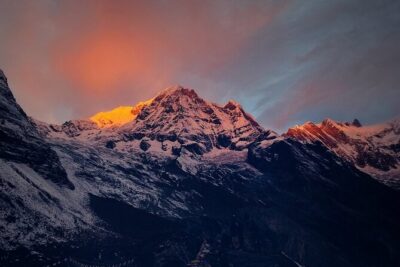
- Day 8: Poon Hill sunrise at 3,210 meters
- Day 9: Tadapani to Ghandruk and back to Pokhara
- Day 10: Pokhara’s calm side and key sights
- Days 11 and 12: The return to Kathmandu
- Who will appreciate this Nepal itinerary?
- Should you book this 12-day expedition?
- FAQ
- How long is the Discover Nepal trekking and wildlife expedition?
- What is the price per person?
- Is airport pickup included?
- Which languages are available with the guide?
- What wildlife activities are included in Chitwan?
- Can I expect to see a tiger in Chitwan?
- How high is Poon Hill?
- Are meals included throughout the trip?
- What should I bring for the trek?
Five details that shape the experience
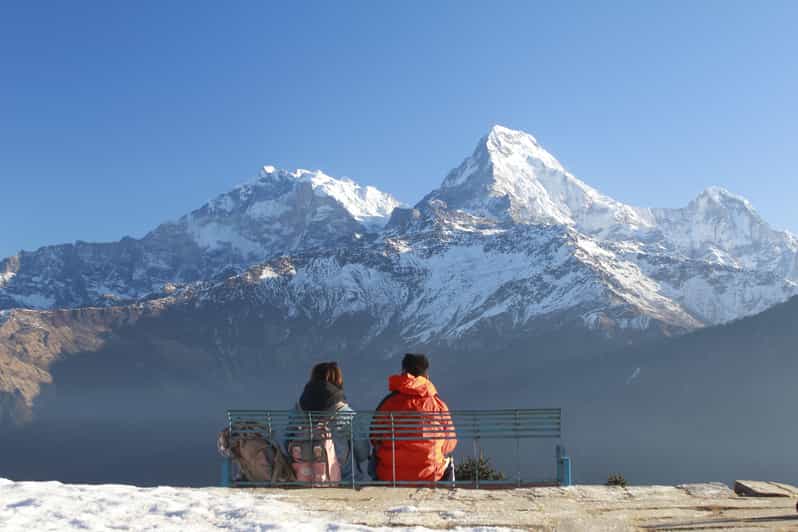
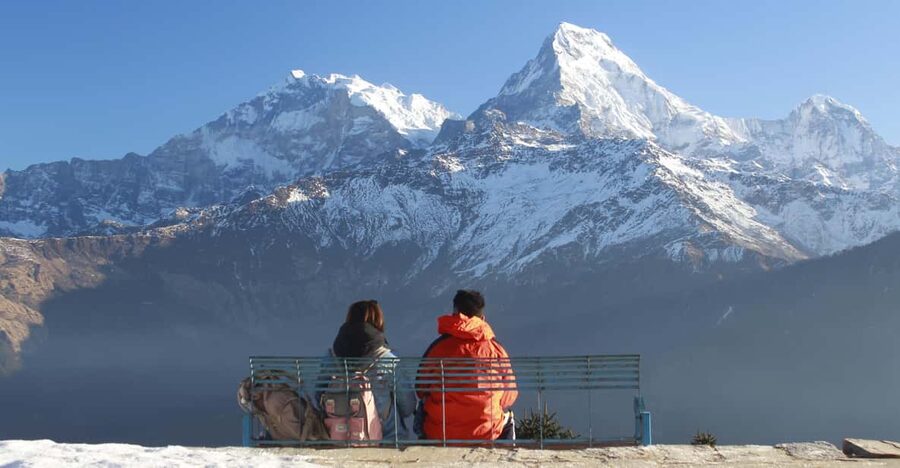
- Poon Hill at 3,210 meters: An early morning climb leads to views of the Annapurna and Dhaulagiri ranges at sunrise.
- Chitwan wildlife by jeep and canoe: A full day includes safari activities, a Rapti River canoe ride, forest walking, bird watching, and a Tharu cultural program.
- Four UNESCO-listed Kathmandu sights: Durbar Square, Pashupatinath, Swayambhunath, and Boudhanath give you a strong introduction to Nepalese culture and faith.
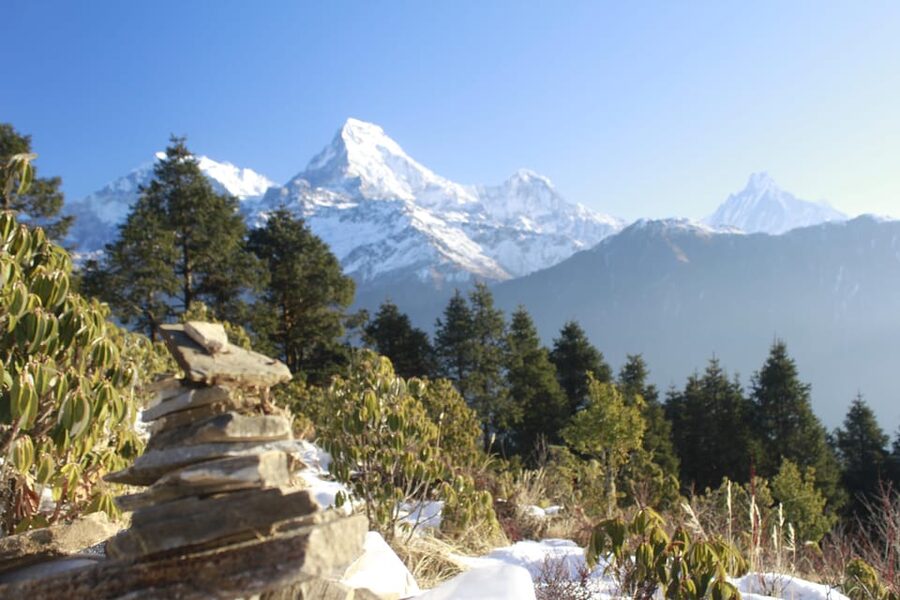
- Rhododendron forest walking: The route from Nayapul through Ulleri and Ghorepani is especially appealing from March to May, when the forests may be at their best.
- A private group with English or Hindi guiding: You receive airport pickup, local trekking support, and guided city tours rather than handling every transfer alone.
What the $742 price really covers
At $742 per person, this trip offers good value if you want Nepal’s main highlights without arranging each piece yourself. The price includes airport pickup and drop-off, three nights in Kathmandu, two nights in Pokhara, two nights in Chitwan, city tours, the trekking guide, trekking permits, Poon Hill entrance fees, safari activities, and several transfers.
That is a lot of moving parts. Kathmandu to Chitwan, Chitwan to Pokhara, and Pokhara back to Kathmandu are all covered by luxury sofa-seat tourist bus. You also receive a private car for the Pokhara to Nayapul transfer and a shared jeep from Ghandruk to Pokhara.
The value is strongest for someone who wants a guided overview of Nepal and does not want to negotiate road transport, permits, guides, and safari arrangements separately. You still need to budget for food and drinks in Kathmandu and Pokhara, as well as entrance fees during the Kathmandu and Pokhara sightseeing days.
Accommodation is tourist standard. Kathmandu and Pokhara use 2-star hotels with breakfast, while Chitwan includes breakfast, lunch, and dinner. During the trek, you stay in tourist-standard guesthouses. Expect a clean and practical base, not resort-style comfort.
More walking in the hills of Kathmandu:
- Everest Base Camp Trek – 14 Days
★ 5.0 · 1,499 reviews - Everest Base Camp Trekking
★ 5.0 · 485 reviews - Nagarkot Sunrise View and Day Hiking from Kathmandu
★ 5.0 · 471 reviews
Days 1 and 2: First impressions in Kathmandu Valley
Your trip begins with pickup at Tribhuvan International Airport. A representative meets you with your name card and transfers you to your hotel. Pickup is also available from hotels in the Thamel area, which is useful if you arrive independently or stay there before the tour.
The first full day is devoted to Kathmandu Valley. You visit four major sites, each showing a different part of Nepal’s religious and political life.
Kathmandu Durbar Square brings historic palace architecture and traditional city culture into the center of the tour. It is a useful first stop because it gives you visual context for Nepal before you head into the mountains and the Terai.
At Pashupatinath, you visit one of Nepal’s most important Hindu temples. The site is sacred, active, and culturally significant. Follow your guide’s instructions about where you may enter and what you may photograph.
Swayambhunath, often called the Monkey Temple, offers another view of the valley and a Buddhist setting. The nickname is memorable, but the religious importance is the main reason to visit.
At Boudhanath, the large Buddhist shrine provides a calmer change of tone. Taken together, these four stops make the Kathmandu day worthwhile, though the schedule may feel busy if you have arrived after a long flight.
Kathmandu entrance fees are not included, so carry money for the sites. The guided private-car format makes the day easier than trying to link all four places by yourself.
Days 3 and 4: Chitwan’s rhinos, river, and Tharu culture
After breakfast on day three, you travel roughly 160 kilometers from Kathmandu to Chitwan. The drive takes about five to six hours. This is not a quick transfer, but it shifts you from the hill capital toward Nepal’s Terai region, where Chitwan National Park offers a very different setting.
Chitwan accommodation includes breakfast, lunch, and dinner for two nights. That makes this portion simpler than the Kathmandu and Pokhara stays, where meals are generally purchased separately.
Day four is the wildlife day. Activities include a jeep safari, canoeing on the Rapti River, a short forest walk, bird watching, and other park activities with an experienced guide. You might see one-horned rhinos, crocodiles, deer, and many bird species. Tigers are listed as a possibility, but no safari can promise a sighting, so treat them as a fortunate bonus rather than a guarantee.
The canoe ride offers a slower way to watch the river environment. It also gives you a chance to look for crocodiles and birds without the engine noise of a jeep. The jeep safari covers more ground, while the forest walk and bird watching reward patience.
The day also includes a cultural performance by local Tharu artists. This matters because Chitwan is not only a wildlife stop. The Tharu community has its own traditions and identity, and the program adds a human element to the park visit.
The safari portion received strong praise from Lara, who also enjoyed the Poon Hill trek. Her January trip had good weather, which helped both parts of the journey. Keep in mind that January can be cooler, while the recommended travel periods are March to May and September to December.
Day 5: Chitwan to Pokhara by road
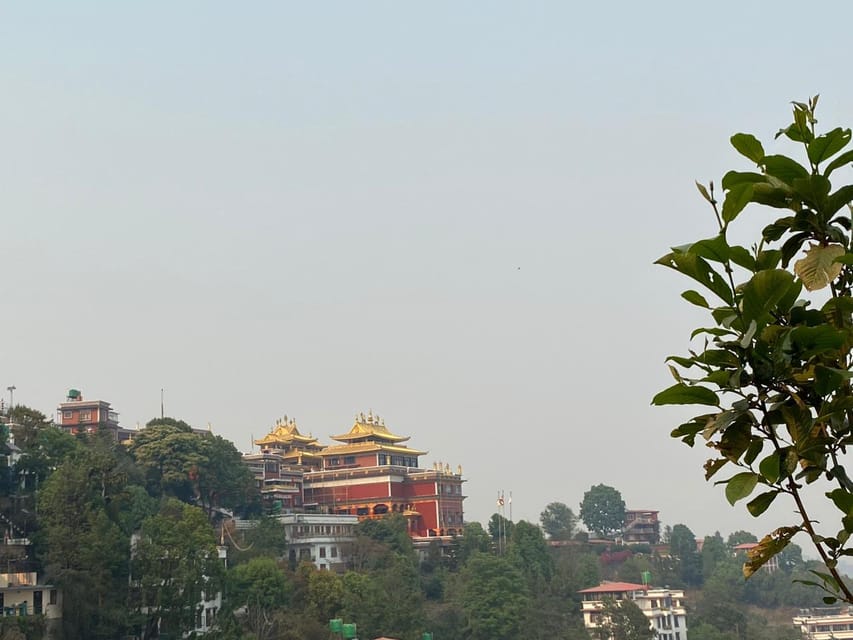
The journey from Chitwan to Pokhara covers about 145 kilometers. After arrival, you meet your trekking guide and discuss the route ahead.
This meeting is useful. You can confirm the next morning’s departure, ask about the day’s walking time, and check that your clothing and footwear are suitable. The trek is short by Himalayan standards, but it includes uphill sections and an early morning summit walk.
The bus transfer saves you from arranging your own connection, but road travel is a real part of this itinerary. The total program includes several hours on Nepal’s winding roads. If you prefer slow travel and changing scenery, the drives are part of the experience. If you dislike long road days, this is the main weakness of the schedule.
A short list of alternatives around Kathmandu
- Private Kathmandu Sightseeing Tour | UNESCO World Heritage sites
★ 5.0 · 756 reviews - Everest Base Camp Helicopter Tour landing at Everest View Hotel
★ 5.0 · 668 reviews - Half day cooking class in Thamel kathmandu
★ 5.0 · 607 reviews - Kathmandu: Full Day 7 UNESCO Tour with Lunch – Private/Group
★ 5.0 · 415 reviews
Days 6 and 7: Nayapul, Ulleri, and Ghorepani
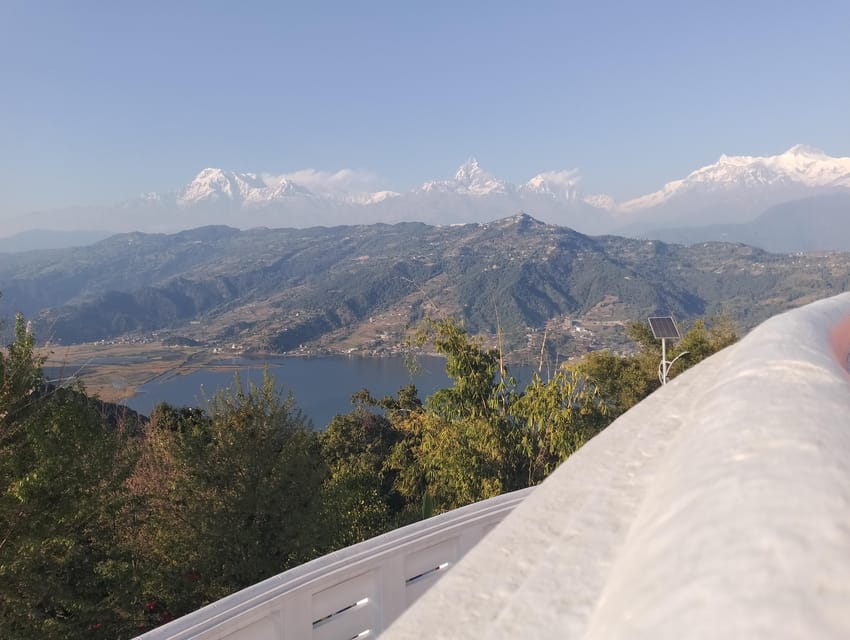
On day six, a private car takes you from Pokhara to Nayapul. From there, you walk to Ulleri at about 2,070 meters. The trek takes roughly five to six hours.
The route includes river views, birdsong, and rhododendron forest. From March to May, the flowers may add color to the walk, making spring a particularly appealing season for this section.
Ulleri is a proper first trekking stop rather than a quick photo stop. You spend the night in a tourist-standard guesthouse, then continue the next day toward Ghorepani at 2,675 meters.
The Ulleri to Ghorepani walk takes about four to five hours. You pass Banthali, a village associated with the Magar community, and gain views toward Annapurna South and Hiunchuli. This is where the cultural side of the trek becomes more visible. You are walking through inhabited mountain communities, not just passing through empty mountain scenery.
The elevation is worth respecting. You are not climbing an extreme peak, but the route still requires steady walking. Wear proper hiking shoes, carry a reusable water bottle, and keep warm clothing close at hand.
Day 8: Poon Hill sunrise at 3,210 meters
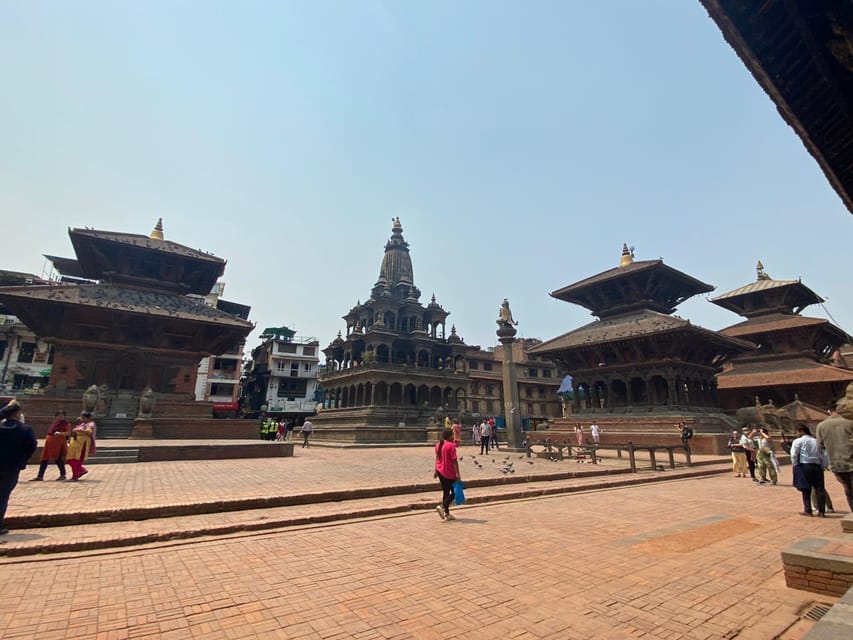
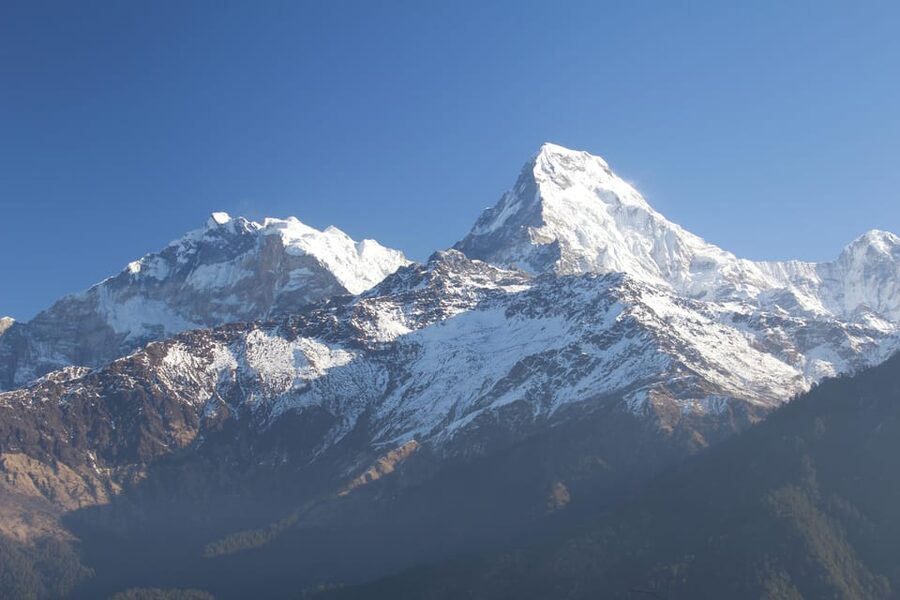
Poon Hill is the centerpiece of the trek. You rise before dawn and walk uphill from Ghorepani to the viewpoint at 3,210 meters. The reward is a sunrise panorama over the Annapurna and Dhaulagiri ranges.
The early start is not optional if sunrise is your goal. Bring a warm layer, a headlamp if you have one, water, and a camera that is ready to use. The cold before sunrise can be sharper than expected, even when the day later becomes comfortable.
After time at the viewpoint, you return to Ghorepani for a break and continue toward Tadapani at 2,675 meters. The entire day takes about five to six hours of trekking.
Lara’s four-day Poon Hill experience included the summit walk from Ghorepani on the third day, with clear weather and an especially memorable sunrise. She gave particular praise to guide Birendra Thapa, who was friendly, helpful, and able to explain the surrounding mountains. If Birendra is assigned to your group, his mountain knowledge should add real value to the walk.
The Poon Hill route is popular for a reason, but it is not a private wilderness experience. The early viewpoint can be active with other walkers. The appeal is the accessible mountain panorama, not solitude.
Day 9: Tadapani to Ghandruk and back to Pokhara
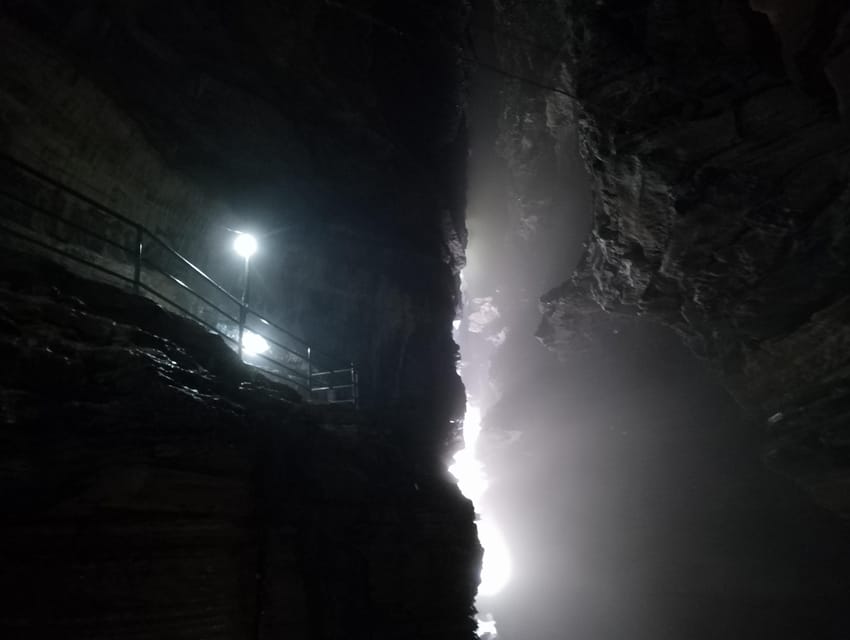
The walk from Tadapani to Ghandruk takes about six to seven hours and reaches Ghandruk at around 1,940 meters. It is one of the longer trekking days, so start it with a realistic view of your energy.
Ghandruk is a picturesque Gurung village with close views of Annapurna South, Hiunchuli, and Machhapuchhre. It gives you another community perspective after the Magar village of Banthali.
After exploring Ghandruk, you travel to Pokhara by shared jeep. This combination of walking and road transport keeps the itinerary within 12 days, but it also makes day nine tiring. You should not plan a late-night activity in Pokhara.
The trek ends here, with the final night in a hotel rather than a mountain guesthouse. That change usually feels welcome after several walking days, especially if you want a hot shower and a little extra space.
Day 10: Pokhara’s calm side and key sights
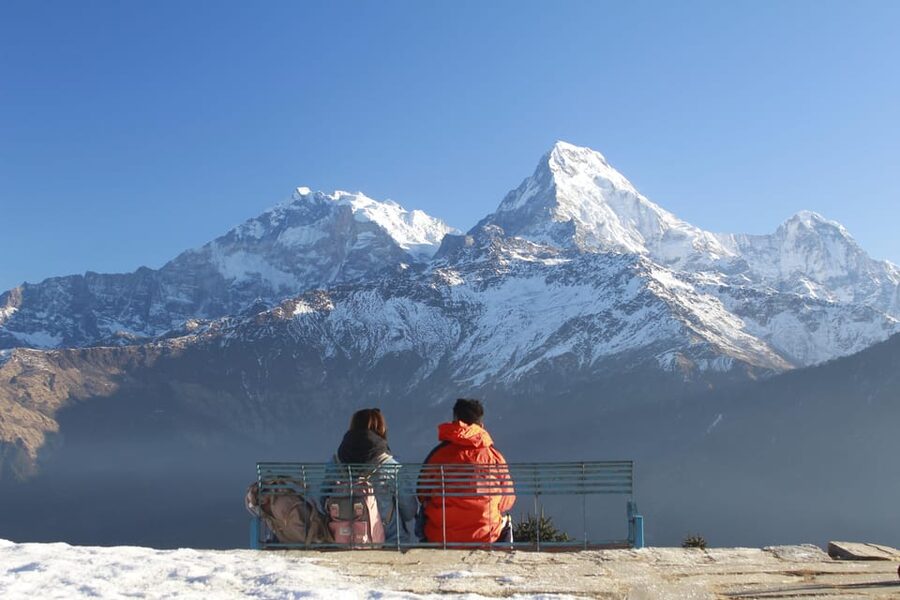
Pokhara sightseeing includes the Peace Pagoda, Davis Falls, Gupteshwor Cave, and the Mountain Museum. The private-car format lets you visit several sites without working out local transport.
The Peace Pagoda provides a quiet viewpoint and a chance to see Pokhara from above. Davis Falls and Gupteshwor Cave pair natural features with a short sightseeing stop. The Mountain Museum gives useful background on Himalayan climbing and the people connected with those expeditions.
Pokhara is also your recovery day after the trek. I would use the schedule to walk gently, sort your luggage, and enjoy the lakeside area at your own pace if time allows. The listed sightseeing stops fill much of the day, so ask your guide how much free time remains.
Pokhara entrance fees are not included. Keep this separate from the Kathmandu entrance fees when planning your spending money.
Days 11 and 12: The return to Kathmandu
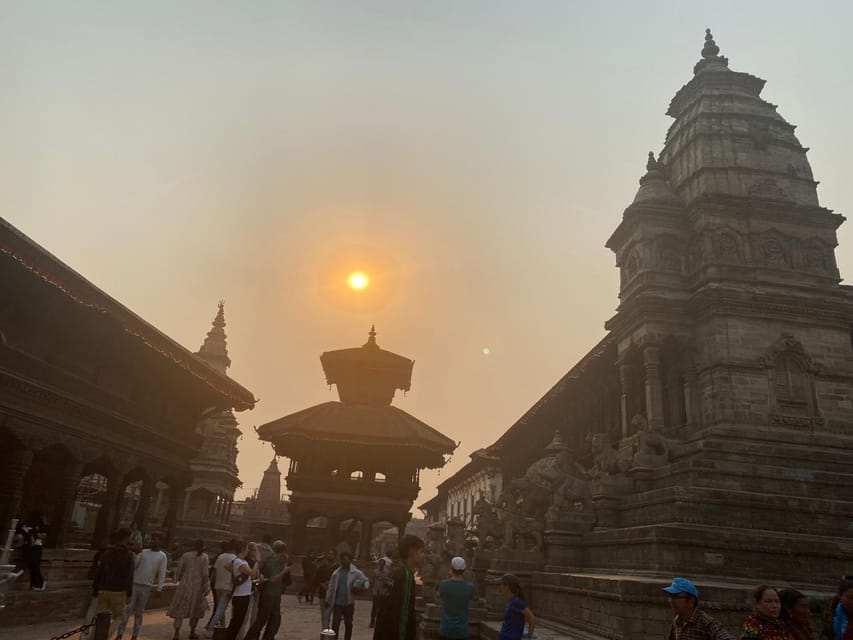
Day eleven takes you from Pokhara to Kathmandu, a journey of about 200 kilometers and seven to eight hours. The road offers river views and changing scenery, but this is another long sitting day.
The return transfer is included by luxury sofa-seat tourist bus. That is more comfortable than a basic local bus, though comfort cannot remove the time required by Nepal’s roads.
On day twelve, your schedule depends on your flight. You may have time for final shopping in Kathmandu before the representative transfers you to Tribhuvan International Airport.
Because the tour ends with an airport transfer, confirm your flight time and keep essential documents and valuables accessible. The required items include your passport or an accepted copy, sunscreen, sunglasses, a sun hat, toiletries, warm clothes, hiking pants, trekking gear, hiking shoes, and a reusable water bottle.
Who will appreciate this Nepal itinerary?
I would recommend this trip to you if you want a first look at Nepal that goes beyond Kathmandu. You get religious sites, wildlife, rural communities, mountain walking, and two major tourist centers in less than two weeks.
It suits people who prefer a private group and want English or Hindi support throughout the trip. The local trekking guide is especially helpful on the Poon Hill section, where route timing and the pre-dawn walk matter.
It is less suitable if you want luxury hotels, long free periods, or a slow trekking holiday. The itinerary has fixed movements and several long drives. It is also not suitable for pregnant women, people with back problems, or wheelchair users.
The best travel periods listed are March to May and September to December. Spring may be the best choice for rhododendron forest color, while clear mountain views can depend on weather at any time.
Free cancellation is available up to 24 hours before the experience for a full refund, and you can reserve now and pay later. Those options help if your Nepal plans are still taking shape.
Should you book this 12-day expedition?
Book it if you want an efficient, guided introduction to Nepal and value having transport, permits, safari activities, and trekking support arranged in one price. The strongest moments are likely to be the Chitwan canoe and jeep activities, the early climb to Poon Hill, and the village walking around Ghorepani, Tadapani, and Ghandruk.
Before booking, make sure you are comfortable with 12 days of movement, basic accommodation, long bus journeys, and several active walking days. At $742, the package offers solid practical value, especially for a first visit. Just bring realistic expectations: this is an active overview of Nepal, not a luxury escape.
FAQ
How long is the Discover Nepal trekking and wildlife expedition?
The experience lasts 12 days, including arrival and departure transfers, sightseeing in Kathmandu and Pokhara, two nights of Chitwan activities, and the Poon Hill trek.
What is the price per person?
The listed price is $742 per person.
Is airport pickup included?
Yes. Airport pickup and drop-off are included. Pickup is available at Tribhuvan International Airport or from a hotel in the Thamel area of Kathmandu.
Which languages are available with the guide?
Live guiding is available in English and Hindi. The Kathmandu and Pokhara city tours include English-speaking guides.
What wildlife activities are included in Chitwan?
The Chitwan portion includes a jeep safari, canoeing, a short forest walk, bird watching, a cultural program, and other park activities with a guide.
Can I expect to see a tiger in Chitwan?
Tigers are listed among the wildlife you may have a chance to see, but a sighting is not guaranteed. Rhinos, crocodiles, deer, and bird species are also possible sightings.
How high is Poon Hill?
Poon Hill reaches 3,210 meters. The itinerary includes an early morning walk there from Ghorepani for sunrise views of the Annapurna and Dhaulagiri ranges.
Are meals included throughout the trip?
Breakfast is included at the Kathmandu and Pokhara hotels. Chitwan accommodation includes breakfast, lunch, and dinner. Food and drinks in Kathmandu and Pokhara are not included and can be purchased separately.
What should I bring for the trek?
Bring warm clothing, sunglasses, a sun hat, sunscreen, toiletries, hiking shoes, hiking pants, trekking gear, a reusable water bottle, and your passport or an accepted copy.
New in the Kathmandu listings
- Traditional Momo Making Class★ 5.0 · 10 reviews
- Kathmandu: Ancient City Kirtipur & Pharping Monastery Tour★ 5.0 · 2 reviews
- Kathmandu to Pokhara Premium sofa bus ticket★ 4.0 · 17 reviews
- Women Empowerment Project(Nepali cooking class & jewelry workshop★ 5.0 · 15 reviews
- 7-Day Langtang Valley Trek from Kathmandu★ 5.0 · 1 review
- Kathmandu 2 Nights 3 Days Chitwan Jungle Safari Tour★ 5.0 · 9 reviews
- Yoga Experience Day Trip with Private Transfer From Kathmandu★ 4.0 · 2 reviews
- Wildlife Adventure in Chitwan Nepal★ 4.0 · 4 reviews
Hiking & Trekking, compared.
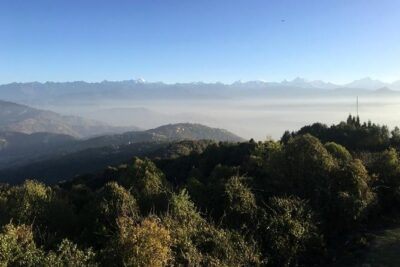
Nagarkot Sunrise View and Day Hiking from Kathmandu
Read our review →