
REVIEW · EVEREST BASE CAMP TREKS
Everest Base Camp Trekking – 13 Day
Everest begins with a small plane. This 13-day Everest Base Camp trek handles the major arrangements for you, including Kathmandu and Lukla flights, trailside lodging, meals, permits, and an experienced guide. I like the sensible acclimatization days in Namche Bazaar and Dingboche, and I like that private groups can adjust parts of the trip. The main caution is simple: this is a serious high-altitude trek, not a casual holiday, and weather can disrupt the flight schedule.
At $1,399 per person, the package offers solid value if you want one company coordinating the main moving parts. You still need to budget for Kathmandu meals, drinks, personal expenses, insurance, visa fees, and possible helicopter evacuation coverage. Also check the single supplement carefully, since a solo departure can add $150.
In This Review
- The Trek in Five Useful Points
- Starting in Kathmandu, Then Flying to Lukla
- Day 3: Following the Dudh Koshi to Namche Bazaar
- Day 4: Using Namche for Acclimatization
- Days 5 and 6: From Namche to Tengboche and Dingboche
- Day 7: A Second Acclimatization Day in Dingboche
- Day 8: Climbing Toward Lobuche
- Day 9: Reaching Everest Base Camp
- Day 10: Kala Patthar and the Return to Lower Altitude
- Days 11 and 12: Back Through Namche to Lukla
- Day 13: Returning to Kathmandu
- What the $1,399 Price Really Covers
- The Guides and the Human Side of the Trek
- What to Pack for 13 Days Above the Tree Line
- Who Should Book This Trek?
- Should You Book the Everest Base Camp Trek?
- FAQ
- Is the Kathmandu to Lukla flight included?
- Are meals included during the trek?
- Are accommodations included?
- Is this a private trek?
- What level of fitness do I need?
- Are acclimatization days included?
- What personal costs are excluded?
- Is a Nepal visa included?
- What happens if bad weather affects the flights?
The Trek in Five Useful Points
- Lukla flights are included: The Kathmandu to Lukla and Lukla to Kathmandu flights are part of the package, including airport departure tax.
- Two acclimatization days matter: Rest and short-hike days in Namche Bazaar and Dingboche help break up the climb toward Base Camp.
- The guide is central to the experience: Guides named in the feedback, including Milan, Dibash, Ratna, Achyut Mishra, Anil, Dipak, and Prokhas, were praised for pacing, planning, care, and problem-solving.
- Lodges and meals simplify the trek: You sleep in trailside lodges and receive 12 breakfasts, 11 lunches, and 12 dinners.
- The final goal comes with an early start: The trek reaches Everest Base Camp on Day 9, followed by an early Kala Patthar outing on Day 10.
- The price has conditions: The listed rate is for one person, but a $150 single surcharge can apply if you choose a solo departure instead of joining an existing group.
Starting in Kathmandu, Then Flying to Lukla
Day 1 is an arrival and settling-in day. A representative meets you at Tribhuwan International Airport, helps after customs, and takes you to your hotel. That is useful after an international flight, particularly if you are carrying trekking gear and need help finding your first foothold in Nepal.
Day 2 begins early. You organize your equipment and bags the day before, then fly from Kathmandu to Lukla with your guide. The flight is part of the appeal, but it is also one of the trip’s less predictable pieces. The itinerary notes that weather can affect the return flight, so I would avoid scheduling an important onward connection immediately after the trek.
Lukla is the gateway to the Everest region. From there, the walking begins, and the change is quick: roads give way to a trail, aircraft give way to foot travel, and your day starts being measured in walking hours rather than traffic.
The package supplies one complimentary Trekking Planner duffel bag, which must be returned after the trip. You carry a day pack of 25 to 40 liters, while your larger bag is handled as part of the trekking setup. Pack carefully and keep anything essential in your day pack, including warm layers, rain protection, water, medication, and batteries.
More Everest Base Camp treks:
- Everest Base Camp Trek – 14 Days
★ 5.0 · 1,499 reviews - Everest Base Camp Trekking
★ 5.0 · 485 reviews - Everest Base Camp Trek -14 Days
★ 5.0 · 321 reviews
Day 3: Following the Dudh Koshi to Namche Bazaar
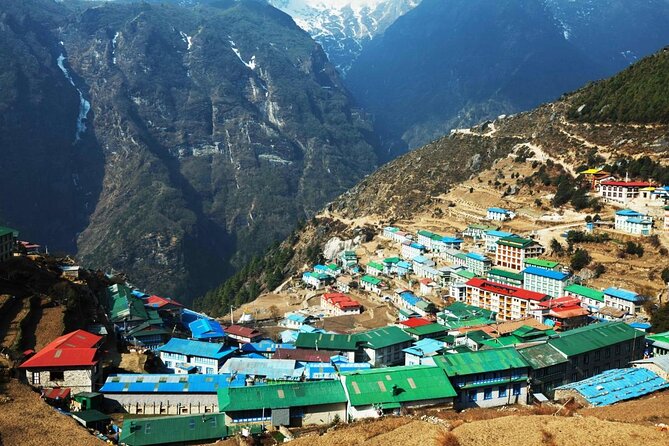
The route follows the Dudh Koshi River toward Namche Bazaar. The first day of walking includes suspension bridges, forest, and the first view of Kongde Ri Peak. It is a strong introduction to the Khumbu region because the trail gives you changing views instead of one long, uniform climb.
Namche Bazaar is an old trading center and one of the most memorable settlements on the route. Its shops and Saturday market give the town a social energy that is missing from the quieter lodge stops. You might find this a good place to buy a small forgotten item, though personal purchases are not included in the tour price.
The approach to Namche is not described as easy, and the itinerary notes a steep climb in the area. You should expect the altitude to begin shaping your pace. A moderate level of fitness is required, but fitness alone does not remove the need to walk slowly and follow the guide’s advice.
Day 4: Using Namche for Acclimatization
Day 4 is set aside for rest and acclimatization. That does not necessarily mean staying in bed. Short hikes to higher points, followed by a return to sleep at a lower elevation, are used to help your body adjust before the route rises again.
I like this pause in the schedule because it makes the 13-day plan more responsible than a rushed ascent. Namche also gives you time to look around, visit shops, and experience one of the region’s livelier communities before the villages become smaller and the trail more exposed.
Your guide’s daily briefing can be especially useful here. Milan was praised for explaining the next day’s route, estimating walking times based on ability, and planning around sunset. That sort of clear communication is worth a great deal when you are tired and the altitude makes every decision feel larger than it should.
Days 5 and 6: From Namche to Tengboche and Dingboche
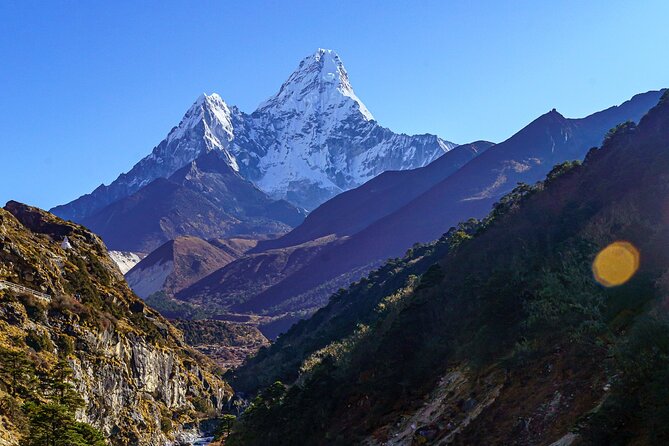
Day 5 begins with a short, steep climb out of Namche. After that, the trail passes through the settlements of Kenjoma and Sanasa, with forest sections and views toward the mountains. The route then continues toward Tengboche, known for its monastery and striking mountain setting.
Tengboche is one of the cultural highlights of the trek. The stop at the monastery adds more than scenery to the trip. It gives you a chance to see the spiritual side of the Khumbu and to understand that this route is not only a test of endurance.
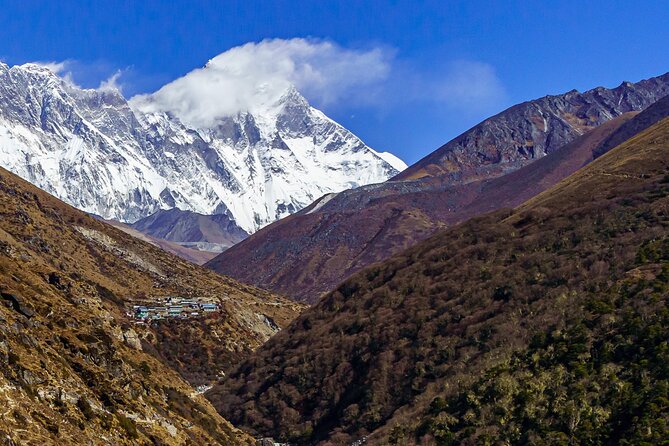
Day 6 continues toward Dingboche. The route descends through forest to Deboche before climbing onward, with views of the mountains and villages along the way. The itinerary wording describes this section in a slightly confusing order, so I would ask the operator for the exact overnight stop and estimated walking time before departure.
Dingboche is an important high-altitude settlement and a useful staging point for the next part of the trek. The air is thinner here, and the simple routine becomes clear: walk, eat, rest, hydrate, and prepare for the next morning.
More walking in the hills of Kathmandu:
- Nagarkot Sunrise View and Day Hiking from Kathmandu
★ 5.0 · 471 reviews - Annapurna Circuit Trek with Tilicho Lake
★ 5.0 · 368 reviews - Annapurna base camp trek 5 Days
★ 5.0 · 252 reviews - Everest Base Camp Trekking – 2025/2026
★ 5.0 · 199 reviews
Day 7: A Second Acclimatization Day in Dingboche
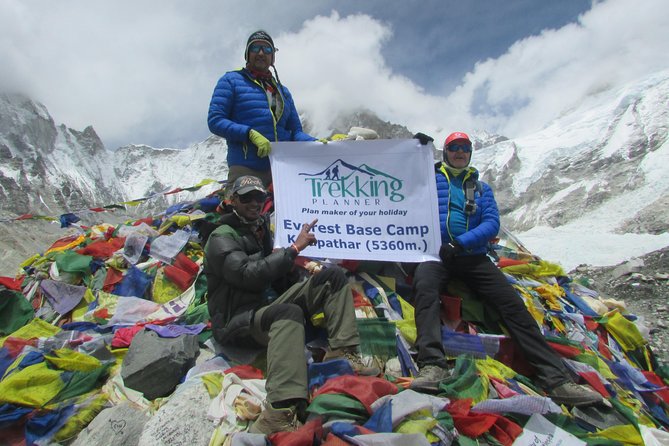
Day 7 is another rest and acclimatization day. The plan uses short hikes to higher elevations so your body can adjust before you move toward Lobuche and Base Camp.
This is not wasted time. You are building room into the schedule for altitude, and that matters more than squeezing in another village. The itinerary specifically warns about acute mountain sickness at higher elevations, so do not treat the schedule as a race.
Your guide should help judge the day’s pace and response to altitude. Achyut was praised for staying attentive, offering support, and finding practical solutions when conditions became difficult. Dibash also received strong praise for pacing each day and handling logistics. Those qualities matter most when a planned timetable needs to change.
Day 8: Climbing Toward Lobuche
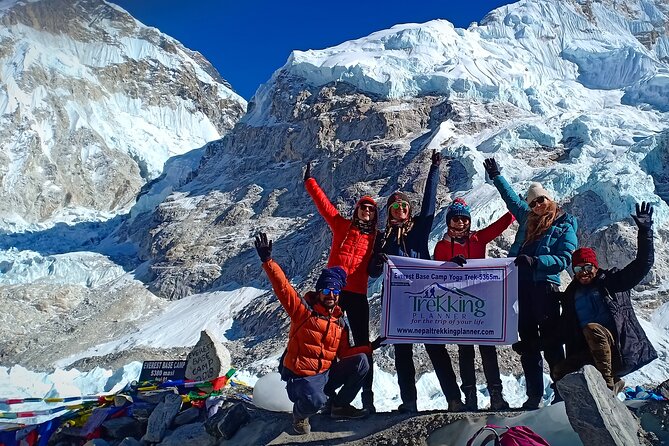
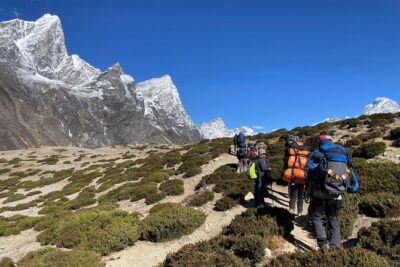
The trail from Dingboche rises gradually through grazing areas, past chortens and Mani walls, with high mountains ahead. These Buddhist features add meaning to what might otherwise feel like a long walk through increasingly spare surroundings.
Lobuche is the next major stop before Base Camp. By this point, you should expect the trek to feel physically demanding even if the trail itself is not steep every minute. Cold, altitude, and accumulated fatigue all count.
The package includes meals, but food choices and drinks beyond the stated inclusions are your responsibility. Alcoholic drinks are available to buy, but I would not plan on them during the high sections of this trek. Personal bills, phone calls, battery charging, and bar or beverage costs are also excluded.
Day 9: Reaching Everest Base Camp
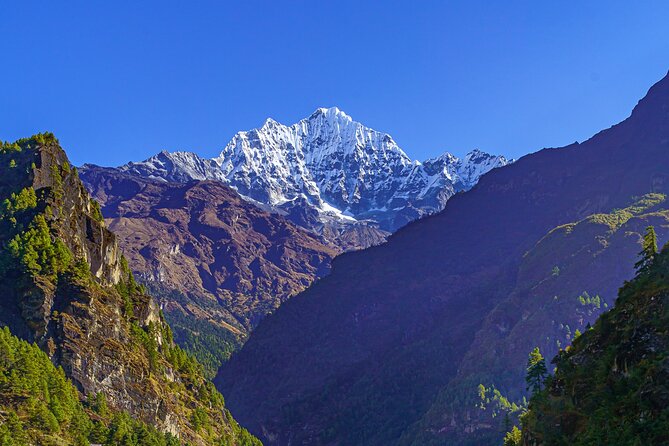
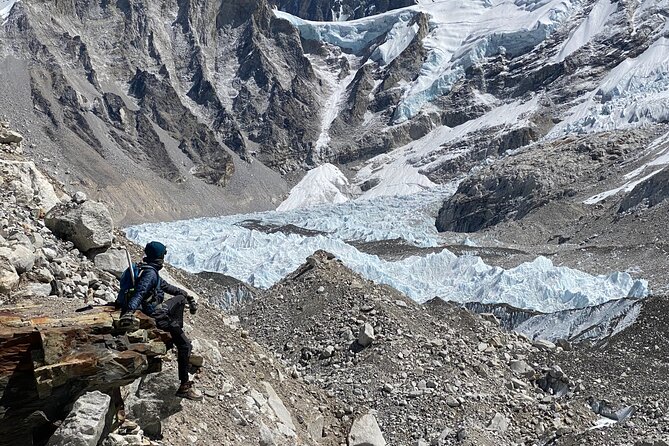
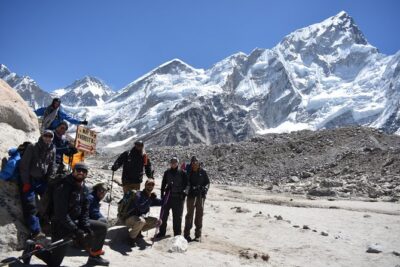
Day 9 is the emotional center of the trip. You leave Lobuche early and walk toward Everest Base Camp, with the itinerary warning you to take acute mountain sickness seriously at this altitude.
Base Camp is not simply a photo stop. It is the payoff for several days of steady effort, and the approach lets you feel the scale of the Khumbu more clearly than a quick viewpoint ever could. The route is demanding, so reaching the destination depends on patience and on listening to your guide.
The highest praise for the guiding team centers on care rather than showmanship. Dibash was described as professional and attentive, and Achyut as someone who kept people calm and looked for workable solutions. That is exactly what I would want at this stage: a guide who watches the group, gives clear instructions, and does not push pride over safety.
Day 10: Kala Patthar and the Return to Lower Altitude
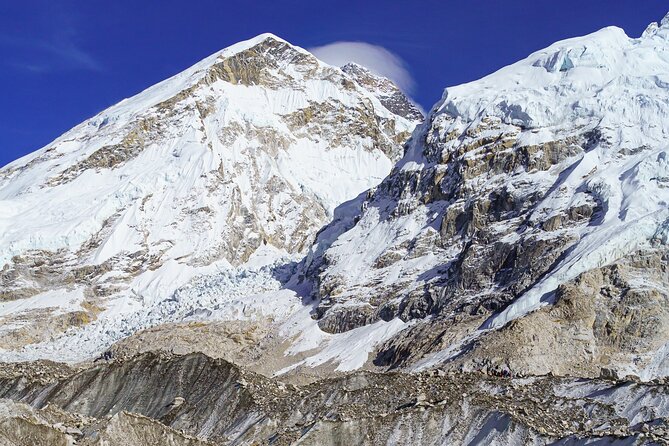
Day 10 begins before sunrise for the climb toward Kala Patthar. The early start is designed for the mountain views around daybreak, followed by a return to lower elevations.
This is a demanding morning after Base Camp, so you should keep your expectations realistic. You may be tired, cold, and moving slowly. Still, the chance to see the Everest region in early light is one of the strongest reasons to choose this route.
The package description refers to panoramic viewpoints, and Kala Patthar is the key viewpoint day in this itinerary. Afterward, the descent provides welcome relief. Going lower is not a failure to continue. It is a smart part of the plan after the highest section of the trek.
Days 11 and 12: Back Through Namche to Lukla
Day 11 takes you from Pheriche, spelled Periche in the itinerary, back toward Namche Bazaar. Much of the route is downhill, and the Dudh Koshi River returns as a familiar companion.
Downhill walking can sound easy, but tired knees and feet may disagree. Use trekking shoes with good support, and keep your pace controlled rather than rushing toward the next lodge.
Day 12 is the final walking day. You descend steeply out of Namche toward the river confluence and continue to Lukla. This is a satisfying end to the walking portion because you can look back on the route in a different way. The trail that felt intimidating on the way up now becomes a record of what you have managed.
The return to Lukla also brings back the practical concern of flight timing. Keep a little flexibility in your larger Nepal plans. Weather-related disruption is specifically noted, and mountain flights do not operate on the same dependable rhythm as city transport.
Day 13: Returning to Kathmandu
The final day takes you back to Kathmandu by air. The itinerary notes an early flight because weather can interfere with daytime departures.
Once in Kathmandu, meals are not included, and the package does not cover personal purchases or other city expenses. If you want a relaxed final day, leave room in your budget for food, drinks, and any extra hotel arrangements you may need.
What the $1,399 Price Really Covers
At $1,399 per person, the cost is attractive for a trek that includes the major regional transport, accommodation, meals, park entry, TIMS card, taxes, and a guide. You are paying for coordination in a place where a missed flight or misplaced bag can quickly become a large problem.
The value is strongest if you want a planned trek rather than arranging every lodge, permit, meal, and flight yourself. It is also useful for first-time visitors who prefer a guide handling local logistics.
Read the pricing note closely. The amount is specifically valid for one person, even if two people make a booking, and a $150 single surcharge may apply if you want to depart alone instead of joining an existing group. Discounts are available for groups, families, and honeymooners, so ask for the exact rate for your party and departure date.
Included meals cover 12 breakfasts, 11 lunches, and 12 dinners. Kathmandu meals, alcohol, drinks unless specified, phone calls, battery charging, personal bills, Nepal visa fees, personal insurance, and helicopter evacuation insurance are not included.
The Guides and the Human Side of the Trek
The strongest feature of this experience is the guide support. Milan was praised for daily briefings and realistic timing. Dibash was praised for responsible logistics and careful pacing. Ratna was valued for adding information about the route and the region.
Achyut Mishra received especially warm praise for attention, encouragement, and problem-solving. Anil, Dipak, and Prokhas were also singled out for helping make one journey special. These details suggest that the company’s best guides do more than lead from the front. They explain what comes next, monitor how you are doing, and help the group make sensible choices.
Porter support also matters. Ganesh was described as bringing luggage to the next stop before the walkers arrived. That makes the day easier, but you should still pack light and keep your valuables and essentials with you.
What to Pack for 13 Days Above the Tree Line
The suggested equipment list is detailed and practical. You need trekking shoes, sports shoes or sandals, a 25 to 40-liter day pack, warm hats, gloves, fleece or a puffy jacket, a waterproof Gore-Tex layer, rainwear, trekking trousers, non-cotton underwear, and several pairs of good socks.
Bring two one-liter water bottles, a flashlight, camera and batteries, toiletries, a small towel, and toilet paper. A large towel is discouraged because it is bulky and heavy.
The tour operates in all weather conditions, so dress for change rather than one forecast. Your passport name, number, expiry date, and country are required for all participants, and dietary requirements should be provided at booking.
Who Should Book This Trek?
I would recommend it to you if you want the classic Everest Base Camp route with a fixed 13-day framework, guide support, included meals, and flights arranged. It suits people who value organization but still want private-tour flexibility.
It is also a good fit for couples, families with suitable fitness, honeymooners, and small groups, particularly if a discount applies. The private format means only your group participates, though the single-person pricing note means you should confirm whether you will join an existing group or pay the solo supplement.
I would not choose it if you want a soft adventure, dislike early mornings, or are unwilling to prepare for altitude and changing weather. The schedule is carefully broken up with acclimatization days, but no itinerary can make high-altitude trekking effortless.
You can cancel for a full refund up to 24 hours before the local start time. Cancellations or changes made inside that window are not accepted, so check your plans before the cutoff.
Should You Book the Everest Base Camp Trek?
Book it if you want the main Everest Base Camp experience without spending weeks arranging permits, flights, lodges, meals, and porters. The $1,399 price is reasonable for the amount included, and the guide feedback points to strong attention to pacing, communication, and care.
Before paying, confirm three things in writing: the exact departure date, whether you will join an existing group, and whether the $150 single surcharge applies. Then buy suitable insurance, allow flexibility around the Lukla flights, and prepare properly for cold and altitude.
If you can accept the physical demands and the possibility of weather delays, this is a well-organized way to reach one of the world’s great trekking destinations.
FAQ
Is the Kathmandu to Lukla flight included?
Yes. The package includes the Kathmandu to Lukla and Lukla to Kathmandu flights, along with airport departure tax.
Are meals included during the trek?
Yes. The package includes 12 breakfasts, 11 lunches, and 12 dinners. Meals in Kathmandu are not included.
Are accommodations included?
Yes. Nightly accommodation in trailside lodges is included during the trekking portion.
Is this a private trek?
Yes. It is described as a private tour or activity, with only your group participating. However, a solo departure may involve a $150 single surcharge if you do not join an existing group.
What level of fitness do I need?
A moderate level of physical fitness is required. The route includes steep sections, long trekking days, and high altitude.
Are acclimatization days included?
Yes. Day 4 in Namche Bazaar and Day 7 in Dingboche are set aside for rest and acclimatization activities, including short hikes.
What personal costs are excluded?
Alcoholic drinks, Kathmandu meals, personal expenses, phone calls, battery charging, bar and beverage bills, Nepal visa fees, personal travel and health insurance, and helicopter evacuation insurance are excluded.
Is a Nepal visa included?
No. Your Nepal visa fee is your responsibility.
What happens if bad weather affects the flights?
The itinerary operates in all weather conditions, but weather-related disturbances may affect the flight schedule. The return flight to Kathmandu is planned early on Day 13, and you should allow flexibility in your onward plans.
New in the Kathmandu listings
- Traditional Momo Making Class★ 5.0 · 10 reviews
- Kathmandu: Ancient City Kirtipur & Pharping Monastery Tour★ 5.0 · 2 reviews
- Kathmandu to Pokhara Premium sofa bus ticket★ 4.0 · 17 reviews
- Women Empowerment Project(Nepali cooking class & jewelry workshop★ 5.0 · 15 reviews
- 7-Day Langtang Valley Trek from Kathmandu★ 5.0 · 1 review
- Kathmandu 2 Nights 3 Days Chitwan Jungle Safari Tour★ 5.0 · 9 reviews
- Yoga Experience Day Trip with Private Transfer From Kathmandu★ 4.0 · 2 reviews
- Wildlife Adventure in Chitwan Nepal★ 4.0 · 4 reviews
Everest Base Camp Treks, compared.
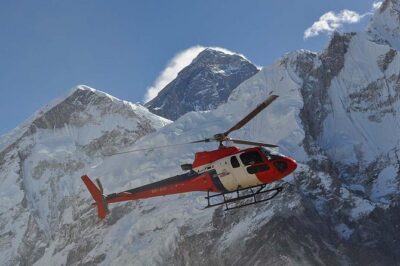
Everest Base Camp Trek with Helicopter Return from Gorakshep to Lukla
Read our review →Browse the lists this tour appears in