
REVIEW · EVEREST BASE CAMP TREKS
Everest Base Camp Trek 12 Days
The highest walk in the world starts with a small plane. This 12-day Everest Base Camp Trek combines a thrilling Lukla flight with a steady route through Namche Bazaar, Tengboche, Dingboche, Lobuche, Gorak Shep, and Kala Patthar. I like the strong mountain highlights, especially the view from Everest View Hotel and the chance to reach both Everest Base Camp and Kala Patthar. The main drawback is that meals during the trek are not included, adding about $300 to $350 to your budget.
I also like the clear structure of the route, with acclimatization days at Namche Bazaar and Dingboche. Guide Armit, who led Brendan’s trip, earned praise for setting a good pace and helping with whatever was needed. That kind of support matters at altitude, where a calm guide can be more valuable than a fancy lodge.
In This Review
- Key points before you book
- Why the 12-day Everest route works
- Day 1: Lukla flight and the walk to Phakding
- Day 2: Phakding to Namche Bazaar
- Day 3: Acclimatization at Namche Bazaar
- Day 4: Namche Bazaar to Tengboche
- Day 5: Tengboche to Dingboche
- Day 6: Dingboche and Nangkartshang Peak
- Day 7: Dingboche to Lobuche
- Day 8: Lobuche to Everest Base Camp and Gorak Shep
- Day 9: Kala Patthar and the descent to Pheriche
- Day 10: Pheriche to Namche Bazaar
- Day 11: Namche Bazaar to Lukla
- Day 12: Flight back to Kathmandu
- What the $1,111 price really covers
- Who should choose this trek
- Should you book the Everest Base Camp Trek?
- FAQ
- How long is the Everest Base Camp Trek?
- Is the Lukla flight included?
- Are meals included during the trek?
- Is a guide included?
- Is porter service included?
- What is the cancellation policy?
Key points before you book
- Two acclimatization days give your body time to adjust at Namche Bazaar and Dingboche.
- Kala Patthar is the big scenic payoff, offering a high viewpoint before the walk down to Pheriche.
- The Lukla flight is part of the adventure, with aerial views of Himalayan wilderness on the way in and out.
- The $1,111 price includes major logistics, including domestic flights, permits, accommodation, guide services, and staff costs.
- Food is an extra cost, with meals during the trek estimated at $300 to $350.
- Guide quality matters, and Armit received specific praise for his pacing and practical help.
Why the 12-day Everest route works
The Everest Base Camp route is famous for a reason. It takes you from the busy streets of Kathmandu into the high valleys of the Solukhumbu region, where the scale changes quickly. Villages become smaller, trails become rougher, and the mountains begin to dominate every view.
This trip is not simply a walk to a famous sign. You spend several days moving through the Khumbu area, with time to adjust before the highest sections. The route reaches Everest Base Camp, but the early morning climb to Kala Patthar is likely to be the visual high point.
The schedule is compact. You have two acclimatization days, but several walking days are long and demanding. I would choose this version if you want a focused Everest experience and have enough trekking fitness for sustained uphill and downhill walking.
The cost is $1,111 per person. That is a useful starting price because it covers the large pieces that are difficult to arrange alone: airport and hotel transfers, Kathmandu to Lukla flights, guesthouse accommodation, a licensed English-speaking guide, national park permits, TIMS, a duffel bag, and sleeping bag. It also covers food, accommodation, insurance, and equipment for the staff.
But you need to read the budget carefully. Your own meals during the trek are not included, and the stated estimate is $300 to $350 for 12 days. International flights, Nepal’s entry visa, personal travel insurance, porter service, Kathmandu meals, tips, and personal expenses are also extra.
More Everest Base Camp treks:
- Everest Base Camp Trek – 14 Days
★ 5.0 · 1,499 reviews - Everest Base Camp Trekking
★ 5.0 · 485 reviews - Everest Base Camp Trekking – 13 Day
★ 5.0 · 365 reviews
Day 1: Lukla flight and the walk to Phakding
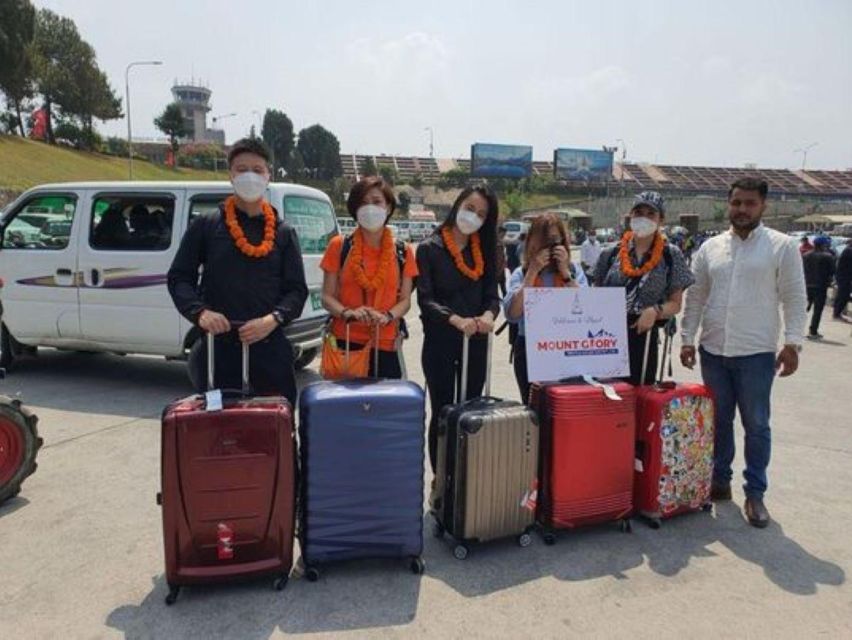
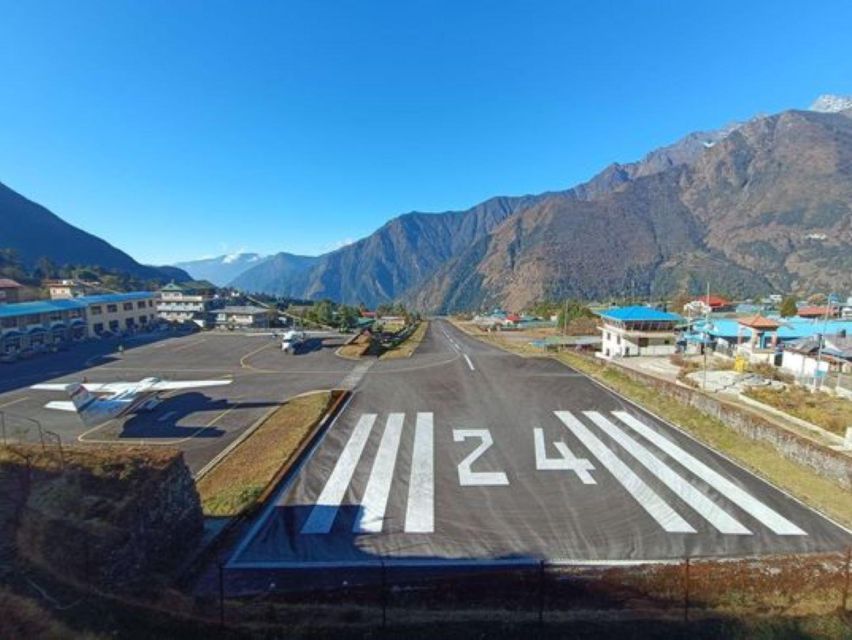
The trip begins with a flight from Kathmandu to Lukla, or from Manthali to Lukla depending on the departure arrangement. The flight is one of the defining moments of the trip, not just a transfer. You get aerial views of the Himalayan wilderness before landing in the mountain town of Lukla.
From Lukla, you walk to Phakding. This first day lets you move your legs without immediately facing the highest parts of the route. It is also your first taste of the trail system that leads deeper into the Everest region.
The Lukla flight can feel thrilling, and that is the polite word for it. You should expect the flight itself to be a memorable part of the experience. Airport and hotel transfers are included, which makes the start easier, particularly after an international arrival.
Day 2: Phakding to Namche Bazaar
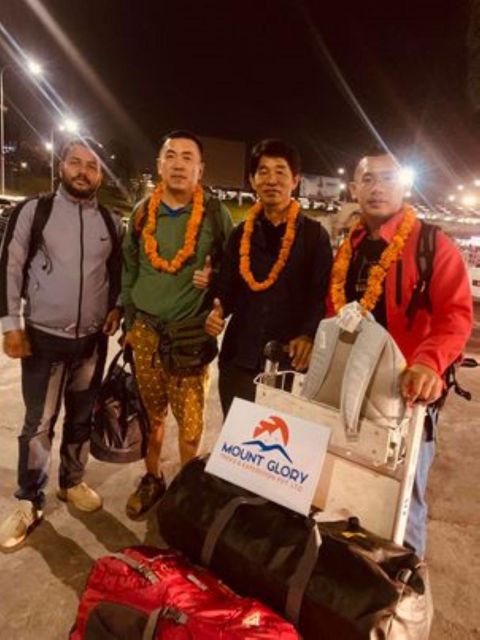
The route continues from Phakding to Namche Bazaar. Namche is the main trading and service center on the trek, and reaching it marks a clear change in the journey. The walk becomes more serious as you gain height and move toward the higher valleys.
Namche is not just a place to sleep. It is the first major point where the schedule slows down for altitude adjustment. The town is also the base for one of the trip’s most appealing side visits, the hike toward Everest View Hotel.
Day 3: Acclimatization at Namche Bazaar
The Namche acclimatization day is one of the most important parts of the program. You do not simply lose a day by staying in one area. The schedule gives your body time to adjust before the trail rises farther toward Tengboche and Dingboche.
The planned highlight is the spectacular view from Everest View Hotel. This is a smart use of an acclimatization day because you gain height during the outing and return to Namche rather than sleeping higher up.
I would treat this day as a chance to walk at a relaxed pace, take in the views, and avoid trying to prove anything. Altitude does not reward speed. A guide who keeps the group moving at a sensible pace, as Armit did for one guest, can make this day much more useful.
More walking in the hills of Nepal:
- Nagarkot Sunrise View and Day Hiking from Kathmandu
★ 5.0 · 471 reviews - Annapurna Circuit Trek with Tilicho Lake
★ 5.0 · 368 reviews - Everest Base Camp Trek -14 Days
★ 5.0 · 321 reviews - Annapurna base camp trek 5 Days
★ 5.0 · 252 reviews
Day 4: Namche Bazaar to Tengboche
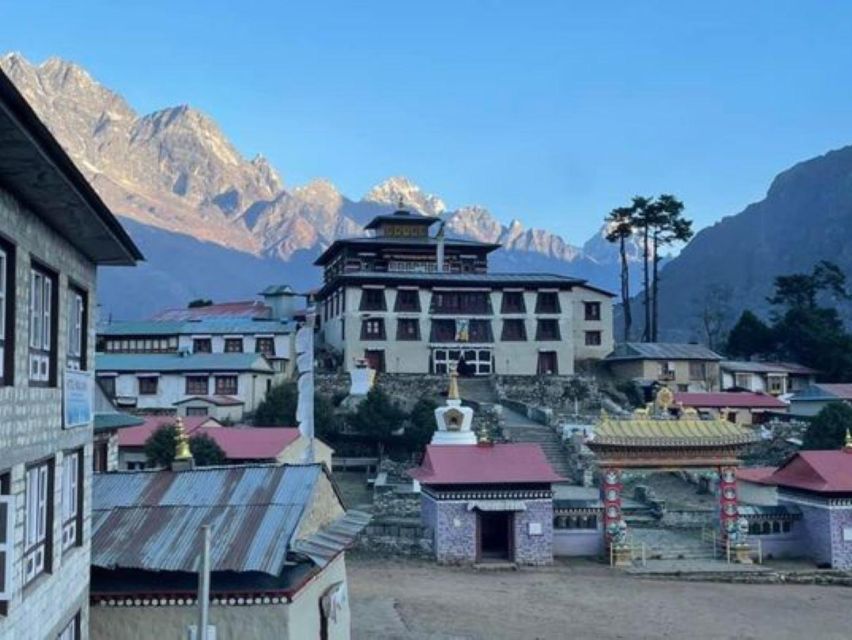
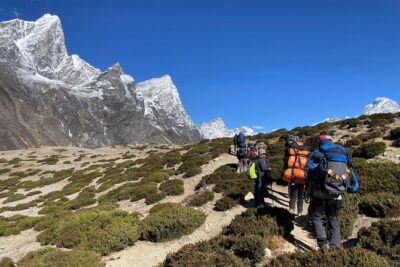
From Namche, you continue to Tengboche. The route moves farther into the Khumbu and begins to feel more remote. Tengboche is one of the best-known stops on this trail, and it gives you a strong sense of being surrounded by high Himalayan country.
This is also the point where the trip begins to feel less like a warm-up and more like a serious mountain trek. The elevation continues to rise, and your pace should remain controlled. You are better off arriving with energy left than racing into the next lodge.
The standard guesthouses are included on a twin-sharing basis. That keeps the basic price down, but you should not expect private hotel comfort. The value is in having a bed and an organized route through a demanding region, not in luxury.
Day 5: Tengboche to Dingboche
The walk from Tengboche to Dingboche takes you higher again. Dingboche is an important stop because it comes before the hardest part of the route. You will spend the next day here for another acclimatization break.
The scenery changes as you travel farther from the lower valleys. The air is thinner, the walking rhythm matters more, and small gains in height can feel surprisingly tiring. You might find that a route that looks manageable on paper takes more effort than expected.
This is a good place to pay attention to your guide’s judgment. The package includes a government-licensed, English-speaking guide from Lukla to Lukla. That continuity is useful because the same guide is with you through the full trekking section rather than handing you between different local arrangements.
Day 6: Dingboche and Nangkartshang Peak
The second acclimatization day is based in Dingboche, with a climb to Nangkartshang Peak. This outing gives you another chance to walk higher during the day and return to Dingboche for the night.
I like this structure because it breaks up the climb before Lobuche and Gorak Shep. You are not simply pushing upward every day. The schedule asks you to work, rest, and then continue.
Still, the peak climb is not a free sightseeing stop. Your body may be feeling the altitude by now, so the sensible goal is a steady outing rather than a race. Keep your pack light, drink as advised by your guide, and tell the guide promptly if you feel unwell. The information provided does not specify medical procedures, so personal travel insurance remains essential.
Day 7: Dingboche to Lobuche
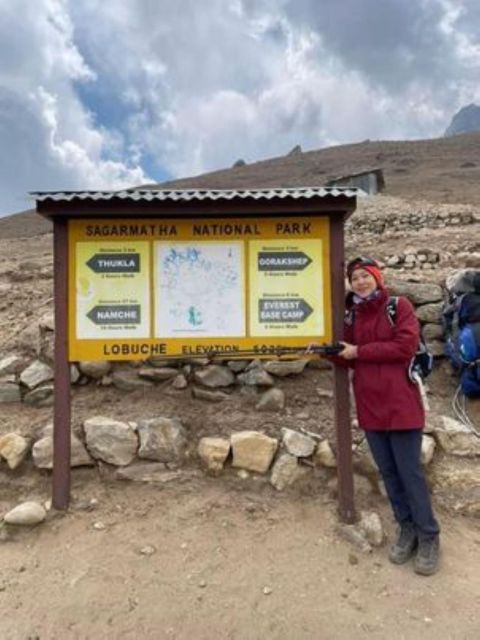
The trail from Dingboche to Lobuche brings you close to the high point of the trek. Lobuche is a staging stop before the walk to Everest Base Camp, and the setting feels more severe than the lower villages.
This is one of the days when the 12-day schedule can feel tight. You have already walked for several days, and the air is thin. The benefit is that you reach the key destinations without adding extra nights. The tradeoff is less spare time if you need to slow down.
Your guide and staff costs are included in the package, but porter service is not. If you do not want to carry your own main bag, you need to arrange and budget for a porter separately. The included duffel bag is returned after the trek, which is useful for organizing your gear, but it does not mean porter service is part of the price.
Day 8: Lobuche to Everest Base Camp and Gorak Shep
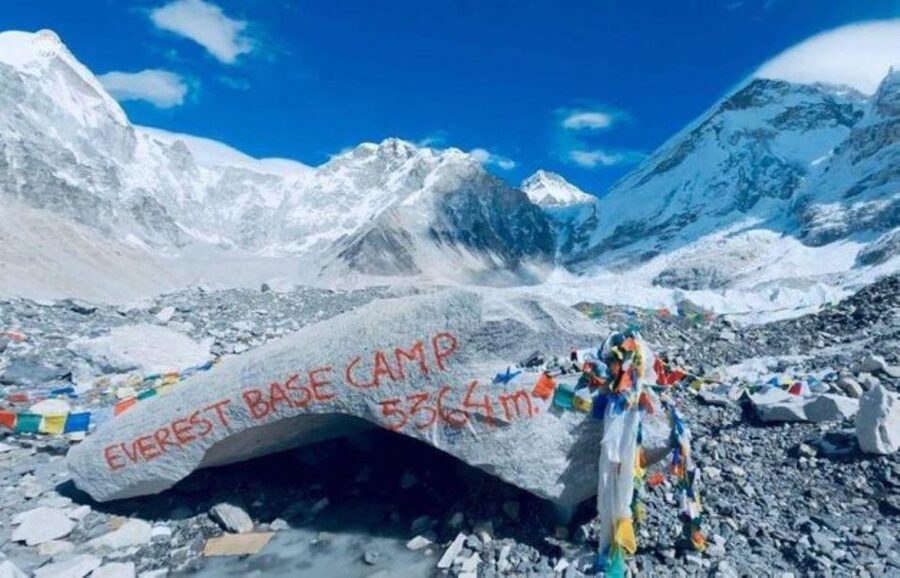
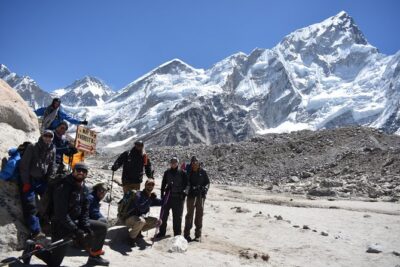
This is the day many people picture when they think about the trek. You walk from Lobuche to Everest Base Camp, then continue back to Gorak Shep for the night.
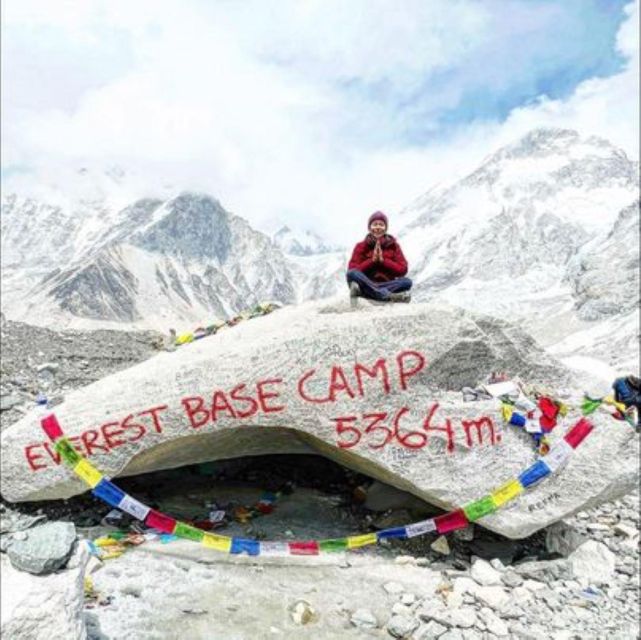
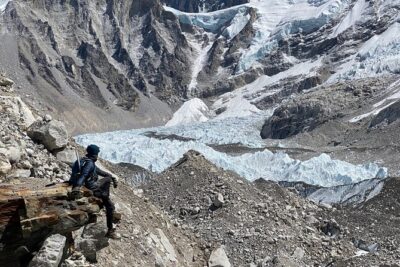
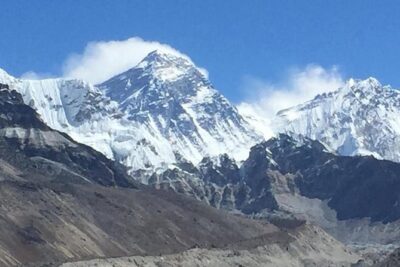
Reaching Base Camp is the emotional center of the route. You are walking toward the staging area used by expeditions attempting Everest, the world’s highest mountain at 8,848.86 meters. The exact appearance of the camp can vary, but the importance of the destination does not.
The return to Gorak Shep is part of the challenge. The day includes the walk to Base Camp and then a further movement to your overnight stop, so you should conserve energy early. A guide who sets a measured pace is especially helpful here. Brendan specifically praised Armit for doing exactly that and for providing practical help along the way.
Do not expect Base Camp to be a quiet personal moment. It is a major destination on the route, and the day is physically demanding. The reward is the sense of having reached the point where the Everest story becomes real beneath your boots.
Day 9: Kala Patthar and the descent to Pheriche
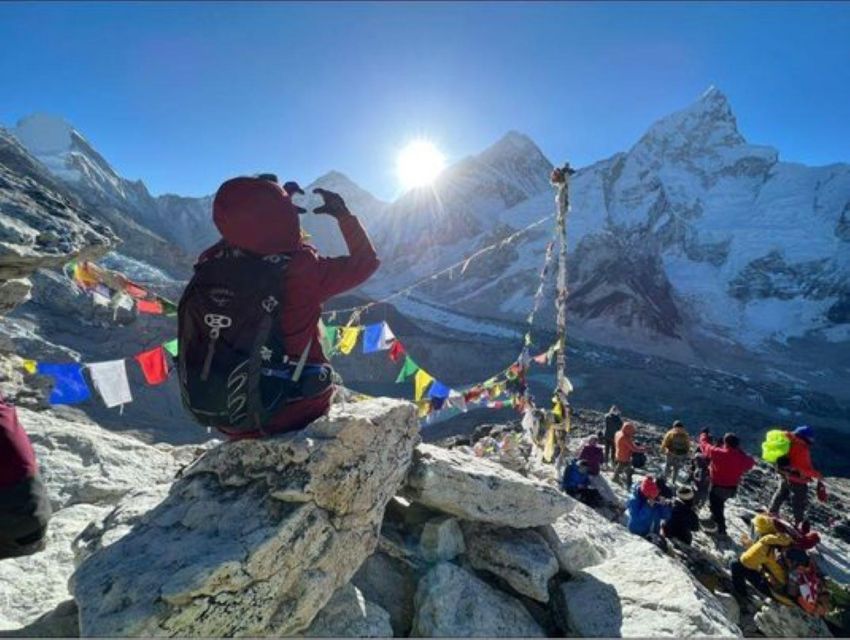
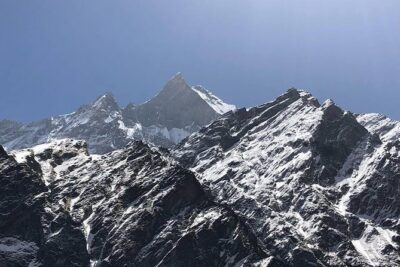
The early morning hike from Gorak Shep to Kala Patthar is likely the finest viewpoint of the trip. You climb before beginning the long descent to Pheriche, using the morning light for the mountain views.
This is the moment to protect your camera, keep your layers ready, and stay focused on your footing. The climb comes after the previous day’s Base Camp walk, so tired legs are part of the equation.
After Kala Patthar, you trek down to Pheriche. The descent is welcome for your lungs, but it can be hard on knees and ankles. Trekking poles may be worth bringing, although the package information does not state that they are supplied.
The order of this day makes sense. You get the high viewpoint first, then move lower. Pheriche provides a needed change after the altitude of Gorak Shep.
Day 10: Pheriche to Namche Bazaar
The route turns back toward Namche Bazaar. At this stage, the descent should feel encouraging because the air becomes easier to manage, even though the walking remains tiring.
Returning to Namche also gives the journey a satisfying sense of progress. You have crossed the highest sections and are now retracing the route toward Lukla. The town is a practical stop, and its position makes it a natural place to rest before the final walking day.
The package includes standard guesthouse accommodation on a twin-sharing basis. If you value privacy, ask about room arrangements before booking. The supplied details do not promise private rooms.
Day 11: Namche Bazaar to Lukla
The final walking day takes you from Namche Bazaar to Lukla. It is a fitting end to the trail because you return to the place where the trek began, carrying the memory of the high route back down to the airstrip.
This day is not simply a gentle stroll. Downhill sections can be tiring, and you will have already spent more than a week walking. Keep your pace steady and allow time for the guide to manage the group.
The trip is organized from Lukla to Lukla for the trekking section. That makes the arrangement straightforward: transfers and flights are handled as part of the package, while you focus on the walk.
Day 12: Flight back to Kathmandu
The final day is the return flight to Kathmandu. You get another aerial look at the Himalayan wilderness, then leave the mountain region behind.
The package includes the Kathmandu to Lukla and Lukla to Kathmandu airfare, including the stated airport departure taxes in Kathmandu and Lukla. That is a major value point because domestic mountain flights can be one of the more awkward parts to arrange independently.
You should still allow flexibility in your larger Nepal plans. The provided information does not promise a backup day for flight disruption, so do not schedule an international connection too tightly after the trek.
What the $1,111 price really covers
At $1,111, this is not an all-inclusive holiday. It is a guided trekking package with the main route logistics already arranged.
Included items cover:
- Airport, hotel, and airport transfers by private tourist vehicle
- Domestic flights between Kathmandu and Lukla
- Twin-sharing guesthouse accommodation during the trek
- A licensed English-speaking guide
- Staff food, accommodation, salary, insurance, and equipment
- Duffel bag and sleeping bag for the trek
- Everest National Park permits and TIMS
- Applicable government, hotel, and other taxes
- Rescue service arrangements if needed, based on your travel insurance
Your real budget should also include the $300 to $350 meal estimate, Nepal’s entry visa, international airfare, insurance, tips, and personal expenses. Porter service is extra, too.
That makes the package a reasonable value for someone who wants the difficult planning handled. The cost is less attractive if you already have your own guide contacts, equipment, and flight arrangements. For most people attempting this route, though, permits, flights, staff, and a licensed guide are not small details.
Who should choose this trek
I would recommend this trek to someone who wants the classic Everest Base Camp route in a focused 12-day format. It suits people who are comfortable with sustained trekking and who prefer a set plan over arranging each lodge, flight, and permit alone.
It is especially appealing if you want:
- A guide-led experience in English
- Two planned acclimatization days
- Both Everest Base Camp and Kala Patthar
- Domestic flights and transfers arranged
- Basic guesthouse accommodation rather than luxury hotels
- A compact schedule with the main Khumbu highlights
I would think twice if you want a relaxed walking holiday, private accommodation, included meals, or a large amount of spare time. The route is demanding, and the listed price does not cover every daily cost.
The two available ratings are both five out of five. Jack described the experience as solid and enjoyable, while Brendan gave special praise to guide Armit for his pacing and practical support. Those comments point to the most important part of this trip: good organization and a guide who pays attention to your needs.
Should you book the Everest Base Camp Trek?
Book it if reaching Everest Base Camp is a serious personal goal and you want the main logistics arranged in advance. The combination of Lukla flights, Everest View Hotel, two acclimatization days, Base Camp, Kala Patthar, and a licensed guide gives you the essential Everest route without luxury pricing.
Before paying, budget beyond the $1,111 headline price. Add meals, insurance, visa costs, tips, personal expenses, and possible porter service. If you accept basic twin-sharing accommodation and a demanding schedule, this trek offers a clear, well-supported path to one of Nepal’s great mountain destinations.
FAQ
How long is the Everest Base Camp Trek?
The trek lasts 12 days, including the Lukla flights, walking days, acclimatization days, the Everest Base Camp visit, the Kala Patthar hike, and the return to Kathmandu.
Is the Lukla flight included?
Yes. The price includes airfare from Kathmandu to Lukla and back, including the stated airport departure taxes in Kathmandu and Lukla.
Are meals included during the trek?
No. Breakfast, lunch, and dinner during the trek are excluded. The stated estimated cost for trekking meals is about $300 to $350 for 12 days.
Is a guide included?
Yes. The package includes an English-speaking, government-licensed and experienced trek leader or guide from Lukla to Lukla.
Is porter service included?
No. Porter service is not included in the listed price and must be arranged and paid for separately if needed.
What is the cancellation policy?
You can cancel up to 24 hours in advance for a full refund. The reserve now and pay later option is also available.
New in the Nepal listings
- Traditional Momo Making Class★ 5.0 · 10 reviews
- Kathmandu: Ancient City Kirtipur & Pharping Monastery Tour★ 5.0 · 2 reviews
- Pokhara: Pokhara Highlights Tour by Bus★ 3.6 · 10 reviews
- Day Walk(8-10h.) inside Chitwan National Park.★ 5.0 · 1 review
- One Day Tour inside Chitwan National Park★ 5.0 · 2 reviews
- Night Stay in Chitwan National Park, 2 Nights 3 Days Package★ 5.0 · 1 review
- Private Jeep Safari (8-10 hrs.)inside Chitwan National Park.★ 5.0 · 3 reviews
- Jungle Towernight Stay: 4-Day Tour in Chitwan National Park★ 5.0 · 4 reviews
Everest Base Camp Treks, compared.
Everest Base Camp Trek with Helicopter Return from Gorakshep to Lukla
Read our review →Browse the lists this tour appears in