
REVIEW · EVEREST BASE CAMP TREKS
14-Days Private Everest Base Camp Trek
Everest rewards patience, not speed. This 14-day private trek from Kathmandu gives you a well-supported route to Everest Base Camp, with domestic flights, porters, permits, lodging, meals, and an English-speaking guide included. You also get time to adjust at Namche Bazaar and Dingboche, two essential pauses on a route where rushing can spoil the whole experience.
I like the private format, since your guide can adjust the pace to your group rather than a large fixed party. I also like the practical setup: airport pickup, Kathmandu lodging, tea houses, a porter for every two trekkers, and flights between Kathmandu and Lukla are included. The main drawback is that the itinerary contains a few unclear day descriptions, especially around Kala Patthar and the return route, so I would confirm the exact schedule before paying.
In This Review
- Key points to know before booking
- What the 14-day Everest trek is really like
- Day 1: A gentle arrival in Kathmandu
- Day 2: Flying to Lukla and walking toward Phakding
- Day 3: Suspension bridges and Namche Bazaar
- Day 4: Acclimatization around Namche
- Day 5: Forest trails and Tengboche Monastery
- Day 6: Pangboche, mani walls, and Dingboche
- Day 7: A second acclimatization day in Dingboche
- Day 8: The high route to Lobuche
- Day 9: Gorak Shep and Everest Base Camp
- Day 10: Kala Patthar and an itinerary detail to confirm
- Days 11 and 12: Returning through Namche to Lukla
- Day 13: Flying back to Kathmandu
- Day 14: Farewell dinner and a trekking certificate
- What the $1,600 price includes
- The guide and porter support
- Who should book this trek?
- Should you book the 14-day Everest Base Camp trek?
- FAQ
- Where does the Everest Base Camp trek start?
- How long is the tour?
- Are flights between Kathmandu and Lukla included?
- Is accommodation included?
- Is a guide provided?
- Are meals included?
- Is travel insurance included?
- What happens if bad weather cancels the experience?
Key points to know before booking
- Lukla begins the real adventure: The scenic 40-minute flight takes you to the mountain airstrip that starts the trek.
- Two acclimatization days are built in: You spend one day around Namche Bazaar and another around Dingboche.
- Porter support keeps your load manageable: One porter is arranged for every two trekkers, while you still need to carry your daypack.
- The package covers major costs: Flights, permits, entrance fees, accommodation, meals, airport transfers, and a farewell dinner are included.
- Guiding is the strongest part of the experience: Names praised in the feedback include Kalyan Gurung, Parkhidhan Tamang, Kaylen, Ram, Romeo, and Asman.
- The high-altitude sections demand real fitness: This is not a sightseeing walk. You should expect several hours of trekking each day at altitude.
What the 14-day Everest trek is really like
This is a private Everest Base Camp trek operated by Glorious Eco Trek Nepal. The listed price is $1,600 per person, although the supplied details do not explain whether that price changes with group size or season.
The tour is designed to remove much of the planning work. Your guide arranges the necessary permits, entrance fees, accommodation, and route logistics. A porter carries the heavier gear, and a private vehicle handles airport transfers in Kathmandu.
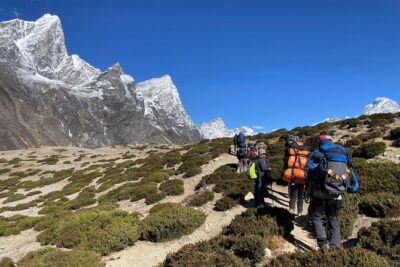
That structure matters on the Everest route. The trek passes through villages, forests, suspension bridges, Buddhist monasteries, mani walls, chortens, glaciers, and high mountain valleys. You are not simply walking toward a famous sign. You are moving through Sherpa communities and a landscape shaped by altitude, weather, trade, religion, and mountaineering.
The private setup is especially useful if people in your group have different walking speeds. Feedback about guides such as Parkhidhan Tamang and Kalyan Gurung points to careful pacing, daily briefings, and attention to individual needs. One group had to stop because of altitude sickness, and the guide was praised for responding carefully rather than pushing ahead.
That is important. Reaching Base Camp is a goal, but getting down safely is the real measure of a good trek.
More Everest Base Camp treks:
- Everest Base Camp Trek – 14 Days
★ 5.0 · 1,499 reviews - Everest Base Camp Trekking
★ 5.0 · 485 reviews - Everest Base Camp Trekking – 13 Day
★ 5.0 · 365 reviews
Day 1: A gentle arrival in Kathmandu
Your trip begins with a welcome at Tribhuvan Airport. Staff transfer you to your hotel, and an airport representative explains the program after you arrive.
This first night is useful because Kathmandu can be tiring after a long flight. You are not expected to trek or organize your own onward transport. The package includes two nights in a three-star Kathmandu hotel with breakfast, though the itinerary places Kathmandu stays at the beginning and end of the trip, with a final farewell dinner on Day 14.
Use this time to check your gear, confirm the flight to Lukla, and ask your guide about the walking plan. The tour includes airport pickup, but you should still make sure the operator has your correct arrival details.
Day 2: Flying to Lukla and walking toward Phakding
The 40-minute flight to Lukla is one of the trip’s memorable opening moments. After landing at Tenzing Hillary Airport, you begin walking through the Khumbu region.
The first trekking day takes about five hours. The route follows the Dudh Koshi River and passes through villages and forested sections before reaching the area around Phakding. The itinerary description is truncated, so the exact overnight stop should be confirmed, but Phakding is named later as part of the route.
The short flight changes the scale of the trip quickly. You leave Kathmandu’s urban setting and begin walking in a mountain region where roads do not carry the whole journey. The first day should feel like an introduction rather than a test of endurance, but you still need proper footwear and a comfortable daypack.
Day 3: Suspension bridges and Namche Bazaar
Day 3 takes about six hours and follows the northern bank of the Dudh Koshi River toward Namche Bazaar. You cross several suspension bridges, including the Hillary Suspension Bridge, while the route gradually gains height.
Namche is more than a place to sleep. It is a major Sherpa trading center and a practical stop for food, cafes, souvenirs, trekking equipment, and internet access. The itinerary specifically mentions Wi-Fi-linked cafes and gear shops, which can be useful if you need batteries, snacks, or a last-minute clothing item.
The approach to Namche is physically demanding because the altitude starts to become more noticeable. Walk slowly and keep your breathing steady. The guide’s role becomes more important here, since the pace should allow your body time to adjust.
More walking in the hills of Kathmandu:
- Nagarkot Sunrise View and Day Hiking from Kathmandu
★ 5.0 · 471 reviews - Annapurna Circuit Trek with Tilicho Lake
★ 5.0 · 368 reviews - Everest Base Camp Trek -14 Days
★ 5.0 · 321 reviews - Annapurna base camp trek 5 Days
★ 5.0 · 252 reviews
Day 4: Acclimatization around Namche
You spend the day acclimatizing in Namche, with about five hours of walking options. The suggested activities include exploring the town and hiking toward nearby viewpoints such as the Hillary area.
A rest day at altitude does not mean staying in bed all day. A gentle climb followed by a return to the same sleeping elevation helps you adjust while keeping your legs active. You can also use the day to visit shops, cafes, and local sights without carrying your full trekking load.
I consider this one of the most valuable parts of the schedule. Some fast itineraries try to reduce the time at Namche, but altitude does not care about your holiday timetable. The extra day gives you a better chance of continuing comfortably.
Day 5: Forest trails and Tengboche Monastery
The five-hour walk from Namche to Tengboche includes repeated ups and downs through forest. The route can feel harder than its distance suggests, but the scenery rewards a measured pace.
Tengboche is known for its Buddhist monastery and its broad mountain views. The route also offers a chance of seeing wildlife such as musk deer, although this is a possibility rather than a promise.
This section gives the trek much of its cultural character. You pass Buddhist markers and mountain villages, and the monastery provides a reminder that the Khumbu is a lived-in region, not just a route for hikers. Your guide can add context about Sherpa culture, monasteries, and local customs, which makes these stops more meaningful than a quick photograph.
Day 6: Pangboche, mani walls, and Dingboche
The route to Dingboche takes about five hours. Along the way, you pass chortens, mani walls, small villages, and Pangboche, with views toward Ama Dablam.
Chortens are Buddhist monuments, while mani walls are built from stones carved with prayers. You should treat these religious features with respect and avoid climbing on them or casually moving the stones.
Dingboche sits at a higher elevation, so this is another day when pace matters more than speed. The views become more dominated by snow-covered peaks, but the air is thinner and ordinary uphill sections feel more serious. A good guide will encourage steady walking, regular water breaks, and honest conversations about symptoms.
Day 7: A second acclimatization day in Dingboche
The second acclimatization day is spent in Dingboche, with a walk up the ridge above town taking about five hours. You return to Dingboche to sleep rather than gaining altitude for the night.
This is a sound plan. The body needs time to adjust before the route climbs toward Lobuche, Gorak Shep, and Base Camp. You may find the ridge walk tiring even though it is shorter than a full route day. That is normal at this elevation.
I would use this day to ask your guide about the next two nights, the condition of the trail, and what will happen if someone develops altitude sickness. The supplied feedback repeatedly praises guides for safety, pacing, and medical judgment. That support is more valuable here than cheerful conversation or a fast walking speed.
Day 8: The high route to Lobuche
The five-hour trek to Lobuche begins with wide Himalayan views and becomes more demanding as the valley narrows near Dusa. The route follows part of the first completed Everest Expedition trail.
This is where the trek starts to feel stark and serious. Vegetation becomes less prominent, the walking surface can be rough, and the surrounding peaks seem closer and more imposing. You should not judge the day by mileage alone. Altitude, cold, wind, and the condition of the trail all affect how long a short section can take.
Lobuche is a practical overnight stop before the Base Camp push. Keep your evening simple. Eat, drink, organize your warm layers, and sleep as much as you can.
Day 9: Gorak Shep and Everest Base Camp
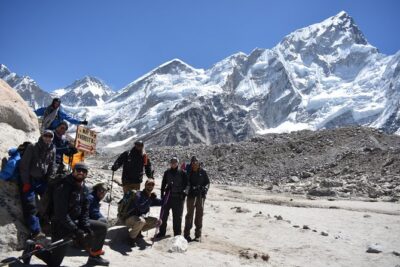
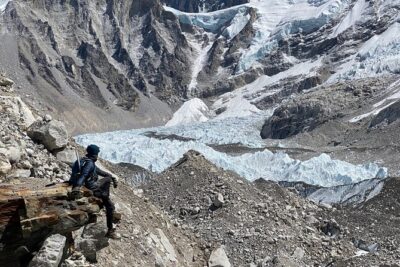
This is the central day of the tour. You cross the lateral moraine of the Khumbu Glacier before reaching Gorak Shep, a small settlement surrounded by snow-covered mountains. From there, you continue toward Everest Base Camp.
The walk takes about five hours according to the itinerary, but conditions can affect the timing. The glacier moraine is uneven, and the high altitude can make every rise feel larger than expected.
Everest Base Camp is not a permanent city or a mountaintop summit. It is a seasonal expedition area at the foot of the climbing route, and the experience is defined by the glacier, huge peaks, and the knowledge that climbers use this region as the starting point for Everest attempts.
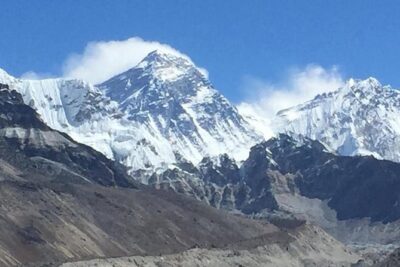
You should keep your expectations realistic. The view of Mount Everest itself can be limited from Base Camp, depending on where you are and the surrounding peaks. The journey through the Khumbu, the approach across the glacier, and the achievement of reaching Base Camp are the main rewards.
Day 10: Kala Patthar and an itinerary detail to confirm
The Day 10 title names Kala Patthar, but the written description says you wake after staying at Pheriche and trek down toward Tengboche through rhododendron, juniper forest, and across the Imja Khola bridge. Those details do not fully match.
Kala Patthar is normally treated as a high viewpoint near Gorak Shep, while Pheriche and Tengboche are on the return route. Because the supplied schedule is inconsistent, you should ask Glorious Eco Trek Nepal to confirm the exact sequence before booking.
This is not a minor point. Kala Patthar is often one of the highest and most demanding walks on the route, while a descent from Pheriche is a different kind of day. Find out where you sleep after Base Camp, when Kala Patthar is attempted, and how the descent is arranged.
Days 11 and 12: Returning through Namche to Lukla
Day 11 again lists Namche Bazaar, but its description repeats the descent from Pheriche toward Tengboche. Day 12 lists Lukla and describes a shorter walk toward Phakding along the Dudh Koshi River, crossing suspension bridges and passing forests and villages before reaching the airport area.
The broad return pattern is clear: you descend through the same major corridor, pass through Namche, continue toward Lukla, and prepare for the flight to Kathmandu. However, the day-by-day wording should be clarified because the listed stops and descriptions are not perfectly aligned.
Descending is easier on your lungs but can be tough on knees and legs. Do not treat the return as effortless. Trek poles, careful footing, and a controlled pace can help, especially after the high-altitude days.
Lukla is also a place where weather can affect flights. The tour states that poor weather can lead to a date change or full refund if the experience is canceled, but you should still allow flexibility in any wider Nepal travel plans.
Day 13: Flying back to Kathmandu
After breakfast, you fly from Lukla to Kathmandu on a flight listed at about 40 minutes. The Kathmandu to Lukla and Lukla to Kathmandu airfare, including airport tax, is included.
The return flight gives you a chance to look back on the route, but it is also practical recovery time. Once back in Kathmandu, you can return to a hotel covered by the package and have a quieter evening after the trek.
The itinerary says Day 13 includes about five hours, even though the flight itself is much shorter. Ask whether that time includes airport transfers, waiting, or other planned activities.
Day 14: Farewell dinner and a trekking certificate
The final day includes a farewell dinner organized by Glorious Eco Trek Nepal. You also receive an appreciation certificate after completing the trek.
The dinner is a pleasant way to close the trip and speak with the company about what worked well and what could improve. The certificate is a small keepsake, but the more useful value is the chance to finish the trip with the operator and guide team while the experience is still fresh.
What the $1,600 price includes
At $1,600, the package offers solid value if all listed inclusions apply to your booking. The price covers:
- Airport pickup and drop-off by private vehicle
- Two nights in a three-star Kathmandu hotel with breakfast
- Tea house or lodge accommodation during the trek
- Kathmandu to Lukla and Lukla to Kathmandu flights, including airport tax
- An experienced English-speaking guide
- One porter for every two trekkers
- Trekking permits and entrance fees
- Breakfast, lunch, and dinner as listed in the package
- A farewell dinner
- An appreciation certificate
The meal allowance lists 12 breakfasts, 10 lunches, and 10 dinners. Since the trip lasts 14 days, ask which meals are covered on arrival, flight, and departure days. Also confirm the room arrangement, porter baggage limit, and whether airport transfers are private for your group.
Personal expenses and travel insurance are not included. Insurance is especially important for a high-altitude trek. The package does not state that emergency evacuation, medical costs, snacks, drinks, or personal gear are covered, so you should ask about these before departure.
The guide and porter support
The strongest theme in the feedback is the care provided by the guides and porters. Asman is praised for a warm welcome and professional organization. Parkhidhan Tamang is praised for being supportive when a trekker developed a fever and for adjusting the pace to the group’s energy.
Kalyan Gurung receives repeated praise for managing different abilities, giving daily briefings, and adding cultural information. Kaylen and Ram are credited with keeping a trekker safe and helping the whole group reach Base Camp. Romeo is praised for making a longer Everest and Gokyo trip feel safe and well supported.
Names and staff assignments can change, so do not assume you will receive a particular guide. Still, these details suggest that the company’s main strength is personal care rather than luxury. You should expect a practical mountain service, not a resort-style holiday.
Who should book this trek?
This trip suits you if you want Everest Base Camp with a private guide and a package that handles most of the basic logistics. It is a good match for people who value airport assistance, porter support, built-in acclimatization, and a guide who can adapt the daily pace.
You should have a moderate level of physical fitness. The supplied information does not give exact distances, elevations, or daily elevation gains, so ask for those details before booking. You should also be comfortable with lodge or tea house accommodation rather than expecting high-end hotels throughout.
This is less suitable if you want a completely fixed, highly detailed schedule with no ambiguity. The conflicting descriptions for Days 10 and 11 need clarification. It is also not a good choice if you are unwilling to walk for several hours on consecutive days or if you do not want to arrange your own travel insurance.
The tour is private, and only your group participates. That gives you more control than a large group departure, but the package details do not state the maximum group size. Ask how many people can be included before you book.
Should you book the 14-day Everest Base Camp trek?
I would consider booking this tour if you want strong support at a reasonable package price and you are willing to confirm the details first. The included Lukla flights, permits, meals, lodging, airport transfers, guide, and porter remove many costs and decisions that can otherwise complicate an Everest trek.
The best reason to choose it is the reported quality of the guiding. Careful pacing and good judgment matter more than a polished brochure when altitude sickness or bad weather enters the picture. The main reason to pause is the unclear return itinerary, especially the placement of Kala Patthar.
Ask the company to provide the final day-by-day plan, exact overnight stops, meal details, porter limits, and insurance expectations. If those answers are clear, this private 14-day trek looks like a sensible way to reach Everest Base Camp while keeping the hard parts of the planning under control.
FAQ
Where does the Everest Base Camp trek start?
The experience starts at Tribhuvan Airport in Kathmandu, Nepal. Pickup is available from the airport or your hotel.
How long is the tour?
The total experience is planned for approximately 14 days.
Are flights between Kathmandu and Lukla included?
Yes. Domestic airfare between Kathmandu and Lukla, in both directions, including airport tax, is included.
Is accommodation included?
Yes. The package includes two nights in a three-star Kathmandu hotel with breakfast, plus lodge or tea house accommodation during the trek.
Is a guide provided?
Yes. An English-speaking professional guide is included, along with a porter for every two trekkers.
Are meals included?
The package lists 12 breakfasts, 10 lunches, and 10 dinners. Ask the operator to confirm which specific days those meals cover.
Is travel insurance included?
No. Personal expenses and travel insurance are excluded from the tour price.
What happens if bad weather cancels the experience?
If poor weather causes the experience to be canceled, you will be offered a different date or a full refund.
New in the Kathmandu listings
- Traditional Momo Making Class★ 5.0 · 10 reviews
- Kathmandu: Ancient City Kirtipur & Pharping Monastery Tour★ 5.0 · 2 reviews
- Kathmandu to Pokhara Premium sofa bus ticket★ 4.0 · 17 reviews
- Women Empowerment Project(Nepali cooking class & jewelry workshop★ 5.0 · 15 reviews
- 7-Day Langtang Valley Trek from Kathmandu★ 5.0 · 1 review
- Kathmandu 2 Nights 3 Days Chitwan Jungle Safari Tour★ 5.0 · 9 reviews
- Yoga Experience Day Trip with Private Transfer From Kathmandu★ 4.0 · 2 reviews
- Wildlife Adventure in Chitwan Nepal★ 4.0 · 4 reviews
Everest Base Camp Treks, compared.
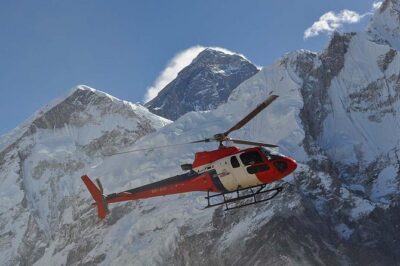
Everest Base Camp Trek with Helicopter Return from Gorakshep to Lukla
Read our review →Browse the lists this tour appears in