
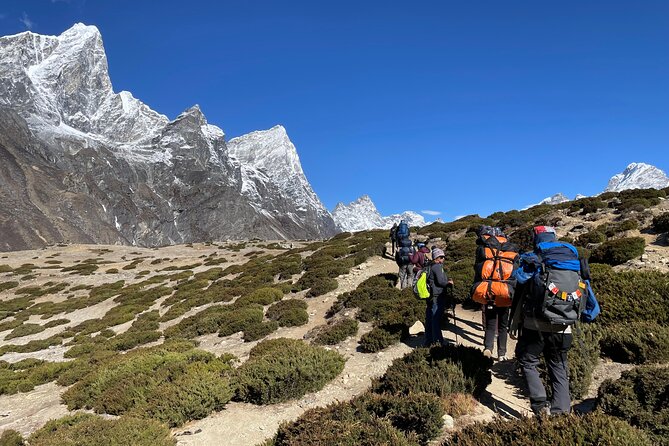
REVIEW · EVEREST BASE CAMP TREKS
Everest Base Camp Trek
Lukla is where the adventure begins. This 15-day Everest Base Camp trek combines high Himalayan scenery with Sherpa villages, organized support, and the famous little flight from Kathmandu to Lukla. I like that the price includes domestic flights, accommodation, meals, permits, porters, and useful cold-weather gear.
I also like the private small-group format. You can walk at a sensible pace instead of being pushed along with a large crowd, and the guide can adjust the day’s plan. The main caution is altitude: this is a demanding trek with steep climbs, glacier walking, and thin air, not a casual mountain holiday.
The strongest praise goes to the guides, especially Lok, Khila, Lal, Hari, Ossman, and Namraj. The practical value is good at $1,408 per person, but you still need to budget for insurance, drinks, showers, laundry, personal snacks, and possible weather-related disruption.
In This Review
- Key points to know before you book
- What the $1,408 price really covers
- Days 1 and 2: Kathmandu to Phakding by way of Lukla
- Days 3 and 4: Monjo, Namche, and your first acclimatization day
- Days 5 and 6: Kyanjuma, Tengboche, and Pangboche
- Day 7: Nagarkhang Peak and the second acclimatization stop
- Day 8: Dughla Pass and the approach to Base Camp
- Day 9: Glacier walking and Everest Base Camp
- Day 10: The Kalapatthar sunrise climb
- Days 11 and 12: Back through Tengboche, Phakding, and Lukla
- Days 13 to 15: Lukla flight, Kathmandu buffer, and departure
- Guides, porters, and the small-group advantage
- Meals, equipment, and what you still need to pay for
- Who should book this Everest trek?
- Should you book it?
- FAQ
- How long does the Everest Base Camp trek take?
- Are flights between Kathmandu and Lukla included?
- Are meals included?
- Does the tour provide trekking equipment?
- Is this a private tour?
- What happens if bad weather cancels the Lukla flight or the trek?
Key points to know before you book
- The Lukla flight sets the tone: The short flight from Kathmandu is scenic, exciting, and vulnerable to bad weather and delays.
- Two acclimatization days are built in: Hikes near Namche Bazaar and Nagarkhang Peak give your body time to adjust to altitude.
- Porters carry your main gear: A guide, porters, and sleeping equipment are included, so you do not need to haul every item yourself.
- The route reaches both Everest Base Camp and Kalapatthar: Base Camp is the goal, while Kalapatthar provides the famous mountain viewpoint.
- Sherpa culture is part of the experience: Villages such as Khumjung, Pangboche, Tengboche, and Namche bring the human story of the Khumbu region into focus.
- A spare Kathmandu day matters: Lukla flights can be canceled or delayed, so the final free day acts as a useful buffer.
What the $1,408 price really covers
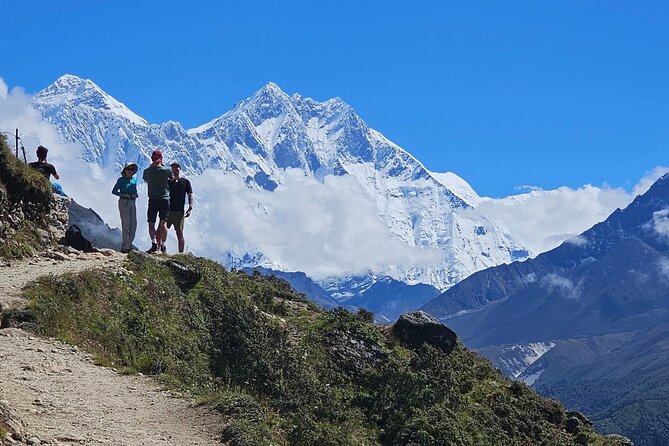
At first glance, $1,408 may seem high for a walking trip. Then you count what is included. The price covers airport transfers in Kathmandu, round-trip Kathmandu to Lukla airfare, the guide’s airfare, Everest National Park entry, the TIMS registration card, accommodation, most meals, porters, guide and porter insurance, and government and local taxes.
You also receive a down jacket, four-season sleeping bag, and duffel bag for the trek. These are returned at the end, but they can save you from buying or transporting bulky equipment for one trip.
Breakfast is included on 14 days, lunch on 11 days, and dinner on 12 days. That means nearly all meals during the mountain portion are covered, though you still pay for drinks, hot showers, telephone use, laundry, snacks, and bar bills.
The value is especially strong if you are new to Himalayan trekking. You do not need to arrange permits, flights, porters, local transport, or sleeping gear separately. You are paying for organization as much as for the walk itself.
The price does not include international airfare, a Nepal visa, travel insurance, medical insurance, or emergency evacuation. Those are not optional details at this altitude. Read the insurance terms carefully and make sure emergency evacuation is covered.
More Everest Base Camp treks:
- Everest Base Camp Trek – 14 Days
★ 5.0 · 1,499 reviews - Everest Base Camp Trekking
★ 5.0 · 485 reviews - Everest Base Camp Trekking – 13 Day
★ 5.0 · 365 reviews
Days 1 and 2: Kathmandu to Phakding by way of Lukla
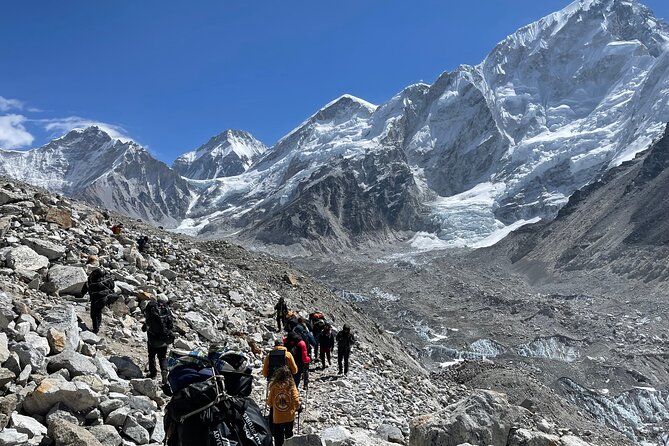
Your first day begins with an airport pickup in Kathmandu. An airport representative meets you with a name card and takes you to the hotel. The transfer is short, around 30 minutes, and gives you a gentle start in a city famous for temples and Himalayan access.
Day two is the first major change of pace. You fly from Kathmandu to Lukla, a trip of about 30 minutes, then begin walking toward Phakding. The flight is often described as one of the most adventurous parts of the journey, and that is easy to understand. The route is short, but the views and the mountain air make it feel like a real threshold.
The walk to Phakding is relatively manageable compared with what comes later. It gives you a chance to check your boots, settle into the group, and learn how the guide handles the day.
You should keep your schedule flexible here. The program includes a later spare day because weather can interrupt Lukla flights. That is a sensible safeguard, not wasted time.
Days 3 and 4: Monjo, Namche, and your first acclimatization day
The trail continues through pine forest toward Monjo and the entrance area for Sagarmatha National Park. Lunch is planned at Jorsalle before the route reaches the Hillary Bridge, a memorable crossing above the river.
After the bridge, the path becomes much steeper. This is where the trek begins to feel serious. The change from gentle walking to sustained uphill effort can surprise you, especially while your body is still adjusting to altitude.
Day four is a rest and acclimatization day around the Namche area. Rest does not mean sitting indoors all day. The guide may offer hikes toward Khumjung and Khunde, the Everest View Hotel, Thame, or the national park area.
This is one of the most valuable parts of the plan. A short hike at altitude followed by rest helps you adjust without spending another full day on the main route. The private format also gives the guide room to choose an option that suits your pace.
The village culture becomes more visible here. You are not simply walking toward a famous mountain. You are passing through the Sherpa heartland, where villages and trails are shaped by the demands of life in the Khumbu.
Days 5 and 6: Kyanjuma, Tengboche, and Pangboche
From the national park headquarters, the trail follows a gentler section toward Kyanjuma. A tea break may come before the route descends to Phungi Thanga for lunch.
Then comes another climb. You cross the Dudh Koshi River and continue toward Tengboche, an important stop in the region. The route mixes river crossings, forest, and open mountain views, so the day has plenty of variety even before you reach the higher villages.
The next day follows the Imja Khola toward Pangboche at about 3,930 meters. Pangboche is known as the home of experienced Everest climbers and brave Sherpas. It is a good place to connect the famous expedition story with the people who make high-altitude travel possible.
The mountain views become more powerful as the route gains height. They are also a reminder that every uphill section now costs more effort. You will want to walk steadily, drink often, and avoid treating each climb like a race.
More walking in the hills of Kathmandu:
- Nagarkot Sunrise View and Day Hiking from Kathmandu
★ 5.0 · 471 reviews - Annapurna Circuit Trek with Tilicho Lake
★ 5.0 · 368 reviews - Everest Base Camp Trek -14 Days
★ 5.0 · 321 reviews - Annapurna base camp trek 5 Days
★ 5.0 · 252 reviews
Day 7: Nagarkhang Peak and the second acclimatization stop
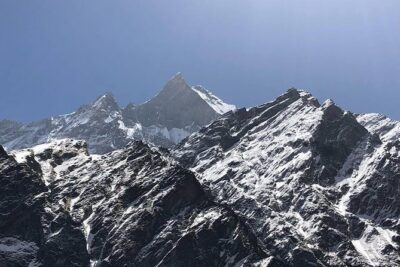
The second acclimatization day includes a hike toward Nagarkhang Peak, at roughly 5,000 meters. From the high point, you can see a broad sweep of Himalayan peaks.
This is not an easy rest day. The climb itself can be demanding, but the purpose is important. You reach a higher elevation for a limited period, then return to sleep at a lower altitude.
I consider this a strong feature of the program because it breaks up the hardest portion of the route. It also gives you a mountain viewpoint before the final push toward Base Camp. Still, you should not treat the day as optional exercise for fun. At around 5,000 meters, even a short hike can feel strenuous.
The guide’s role matters here. Several highly praised guides, including Khila, Lok, Lal, and Hari, are described as attentive to safety and good at setting a workable pace. That kind of steady judgment is more useful than a guide who simply walks quickly.
Day 8: Dughla Pass and the approach to Base Camp
The route now follows the ridge above Pheriche toward Dughla. After lunch, you climb steeply to Dughla Pass.
This section carries emotional weight because the memorial area near the pass recalls climbers and Sherpas who died in the Himalayas. The trail is not just scenic. It also shows the cost of high-altitude climbing.
The climb itself is short in distance but hard on the lungs. You are now walking at an elevation where every step can feel slow. The guide and porters help with the practical side, but no support service can remove the physical challenge.
I would keep this day free of extra plans. The most useful goal is to reach the next lodge, eat, drink, and sleep.
Day 9: Glacier walking and Everest Base Camp
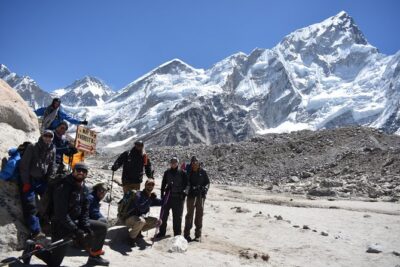
The first part of the walk toward Everest Base Camp is described as fairly manageable. The difficulty rises once you reach the glacier area, where uneven ground and low oxygen make progress slower.
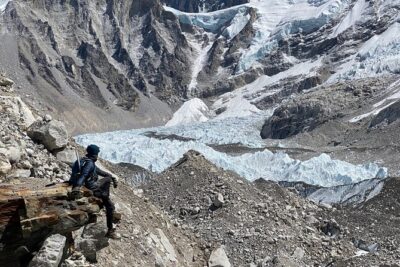
Crossing the glacier gives you a direct sense of the terrain used by mountaineering teams. You are not simply looking at distant snowy peaks from a viewpoint. You are walking through a rough, high-altitude environment on the way to the base of the world’s highest mountain.
Base Camp itself can vary in appearance depending on the season. You should expect a major milestone rather than a polished attraction. The satisfaction comes from reaching it under your own power after days of gradual ascent.
This is also where pacing matters most. The distance may not look extreme on a map, but cold, altitude, and loose ground can stretch the day. Stay close to the guide and follow instructions on the glacier.
Day 10: The Kalapatthar sunrise climb
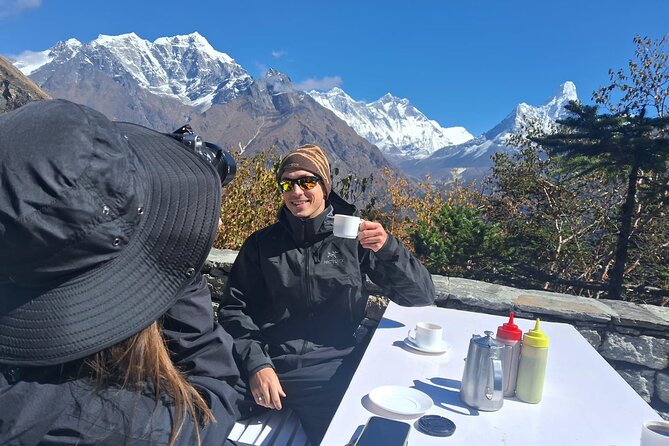
The group starts early for Kalapatthar, often before sunrise. The climb is difficult, but the reward is the best mountain viewpoint on the route.
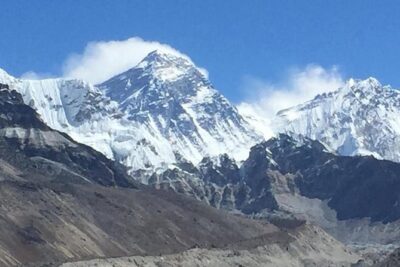
Kalapatthar is famous for views across the Khumbu toward Everest and other major Himalayan peaks. In practical terms, it may offer a better view of Everest than Base Camp itself, since Base Camp is positioned on the glacier and can have limited sightlines.
The early start has a cost. You will be cold, tired, and climbing at very high altitude. The payoff is the changing light on the peaks and the feeling that the trek has reached its visual high point.
After Kalapatthar, the route begins the return journey. The descent is not automatically easy. Tired knees, steep ground, and accumulated fatigue can make downhill walking uncomfortable.
Days 11 and 12: Back through Tengboche, Phakding, and Lukla
The return route passes through Debuche and Tengboche before descending steeply to Phungi Thanga. Lunch comes near the Dudh Koshi River, followed by an ascent to Kyanjuma.
This up and down pattern is typical of Himalayan trails. You may expect the return to be one long downhill walk, but the route still includes climbs. The views change as you retrace your steps, and familiar villages can feel different when you are carrying the memory of Base Camp.
The next day drops to Jorsalle and continues toward Phakding, with the route eventually reaching Lukla. This marks the end of the main walking section, described as roughly 11 nights and 12 days of trekking within the full 15-day program.
By now, the porters’ help becomes especially clear. Your main duffel is carried, while you keep only the items needed during the day. You still need to carry your own small pack, but the arrangement makes the trek more manageable.
Days 13 to 15: Lukla flight, Kathmandu buffer, and departure
Day 13 brings the flight back to Kathmandu. The return trip is another scenic and weather-sensitive flight. A useful seat tip is to try the right side of the aircraft for mountain views, though the exact view depends on the flight and weather.
Day 14 is free in Kathmandu. You can use it for shopping, rest, or simply recovering from the trek. Its more important role is as a weather buffer. If the Lukla flight is delayed, this day can absorb the disruption before your international departure.
On day 15, the company takes you to the airport about three hours before your flight. Kathmandu’s airport has one terminal, and the transfer is included.
The extra Kathmandu day is one of the program’s best planning choices. Without it, a delayed mountain flight could create a serious problem for your international connection.
Guides, porters, and the small-group advantage
The tour uses an English-speaking, government-licensed guide trained through Nepal’s Ministry of Tourism. Groups larger than six receive an assistant guide, and porters carry the main gear.
The strongest part of the service is the human support. Upendra and Birendra are praised for answering questions and organizing the trip before departure. Guides named Lok, Khila, Lal, Hari, Ossman, and Namraj receive repeated praise for safety, patience, motivation, and attention to detail.
That matters because the route changes from pleasant forest paths to steep climbs, glacier terrain, and thin air. A good guide watches the group, handles the daily organization, and helps you avoid turning tiredness into a safety problem.
The private format is also useful. It allows a more personal walking pace, although private does not mean easy. You still need moderate physical fitness and the willingness to walk for many consecutive days.
Meals, equipment, and what you still need to pay for
The included down jacket, sleeping bag, and duffel bag reduce the amount of specialist equipment you need to bring. A first aid kit is carried by the guide, and porters receive food, accommodation, salary, and insurance.
The meal plan covers most breakfasts, lunches, and dinners, but personal costs can grow in the mountains. Hot showers, drinks, laundry, phone use, snacks, and bar bills are excluded.
You should also plan for travel and medical insurance, emergency evacuation coverage, and any costs caused by natural disasters or events outside the company’s control. Weather is a real part of this trip, not a minor footnote.
The experience requires a moderate fitness level. That phrase should be taken seriously. You do not need to be an elite athlete, but you do need to manage steep climbs, long walking days, high altitude, and cold conditions.
Who should book this Everest trek?
I would choose this trip if I wanted the classic Everest Base Camp route with the major logistics handled by a local company. It suits you if you value a private group, porters, a guide, built-in acclimatization days, and included cold-weather gear.
It is also a good fit if you want more than mountain scenery. Sherpa villages, river crossings, monasteries, bridges, and the working life of the Khumbu are central to the experience.
I would hesitate if you need guaranteed flight times, dislike basic mountain conditions, or have not prepared for sustained uphill walking. Lukla weather can disrupt the schedule, and the route includes difficult sections at high altitude.
The cancellation terms allow a full refund when you cancel at least six full days before the start. Canceling two to six days ahead allows a 50 percent refund, while cancellation less than two days before departure is nonrefundable. If poor weather forces the company to cancel, you should be offered another date or a full refund.
Should you book it?
Yes, if you want a well-supported Everest Base Camp trek and understand that support does not remove the physical challenge. The $1,408 cost is fair for the flights, permits, meals, porters, guide, transfers, and loaned equipment.
My main reason to favor it is the attention given to guiding and pacing. The repeated praise for Lok, Khila, Lal, Hari, Ossman, and Namraj points to a service built around keeping you safe and cared for, not simply moving you from village to village.
Book it if you can accept weather delays, carry proper insurance, and prepare your body for altitude. If you do, the trek offers a strong mix of Sherpa culture, mountain scenery, and the satisfaction of reaching Everest Base Camp on foot.
FAQ
How long does the Everest Base Camp trek take?
The full program lasts approximately 15 days. The walking section is described as about 11 nights and 12 days, with time in Kathmandu before and after the trek.
Are flights between Kathmandu and Lukla included?
Yes. Round-trip domestic airline tickets between Kathmandu and Lukla are included, including the guide’s ticket.
Are meals included?
Yes. The package includes breakfast on 14 days, lunch on 11 days, and dinner on 12 days. Drinks, hot showers, laundry, phone use, snacks, and bar bills are not included.
Does the tour provide trekking equipment?
Yes. A down jacket, four-season sleeping bag, and duffel bag are provided for the trek. These items must be returned after the trip.
Is this a private tour?
Yes. Only your group participates. An assistant trekking guide is included for groups larger than six people.
What happens if bad weather cancels the Lukla flight or the trek?
The schedule includes a free day in Kathmandu to help absorb possible Lukla flight delays or cancellations. If the experience itself is canceled because of poor weather, you are offered another date or a full refund.
New in the Kathmandu listings
- Traditional Momo Making Class★ 5.0 · 10 reviews
- Kathmandu: Ancient City Kirtipur & Pharping Monastery Tour★ 5.0 · 2 reviews
- Kathmandu to Pokhara Premium sofa bus ticket★ 4.0 · 17 reviews
- Women Empowerment Project(Nepali cooking class & jewelry workshop★ 5.0 · 15 reviews
- 7-Day Langtang Valley Trek from Kathmandu★ 5.0 · 1 review
- Kathmandu 2 Nights 3 Days Chitwan Jungle Safari Tour★ 5.0 · 9 reviews
- Yoga Experience Day Trip with Private Transfer From Kathmandu★ 4.0 · 2 reviews
- Wildlife Adventure in Chitwan Nepal★ 4.0 · 4 reviews
Everest Base Camp Treks, compared.
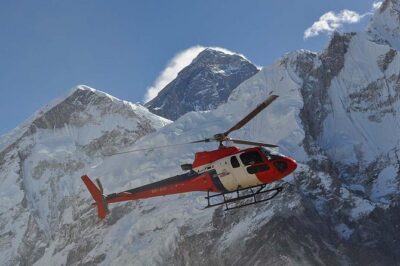
Everest Base Camp Trek with Helicopter Return from Gorakshep to Lukla
Read our review →Browse the lists this tour appears in