
REVIEW · EVEREST BASE CAMP TREKS
Everest Base Camp Trek with Helicopter Return from Gorakshep to Lukla
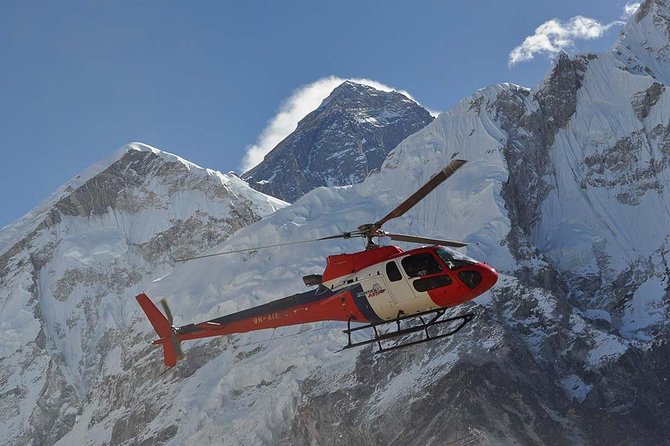
The mountain views are only half the story. This 12-day Everest Base Camp trek combines steep Himalayan walking, Sherpa villages, monastery visits, two useful acclimatization days, and a helicopter flight from Gorakshep to Lukla. You still earn the classic route on foot, but you avoid repeating the same trail on the way back.
I like the careful pacing, especially the rest days at Namche Bazaar and Dingboche. I also like the support package: a licensed English-speaking guide, porters, filtered trail water, permits, meals, and a first-aid kit with an oxygen saturation monitor are included. The main drawback is the price, $3,000 per person, and the trek remains physically demanding despite the shorter return.
The high point is not only reaching Everest Base Camp at 5,365 meters. Kala Patthar rises to 5,555 meters and often provides the finest mountain view of the trip. The helicopter ride is a smart finish, but poor weather can affect flights and the Lukla air route.
In This Review
- Key points to know before booking
- What the $3,000 price really covers
- Day 1 in Kathmandu: A gentle start
- Day 2: Lukla to Phakding, the first Himalayan steps
- Day 3: The six-hour climb to Namche Bazaar
- Day 4: Namche acclimatization and Everest View Point
- Day 5: Tengboche and its hilltop monastery
- Day 6: Dingboche through Pangboche
- Day 7: Nangkartshang Peak and a second altitude test
- Day 8: Lobuche and the memorial stones
- Day 9: Everest Base Camp at 5,365 meters
- Day 10: Kala Patthar at 5,555 meters
- Day 11: Helicopter from Gorakshep to Lukla
- Day 12: Departure from Kathmandu
- Guides, porters, and day-to-day support
- What you need to bring
- Who should choose this trek
- Should you book this Everest Base Camp package?
- FAQ
- How long is the Everest Base Camp trek with helicopter return?
- Where does the trek begin?
- How high is Everest Base Camp?
- What is the highest point on the itinerary?
- How long is the helicopter flight?
- Is the helicopter ride private?
- Are meals included?
- Is travel insurance included?
- What is the minimum booking requirement?
- What is the maximum group size?
- What happens if bad weather cancels the experience?
Key points to know before booking
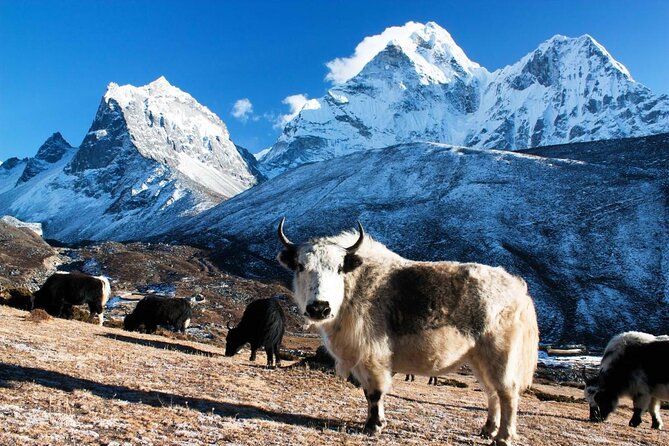
- You walk the famous approach to Everest Base Camp: The route passes through Phakding, Namche Bazaar, Tengboche, Dingboche, Lobuche, and Gorakshep.
- Two acclimatization stops help with altitude: You spend one day around Namche and another hiking to Nangkartshang Peak above Dingboche.
- Kala Patthar is the highest point: At 5,555 meters, this climb is harder than the base camp walk but gives you a superb high-altitude viewpoint.
- The return includes a shared helicopter flight: From Gorakshep, the helicopter takes you to Lukla in about 20 minutes, replacing the long walk back.
- The group can reach 14 people: A minimum booking of two people applies, so this is not designed as a private solo departure.
- The support is strong for a guided trek: One porter is assigned for every two people, while guide and staff costs, permits, food, and basic medical supplies are covered.
What the $3,000 price really covers
At first glance, $3,000 is a serious sum for a 12-day trek. The value becomes clearer when you separate the hiking from the logistics. This package includes airport transfers, two nights in a three-star Kathmandu hotel with breakfast, domestic flights between Kathmandu and Lukla, trekking accommodation, meals on the trail, national park and TIMS permits, a guide, porters, staff insurance, and the helicopter return.
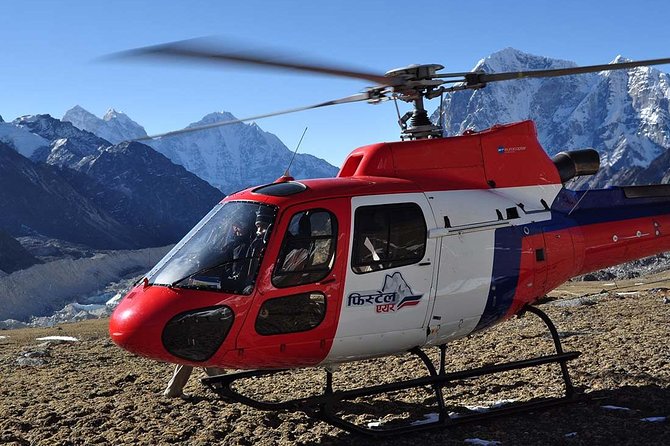
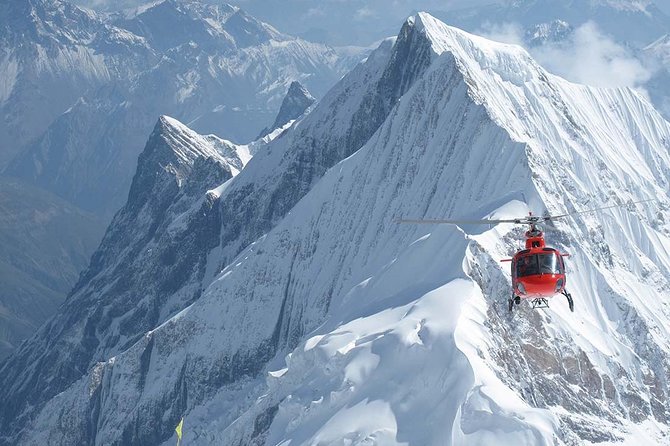
The helicopter flight is the costly feature that changes the trip from a standard return trek. It saves several walking days and gives you a memorable aerial view of the Khumbu region, though the listed flight is shared rather than private.
You also receive a duffel bag, trekking map, sun hat, filtered water from a Katadyn Pocket Water Filter, seasonal fruit, and a first-aid kit with an oximeter. These are useful touches, particularly water support at altitude, where buying bottled water repeatedly can become expensive and environmentally wasteful.
The price does not cover international flights, a Nepal visa, insurance, personal gear, drinks, Kathmandu lunches and dinners, or tips. Insurance with emergency rescue and evacuation cover is essential, not an optional luxury. At this altitude, a medical evacuation can be extremely expensive.
More Everest Base Camp treks:
- Everest Base Camp Trek – 14 Days
★ 5.0 · 1,499 reviews - Everest Base Camp Trekking
★ 5.0 · 485 reviews - Everest Base Camp Trekking – 13 Day
★ 5.0 · 365 reviews
Day 1 in Kathmandu: A gentle start
Your arrival at Tribhuvan International Airport is handled with a private transfer to the hotel. You then meet the guide and attend a pre-trip briefing.
This first day is mainly about getting organized. You can check your equipment, ask questions about the walking schedule, and make sure your luggage is divided between your daypack and the porter’s load. Since the next morning begins early, do not treat this as a sightseeing day.
Two nights in Kathmandu are included, with breakfast. Lunch and dinner are your responsibility, as are drinks throughout the trip. That arrangement gives you freedom to choose your own meals in the capital, but remember to budget for it.
Day 2: Lukla to Phakding, the first Himalayan steps
The flight from Kathmandu to Lukla takes about 35 minutes and lands at Tenzing and Hillary Airport, at approximately 2,804 meters. Even before the hike begins, the flight is part of the adventure. It is short, scenic, and tied closely to the practical realities of mountain travel.
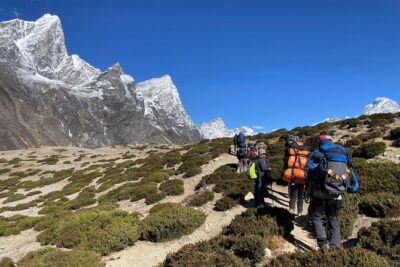
From Lukla, you walk to Phakding. This opening section gives your body time to adjust before the route reaches greater heights. The trail follows the Dudh Koshi and passes through green forest, small settlements, bridges, and mountain paths.
Phakding accommodation is listed as a guesthouse with attached toilets. That is a useful comfort during the first trekking night. The walking day is long in the schedule, listed at about 20 hours, but this appears to represent the full activity window rather than nonstop walking. Ask the operator for the exact daily walking estimate before departure.
Day 3: The six-hour climb to Namche Bazaar
The route from Phakding to Namche takes about six hours of hiking. You follow the Dudh Koshi and cross suspension bridges decorated with prayer flags. The bridges are not just photo stops. They are part of the trail’s rhythm, with the river far below and the path rising steadily toward the main trading town of the Khumbu.
Namche Bazaar sits at about 3,440 meters and is a key staging point for the trek. It is the last major settlement on the route with a broad range of trekking services, though the package provides the needed accommodation and meals.
This is where the climb begins to feel serious. You may still feel fresh from the lower trail, but the higher altitude changes the effort. Walk at the guide’s pace, keep drinking water, and avoid treating the first difficult climb as a race.
More Helicopter Tours in Kathmandu:
- Everest Base Camp Helicopter Tour landing at Everest View Hotel
★ 5.0 · 668 reviews - Everest Base Camp Helicopter Tour landing at Hotel Everest View
★ 5.0 · 218 reviews - Everest Base Camp helicopter tour with landing
★ 5.0 · 61 reviews - Everest Base Camp Helicopter Tour with Hotel Everest View Landing
★ 5.0 · 52 reviews
Day 4: Namche acclimatization and Everest View Point
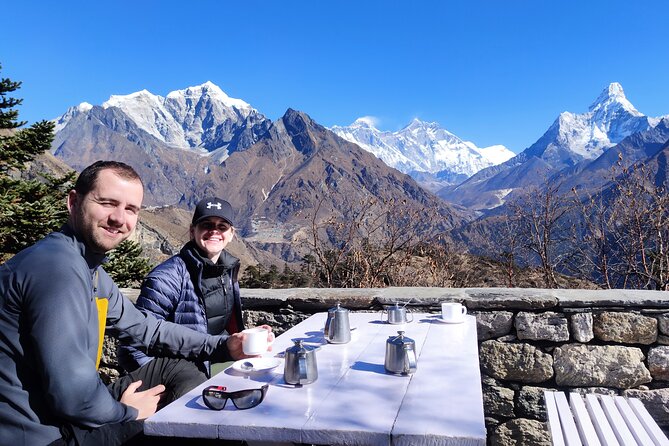
The rest day at Namche is not a day of doing nothing. You take a short hike around the town toward the Everest View Point, with mountain views and a sunrise opportunity.
This pause matters. The itinerary gains altitude in measured steps rather than pushing directly toward Base Camp. You also get time to adjust to the thinner air, inspect the surrounding villages, and enjoy a less hurried morning before the route becomes more remote.
The scheduled viewpoint stop is only about 24 minutes, but the wider acclimatization day is listed as a full day. Keep expectations sensible: clouds can affect the view, and mountain weather can change quickly. The value is the combination of a short climb and a rest period, not a guaranteed postcard scene.
Day 5: Tengboche and its hilltop monastery
From Namche, the trail follows the Dudh Koshi with broad mountain views before reaching Tengboche at about 3,860 meters. The route includes more uphill walking and follows rushing glacial water.
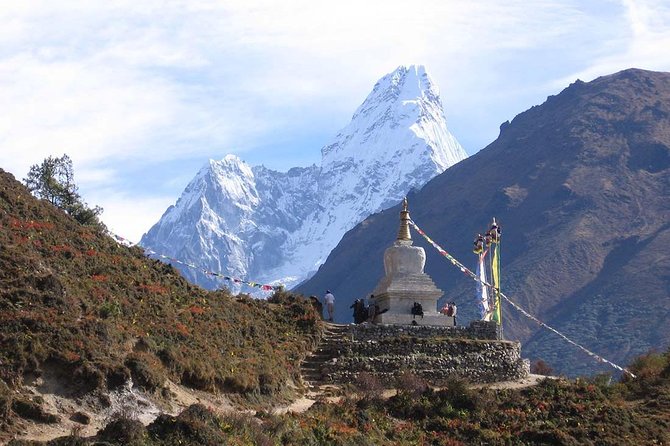
Tengboche is best known for its monastery. A visit gives the trek a cultural dimension that a simple summit-focused itinerary would miss. The mani stones and prayer flags along the route also show how closely the trail is tied to local Buddhist practice.
This is a demanding day because the altitude is now obvious. The schedule again lists a long activity period, around 16 hours, so confirm the precise walking time and departure arrangements. The guesthouse standard may be simpler here than in Kathmandu or Namche, and attached toilets are specifically promised only for Lukla, Phakding, and Namche.
Day 6: Dingboche through Pangboche
The route drops from Tengboche to Debuche, crosses the Imja Khola, and climbs through Pangboche. Mani stones line sections of the trail, and the route continues toward Dingboche at roughly 4,410 meters.
Dingboche is an important altitude stop. You are high enough for the air to feel thin, but the next acclimatization day gives you a chance to adjust before moving toward Lobuche and Gorakshep.
Do not underestimate this section because it is not yet Base Camp day. Your body is doing much of the work quietly. A moderate fitness level is required, but you should also be comfortable walking for several hours on uneven, uphill terrain.
Day 7: Nangkartshang Peak and a second altitude test
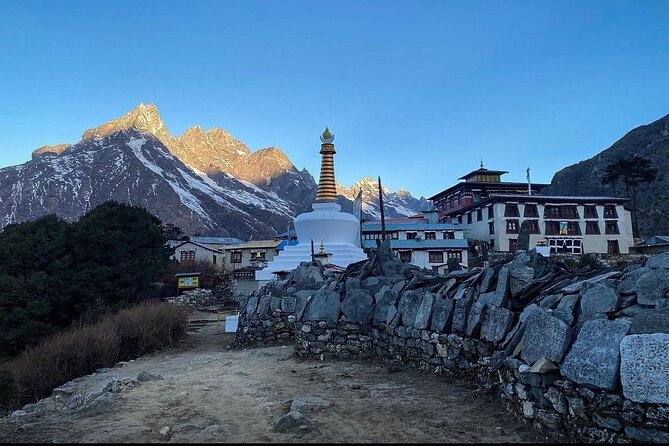
The second acclimatization day includes a hike to Nangkartshang Peak above Dingboche. You do not advance toward Everest Base Camp, and that is precisely the point.
The climb offers views of the surrounding Himalayan peaks while giving your body another controlled exposure to altitude. It can feel frustrating to spend a full day without changing villages, but this is one of the most sensible parts of the schedule.
You will want warm clothing, water, sun protection, and a steady pace. The supplied sun hat is useful, but it does not replace sunglasses, sunscreen, gloves, or a warm outer layer. Those personal items are not included.
Day 8: Lobuche and the memorial stones
The route leaves Dingboche and follows the lateral moraine of the Khumbu Glacier toward Lobuche. The ground becomes more stark and demanding as vegetation thins.
Along the way, stone memorials honor climbers who died on nearby peaks. They give this part of the route a quiet seriousness. Everest is not simply a scenic destination, and these memorials make the risks of high-altitude climbing impossible to ignore.
Lobuche is a key overnight stop before the push to Gorakshep and Base Camp. The day is physically tiring, with a long schedule listed at about 16 hours. Pack only what you need for the day in your personal bag and let the porter handle the larger load within the agreed arrangements.
Day 9: Everest Base Camp at 5,365 meters
The walk from Lobuche to Everest Base Camp is one of the trip’s major tests. You follow the Khumbu Glacier and climb toward Gorakshep before continuing to Base Camp at approximately 5,365 meters.
The trail is not a paved path or a simple viewpoint walk. Glacier-side terrain, altitude, and the length of the day all add difficulty. You may move slowly, and that is normal. The guide’s role is especially important here, since the group needs to stay together and respond sensibly to symptoms of altitude trouble.
Base Camp itself changes with the climbing season. In spring, expedition activity may be visible, while at other times the area can feel quieter. You are not climbing Everest, but reaching this point on foot gives the destination real meaning.
The return to Gorakshep follows the same general area, so you need enough energy for the trip back. This is why the next day’s plan is built around Kala Patthar rather than a long descent.
Day 10: Kala Patthar at 5,555 meters
Kala Patthar is the highest point on the itinerary and one of its toughest climbs. At about 5,555 meters, the ascent is short compared with the full trek, but altitude makes every step count.
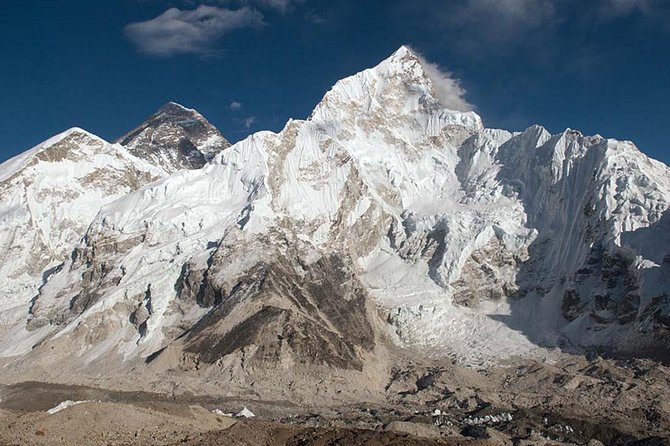
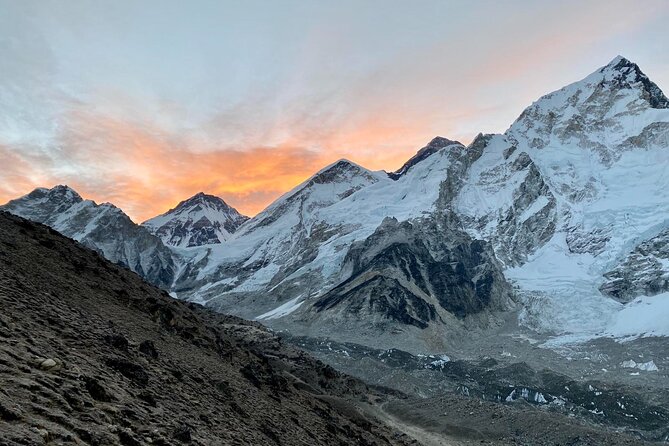
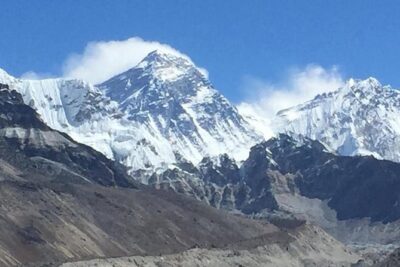
The reward is a broad view toward Everest and the surrounding peaks. Many people find this viewpoint more visually satisfying than Base Camp because it offers a higher perspective over the Khumbu region.
The schedule lists the stop at about 30 minutes, although the climb and return take much longer than the time spent at the top. Carry water, protect your face from the sun, and keep expectations practical. The air is thin, and even a fit person can feel slow here.
This is also the moment to appreciate the unusual design of the trip. A standard route would continue back down the trail on foot. Here, you return toward Gorakshep for a helicopter flight the next day.
Day 11: Helicopter from Gorakshep to Lukla
The shared helicopter ride from Gorakshep to Lukla takes about 20 minutes. It replaces the long return trek and offers a sharp change of pace, from slow foot travel to a fast flight over the region you have just crossed.
The flight depends on suitable weather. If poor conditions cancel the experience, the stated policy offers a different date or a full refund. You should still build flexibility into your wider Nepal plans, since both mountain flights and helicopter operations can be affected by weather.
The itinerary then describes a scenic flight onward from Lukla to Kathmandu, taking about 35 minutes, followed by a hotel transfer. The wording suggests the helicopter gets you back to Lukla and the regular domestic flight continues the journey to Kathmandu. Confirm the exact flight sequence and timing before departure.
Day 12: Departure from Kathmandu
The final day provides transfer support to Tribhuvan International Airport. The experience ends without another major sightseeing activity.
That is useful if you have an international flight to catch, but check the departure timing carefully. The package covers airport transfers, not international airfare or departure taxes.
Guides, porters, and day-to-day support
The guide is a local, licensed, English-speaking professional with first-aid training. That matters on a high-altitude trek where pacing, hydration, and early attention to symptoms are more important than heroic effort.
The company assigns one porter for every two people. You remain responsible for your daypack, while the porter carries the larger shared load. Be respectful about weight, pack lightly, and remember that tipping is expected for trekking staff and the driver.
Several guide and porter names appear in the trip’s feedback, including Raj, Ram, Rajendra, Madan, Krishna, Probin, Bishal, Girija, Pesal, Saman, Jit, and Sher. Specific praise often centers on encouragement, personal care, and calm support during hard sections. If you are booking with a group, ask when you will receive your guide and porter details.
The maximum group size is 14 people. That is large enough for a social atmosphere but small enough for a guide to manage more easily than a big commercial departure.
What you need to bring
Personal trekking equipment is not included. You will need to arrange suitable clothing and footwear for cold, high-altitude conditions, along with sun protection and a reliable daypack.
The package does include a duffel bag, map, and sun hat. It also covers standard breakfast, lunch, and dinner during the trek, plus a farewell dinner on the last night. Alcoholic and other hot or cold drinks cost extra.
Filtered water is provided on the trail using a Katadyn Pocket Water Filter. Seasonal fruit is also included. These details reduce the amount of disposable plastic you need to buy, though you still need a refillable bottle or hydration system.
Who should choose this trek
I would recommend it to you if you want the classic Everest Base Camp route but do not want to walk all the way back to Lukla. The helicopter return saves time and reduces repeated trail walking, while still preserving the major villages, monastery, glacier route, Base Camp visit, and Kala Patthar climb.
It suits people with moderate physical fitness who can handle several long hiking days and substantial altitude. It is not a relaxed sightseeing holiday. You should be comfortable with basic guesthouse accommodation, changing weather, early starts, and the possibility that plans may shift.
It is also a good fit if you value organized support. Permits, meals, staff, transfers, flights, water filtering, and medical supplies are bundled together. Independent trekkers may prefer to arrange each item themselves, but this package reduces the number of moving parts.
Should you book this Everest Base Camp package?
Book it if the helicopter return is important to you and you want a guided, supported route with two acclimatization days. The strongest reasons are the sensible altitude schedule, the experienced guide and porter structure, and the way the flight trims the return without removing the main trek.
Think twice if $3,000 stretches your budget, if you dislike fixed group arrangements, or if you want a private helicopter. This is a shared flight, and the trip still requires serious effort before you reach it.
For the right person, the value is not just the aircraft ride. You get a carefully supported route to Everest Base Camp, a high climb to Kala Patthar, and a practical way to finish the journey without retracing every step on foot.
FAQ
How long is the Everest Base Camp trek with helicopter return?
The experience lasts approximately 12 days.
Where does the trek begin?
The trip begins in Kathmandu, with airport pickup and transfer to a hotel. The trekking route starts after the flight from Kathmandu to Lukla.
How high is Everest Base Camp?
Everest Base Camp is listed at approximately 5,365 meters.
What is the highest point on the itinerary?
Kala Patthar is the highest point, at approximately 5,555 meters.
How long is the helicopter flight?
The shared helicopter flight from Gorakshep to Lukla takes about 20 minutes.
Is the helicopter ride private?
No. The included helicopter ride is shared.
Are meals included?
Breakfast, lunch, and dinner are included during the trek. Kathmandu lunches and dinners, alcoholic drinks, and other hot or cold drinks are not included.
Is travel insurance included?
No. You must arrange travel insurance that covers emergency rescue and evacuation.
What is the minimum booking requirement?
At least two people must book the experience.
What is the maximum group size?
The maximum group size is 14 people.
What happens if bad weather cancels the experience?
If poor weather causes cancellation, you are offered a different date or a full refund.
New in the Kathmandu listings
- Traditional Momo Making Class★ 5.0 · 10 reviews
- Kathmandu: Ancient City Kirtipur & Pharping Monastery Tour★ 5.0 · 2 reviews
- Kathmandu to Pokhara Premium sofa bus ticket★ 4.0 · 17 reviews
- Women Empowerment Project(Nepali cooking class & jewelry workshop★ 5.0 · 15 reviews
- Yoga Experience Day Trip with Private Transfer From Kathmandu★ 4.0 · 2 reviews
- 7-Day Langtang Valley Trek from Kathmandu★ 5.0 · 1 review
- Kathmandu 2 Nights 3 Days Chitwan Jungle Safari Tour★ 5.0 · 9 reviews
- Wildlife Adventure in Chitwan Nepal★ 4.0 · 4 reviews
Everest Base Camp Treks, compared.
Browse the lists this tour appears in