
REVIEW · EVEREST BASE CAMP TREKS
Everest Base Camp Trek: A short EBC Trek to Iconic Himalaya
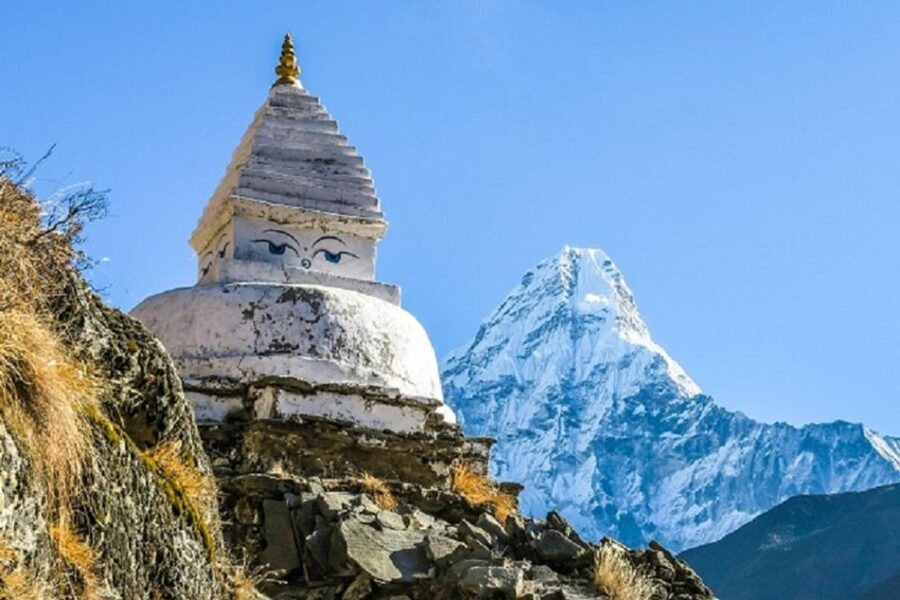
Everest rewards patience, but this trek moves fast. This nine-day Everest Base Camp trek takes you from Kathmandu to Lukla, through Namche Bazaar and Tengboche, and onward to Everest Base Camp at 5,364 meters. You get huge views of Everest, Lhotse, Nuptse, Ama Dablam, and the Khumbu Icefall, along with time in Sherpa villages and a visit to Tengboche Monastery.
I like the direct route and the strong cultural focus. You also get a guide, trekking lodge stays, meals, permits, a sleeping bag, down jacket, duffle bag, and trekking poles when needed. The main concern is the pace: nine days is short for this altitude, and the schedule gives limited time for acclimatization.
The listed price is $681 per person, which can offer good value for a guided trek with meals and permits included. But your Lukla flights, Kathmandu hotels, drinks, gear, and personal costs are extra. Plan carefully, especially since mountain weather can disrupt flights.
In This Review
- Key details that shape the trek
- What $681 includes, and what it does not
- Day 1: Lukla to Phakding, an easy start with a catch
- Day 2: Phakding to Namche Bazaar, the first serious climb
- Day 3: Namche to Tengboche and its famous monastery
- Day 4: Tengboche to Dingboche, where the air gets thin
- Day 5: Dingboche to Lobuche, a high and demanding day
- Day 6: Gorak Shep and Everest Base Camp at 5,364 meters
- Day 7: Kala Patthar sunrise and the long descent to Pheriche
- Days 8 and 9: Returning to Lukla and Kathmandu
- Guides, porters, and the human side
- Who should choose this nine-day plan?
- Practical preparation for the Himalayas
- Should you book the Everest Base Camp Trek?
- FAQ
- How long is the Everest Base Camp Trek?
- How high is Everest Base Camp?
- How much does the trek cost?
- Are flights to Lukla included?
- What happens if the flight leaves from Ramechhap?
- Should I add extra acclimatization days?
- What languages can the guide service provide?
- What equipment is provided?
Key details that shape the trek
- Lukla is the gateway: Your Himalayan journey begins with a flight from Kathmandu, or sometimes a road transfer to Ramechhap followed by the flight.
- The trek reaches 5,364 meters: Everest Base Camp is high enough that fitness alone does not remove the risk of altitude sickness.
- Kala Patthar provides the great panorama: The early morning climb to 5,545 meters offers the best listed viewpoint for Everest and the surrounding peaks.
- Sherpa culture is part of the route: Namche Bazaar, Tengboche, Dingboche, and other villages give the trek a human side beyond mountain scenery.
- The schedule is quick: Adding one or two days in Namche Bazaar and Dingboche would make the plan more comfortable for many people.
- Guide support is a major part of the value: Ramesh, Palden, and coordinator Sobit are named in the supplied experience details, with especially warm praise for their care and organization.
What $681 includes, and what it does not
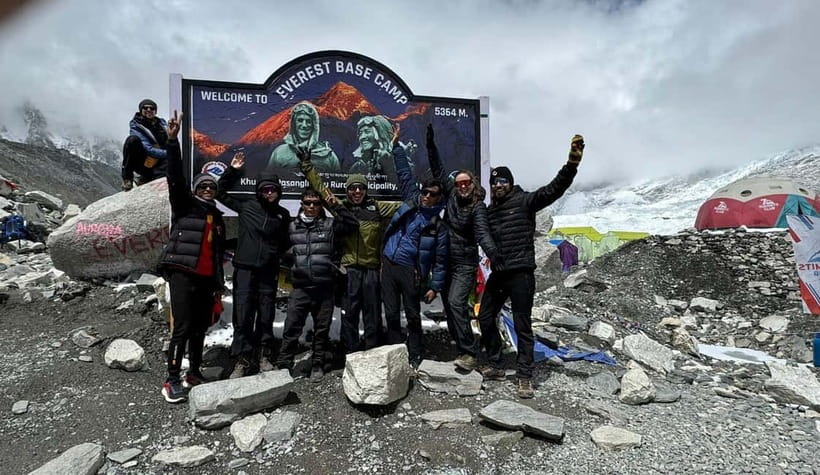
At $681 per person, this trek sits in an appealing price range for a guided Everest Base Camp experience, but the headline figure needs a close look. The package includes airport pickup and departure services related to the trek, standard trekking lodges, breakfast, lunch, and dinner during the walk, seasonal fruit, and a special cultural show with a farewell dinner in Kathmandu.
The price also covers an experienced trekking guide, Sagarmatha National Park fees, the Pasang Lhamu Rural Municipality entrance fee, TIMS, government taxes, official expenses, and service charges. A sleeping bag, down jacket, duffle bag, and trekking pole are available if needed and expected to be returned after the trek. You also receive a T-shirt or cap and a trip certificate.
The important extra cost is the Kathmandu to Lukla return flight. The company can arrange the ticket, or a helicopter flight upon request, but the fare itself is not included. Kathmandu hotels before and after the trek are also outside the price, as are personal gear, drinks, tea, coffee, water, laundry, communications, and other personal spending.
That makes the trek good value if you already have suitable hiking clothes and do not need hotel arrangements. It is less of a bargain if you add flights, several hotel nights, drinks, equipment, and an extra acclimatization day. Ask for the full current cost before booking so the $681 price does not surprise you later.
More Everest Base Camp treks:
- Everest Base Camp Trek – 14 Days
★ 5.0 · 1,499 reviews - Everest Base Camp Trekking
★ 5.0 · 485 reviews - Everest Base Camp Trekking – 13 Day
★ 5.0 · 365 reviews
Day 1: Lukla to Phakding, an easy start with a catch
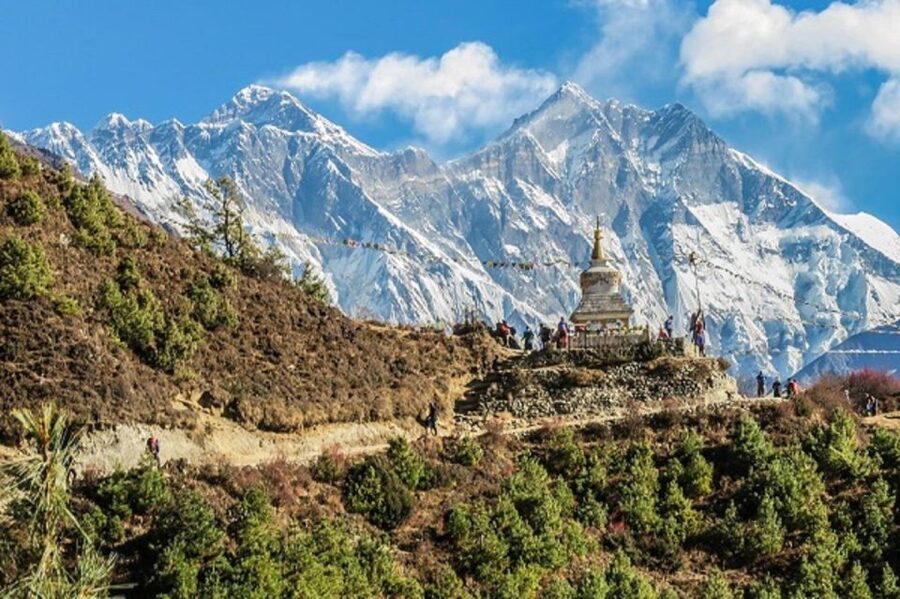
The journey begins with an early morning flight to Lukla. From there, you walk to Phakding at 2,610 meters, a trek of about three hours.
This first walking day is useful because it lets you begin gaining altitude without starting with a hard climb. The route also gives you a first taste of suspension bridges, mountain paths, and the Khumbu region.
The catch is the flight. High air traffic can mean that the flight departs from Ramechhap instead of Kathmandu. In that case, you need a roughly four-hour drive from Kathmandu to Ramechhap before boarding the flight to Lukla. Your pickup time depends on your location and flight schedule, and you need to be at the airport at least one hour before departure.
Do not treat the first day as a fixed clockwork transfer. Mountain weather and air traffic can change the plan.
Day 2: Phakding to Namche Bazaar, the first serious climb
The walk to Namche Bazaar takes about six to seven hours and finishes at 3,440 meters. This is where the trek begins to feel like a real high-altitude trip.
Namche is one of the key Sherpa settlements on the route. It is also an important place to adjust to the thinner air. The schedule describes an acclimatization day in Namche, but the nine-day version does not provide a separate full rest day. Instead, the plan moves onward on Day 3.
That is a major point for your decision. If you are fit and already comfortable with long days at altitude, the pace may be workable. If you are new to high elevations, adding one day here is sensible. The operator specifically recommends extra time in Namche and Dingboche, and I would take that advice seriously.
Day 3: Namche to Tengboche and its famous monastery
The trail from Namche to Tengboche takes about five to six hours, ending at 3,860 meters. The route brings you into a more dramatic mountain setting, with views of peaks such as Ama Dablam and Lhotse.
Tengboche Monastery is the cultural high point of this part of the trek. A visit gives you a break from the physical effort and a chance to understand the Buddhist traditions that shape life in the Khumbu. The Sherpa hospitality is not an add-on here. It is part of the character of the route.
You should also expect another gain in altitude. The distance is manageable on paper, but altitude can make a normal walking day feel much harder. Keep your pace steady and do not race your guide or companions.
More walking in the hills of Nepal:
- Nagarkot Sunrise View and Day Hiking from Kathmandu
★ 5.0 · 471 reviews - Annapurna Circuit Trek with Tilicho Lake
★ 5.0 · 368 reviews - Everest Base Camp Trek -14 Days
★ 5.0 · 321 reviews - Annapurna base camp trek 5 Days
★ 5.0 · 252 reviews
Day 4: Tengboche to Dingboche, where the air gets thin
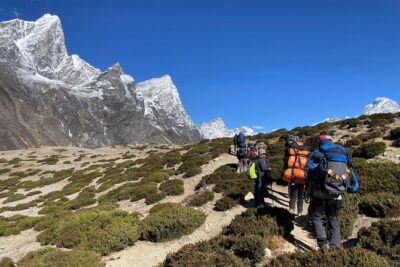
The walk to Dingboche takes about five to six hours and reaches 4,410 meters. The trail passes through rhododendron forest and open mountain country, with the surrounding peaks becoming more imposing as you climb.
Dingboche is listed as an acclimatization point. In the standard nine-day schedule, however, you arrive on Day 4 and continue to Lobuche on Day 5. That gives you little time to rest unless you add a day.
This is the point where I would most strongly consider extending the trek. An extra day in Dingboche can make the upper section more manageable, particularly for a beginner. The stated guidance is clear: trekkers should be physically fit and able to walk four to five hours a day even at high altitude. The upper route can involve longer days than that.
Day 5: Dingboche to Lobuche, a high and demanding day
The walk to Lobuche takes about five to six hours and reaches 4,910 meters. By now, you are well above the elevation of most inhabited places, and the cold, thin air can affect sleep, appetite, and walking speed.
Lobuche is a practical overnight stop before the final push. The value of this day is not sightseeing alone. It breaks the climb into sections so you can reach Everest Base Camp without attempting the entire upper route at once.
Take the phrase physically fit seriously. You do not need to be an elite athlete, but you do need preparation for repeated walking days, steep sections, cold conditions, and limited recovery time. Comfortable hiking shoes, warm clothing, gloves, socks, thermal layers, a jacket, and hiking pants are essential parts of the packing list.
Day 6: Gorak Shep and Everest Base Camp at 5,364 meters
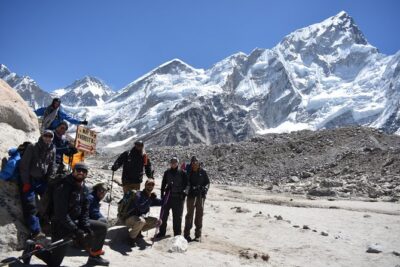
This is the big day. You walk from Lobuche to Gorak Shep at 5,140 meters, then continue to Everest Base Camp at 5,364 meters. The full day takes about seven to eight hours, and you return to Gorak Shep for the night.
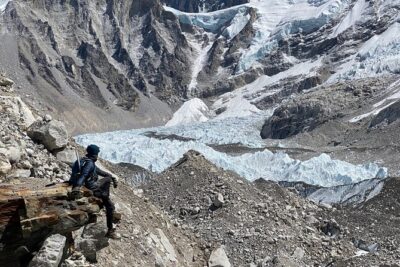
The trail follows the Khumbu Glacier, with the Khumbu Icefall providing the dramatic centerpiece. Base Camp itself is the emotional goal: a place tied to the great Everest expeditions and a clear reward for the days of climbing.
The altitude makes this achievement more than a photo stop. At 5,364 meters, a short walk can feel tiring, and the return to Gorak Shep still requires effort after reaching the main goal. Keep water and warm layers close, and follow your guide’s advice if you feel unwell.
The description promises views of the Khumbu Icefall, but conditions and exact visibility can vary. The attraction is the full setting: glacier, rock, ice, and the knowledge that you have reached the foot of the world’s highest mountain.
Day 7: Kala Patthar sunrise and the long descent to Pheriche
The day begins early with a climb to Kala Patthar at 5,545 meters. This is higher than Everest Base Camp and is included for its sunrise panorama of Everest and the surrounding Himalayan peaks.
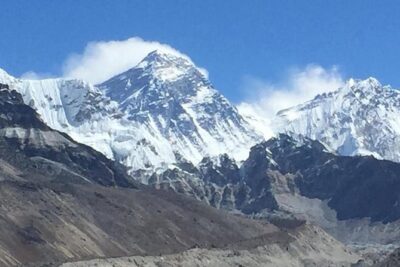
Kala Patthar is likely to be one of the strongest visual moments of the trek. You are not simply looking toward Everest from a distant village. You are standing high above the Khumbu Valley with Everest, Lhotse, Nuptse, and other peaks in view.
After the sunrise, you descend to Pheriche at 4,371 meters. The full day takes about seven to eight hours. Descending is easier on the lungs, but it still puts pressure on tired knees and legs. Your trekking poles can be particularly useful here.
Days 8 and 9: Returning to Lukla and Kathmandu
Day 8 takes you from Pheriche back to Namche Bazaar, a six to seven-hour walk. Returning through familiar villages lets you notice how different the route feels after the summit section. The lower elevation usually brings more energy, but the distance remains substantial.
On Day 9, you walk from Namche to Lukla in about six to seven hours, then fly back to Kathmandu. This is a demanding final day because the walk and flight are placed together.
The schedule ends in Lukla and includes the return flight arrangement upon request, but you should allow at least one buffer day before your international departure. Weather in the mountains can delay flights, and missing an international connection would erase much of the value of a carefully planned trek.
Guides, porters, and the human side
The package includes an experienced trekking guide throughout the walk. The named staff connected with this experience are Ramesh, Palden, and coordinator Sobit. Sydney, who completed an eight-day round trip from Lukla with a father, specifically described Ramesh as attentive and praised Sobit for his coordination. That same account described the pace as quick, with five and a half days ascending and two and a half days descending.
Another account singled out Palden and the porter team for being kind and pleasant. These details matter because a guide is not just someone who points out the trail. On a high-altitude trek, good support affects pacing, communication, confidence, and decisions when conditions change.
Porters can be arranged upon request rather than automatically included in the stated price. Ask exactly what porter service costs and what weight limit applies before you arrive. The duffle bag is provided if needed, but your personal gear and equipment remain your responsibility.
Who should choose this nine-day plan?
I would recommend the standard plan to fit trekkers who are comfortable with long walking days and want a short, focused route. It suits someone with limited time who accepts that the schedule leaves less room for rest.
I would not call it the best first high-altitude trek for everyone. Beginners should plan one or two extra days, especially in Namche Bazaar and Dingboche. Those days cost more in food and lodging, but they can make the experience more enjoyable and reduce the pressure of the fastest sections.
The route is not suitable for wheelchair users, babies under one year, or people over 95 years. Those limits do not replace a personal medical assessment, so you should consider your own fitness and altitude experience before booking.
Practical preparation for the Himalayas
Bring warm clothing, hiking shoes, a jacket, gloves, socks, hiking pants, and thermal clothing. The supplied down jacket, sleeping bag, and trekking pole can reduce the amount of equipment you need to buy, but you still need personal adventure gear suitable for cold and demanding conditions.
You can communicate with the provider in English, Chinese, Korean, Russian, Traditional Chinese, or Japanese. Pickup is included for the Kathmandu airport transfer, with details sent according to your hotel or airport location and flight schedule.
The booking terms are flexible: you can cancel up to 24 hours in advance for a full refund, and you can reserve now and pay later. Keep those terms in mind, but focus first on the physical plan, flight timing, and total cost.
Should you book the Everest Base Camp Trek?
Book this trek if you want the classic Everest route, have nine days available, and are ready for a fast schedule with long days at high altitude. The combination of Everest views, Sherpa villages, Tengboche Monastery, the Khumbu Icefall, Base Camp, and Kala Patthar gives you the essential Khumbu experience.
I would choose the package with one or two extra acclimatization days if your schedule allows. I would also confirm the return flight, porter cost, Kathmandu hotels, and full trip total before paying.
The strongest reason to choose Bold Himalaya Treks and Travels is the personal support offered by the guide and coordinator team. The main reason to pause is the compressed timing. If you accept that trade-off, this is a practical, well-priced route to one of the world’s great mountain journeys.
FAQ
How long is the Everest Base Camp Trek?
The planned trek lasts nine days, beginning with a flight from Kathmandu to Lukla and ending with a trek back to Lukla followed by a flight to Kathmandu.
How high is Everest Base Camp?
Everest Base Camp is at 5,364 meters. The Kala Patthar viewpoint is higher, at 5,545 meters.
How much does the trek cost?
The listed price is $681 per person. The Kathmandu to Lukla return flight, Kathmandu hotels, personal gear, drinks, water, laundry, communications, and other personal expenses are not included.
Are flights to Lukla included?
No. The flight can be arranged upon request, but the Kathmandu to Lukla and Lukla to Kathmandu fare is not included in the trek price.
What happens if the flight leaves from Ramechhap?
High air traffic can require a flight from Ramechhap instead of Kathmandu. You would then drive approximately four hours from Kathmandu to Ramechhap before flying to Lukla.
Should I add extra acclimatization days?
One or two extra days are recommended if you want more time to adjust in Namche Bazaar and Dingboche. Beginners are especially advised to consider adding days.
What languages can the guide service provide?
Guide service is available in English, Chinese, Korean, Russian, Traditional Chinese, and Japanese.
What equipment is provided?
A sleeping bag, down jacket, duffle bag, and trekking pole are available if you need them and are expected to be returned after the trek. Personal adventure gear and clothing are not included.
New in the Nepal listings
- Traditional Momo Making Class★ 5.0 · 10 reviews
- Kathmandu: Ancient City Kirtipur & Pharping Monastery Tour★ 5.0 · 2 reviews
- Pokhara: Pokhara Highlights Tour by Bus★ 3.6 · 10 reviews
- Day Walk(8-10h.) inside Chitwan National Park.★ 5.0 · 1 review
- One Day Tour inside Chitwan National Park★ 5.0 · 2 reviews
- Private Jeep Safari (8-10 hrs.)inside Chitwan National Park.★ 5.0 · 3 reviews
- Jungle Towernight Stay: 4-Day Tour in Chitwan National Park★ 5.0 · 4 reviews
- Night Stay in Chitwan National Park, 2 Nights 3 Days Package★ 5.0 · 1 review
Everest Base Camp Treks, compared.
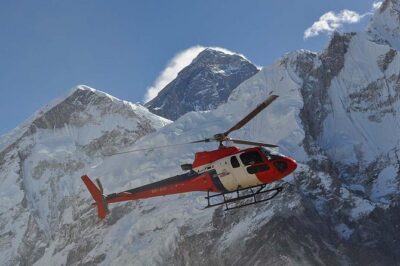
Everest Base Camp Trek with Helicopter Return from Gorakshep to Lukla
Read our review →Browse the lists this tour appears in