
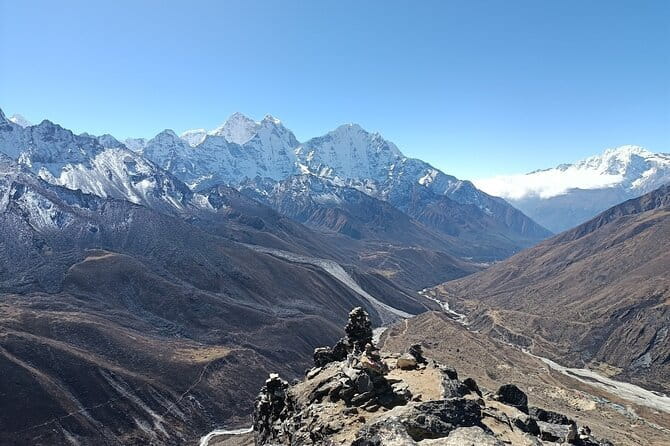
REVIEW · EVEREST BASE CAMP TREKS
Everest Base Camp Trek | Deluxe Lodges | Both Way Helicopter Ride
The mountains begin before the walking does. This 10-day Everest Base Camp trip gives you a fast route into the Khumbu, with helicopter flights to Lukla, a steady trek through Sherpa villages, and a helicopter return from the high country. I like the short 10-day format for anyone with limited holiday time, and I like that permits, guides, porters, meals, sleeping bags, and airport transfers are bundled together.
The best parts are the quiet morning views around Namche and the sunrise from Kala Patthar. The main drawback is the pace: this is a serious high-altitude trek compressed into a short schedule, so you need strong fitness and must take altitude symptoms seriously. The flight plan also deserves confirmation before booking, since the stated days describe both a Gorakshep to Lukla flight and a Lukla to Kathmandu flight.
In This Review
- Key points to know before booking
- What $3,332 buys you in the Khumbu
- Day 1: A soft landing in Thamel
- Day 2: Helicopter to Lukla, then an easy walk to Phakding
- Day 3: Suspension bridges and the climb to Namche Bazaar
- Day 4: Acclimatization around Namche and Syangboche
- Day 5: Tengboche Gompa and the Imja Khola Valley
- Day 6: Pangboche and stronger views of Ama Dablam
- Day 7: Dingboche and the second acclimatization day
- Day 8: Lobuche and the Thukla memorials
- Day 9: Gorakshep and Everest Base Camp
- Day 10: Kala Patthar sunrise and the return flight
- Guides, porters, and the human side of the trip
- What to pack and what the price leaves out
- Who should book this 10-day trek?
- Should you book Life Himalaya’s Everest Base Camp trek?
- FAQ
- How long is the Everest Base Camp trek?
- What is the price per person?
- Are helicopter flights included?
- Is airport pickup included?
- What accommodation is provided?
- Are meals included?
- Is travel insurance included?
Key points to know before booking
- Shared helicopter flights save time: You fly from Kathmandu to Lukla in about 45 minutes, then return by helicopter from the Everest Base Camp area to Lukla before flying onward to Kathmandu.
- You reach Everest Base Camp on foot: The route passes through Phakding, Namche Bazaar, Tengboche, Pangboche, Dingboche, Lobuche, and Gorakshep.
- Two acclimatization days are built in: You spend time around Namche and Dingboche, using the useful climb-high, sleep-low approach.
- Deluxe means practical lodge comfort: Accommodation is twin-share in the best available lodges, with two nights in a three-star Kathmandu hotel.
- The package includes cold-weather basics: A warm down jacket and sleeping bag rated to minus 20 degrees Celsius are provided and returned after the trip.
- Price reflects bundled support: At $3,332 per person, the cost covers flights, staff, lodging, meals on trek, permits, and equipment, but not insurance or Kathmandu lunches and dinners.
What $3,332 buys you in the Khumbu
At $3,332 per person, this is not a bare-bones walking holiday. You are paying for a guided private trip, shared helicopter transport at both ends, lodge accommodation, food during the trek, permits, porters, warm gear, and airport transfers.
The helicopter flights account for much of the price. They replace the usual fixed-wing flight to Lukla and save walking days on the return. That matters if you have only 10 days, although helicopter flights can still be affected by mountain weather. The package also includes a porter for every two people, which lets you walk with a lighter daypack.
You receive 10 breakfasts, eight lunches, and eight dinners. Meals in Kathmandu are not included except for breakfast at the hotel and a farewell dinner in a traditional Nepali restaurant. Drinks, snacks, international airfare, Nepal’s entry visa, and travel insurance are extra.
The value is strongest if you want one organized price rather than arranging each service yourself. It is less attractive if you already have access to local guides, equipment, and flexible time. The package is private for your group, but the helicopter flights are shared.
More Everest Base Camp treks:
- Everest Base Camp Trek – 14 Days
★ 5.0 · 1,499 reviews - Everest Base Camp Trekking
★ 5.0 · 485 reviews - Everest Base Camp Trekking – 13 Day
★ 5.0 · 365 reviews
Day 1: A soft landing in Thamel
Your arrival begins at Tribhuvan International Airport. A representative from Life Himalaya Trekking meets you and takes you by private car or van to your hotel in Thamel.
This first night is simple but useful. You can rest after the flight, sort your bags, and prepare for an early start. The package includes one pre-trek night in a three-star Kathmandu hotel, with another night included after the trek.
Thamel is Kathmandu’s main tourist district, filled with trekking shops, restaurants, massage centers, and small hotels. You will not need to hunt for a guide or arrange a transfer after landing, which is welcome after an international flight. Ask the operator to confirm the hotel name and the exact morning pickup time before you arrive.
Day 2: Helicopter to Lukla, then an easy walk to Phakding
The morning starts with a transfer to Tribhuvan International Airport for the helicopter flight to Tenzing-Hillary Airport in Lukla. The flight takes about 45 minutes and offers views toward Everest and Kanchenjunga.
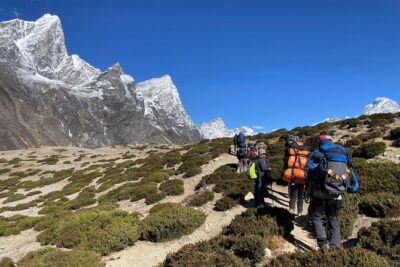
Lukla is the practical gateway to the Everest region. After landing, you begin walking toward Phakding along the Dudh Koshi River. The route is described as gentle, giving you a first chance to adjust to trekking at altitude without immediately facing a major climb.
Phakding is a sensible first stop. You have already gained elevation by flying to Lukla, but the day’s walking is relatively modest. Do not treat this as a throwaway day. Drink steadily, walk at a measured pace, and use the evening to prepare for the larger climb to Namche.
The published schedule gives this stop a very long duration, so treat the times as approximate. Mountain transport and walking rarely follow a neat city timetable.
Day 3: Suspension bridges and the climb to Namche Bazaar
From Phakding, the trail follows pine forest and the Dudh Koshi River. You pass through Benkar and Monjo before entering Sagarmatha National Park, where park and local permit arrangements are part of the package.
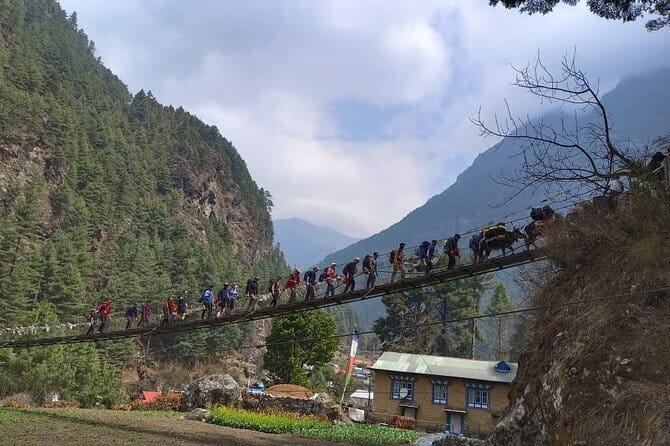
The route includes suspension bridges, including the Hillary Bridge. These crossings are a memorable part of the approach. The river runs below, the trail narrows, and the high peaks begin to feel less like distant scenery and more like your immediate surroundings.
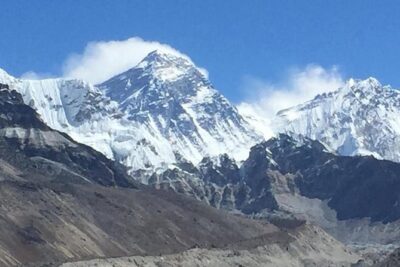
After the confluence of the Dudh Koshi and Bhote Koshi rivers, the trail climbs more sharply toward Namche Bazaar. This is one of the tougher early sections. Your first glimpse of Everest appears above the Lhotse and Nuptse range, though the view may be partly blocked depending on your position and the weather.
Namche sits at about 3,440 meters. It is the Khumbu’s main trading center and a useful place to pause. The climb is demanding, but the payoff is a real mountain settlement rather than a simple overnight camp.
More Helicopter Tours in Kathmandu:
- Everest Base Camp Helicopter Tour landing at Everest View Hotel
★ 5.0 · 668 reviews - Everest Base Camp Helicopter Tour landing at Hotel Everest View
★ 5.0 · 218 reviews - Everest Base Camp Trek with Helicopter Return from Gorakshep to Lukla
★ 5.0 · 161 reviews - Everest Base Camp helicopter tour with landing
★ 5.0 · 61 reviews
Day 4: Acclimatization around Namche and Syangboche
This is the first acclimatization day. Instead of resting indoors all day, you hike toward Syangboche beneath Khumbila Peak.
The short excursion follows the sensible principle of climbing higher during the day and sleeping lower at night. You also visit the Hotel Everest View, listed at about 3,880 meters, where you can stop for coffee and views toward Everest, Ama Dablam, and Lhotse.
The hotel visit is not included, so budget separately for anything you buy there. The point is not luxury. It is the view and the chance to spend time at a higher elevation before moving farther up the valley.
Back in Namche, you have time for the market, restaurants, massage centers, and spas. This is one of the more flexible days in the program. Use it to check your boots, charge devices if possible, and tell your guide promptly about headaches, nausea, unusual tiredness, or poor sleep.
Day 5: Tengboche Gompa and the Imja Khola Valley
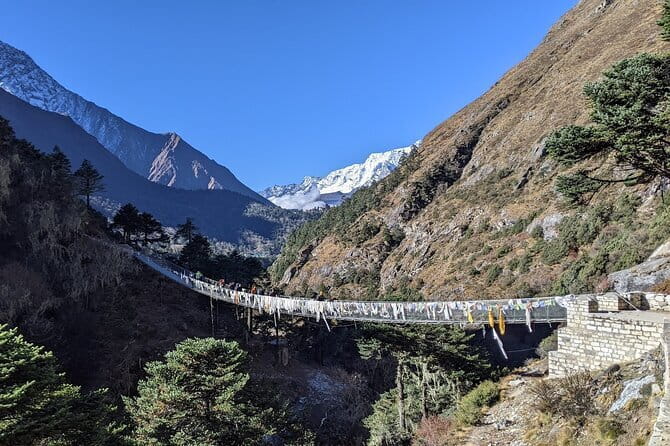
After breakfast, you follow the Dudh Koshi for part of the route before crossing a suspension bridge into the Imja Khola Valley. The trail leads toward Tengboche Gompa, one of the best-known religious sites on the Everest route.
Tengboche is more than a scenic stopping point. The monastery gives the walk a clear cultural dimension, connecting the mountain route with Sherpa Buddhist life. The surrounding views, especially toward Ama Dablam, make this a rewarding day even before the final destination comes into view.
The day is listed at about five hours of walking. That sounds manageable, but altitude changes the effort. Keep your pace slow and let your guide set the rhythm. You are now leaving the lower valley behind, and each night matters more.
Day 6: Pangboche and stronger views of Ama Dablam
The trek continues to Pangboche, a village with a Buddhist monastery and fine views of Ama Dablam and other major peaks.
The description of this day suggests that the route is physically more comfortable than some earlier sections, but you should not confuse that with low risk. You are still gaining elevation, and the air is thinner than it was around Namche.
Pangboche gives you a close look at a settled mountain community along the trail. The village is a useful reminder that the route is not only about standing at Base Camp. It passes through places where people live, work, trade, and maintain religious traditions at high altitude.
Day 7: Dingboche and the second acclimatization day
Dingboche is the second main acclimatization stop. The plan again uses the climb-high, sleep-low method, with a hike toward higher ground before returning to Dingboche for the night.
The listed excursion takes about five hours. The purpose is to let your body adjust before the route climbs toward Lobuche and Gorakshep. This is also the point where patience becomes practical rather than optional. A shorter itinerary has fewer spare days, so you should not rush the acclimatization walks.
Dingboche is one of the last major settlements before the route becomes more exposed and severe. Enjoy the surrounding views, but keep your focus on hydration, food, warmth, and sleep. Your guide carries a first-aid kit and pulse oximeter, but those tools support good judgment. They do not replace it.
Day 8: Lobuche and the Thukla memorials
The walk to Lobuche is described as relatively light, though you gain substantial altitude. You follow steep slopes toward the broad valley of Dughla and then pass the memorial area near Thukla.
These memorials honor climbers and high-altitude workers who died on Himalayan expeditions. The stop changes the mood of the trek. The mountain route is beautiful, but it is not harmless, and the memorials make that fact plain.
Lobuche is close to the high point of the trek. The route is now less about villages and more about rock, ice, cold, and wide open mountain views. Keep your evening quiet. You will need an early start and plenty of energy for Gorakshep and Base Camp.
Day 9: Gorakshep and Everest Base Camp
From Lobuche, you walk for about four hours across glacier terrain to Gorakshep. This is the last lodging point before Everest Base Camp and one of the highest places where you sleep on the route.
After reaching Gorakshep, you continue toward Everest Base Camp. The trail is rocky and uneven, and the altitude makes every rise feel longer. The goal is not a summit, but reaching the famous base area at the foot of the Khumbu Glacier is still a major achievement.
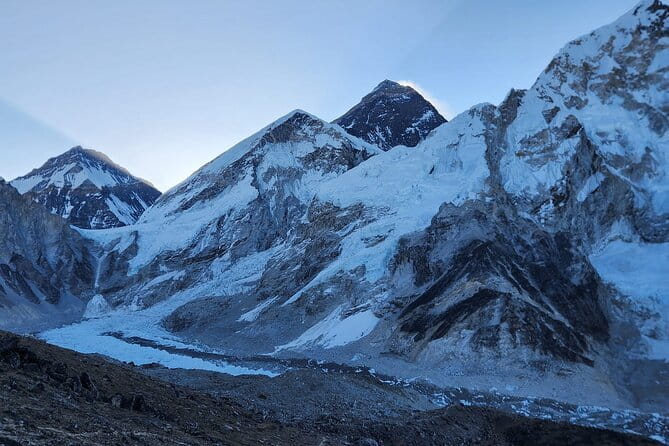
The exact views depend on the season and conditions. You may see the glacier, ice formations, and surrounding peaks, but Everest itself is not always the most dramatic feature from Base Camp. Kala Patthar generally provides the better direct view of Everest.
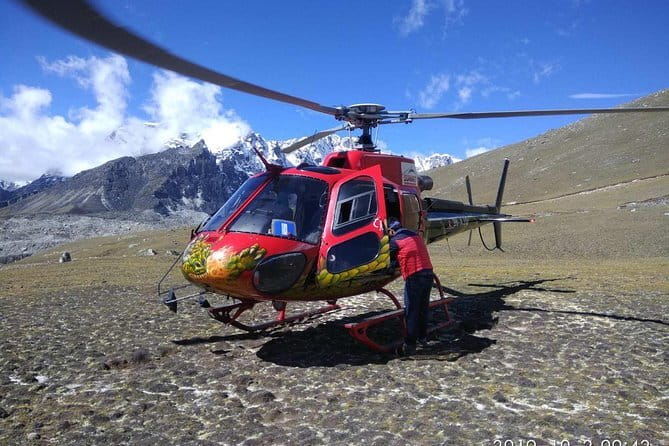
This package includes a helicopter flight from the Everest Base Camp area, specifically Gorakshep, to Lukla. Confirm the timing carefully. The published day plan places Kala Patthar on the following morning, so you should ask the operator whether the helicopter leaves after the Base Camp walk, after the sunrise hike, or according to weather and flight availability.
Day 10: Kala Patthar sunrise and the return flight
The final planned highlight is an early hike to Kala Patthar before sunrise. From the viewpoint, you can see Everest and the surrounding peaks in morning light. This is the clearest reward for the uphill effort, but it is also a cold and demanding start after sleeping at high altitude.
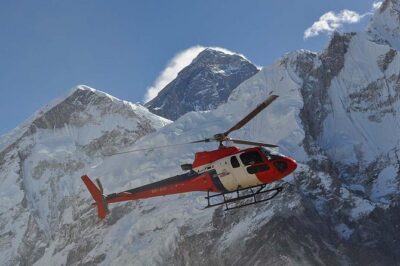
The program then uses helicopter transport for the return. The included services describe a shared helicopter from Gorakshep to Lukla and a shared flight from Lukla to Kathmandu. The itinerary also lists a helicopter from Kathmandu to Lukla at the start.
Because the day-by-day description is not perfectly clear about the order of Kala Patthar, Gorakshep, Lukla, and Kathmandu, get the operational plan in writing before you pay. Ask whether the return flight leaves directly from Gorakshep after Kala Patthar, whether you sleep in Lukla, and how weather delays are handled.
Guides, porters, and the human side of the trip
The operator assigns an experienced government-licensed trekking guide and one porter for every two people. Staff costs, food, transport, equipment, and accidental insurance for the guide and porters are included.
The strongest praise attached to this company focuses on communication, flexibility, and personal care. Shiba is described as attentive before the trek, while guides named Tika, Rabin, Pramod, and Promod receive specific praise for encouragement, organization, and adapting the pace to individual needs.
Names alone do not guarantee a good trip, but they give you useful questions to ask. Request the name and experience of your assigned guide, ask how the team handles altitude symptoms, and confirm the porter baggage limit. The allowance is 10 kilograms for your main bag and 5 kilograms for a handbag.
The private format means only your group participates, not a large mixed party. That can make pacing and communication easier, but the helicopter portions remain shared.
What to pack and what the price leaves out
A warm down jacket and sleeping bag rated to minus 20 degrees Celsius are supplied for use during the trek. You also receive a Life Himalaya duffel bag, T-shirt, trail map, and access to first-aid supplies that include an oximeter.
You still need suitable personal clothing, footwear, and travel essentials. The supplied information does not specify a full packing list, so ask the company what personal items are expected. Snacks and all beverages are extra, which matters on long walking days.
Travel insurance covering trekking and rescue evacuation up to 5,500 meters is not included. This is one of the most important extra costs. International flights, Nepal’s entry visa, and Kathmandu lunch and dinner are also outside the package.
The package includes emergency and rescue coordination, but coordination is not the same as insurance coverage. Read your policy carefully before departure.
Who should book this 10-day trek?
This trip suits you if you have limited time, want the major Everest route highlights, and prefer a local company to handle permits, staff, flights, lodging, and meals. It is also a good match if you value a private group and want helicopter transport to reduce the number of days spent walking.
You should think twice if you are new to strenuous hiking, uneasy with altitude, or hoping for a relaxed holiday. The short schedule leaves little room for illness, bad weather, or flight disruption. The package requires strong physical fitness, and that warning should be taken seriously.
The company has earned an overall five-star rating from six published reviews, with particular praise for guides and organization from airport pickup through the return to Kathmandu. That is encouraging, but six reviews are still a small sample. The practical protection is to confirm the exact flight sequence, accommodation standard, guide assignment, baggage rules, and emergency procedures.
Should you book Life Himalaya’s Everest Base Camp trek?
Book it if time is your main limitation and you want Everest Base Camp with helicopter support rather than a longer traditional schedule. The included staff, permits, cold-weather equipment, meals, and transfers make the $3,332 price easier to justify than it first appears.
Do not book until you clarify the final two days. The written plan needs to explain exactly when you hike Kala Patthar and when you fly from Gorakshep to Lukla and onward to Kathmandu.
If you are fit, prepared for high altitude, and comfortable with shared helicopter flights, this is a focused way to reach the Khumbu’s main landmarks. If you can add several days, a longer itinerary would give you more recovery time and more protection against weather or altitude problems.
FAQ
How long is the Everest Base Camp trek?
The advertised duration is approximately 10 days, including arrival arrangements, trekking, acclimatization, and helicopter transport.
What is the price per person?
The listed price is $3,332 per person.
Are helicopter flights included?
Yes. The package includes shared helicopter transport from Kathmandu to Lukla, a shared helicopter from the Everest Base Camp area at Gorakshep to Lukla, and a shared Lukla to Kathmandu flight.
Is airport pickup included?
Yes. Private airport pickup and drop-off transportation are included.
What accommodation is provided?
You receive two nights in a three-star hotel in Kathmandu, one before and one after the trek. During the trek, accommodation is in twin-share, best available lodges.
Are meals included?
The package includes 10 breakfasts, eight lunches, and eight dinners. Lunch and dinner in Kathmandu, beverages, and snacks are not included.
Is travel insurance included?
No. You must arrange your own travel insurance covering rescue and evacuation up to 5,500 meters.
New in the Kathmandu listings
- Kathmandu: Ancient City Kirtipur & Pharping Monastery Tour★ 5.0 · 2 reviews
- Traditional Momo Making Class★ 5.0 · 10 reviews
- Kathmandu to Pokhara Premium sofa bus ticket★ 4.0 · 17 reviews
- Women Empowerment Project(Nepali cooking class & jewelry workshop★ 5.0 · 15 reviews
- 7-Day Langtang Valley Trek from Kathmandu★ 5.0 · 1 review
- Kathmandu 2 Nights 3 Days Chitwan Jungle Safari Tour★ 5.0 · 9 reviews
- Yoga Experience Day Trip with Private Transfer From Kathmandu★ 4.0 · 2 reviews
- Wildlife Adventure in Chitwan Nepal★ 4.0 · 4 reviews
Everest Base Camp Treks, compared.
Everest Base Camp Trek with Helicopter Return from Gorakshep to Lukla
Read our review →Browse the lists this tour appears in