
REVIEW · EVEREST BASE CAMP TREKS
Everest Base Camp trek with Helicopter return 9 days
Everest in nine days is possible. This route gives you a proper trek through the Khumbu Valley, then swaps the long return walk for a helicopter flight from the Everest region. I like the efficient design, the built-in acclimatization day in Namche Bazaar, and the practical support of guides, porters, permits, meals, and altitude checks. The main concern is the pace: reaching Kala Patthar at 5,644 meters in only a week of mountain walking demands good fitness and careful attention to altitude.
I also like that the trip is private, so your group does not have to match the speed of a large organized party. The helicopter return saves several days and adds a memorable flight over the mountains. Still, the price of $3,888 per person is substantial, and extra costs for drinks, showers, phone charging, insurance, tips, and personal items can add up.
In This Review
- Key points to know before booking
- Why the helicopter return makes sense
- Day 1: Kathmandu arrival and a gentle start
- Day 2: Kathmandu to Lukla and the walk to Phakding
- Day 3: Phakding to Namche Bazaar
- Day 4: Namche acclimatization and Khumjung
- Day 5: Namche to Kyangjuma
- Day 6: Tengboche and the monastery setting
- Day 7: Toward Dingboche and the Khumbu Glacier
- Day 8: Lobuche to Gorak Shep and Everest Base Camp
- Day 9: Kala Patthar and the helicopter to Lukla
- What the $3,888 price really covers
- Who this trek suits best
- Should you book the Everest helicopter return trek?
- FAQ
- How long is the Everest Base Camp helicopter return trek?
- Is airport pickup included?
- Is the helicopter flight included?
- Is the flight from Kathmandu to Lukla included?
- How difficult is the trek?
- Is there an acclimatization day?
- Are meals included?
- Is a porter provided?
- Is travel insurance included?
Key points to know before booking
- Kala Patthar reaches 5,644 meters: The viewpoint is higher than Everest Base Camp and is the main high point of the trek.
- The return is by helicopter: You walk toward Everest and return by helicopter from Gorak Shep to Lukla, with the Kathmandu flight arrangements included.
- Namche provides one acclimatization day: This rest day includes a walk toward Khumjung and the Everest View Hotel.
- The route becomes tougher after Dingboche: Above 4,410 meters, the trail is more remote, rocky, and steep.
- One porter serves two people: Pack carefully, since you still need to carry your day bag and essential personal items.
- The price includes major trek costs: Meals, lodging, permits, guide support, porter service, ground transport, and listed flights are covered.
Why the helicopter return makes sense
The classic Everest Base Camp route is not difficult because the trail is technically dangerous. It is difficult because you spend days walking uphill at high altitude, then must retrace much of the same route on the way down.
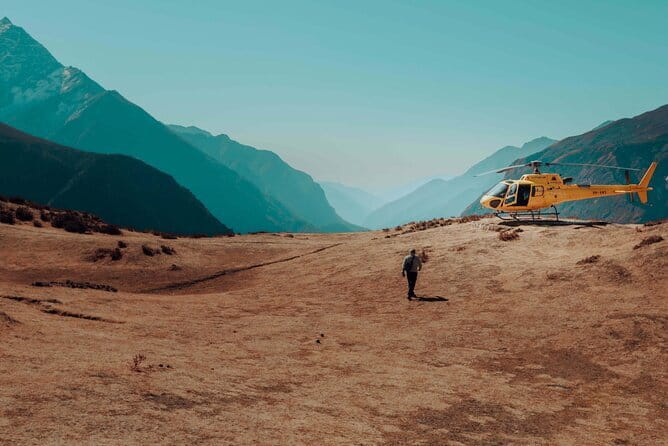
This nine-day plan removes that long return. You still get the big walking days, the Sherpa villages, suspension bridges, monasteries, glacier views, Everest Base Camp, and Kala Patthar. Then, instead of spending several more days descending, you fly back from Gorak Shep to Lukla by helicopter.
That makes the trip useful for you if your time in Nepal is limited. It also helps if you want the core Everest trekking experience without committing to a two- or three-week schedule. The tradeoff is a quicker ascent. You have less spare time if altitude causes trouble, weather disrupts flights, or you need a slower pace.
The helicopter is not simply a luxury add-on. It is part of the route’s practical design. It saves walking days, but it also brings weather dependence. Mountain flights can change because of conditions, and the exact flight operation is worth confirming before departure.
More Everest Base Camp treks:
- Everest Base Camp Trek – 14 Days
★ 5.0 · 1,499 reviews - Everest Base Camp Trekking
★ 5.0 · 485 reviews - Everest Base Camp Trekking – 13 Day
★ 5.0 · 365 reviews
Day 1: Kathmandu arrival and a gentle start
Your airport pickup is handled in a private car. An airport team member meets you at the international terminal, helps with your bags, and takes you to the hotel. This is a small service, but after an international flight it matters.
You then have time to rest before meeting the core team. This meeting is your chance to ask about the walking schedule, food, luggage, altitude checks, and the helicopter plan. Use it well. Ask exactly what your porter will carry, how much your day bag should weigh, and what happens if weather affects the Lukla or helicopter flights.
Kathmandu meals are not included for lunch and dinner, so plan for those separately. Your visa, international flights, travel insurance, and medical insurance are also your responsibility.
Day 2: Kathmandu to Lukla and the walk to Phakding
The trip begins early with a short flight from Kathmandu to Lukla. The flight is known for mountain views, and landing at Tenzing Hillary Airport gives the trek an immediate sense of occasion.
After landing, porters join the group and you begin walking. The day is listed at about four hours, making it a useful first mountain day rather than a punishing march. The trail leads toward Phakding, where you spend the night.
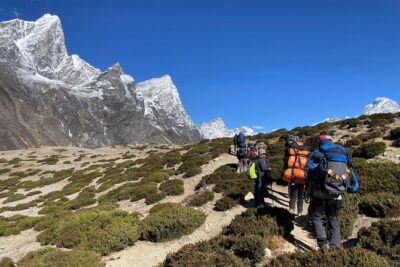
The lower Khumbu route is greener than the high country later in the trip. You walk through rhododendron and magnolia woodland, cross bridges, and pass small settlements. The scenery changes steadily as the valley begins to narrow.
The biggest practical point is that the Lukla flight sets the rhythm for the trip. A delayed flight can affect the day’s start, so you should arrive in Nepal with some flexibility around the overall schedule. The tour includes the Kathmandu to Lukla flight and the listed return flight arrangements, but you should confirm how weather delays are handled.
Day 3: Phakding to Namche Bazaar
This is a longer day, listed at about six hours. You pass through Toktok at roughly 2,760 meters, then continue toward Monjo and the Sagarmatha National Park entry area. The route includes several bridges, including crossings near Bengkar Village.
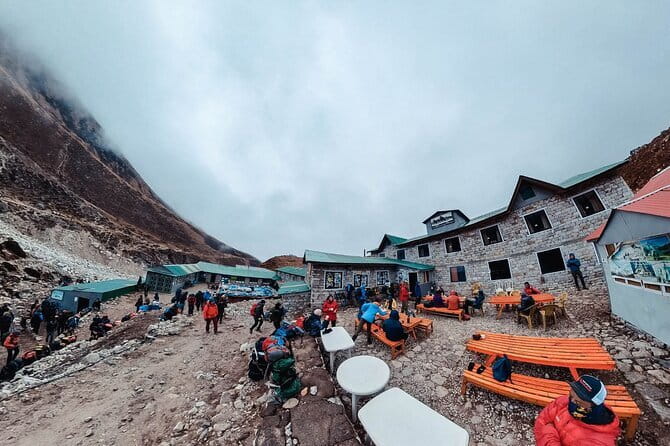
Namche Bazaar sits at about 3,440 meters and is the main trading center of the Khumbu. The approach is a real step up from the first day. You gain altitude, and the trail has more uphill sections. Namche rewards you with a lively mountain town, but the practical purpose of the stop is even more important: it gives your body time to adjust.
Take this day slowly. The goal is not to reach Namche first. The goal is to arrive with enough energy to eat, drink, and sleep well.
The route passes through forest and mountain villages, so you get a feel for everyday life in the valley rather than seeing only big peaks. Bridges, stone paths, prayer flags, and lodge courtyards become part of the daily rhythm.
More Helicopter Tours in Kathmandu:
- Everest Base Camp Helicopter Tour landing at Everest View Hotel
★ 5.0 · 668 reviews - Everest Base Camp Helicopter Tour landing at Hotel Everest View
★ 5.0 · 218 reviews - Everest Base Camp Trek with Helicopter Return from Gorakshep to Lukla
★ 5.0 · 161 reviews - Everest Base Camp helicopter tour with landing
★ 5.0 · 61 reviews
Day 4: Namche acclimatization and Khumjung
You do not spend the acclimatization day lying in bed. The schedule includes a walk toward Khumjung and the Syangboche airstrip, followed by the Everest View Hotel area above Namche. The walking time is about five hours.
This is a smart part of the itinerary. A rest day at altitude works best when you walk gently higher and return to sleep lower. The trip gives you a chance to see wide mountain views without carrying your trekking schedule forward to a new overnight stop.
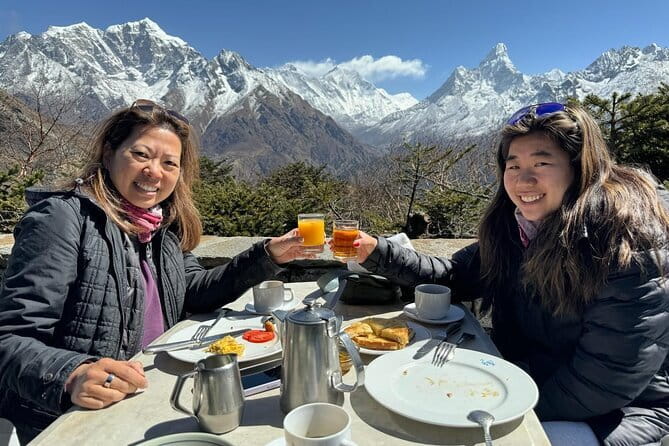
Khumjung is one of the important villages in the area, and the walk gives you a closer look at the settled side of the Khumbu. The Everest View Hotel area is included for its mountain outlook. Do not treat this as an easy sightseeing stroll. At altitude, even a modest hill can leave you breathing hard.
The acclimatization day is also where a private trip can help. Your guide can adjust the pace and watch how you are coping. The operator says oxygen saturation, pulse, and heart rate are checked twice daily with an oximeter. That does not replace medical care, but it adds a useful layer of monitoring.
Day 5: Namche to Kyangjuma
The trail climbs from Namche toward Kyangjuma at about 3,550 meters. The walking time is listed at roughly five hours.
This section is known for open mountain views and a route that winds through the hills before dropping toward the next settlement. The exact balance of uphill and downhill matters. You are still gaining altitude overall, but not every step goes up.
Kyangjuma is a useful overnight point because it keeps the day manageable while moving you deeper into the valley. You should notice the air becoming thinner and the walking rhythm changing. Keep your pace steady, take short breaks, and drink regularly.
Your accommodation is in tea houses. These are simple mountain lodgings, and the tour covers the listed breakfasts, lunches, and dinners for eight days. Drinks outside those meals are extra. Hot showers and phone charging are also available at tea houses for about $2 to $5, depending on the facility.
Day 6: Tengboche and the monastery setting
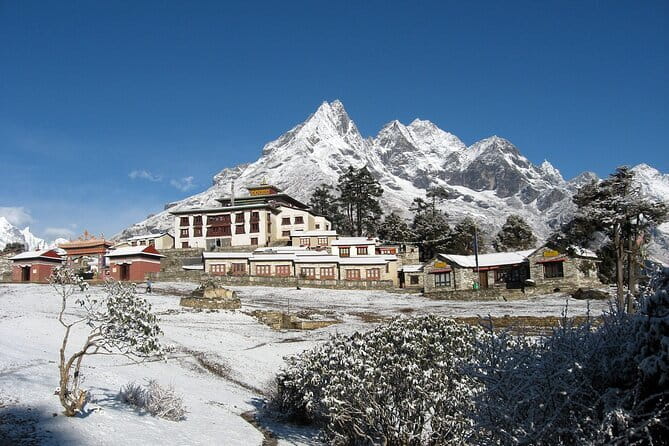
The walk to Tengboche takes about five hours. The route brings you through more rhododendron woodland and toward one of the best-known stops on the Everest trail.
Tengboche is valued for its mountain setting and monastery. The schedule allows for an early sunrise view, followed by breakfast and a descent through the forest toward Deboche at about 3,320 meters. The itinerary wording places Tengboche prominently on this day, so confirm the exact overnight arrangement with Adventure Master Trek before departure.
This section offers some of the most varied scenery on the route. You move from wooded slopes to more open high-country views, and the valley begins to feel more remote. The trip information also notes the possibility of seeing musk deer, blue sheep, and mountain birds. Wildlife sightings are never guaranteed, so enjoy them as a bonus rather than a promise.
The day includes both uphill and downhill walking. That may sound easier than a steady climb, but descents can tire your knees. Trekking poles are worth considering, especially if you are not used to long days on uneven paths.
Day 7: Toward Dingboche and the Khumbu Glacier
The upper route becomes more serious after Dingboche, which sits at about 4,410 meters. The day is listed at about six hours and includes a climb through a ridge after leaving the village, with views toward Cholatse and Tawache.
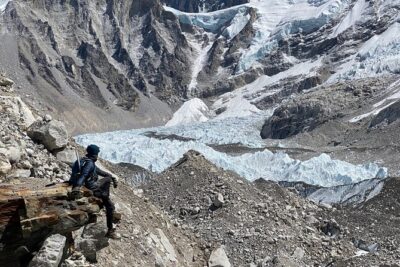
The Khumbu Glacier becomes a major visual feature as you continue upward. You walk along or near the glacier for much of the day, depending on the exact trail conditions and guide decisions. The rockier ground and thinner air make this a day for patience.
This is where the stated moderate difficulty needs a clear explanation. You do not need technical climbing skills for the trek, but you do need to handle long walks, steep sections, cold conditions, and altitude. The route is more remote above Dingboche, so you have fewer easy options to stop or shorten the day.
Watch for signs of altitude illness, including a worsening headache, unusual tiredness, nausea, dizziness, or trouble breathing. Tell your guide early. The presence of an oximeter is useful, but your symptoms and overall condition matter more than one number.
Day 8: Lobuche to Gorak Shep and Everest Base Camp
This is the biggest walking day, listed at about eight hours. From Lobuche, you follow the broad valley toward Gorak Shep. The rocky trail rises gradually at first, then becomes steeper as you gain height.
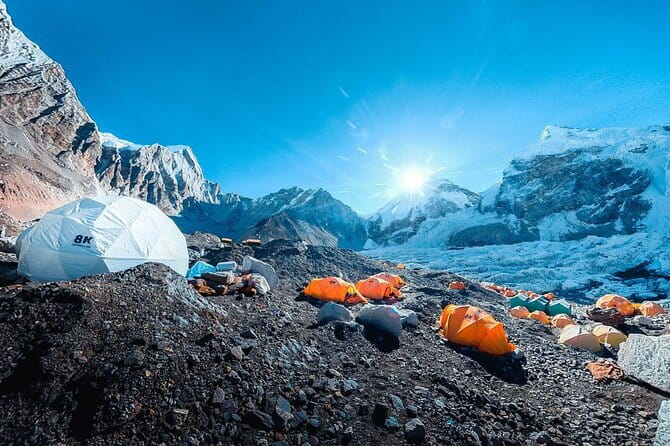
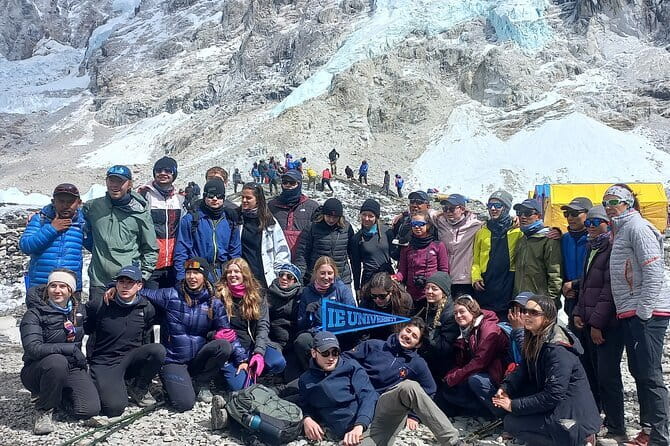
Gorak Shep is the final settlement on this route and sits at a very high elevation. From there, you walk toward Everest Base Camp and along the Khumbu Glacier area. The ground is rough, and the air is thin. You may move slowly even if you are normally fit.
The base camp itself changes with the climbing season, and the route does not promise a fixed visual setup. What you get is the setting at the foot of the Khumbu Icefall, with huge peaks and glacial terrain around you.
This day is not a casual walk to a signpost. It is a demanding high-altitude outing after several days of ascent. Pack only what you need in your day bag, use layers, and keep your expectations realistic. The achievement comes from reaching the area safely, not from rushing for a photograph.
Day 9: Kala Patthar and the helicopter to Lukla
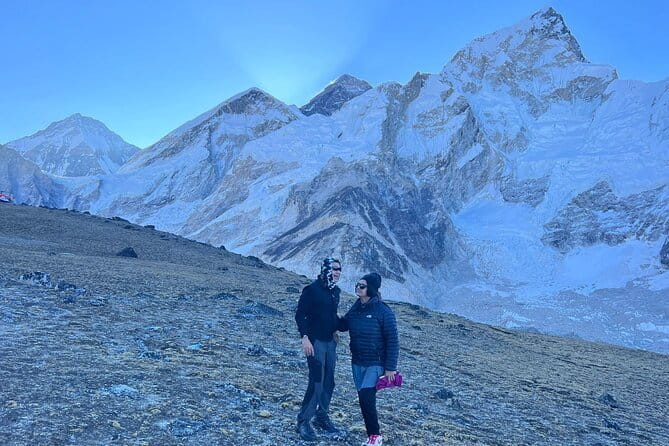
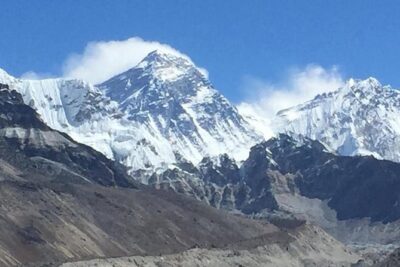
The final morning begins early with the climb to Kala Patthar. The trail starts above Gorak Shep and is well used, though the altitude makes the effort hard. The early light is the reason for the early start. Golden sun on Everest and the surrounding peaks can be the visual high point of the entire trip.
At 5,644 meters, Kala Patthar is higher than Everest Base Camp. The climb gives you one of the clearest viewpoints of Everest on the itinerary, but it is also the moment when altitude is most demanding. You should not feel embarrassed about turning around if your condition is poor. A guide’s judgment is important here.
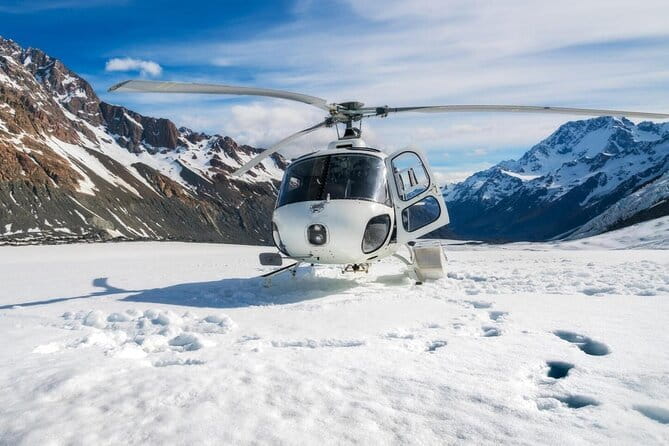
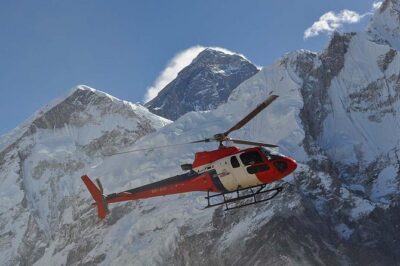
After the Kala Patthar walk, the plan is to take a helicopter from Gorak Shep to Lukla. From Lukla, the included flight arrangements return you toward Kathmandu. The helicopter cuts out the long descent, but the flight depends on mountain conditions and operational availability.
The return is a fitting finish: after days of walking through the valley, you see the route from above. It is also the part of the trip most likely to require flexibility. Confirm the sequence of helicopter and airplane connections, and ask what happens if the helicopter cannot fly as planned.
What the $3,888 price really covers
At $3,888 per person, this is not a low-cost trek. The value comes from the number of major services bundled into one private arrangement.
Included costs cover private ground transport, airport transfers, the Kathmandu to Lukla and listed return flight, an experienced guide, one porter for every two people, permits, government fees, taxes, first-aid equipment, an oximeter, and the helicopter from Gorak Shep to Lukla.
Eight breakfasts, eight lunches, and eight dinners are included. That removes a large amount of daily planning in the mountains. It also means you should budget for drinks, desserts, and personal snacks separately. Chocolate, cake, pie, pudding, and alcoholic or non-alcoholic drinks are not included.
You also need money for hot showers and charging, which cost about $2 to $5 at tea houses. Tips for the guide, porter, and driver are expected. Add travel and medical insurance, visa costs, international airfare, Kathmandu lunches and dinners, and personal expenses before deciding if the price fits your budget.
The trip has a strong service element. Specific names connected with positive feedback include Raj, who was praised for making arrangements efficient, and Ramesh, who was praised for support on an Everest trek. Ganesh and Sital also received warm comments for other Nepal routes. Ask in advance who your own guide will be, since guide quality can shape the trip more than any brochure description.
Who this trek suits best
I would consider this trip if you want the main Everest route but cannot spare the time for a full return trek. It suits people with a moderate level of physical fitness who are comfortable walking for four to eight hours a day and sleeping in simple tea houses.
It also suits you if you value private support. A private group can make it easier to keep a steady pace, raise health concerns, and discuss changes with the guide.
I would hesitate if you want a relaxed holiday, dislike basic lodging, or have no flexibility for weather delays. The word moderate should not hide the altitude. The final days are demanding, and the rapid nine-day schedule leaves little room for a slow adjustment.
Free cancellation is available if you cancel at least 24 hours before the start time. Cancellations within 24 hours are not refunded, and changes in that final period are not accepted.
Should you book the Everest helicopter return trek?
I would recommend it to a fit, time-conscious person who wants Everest Base Camp, Kala Patthar, and the high Khumbu without walking back to Lukla. The included guide, porter, meals, permits, health checks, and helicopter give the package real value, even at a high price.
Before booking, confirm the exact day-by-day overnight stops, the flight arrangements, the guide’s name, luggage limits, and the policy for weather delays. If those details suit you and you can handle the altitude, this is a focused way to experience Everest in nine days. If you want more breathing room, a longer itinerary is the safer and more comfortable choice.
FAQ
How long is the Everest Base Camp helicopter return trek?
The trip lasts approximately nine days, including arrival in Kathmandu, the trek to Everest Base Camp and Kala Patthar, and the helicopter return toward Lukla.
Is airport pickup included?
Yes. Private ground transport includes airport pickup and transfers to and from the airport.
Is the helicopter flight included?
Yes. The helicopter flight from Gorak Shep to Lukla is included.
Is the flight from Kathmandu to Lukla included?
Yes. The listed Kathmandu to Lukla and return flight arrangements are included.
How difficult is the trek?
The trek is described as moderate, but it includes high-altitude walking. The route reaches Kala Patthar at 5,644 meters, and the trail becomes more remote and steep above Dingboche.
Is there an acclimatization day?
Yes. Day four is spent around Namche Bazaar, with walking toward Khumjung, the Syangboche airstrip, and the Everest View Hotel area.
Are meals included?
Eight breakfasts, eight lunches, and eight dinners are included. Kathmandu lunches and dinners, drinks, desserts, and personal snacks are not included.
Is a porter provided?
Yes. One porter is provided for every two people.
Is travel insurance included?
No. You must arrange your own travel and medical insurance. Visa fees, international airfare, tips, and personal expenses are also excluded.
New in the Kathmandu listings
- Traditional Momo Making Class★ 5.0 · 10 reviews
- Kathmandu: Ancient City Kirtipur & Pharping Monastery Tour★ 5.0 · 2 reviews
- Kathmandu to Pokhara Premium sofa bus ticket★ 4.0 · 17 reviews
- Women Empowerment Project(Nepali cooking class & jewelry workshop★ 5.0 · 15 reviews
- 7-Day Langtang Valley Trek from Kathmandu★ 5.0 · 1 review
- Kathmandu 2 Nights 3 Days Chitwan Jungle Safari Tour★ 5.0 · 9 reviews
- Yoga Experience Day Trip with Private Transfer From Kathmandu★ 4.0 · 2 reviews
- Wildlife Adventure in Chitwan Nepal★ 4.0 · 4 reviews
Everest Base Camp Treks, compared.
Everest Base Camp Trek with Helicopter Return from Gorakshep to Lukla
Read our review →Browse the lists this tour appears in