
REVIEW · EVEREST BASE CAMP TREKS
Everest Base Camp Trek with Helicopter Return to Lukla – 10 Days
The best shortcut comes after the hardest walking. This 10-day Everest Base Camp trek gives you the classic Himalayan route, then replaces the long return walk with a helicopter flight from Gorakshep to Lukla. I like the efficient design and the chance to see the route from above after experiencing it on foot. I also like that permits, domestic flights, guesthouses, a licensed guide, basic trekking gear, and a Kathmandu farewell dinner are bundled into one price.
The main catch is the schedule. Ten days is a tight timetable for a high-altitude trek, and you still need to pay separately for meals during the trek, insurance, porter service, and some Kathmandu meals. Altitude and weather remain serious concerns, so this is not a soft adventure simply because the return includes a helicopter.
In This Review
- Key points to know before booking
- What the $799 price really covers
- Kathmandu arrival and the flight toward Lukla
- Sherpa villages, forests, and the approach to Namche Bazaar
- Tengboche monastery and the cultural side of the route
- Dingboche and the work of acclimatization
- Reaching Everest Base Camp at Gorakshep
- Kala Patthar sunrise and the helicopter return
- Comfort, support, and the parts you must handle
- Who should book this Everest trek
- Final verdict on the $799 package
- FAQ
- How long is the Everest Base Camp trek with helicopter return?
- Where does the experience begin?
- What time does the experience start?
- Is airport pickup included?
- Is accommodation in Kathmandu included?
- Which permits are included?
- Is the helicopter ride included?
- Are meals included?
- Is porter service included?
- What happens if bad weather cancels the experience?
Key points to know before booking
- The helicopter leaves from Gorakshep: You finish the high-altitude section, then fly back to Lukla instead of retracing the trail on foot.
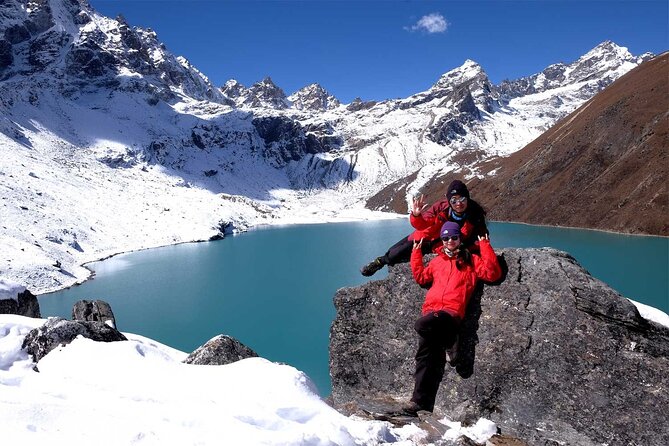
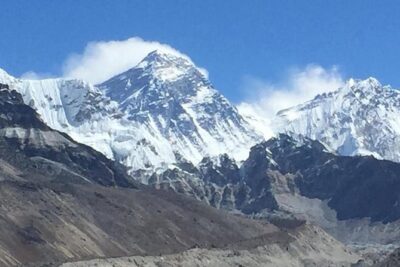
- Kala Patthar is part of the plan: The sunrise hike offers one of the finest viewpoints toward Everest and the surrounding peaks.
- Acclimatization is built in at Dingboche: This rest period matters because the route climbs into very high terrain.
- The package costs $799 per person: That is useful value for permits, domestic flights, lodging, a guide, gear, transfers, and the helicopter sector.
- The trek is limited to 15 people: That should make group management easier than on a large commercial departure.
- Guide quality matters greatly: Ram, Rupak, Dambar, Pemba, and other guides have received strong praise for patience, organization, and care, though your assigned guide may vary.
What the $799 price really covers
At $799 per person, this is priced as a packaged Everest Base Camp trip rather than a bare trail arrangement. You receive airport transfers by private vehicle, a three-star Kathmandu hotel with breakfast, permits, domestic flights between Kathmandu or Manthali and Lukla, standard guesthouses on the trail, and a licensed English-speaking guide.
The helicopter return is the expensive-looking feature, but it also saves several trekking days. A normal return from Everest Base Camp requires walking back through the same valleys. Here, you fly from Gorakshep to Lukla after the high point of the trip, then return to Kathmandu by domestic flight.
The package also includes a duffel bag, sleeping bag, T-shirt, map, first-aid kit, and official government charges. Those small items matter. You do not have to arrange every permit and piece of basic equipment on your own, and the duffel makes it easier to leave nonessential luggage in Kathmandu.
Still, $799 is not the final amount you will spend. You must budget for all lunch and dinner meals in Kathmandu, every meal during the trek, snacks, drinks, laundry, tips, international flights, and a Nepal visa. Travel insurance is also your responsibility, and it must cover high-altitude medical treatment and evacuation.
Porter service is optional. The company recommends one porter for two trekkers, which is sensible for a route where every kilogram becomes noticeable. If you want to carry only a daypack, ask about the porter cost before departure.
More Everest Base Camp treks:
- Everest Base Camp Trek – 14 Days
★ 5.0 · 1,499 reviews - Everest Base Camp Trekking
★ 5.0 · 485 reviews - Everest Base Camp Trekking – 13 Day
★ 5.0 · 365 reviews
Kathmandu arrival and the flight toward Lukla
The experience begins with pickup at Tribhuvan International Airport in Kathmandu. The stated start time is 9:00 a.m., so confirm the exact meeting arrangement and what happens if your international flight arrives later.
Kathmandu accommodation is in a three-star hotel with breakfast. This gives you a practical base before and after the trek, but do not expect a luxury-hotel holiday. The package is built around the mountains, not long hours in a polished city property.
The route then heads toward Lukla by domestic flight. Depending on operating arrangements, the flight may leave from Kathmandu or Manthali. That distinction matters because Manthali transfers can affect your morning schedule and ground transport plans.
Lukla is the gateway to the Everest region. From here, the walking begins immediately, with trails passing through Sherpa settlements, forests, suspension bridges, and sections beside the Dudh Koshi River. The change from Kathmandu’s city streets to mountain footpaths is quick and dramatic.
Flights in the Everest region depend heavily on weather. A delayed flight can affect the whole timetable, including the helicopter return. Keep some flexibility in your international travel plans rather than scheduling your flight home too tightly after the trek.
Sherpa villages, forests, and the approach to Namche Bazaar
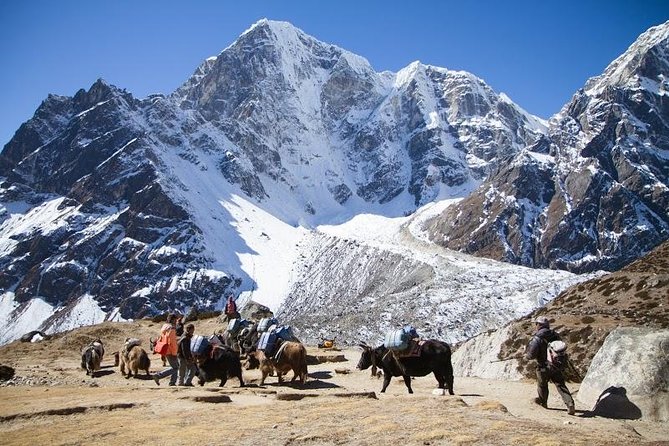
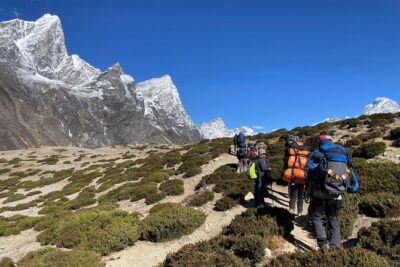
The first walking days introduce you to the Khumbu region at a manageable pace. The trail passes through woodland and small villages, with the Dudh Koshi providing a constant companion in the lower valley.
Namche Bazaar is one of the most memorable stops. It is a major Sherpa trading center and a useful place to rest, buy snacks, and adjust to the rising altitude. I like that the itinerary includes time around Namche rather than treating it as a quick overnight stop. The town gives you a better sense of how mountain communities live and trade along a route shaped by trekking and mountaineering.
You will also begin to notice the practical limits of high-altitude travel. Walking distances that look modest on a map can take much longer once the trail rises and the air thins. Your guide should set a steady pace, and the strongest approach is to walk slowly, drink regularly, and avoid racing ahead early in the trip.
The group limit of 15 is useful here. A group this size is large enough to share the experience but small enough for a guide to keep track of people on uneven trails. It is not a private trek, so expect some differences in pace and energy.
Tengboche monastery and the cultural side of the route
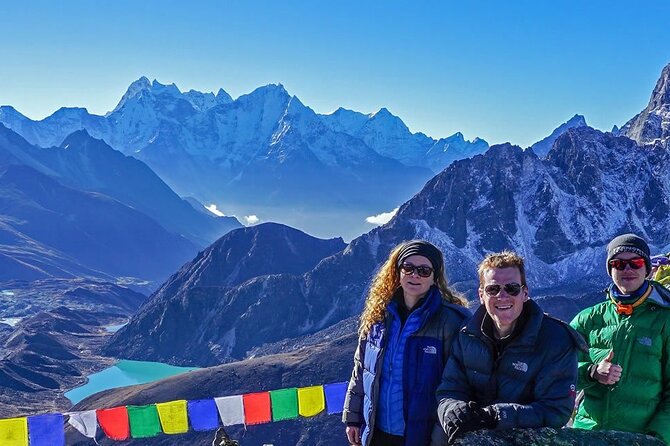
Tengboche adds a cultural layer to the trek. Its monastery is one of the best-known religious sites in the Everest region, and the setting gives you a chance to pause and consider that this is more than a mountain photo route.
The itinerary specifically highlights monasteries in Tengboche, along with Sherpa villages and local communities. Your licensed English-speaking guide can help explain the religious and cultural details, which is one reason guided trekking is worth paying for. The strongest guide feedback has focused on practical care as much as local knowledge.
Ram is repeatedly praised for patience, flexibility, and attention to group members. Rupak has also been praised for clear English and for keeping people in good spirits, including older members of mixed-age groups. Dambar and Pemba are among the other staff names associated with positive experiences. Guide assignments can change, so treat these names as examples of the company’s experienced team, not a guarantee that one particular person will lead your trek.
The cultural element also continues back in Kathmandu, where a farewell dinner includes Nepali food and traditional dance. It is a pleasant way to mark the achievement, though it should be viewed as a short cultural finale rather than a full Kathmandu sightseeing program.
More Helicopter Tours in Kathmandu:
- Everest Base Camp Helicopter Tour landing at Everest View Hotel
★ 5.0 · 668 reviews - Everest Base Camp Helicopter Tour landing at Hotel Everest View
★ 5.0 · 218 reviews - Everest Base Camp Trek with Helicopter Return from Gorakshep to Lukla
★ 5.0 · 161 reviews - Everest Base Camp helicopter tour with landing
★ 5.0 · 61 reviews
Dingboche and the work of acclimatization
Dingboche is the point where the trek becomes more demanding. The route leaves much of the lower forest behind and enters high, open mountain terrain. The itinerary includes an acclimatization stop here, and that is not wasted time.
Your body needs time to adjust as you climb. A rest day can feel frustrating when you are eager to reach Base Camp, but skipping or weakening acclimatization is a poor trade. The purpose is to make the later walking safer and more manageable.
The tour is rated for people with a moderate fitness level. That description should be taken seriously. You do not need to be an elite athlete, but you should be ready for repeated days of walking at altitude, changing weather, basic guesthouses, and limited comforts.
The information provided does not give exact daily distances, walking hours, or elevations for each night. Ask for a day-by-day schedule before paying, especially if you have limited trekking experience. The 10-day format leaves less spare time than a longer itinerary, so you should understand how the company handles a slower pace or a weather delay.
Reaching Everest Base Camp at Gorakshep
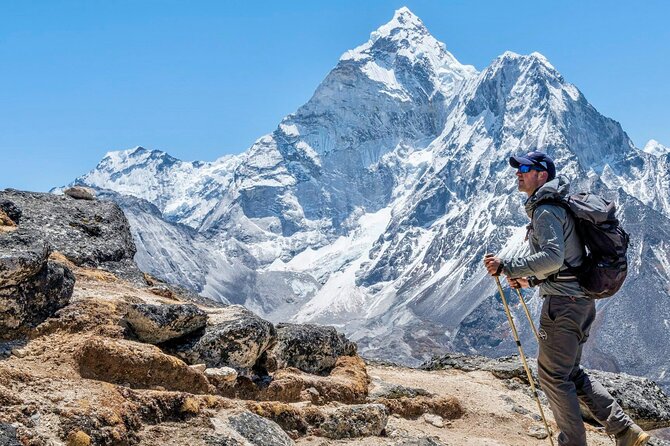
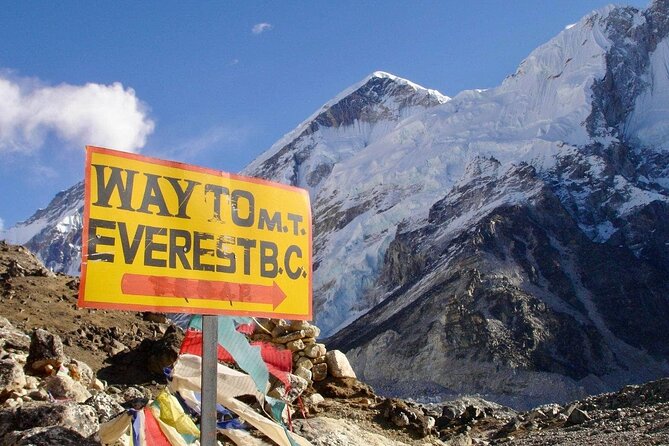
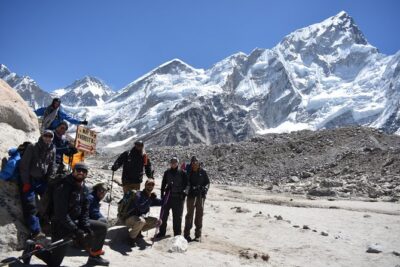
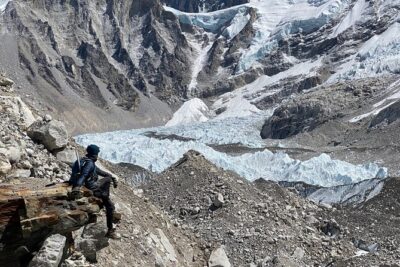
The final approach leads toward Gorakshep and Everest Base Camp. This is the emotional center of the trip. You have moved from river valleys and forests into the high Himalayan world, where the views become larger and the walking more demanding.
Base Camp itself is a major achievement, but it is important to set your expectations. From the camp, you do not necessarily get the classic summit view that appears in every photograph. The best broad viewpoint on this itinerary is Kala Patthar.
Gorakshep is also where the helicopter return begins. That makes the stop more than just an overnight point. Once you have reached Base Camp and completed the Kala Patthar hike, you will be positioned for the return flight, subject to weather and flight operations.
Standard guesthouses provide the lodging along the trail. These are functional mountain accommodations, not resorts. You should expect simple rooms and basic facilities, with comfort affected by altitude, weather, and local supply conditions. The reward is sleeping close to the route and staying in the communities that support life in the Khumbu.
Kala Patthar sunrise and the helicopter return
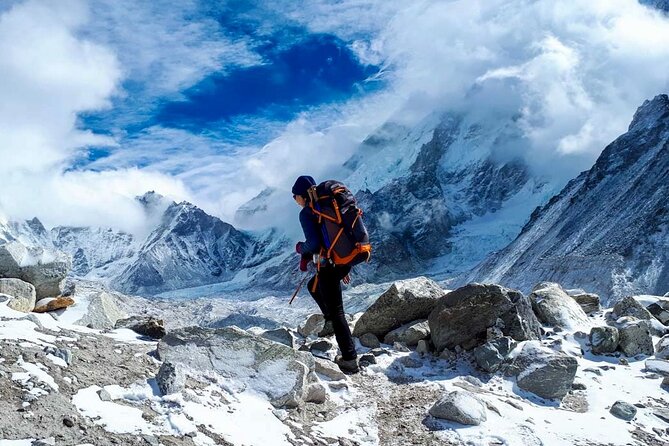
The Kala Patthar hike is one of the strongest parts of the itinerary. You climb early for sunrise, when changing light can reveal Everest and the nearby Himalayan peaks. The views are a fitting payoff for the effort of the previous days.
This early start adds work to an already demanding section. You may be cold, tired, and short of breath, and the exact quality of the view depends on weather. Even so, including Kala Patthar gives the trip a better mountain viewpoint than simply reaching Base Camp and turning around.
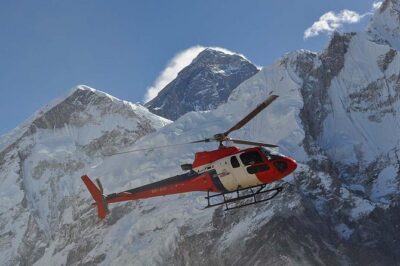
Afterward, the helicopter flight from Gorakshep to Lukla changes the character of the return. Instead of spending several more days walking downhill, you get a bird’s-eye view of the valleys, ridges, villages, and route you have just crossed.
That flight is not only a time saver. It lets you see how the trail fits into the wider Khumbu region. The aerial perspective can make the scale of the trek clearer, especially after experiencing each section at walking speed.
Weather is the key limitation. The helicopter requires suitable flying conditions, and a cancellation can lead to a different date or a full refund under the stated policy. Confirm what happens if the helicopter is delayed after you have already reached Gorakshep, since the published details do not explain every possible disruption.
Comfort, support, and the parts you must handle
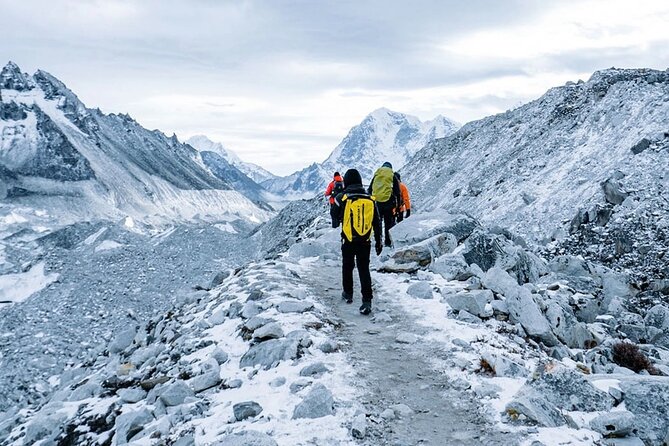
The package takes care of many complex details. Permits include Sagarmatha National Park, TIMS, and the Pasang Lhamu entry permit. A guide leads the trek, and the company supplies a first-aid kit, sleeping bag, duffel, map, and T-shirt.
That support is valuable in Nepal, where flight schedules, permits, accommodation, and weather can all affect the plan. Strong guides also help monitor how people are coping. Several guide accounts praise Ram for checking group condition and adapting his pace, which is exactly the kind of behavior you want at altitude.
You still need to take responsibility for your own health. Insurance must include high-altitude evacuation, not only ordinary trip cancellation. Personal spending adds up too, especially for drinks, snacks, laundry, and tips.
The tour is not described as wheelchair accessible, and the moderate fitness requirement is clear. The route includes high-altitude hiking, so it suits people prepared for physical effort rather than anyone seeking a sightseeing holiday with short walks.
Who should book this Everest trek
I would consider this trip a good fit if you want the classic Everest Base Camp route but do not want to spend the full return journey retracing your steps. The helicopter adds a memorable finish and makes a 10-day schedule possible.
It also suits people who prefer a guided package. Permits, flights, transfers, lodging, and basic gear are arranged, while an English-speaking guide helps with navigation and group care.
I would hesitate if you need a slow, flexible itinerary, dislike basic guesthouses, or have no interest in walking at high altitude. The helicopter does not remove the difficult part. You still have to reach Gorakshep under your own power.
The 100 percent recommendation rate and 4.9 rating from 34 listed ratings suggest strong satisfaction, especially with the guiding team and overall organization. The praise is particularly strong for patience, encouragement, flexibility, and handling logistics. Because some of the detailed comments concern Gokyo and other Everest-region treks, use them as evidence about the company’s wider guide team rather than as a precise promise about every detail of this 10-day route.
Final verdict on the $799 package
I like this trek because it combines the real work of reaching Everest Base Camp with a practical shortcut home. You walk through Sherpa villages, visit Tengboche, acclimatize in Dingboche, reach Base Camp, climb Kala Patthar, and then see the route from the air.
The value is good if you use the included services: domestic flights, permits, guide, guesthouses, equipment, transfers, and helicopter sector. The price becomes less attractive if you add many extras or expect premium accommodation and all meals to be included.
Book it if you want a compact, guided Everest adventure with a dramatic helicopter finish. Choose a longer trek instead if acclimatization time, flexibility, or a gentler pace matters more than saving days on the return.
FAQ
How long is the Everest Base Camp trek with helicopter return?
The experience lasts approximately 10 days.
Where does the experience begin?
It begins at Tribhuvan Airport in Kathmandu, Nepal.
What time does the experience start?
The stated start time is 9:00 a.m.
Is airport pickup included?
Yes. Arrival and departure transfers by private vehicle are included.
Is accommodation in Kathmandu included?
Yes. The package includes a three-star Kathmandu hotel with breakfast.
Which permits are included?
The package includes Sagarmatha National Park, TIMS, and Pasang Lhamu entry permits.
Is the helicopter ride included?
Yes. A helicopter flight from Gorakshep to Lukla is included.
Are meals included?
Breakfast in Kathmandu is included. Lunch and dinner in Kathmandu, plus all meals during the trek, are not included.
Is porter service included?
No. Porter service is optional, and the company recommends one porter for every two trekkers.
What happens if bad weather cancels the experience?
If poor weather causes cancellation, you will be offered a different date or a full refund. You can also cancel for a full refund if you do so at least 24 hours before the local start time.
New in the Kathmandu listings
- Traditional Momo Making Class★ 5.0 · 10 reviews
- Kathmandu: Ancient City Kirtipur & Pharping Monastery Tour★ 5.0 · 2 reviews
- Kathmandu to Pokhara Premium sofa bus ticket★ 4.0 · 17 reviews
- Women Empowerment Project(Nepali cooking class & jewelry workshop★ 5.0 · 15 reviews
- 7-Day Langtang Valley Trek from Kathmandu★ 5.0 · 1 review
- Kathmandu 2 Nights 3 Days Chitwan Jungle Safari Tour★ 5.0 · 9 reviews
- Yoga Experience Day Trip with Private Transfer From Kathmandu★ 4.0 · 2 reviews
- Wildlife Adventure in Chitwan Nepal★ 4.0 · 4 reviews
Everest Base Camp Treks, compared.
Everest Base Camp Trek with Helicopter Return from Gorakshep to Lukla
Read our review →Browse the lists this tour appears in