
REVIEW · EVEREST BASE CAMP TREKS
Everest Base Camp Trekking 12 Days
The mountain trail starts before sunrise. This 12-day Everest Base Camp trek combines the classic route with Sherpa villages, Tengboche Monastery, Kala Patthar, and the final walk to Base Camp. I like the thoughtful acclimatization stop in Namche and the inclusion of flights, meals, lodging, permits, and trekking gear. I also like that the guiding team includes named local staff such as Dilli, Pasang, and owner Shiva, who helped organize the trip.
The main caution is altitude. The route reaches 5,554 meters, and the days can run six to eight hours on foot. The schedule is demanding, and Lukla flights are part of the adventure rather than a minor transfer. People with respiratory problems or a history of altitude sickness should think carefully before booking.
In This Review
- Key points at a glance
- Why this Everest trek earns attention
- From Kathmandu to Lukla by air
- Namche Bazaar, the first major test
- Tengboche and the region’s spiritual center
- Dingboche and the value of a rest day
- Lobuche and the approach to Base Camp
- Kala Patthar and Everest Base Camp
- Returning through Pheriche and Namche
- What the $1,254 price includes
- The guiding team and day-to-day support
- Who should book this trek?
- Should you book the 12-day Everest Base Camp trek?
- FAQ
- How long is the Everest Base Camp trek?
- What is the highest point on the route?
- Does the trek visit Everest Base Camp?
- Which villages are included?
- Is Tengboche Monastery included?
- Are flights between Kathmandu and Lukla included?
- Are meals included during the trek?
- Is accommodation included?
- Is a guide provided?
- What equipment is provided?
Key points at a glance
- Kala Patthar reaches 5,554 meters: This is the high point of the trip and the place for some of the finest views of Everest and the surrounding peaks.
- Two nights in Namche Bazaar: The extra day gives you time to adjust to altitude instead of rushing straight uphill.
- Tengboche Monastery is a major stop: You visit one of the oldest and largest monasteries in the Everest region.
- Local guides receive strong praise: Shiva arranged the details, while guides including Dilli and Pasang helped with pacing, meals, bags, and safety.
- Most core costs are included: Flights, meals, teahouse accommodation, guide, permits, a sleeping bag, a down jacket, a duffel bag, and first aid support are covered.
- The route is physically serious: You walk through forests, villages, high valleys, and rocky terrain for roughly 130 kilometers.
Why this Everest trek earns attention
Everest Base Camp is not a simple sightseeing trip. You do not drive to a viewpoint, take a photograph, and return to Kathmandu before lunch. You walk for days through the Khumbu region, gaining height slowly and learning how the Sherpa communities live along one of the world’s best-known mountain routes.
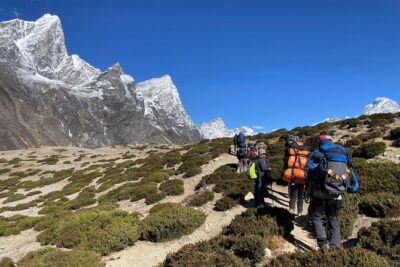
This trip reaches a maximum height of 5,554 meters at Kala Patthar. Everest Base Camp itself is lower, but getting there still requires steady effort, careful pacing, and patience. The route passes through dense forest, suspension-bridge country, stone villages, open high valleys, and bare mountain terrain.
I like the way the schedule builds in a second night at Namche Bazaar and another acclimatization day at Dingboche. Those pauses are not wasted time. They give your body a better chance to adjust and let you explore important villages rather than treating them as places to sleep.
The company also includes a licensed English, Chinese, Korean, or Hindi-speaking guide, along with Nepali. The published activity lists English as the operating language, so you should confirm the language of your assigned guide when booking.
More Everest Base Camp treks:
- Everest Base Camp Trek – 14 Days
★ 5.0 · 1,499 reviews - Everest Base Camp Trekking
★ 5.0 · 485 reviews - Everest Base Camp Trekking – 13 Day
★ 5.0 · 365 reviews
From Kathmandu to Lukla by air
The trip begins with airport pickup in Kathmandu, with Thamel listed as a pickup point. From there, you fly to Lukla, the usual gateway for the Everest region. The flight takes about an hour and provides aerial views before the walking portion begins.
Lukla is more than a transport stop. It marks the sharp change from city travel to mountain travel. You have lunch and dinner there, then begin walking and settle into the first mountain accommodation.
The schedule labels this opening day with scenic views and sunrise. That suggests an early start, though the exact flight and walking times should be confirmed before departure. Mountain flights can also affect the day’s rhythm, so keep your first day flexible rather than planning a tight connection or important appointment in Kathmandu.
Namche Bazaar, the first major test
The route to Namche Bazaar takes about six hours and includes hiking, village walking, and an overnight stay. Namche is one of the best-known Sherpa settlements in the region, and reaching it feels like the first real achievement of the trek.
You will see mountain scenery on the way, with sunrise listed as part of the day’s experience. The trail changes from lower forest to higher mountain country, and your pace matters more than speed. If you push too hard here, the following days can feel much tougher.
The next day remains in Namche for around five hours of guided walking and sightseeing. This is one of the strongest features of the schedule. You get a chance to explore Namche, visit nearby points of interest, and let your body adjust before climbing higher.
The itinerary also names Khumjung and Khunde among the Sherpa villages included in the wider route. These villages add a cultural side to the trek. You are not simply walking toward a mountain marker. You are passing through working communities where the route is part of daily life.
Tengboche and the region’s spiritual center
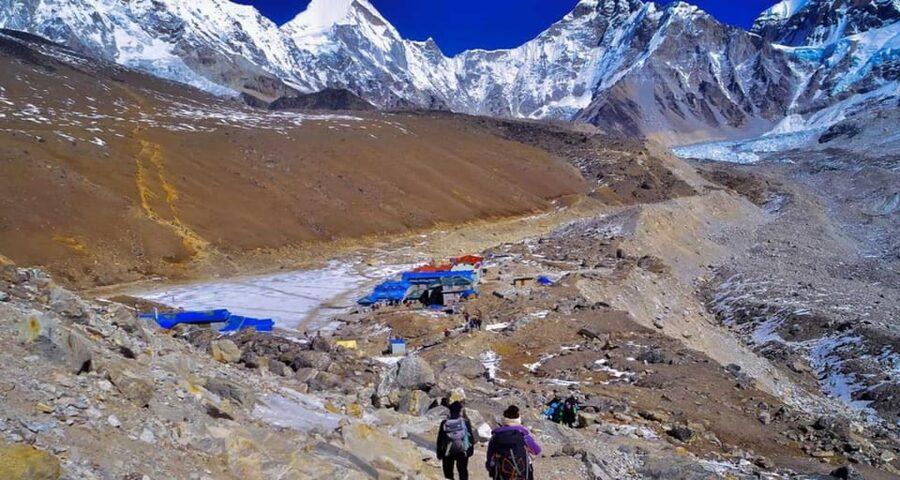
The walk from Namche to Tengboche takes about six hours. Tengboche is the site of the biggest and oldest monastery in the region, making it one of the trip’s most meaningful stops.
The monastery gives the route a sense of place that photographs alone cannot provide. You can visit with a guide, see the setting, and connect the mountain journey with Sherpa Buddhist culture. Sunrise is also listed for this day, so an early start may offer especially fine views.
Tengboche is also a useful reminder that this is not only a physical challenge. The route passes through religious sites, villages, and valleys that matter to local communities. Be respectful during visits, follow your guide’s instructions, and keep noise low around the monastery.
The six-hour walking time sounds moderate on paper, but altitude changes the calculation. At this point, you are already much higher than Kathmandu, and every uphill section can feel longer. Take short rests, drink regularly, and tell the guide early if you feel unwell.
More walking in the hills of Nepal:
- Nagarkot Sunrise View and Day Hiking from Kathmandu
★ 5.0 · 471 reviews - Annapurna Circuit Trek with Tilicho Lake
★ 5.0 · 368 reviews - Everest Base Camp Trek -14 Days
★ 5.0 · 321 reviews - Annapurna base camp trek 5 Days
★ 5.0 · 252 reviews
Dingboche and the value of a rest day
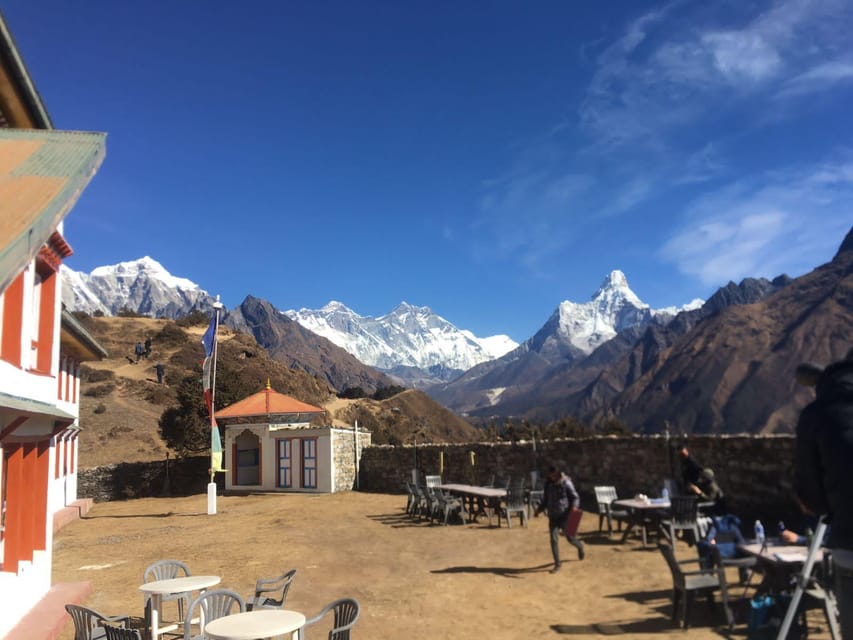
The trek continues to Dingboche in about six hours. Dingboche is an important high-altitude settlement and one of the places where the schedule slows down.
The following day is set aside for a shorter four-hour program with sightseeing, free time, a visit, and sunrise. This is the second key acclimatization pause. I would treat it as part of the main trek, not as an optional extra.
A rest day does not mean sitting indoors all day. The schedule includes walking and sightseeing, which helps you adjust without the strain of a full transfer day. You can use the time to organize your pack, dry clothing, and prepare for the higher sections ahead.
The high valley around Dingboche may feel exposed compared with the forested trail below. Temperatures can also feel more severe, and the simple accommodation becomes more noticeable. The tour includes a down jacket and an all-season sleeping bag if you need them, but you should still bring suitable personal layers.
Lobuche and the approach to Base Camp
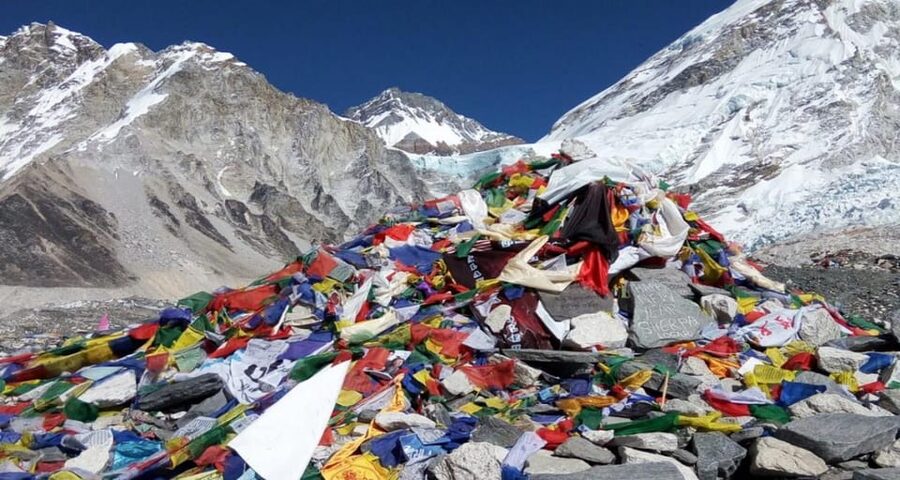
The walk to Lobuche takes around six hours. This is a key approach day, with the route heading into a colder and more open part of the Khumbu.
Lobuche is a practical overnight stop before the Everest Base Camp section. By now, the trip has moved well beyond the lower villages, and the physical demands are more apparent. The combination of altitude, rocky ground, and long walking hours means you should judge progress by how you feel, not by how quickly others move.
The route is described as roughly 130 kilometers in total. That distance is spread across many days, but it still helps explain why this trek requires preparation. You need comfortable footwear, reliable layers, and a daypack you can carry without strain.
The guide’s role becomes especially important here. Dilli was praised for helping with pacing and acclimatization, while Pasang was credited with organizing meals and keeping bags moving to each location. Those practical tasks matter when you are tired and thinking about little beyond the next rest.
Kala Patthar and Everest Base Camp
The schedule places Kala Patthar in the Solukhumbu District on day nine, after the Lobuche section. The walking time is around six hours, and regional food is listed for the day.
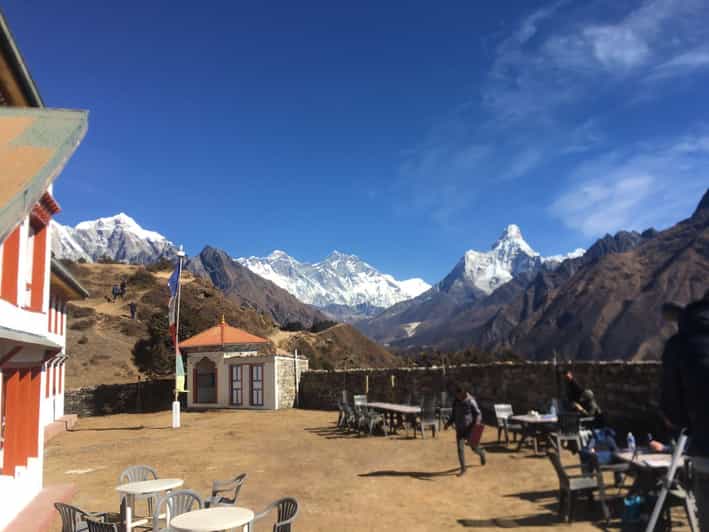
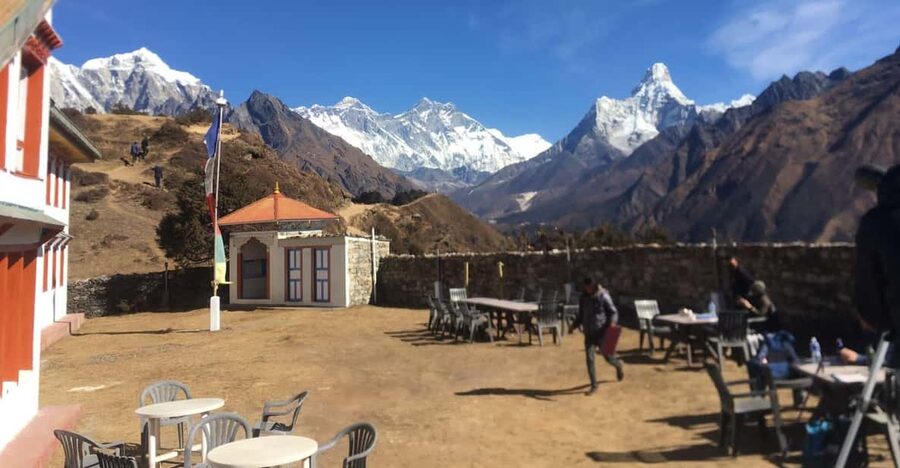
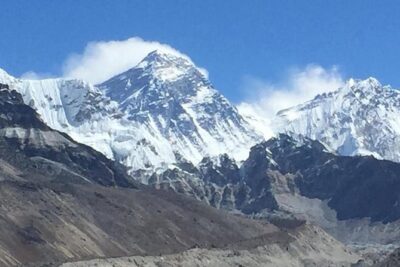
Kala Patthar is the high point at 5,554 meters. It is the place to focus on if your main goal is a broad mountain view, especially toward Everest and the surrounding Himalayan peaks. The climb is not just about reaching a number. At this height, the thin air makes each step count.
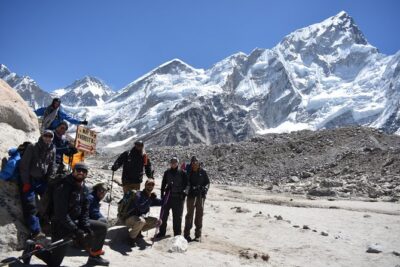
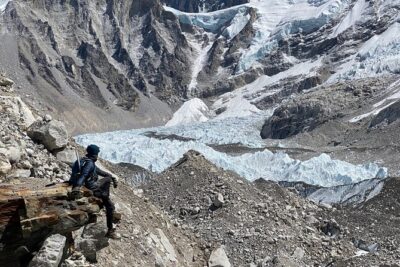
The same section of the journey includes the walk to world-famous Everest Base Camp. Base Camp has powerful symbolic value, even though the famous summit route continues beyond it. You are reaching the foot of the route used for Everest expeditions, after days of walking from Lukla.
Conditions can be stark at this stage. You may find little shelter from wind, and the high route can feel tiring even if the distance looks manageable. Follow the guide’s pace and allow time for photographs without turning the day into a race.
Returning through Pheriche and Namche
The return to Pheriche is listed as an eight-hour day. That is the longest walking day in the schedule, so do not assume the return will feel easy simply because you are heading downhill.
Pheriche provides a useful break in the descent. The journey then continues to Namche Bazaar in about seven hours, with a visit, meals, and an overnight stay. Returning through familiar villages gives you a different view of the route. You may notice details you missed while concentrating on the uphill effort.
The final walking day to Lukla takes around six hours. It includes a visit, meals, walking, and an overnight stay. This is your last night in the mountain region before the flight back.
The schedule then lists a one-hour flight to Kathmandu, followed by drop-off at your hotel. Airport transfers in the company’s own vehicle are included at the beginning and end of the trip, which removes one common source of confusion after a long trek.
What the $1,254 price includes
At $1,254 per person, the package offers solid value if you need a full-service trek rather than a bare route arrangement. The cost includes flights between Kathmandu and Lukla, meals throughout the trek, accommodation, a licensed guide, guide insurance, permits, paperwork, and airport transport.
Meals include breakfast, lunch, dinner, and a cup of tea or coffee each day. Accommodation is described as family-style hotel lodging, which means you should expect practical mountain stays rather than city-standard rooms.
The gear allowance is useful. You can receive a down jacket, an all-season sleeping bag, a duffel bag, and a trekking map if you do not have your own. The jacket, sleeping bag, and duffel bag must be returned after the trip.
The guide carries a first aid medical kit. That is helpful, but it does not replace your own travel and medical insurance. Emergency costs, including chartered flights or helicopter services, are excluded and could be substantial.
You will still pay for international flights, a Nepal visa, Kathmandu hotels, food in Kathmandu, hot showers, laundry, phone use, bar bills, shopping, snacks, and other personal costs. Add those expenses before deciding that $1,254 is your total holiday budget.
The guiding team and day-to-day support
The strongest praise centers on organization and personal care. Shiva, the company owner, met the group at the hotel, helped arrange the details, and provided a warm welcome. That sort of contact can make the first day in Nepal much less confusing.
Guide Dilli was praised for route knowledge, encouragement, acclimatization help, pacing, and stories about the region. Guide Pasang was praised for arranging meals and making sure bags arrived safely at each stop. These are exactly the details that influence a high-altitude trek.
The package includes a guide, but the supplied information does not state the group size or porter-to-client ratio. Ask about both before paying. Also confirm who carries your main bag, how much you may pack, and what happens if weather disrupts a Lukla flight.
Who should book this trek?
I would recommend this trip to a fit adult who wants the classic Everest Base Camp route with meals, lodging, permits, flights, equipment support, and a guide arranged in one package. It suits people who value local assistance and want to spend time in Namche, Tengboche, Dingboche, Lobuche, and Pheriche.
It is not suitable for wheelchair users, babies under one year, people with respiratory issues, people with altitude sickness, or people over 95 years. Those limits are clear, but they do not cover every medical concern. Speak with a doctor before committing to a trek that reaches 5,554 meters.
You should also be comfortable with six-hour walking days and at least one eight-hour day. The reward is not only the Base Camp sign. It is the slow change from forest to high mountain country, the Sherpa villages, the monastery at Tengboche, and the feeling of earning each view on foot.
Free cancellation is available up to 24 hours before departure for a full refund, and you can reserve now and pay later. Those policies make planning easier, but they do not remove the need to check flight conditions, insurance, and medical readiness.
Should you book the 12-day Everest Base Camp trek?
Book it if you want a structured, guided route and value having the major practical pieces handled for you. The combination of two nights in Namche, an acclimatization day in Dingboche, included Lukla flights, gear loans, and attentive guides gives this trip a sensible framework.
Think twice if you want a relaxed mountain holiday. The route is long, the altitude is serious, and the return includes an eight-hour walking day. Before booking, confirm the exact flight schedule, group size, porter arrangements, guide language, Kathmandu hotel plan, and emergency procedure.
For a properly prepared walker, this is a strong-value way to reach Everest Base Camp and Kala Patthar while seeing the cultural heart of the Khumbu along the way.
FAQ
How long is the Everest Base Camp trek?
The activity is advertised as a 12-day trek. The schedule includes the flight from Kathmandu to Lukla at the start and the return flight to Kathmandu at the end.
What is the highest point on the route?
Kala Patthar is the highest point listed, at 5,554 meters.
Does the trek visit Everest Base Camp?
Yes. The route includes a walk to the world-famous Everest Base Camp after the Lobuche section.
Which villages are included?
The route includes Namche Bazaar, Khumjung, Khunde, Tengboche, Dingboche, Lobuche, Pheriche, and Lukla.
Is Tengboche Monastery included?
Yes. The itinerary includes a visit to Tengboche, described as the biggest and oldest monastery in the region.
Are flights between Kathmandu and Lukla included?
Yes. Transportation from Kathmandu to Lukla and back to Kathmandu by flight is included.
Are meals included during the trek?
Yes. Breakfast, lunch, dinner, and one cup of coffee or tea are included throughout the trek. Food in Kathmandu is not included.
Is accommodation included?
Yes. Accommodation during the trek is included. Hotel expenses in Kathmandu are not included.
Is a guide provided?
Yes. The package includes one licensed trekking guide who speaks English, Chinese, Korean, or Hindi, along with Nepali. The activity information lists English as the tour language.
What equipment is provided?
A down jacket, all-season sleeping bag, duffel bag, and trekking map are available if you do not have your own. The down jacket, sleeping bag, and duffel bag must be returned after the trek.
New in the Nepal listings
- Traditional Momo Making Class★ 5.0 · 10 reviews
- Kathmandu: Ancient City Kirtipur & Pharping Monastery Tour★ 5.0 · 2 reviews
- Pokhara: Pokhara Highlights Tour by Bus★ 3.6 · 10 reviews
- Day Walk(8-10h.) inside Chitwan National Park.★ 5.0 · 1 review
- One Day Tour inside Chitwan National Park★ 5.0 · 2 reviews
- Private Jeep Safari (8-10 hrs.)inside Chitwan National Park.★ 5.0 · 3 reviews
- Jungle Towernight Stay: 4-Day Tour in Chitwan National Park★ 5.0 · 4 reviews
- Night Stay in Chitwan National Park, 2 Nights 3 Days Package★ 5.0 · 1 review
Everest Base Camp Treks, compared.
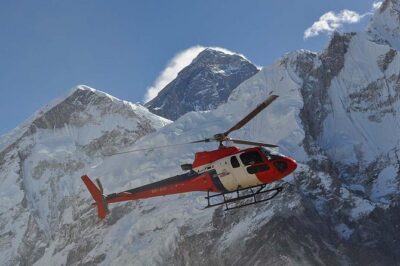
Everest Base Camp Trek with Helicopter Return from Gorakshep to Lukla
Read our review →Browse the lists this tour appears in