REVIEW · HIKING & TREKKING
Everest Three Pass Trek
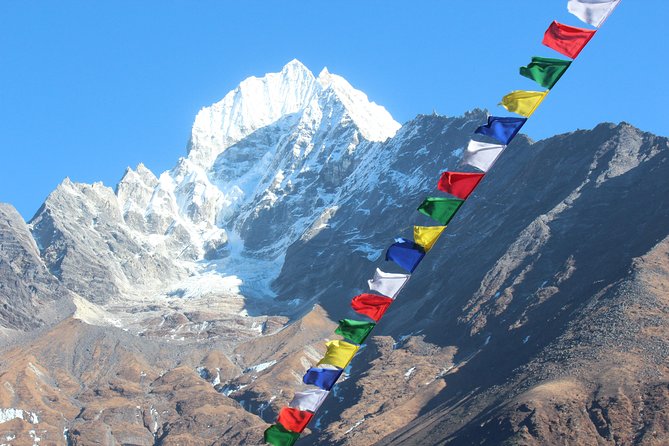
Three high passes, one giant Himalayan challenge. The Everest Three Pass Trek links Kongma La, Cho La, and Renjo La in a demanding 15-day route through the Khumbu. You get Everest, Ama Dablam, Lhotse, glaciers, Sherpa villages, Gokyo Lakes, and Kala Patthar in one carefully planned journey.
I like the private group format, since your party can move at its own pace with a licensed English-speaking guide and porters carrying your main luggage. I also like the way the route includes both the famous Everest views and quieter high-pass trails, rather than simply following the standard Everest Base Camp path.
The drawback is clear: this is not a gentle introduction to Himalayan trekking. You need strong fitness, a good head for steep and rough ground, and patience for changing weather. At more than 5,000 meters, every pass can become a serious day out.
In This Review
- Key points before you commit
- What the Everest Three Pass route actually offers
- Day 1: Flying from Kathmandu to Lukla
- Days 2 and 3: River trails and acclimatization in Namche
- Days 4 and 5: Tengboche, rhododendrons, and Dingboche
- Day 6: The short climb to Chhukung
- Day 7: Crossing Kongma La at 5,535 meters
- Days 8 and 9: Gorakshep and the Kala Patthar sunrise
- Day 10: Cho La and the approach to Gokyo
- Day 11: Gokyo Lakes and Gokyo Ri
- Day 12: The final crossing, Renjo La
- Days 13 to 15: Returning through Namche and Lukla
- What the $1,800 price includes
- Guides, staff, and the private format
- Who should book this trek?
- Should you book the Everest Three Pass Trek?
- FAQ
- Where does the Everest Three Pass Trek start and finish?
- How long is the trek?
- What time does the experience start?
- Which three passes does the trek cross?
- Are domestic flights included?
- Are meals included?
- What happens if poor weather cancels the trek?
Key points before you commit
- Three passes above 5,300 meters: Kongma La reaches 5,535 meters, Cho La 5,420 meters, and Renjo La 5,360 meters.
- A 15-day Kathmandu to Kathmandu plan: The trek begins and ends with domestic flights between Kathmandu and Lukla.
- Built-in acclimatization: Rest days in Namche and Gokyo help you adjust to altitude, though the schedule remains strenuous.
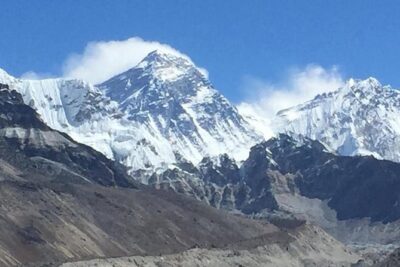
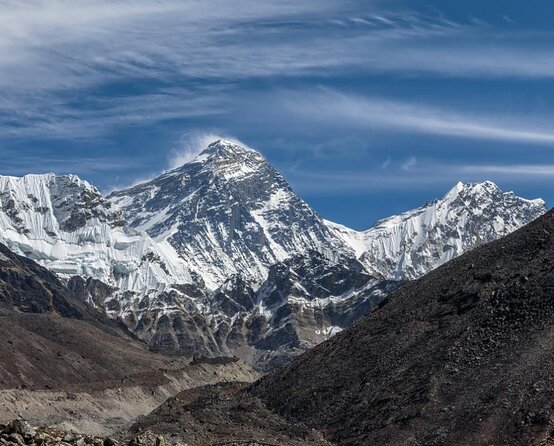
- Major Everest viewpoints: Kala Patthar, Gokyo Ri, and all three passes offer different angles on Everest and the Mahalangur range.
- Most core trekking costs are covered: Flights, permits, lodging, meals, guide, porters, staff costs, a sleeping bag, down jacket, and duffel are included.
- A private experience for your own group: The trip is not a large shared departure, which can make a difficult route easier to manage.
What the Everest Three Pass route actually offers
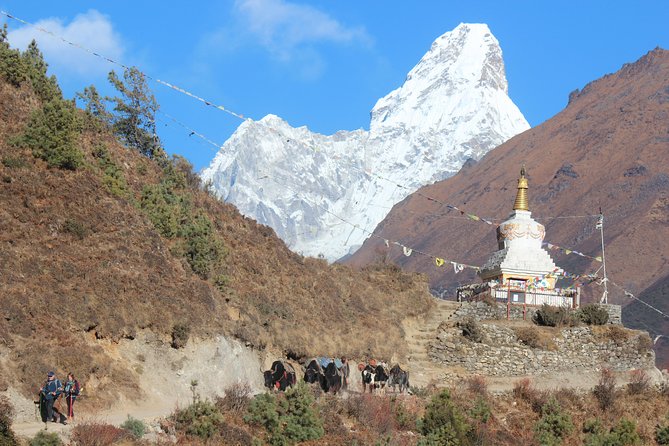
The Three Pass Trek is best understood as a mountain circuit with several major rewards, not as a single march to Everest Base Camp. You begin on the familiar trail through Namche and Tengboche, then leave the main route for the rougher crossings of Kongma La, Cho La, and Renjo La.
Each pass feels different. Kongma La is the highest and often the most physically taxing. Cho La involves an ice-covered trail and links the Everest side of the route with Gokyo. Renjo La provides a final high crossing before the trail drops toward Namche.
The route also includes Kala Patthar and Gokyo Ri. These viewpoints matter because Everest looks different from each side. The trek gives you glaciers, lakes, valleys, suspension bridges, prayer wheels, forests, and high rocky ground instead of a single repeated view.
This is a strong choice if you want a serious Himalayan challenge with a wide range of scenery. It is less suitable if your main aim is a relaxed walking holiday or a simple first trek at altitude.
More walking in the hills of Kathmandu:
- Everest Base Camp Trek – 14 Days
★ 5.0 · 1,499 reviews - Everest Base Camp Trekking
★ 5.0 · 485 reviews - Nagarkot Sunrise View and Day Hiking from Kathmandu
★ 5.0 · 471 reviews
Day 1: Flying from Kathmandu to Lukla
The trip starts early, with a flight from Kathmandu to Lukla. The route passes over green hills and snow-covered peaks before landing at Tenzing-Hillary Airport, one of the most memorable airstrips in the mountains.
After meeting the guide and porters in Lukla, you begin walking toward the lower Khumbu trail. The airport is more than a transport stop. It marks the quick change from city life to a mountain route where your feet, weather, and daylight shape the day.
The early start matters. This is a weather-sensitive flight, and the trip provider states that poor conditions can lead to a new date or a full refund if the activity is canceled. Give yourself flexibility around this trek if your wider Nepal plans depend on a precise flight schedule.
Days 2 and 3: River trails and acclimatization in Namche
The second day follows the Dudh Koshi River through forest and village country. You cross the river several times on suspension bridges decorated with prayer flags, then enter Sagarmatha National Park.
Namche is one of the key stops on the whole trek. It is a Sherpa town set among steep hills, and the planned acclimatization day gives your body time to adjust before the route climbs higher.
The suggested outing reaches Everest View Hotel. From there, you can see peaks including Nuptse, Thamserku, and Everest. The point is not simply sightseeing. A controlled uphill walk followed by a return to Namche helps you gain height during the day while sleeping lower.
I would take this day seriously rather than treating it as spare time. Drink water, walk steadily, and avoid using the stop to prove how fast you can climb. The passes later in the trek will demand enough from you.
Days 4 and 5: Tengboche, rhododendrons, and Dingboche
The trail continues upstream beside the Dudh Koshi, passing the water-driven prayer wheels near Phunke Tenga. From there, you climb above the Imja Khola toward Tengboche.
Tengboche is known for its monastery and its mountain setting. The stop offers a useful change of pace after the river trail, with views toward Ama Dablam and the surrounding peaks. The route then moves through rhododendron forest and past Pangboche village before reaching Dingboche.
Dingboche is where the altitude begins to feel more serious for many people. The day’s views include Ama Dablam, Lhotse, and Everest, but the walking itself becomes more exposed and demanding as the trees thin out.
The schedule does not use a separate extra acclimatization day in Dingboche. Instead, it goes to Chhukung on Day 6. That choice shortens the following approach to Kongma La, but it also means you should arrive ready for a challenging sequence of high days.
A short list of alternatives around Kathmandu
- Private Kathmandu Sightseeing Tour | UNESCO World Heritage sites
★ 5.0 · 756 reviews - Everest Base Camp Helicopter Tour landing at Everest View Hotel
★ 5.0 · 668 reviews - Half day cooking class in Thamel kathmandu
★ 5.0 · 607 reviews - Kathmandu: Full Day 7 UNESCO Tour with Lunch – Private/Group
★ 5.0 · 415 reviews
Day 6: The short climb to Chhukung
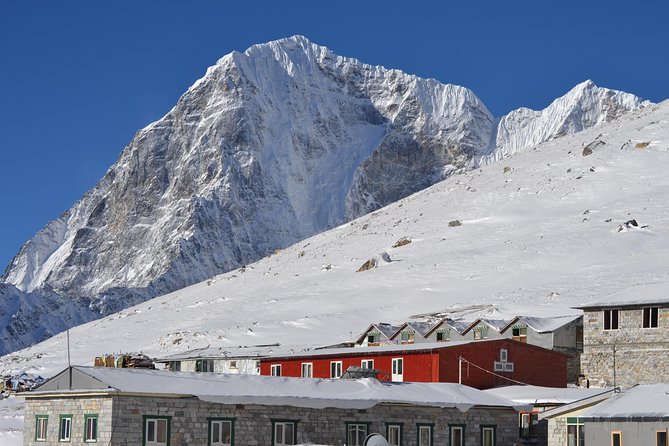
This is a shorter uphill day to Chhukung, with views toward the peaks around the Imja Valley. Its main value is practical: you move closer to the first pass instead of starting the Kongma La crossing from Dingboche.
Do not mistake short for easy. At this altitude, a modest climb can feel slow, especially if you are still adjusting. The day gives you time to prepare equipment, check clothing, and get a good night’s rest before the highest pass.
Day 7: Crossing Kongma La at 5,535 meters
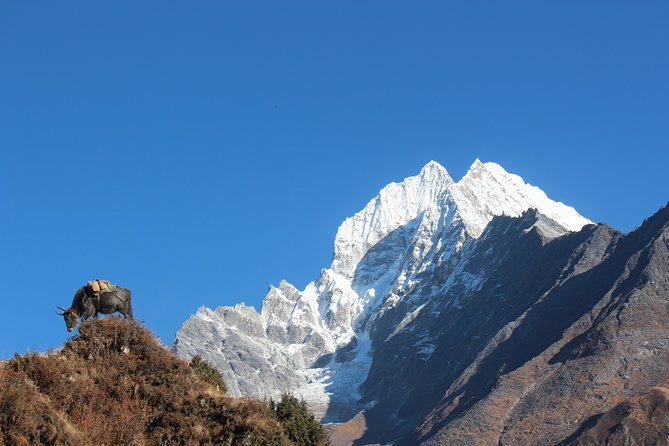
Kongma La is the highest of the three passes, and the route describes it as a steep and difficult climb. You begin after breakfast and spend several hours gaining height over rough ground before reaching the pass at 5,535 meters.
This is a serious mountain day. The exact conditions can change, but the path may include snow and difficult surfaces. The reward is a wide view of the Mahalangur Himalayan range, with Everest and other major peaks forming the backdrop.
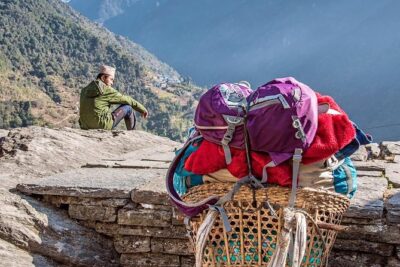
Your guide and porters are particularly important here. The package includes staff costs, insurance, equipment, and porter support, not just their walking company. You still need to carry your own essentials, but the main load is handled for you.
At the price of $1,800 per person, this included support is a major part of the value. A three-pass trek requires more planning and staff coordination than a straightforward lodge-to-lodge walk. The cost also includes national park and TIMS permits, domestic flights, meals, lodging, and basic cold-weather equipment.
Days 8 and 9: Gorakshep and the Kala Patthar sunrise
After Kongma La, the route continues toward Gorakshep over mostly stony tracks. You can expect big views of snow peaks and glaciers, but not an easy recovery walk. The rough surface and thin air make this another day where steady pacing matters.
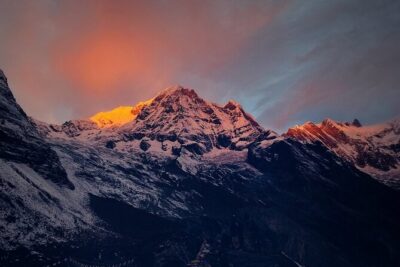
The following morning begins early with the climb to Kala Patthar at 5,550 meters. This is one of the trek’s signature viewpoints, especially at sunrise, when the first light reaches Everest and the surrounding valleys.
Kala Patthar is not the highest named pass on the route, but it is one of the most visually rewarding high points. You get a direct mountain panorama and a strong sense of the scale of the Khumbu.
The coldest part of the day is often the early start, so the included down jacket and sleeping bag are useful rather than decorative extras. You will still need personal trekking clothing and equipment, including whatever you prefer for hands, feet, sun protection, and changing weather.
Day 10: Cho La and the approach to Gokyo
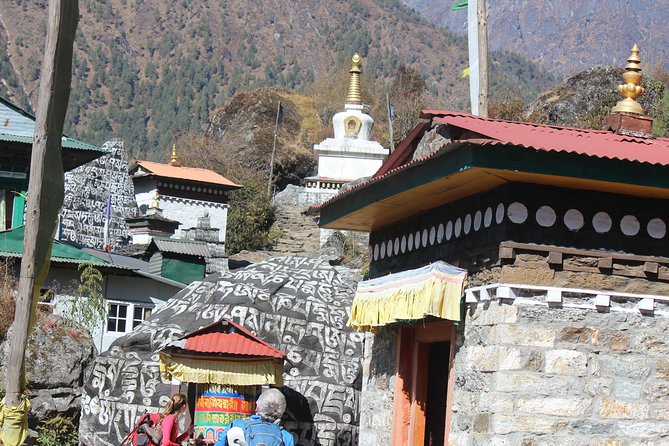
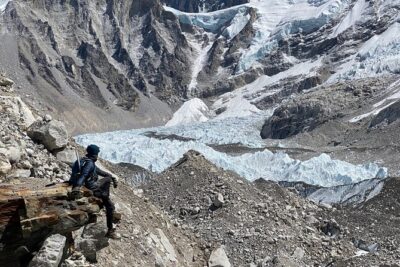
Cho La is the second high pass, reaching 5,420 meters. The approach includes a steep climb over an ice-covered trail, making this one of the days that most clearly separates the Three Pass route from an ordinary high-altitude hike.
The crossing connects the Everest side of the trek with Gokyo. After the effort of the pass, the arrival at the lakes is a major change in scenery. Instead of only rocky trails and glaciers, you reach a group of striking mountain lakes near Gokyo village.
This is another day when weather matters. The plan specifically describes snow and ice, so you should not judge the route only by the calendar or by photographs from a different season. The provider offers a new date or full refund if poor weather cancels the experience, but conditions can still affect the character of a scheduled trek.
Day 11: Gokyo Lakes and Gokyo Ri
Gokyo is the route’s most distinctive stop. The planned rest day includes a morning climb to Gokyo Ri at 5,360 meters, with views over the Gokyo Valley, its smaller lakes, glaciers, and the surrounding peaks.
Calling this a rest day is a little generous. It is less demanding than crossing a pass, but Gokyo Ri is still a high climb. The benefit is that you gain another viewpoint without changing accommodation, then return to the village.
I like this part of the itinerary because it gives you time to see a different side of the Everest region. If you want only Everest Base Camp, you could miss the lakes and the broad Gokyo views. Here, they are central to the route.
Day 12: The final crossing, Renjo La
The trek starts early again for Renjo La, the third and final pass at 5,360 meters. The path rises gradually over snow-covered ground before reaching the top.
From Renjo La, the views include Cho Oyu and other high peaks, along with the dramatic mountains of the Khumbu. After two earlier passes, this crossing may feel like a final examination of your stamina, but it also brings a sense of progress. The hardest part of the circuit is close to finished.
The descent after a high pass can be as awkward as the climb. Take care with footing, especially if snow or ice remains on the trail. Your guide can help with pace and route decisions, but you should expect to work hard throughout the day.
Days 13 to 15: Returning through Namche and Lukla
After Renjo La, the route heads toward Namche on a relatively easier trail. You can enjoy distant views of Everest and the other peaks without another major pass immediately ahead.
The next day follows the trail from Namche to Lukla, crossing villages, forests, rivers, and suspension bridges. This final walking day is long enough to feel like a real finish, but the lower altitude and more familiar terrain should make it less severe than the central section.
The last morning is the flight from Lukla back to Kathmandu. The trip ends at the original meeting point in Kathmandu after the mountain flight. Since the route depends on domestic air travel, I would avoid scheduling an important international connection immediately afterward.
What the $1,800 price includes
The price is strong value if you need a supported, organized trek rather than a bare route permit. Included are:
- Domestic airfare between Kathmandu and Lukla
- Airport tax and required land transport
- Twin-sharing guesthouse accommodation
- Breakfast, lunch, and dinner for 14 days
- Licensed English-speaking guide
- Porters and the required trekking staff
- Staff food, accommodation, salary, insurance, equipment, and transport
- Sagarmatha National Park entry permit
- TIMS permit
- Down jacket, sleeping bag, and duffel or kit bag
- First aid medical kits
That list covers the costly essentials. You still pay for international flights, drinks, laundry, hot showers, personal trekking equipment, staff tips, and any expense not listed.
At $1,800, the tour makes the most sense if you value having flights, permits, porters, meals, and a private guide arranged together. You may find a cheaper independent approach, but you would then handle more of the planning and risk yourself.
Guides, staff, and the private format
The trip uses a local government licensed English-speaking guide, plus porters for luggage. That matters on a route where trail conditions, altitude, and weather can alter the day’s plan.
The company’s Everest trekking team has received specific praise for guides named Shiva and Jwala, as well as for organizer Shree. Guide assignments are not guaranteed in the supplied details, so treat those names as examples of the wider team rather than a promise that one of them will lead your trek.
Because this is a private activity, only your group participates. That can be a real advantage on difficult crossings. You are not tied to the pace of a large group, though your own group still needs to agree on a sensible pace and follow the guide’s safety advice.
Who should book this trek?
I would recommend it to you if you:
- Have strong physical fitness
- Want three high passes rather than a standard Everest route
- Are comfortable with steep, rough, stony, snowy, and icy trails
- Want both Kala Patthar and Gokyo Ri
- Prefer a private group with guide and porter support
- Can allow flexibility around Lukla flights and mountain weather
I would be cautious if this is your first high-altitude trek, if you dislike early starts, or if you want a relaxed holiday. The itinerary is tightly packed with major climbs, and the phrase rest day often means a shorter acclimatization hike, not a day spent doing nothing.
The trip is generally booked about 39 days ahead. That is a useful planning clue, though it is not a guarantee of availability. Confirmation is provided at booking, and the cancellation policy allows a full refund when you cancel at least 24 hours before the start time. Later cancellations and changes are not accepted under the stated policy.
Should you book the Everest Three Pass Trek?
Book it if you want the Everest region at its most varied and demanding. The three passes, Kala Patthar, Gokyo Ri, and Gokyo Lakes give you far more than a single out-and-back route, while the included flights, permits, meals, staff, and cold-weather kit keep the planning manageable.
Skip it if your priority is comfort or a forgiving schedule. At 15 days and above 5,000 meters several times, this is a serious trek with real physical demands.
For a fit and well-prepared walker, I see the $1,800 price as fair, especially with private guiding, porters, meals, permits, domestic flights, and accommodation included. Pack carefully, build in extra time around Lukla, and choose this route for the challenge as much as for the views.
FAQ
Where does the Everest Three Pass Trek start and finish?
It starts at the designated meeting point in Kathmandu, Nepal, and ends back at the same meeting point after the flight from Lukla.
How long is the trek?
The planned duration is approximately 15 days.
What time does the experience start?
The stated start time is 6:15 am in Kathmandu.
Which three passes does the trek cross?
The route crosses Kongma La at 5,535 meters, Cho La at 5,420 meters, and Renjo La at 5,360 meters.
Are domestic flights included?
Yes. The package includes domestic airfare between Kathmandu and Lukla, including the return flight and airport tax.
Are meals included?
Yes. Breakfast, lunch, and dinner are included for 14 days.
What happens if poor weather cancels the trek?
If the experience is canceled because of poor weather, you are offered a different date or a full refund.
New in the Kathmandu listings
- Traditional Momo Making Class★ 5.0 · 10 reviews
- Kathmandu: Ancient City Kirtipur & Pharping Monastery Tour★ 5.0 · 2 reviews
- Kathmandu to Pokhara Premium sofa bus ticket★ 4.0 · 17 reviews
- Women Empowerment Project(Nepali cooking class & jewelry workshop★ 5.0 · 15 reviews
- 7-Day Langtang Valley Trek from Kathmandu★ 5.0 · 1 review
- Kathmandu 2 Nights 3 Days Chitwan Jungle Safari Tour★ 5.0 · 9 reviews
- Yoga Experience Day Trip with Private Transfer From Kathmandu★ 4.0 · 2 reviews
- Wildlife Adventure in Chitwan Nepal★ 4.0 · 4 reviews
Hiking & Trekking, compared.
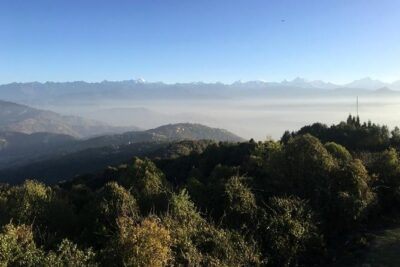
Nagarkot Sunrise View and Day Hiking from Kathmandu
Read our review →