REVIEW · HIKING & TREKKING
Everest Three Passes Trek 16 Days
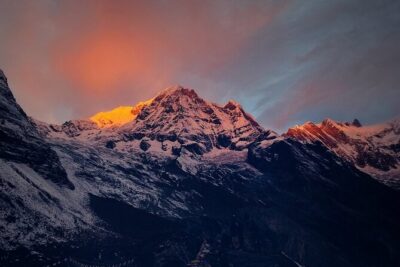
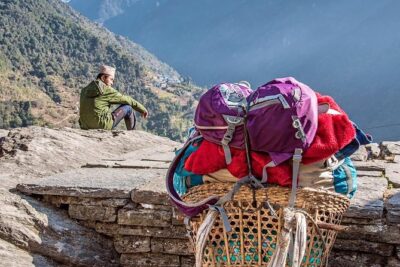
Three high passes, one huge Himalayan journey. The Everest Three Passes Trek packs Renjo La, Cho La, and Kongma La into 16 days, with side trips to Gokyo Ri, Everest Base Camp, and Kala Patthar. I like the route’s mix of famous viewpoints and quieter Sherpa villages, especially Thame and Lungden. I also like that Trek Mania Nepal includes airport pickup, an English-speaking guide, permits, rescue management, and a first-aid kit.
The main drawback is the cost structure. At $1,485 per person, the price covers guide services and key transport, but meals and all trekking accommodation are extra. You also need strong fitness, patience with high altitude, and flexibility for weather-related flight changes.
In This Review
- Five things to know before you book
- Why this 16-day route is unusually ambitious
- Day 1: Ramechhap, Lukla, and the trail to Phakding
- Day 2: Entering Sagarmatha National Park and reaching Namche
- Day 3: Namche acclimatization, Khumjung, and Khunde
- Day 4: Tengboche and its famous monastery
- Days 5 and 6: Dingboche, Chhukung, and Chhukung Ri
- Day 7: Crossing Kongma La to Lobuche
- Days 8 and 9: Gorak Shep, Kala Patthar, and Everest Base Camp
- Day 10: Cho La and the descent to Dragnag
- Days 11 and 12: Ngozumpa Glacier, Gokyo Lakes, and Gokyo Ri
- Day 13: Renjo La and the descent to Lungden
- Days 14 to 16: Thame, Namche, Lukla, and the return to Kathmandu
- What the $1,485 price really covers
- Safety, support, and the one review worth noting
- Should you book the Everest Three Passes Trek?
- FAQ
- How long is the Everest Three Passes Trek?
- Which high passes does the route cross?
- Does the trek visit Everest Base Camp?
- Does the trek include Gokyo Lakes?
- Is Kala Patthar included?
- Are meals and accommodation included for the trekker?
- Is airport pickup available?
- What fitness level is required?
Five things to know before you book
- Three high passes in one route: You cross Kongma La, Cho La, and Renjo La, each with steep, rough sections and high-altitude exposure.
- Gokyo and Everest Base Camp together: The route includes the turquoise Gokyo Lakes, Gokyo Ri, Kala Patthar, and Everest Base Camp.
- A careful acclimatization rhythm: Namche gets a full rest day, followed by acclimatization time around Dingboche and Chhukung.
- A genuine Sherpa culture component: Khumjung, Khunde, Tengboche, Thame, and other villages add far more than mountain scenery.
- Flights may use Ramechhap: In peak seasons, you may fly between Lukla and Manthali, then face a five to six-hour drive to Kathmandu.
- Private group format: Only your own group participates, which can make the pace and daily support feel more personal.
Why this 16-day route is unusually ambitious
The standard Everest Base Camp trek is already a serious high-altitude walk. This route adds three demanding passes and the Gokyo Valley, creating a much tougher circuit through the Khumbu.
I like the design because it avoids turning the trek into a simple out-and-back journey. You see the Everest region from several angles: the Khumbu Glacier near Lobuche, the Gokyo Valley from Gokyo Ri, and the remote Nangpa-style valleys around Renjo La and Lungden. The route also lets you visit major mountain landmarks without giving up the feel of a village-to-village trek.
The trade-off is clear. Several days involve 14 to 16 hours of trekking time in the supplied schedule. Some listed stop durations appear to represent the full time spent at a destination or the day’s trek, rather than a short visit. Still, you should prepare for long, tiring days, especially around Kongma La, Cho La, and Renjo La.
This is not a casual sightseeing tour. It is best for someone with strong physical fitness and previous experience with long mountain walks. The guide, first-aid kit, acclimatization plan, and rescue management service are useful safeguards, but they do not remove the risks of altitude, cold, rough trails, or delayed flights.
More walking in the hills of Kathmandu:
- Everest Base Camp Trek – 14 Days
★ 5.0 · 1,499 reviews - Everest Base Camp Trekking
★ 5.0 · 485 reviews - Nagarkot Sunrise View and Day Hiking from Kathmandu
★ 5.0 · 471 reviews
Day 1: Ramechhap, Lukla, and the trail to Phakding
The journey begins with an early drive from Kathmandu to Ramechhap. The road passes through winding hills, highways, and rural Nepali countryside before you reach the airport.
After the flight to Lukla, you get a short tea break and time to prepare your pack. Lukla is more than a transport stop. It is the point where the journey changes from road and air travel to walking, and you get your first Himalayan views.
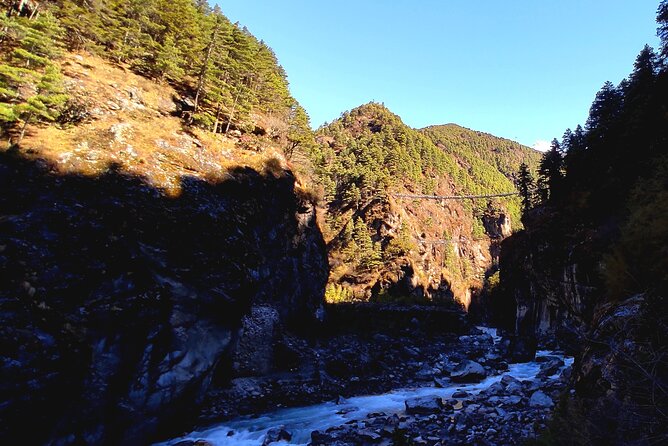
The trail passes through Chheplung, a Sherpa village marked by mani stones and prayer flags. At Ghat, look for chortens, mani walls, suspension bridges, and views toward Kusum Kanguru. The first day ends in Phakding, a riverside village among pine trees beside the Dudh Koshi River.
Phakding is a sensible first night because the walking day is relatively moderate compared with what follows. You can rest at the teahouse, explore the riverbanks, or visit nearby monasteries. Remember that accommodation and food during the trek are not included in the price, so budget for both.
Day 2: Entering Sagarmatha National Park and reaching Namche
From Phakding, the route follows the Dudh Koshi through pine forests and small settlements. Benkar is a pleasant pause, with tea, apple pies, and a nearby waterfall.
At Monjo, permits are checked before you enter Sagarmatha National Park. This is an important transition point. The trail begins to feel more remote, and you may spot mountain birds or musk deer in the surrounding area.
Jorsalle is the last village before Namche Bazaar and a common lunch stop. After that, the path crosses suspension bridges and climbs more sharply through forest. The final push to Namche can feel long, especially as your body adjusts to the rising altitude.
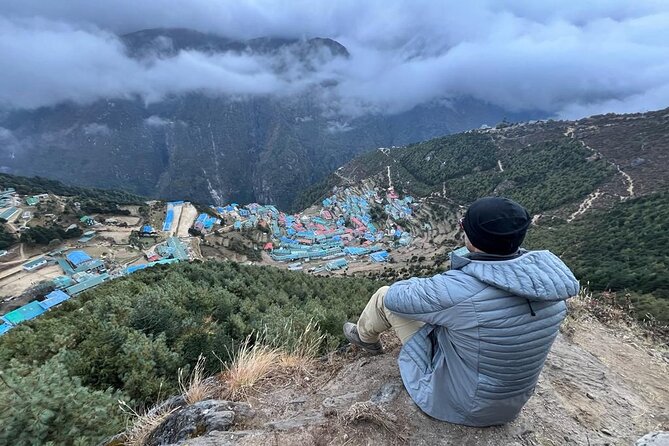
Namche is the region’s main trading and lodging center. You will find bakeries, cafes, shops, lodges, and mountain views, but this is not simply a place to rush through. The town gives you a useful chance to rest, check your gear, and prepare for the higher sections.
Day 3: Namche acclimatization, Khumjung, and Khunde
A full day around Namche is one of the route’s best features. Instead of remaining idle, you take a side trip through the Sherpa settlements of Khumjung and Khunde.
The Sherpa Culture Museum in Namche offers context about local life, mountaineering, and the region’s past. If your visit lines up with Saturday, the local market adds another reason to spend time in town.
The hike to Hotel Everest View provides broad views of Everest, Lhotse, and Ama Dablam. The hotel is also one of the highest-altitude hotels in the world, so the walk gives you a useful test of how your body handles elevation.
Khumjung has a monastery associated with a supposed yeti scalp, along with the Khumjung School founded by Sir Edmund Hillary. Nearby Khunde is home to the Hillary Hospital, founded in 1966. These stops give the trek a human side. You are not only collecting mountain viewpoints, you are seeing schools, health services, religious sites, and working villages.
You return to Namche for another night. Use the afternoon for a gear check and rest rather than treating the bakery as an endurance event.
A short list of alternatives around Kathmandu
- Private Kathmandu Sightseeing Tour | UNESCO World Heritage sites
★ 5.0 · 756 reviews - Everest Base Camp Helicopter Tour landing at Everest View Hotel
★ 5.0 · 668 reviews - Half day cooking class in Thamel kathmandu
★ 5.0 · 607 reviews - Kathmandu: Full Day 7 UNESCO Tour with Lunch – Private/Group
★ 5.0 · 415 reviews
Day 4: Tengboche and its famous monastery
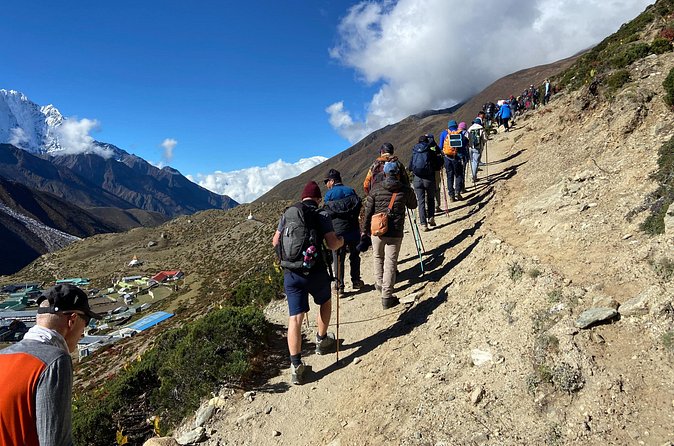
Leaving Namche, you stop at the Tenzing Norgay Memorial. This is an excellent viewpoint for Ama Dablam, Lhotse Shar, Kangtega, Taboche, and Thamserku.
The trail then descends toward Phunki Thanga beside the Dudh Koshi. This is a practical lunch stop before the steady climb to Tengboche. The uphill section can feel demanding after the earlier descent, but the destination is worth the effort.
Tengboche Monastery is the largest monastery in the Everest region. Its painted interior, murals, and mountain setting make it one of the cultural highlights of the trek. The monastery gives you a quiet counterpoint to the physical challenge outside. Plan to slow down here and take in the setting rather than treating it as another quick photo stop.
Days 5 and 6: Dingboche, Chhukung, and Chhukung Ri
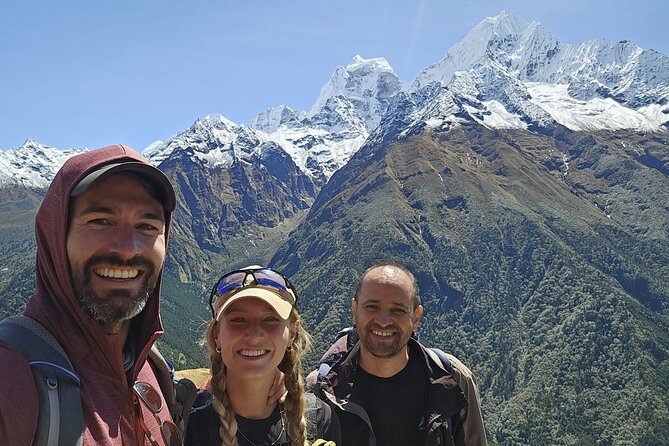
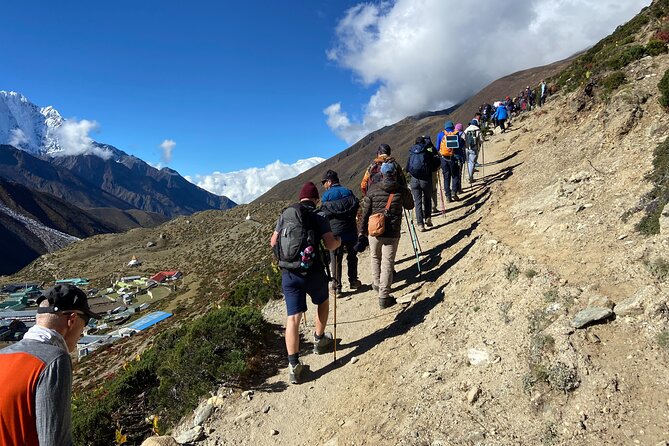
The walk to Dingboche passes through Sherpa villages and yak pastures after a gradual descent from Tengboche. Dingboche sits at about 4,410 meters, so this is where altitude becomes a serious part of the trip.
The next day takes you to Chhukung at about 4,730 meters. The village is a calmer base before the harder climb to Chhukung Ri. The surrounding peaks make this a memorable place to pause, but the air is thin and every uphill section takes longer.
Chhukung Ri rises to about 5,550 meters. The climb is steep and more demanding than the walk to the village. The supplied plan specifically warns that the risk of altitude sickness increases here, so you should move slowly, follow your guide’s advice, and report symptoms early.
This is one of the points where a private group may help. You are not forced to match the pace of a large mixed group, and the guide can focus on your group’s condition. That said, a private trip does not mean an easy trip. The altitude remains the same for everyone.
Day 7: Crossing Kongma La to Lobuche
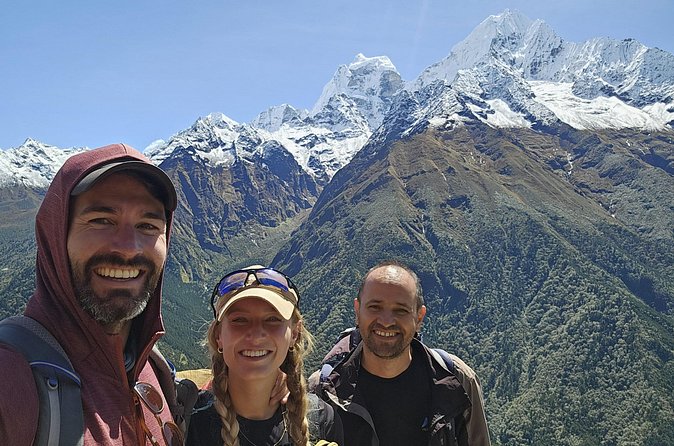
Kongma La is the highest of the three passes on this route. The trail begins in a fairly clear manner, but the approach becomes rougher and more demanding as you climb.
Expect steep ground and a slow pace. The pass is not a simple scenic overlook reached by a short path. You need stamina, careful footwork, and a good response to altitude. Weather can also affect the experience, which is why flexibility matters.
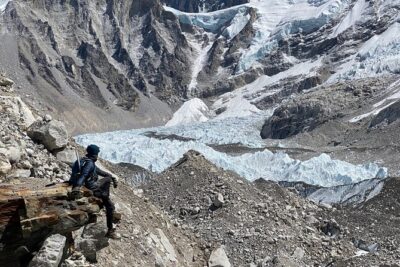
After the pass, you descend toward Lobuche with views of the Khumbu Glacier. Downhill walking is not automatically easy. Loose or uneven ground can put stress on tired legs, and the long day requires attention even after the high point has been crossed.
Lobuche is an important staging point for the Everest Base Camp section. By now, the route has moved well beyond the easier lower valleys.
Days 8 and 9: Gorak Shep, Kala Patthar, and Everest Base Camp
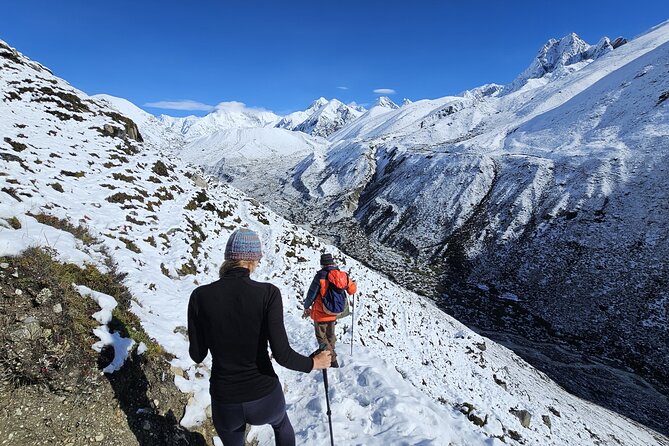
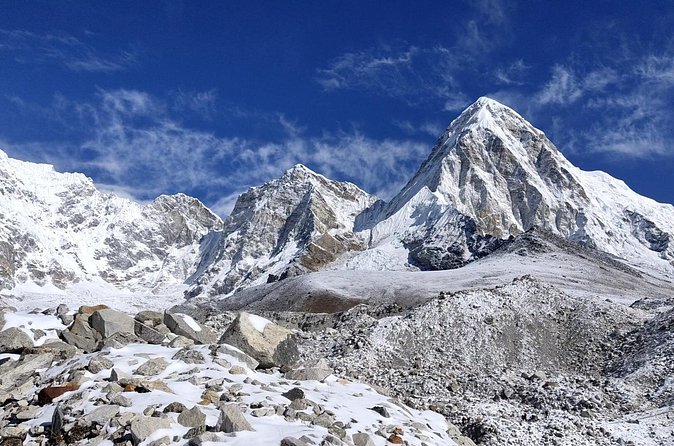
From Lobuche, the trail reaches Gorak Shep over a series of ups and downs. The snowy peaks to the west provide a dramatic backdrop, but the route remains physically demanding because of altitude and the lack of easy recovery time.
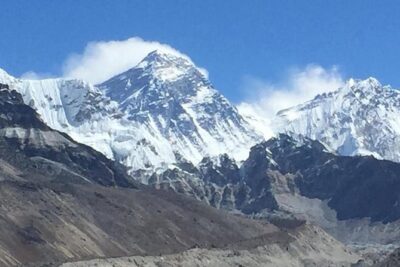
The plan schedules Kala Patthar in the afternoon rather than at sunrise. That is a practical choice for anyone who prefers sunset light and a less rushed start. From the viewpoint, the southern face of Everest and the surrounding peaks form the main reward.
The next morning, you walk to Everest Base Camp before returning to Gorak Shep for lunch. Base Camp itself offers a broad snowy setting with mountains partly hidden by mist. It is an important destination, but the viewpoint from Kala Patthar is generally the stronger mountain-view stop on this route.
After lunch, you continue toward Dzongla and pass by Tshola Lake. This makes Day 9 especially long. You should think of it as a major endurance day, not a relaxed Base Camp outing.
Day 10: Cho La and the descent to Dragnag
Cho La is another difficult section. The ascent from Dzongla includes steep ground and rocky boulders, requiring careful movement.
The descent toward Dragnag can be slippery. This is where good boots, deliberate steps, and patience matter more than speed. Your guide’s role is especially important here, both for route finding and for keeping the group moving safely.
Cho La is not difficult only because of its height. The combination of rough rock, steep gradients, and fatigue makes it a demanding day. You should not book this trek expecting every pass to feel similar. Each one has its own character and challenge.
Days 11 and 12: Ngozumpa Glacier, Gokyo Lakes, and Gokyo Ri
From Dragnag, the route crosses the Ngozumpa Glacier, described as Nepal’s longest glacier. The path is steep and icy, with jagged ice formations and large mountain views.
After the crossing, you reach Gokyo and the six major freshwater lakes in the Gokyo Lakes system. Their clear turquoise color makes this one of the most memorable parts of the journey. Gokyo feels different from the Everest Base Camp corridor, with a quieter setting and a broader sense of open mountain space.
The following day is set aside for Gokyo Ri. It is often compared with Kala Patthar because of its wide views across the surrounding peaks. The trail is steep and may be icy, so the climb still demands care even after you have already crossed two passes.
You return to Gokyo for the night. The route gives you time to see both the lakes and the high viewpoint, rather than passing through the valley in a single hurried day.
Day 13: Renjo La and the descent to Lungden
The final pass, Renjo La, begins with a gentler walk along the edge of the third Gokyo Lake. The trail then rises sharply over rugged, stony ground.
The descent to Lungden includes slippery trails and uneven stone steps. You need patience here, especially because this pass comes after a long sequence of high-altitude days.
Renjo La rewards you with another angle on the Everest region, but the real value is the change in scenery and route. Instead of simply retracing the main trail, you move into a quieter valley toward Thame.
Days 14 to 16: Thame, Namche, Lukla, and the return to Kathmandu
From Lungden, the trail descends through a broad valley and crosses the Langmuche Khola before reaching Thame. The walk is more open and less punishing than the pass days, giving your legs some relief.
Thame is a particularly worthwhile stop for anyone interested in Sherpa life beyond the main Everest corridor. The route then returns to Namche through forested ridgelines and small streams.
Day 15 retraces the trail from Namche to Lukla. Much of it is downhill, but the distance remains tiring after the high passes. Lukla is your final night in the mountains.
On Day 16, you fly from Lukla to Manthali Airport in about 15 minutes. During peak autumn and spring trekking periods, Manthali is used as the main airport connection, followed by a five to six-hour drive to Kathmandu. This transfer can make the return day much longer than the flight time suggests.
What the $1,485 price really covers
The $1,485 price is reasonable for a guided private trek of this length, but only if you understand the exclusions.
The package includes airport pickup and drop-off, transportation between your hotel and the airport, the Kathmandu to Lukla to Kathmandu flight arrangement, a licensed English-speaking guide, guide salary, lodging, food, and insurance for the guide, Sagarmatha National Park fees, a first-aid kit, a duffel bag, a T-shirt, a trekking map, rescue management service, taxes, service charges, and farewell dinners.
The important catch is that your own meals, drinks, and all trekking accommodation are excluded. Porter service is also extra. Travel insurance and rescue operation costs are not covered, nor are visa fees, personal expenses, hot or cold showers, electronic charging, laundry, tips, international flights, or extra baggage.
Ask for a clear estimate of teahouse and meal costs before departure. Also confirm exactly how the included Lukla flights and the Manthali road transfer apply to your dates.
Safety, support, and the one review worth noting
Safety is presented as a priority, with an experienced guide, acclimatization planning, a first-aid medical box, and rescue management service. These are meaningful inclusions on a trek with three high passes, but you still need personal travel insurance that covers trekking and rescue costs, since those expenses are specifically excluded.
The experience is private, and confirmation is provided at booking. The company’s only supplied customer comment gives special praise to Devaraj for airport pickup and a smooth start, while the guide is praised for being helpful and focused on safety. The most useful takeaway is simple: confirm your airport meeting details and guide contact before you arrive.
The accommodation standard is not specified. You should expect mountain teahouse arrangements to vary, and you should ask what is included in the lodging plan before paying.
Should you book the Everest Three Passes Trek?
Book it if you want a serious Everest-region challenge that includes far more than Base Camp. The combination of Kongma La, Cho La, Renjo La, Gokyo Lakes, Kala Patthar, and Sherpa villages gives you a broad and memorable route.
Do not book it if you want short walking days, predictable transport, or an all-inclusive package. The long high-altitude stages, extra costs for food and lodging, possible Ramechhap transfer, and demanding passes require real preparation.
I would choose this trip for an experienced trekker who values route variety, private guiding, and cultural stops as much as famous mountain views. Before booking, confirm the accommodation plan, porter cost, meal budget, flight routing, and insurance requirements. If those details fit your budget and fitness level, this is a powerful way to see the Everest region from several distinct sides.
The cancellation terms allow a full refund when you cancel at least six full days before the start time. A 50 percent refund applies when you cancel two to six full days before departure, while cancellations less than two days ahead are nonrefundable. Poor weather may lead to a different date or a full refund.
FAQ
How long is the Everest Three Passes Trek?
The trek lasts approximately 16 days, including the journey from Kathmandu to Ramechhap, the flight to Lukla, the mountain trek, and the return from Manthali to Kathmandu.
Which high passes does the route cross?
The route crosses Kongma La, Cho La, and Renjo La.
Does the trek visit Everest Base Camp?
Yes. The route includes an early morning walk from Gorak Shep to Everest Base Camp on Day 9.
Does the trek include Gokyo Lakes?
Yes. You visit the Gokyo Lakes after crossing the Ngozumpa Glacier, and you also climb Gokyo Ri.
Is Kala Patthar included?
Yes. The plan schedules a hike to Kala Patthar from Gorak Shep, using afternoon light for sunset views.
Are meals and accommodation included for the trekker?
No. Food, drinks, and all accommodation during the trek are excluded. Guide food, lodging, salary, and insurance are included.
Is airport pickup available?
Yes. Airport pickup and drop-off are included, with the listed meeting point at Hotel Chhimeki, 17 Purano Dhalko Marga, Kathmandu.
What fitness level is required?
You should have a strong physical fitness level. The route includes steep, rocky, slippery, icy, and high-altitude sections, with several very long trekking days.
New in the Kathmandu listings
- Traditional Momo Making Class★ 5.0 · 10 reviews
- Kathmandu: Ancient City Kirtipur & Pharping Monastery Tour★ 5.0 · 2 reviews
- Kathmandu to Pokhara Premium sofa bus ticket★ 4.0 · 17 reviews
- Women Empowerment Project(Nepali cooking class & jewelry workshop★ 5.0 · 15 reviews
- 7-Day Langtang Valley Trek from Kathmandu★ 5.0 · 1 review
- Kathmandu 2 Nights 3 Days Chitwan Jungle Safari Tour★ 5.0 · 9 reviews
- Yoga Experience Day Trip with Private Transfer From Kathmandu★ 4.0 · 2 reviews
- Wildlife Adventure in Chitwan Nepal★ 4.0 · 4 reviews
Hiking & Trekking, compared.
Nagarkot Sunrise View and Day Hiking from Kathmandu
Read our review →