
REVIEW · SHOPPING TOURS
From Bazaar to Hippie Hub: Ason & Freak Street in Kathmandu
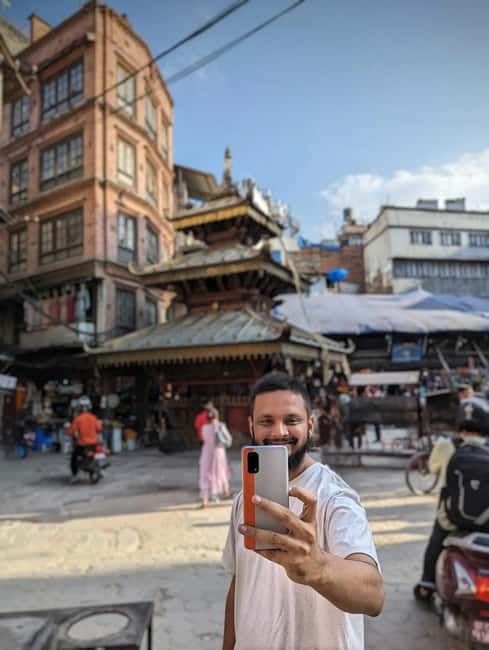
Kathmandu reveals itself on foot. This three-hour walk links Thamel, Asan Bazaar, Indra Chowk, Potey Bazaar, New Road, and Freak Street, giving you a lively mix of shopping streets, shrines, local customs, and counterculture history. I especially like the group limit of five people and the route’s focus on ordinary city life rather than only famous monuments.
I also like the way the walk connects several different sides of Kathmandu. You move from tourist cafés to spice stalls, from the Temple of Annapurna to Newar Muslim bead makers, then into Freak Street’s old hippie quarter. The main consideration is pace: three hours on foot, with four separate walking sections, can feel demanding in heat, rain, traffic, and crowded lanes.
In This Review
- Five Details That Make This Walk Worth Considering
- Starting at Pumpernickel Bakery in Thamel
- The 45-Minute Walk Toward Asan Bazaar
- The Temple of Annapurna and Kathmandu’s Daily Faith
- Indra Chowk and the Potey Bead Market
- New Road: Old Customs Meet Modern Kathmandu
- Freak Street and the Memory of the Hippie Trail
- Four Walking Sections and What to Pack
- Is $15 Good Value for Three Hours?
- Who Will Enjoy This Kathmandu Walk?
- Booking Details to Keep in Mind
- Should You Book From Bazaar to Hippie Hub?
- FAQ
- Where does the tour begin?
- Where does the tour finish?
- How long does the experience last?
- How much does the tour cost?
- How large is the group?
- What language is the tour offered in?
- Is food included?
- What should I wear and bring?
- Can I take photographs?
Five Details That Make This Walk Worth Considering
- A group of no more than five: You get a better chance to ask questions and keep close to the guide in crowded lanes.
- Ason Bazaar’s Temple of Annapurna: The shrine links daily food, grain, and prosperity with Kathmandu’s spiritual life.
- Potey Bazaar’s glass bead tradition: Newar Muslim artisans make garlands traditionally worn by married women in Nepal.
- Freak Street’s counterculture past: Jhochhen recalls the 1960s and 1970s Hippie Trail, with cafés and shops still hinting at that era.
- A useful first-day route: One five-star report called it a great first activity in Kathmandu, and that makes sense because the walk helps you get oriented.
- A guide-led city lesson: The strongest praise focuses on clear explanations and unexpected stops away from the most obvious tourist path.
Starting at Pumpernickel Bakery in Thamel
The meeting point is Pumpernickel Bakery, in the center of Thamel. Your guide arrives 15 minutes before the scheduled start with a sign reading Meeting Point, Amazing Kathmandu.
This is a practical place to begin. Thamel is Kathmandu’s main tourist district, packed with shops, cafés, trekking offices, and narrow lanes. Pumpernickel Bakery also serves coffee, all-day breakfasts, cakes, and gluten-free and vegan food, so you can arrive early for something to eat before setting off. Food and drinks are not part of the tour price, so breakfast here is at your own cost.
Thamel is not the traditional Kathmandu you may have pictured. It is a busy commercial quarter shaped by tourism, with plenty of familiar comforts. That makes it a useful starting point. You first see the city through the eyes of visitors, then the route gradually moves into markets and neighborhoods used for daily trade and worship.
The group limit matters here. Five people is small enough for the guide to explain things without shouting over a large crowd. It also helps when the route turns into narrow lanes, where a big party can easily become scattered.
More market mornings in Kathmandu:
- Kathmandu Secret Food Crawl & Local Market Tour
★ 4.7 · 54 reviews - Best Nepali Cooking Class in Thamel with Local Market Trip
★ 5.0 · 26 reviews - Kathmandu Food Crawl & Market Tour
★ 5.0 · 26 reviews
The 45-Minute Walk Toward Asan Bazaar
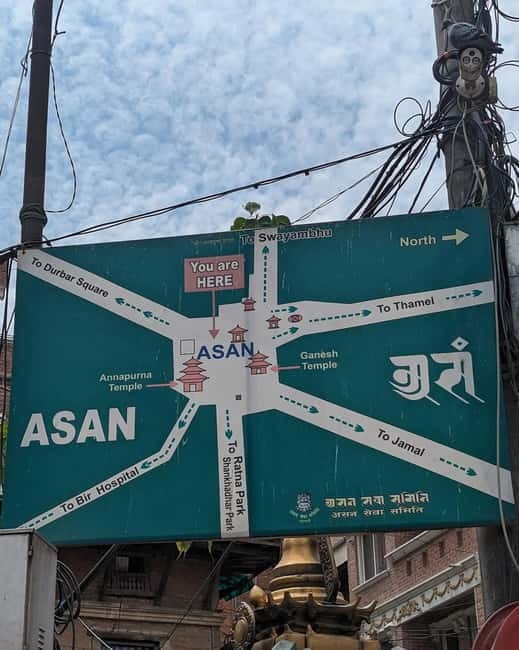
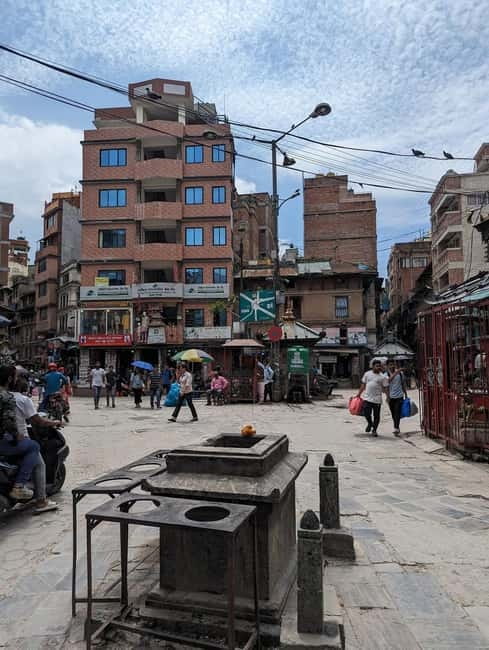
The first walking section lasts about 45 minutes. The exact route details are not specified, but the destination is Asan Bazaar, one of Kathmandu’s oldest and best-known market squares.
This is where the tour begins to feel less like a general city stroll and more like a lesson in how Kathmandu works. Asan is a working market, not a set built for sightseeing. You can expect stalls and shops selling spices, textiles, kitchenware, and everyday goods. The appeal is in the mix: fragrant food ingredients beside household items, religious activity beside commerce, and local shoppers moving through the same lanes as you.
You should keep your eyes moving and your expectations practical. A market is noisy, crowded, and visually busy. It is not a calm place for a slow photograph at every corner. You will need to stay near the guide and watch your footing.
The guide’s role is especially useful here. Without context, Asan can look like a colorful collection of stalls. With explanation, it becomes a window into food, household life, trade, and religious practice in Kathmandu. The tour is strongest when it helps you understand why a place matters, not only what it looks like.
The Temple of Annapurna and Kathmandu’s Daily Faith
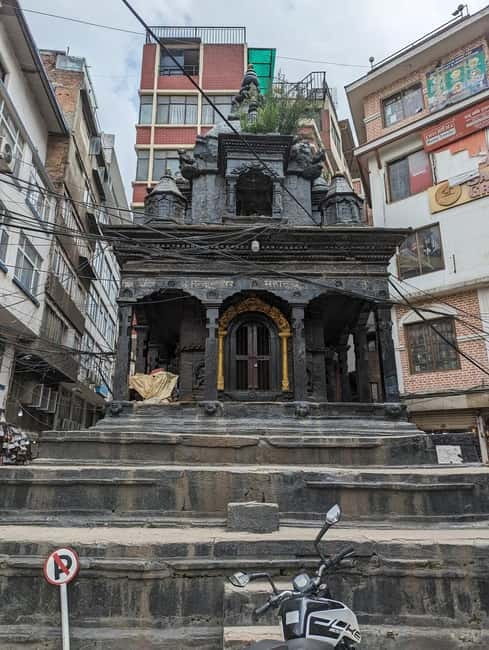
At Asan, the route includes the Temple of Annapurna. Annapurna is revered as the goddess of grain and prosperity, making this a fitting shrine to encounter in a food market.
This connection between worship and trade is one of the walk’s best features. You are not being taken to an isolated religious site and then moved on. Instead, you see a deity associated with food and abundance within a marketplace where goods are bought, sold, and carried home.
The tour includes an explanation of Annapurna’s importance to the local community and an opportunity to witness spiritual rituals performed by devotees. The timing of rituals can vary, so you should treat this as a chance to observe respectfully rather than a guaranteed ceremony at a specific moment.
Dress and behavior matter. Follow the guide’s advice, avoid blocking worshippers, and ask before taking close photographs of people. Photography is allowed, but privacy and local customs come first. The market is a public place, yet public does not mean every person wants to be photographed.
Indra Chowk and the Potey Bead Market
From Asan, you walk for about 30 minutes to Indra Chowk, another major market square. This section keeps the focus on Kathmandu’s commercial life, but the next stop adds a striking cultural detail.
Potey Bazaar is known for glass bead garlands called potey. Newar Muslim artisans make and sell these colorful strands, traditionally worn by married women in Nepal. The market also carries cosmetics and small household goods, so it is not a museum display. It is a place where a living craft sits beside everyday shopping.
I find this one of the most valuable stops on the route because it gives you a specific object to understand. Instead of hearing only broad statements about Nepalese culture, you learn about an item, who makes it, who wears it, and how a particular community contributes to Kathmandu’s city life.
The stop also highlights the capital’s mixed heritage. Hindu religious practice, Newar traditions, Muslim craftsmanship, and modern retail all appear within a short walk. That combination is more revealing than a polished attraction designed only for sightseeing.
If you enjoy shopping, you might be tempted to pause at every stall. Keep an eye on the clock. The tour has several walking sections, and personal purchases are not included in the $15 price. You may want to bring a small amount of spending money, but do not expect shopping time to replace the guided route.
A completely different way to spend the day:
- Everest Base Camp Trek – 14 Days
★ 5.0 · 1,499 reviews - Private Kathmandu Sightseeing Tour | UNESCO World Heritage sites
★ 5.0 · 756 reviews - Everest Base Camp Helicopter Tour landing at Everest View Hotel
★ 5.0 · 668 reviews - Half day cooking class in Thamel kathmandu
★ 5.0 · 607 reviews
New Road: Old Customs Meet Modern Kathmandu
The walk continues through New Road for about 15 minutes. This is a shorter section, but it helps connect the older market squares with Freak Street.
New Road brings a more modern commercial feel. The point is not that old Kathmandu ends at one street and new Kathmandu begins at another. The two overlap. Traditional goods, religious customs, modern shops, and city traffic all share the same space.
This part of the route may be less picturesque than the market squares. That is worth knowing. You are not walking from one postcard view to another. You are seeing how a capital city functions, including its practical, crowded, and commercial sides.
For first-time visitors, that is useful orientation. You begin to understand the shape of central Kathmandu and how its districts connect. One of the five-star reports described the walk as a good first-day activity, and the route is well suited to that purpose. It introduces Thamel, market streets, religious life, and historic Jhochhen before you decide how to explore the city on your own.
Freak Street and the Memory of the Hippie Trail
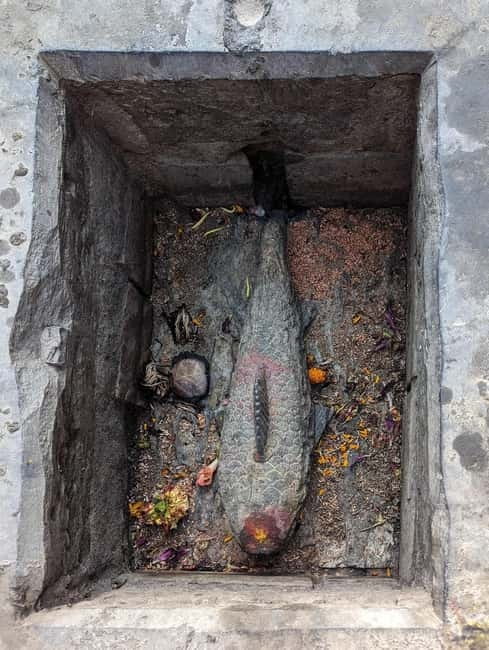
The final major section takes about 30 minutes and leads to Jhochhen, better known as Freak Street. In the 1960s and 1970s, this lane became a major stop on the Hippie Trail through Asia.
Freak Street attracted people looking for alternative lifestyles, spiritual ideas, artistic inspiration, and a slower way of living. Names connected with the era include Jimi Hendrix, George Harrison, Cat Stevens, Joni Mitchell, and Allen Ginsberg. Members of The Rolling Stones were also rumored to have visited.
The important point is not the celebrity list. Freak Street mattered because Kathmandu offered a mix of spiritual interest, mystery, affordability, and hospitality that drew counterculture visitors from far beyond Nepal. The lane became a meeting point for people searching for something outside ordinary Western life.
Today, the mood is quieter and more ordinary. You might find cafés, small shops, and local charm rather than a preserved 1960s scene. That is part of the value. You can compare the old stories with the present street instead of being shown a staged version of the past.
The government crackdown on drug use in the mid-1970s brought the hippie period into decline. The cultural effect did not disappear, though. Freak Street remains linked to Kathmandu’s reputation as a place of spiritual curiosity and unconventional journeys.
This stop will suit you if you enjoy social history and atmosphere. If you want a major monument or a long museum visit, Freak Street may feel modest. Its interest lies in what happened there and in the contrast between its famous past and its current everyday appearance.
Four Walking Sections and What to Pack
The route lasts three hours and includes walking sections of approximately 45, 30, 15, and 30 minutes. Those times help you understand the physical demand, though market streets may make the pace slower than the clock suggests.
Wear comfortable walking shoes. You will be on paved city streets and in crowded lanes, and good footwear will make the route easier. Carry water, and bring a snack if you need one. Food and drinks are excluded.
Weather can change, so prepare for varying conditions. The supplied information does not specify a particular season or weather guarantee. A light layer or rain protection may be sensible, depending on the forecast.
You do not need transportation during the walk. The tour begins and ends at Pumpernickel Bakery, which keeps the logistics simple if you are staying in or near Thamel. Transportation to and from the meeting point is not included, so arrange that part yourself.
Photography is permitted, but use judgment. Markets and religious sites offer plenty to photograph, yet people are not scenery. Ask before taking close portraits, and avoid interfering with rituals or shopkeepers.
Is $15 Good Value for Three Hours?
At $15 per person, this is a low-cost guided introduction to central Kathmandu. The value comes less from admission tickets, since the experience is primarily a walk, and more from having someone explain the market customs, religious setting, bead trade, and Freak Street story as you go.
A private guide would usually offer more flexibility, but this experience keeps the group to five people. That is a strong middle ground. You receive personal attention without paying a full private-tour price.
The price is especially fair if you are new to Kathmandu and want help with orientation. It is less compelling if you already know Asan, Indra Chowk, and Freak Street well, or if you prefer to explore markets alone at your own speed.
The guide is the key factor. The available five-star feedback gives special weight to clear explanations, unexpected stops, and a friendly manner. One account praised the guide as the kind of person visitors hope to find, while another singled out the tour as a strong first-day activity. Since no guide’s name is provided, you should judge the experience mainly by the small group and the route rather than by a named individual.
Who Will Enjoy This Kathmandu Walk?
I would recommend it to first-time visitors, curious walkers, and anyone who wants more context for the streets around Thamel. It is also a good fit if you like markets, local craft, religious customs, and social history more than formal museum displays.
The route suits solo visitors and couples who value a small group. With no more than five participants, you can ask questions and stay connected to the guide in the crowded parts of town.
It may be less suitable for anyone who has difficulty walking for three hours, dislikes traffic and crowded markets, or wants a quiet sightseeing experience. The route is urban and active. You should expect city noise, changing weather, and plenty of people around you.
It also works well near the start of a Kathmandu stay. You get a working map of central districts and a better sense of how Thamel relates to the old market core. Afterward, you may feel more confident returning to the places that caught your attention.
Booking Details to Keep in Mind
The tour is offered in English with a live guide. You can cancel up to 24 hours before the start for a full refund, and the reserve-now, pay-later option keeps your plans flexible.
Check the available starting times before booking. The duration is fixed at three hours, but the start time is not given in the supplied information.
Arrive at Pumpernickel Bakery at least 15 minutes early if you want time to find the meeting point and settle in. The guide will be holding the meeting sign, and arriving early also gives you the chance to buy coffee or breakfast before the walk.
Should You Book From Bazaar to Hippie Hub?
Book this walk if you want a compact, affordable introduction to Kathmandu that connects real markets with religious practice, craft traditions, and Freak Street’s unusual past. The strongest reasons are the five-person limit, the clear route through several distinct districts, and the guide’s reported ability to explain places and make useful off-route stops.
Skip it if you want a relaxed ride, a major monument tour, or plenty of time for shopping. For most first-time visitors with comfortable shoes and three free hours, this is a practical way to get oriented and see a more ordinary side of the capital beyond Thamel’s tourist center.
FAQ
Where does the tour begin?
It begins at Pumpernickel Bakery in Thamel, Kathmandu. The guide will arrive 15 minutes before the meeting time with a sign reading Meeting Point, Amazing Kathmandu.
Where does the tour finish?
The walk returns to Pumpernickel Bakery in Thamel.
How long does the experience last?
The tour lasts three hours.
How much does the tour cost?
The listed price is $15 per person.
How large is the group?
The group is limited to a maximum of five participants.
What language is the tour offered in?
The live guided tour is offered in English.
Is food included?
No. Food and drinks are not included. Pumpernickel Bakery offers breakfast, coffee, cakes, gluten-free food, and vegan options for separate purchase.
What should I wear and bring?
Wear comfortable walking shoes. You should also carry water and snacks for personal use and prepare for changing weather.
Can I take photographs?
Yes, photography is allowed. You should respect local customs and be mindful of people’s privacy, especially during religious rituals.
New in the Kathmandu listings
- Traditional Momo Making Class★ 5.0 · 10 reviews
- Kathmandu: Ancient City Kirtipur & Pharping Monastery Tour★ 5.0 · 2 reviews
- Kathmandu to Pokhara Premium sofa bus ticket★ 4.0 · 17 reviews
- Women Empowerment Project(Nepali cooking class & jewelry workshop★ 5.0 · 15 reviews
- 7-Day Langtang Valley Trek from Kathmandu★ 5.0 · 1 review
- Kathmandu 2 Nights 3 Days Chitwan Jungle Safari Tour★ 5.0 · 9 reviews
- Yoga Experience Day Trip with Private Transfer From Kathmandu★ 4.0 · 2 reviews
- Wildlife Adventure in Chitwan Nepal★ 4.0 · 4 reviews
Shopping Tours, compared.

Kathmandu Food & Drink and Shopping Rickshaw Tour
Read our review →

Best Nepali Cooking Class in Thamel with Local Market Trip
Read our review →
Oldest Local Market Walking Tour With Living Goddess Kumari
Read our review →Oldest Local Market Walking Tour with Living Goddess Kumari
Read our review →Browse the lists this tour appears in