
REVIEW · COOKING CLASSES
Kathmandu: Local Lead Nepali Cooking & Momo-Making Class
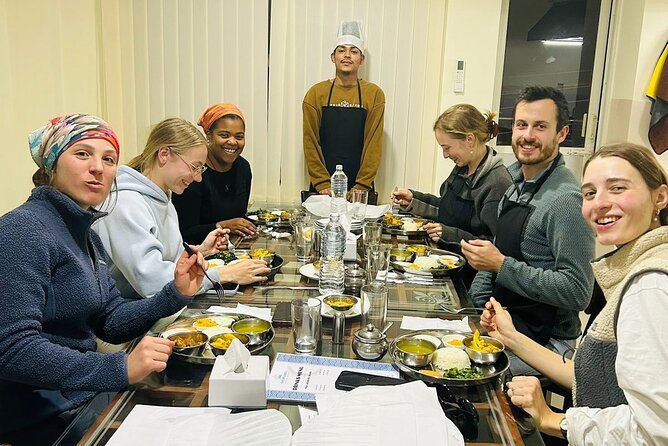
Food can get you oriented fast. This Kathmandu cooking class pairs momo-making with a short ingredient-shopping trip, traditional recipes, and a meal you prepare yourself. I like the friendly, hands-on teaching, and I like that the class includes cultural context rather than treating Nepali food as a list of recipes. The main consideration is the low listed price of $5, which is excellent value, but you should confirm the exact menu and pickup option when booking because dishes are selected from a broader traditional menu.
The class lasts about three and a half hours and takes place at Kathmandu Cooking Academy on Yapikhya Marg. It has a maximum of 12 people, so you get a better chance to work directly with the chef than in a large demonstration. The kitchen has been praised for being clean, and the instructions are given in clear, simple English. You finish by eating what you made, with recipes sent as a PDF so you can try the dishes again at home.
In This Review
- The best parts of the class at a glance
- Starting with masala tea near Thamel
- Shopping for ingredients before cooking
- Making momos by hand
- Preparing dal bhat and other Nepali dishes
- Eating what you have prepared
- What the $5 price really offers
- Timing, transport, and practical details
- Who will enjoy this Kathmandu cooking class?
- Should you book the momo-making class?
- FAQ
- Where does the cooking class begin?
- Where does the activity end?
- How long does the class last?
- Is hotel pickup available?
- How many people can join the class?
- Are momos included in the cooking lesson?
- What other food might I prepare?
- Can I cancel for a refund?
The best parts of the class at a glance
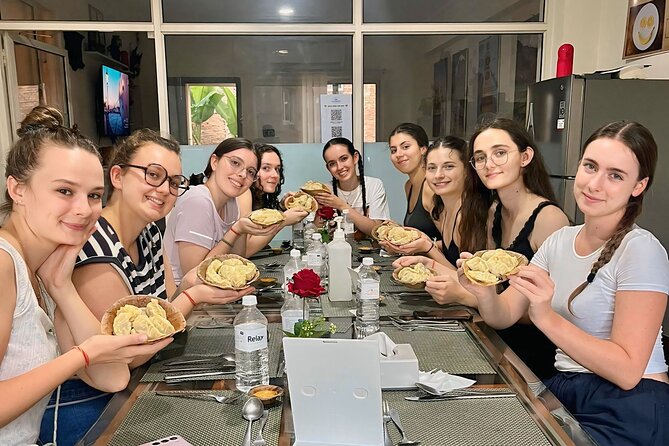
- A real momo lesson: Shape Nepali dumplings by hand, with a choice of vegetarian or chicken filling.
- Market shopping comes first: Visit a local market or shop to help choose the fresh ingredients used in class.
- Three traditional dishes: Prepare an entrée, main course, and dessert from a rotating selection of Nepali food.
- Masala tea begins the experience: Start with homemade Nepali masala tea before the cooking gets underway.
- Small group setting: The class is limited to 12 people, which allows for more direct help from the instructor.
- A useful take-home bonus: Recipes are provided in PDF form, making the meal easier to recreate later.
Starting with masala tea near Thamel
Your class begins at Kathmandu Cooking Academy, a short walk from Thamel. One particularly useful note is that the school is about 10 minutes on foot from the Thamel area, making it practical if you are staying nearby. The exact meeting point is Yapikhya Marg, Kathmandu 44600, and the activity ends back there.
The welcome starts with a cup of Nepali masala tea. That small ritual sets the tone nicely. You are not rushed straight into chopping onions or folding dough. Instead, you get a warm introduction and a first taste of the spice-led cooking style that will shape the rest of the lesson.
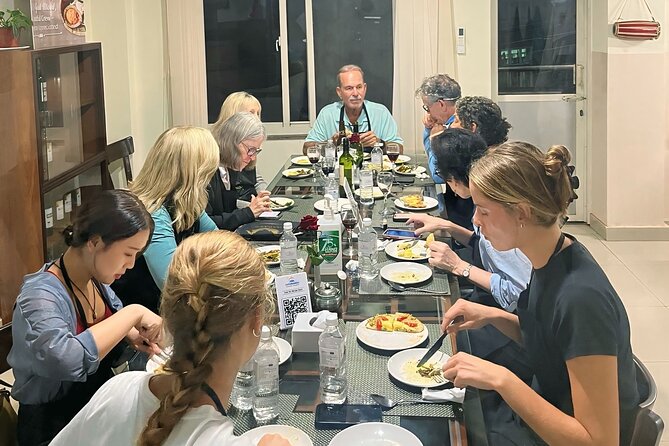
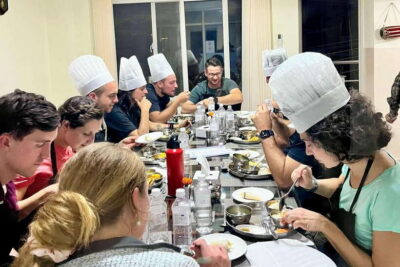
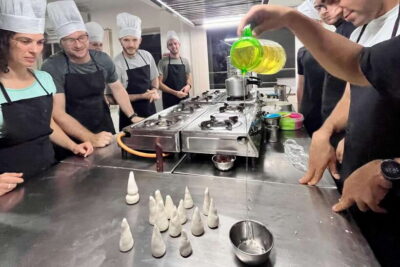
The setting is intended to be intimate, with no more than 12 people. That matters in a cooking class. You can watch the chef’s hand movements, ask for help, and get corrections while you work. A larger class might offer more energy, but it can also leave you standing at the back while someone else does the cooking.
The class suits beginners particularly well. Instructions are broken down into clear steps, and the chef is described as patient and easy to understand in English. Experienced home cooks should still find useful details in the traditional utensils, preparation methods, and explanations of why each dish is made in a certain way.
More Cooking Classes in Kathmandu
- Half day cooking class in Thamel kathmandu
★ 5.0 · 607 reviews - Kathmandu: Local Women-Led Nepali Cooking & Momo Class
★ 4.9 · 360 reviews - The best Private Nepali Cooking Class in Kathmandu
★ 5.0 · 83 reviews
Shopping for ingredients before cooking
One of the more valuable parts of the experience happens before you enter the kitchen. You take a short market or shop visit to pick up the key ingredients for the meal. This gives you a direct look at the everyday products behind Nepali cooking instead of meeting them only after they have been measured and arranged on a counter.
The visit is not presented as a separate sightseeing tour. Its purpose is practical: you learn what goes into the dishes and help gather what you will use. That makes the cooking feel connected to Kathmandu rather than isolated from it.
You should keep your expectations realistic. The available information does not promise a particular market, a long walking route, or a set list of ingredients. The visit may be a nearby shop or market stop, depending on the class arrangements. Still, even a short buying trip adds useful context and gives you a better sense of how the meal comes together.
For many people, this step will be more rewarding than a standard cooking demonstration. You are not simply watching a chef work with prepared ingredients. You have a hand in the process from the start.
Making momos by hand
Momos are the star of the class, and for good reason. These dumplings are among Nepal’s best-known foods, but the pleasure is in the shaping. You learn how to prepare and fold them, rather than receiving a ready-made plate with no explanation.
The class offers vegetarian or chicken momos. That choice helps the experience suit different diets, although the supplied details do not specify all available dietary substitutions. If you have allergies or strict food requirements, contact the academy before booking instead of assuming the menu can be changed.
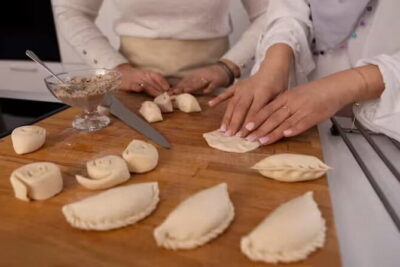
Momo-making is a social activity, too. The folding process is simple to understand but takes a little practice to make every dumpling look tidy. That is part of the fun. You might produce a few uneven shapes at first, and the instructor can show you how to adjust the dough, filling, or fold.
The class is praised for being playful and hands-on. You are encouraged to work rather than watch, and the relaxed mood helps take pressure off anyone who is not used to cooking in front of other people. If your first momo looks more artistic than traditional, you will not be alone.
Preparing dal bhat and other Nepali dishes
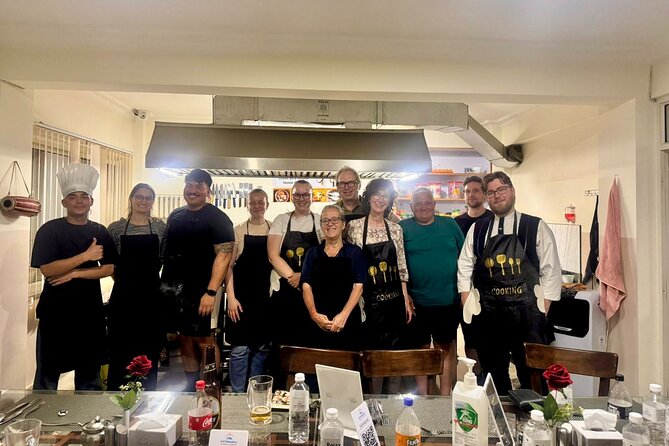
Momos are only part of the meal. The class teaches three authentic Nepali dishes: one entrée, one main course, and one dessert. The precise choices come from a larger traditional menu, so you should not book expecting a guaranteed set of dishes unless the academy confirms them in advance.
Dal bhat is one example of the food that may appear in the class. It is a central Nepali meal built around lentils, rice, and accompanying preparations. Learning it in a kitchen setting gives you more than a restaurant tasting. You can see how separate elements are prepared and how they work together on the plate.
Another possible dish is bara, a savory lentil pancake. One class menu also included three kinds of dessert, and yomari is named as one of the traditional sweets that may be taught. Yomari is especially interesting because it shows a different side of Nepali cooking from the savory dumpling. Its preparation, shape, and sweet filling make it a useful example of how food can carry cultural meaning.
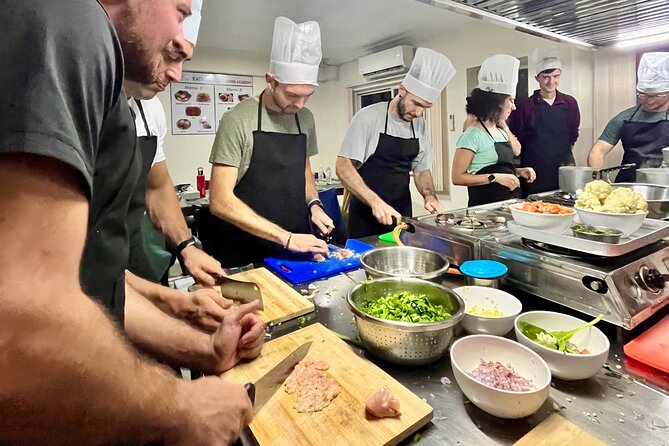
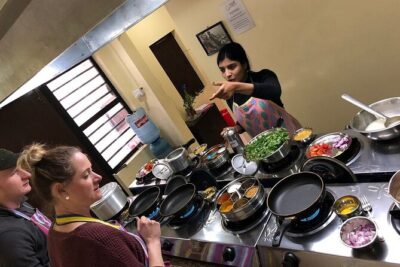
You should expect a full cooking session rather than a quick recipe lesson. The chef explains the techniques step by step, and you use the cooking equipment and accessories provided by the academy. The class also introduces traditional utensils, which adds a physical connection to the food and methods.
A completely different way to spend the day:
- Everest Base Camp Trek – 14 Days
★ 5.0 · 1,499 reviews - Private Kathmandu Sightseeing Tour | UNESCO World Heritage sites
★ 5.0 · 756 reviews - Everest Base Camp Helicopter Tour landing at Everest View Hotel
★ 5.0 · 668 reviews - Everest Base Camp Trekking
★ 5.0 · 485 reviews
Eating what you have prepared
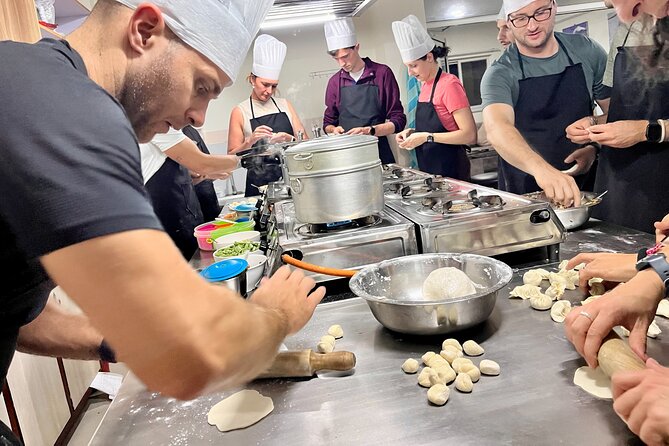
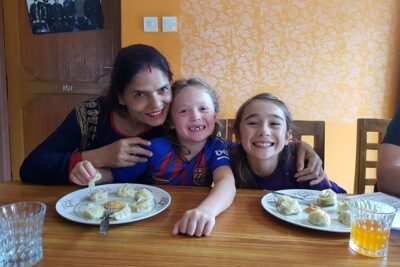
The final tasting session is where the class pays off. You sit down and eat the food prepared during the lesson, including the dumplings and the other dishes selected for your group. Food tends to taste better when you have chopped, mixed, folded, and cooked it yourself, but the practical value goes beyond that first meal.
You can judge the balance of spices, the texture of the momo dough, and the difference between a dish made under instruction and one ordered at a restaurant. That makes the tasting useful for anyone hoping to repeat the recipes later.
The class includes Nepali masala tea during the lesson. Specialty drinks and alcohol are not included, so plan to pay separately if you want something beyond the provided tea and food. Tips are also not included.
A cookbook or PDF recipes may be supplied, depending on the class arrangement. The recipe PDF is particularly helpful because it lets you remember the quantities and steps after leaving Nepal. Without written instructions, a three-hour cooking lesson can become a pleasant memory but a difficult meal to reproduce.
What the $5 price really offers
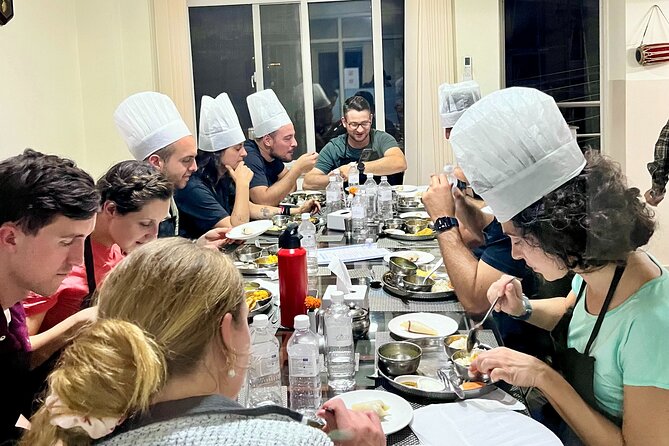
At the listed price of $5 per person, this is unusually inexpensive for an experience lasting about three and a half hours. The value is strongest if you use the class as both a meal and a cultural activity. You receive instruction, ingredients purchased for the cooking session, kitchen equipment, tea, and a tasting of the food you make.
The price does not include specialty or alcoholic drinks, and hotel transport is included only if you select the pickup and drop-off option. Check the booking choices carefully so you do not assume transportation is part of the basic rate.
The low price may also mean the exact dish selection varies by class. That is not necessarily a weakness. A changing menu can let the instructor work with available ingredients and offer more than the same fixed recipe every day. It does mean you should ask ahead if you have your heart set on dal bhat, bara, yomari, or a specific momo filling.
With a maximum of 12 people and strong overall feedback, the class offers a lot for the money. It is especially good value for a solo visitor, since the shared kitchen gives you an easy way to meet other people without needing to arrange a group in advance.
Timing, transport, and practical details
The total duration is approximately three hours and 30 minutes. Allow a little extra time around the edges if you select hotel pickup or drop-off, since transport can add time depending on your location.
Pickup and drop-off are available only with the appropriate option selected. If you are staying near Thamel, walking may be simpler. The academy is near public transportation, and the meeting point is also easy to reach on foot from Thamel according to the practical directions provided.
The activity ends where it starts, at Kathmandu Cooking Academy. That makes planning the rest of your day straightforward. You can schedule the class between sightseeing activities without needing to arrange a separate return point.
Confirmation is sent at booking. The group limit is 12 people, but the class may still feel different depending on the final number. A small group should give you more personal help, while a fuller group may bring more conversation and shared amusement during the momo-folding practice.
Free cancellation is available when you cancel at least 24 hours before the local start time. Cancellations inside that window are not refunded, and changes made within 24 hours are not accepted. Keep that cutoff in mind if your Kathmandu plans may shift.
Who will enjoy this Kathmandu cooking class?
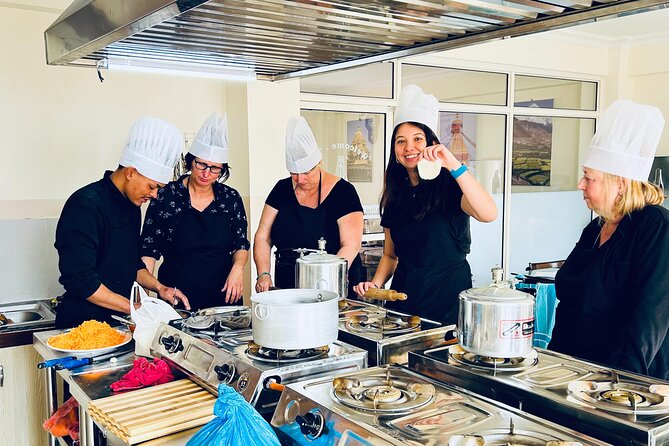
I would recommend this class to anyone who wants a useful, relaxed activity beyond temples and city walks. It is a strong fit for solo visitors because the group format makes it easy to meet people while doing something practical. Couples, families, and small groups should also find the shared preparation enjoyable.
Beginners should feel comfortable here. The chef provides step-by-step instruction, and the teaching style is described as patient and simple. You do not need advanced kitchen skills to take part.
It also works for experienced cooks who enjoy learning local methods. The use of traditional utensils, market shopping, and cultural explanations gives the lesson more substance than a generic dumpling workshop.
I would be more cautious if you need a fixed menu, have serious dietary restrictions, or want a private class with a guaranteed personal schedule. The available information confirms vegetarian or chicken momos, but it does not confirm every possible substitution. Ask before booking if specific ingredients matter to you.
The strongest praise centers on three things: the clean kitchen, the friendly instruction, and the food itself. The experience is meant to be fun, and that matters. Cooking classes can become stiff when every step is treated like an exam. Here, the laughter and imperfect dumpling shapes are part of the appeal.
Should you book the momo-making class?
You should book this class if you want an affordable, hands-on introduction to Nepali food and enjoy learning by doing. The combination of market shopping, masala tea, momo-making, three cooked dishes, and a final meal gives you a fuller experience than a simple recipe demonstration.
Book with two points in mind: confirm the exact menu if you want a particular dish, and select the hotel transfer option if you do not want to make your own way to Yapikhya Marg. For $5, the class offers excellent value, especially for solo visitors and first-time cooks.
I would choose it for a free half-day in Kathmandu when I wanted food, conversation, and a skill to take home. You may leave with a few crooked momos, but you should also leave knowing how to make them again.
FAQ
Where does the cooking class begin?
The class begins at Kathmandu Cooking Academy on Yapikhya Marg, Kathmandu 44600, Nepal.
Where does the activity end?
The activity ends back at Kathmandu Cooking Academy, the same place where it begins.
How long does the class last?
The experience lasts approximately three hours and 30 minutes.
Is hotel pickup available?
Hotel pickup and drop-off are available if you select the appropriate option when booking.
How many people can join the class?
The activity has a maximum group size of 12 travelers.
Are momos included in the cooking lesson?
Yes. Momo-making is a central part of the class, and you can prepare either vegetarian or chicken momos.
What other food might I prepare?
The class includes three Nepali dishes: one entrée, one main course, and one dessert. Possible dishes include dal bhat, bara, and yomari, but the exact menu is selected from a wider traditional menu.
Can I cancel for a refund?
Yes. You can receive a full refund if you cancel at least 24 hours before the experience start time. Cancellations within 24 hours are not refunded.
New in the Kathmandu listings
- Traditional Momo Making Class★ 5.0 · 10 reviews
- Kathmandu: Ancient City Kirtipur & Pharping Monastery Tour★ 5.0 · 2 reviews
- Kathmandu to Pokhara Premium sofa bus ticket★ 4.0 · 17 reviews
- Women Empowerment Project(Nepali cooking class & jewelry workshop★ 5.0 · 15 reviews
- 7-Day Langtang Valley Trek from Kathmandu★ 5.0 · 1 review
- Kathmandu 2 Nights 3 Days Chitwan Jungle Safari Tour★ 5.0 · 9 reviews
- Yoga Experience Day Trip with Private Transfer From Kathmandu★ 4.0 · 2 reviews
- Wildlife Adventure in Chitwan Nepal★ 4.0 · 4 reviews
Cooking Classes, compared.
Nepalese Momos or Dal Bhat Cooking Class (Cook with Delight)
Read our review →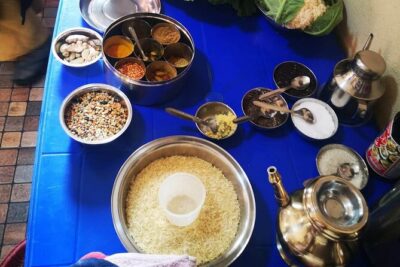
The best Private Nepali Cooking Class in Kathmandu
Read our review →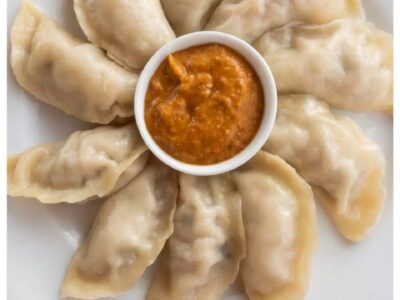
Nepalese Kitchen in Pokhara: Momos or Dal Bhat Cooking Class
Read our review →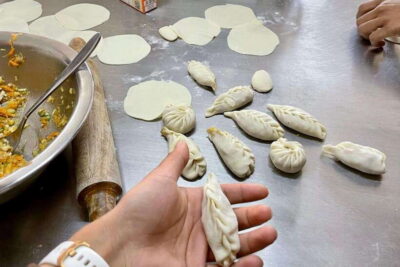
Browse the lists this tour appears in