
REVIEW · WALKING TOURS
Kathmandu Local Morning Market and Food Walking Tour
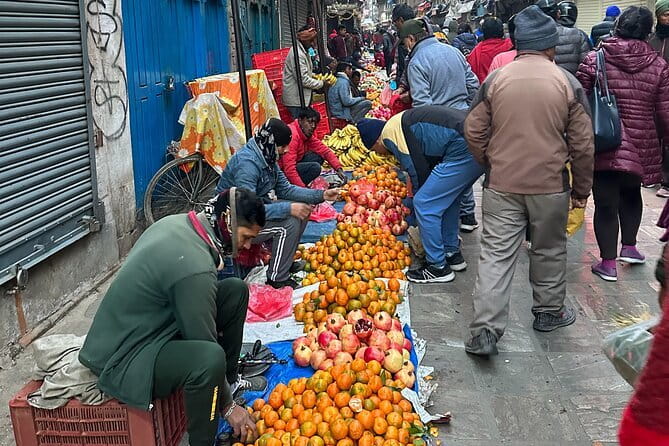
Kathmandu wakes early. This morning walk puts you right in the action, with market stalls, breakfast bites, and old-city streets appearing before the heat builds. I like the small group size, capped at 12 people, and the chance to taste samosas, juju dhau, and Nepali tea while learning how local people shop and eat. The main consideration is timing: you must meet at 6:15 AM, and the walk lasts only about two hours.
I also like that the tour stays focused on central Kathmandu instead of spending time in a vehicle. You move through Asan, Indra Chowk, and Thahiti Chowk on foot, seeing produce, spices, textiles, handicrafts, and daily shopping at close range. The drawback is that hotel pickup is not included, so you must reach Sunshine Travel Agency in Chaksibari yourself.
In This Review
- Key things to know before you book
- Why an early walk works so well in Kathmandu
- Starting at Sunshine Travel Agency in Chaksibari
- Asan Market, Kathmandu’s first burst of color
- Indra Chowk for crafts, textiles, and local food
- Thahiti Chowk and the final taste of old Kathmandu
- What you actually eat and drink
- The guide and the feel of a small group
- Is $25 a fair price?
- Who will get the most from this morning walk?
- Should you book the Kathmandu market walk?
- FAQ
- How much does the Kathmandu market and food walk cost?
- How long does the experience last?
- What time does the tour start?
- Where does the tour begin?
- Where does the activity end?
- Is hotel pickup included?
- What food and drinks are included?
- How many people can join the tour?
Key things to know before you book
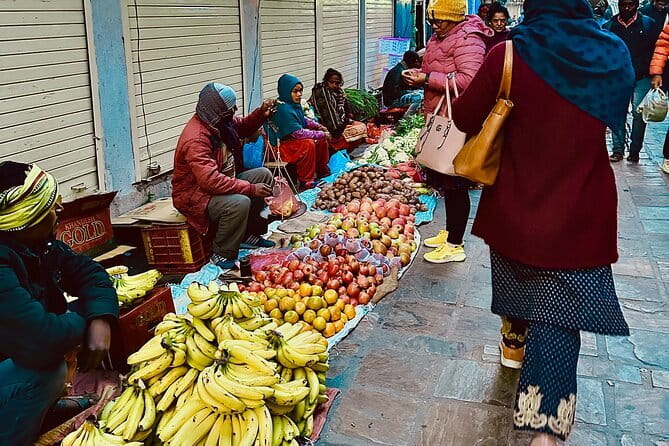
- Three old-city market areas: Asan, Indra Chowk, and Thahiti Chowk each offer a different look at Kathmandu’s trade, food, and street life.
- Early start at 6:15 AM: The timing lets you see people buying breakfast and fresh ingredients as the city gets moving.
- Local food is included: Expect snacks such as samosas, juju dhau, and Nepali tea, along with bottled water.
- Small English-speaking group: The maximum group size is 12, which should make it easier to hear the guide and ask questions.
- Good value at $25: The price includes the guide, drinks, snacks, and the walking experience, but not transportation to or from the meeting point.
- Flexible cancellation: You can receive a full refund if you cancel at least 24 hours before the start time.
Why an early walk works so well in Kathmandu
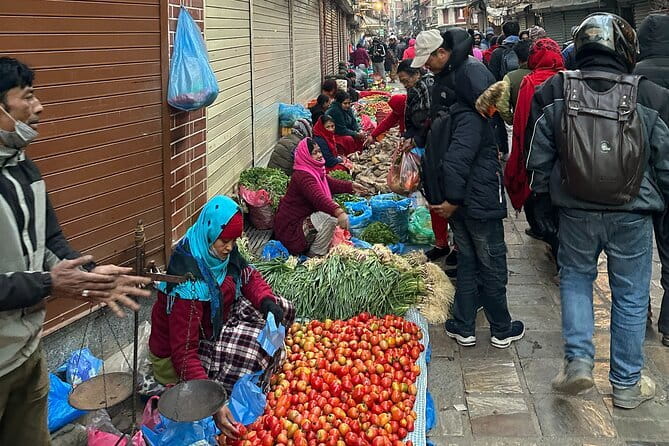
Kathmandu can feel crowded and noisy later in the day. At 6:15 AM, the city has a different rhythm. Shops and market stalls are opening, shoppers are choosing fresh food, and breakfast activity is already underway.
That early hour is the main reason I see value in this tour. You are not simply looking at old buildings from the outside. You are watching the city use its streets for work, shopping, eating, and conversation.
The route is also compact. You do not lose half the morning sitting in traffic, and the total activity takes about one to two hours. That makes it easy to fit around other plans, such as a temple visit, a later city walk, or a day trip.
The short format has a limit. You will get an introduction to several market areas rather than a full study of Kathmandu’s food culture. If you want long tastings or a detailed cooking lesson, this is not that kind of experience. It is a brisk morning orientation with food along the way.
More Walking Tours in Kathmandu
- Kathmandu Food and Drink Walking Tour
★ 5.0 · 266 reviews - Kathmandu: Food and Drink Walking Tour
★ 4.9 · 119 reviews - Walking Street Food Tour in Kathmandu
★ 5.0 · 111 reviews
Starting at Sunshine Travel Agency in Chaksibari
The meeting point is Sunshine Travel Agency Pvt Ltd in Chaksibari, Kathmandu 44600. The tour begins and ends there, so you need to arrange your own way to the start and back to your accommodation.
That detail matters in Kathmandu. The experience does not include hotel pickup or drop-off, so check your route before booking and allow enough time for the early appointment. The tour operates every day from Monday through Sunday, between 6:15 AM and 8:15 AM, during the stated operating period.
You receive confirmation when booking, and the activity is near public transportation. Still, the supplied details do not promise a particular transfer service or a pickup from a specific neighborhood. I would treat the meeting point as a firm responsibility, not a minor footnote.
Once the walk begins, the small-group limit should help. A group of no more than 12 people is easier to keep together in narrow market lanes than a large coach group. It also gives you a better chance to ask about ingredients, customs, and the food set before you.
Asan Market, Kathmandu’s first burst of color
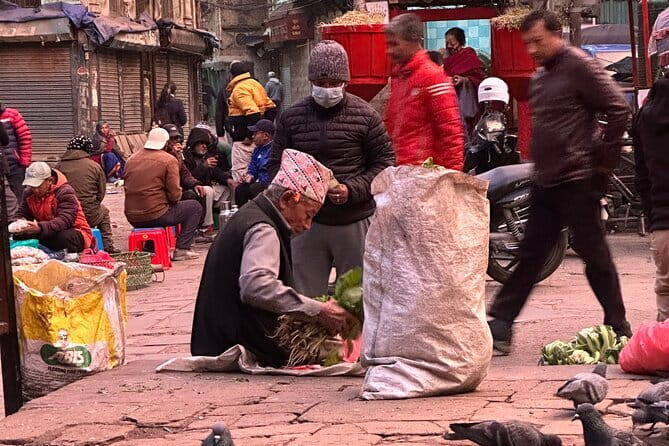
The first stop is Asan, with about 20 minutes set aside for the market. This is one of central Kathmandu’s best places to see ordinary trade at close range.
The stalls carry fresh produce, spices, and traditional ingredients. You may also see handicrafts and traditional clothing, giving the market a wider role than a simple food stop. It is a place where daily needs and cultural goods share the same busy streets.
I like Asan as an opening stop because it gives your guide plenty to explain. Spices and produce are easy to recognize, but the local meaning of ingredients, cooking habits, and shopping routines is less obvious. An English-speaking local guide can connect those details to Kathmandu’s food traditions.
The 20-minute visit is useful but brief. You should expect an overview, not time to examine every stall or shop at leisure. If you enjoy taking photographs, keep your camera ready and remain aware of people working around you. The point is to observe daily life respectfully, not turn the market into a stage.
This is also where the included snacks and tea begin to make sense. You are not being taken to a formal restaurant. The food element is tied to the morning market setting, which makes the experience feel more local and less polished.
Indra Chowk for crafts, textiles, and local food
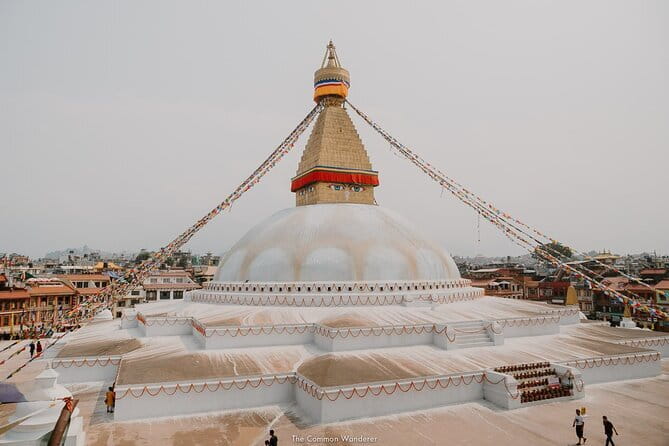
The second stop is Indra Chowk, also for roughly 20 minutes. This bazaar is known for traditional Nepali handicrafts, souvenirs, textiles, and local delicacies.
Indra Chowk adds a different layer to the morning. Asan focuses strongly on ingredients and household shopping, while Indra Chowk gives you more to look at in the form of handmade goods, cloth, and items connected with local culture.
That mix is helpful if you are still getting your bearings in Kathmandu. You can see how food, commerce, clothing, and souvenirs all occupy the same central setting. The guide’s role is especially useful here because a quick look at a stall may not tell you what an item is used for or why it matters.
Do not expect a dedicated shopping session. The stop is short, and the tour is built around walking and tasting rather than bargaining for purchases. If you see something you want to buy, you may need to decide quickly, and the supplied information does not promise time for extended shopping.
The food side remains important. Local delicacies appear along the route, and the tour includes snacks, tea, and bottled water. Samosas are specifically included among the foods you may taste. The tour also features juju dhau, a sweet, thick yogurt known as king curd, and freshly brewed Nepali tea.
More market mornings in Kathmandu:
- Kathmandu Secret Food Crawl & Local Market Tour
★ 4.7 · 54 reviews - Best Nepali Cooking Class in Thamel with Local Market Trip
★ 5.0 · 26 reviews - Kathmandu Food Crawl & Market Tour
★ 5.0 · 26 reviews - Oldest Local Market Walking Tour with Living Goddess Kumari
★ 5.0 · 8 reviews
Thahiti Chowk and the final taste of old Kathmandu
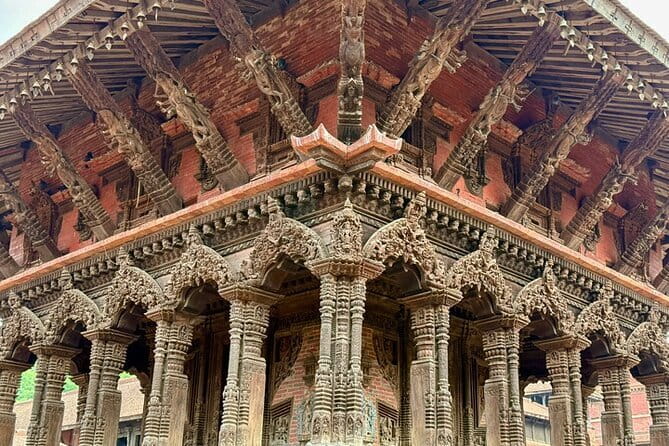
Thahiti Chowk is the third listed stop, with another 20 minutes planned. Located in the historic center, the square has shops, vendors, traditional market activity, and street food.
This final stop rounds out the route. After seeing produce and spices at Asan and handicrafts and textiles at Indra Chowk, you get another look at the social side of the old city. People shop, eat, sell goods, and move through the square as part of their normal morning.
I would pay attention to the small details here: what vendors are selling, how food is served, and how the square functions as a meeting point. The value is not just in checking off three names on a route. It is in seeing how several kinds of commerce fit together in a compact part of Kathmandu.
Again, 20 minutes is enough for a taste, not a full exploration. The tour returns to the starting point afterward, so you should not book it expecting a longer walk through every nearby lane.
What you actually eat and drink
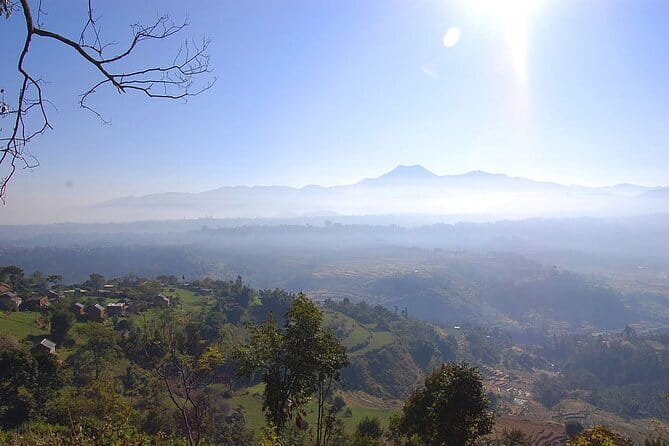
Food is a central reason to choose this walk, but the details are simple and appealing. Included items are local tea, snacks, bottled water, and coffee or tea as listed in the inclusions.
The named food examples are samosas, juju dhau, and freshly brewed Nepali tea. That gives you a useful range: a savory snack, a sweet dairy specialty, and a familiar hot drink with a local character.
Juju dhau is particularly worthwhile because it is more than a generic snack. The name means king curd, and trying it gives you a direct connection to Nepal’s food traditions without requiring a full meal.
You should keep your expectations practical. The supplied information does not state how many tastings you receive, identify particular vendors, or promise a full breakfast. Think of the food as part of the walking tour, not an all-you-can-eat tasting route.
The guide can also add value by explaining the dishes and ingredients as you encounter them. Since the tour is led in English, you can ask questions about what you are eating and how it fits into local life.
The guide and the feel of a small group
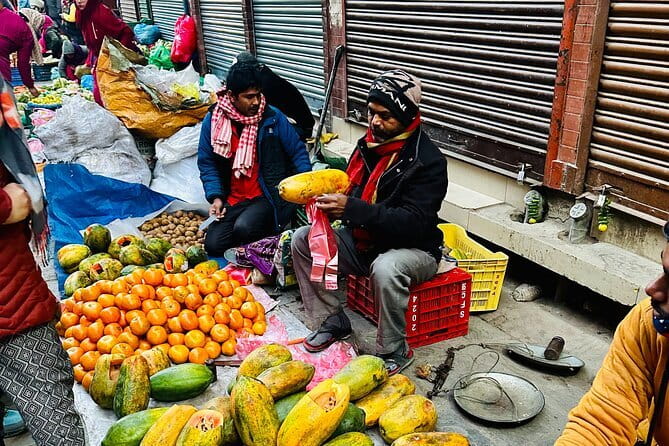
An English-speaking local guide leads the experience. That is important in a market, where the most useful information is often not printed on a sign. A guide can explain what you are seeing, help you understand the food, and provide stories about Kathmandu’s culinary and cultural traditions.
The provider’s response to one piece of feedback was signed by Raj, but the supplied details do not clearly state that Raj personally leads this specific market walk. I would not book on the assumption that he will be your guide. Instead, look for the value of a local English-speaking host and a group capped at 12.
The small size suits this setting. Market lanes can be tight, and a group of 12 is less awkward than a large crowd. You should also be able to hear explanations more clearly and ask questions without waiting through a long line of people.
The experience is designed for most ages, according to the supplied information. It is still a walking tour through active market streets, so you should be comfortable spending the morning on foot and moving through public areas. No special adventure skills are listed.
Is $25 a fair price?
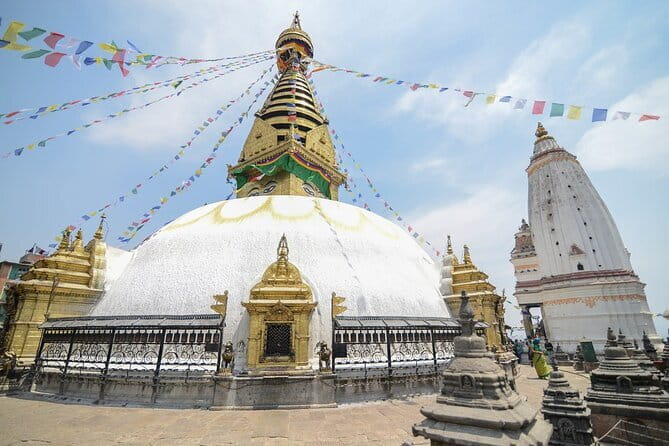
At $25 per person, this is a reasonable price for a short guided introduction to Kathmandu’s old markets. You are paying for an English-speaking local guide, three market areas, snacks, tea, and bottled water.
The best value comes from the context. You could walk through Asan, Indra Chowk, and Thahiti Chowk on your own, but you would likely miss some of the food and cultural meaning. The guide turns a simple stroll into a more informed first look at the city.
The price is less attractive if you are already familiar with these markets or if you want a substantial meal. The tour lasts only one to two hours, and hotel transportation is not included. Those limits should be clear before you compare it with longer food tours.
Group discounts are available, which may improve the value if you are booking with family or friends. The small maximum group size also gives the tour a more personal feel without putting you into a private-tour price range.
Who will get the most from this morning walk?
I would recommend this experience for a first visit to Kathmandu, especially if you want an easy introduction to local food and city life. It is also a good choice if you prefer seeing a place through markets rather than only through major monuments.
Food-focused visitors will appreciate the chance to try samosas, juju dhau, and Nepali tea. Culture-focused visitors will enjoy the mix of produce, spices, handicrafts, textiles, traditional clothing, and ordinary shopping.
Families may find the short duration manageable, since the activity does not take up a full day. The stated information says most ages can participate, and the route remains within central market areas.
I would be more cautious if you dislike early mornings, need hotel transportation, or want a long, slow food tour. The start time is fixed at 6:15 AM, the walk is compact, and the precise number of tastings is not specified.
Bad weather can also affect plans. The activity requires good weather, and if it is canceled for that reason, you will be offered another date or a full refund. A minimum number of people is also required, with the same general choice of a new date, another experience, or a refund if the tour does not operate.
Should you book the Kathmandu market walk?
Book it if you want a low-cost, early look at how Kathmandu eats and shops. The strongest reasons are the local guide, the three central market stops, the included tastings, and the group limit of 12.
I would make this one of your first Kathmandu activities rather than a major food event at the end of your trip. It can help you understand the city’s streets and flavors before you explore further on your own.
Skip it if you need hotel pickup, cannot manage a 6:15 AM meeting time, or expect a full breakfast and several hours of food sampling. For the right person, though, $25 buys a useful first taste of Kathmandu, with enough local detail to make the city feel more understandable from the start.
FAQ
How much does the Kathmandu market and food walk cost?
The tour costs $25 per person. Group discounts are available.
How long does the experience last?
The walk lasts approximately one to two hours.
What time does the tour start?
The tour operates each morning from 6:15 AM to 8:15 AM, Monday through Sunday during the stated operating period.
Where does the tour begin?
The meeting point is Sunshine Travel Agency Pvt Ltd, Chaksibari, Kathmandu 44600, Nepal.
Where does the activity end?
The tour ends back at the original meeting point.
Is hotel pickup included?
No. Hotel pickup and drop-off are not included.
What food and drinks are included?
The inclusions list local tea, coffee or tea, snacks, and bottled water. Named food examples include samosas, juju dhau, and freshly brewed Nepali tea.
How many people can join the tour?
The activity has a maximum of 12 participants.
More Eating and Drinking in Kathmandu
- Secret Food Tour – Food Bites and Sights Kathmandu 14+ Testings
★ 5.0 · 82 reviews - Kathmandu Food & Drink and Shopping Rickshaw Tour
★ 5.0 · 48 reviews - Walking Food Tour in Hidden Local Eateries of Kathmandu
★ 5.0 · 40 reviews - Kathmandu Food Crawl & Market Tour
★ 5.0 · 8 reviews
New in the Kathmandu listings
- Traditional Momo Making Class★ 5.0 · 10 reviews
- Kathmandu: Ancient City Kirtipur & Pharping Monastery Tour★ 5.0 · 2 reviews
- Kathmandu to Pokhara Premium sofa bus ticket★ 4.0 · 17 reviews
- Women Empowerment Project(Nepali cooking class & jewelry workshop★ 5.0 · 15 reviews
- 7-Day Langtang Valley Trek from Kathmandu★ 5.0 · 1 review
- Kathmandu 2 Nights 3 Days Chitwan Jungle Safari Tour★ 5.0 · 9 reviews
- Yoga Experience Day Trip with Private Transfer From Kathmandu★ 4.0 · 2 reviews
- Wildlife Adventure in Chitwan Nepal★ 4.0 · 4 reviews
Walking Tours, compared.
Walking Food Tour in Hidden Local Eateries of Kathmandu
Read our review →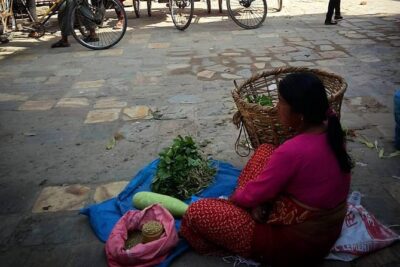
Old Kathmandu Walking Tour, Historic World Heritage Durbar Square
Read our review →
Browse the lists this tour appears in