
REVIEW · COOKING CLASSES
Kathmandu: Nepali Cooking Class with Hotel Pickup
Food is the best way to read Kathmandu. I like the combination of a rickshaw ride to Ason market and hands-on cooking with a local chef, and I like that you make several familiar Nepali dishes rather than watching a single demonstration. The main caution is timing: although the activity is advertised as four hours, one booking report described only two hours, and another returned to the hotel by 11:30 a.m.
You will cook momos, curries, roti, and sel roti while listening to Nepali folk music and learning a few local phrases. Hotel pickup and drop-off from Thamel keep the morning simple, but the market portion may feel brief if you expect a full guided shopping trip.
In This Review
- Key points at a glance
- Starting in Thamel and heading to Ason
- What Ason market adds to the cooking class
- Learning the basics with an English-speaking chef
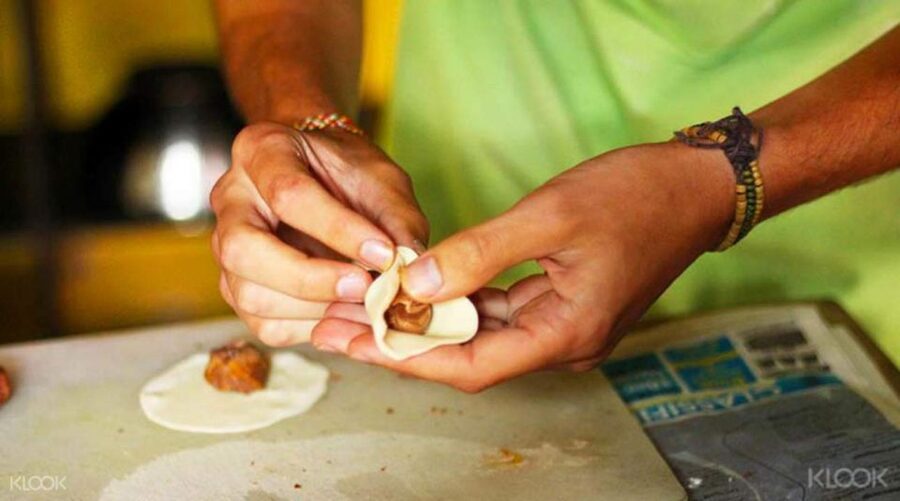
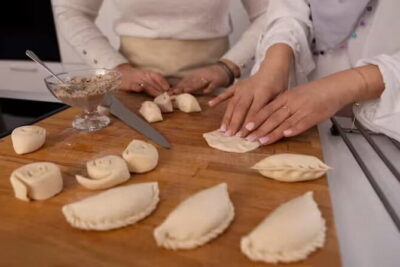
- Making momos, Nepal’s famous dumplings
- Trying curries, roti, and sel roti
- Eating with Nepali music and local phrases
- Is $60 a fair price?
- Who will enjoy this Kathmandu cooking class?
- Weather, paperwork, and planning advice
- Should you book this Nepali cooking class?
- FAQ
- How long does the Kathmandu cooking class last?
- Is hotel pickup included?
- Does the experience include a market visit?
- Which dishes will I cook?
- Is the class taught in English?
- What should I bring?
- Can I cancel or pay later?
Key points at a glance
- Ason market by rickshaw: Start with a ride to one of Kathmandu’s best-known shopping areas, where you can see local merchants and daily trade.
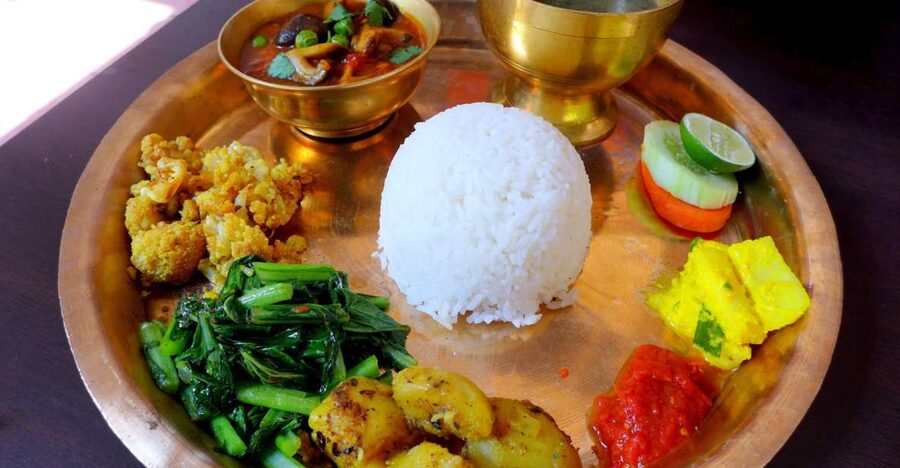
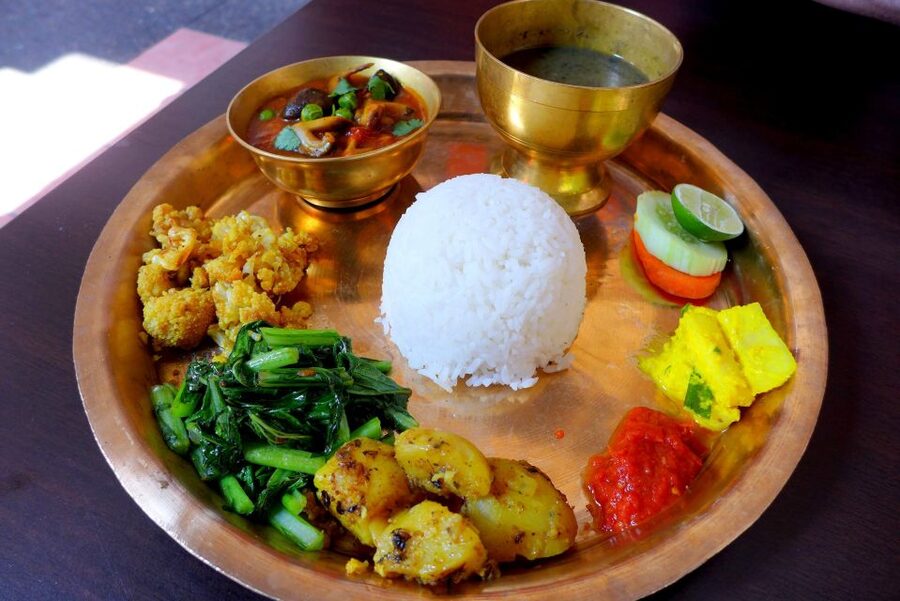
- Several Nepali dishes: Prepare momos, curries, roti, and sel roti, a ring-shaped fried bread often compared with a doughnut.
- Cooking rather than just watching: The chef leads you through the preparation, giving the experience a practical feel.
- Food and music together: Nepali folk music plays during the class and meal, with a few Nepali phrases added along the way.
- Convenient Thamel transport: Pickup and drop-off are included for hotels in the Thamel area.
- A flexible booking policy: You can cancel up to 24 hours ahead for a full refund or reserve now and pay later.
Starting in Thamel and heading to Ason
The experience begins with pickup from your hotel in Thamel, Kathmandu’s main visitor district. That is useful if you are staying in the area and do not want to find a cooking school on your own, especially during a busy morning when navigating city streets can take more effort than expected.
From Thamel, you head to Ason by rickshaw. The ride is part of the experience, not just a transfer. Ason is a traditional market and shopping hub where you can see the ordinary business of Kathmandu: merchants selling food and household goods, shoppers moving between stalls, and narrow streets filled with the sounds of trade.
The market visit is meant to help you understand the ingredients before you cook them. You will select or see the items needed for the meal, then return to the cooking location with a clearer sense of where Nepali kitchen staples come from.
There is one point to keep in mind. The description promises a local market visit, but the amount of time spent there can vary. One account found the stop closer to a visit to a local shop than a full market walk. If Ason is a major reason you are booking, ask at the start how much time is planned for the market.
More Cooking Classes in Kathmandu
- Half day cooking class in Thamel kathmandu
★ 5.0 · 607 reviews - Kathmandu: Local Women-Led Nepali Cooking & Momo Class
★ 4.9 · 360 reviews - Kathmandu: Local Lead Nepali Cooking & Momo-Making Class
★ 5.0 · 212 reviews
What Ason market adds to the cooking class
Ason gives the food lesson a useful setting. Instead of meeting ingredients only after they have been cleaned and placed in bowls, you begin with the shopping side of the meal. That small change helps connect Nepali cooking with everyday life in Kathmandu.
You may see the difference between a cooking class designed for tourists and one that includes a local errand. Buying ingredients is not as polished as a staged food demonstration, but it is more practical. You get a glimpse of how the meal starts before the chopping, mixing, and frying begin.
The rickshaw ride also adds a local touch. It is a simple way to move through the city and reach the market, and it may be especially enjoyable if you have already spent time walking around Thamel. The ride itself is not presented as a sightseeing tour, so you should treat it as transport with a bit of atmosphere rather than expect detailed commentary about every street.
Timing matters here. The advertised duration is three to four hours, generally presented as a four-hour activity. Yet one person reported a two-hour class, while another felt the morning was short because they were back at the hotel by 11:30. I would plan your day with some room afterward rather than scheduling another major activity immediately.
Learning the basics with an English-speaking chef
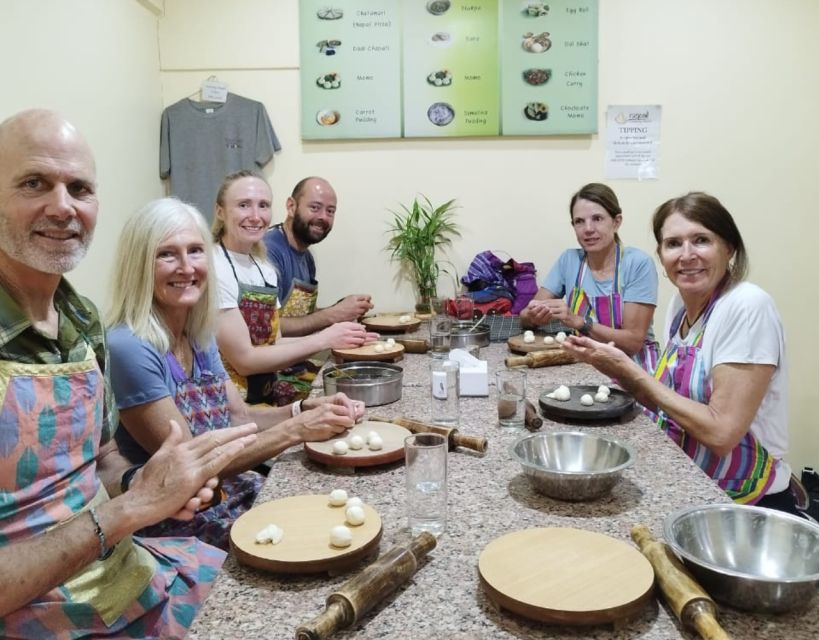
After the market visit, an experienced chef leads the cooking class. The instruction is in English, and an English audio guide is also included. That gives you two forms of support, although the chef is the part that matters most when you are handling dough, filling momos, or trying to judge the right texture.
The focus is not on one perfect dish. You work through several Nepali favorites, which makes the class useful for understanding the range of the local table. You can expect instruction about ingredients, preparation methods, and how different dishes are cooked.
The class also has a social side. Nepali folk music plays while you cook and eat, and the chef teaches a few Nepali phrases. That keeps the session from feeling like a silent kitchen lesson. You get food vocabulary and small cultural details along with the recipes.
The teaching quality appears to be a strong part of the experience. The instructor is described as capable and kind, although one account noted that the chef was a local student in Kathmandu. That is not necessarily a problem, but it means you should not assume the teacher is a senior restaurant chef or a famous culinary professional. The useful question is whether you want a friendly, hands-on introduction rather than a formal chef-training session.
Making momos, Nepal’s famous dumplings
Momos are likely to be the most familiar dish on the menu for many people. These dumplings are closely linked with Nepali food culture and are a natural choice for a first cooking class in Kathmandu.
You will learn how the ingredients are prepared and how the dumplings are assembled. The information provided does not specify the exact filling, folding style, or cooking method, so do not expect a fixed recipe list in advance. The chef will explain the version being prepared during your class.
Momos are also a good measure of how hands-on the class will be. If you are shaping them yourself, you gain a skill you can try again at home. If the chef handles much of the work, the session becomes more of a demonstration. The activity is described as a cooking class, so you should expect participation, but the exact amount of individual preparation may depend on the group and instructor.
I like that momos appear alongside other dishes rather than taking up the whole session. You get the chance to learn one of Nepal’s best-known foods without reducing Nepali cooking to dumplings alone.
A completely different way to spend the day:
- Everest Base Camp Trek – 14 Days
★ 5.0 · 1,499 reviews - Private Kathmandu Sightseeing Tour | UNESCO World Heritage sites
★ 5.0 · 756 reviews - Everest Base Camp Helicopter Tour landing at Everest View Hotel
★ 5.0 · 668 reviews - Everest Base Camp Trekking
★ 5.0 · 485 reviews
Trying curries, roti, and sel roti
The curries add variety to the class. You learn about the ingredients used in local delicacies and how the dishes are cooked, giving you a better sense of the seasonings and methods that shape Nepali meals. The specific curries are not listed, so the menu may change.
Roti provides a different kind of lesson. This traditional bread requires attention to dough and cooking, and it helps show how bread fits beside curries and other dishes. The description also mentions varieties of curries and roti, which suggests that the class aims to prepare more than one item, though the exact number is not guaranteed.
Sel roti is the unusual highlight. It is a traditional ring-shaped bread with a slightly sweet, fried character, often compared with an American doughnut. That comparison gives you a quick idea of its shape and texture, but sel roti belongs to Nepali food culture and is not simply a local version of a doughnut.
For many people, sel roti will be the most memorable item because it is less familiar than momos or curry. It also gives the class a clear local identity. If you already know South Asian cooking, the curry and roti may feel familiar, while sel roti offers something new.
Eating with Nepali music and local phrases
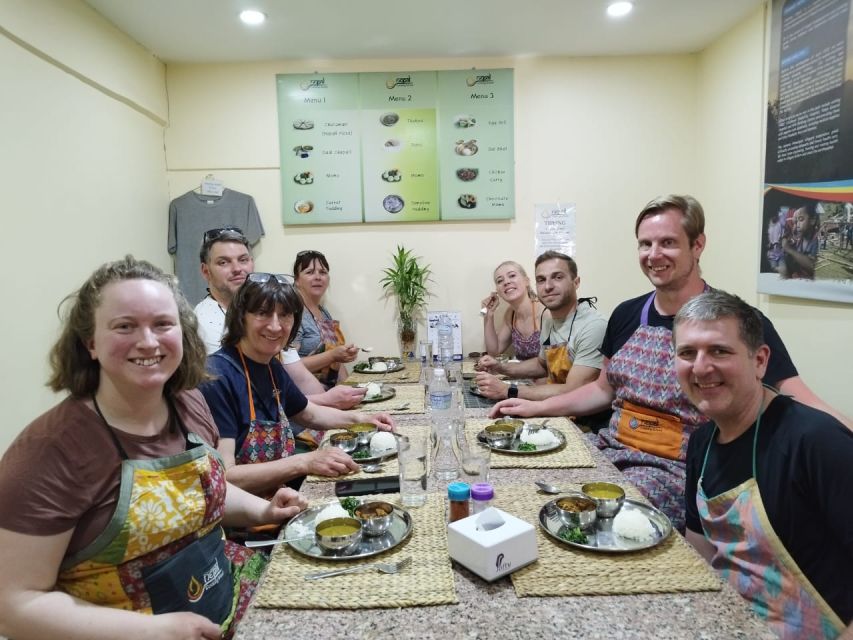
Once the cooking is done, you eat the meal while Nepali folk music continues. This is a pleasant way to finish because you get to taste the results instead of leaving with only notes and photographs.
The music is not described as a live performance, so you should expect recorded folk music rather than a concert. Still, it helps create a setting connected to Nepal rather than a generic international cooking school.
The Nepali phrases are another small but useful extra. The information does not specify which phrases you will learn, but the idea is practical. Even a few words can make your time in Nepal more engaging, especially when you are shopping, greeting people, or thanking someone for a meal.
I would think of these cultural touches as additions, not the main reason to book. The central activity is cooking. The music and language lesson make the class more enjoyable, but they do not replace a longer cultural tour or a detailed lecture about Nepalese food.
Is $60 a fair price?
At $60 per person, this is not the cheapest way to eat in Kathmandu. Local food is generally far less expensive than a cooking class, and you can sample momos, curry, and sel roti in restaurants or market stalls for a small amount.
The price makes more sense when you count what is included: hotel pickup and drop-off from Thamel, the rickshaw trip to Ason, a market visit, an English-speaking chef, the cooking session, and the meal you prepare. You are paying for instruction and convenience, not just ingredients.
Value depends heavily on the length of your class. A full three to four hours makes the price easier to justify, particularly if you enjoy cooking and want to learn several dishes. A two-hour session feels less convincing, especially if the market stop is brief and much of the food preparation is handled by the instructor.
This is best viewed as a cultural activity with food at its center. If you want the cheapest meal in Kathmandu, spend the money elsewhere. If you want a structured introduction to Nepali cooking without arranging transport or shopping on your own, the fee is more reasonable.
Who will enjoy this Kathmandu cooking class?
I would recommend this experience to people who enjoy learning by doing. You do not need advanced cooking skills. The appeal is in handling ingredients, following the chef, and eating what you make.
It also suits first-time visitors who want a gentle introduction to Kathmandu. The hotel pickup removes some early-day friction, while the market visit gives you a first look at local commerce before you settle into the class.
Food-focused visitors will get the most from the menu. Momos are widely known, but sel roti and the combination of breads and curries give the experience more local character. You may also appreciate the chance to ask the chef about ingredients and preparation as the meal comes together.
Families and mixed-interest groups may find it appealing because the activity combines transport, shopping, cooking, music, and lunch or an early meal. The experience is wheelchair accessible, which is an important practical advantage, though the provided details do not explain the accessibility arrangements for the rickshaw or market streets.
You may want to skip it if you need a tightly timed four-hour program. The reported duration has varied, and the market portion may not be as extensive as you expect. It may also disappoint you if you want a professional culinary workshop with advanced technique, a fixed menu, or a chef with a long restaurant career.
Weather, paperwork, and planning advice
The activity runs rain or shine, so bring clothing suitable for Kathmandu’s conditions. A rain jacket or umbrella can be sensible, since the market and rickshaw portion take place outside.
You should bring a passport or identification card. A copy is accepted. Alcohol and drugs are not allowed.
The experience is offered in English, and an English audio guide is included. If you have food allergies, dietary restrictions, or strong preferences, the provided details do not confirm how the menu can be adjusted, so ask before booking rather than relying on changes during the class.
The advertised duration is four hours, but the inclusion details describe a three to four-hour class. I would allow a little flexibility, particularly if you are making a same-day connection or booking another timed tour.
You can cancel up to 24 hours before the activity for a full refund. You can also reserve now and pay later, which helps if your Kathmandu schedule is still shifting.
Should you book this Nepali cooking class?
Book it if you want a friendly, practical introduction to Nepali food and like the idea of combining Ason market with a hands-on meal. The strongest features are the range of dishes, the inclusion of sel roti, the local transport, and the chance to cook with an English-speaking instructor rather than simply watch.
Before paying $60, I would confirm the expected length and ask how much time will be spent at the market. That is the key value question. A full morning with real shopping and several dishes is a fair cultural experience. A short class with a quick shop visit is less persuasive.
For most people staying in Thamel, this is a good choice if cooking is part of your holiday rather than just a way to get lunch. Go with reasonable expectations, keep your schedule flexible, and treat the market portion as a local introduction instead of a full market tour.
FAQ
How long does the Kathmandu cooking class last?
The activity is listed as four hours, while the included cooking class is described as three to four hours. One booking account reported a two-hour experience, so the actual timing may vary.
Is hotel pickup included?
Yes. Pickup and drop-off are included for hotels in the Thamel area.
Does the experience include a market visit?
Yes. You travel by rickshaw to Ason, a local market and shopping hub in Kathmandu, to obtain ingredients for the meal.
Which dishes will I cook?
The class includes momos, varieties of curry, roti, and sel roti. The exact curry selection is not specified.
Is the class taught in English?
Yes. The instructor language is English, and an English audio guide is included.
What should I bring?
Bring a passport or identification card. A copy is accepted.
Can I cancel or pay later?
You can cancel up to 24 hours in advance for a full refund. You can also reserve your place and pay later.
New in the Kathmandu listings
- Traditional Momo Making Class★ 5.0 · 10 reviews
- Kathmandu: Ancient City Kirtipur & Pharping Monastery Tour★ 5.0 · 2 reviews
- Kathmandu to Pokhara Premium sofa bus ticket★ 4.0 · 17 reviews
- Women Empowerment Project(Nepali cooking class & jewelry workshop★ 5.0 · 15 reviews
- 7-Day Langtang Valley Trek from Kathmandu★ 5.0 · 1 review
- Kathmandu 2 Nights 3 Days Chitwan Jungle Safari Tour★ 5.0 · 9 reviews
- Yoga Experience Day Trip with Private Transfer From Kathmandu★ 4.0 · 2 reviews
- Wildlife Adventure in Chitwan Nepal★ 4.0 · 4 reviews
Cooking Classes, compared.
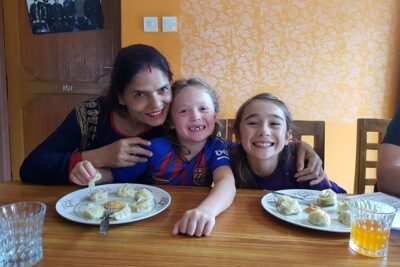
Nepalese Momos or Dal Bhat Cooking Class (Cook with Delight)
Read our review →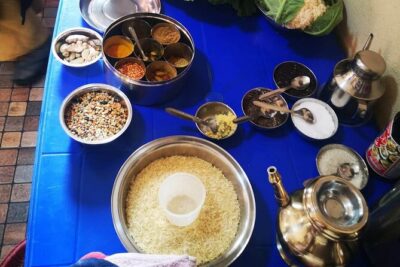
The best Private Nepali Cooking Class in Kathmandu
Read our review →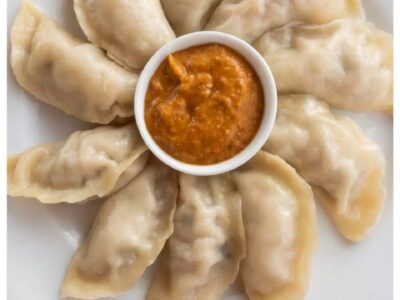
Nepalese Kitchen in Pokhara: Momos or Dal Bhat Cooking Class
Read our review →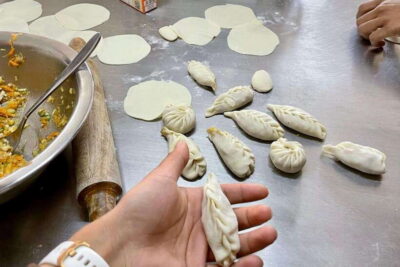
Browse the lists this tour appears in