
REVIEW · COOKING CLASSES
Kathmandu: Women-Led Cooking Class & Momo Making-Local Taste
Come hungry, leave with new skills. This $11 Kathmandu cooking class gives you a practical way to meet Nepali food through shopping, chopping, folding, frying, and eating. I like the small group of up to eight, which should give you a better chance to work directly with the chef, and I like the market visit, where the ingredients become part of the lesson rather than arriving as anonymous items in a kitchen.
The class also offers more than momo. You may prepare dal bhat, Bara, Chatamari, Thukpa, Yomari, Kheer, or another Nepali favorite, depending on the menu selected. The main consideration is that a two to three hour session can feel busy, especially if you are new to shaping dumplings or want detailed instruction for every dish.
In This Review
- Key points to know before booking
- Starting with a Kathmandu market visit
- Entering a modern Nepali kitchen
- Three menus with three different tastes
- Menu one: Bara, dal bhat, and Yomari
- Menu two: Chatamari, momo, and Kheer
- Menu three: Aloo Chop, Thukpa, and carrot halwa
- Why momo making is worth your time
- Tasting the meal you prepared
- Group size, timing, and the overall pace
- What the strong feedback tells me
- Who should book this Kathmandu food class?
- Booking details that matter
- Should you book it?
- FAQ
- How long does the Kathmandu cooking class last?
- How much does the cooking class cost?
- What food can I learn to cook?
- Are vegetarian and meat options available?
- Is the market visit included?
- Is the class taught in English?
- How many people are in each group?
- What is included with the booking?
- Are drinks, photos, and videos included?
Key points to know before booking
- Shop for ingredients before cooking: The market or shop visit introduces the vegetables, spices, and meat used in the meal.
- Choose from three Nepali menus: Options include Bara with dal bhat and Yomari, Chatamari with momo and Kheer, or Aloo Chop with Thukpa and carrot halwa.
- Make and eat your own meal: The food you prepare becomes the lunch or dinner served at the end.
- Momo folding takes patience: The technique is fun, but beginners may need several tries before the dumplings look tidy.
- Small groups keep the lesson hands-on: The class is limited to eight people and taught in English.
- The price is unusually modest: At $11 per person, it offers strong value if you want both food and a cultural activity.
Starting with a Kathmandu market visit
The class begins with one of its most useful features: a trip to a local market or shop to gather cooking supplies. You learn to select vegetables, spices, and meat before returning to the kitchen. That simple step changes the class from a standard cooking demonstration into a lesson in how a Nepali meal starts.
You are not just handed a recipe and told to copy it. You get a chance to see the ingredients that shape the final taste. Spices, lentils, rice, vegetables, and meat are not background decoration here. They explain why Nepali food can taste earthy, warm, sharp, creamy, or gently sweet within the same meal.
The market stop is also valuable if you are still getting your bearings in Kathmandu. You see the kind of food used in ordinary Nepali cooking, rather than only the dishes prepared for restaurant menus. The information provided does not give a fixed market route or a set time for this part, so expect the exact experience to depend on the day and the ingredients needed for your chosen menu.
More Cooking Classes in Kathmandu
- Half day cooking class in Thamel kathmandu
★ 5.0 · 607 reviews - Kathmandu: Local Women-Led Nepali Cooking & Momo Class
★ 4.9 · 360 reviews - Kathmandu: Local Lead Nepali Cooking & Momo-Making Class
★ 5.0 · 212 reviews
Entering a modern Nepali kitchen
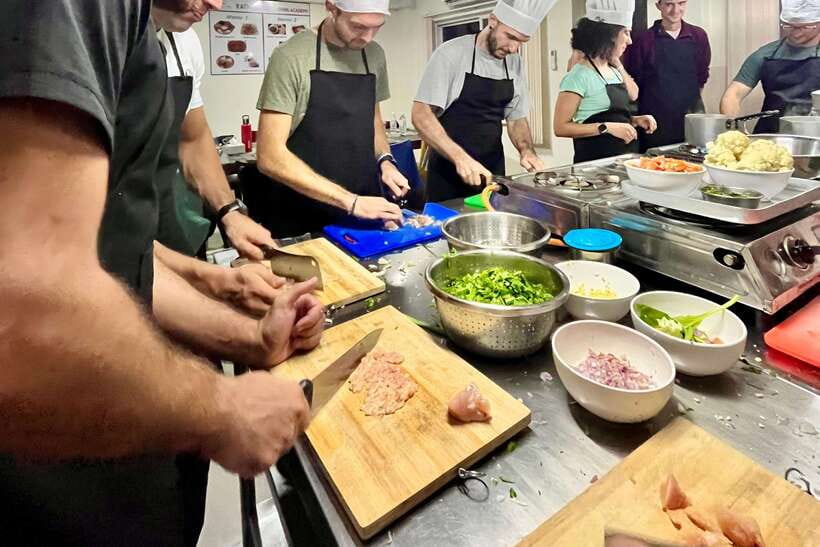
After shopping, you move into a modern Nepali kitchen for the practical part of the workshop. A local chef gives step-by-step instructions, explains the cooking methods, and helps you use the equipment and accessories supplied for the session.
The focus is hands-on. You should expect to wash, cut, season, mix, shape, and cook rather than sit back for a long demonstration. That makes the class a good choice if you learn best by doing, though it also means you need to stay involved throughout the lesson.
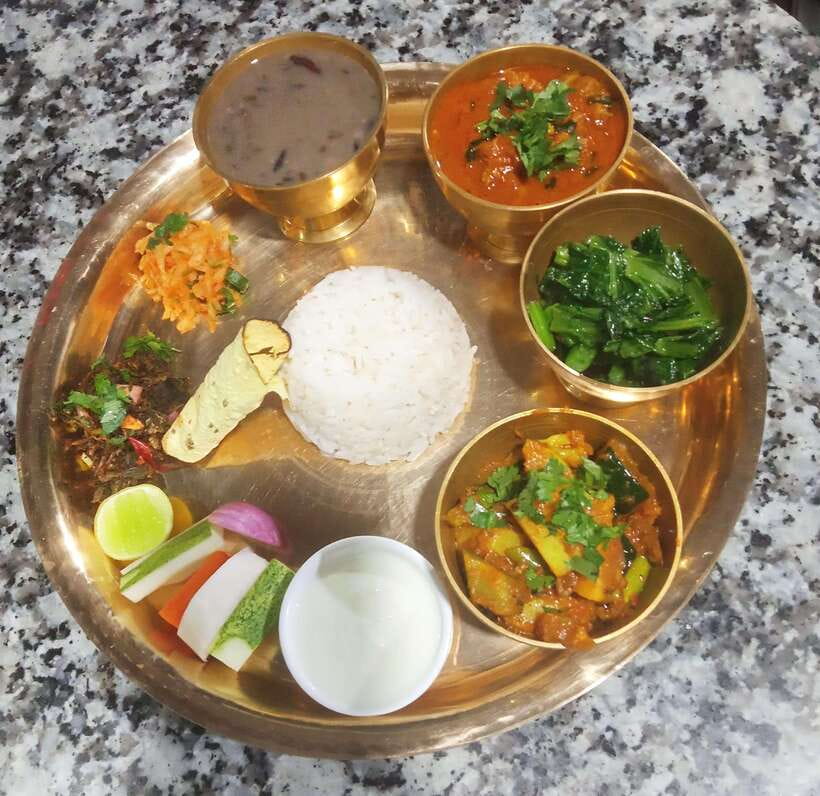
The cooking comes with cultural context. Dal bhat is not merely rice and lentils placed on a plate. It is a staple meal across Nepal and parts of South Asia, usually paired with vegetables, curry, and pickles. Learning how the parts fit together helps you understand why the dish is so satisfying and so central to daily food traditions.
Masala tea is served during the lesson. Black tea mixed with aromatic spices offers a welcome pause while you work, and it gives you another small taste of Nepali food culture beyond the main meal.
Three menus with three different tastes
The class offers three menu sets. You may want to check the available choice when booking, since the selection affects the pace, ingredients, and kind of food you will prepare.
Menu one: Bara, dal bhat, and Yomari
This is a strong choice if you want a meal that shows both savory and sweet sides of Newari food. Bara is a lentil pancake made with ground black gram batter and spices. It may be served plain or prepared with egg, minced meat, or vegetables.
Dal bhat provides the main meal structure: steamed rice with lentil soup, commonly accompanied by vegetables, curry, and pickles. It is filling and balanced, so this menu is likely to suit you if you want a traditional lunch or dinner rather than a plate of snacks.
Yomari finishes the menu with a sweet Newari dumpling. The rice flour dough holds a filling of molasses and sesame seeds, with coconut sometimes added. Its shape and filling make it different from the savory momo, so you get to practice another kind of dumpling preparation.
A completely different way to spend the day:
- Everest Base Camp Trek – 14 Days
★ 5.0 · 1,499 reviews - Private Kathmandu Sightseeing Tour | UNESCO World Heritage sites
★ 5.0 · 756 reviews - Everest Base Camp Helicopter Tour landing at Everest View Hotel
★ 5.0 · 668 reviews - Everest Base Camp Trekking
★ 5.0 · 485 reviews
Menu two: Chatamari, momo, and Kheer
This is the menu for anyone most interested in momo making. Momo are thin-dough dumplings filled with seasoned meat or vegetables. The available fillings include chicken, buff, pork, or vegetables, with the final option depending on the class arrangement.
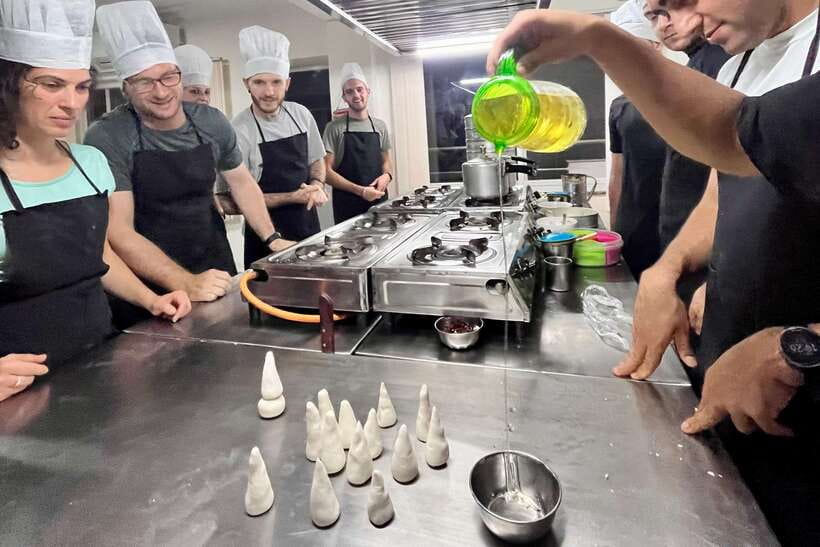
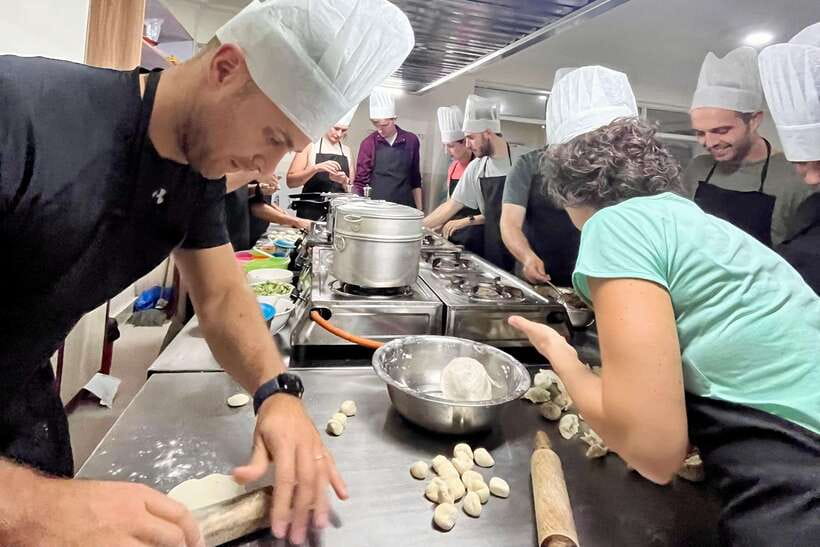
The folding is the star skill here. It looks easy until the dough is in your hands. You need enough filling to make a flavorful dumpling, but not so much that the edges refuse to close. If you are a beginner, expect a few uneven shapes at first. That is part of the lesson, not a failure, but you should allow time to repeat the movement.
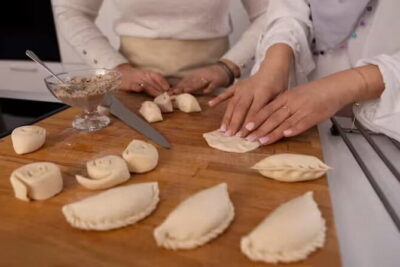
Chatamari is a Newari rice flour crepe often called Nepali pizza. It can be topped with egg, minced meat, vegetables, and spices. Kheer, a creamy rice pudding made with milk, sugar, and cardamom, provides a gentle dessert after the stronger flavors of the savory dishes.
Menu three: Aloo Chop, Thukpa, and carrot halwa
This menu leans toward comfort food. Aloo Chop is a fried potato snack made from mashed boiled potatoes mixed with spices. It is a straightforward dish, but the shaping and frying show how Nepali cooks turn basic ingredients into a satisfying snack.
Thukpa is a Tibetan-Nepali noodle soup with wheat or hand-pulled noodles, broth, vegetables, meat, and aromatic spices. Meat options can include chicken, buff, or mutton. This is the menu to consider if you prefer soup and noodles to rice-based meals.
Carrot halwa ends the session with slow-cooked grated carrots, milk, sugar, ghee, and cardamom. Nuts and raisins may be used as garnish. The dessert takes a familiar ingredient and gives it a richer, softer form.
Why momo making is worth your time
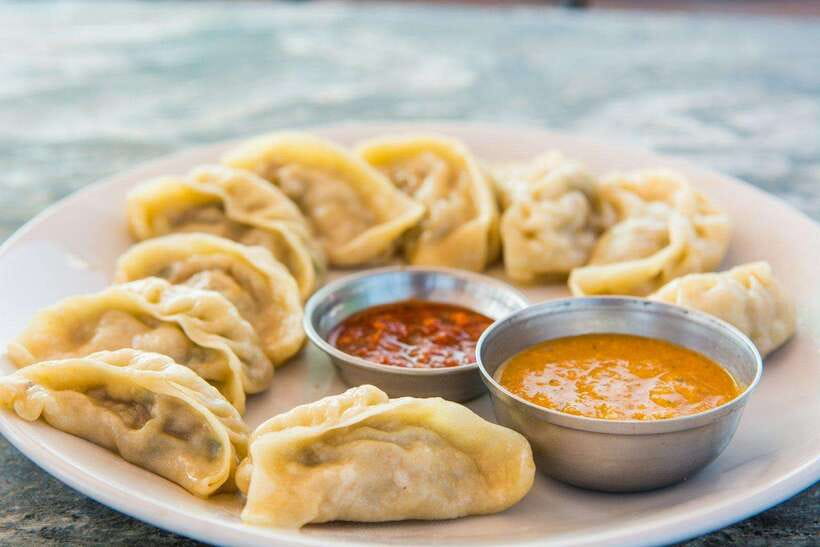
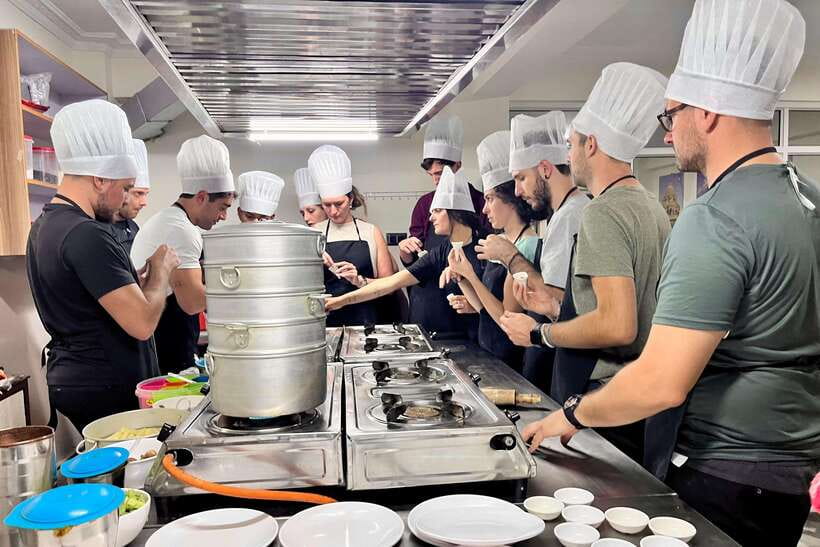
Momo are popular for good reason: they are adaptable, social, and easy to enjoy. The dough can hold meat or vegetables, and the seasoning can change the character of the filling. You are not just learning one fixed recipe. You are learning a basic method that you can repeat at home with different fillings.
The practical value comes from the repeated shaping. You learn how much filling fits, how to seal the edge, and how to keep the dumpling intact during cooking. The supplied feedback includes one caution: a participant found the chef a little irritated when the folding method proved difficult. That is worth keeping in mind if you need a relaxed pace and lots of encouragement.
I would treat the folding as a skill session rather than a test. Ask for the movement to be shown again, make a smaller dumpling if needed, and focus on sealing it properly before worrying about appearance. The finished plate does not need to look like a restaurant display to taste good.
Tasting the meal you prepared
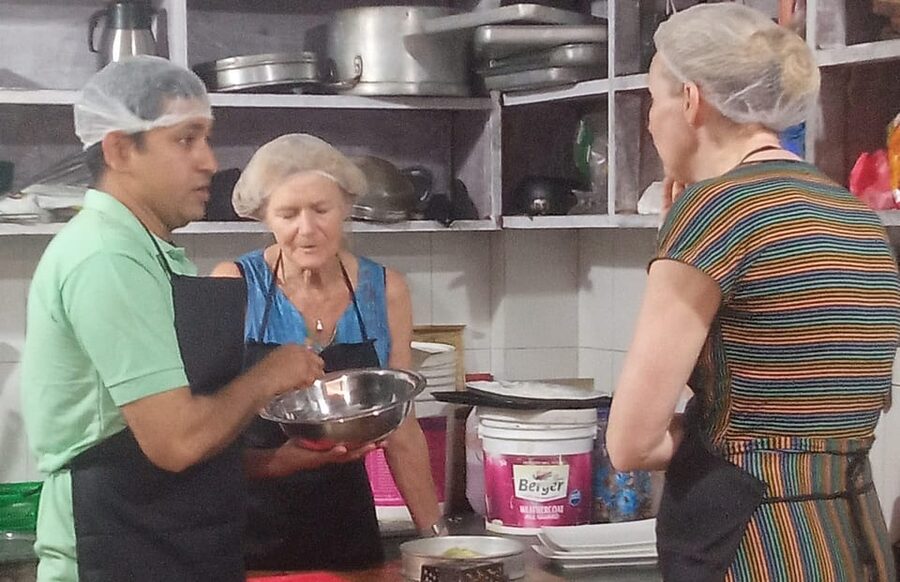
The final meal is the reward, but it also gives you a way to judge the techniques you have just practiced. Freshly cooked food makes it easier to notice the texture of the dumpling dough, the seasoning in the lentils, the crispness of Bara or Aloo Chop, and the balance of a sweet dish such as Kheer or carrot halwa.
Several points make this especially good value. The class includes the ingredients, cooking tools, instruction, market or shop visit, masala tea, and tasting session. At $11 per person, you are paying less than many paid food activities while receiving both a meal and a short lesson in local cooking.
The value is strongest if you take part fully. If you only want to eat Nepali food, a restaurant will be simpler. If you want to understand how the food is made and leave with methods you can use again, the class makes better sense.
Group size, timing, and the overall pace
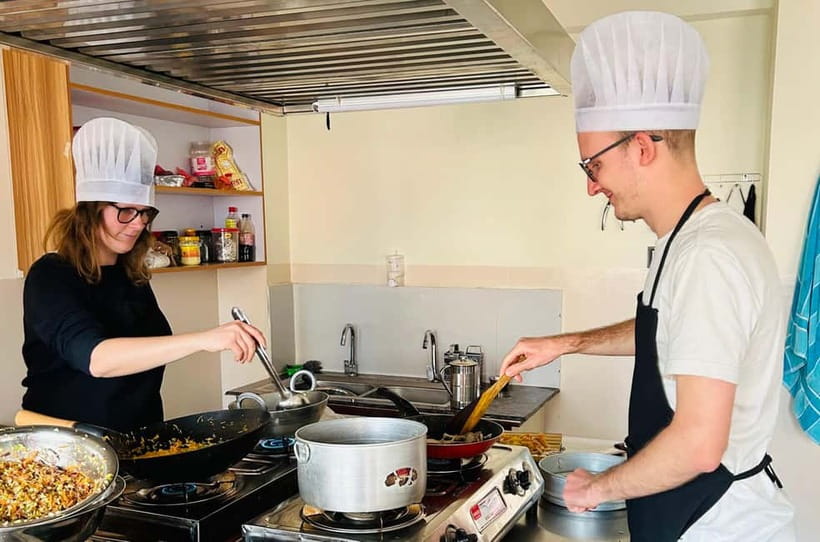
The class lasts two to three hours and is limited to eight participants. That small-group format matters because cooking quickly becomes frustrating when you cannot see the demonstration or get help with your dish.
The duration is long enough for a market visit, instruction, preparation, cooking, tea, and eating. It is not a full-day food course, so the class cannot cover every Nepali dish or give each recipe the attention of a professional culinary program. You should expect a lively introduction rather than advanced chef training.
The English-language instruction makes the session accessible to international visitors. The age guideline is simple: it is suitable for people aged eight and above who are interested in learning new dishes. Children may enjoy the dumpling work, but adults should be ready to help younger participants with knives, hot equipment, and careful folding.
The location is described as easily reachable from Thamel and other parts of the Kathmandu Valley. No exact meeting address or transport arrangement is provided, so confirm the meeting details before setting off.
What the strong feedback tells me
The overall rating is 4.8 from 15 ratings, with particular praise for the food, friendly welcome, and chef instruction. One detailed account describes the class as a blend of learning and enjoyment, with fresh, flavorful food and clear answers about ingredients, preparation, and spices.
That praise points to the core strength of the experience: the class connects technique with culture. You are not only told what to do. You get explanations about why certain ingredients and methods matter in Nepali cuisine.
The warmth of the welcome is another repeated positive. That matters in a small cooking class, where the mood affects how comfortable you feel asking questions or trying a new technique. Still, the folding issue shows that the experience may not feel equally relaxed for everyone, especially if the instructor is moving quickly or the group struggles with the same step.
Who should book this Kathmandu food class?
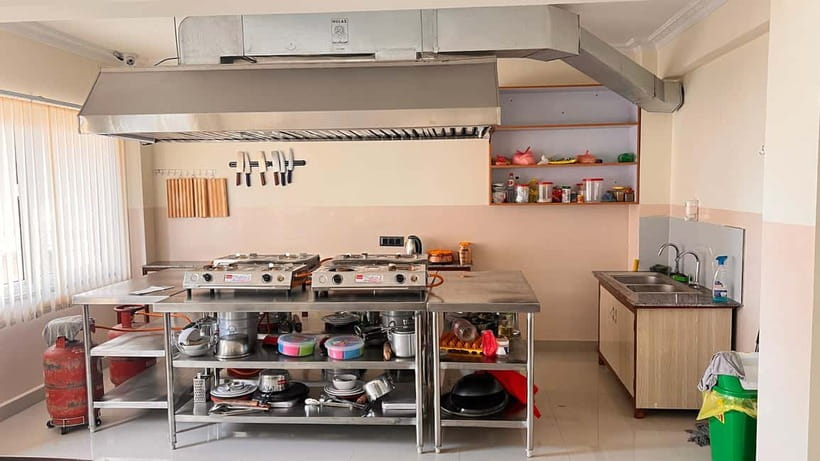
I would recommend it to solo visitors, couples, families with older children, and anyone who wants a break from sightseeing. It gives you a meal, a local food lesson, and a chance to take part in something rather than only photograph it.
Food lovers should look closely at the menu options. Momo fans should select the Chatamari, momo, and Kheer set if it is available. People who want a broader traditional meal may prefer Bara and dal bhat, while noodle fans may find Thukpa and Aloo Chop the best match.
Vegetarians also have options, though the exact menu and fillings should be confirmed before booking. Meat dishes may include chicken, buff, pork, or mutton, so tell the provider your preference clearly.
I would hesitate only if you want a quiet, highly polished demonstration or if you dislike working under time pressure. This is a practical class, and practical cooking sometimes means imperfect dumplings, busy work surfaces, and a few messy moments.
Booking details that matter
The experience is operated by Relax Getaways Pvt. Ltd. It includes an English-speaking local chef and instructor, cooking equipment, ingredients purchased for the session, masala tea, and the food you prepare.
Specialty drinks and alcoholic drinks are not included. Professional photos or video can be arranged for an additional fee, so do not assume media coverage is part of the $11 price.
You can cancel up to 24 hours before the activity for a full refund, and the reserve-now, pay-later option helps if your Kathmandu plans are still shifting. Starting times vary, so check availability for the date you want.
Should you book it?
Book this class if you want an inexpensive, active introduction to Nepali food and do not mind getting involved. The market visit, small group, and choice of three menus give the experience more substance than a basic cooking demonstration.
Choose the momo menu for dumpling practice, dal bhat for the most familiar traditional meal, or Thukpa for a warm noodle-based option. Go in with patience, especially during folding, and you should get a tasty meal plus a better understanding of the food you will encounter across Nepal.
FAQ
How long does the Kathmandu cooking class last?
The class lasts between two and three hours. The exact starting time depends on availability.
How much does the cooking class cost?
The listed price is $11 per person.
What food can I learn to cook?
The menus include Bara, dal bhat, Yomari, Chatamari, momo, Kheer, Aloo Chop, Thukpa, and carrot halwa.
Are vegetarian and meat options available?
Yes. The experience offers vegetarian and meat options. Momo may be prepared with chicken, buff, pork, or vegetables, depending on the selected option.
Is the market visit included?
Yes. The experience includes a market or shop tour to purchase important ingredients for the cooking session.
Is the class taught in English?
Yes. The instructor language is English.
How many people are in each group?
The class is a small-group activity limited to eight participants.
What is included with the booking?
The booking includes step-by-step instruction from a local chef, an experienced instructor, the market or shop tour, hands-on cooking, use of equipment, tasting of the food prepared, and Nepali masala tea.
Are drinks, photos, and videos included?
Nepali masala tea is included. Specialty drinks and alcoholic drinks are not included. Professional photography or videography costs extra.
New in the Kathmandu listings
- Traditional Momo Making Class★ 5.0 · 10 reviews
- Kathmandu: Ancient City Kirtipur & Pharping Monastery Tour★ 5.0 · 2 reviews
- Kathmandu to Pokhara Premium sofa bus ticket★ 4.0 · 17 reviews
- Women Empowerment Project(Nepali cooking class & jewelry workshop★ 5.0 · 15 reviews
- 7-Day Langtang Valley Trek from Kathmandu★ 5.0 · 1 review
- Kathmandu 2 Nights 3 Days Chitwan Jungle Safari Tour★ 5.0 · 9 reviews
- Yoga Experience Day Trip with Private Transfer From Kathmandu★ 4.0 · 2 reviews
- Wildlife Adventure in Chitwan Nepal★ 4.0 · 4 reviews
Cooking Classes, compared.
Nepalese Momos or Dal Bhat Cooking Class (Cook with Delight)
Read our review →
The best Private Nepali Cooking Class in Kathmandu
Read our review →
Nepalese Kitchen in Pokhara: Momos or Dal Bhat Cooking Class
Read our review →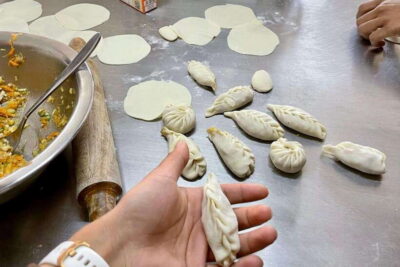
Browse the lists this tour appears in