REVIEW · WORKSHOPS
Kathmandu: Wood Carving Workshop with Local Artisan (Thamel)
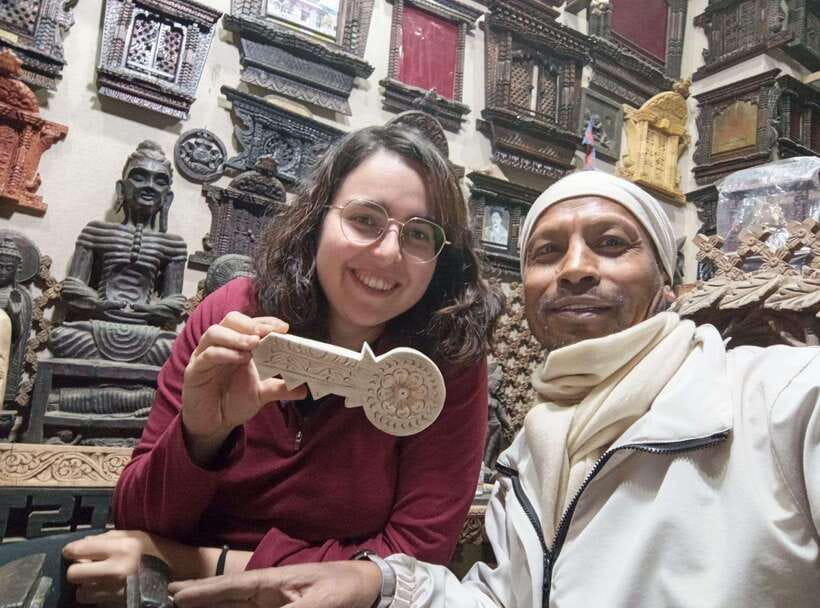
Make something you can carry home. This three-hour Kathmandu wood carving class gives you a close look at a craft that shapes Nepalese temples, palaces, and household art. I like the small group of four and the chance to work directly with a local artisan. I also like that you leave with your own carved wooden piece, not just a few photographs.
The main consideration is that the class may offer only a short introduction to Nepal’s history and symbolism. One participant enjoyed the carving with Hera and his wife but wanted more cultural context. At $42 per person, this is a good value for a personal activity, though it is less suited to anyone expecting an advanced art course.
In This Review
- Key points at a glance
- Why wood carving matters in Kathmandu
- Beginning with tools, wood, and patterns
- Outlining the design on your wooden block
- Chiseling and learning to control the tool
- Adding detail to create a finished souvenir
- What the small group adds to the experience
- Meeting the artisan and the human side of the class
- Is $42 a good value?
- Who should book this Kathmandu class?
- How to get more from the three hours
- Should you book the wood carving workshop?
- FAQ
- How long does the Kathmandu wood carving workshop last?
- How much does the wood carving class cost?
- Where does the workshop take place?
- Is the class suitable for beginners?
- What is included in the price?
- What language is the class taught in?
- How many people are in each group?
- What should I bring to the workshop?
Key points at a glance
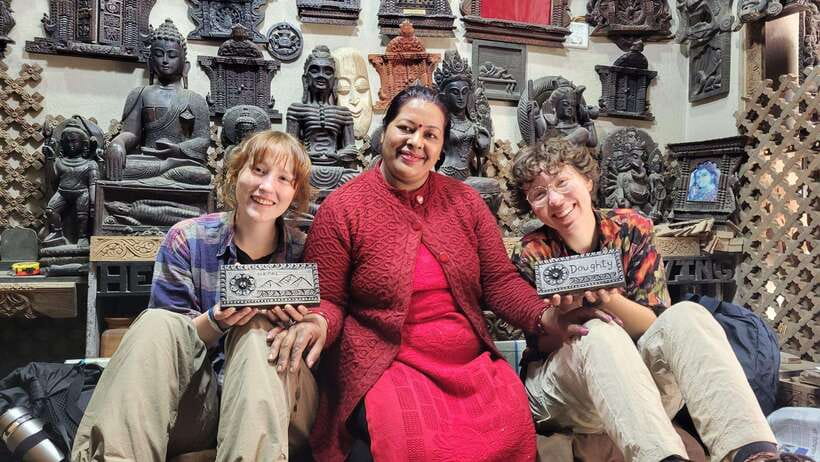
- Work with a local artisan: Hera has been praised for being kind, patient, encouraging, and good at correcting beginners without taking over.
- Keep your own artwork: You carve a wooden block into a decorative panel, small figurine, or symbolic design to take home.
- Learn traditional methods: The class covers outlining, chiseling, and detailing with tools such as chisels and hammers.
- Small groups matter: With a maximum of four participants, you should receive more direct help than in a large craft class.
- Suitable for families: A parent enjoyed the workshop with a ten-year-old son, who received patient guidance throughout.
- A quiet break in Thamel: The workshop offers a slower, hands-on counterpoint to Kathmandu sightseeing and shopping.
Why wood carving matters in Kathmandu
Nepalese wood carving is not simply decorative. It has long been part of the country’s religious buildings, royal architecture, windows, doors, and household objects.
The craft dates back to the Licchavi period, from the fourth to ninth centuries. It became especially prominent during the Malla dynasty, from the twelfth to eighteenth centuries, when artisans created many of the wooden features still admired in the Kathmandu Valley.
You may recognize examples from places such as the 55-Window Palace in Bhaktapur, the Peacock Window, and Kasthamandap, whose name means House of Wood. These sites help explain why a small carved block can carry more meaning than a standard souvenir from a shop shelf.
The Newar community of the Kathmandu Valley is closely associated with this art. Traditional designs often show Hindu and Buddhist figures, lotus flowers, mandalas, mythical creatures, and repeating symbolic patterns.
That background gives the workshop its value. You are not just learning how to make lines in wood. You are getting a basic sense of how Nepali artisans turn religious ideas and familiar symbols into architectural detail.
The historical explanation may be fairly brief, so I would not book this as a full lecture on Newar culture. Think of it as a practical introduction, with cultural information woven into the work.
More hands-on classes in Kathmandu:
- Half day cooking class in Thamel kathmandu
★ 5.0 · 607 reviews - Kathmandu: Local Women-Led Nepali Cooking & Momo Class
★ 4.9 · 360 reviews - Kathmandu: Local Lead Nepali Cooking & Momo-Making Class
★ 5.0 · 212 reviews
Beginning with tools, wood, and patterns
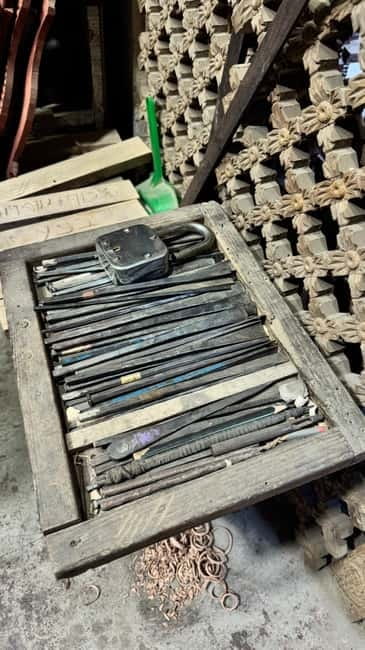
The class starts with an introduction to the materials and tools. You learn how traditional chisels and hammers are used, along with the types of wood commonly associated with the craft, including sal and teak.
This first stage is important for beginners. Wood carving looks calm and precise when you see a finished window or temple panel, but the tools require control. You need to understand how much pressure to use, how to hold the chisel, and how to follow a line without removing too much wood.
You work on a pre-cut wooden block rather than starting with a large raw plank. That keeps the class manageable within three hours and gives you a reasonable chance of finishing a piece.
The instructor also introduces common patterns and motifs. A lotus, mandala, or mythical creature is not merely a pretty shape in this setting. Each can connect to Hindu or Buddhist beliefs, so the design stage gives you a small lesson in the visual language of Nepalese art.
Because the group is limited to four people, you should have room to ask questions. This matters more than it might sound. A carving class becomes frustrating if you wait ten minutes every time you need help with a difficult cut.
Outlining the design on your wooden block
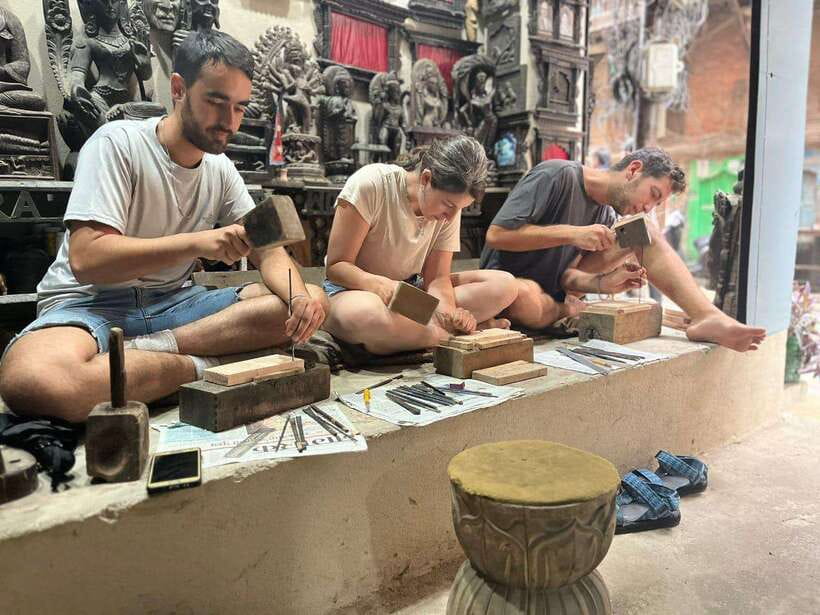
After the introduction, you begin by marking or outlining your design. This is the planning stage, and it sets the shape for everything that follows.
Outlining may seem simple, but it is where beginners learn to slow down. A clean border and clear pattern make the later chiseling much easier. If the design is crowded or uneven at this stage, the final piece will show it.
The instructor guides you through the process rather than expecting you to know how to begin. Hera has received especially warm praise for being patient and encouraging, including during a one-on-one class booked in the off season.
You may work toward a small decorative panel, figurine, or symbolic motif. The exact result depends on the design and your pace. You should approach the class with curiosity rather than a fixed idea of producing museum-quality work.
That is part of the charm. A slightly uneven line can remind you that the piece was made by hand. Your finished object is personal because it records your first attempt at a difficult traditional skill.
Chiseling and learning to control the tool
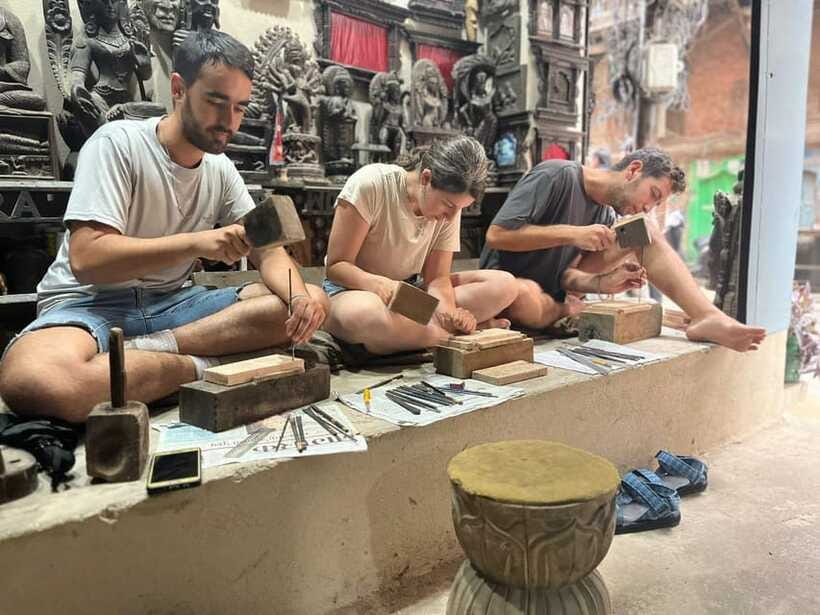
Once the outline is ready, the class moves into chiseling. This is the most physical part of the workshop, though it still calls for patience rather than force.
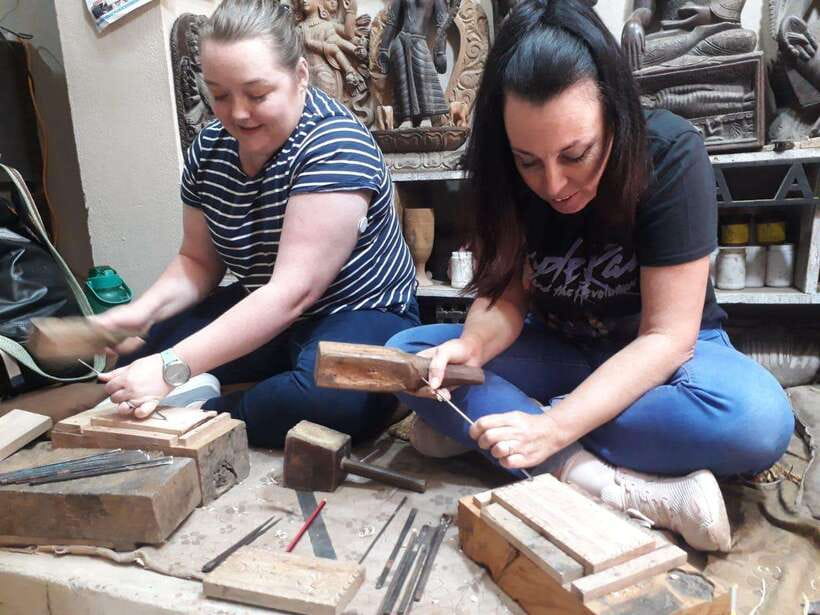
You use the chisel to remove small sections of wood and begin giving the pattern shape. The basic lesson is control. A heavy strike can damage the design, while a cautious series of small cuts gives you more room to correct mistakes.
The artisan demonstrates how the tool meets the wood and then watches as you try it yourself. You receive tips and corrections along the way, which is particularly helpful if you have never worked with carving tools.
A three-hour session gives you time to practice, but not unlimited time to perfect every detail. Your result will likely be a beginner’s piece, not a highly polished temple panel. That is a fair trade for an activity that lets you learn by doing.
The class also works well for families. A ten-year-old participant completed the workshop with help from a friendly and patient instructor. Parents should still expect the child to need guidance, since carving requires attention and careful tool handling.
A short list of alternatives around Kathmandu
- Everest Base Camp Trek – 14 Days
★ 5.0 · 1,499 reviews - Private Kathmandu Sightseeing Tour | UNESCO World Heritage sites
★ 5.0 · 756 reviews - Everest Base Camp Helicopter Tour landing at Everest View Hotel
★ 5.0 · 668 reviews - Everest Base Camp Trekking
★ 5.0 · 485 reviews
Adding detail to create a finished souvenir
The final stage is detailing. Here you refine edges, sharpen the design, and add small marks that make the motif easier to read.
This part can be the most satisfying. A flat block slowly begins to look intentional, and you can see how a series of simple cuts creates texture and depth.
It is also where the limits of a short class become clear. Fine detailing takes time, especially if you are new to the tools. You may finish a smaller design rather than covering the entire block with elaborate decoration.
I would treat this as a lesson in the craft, not a race to produce a perfect souvenir. The value comes from understanding the sequence: outline first, remove wood carefully, then refine the surface.
At the end, you take your own wooden artwork home. That might be a decorative panel, a small figurine, or a symbolic pattern. Unlike a mass-produced carving, it carries the memory of the afternoon and the effort you put into it.
What the small group adds to the experience
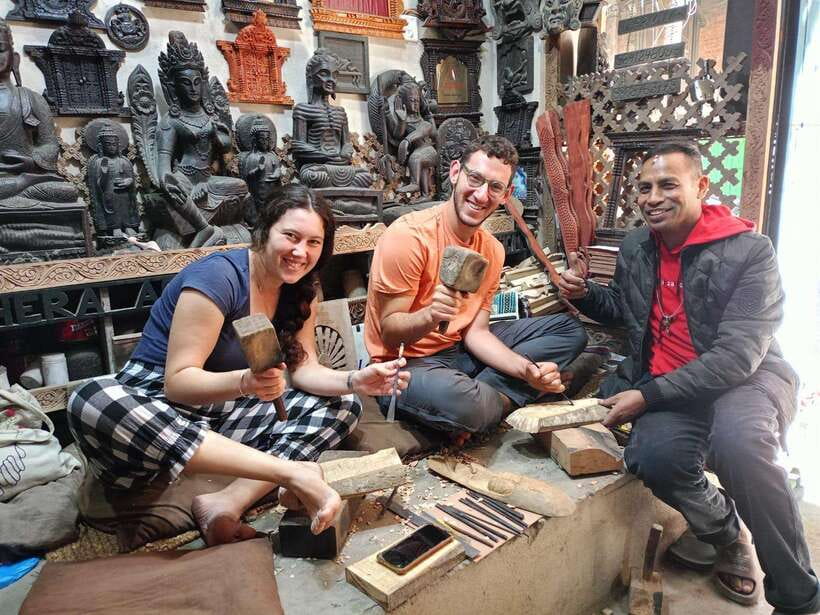
The maximum group size is four participants. That is one of the strongest practical features of this class.
In a larger workshop, you might spend much of the session watching a demonstration or waiting for the instructor. Here, the artisan can move between participants and give individual advice.
The small size also makes it easier to work at your own speed. One person may be comfortable chiseling after a short demonstration, while another needs repeated help with grip and pressure.
In the off season, the group may be even smaller. One participant booked during a quiet period and received a one-on-one class. That kind of private attention can make the $42 price feel especially worthwhile.
The class is listed as English-language, so you can ask questions and follow the demonstrations in English. The exact amount of historical discussion may depend on the instructor and the pace of the group.
Meeting the artisan and the human side of the class
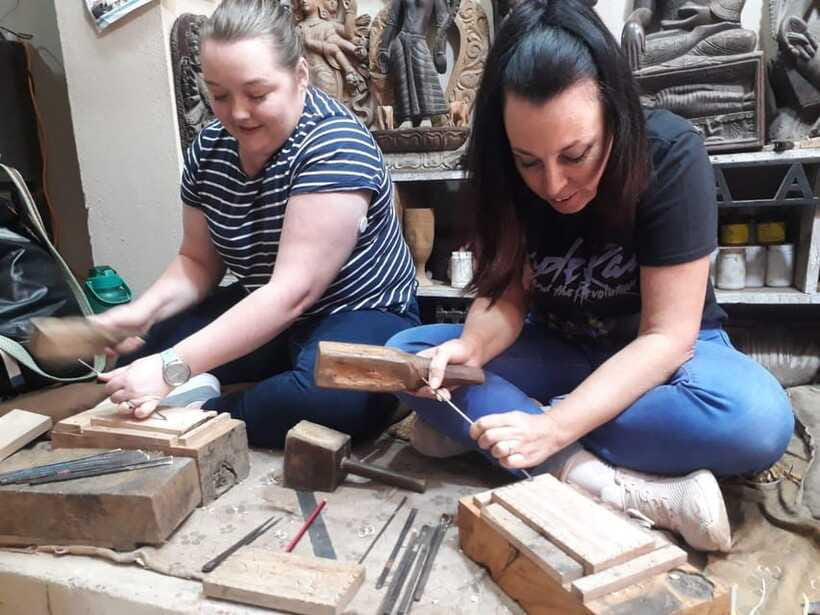
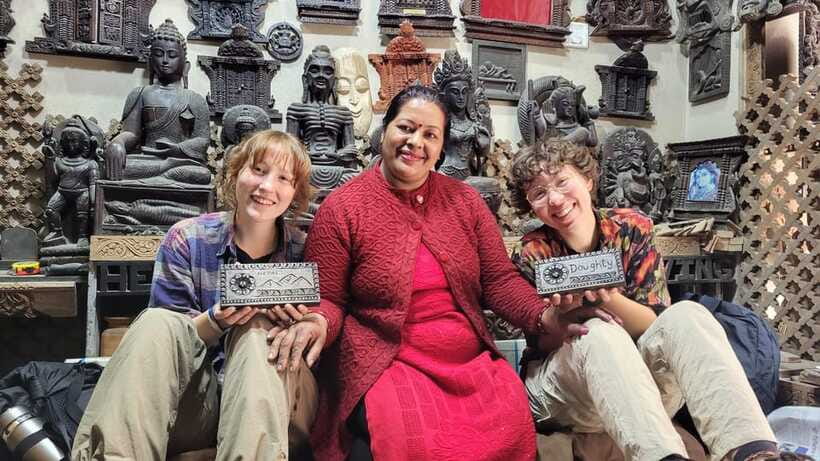
The workshop is led by a local artisan, and the teaching style appears to be one of its biggest strengths. Hera and his wife have been described as warm, kind, funny, and encouraging.
Those qualities matter in a craft class. Beginners often worry about making a bad cut or producing something that looks crude. A patient teacher helps you keep working instead of treating mistakes as failures.
The workshop is also more personal than a standard sightseeing stop. You spend time with people who practice or teach a craft connected to Kathmandu’s cultural life. That contact can make your later visits to temples and historic buildings more meaningful, since you will notice the carved details around doors and windows.
Still, keep your expectations sensible. This is a short class, not a formal apprenticeship. You will learn basic methods and produce a small object, but you will not master Nepalese wood carving in one afternoon.
Is $42 a good value?
The price is $42 per person. For three hours of instruction, a small group, all tools and materials, and a finished wooden piece, I consider that a reasonable price.
The strongest value comes from the combination of teaching and take-home artwork. You are paying for time with an artisan, not simply for admission to a workshop. The materials are supplied, so you do not need to buy chisels, hammers, or wood before beginning.
The value is even better if you enjoy hands-on activities. A museum visit may teach you more about the finished art, but this class lets you understand the effort behind it.
The price may feel less attractive if you are mainly interested in historical information. One participant specifically wanted more context about the craft. If cultural background is your main goal, pair the workshop with visits to Kathmandu Valley landmarks such as Kasthamandap, Bhaktapur’s 55-Window Palace, or the Peacock Window.
Government taxes and VAT are included. The class also includes the wooden piece you make, so you do not need to budget separately for a standard souvenir.
Who should book this Kathmandu class?
I would recommend it to:
- First-time visitors who want a cultural activity beyond temples and shopping
- Art lovers who enjoy learning through their hands
- Families with older children who can follow careful instructions
- Couples and friends looking for a shared activity
- People who prefer a personal souvenir over a shop-bought object
- Anyone with a free three-hour period in Kathmandu
It may not suit you if you want an advanced technical course, a long academic talk, or a completely polished finished product.
Comfortable clothes are recommended. Smoking is not allowed. The provided information does not specify a detailed meeting address, so confirm the exact meeting point before setting out.
You can cancel up to 24 hours in advance for a full refund, and the reserve-now, pay-later option gives you some flexibility while arranging your Nepal itinerary. Starting times depend on availability.
How to get more from the three hours
I would arrive ready to listen before picking up the tools. The historical and design explanation may be short, so pay attention when the artisan describes the motifs and materials.
Ask about the meaning of the pattern you choose. Lotus flowers, mandalas, and mythical creatures can carry different religious and cultural associations, and a simple question may add useful depth to the practical lesson.
Do not rush the outlining stage. A careful beginning gives you a better chance of producing a balanced final design.
I would also leave enough room in your luggage for the finished piece. The class includes a take-home artwork, and its value is partly practical: it should be easy to carry as a reminder of Kathmandu.
Should you book the wood carving workshop?
Book it if you want a friendly, small-scale activity where you learn a traditional Nepalese craft and leave with something you made yourself. The patient instruction, especially from Hera, is a major reason to choose this class, and the experience has worked well for both solo participants and families.
Skip it if you want a detailed history seminar or advanced carving tuition. For most visitors, though, $42 buys a useful three hours, personal guidance, tools, materials, and a souvenir with a story behind it.
FAQ
How long does the Kathmandu wood carving workshop last?
The workshop lasts three hours.
How much does the wood carving class cost?
The price is $42 per person.
Where does the workshop take place?
The experience takes place in Kathmandu, in the Thamel area. The exact meeting point should be confirmed before the class because the supplied details do not give a specific address.
Is the class suitable for beginners?
Yes. The class is designed for all skill levels and teaches basic methods such as outlining, chiseling, and detailing.
What is included in the price?
The class includes guidance from local artisans, all necessary tools and materials, your own handcrafted wooden piece to take home, and government taxes and VAT.
What language is the class taught in?
The instructor teaches in English.
How many people are in each group?
The small group is limited to four participants. During the off season, the class may sometimes be one-on-one.
What should I bring to the workshop?
You should wear comfortable clothes. Smoking is not allowed during the activity.
New in the Kathmandu listings
- Traditional Momo Making Class★ 5.0 · 10 reviews
- Kathmandu: Ancient City Kirtipur & Pharping Monastery Tour★ 5.0 · 2 reviews
- Women Empowerment Project(Nepali cooking class & jewelry workshop★ 5.0 · 15 reviews
- Kathmandu to Pokhara Premium sofa bus ticket★ 4.0 · 17 reviews
- 7-Day Langtang Valley Trek from Kathmandu★ 5.0 · 1 review
- Kathmandu 2 Nights 3 Days Chitwan Jungle Safari Tour★ 5.0 · 9 reviews
- Yoga Experience Day Trip with Private Transfer From Kathmandu★ 4.0 · 2 reviews
- Wildlife Adventure in Chitwan Nepal★ 4.0 · 4 reviews
Workshops, compared.



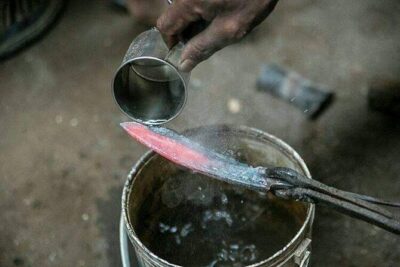
Knife (Khukuri) Making Workshop- Forge of the Gurkhas
Read our review →
Nepalese Momos or Dal Bhat Cooking Class (Cook with Delight)
Read our review →
The best Private Nepali Cooking Class in Kathmandu
Read our review →
Nepalese Kitchen in Pokhara: Momos or Dal Bhat Cooking Class
Read our review →