REVIEW · WORKSHOPS
Knife (Khukuri) Making Workshop- Forge of the Gurkhas
Steel becomes tradition here. This four-hour Kathmandu workshop lets you help turn raw metal into a six-inch khukuri, the curved knife linked with Nepal’s hill communities and Gurkha identity. I especially like the chance to work beside Indra, a blacksmith with more than 40 years of experience, and the fact that you take home a real, sharp knife rather than a factory souvenir.
I also like the small-group setting, capped at five people, and the hotel pickup that makes the trip to the workshop simple. The main consideration is that this is not a fully hands-on blade-making class. You hammer and take part in selected grinding and polishing steps, but the host handles the most dangerous spark-producing work.
In This Review
- Key Details Before You Book
- Why the Khukuri Matters in Nepal
- Meeting Your Guide and Reaching the Forge
- Entering Indra’s Traditional Home Workshop
- Step One: Heating and Hammering the Steel
- Step Two: Grinding the Curved Blade
- Step Three: Buffing, Polishing, and Finishing
- The Human Side of the Workshop
- What the $68 Price Includes in Value
- The Main Drawbacks to Consider
- Who Will Enjoy This Most
- Practical Advice for a Better Visit
- Should You Book the Khukuri Workshop?
- FAQ
- How long does the khukuri workshop last?
- How much does the workshop cost?
- Is hotel pickup offered?
- How many people can join?
- What size knife do I make?
- Can I make a larger khukuri?
- Which parts of the knife-making process can I do?
- Is the finished knife sharp?
- Do I need previous blacksmithing experience?
- Can I cancel for a full refund?
Key Details Before You Book
- A real six-inch khukuri: You begin with raw steel and finish with a usable knife, not a decorative toy.
- Indra’s traditional forge: The blacksmith has more than four decades of experience and works with a simple, time-tested setup.
- Small groups: A maximum of five people allows for personal help and conversation.
- Hotel pickup: Transport is offered, with guides such as Swoyam or Namrata helping along the way.
- About four hours: The pace gives you time to see the craft develop from scrap metal to finished blade.
- Safety comes first: You can take part in hammering and selected finishing work, while the host handles hazardous grinding.
Why the Khukuri Matters in Nepal
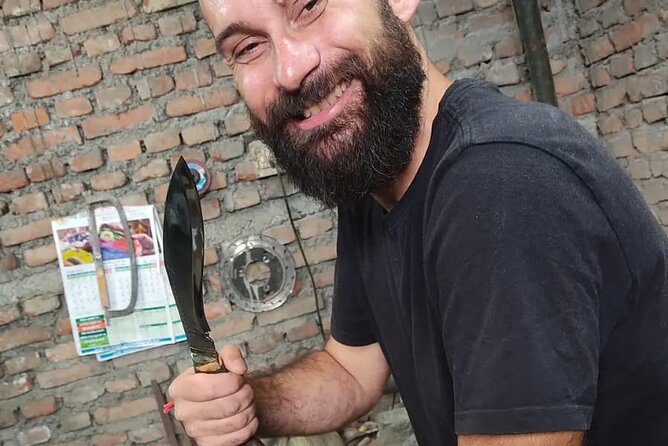
The khukuri is more than a curved knife. It is associated with loyalty, the Gurkha warrior tradition, and the hill communities of Nepal. Its shape makes it useful for many ordinary tasks, from cutting timber to preparing meat and vegetables.
The blade is made from tempered steel and is designed to be very sharp. Handles are traditionally made from wood or buffalo horn, while the blade sits in a wood-and-leather scabbard. The small notch near the handle is both practical and symbolic. It helps keep blood from running onto the handle, and it is linked with the Hindu Trinity of Brahma, Vishnu, and Shiva.
You will make the small workshop version, usually around six inches. That size is easier to handle and take home than a large working khukuri, though you can ask about making a 10-inch version for an added fee. The larger blade is not included in the standard price.
More hands-on classes in Kathmandu:
- Half day cooking class in Thamel kathmandu
★ 5.0 · 607 reviews - Kathmandu: Local Women-Led Nepali Cooking & Momo Class
★ 4.9 · 360 reviews - Kathmandu: Local Lead Nepali Cooking & Momo-Making Class
★ 5.0 · 212 reviews
Meeting Your Guide and Reaching the Forge
Pickup is offered from your Kathmandu hotel. Past arrangements have included meeting in Thamel before taking a taxi into a more remote part of the city. The ride is useful in its own right, since guides often explain Nepal, local places, and practical things to do during the journey.
Swoyam has helped with translation and conversation, while Namrata has also accompanied people and assisted with coordination. The guide’s role matters because the workshop takes place in a family home rather than a polished visitor center. Clear translation helps you understand the process, ask questions, and take part without guessing what to do next.
Allow roughly four to four and a half hours from pickup to return. The exact timing can depend on transport, the number of knives being made, and the pace of the forge. A family with young children found that the process eventually became too long for children aged four and six, so bring something to occupy younger children if you decide to include them.
Entering Indra’s Traditional Home Workshop
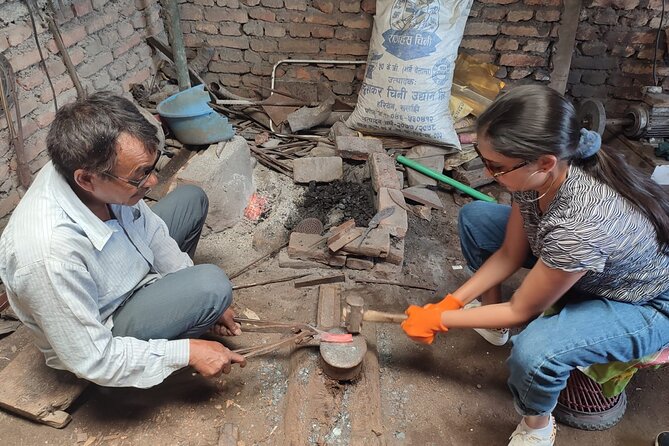
The setting is rustic and practical. You are not walking into a large commercial factory with rows of identical knives. You visit Indra’s home workshop, where he and his helpers make blades for local residents and personal requests.
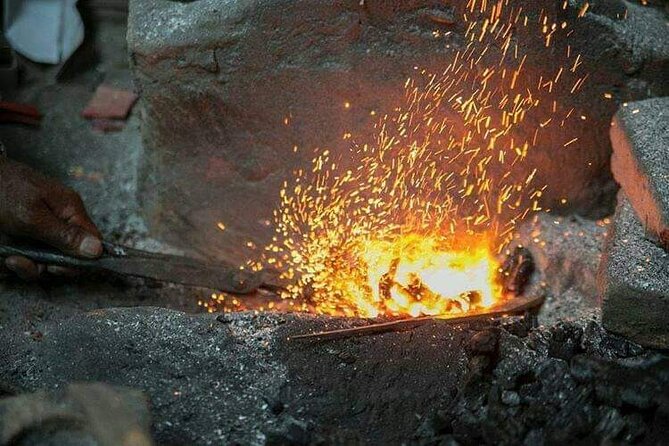
That setting is one of the best parts of the experience. You see how a small forge operates with limited equipment, coal, hand tools, and plenty of skill. One experienced home metalworker particularly enjoyed watching Indra work with a fraction of the equipment found in a modern forge.
You may meet Indra’s apprentice or his nephews, who can assist with the work and give you a break from the physical parts. The atmosphere is described as relaxed and welcoming, with conversation, green tea, and, in some cases, lunch with the family. Lunch is not clearly presented as a guaranteed feature for every booking, so treat it as a possible extra rather than a promised part of the package.
Step One: Heating and Hammering the Steel
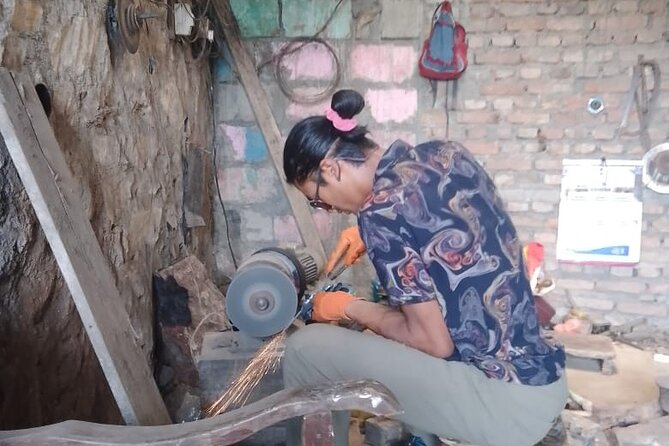
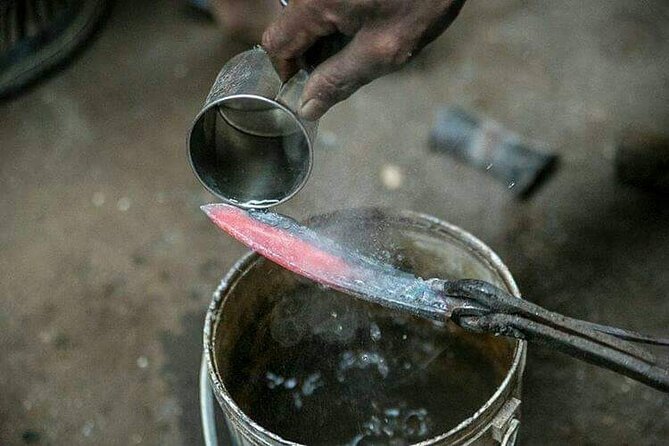
The workshop begins with a plain piece of metal. Some sessions use recycled steel, including material made from old truck suspension springs. Seeing this hard, ordinary scrap become a polished knife gives the whole process a practical edge. You are not just decorating a ready-made blade.
Heating the metal and hammering it into shape is the most physical part of your participation. You will help strike the heated steel under instruction, gradually stretching and forming the curved blade. The job needs rhythm, attention, and a willingness to follow the blacksmith’s timing.
This is where Indra’s experience becomes clear. The process looks simple until you watch the speed and accuracy needed to shape hot metal. You get a taste of the work, but the master blacksmith remains responsible for the difficult decisions that affect the blade’s strength and balance.
Do not expect to forge an entire knife independently. You will contribute meaningful work, but Indra will guide the shaping and complete sections that require greater strength or precision. That is a fair trade for safety and for receiving a finished knife that actually works.
A short list of alternatives around Kathmandu
- Everest Base Camp Trek – 14 Days
★ 5.0 · 1,499 reviews - Private Kathmandu Sightseeing Tour | UNESCO World Heritage sites
★ 5.0 · 756 reviews - Everest Base Camp Helicopter Tour landing at Everest View Hotel
★ 5.0 · 668 reviews - Everest Base Camp Trekking
★ 5.0 · 485 reviews
Step Two: Grinding the Curved Blade
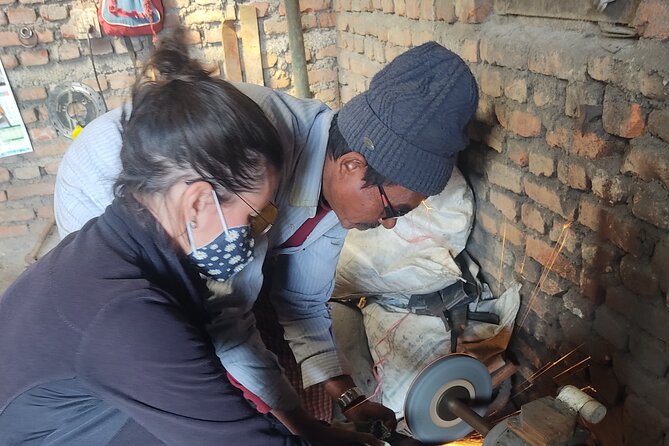
Once the rough shape is formed, the blade needs grinding. This creates the cutting edge and smooths the metal. Depending on the part of the process, you may be allowed to help with an initial grinding stage or other selected work.
The safety instructions are important. The host handles the most hazardous blade-grinding work, and you should stay clear of sparks. The equipment is not described as a modern industrial setup, so listen carefully, keep your hands away from moving parts, and follow the guide’s instructions without trying to rush.
This is also the point where expectations matter most. The workshop description presents grinding and polishing as participatory steps, but it clearly notes that safety limits what you can do. You will get involved, but you will also spend time watching Indra perform skilled work.
That balance is central to the experience. If you want a full blacksmithing course, this may feel too controlled. If you want a safe introduction with a genuine finished object, the arrangement makes sense.
Step Three: Buffing, Polishing, and Finishing
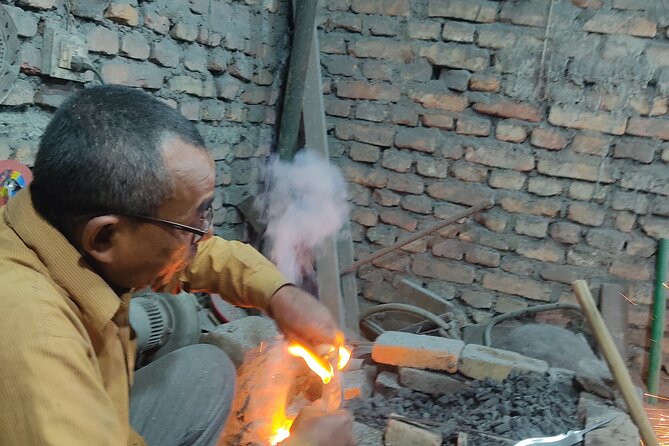
The final stages give the khukuri its finished appearance. You may take part in buffing and polishing, helping move the blade from rough forged steel toward a bright, smooth surface.
This slow change is satisfying. At the start, the material may look like scrap. By the end, it has a clear curve, a defined cutting edge, and the shape of a traditional Nepali knife. Some people have also had the knife personalized, which adds another personal mark to the souvenir.
The result is reported to be very sharp, so handle it with care. This is a working blade, not a toy or a blunt display piece. Before leaving, ask how the knife should be packed and carried, especially if you are continuing by air. The supplied information does not specify airline or customs rules, so you must check the requirements for your next destination yourself.
The Human Side of the Workshop
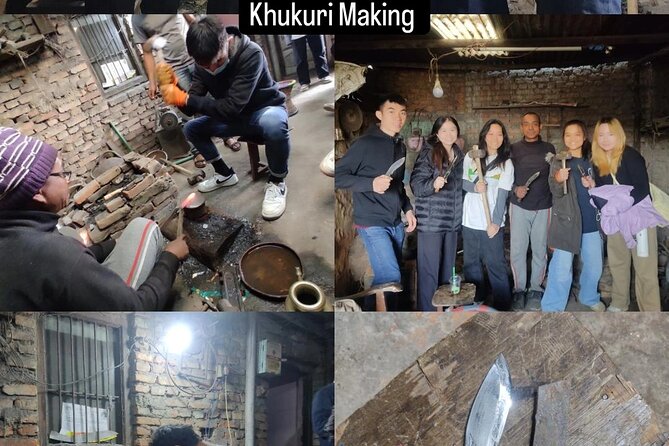
The craft is only half the reason to book. The other half is meeting the people who keep it going. Indra is described as patient, friendly, and proud of his work. His helpers can step in when you need a rest, and the guides help turn technical instructions into an easy conversation.
The family setting can feel more personal than a standard city attraction. You may spend time talking with the blacksmith’s family, drinking tea, and seeing a small part of everyday Nepali life. That does not mean the setting is polished. It is rustic, and the equipment may look basic. For many people, that raw quality is exactly the point.
The experience also gives you a better sense of how much labor goes into a handmade tool. A tourist shop can sell you a khukuri, but it cannot give you the memory of hammering the same piece of steel, watching it take shape, and seeing the maker finish it.
What the $68 Price Includes in Value
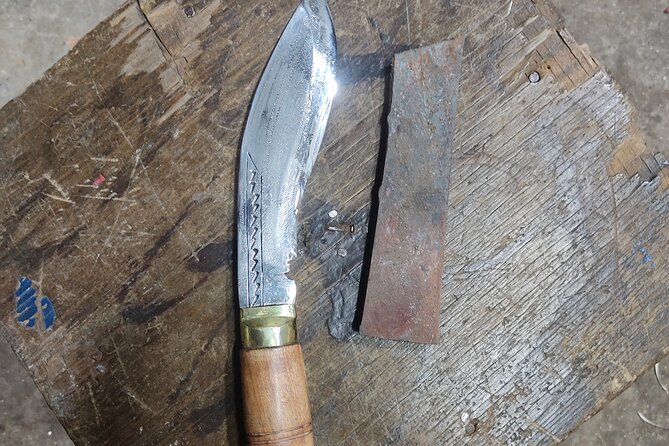
At $68 per person, the workshop costs more than buying an inexpensive knife in a Kathmandu shop. You are paying for roughly four hours of instruction, transport offered from your hotel, translation or guiding, forge time, materials, and the finished six-inch khukuri.
The value depends on what you want from a souvenir. If you only need a blade, a shop purchase will be quicker and possibly cheaper. If you want a cultural activity with a personal result, the price is easier to justify. You are not simply buying steel. You are paying for access to a traditional craft and for the time needed to make an object in front of you.
The small group size strengthens the value. With no more than five people, the blacksmith and guide can give more attention than they could in a large class. You should still ask about the price of a larger 10-inch khukuri, since that option has been available for an additional fee but is not part of the standard booking.
The Main Drawbacks to Consider
The biggest limitation is hands-on time. You do not perform every stage, and the host completes the dangerous grinding. Anyone expecting to operate every tool from start to finish should adjust those expectations before booking.
The workshop can also run longer than four hours. Around four to four and a half hours is a sensible planning range, especially if you are making more than one knife or dealing with Kathmandu traffic. Do not place it too close to a flight, a timed ticket, or another important appointment.
Quality control can occasionally be an issue. Two people in one group found cracks in their knives. The provider indicated that a replacement could normally be made and delivered when cracks appear later, but you should inspect your knife before leaving and ask what happens if a flaw develops.
Finally, pickup details need care. The standard arrangement is built around Kathmandu pickup, and a booking made at short notice may not give the operator enough time to organize transport. If you are staying far outside the city, confirm the pickup before paying rather than assuming the included transport covers a long-distance location.
Who Will Enjoy This Most
I would recommend the workshop to you if you like useful souvenirs, traditional crafts, small-group activities, and meeting local makers. It suits people who want to do something different from visiting temples and shopping in Thamel.
It is also a strong choice for anyone interested in metalwork. You do not need previous blacksmithing experience. The guide and blacksmith provide instruction, and an assistant can help when you need a break.
Families can attend, but the four-hour length may test very young children. Older children and teenagers who enjoy tools, history, or making things may get much more from it. Keep younger children away from the forge and sparks, and bring distractions if needed.
I would be more cautious about recommending it to someone who wants a polished, highly structured class. This is a working home forge, and the experience depends partly on the people, pace, and conditions of the day.
Practical Advice for a Better Visit
Book with enough notice to confirm hotel pickup and avoid last-minute confusion. Free cancellation is available when you cancel at least 24 hours before the local start time. Changes or cancellations inside that window are not accepted for a refund.
Wear clothes and shoes that you do not mind bringing into a dusty, hot work area. The supplied details do not set out a formal dress code, but practical clothing makes more sense than anything delicate or loose.
Tell the guide how much physical participation you want. You can ask questions, take breaks, and watch more if needed. At the same time, do not step toward sparks or moving grinding equipment unless the host specifically tells you to do so.
Keep some room in your luggage. Your finished knife comes with a personal story, but it is still a sharp metal object. Packing and transport rules are your responsibility, so check the requirements of your airline and destination before you travel.
Should You Book the Khukuri Workshop?
Yes, if you want one of Kathmandu’s more personal activities and you value the making as much as the souvenir. The strongest parts are Indra’s skill, the family workshop, the small group, and the chance to help shape a real knife from recycled steel or another raw metal starting point.
Book it with realistic expectations. You will not work alone, the final grinding is restricted for safety, and the rustic setting may not suit everyone. But for $68, you receive several hours of local contact, a rare look at a traditional craft, transport support, and a sharp six-inch khukuri you helped make.
For me, that is a better keepsake than another shop-bought object. Just confirm pickup, allow a full afternoon, inspect the finished blade, and treat it as a real tool from the moment it reaches your hands.
FAQ
How long does the khukuri workshop last?
The experience lasts approximately four hours. Some sessions may take around four and a half hours, depending on the pace of the work and transport.
How much does the workshop cost?
The listed price is $68 per person.
Is hotel pickup offered?
Yes, pickup is offered. Confirm your exact pickup location in advance, particularly if you are staying outside central Kathmandu.
How many people can join?
The activity has a maximum of five participants.
What size knife do I make?
The standard workshop includes a small khukuri with a blade of about six inches.
Can I make a larger khukuri?
A 10-inch khukuri has been available for an additional fee, but it is not included in the standard price.
Which parts of the knife-making process can I do?
You can take part in hammering the iron, the first grinding stage where permitted, and buffing or polishing. The host handles hazardous blade-grinding work for safety.
Is the finished knife sharp?
Yes. The finished khukuri is described as very sharp and should be handled as a real working knife.
Do I need previous blacksmithing experience?
No previous experience is stated as a requirement. The blacksmith and guide provide instruction, and an assistant may help when you need a break.
Can I cancel for a full refund?
You can cancel at least 24 hours before the experience start time for a full refund. Cancellations or changes made less than 24 hours before the start time are not accepted for a refund.
New in the Kathmandu listings
- Traditional Momo Making Class★ 5.0 · 10 reviews
- Kathmandu: Ancient City Kirtipur & Pharping Monastery Tour★ 5.0 · 2 reviews
- Kathmandu to Pokhara Premium sofa bus ticket★ 4.0 · 17 reviews
- Women Empowerment Project(Nepali cooking class & jewelry workshop★ 5.0 · 15 reviews
- Yoga Experience Day Trip with Private Transfer From Kathmandu★ 4.0 · 2 reviews
- 7-Day Langtang Valley Trek from Kathmandu★ 5.0 · 1 review
- Kathmandu 2 Nights 3 Days Chitwan Jungle Safari Tour★ 5.0 · 9 reviews
- Wildlife Adventure in Chitwan Nepal★ 4.0 · 4 reviews
Workshops, compared.
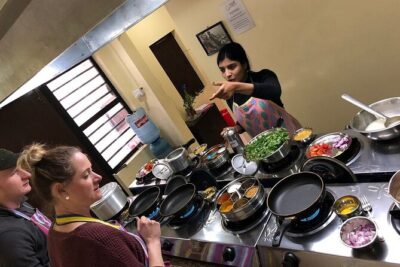
Nepalese Momos or Dal Bhat Cooking Class (Cook with Delight)
Read our review →
The best Private Nepali Cooking Class in Kathmandu
Read our review →
Nepalese Kitchen in Pokhara: Momos or Dal Bhat Cooking Class
Read our review →