REVIEW · WORKSHOPS
Knife Khukuri Making Workshop
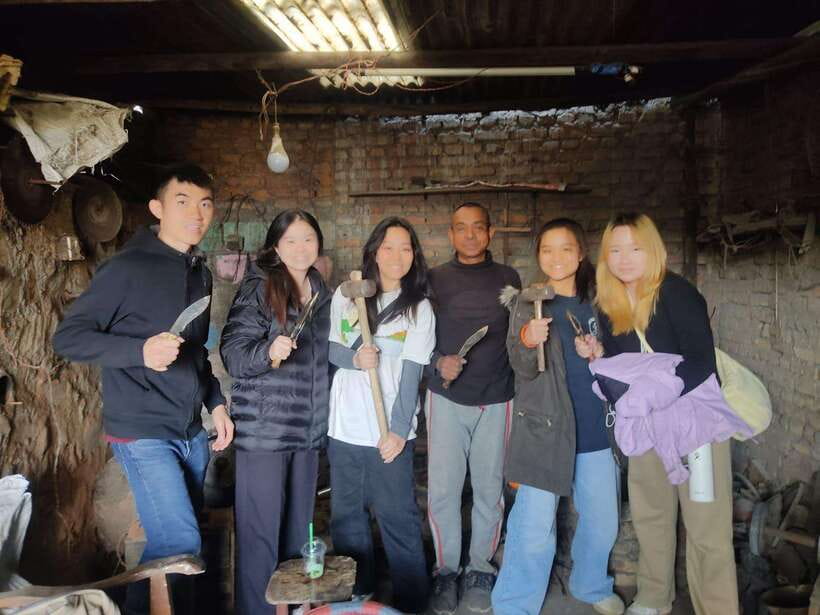
Fire, steel, and a very old Nepalese tradition make this four-hour khukuri workshop far more memorable than a standard souvenir stop. You visit a local blacksmith, learn why the khukuri matters to Nepal, and help turn rough iron into a sharp six-inch knife.
I especially like the hands-on hammering and the chance to meet the family behind the craft. I also like the personal guiding, with guides such as Namrata and Sajeena explaining the work in clear English. The main consideration is that you do not complete every stage yourself. For safety, the blacksmith handles the hardest shaping, sharpening, and final grinding.
At $73 per person, this is not a bargain-bin souvenir purchase. It is a small-group craft lesson, hotel transport, local hospitality, and a finished knife in one package. If you want a polished workshop where you control every step, this is not it. If you want to see a skilled maker at work and safely take part, it offers good value.
In This Review
- Key points to know before you book
- Why the khukuri matters in Nepal
- Hotel pickup and the trip to the workshop
- Meeting a master blacksmith at work
- Hammering the iron into a blade
- Grinding, sparks, and the safety limits
- The handle, cover, and finished souvenir
- The guide adds more than translation
- Is $73 a fair price?
- Who will enjoy this workshop most?
- Booking details that matter
- Should you book the khukuri workshop?
- FAQ
- Where does the khukuri workshop take place?
- How long does the experience last?
- How large is the group?
- What parts of the knife-making process can I do?
- What is included in the price?
- Can I get a horn or bone cover?
Key points to know before you book
- A 42-year craft tradition: The blacksmith has spent decades making khukuris, with some descriptions of his experience reaching about 45 years.
- You hammer the raw iron: Your hands-on work includes shaping the metal and taking part in the first grinding stage.
- The blade is about six inches: This is a small khukuri, practical to carry home and easier to handle than a full-sized version.
- Safety comes first: The host handles the final blade grinding and sharpening, while you stay clear of sparks.
- A local family setting: Tea, water, snacks, and warm hospitality add a personal touch to the workshop.
- Transport is included: Pickup from your hotel lobby and return transport remove the usual Nepal traffic and navigation hassle.
Why the khukuri matters in Nepal
The khukuri is more than a knife. It is tied to the loyalty and identity of the Gurkha warrior, and it remains a traditional tool among Nepal’s hill communities.
Its curved blade has practical uses. It can cut wood, shape timber, and chop meat or vegetables. The steel is tempered for strength, and the edge is notably sharp. A khukuri is both a working tool and a cultural object, which gives the workshop more weight than a simple metalworking class.
You also learn about details built into the design. A small notch near the handle helps keep blood from running toward the grip. It also carries a symbolic connection to the Hindu Trinity of Brahma, Vishnu, and Shiva.
The handle is commonly made from wood or buffalo horn. A traditional khukuri sits inside a scabbard made from wood and leather. Full-sized blades come in several shapes and sizes, but this activity focuses on a smaller six-inch model. That makes sense for a souvenir. It is substantial enough to feel like a real working knife, but not an oversized blade that creates extra trouble when packing.
More hands-on classes in Kathmandu:
- Half day cooking class in Thamel kathmandu
★ 5.0 · 607 reviews - Kathmandu: Local Women-Led Nepali Cooking & Momo Class
★ 4.9 · 360 reviews - Kathmandu: Local Lead Nepali Cooking & Momo-Making Class
★ 5.0 · 212 reviews
Hotel pickup and the trip to the workshop
The experience begins with pickup from your hotel lobby. A guide accompanies you to the blacksmith’s home and returns you afterward, so you do not need to arrange a taxi or work out directions in an unfamiliar part of the Bagmati Zone.
That transport matters more than it may sound. A four-hour activity can easily become a tiring half-day if you add confusing transfers and waiting around. Here, the journey is part of a single package, and the small group size is limited to five participants.
Your guide is an important part of the experience. Guides named Namrata, Sajeena, and Swayam have been praised for their warmth, translation, and clear explanations. English and Hindi are offered, and good communication helps because much of the value comes from understanding what the smith is doing, not simply watching a hammer hit hot metal.
The drive takes you away from the polished tourist routine and into a family-run setting. You may be welcomed with tea, water, and snacks, and one family even served guava from its garden. Those touches are simple, but they help the visit feel like an introduction to local people rather than a staged factory demonstration.
Meeting a master blacksmith at work
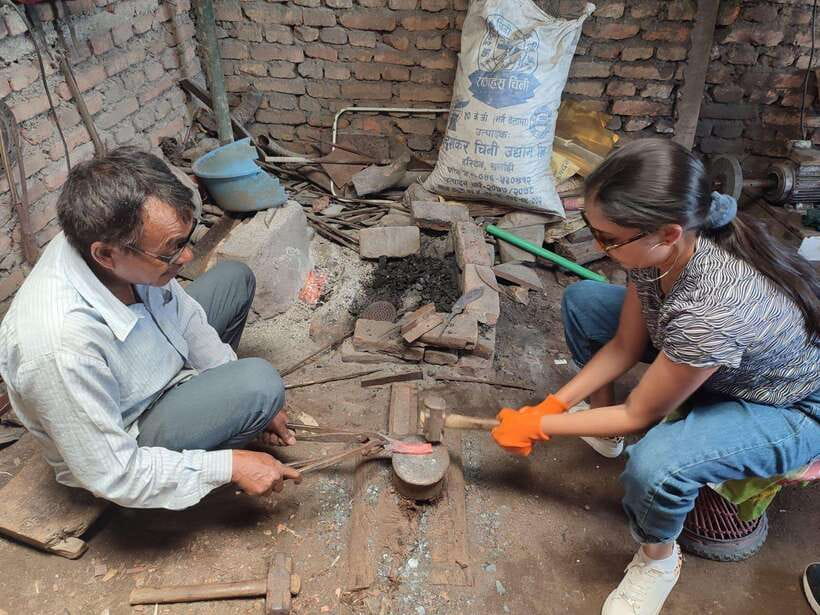
The blacksmith is the heart of the workshop. He has been making knives for roughly 42 years, with one account describing about 45 years of experience. That level of practice changes what you see.
A khukuri may look simple once finished, but its curved profile, balance, edge, and handle require control. You are watching someone judge the metal by sight, pressure, and repeated blows. The workshop gives you a clear lesson in the gap between taking part and mastering a craft.
The blacksmith does not hand over the difficult work just to make the activity feel more exciting. He controls the stages that require the most skill. This is a good arrangement. You get a real role, but you are not asked to perform a dangerous task without years of training.
The setting is described as a cozy studio in the smith’s home. Do not expect a large visitor center with display cases and polished floors. The appeal is precisely that you see the work in a personal, working environment.
Hammering the iron into a blade
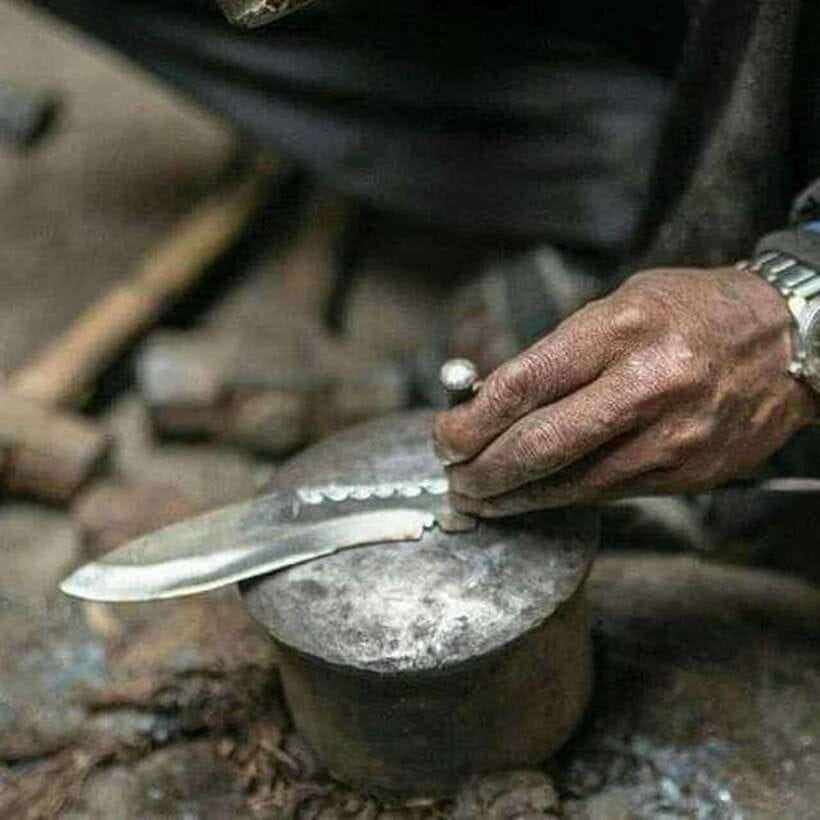
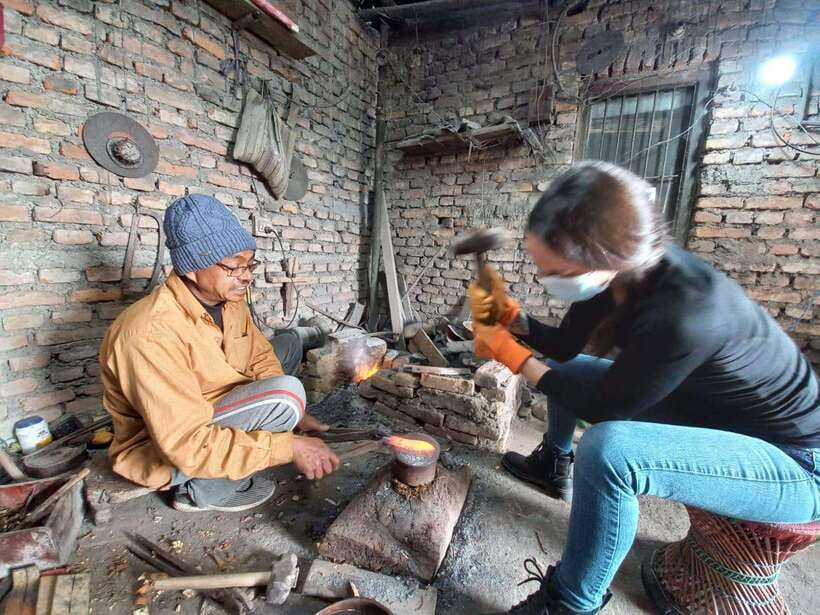
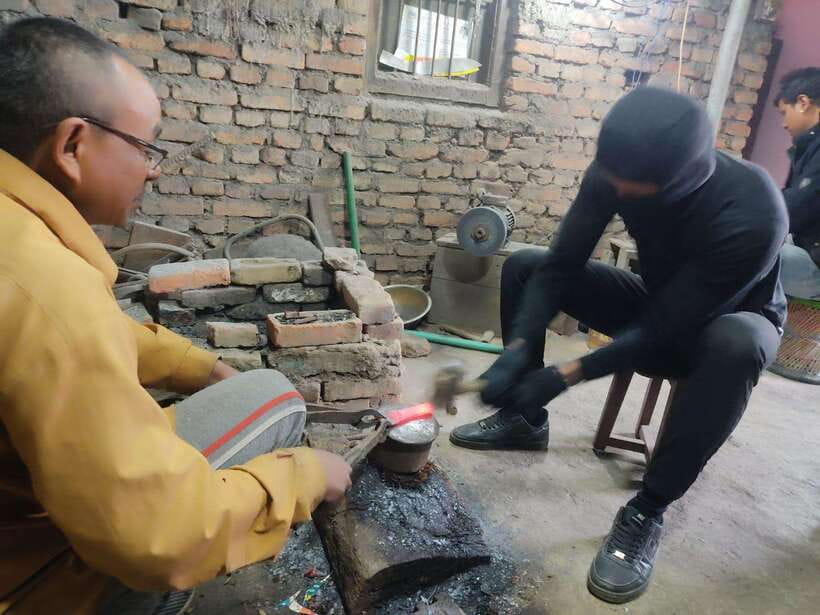
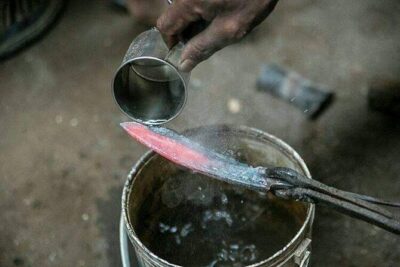
The first major task is hammering a raw piece of iron. The blacksmith begins shaping it into the curved form of a khukuri, then lets you take part in the easier sections of the work.
This is the most physical part of the experience. You will need to pay attention to instructions, use controlled force, and accept that the expert may step in often. The goal is not to prove that you can out-hammer a Nepalese blacksmith. It is to feel the material respond under the tool and understand how much judgment goes into a blade that looks straightforward.
That distinction keeps expectations realistic. You help shape the knife, but the professional forms its unique profile and manages the more demanding stages. The finished piece is not a handmade blade in the sense that every part was completed by you. It is a knife made with your participation under expert supervision.
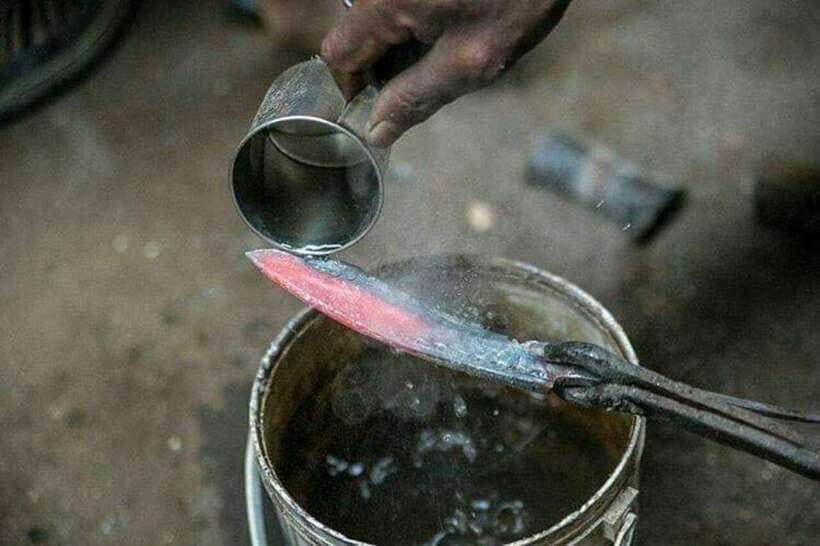
That is still meaningful. You can tell the story of where the metal began, how you helped work it, and how it became a useful object. Several people have also found the final knife notably sturdy, with one describing the steel as harder and more durable than softer versions commonly sold in markets.
A short list of alternatives around Kathmandu
- Everest Base Camp Trek – 14 Days
★ 5.0 · 1,499 reviews - Private Kathmandu Sightseeing Tour | UNESCO World Heritage sites
★ 5.0 · 756 reviews - Everest Base Camp Helicopter Tour landing at Everest View Hotel
★ 5.0 · 668 reviews - Everest Base Camp Trekking
★ 5.0 · 485 reviews
Grinding, sparks, and the safety limits
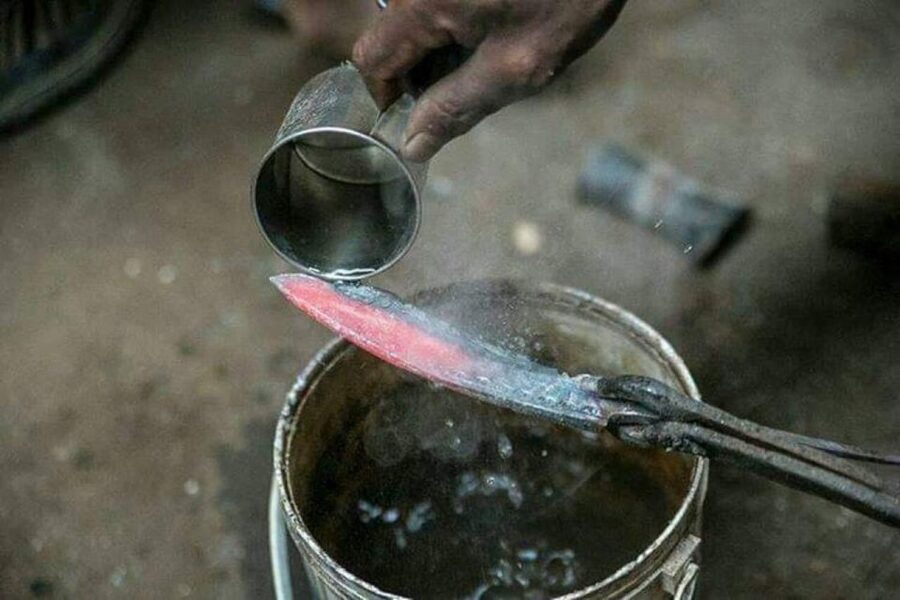
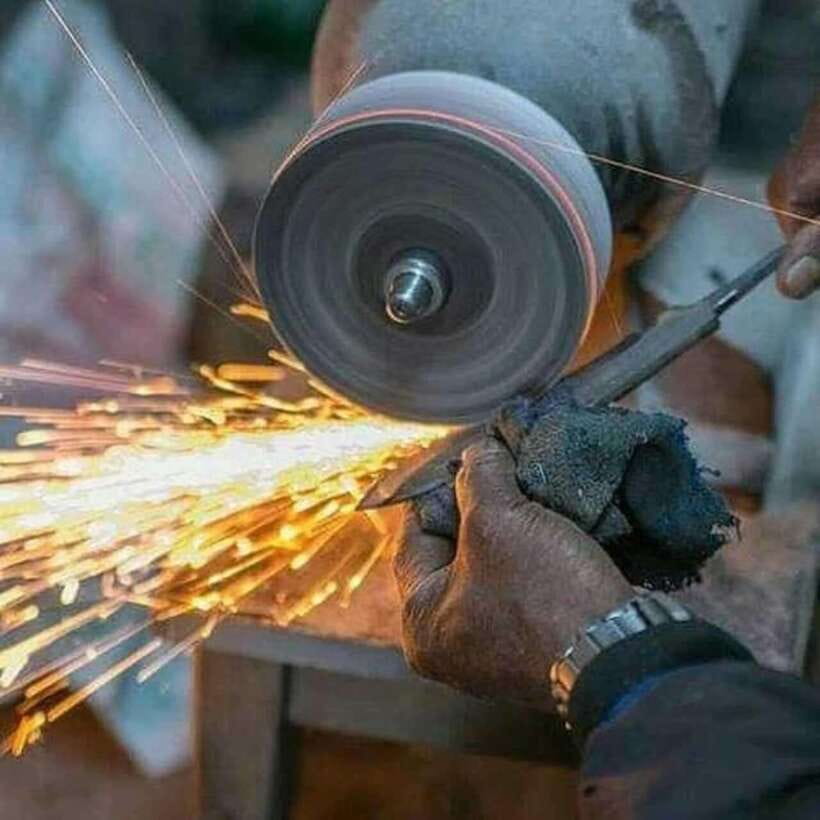
Grinding gives the blade its cleaner form and prepares the edge. You may take part in the first grinding stage, but the host handles the final blade grinding and sharpening.
This division is important. Grinding produces sparks, and you are advised to stay clear during the host’s work. Wear long pants, as required, and follow the safety instructions closely. The activity is not suitable for children under 10, and the age limit makes sense given the hot metal, tools, sharp edge, and flying sparks.
You should also understand that the workshop is not a free-for-all. Some stages are deliberately kept in the blacksmith’s hands. That may disappoint anyone hoping to sharpen a blade alone, but it is the responsible choice.
The final knife is where the process becomes satisfying. In a few hours, a rough piece of metal becomes a finished six-inch khukuri with a sharp edge and its own cover. The transformation is quick to watch, but the skill behind it comes from decades of repetition.
The handle, cover, and finished souvenir
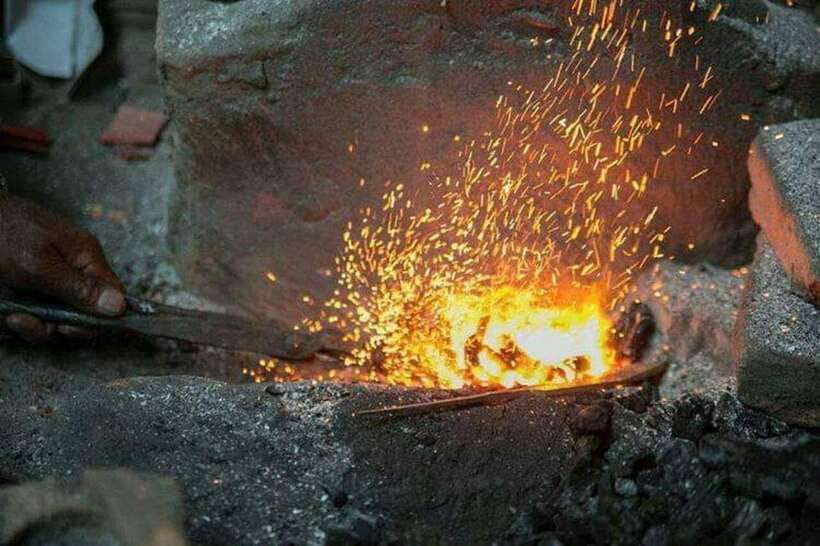
The khukuri’s handle gives the tool its grip and character. Traditional handles may use wood or buffalo horn, and the broader process includes handle work. Still, the parts specifically listed for participant involvement are hammering the iron and the first grinding, so you should not assume that you will personally complete every handle detail.
A basic knife cover is included. If you want a horn or bone cover, that can be arranged for an extra cost. Ask about that option before the workshop if the scabbard matters as much to you as the blade.
The finished knife is the main keepsake. It is not a mass-produced trinket pulled from a shelf. It carries the marks of a local craft process and comes with a direct connection to the person who made it.
You will need to think about transporting a knife home. The activity provides a cover, but your airline and destination may have rules for carrying blades. Keep it packed according to the relevant travel regulations, and do not place it loose in hand luggage.
The guide adds more than translation
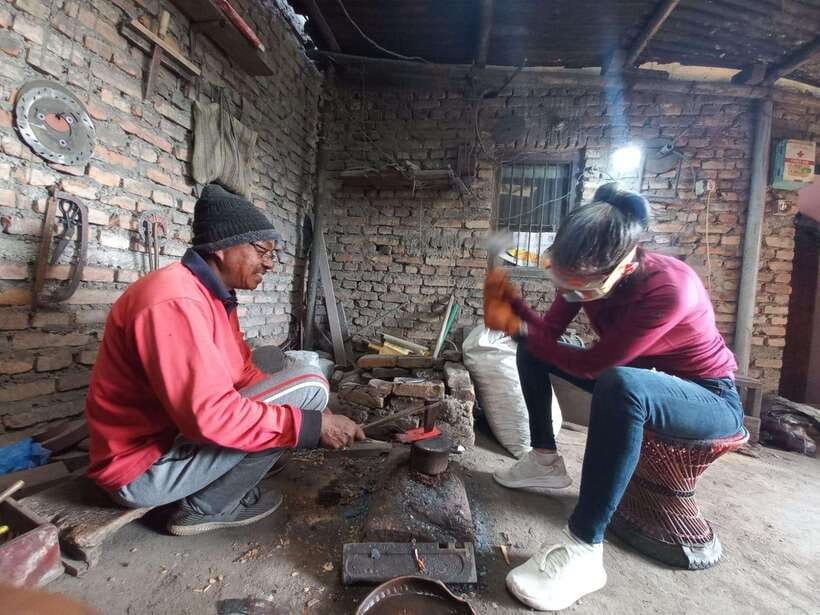
A good guide turns this from a demonstration into a conversation. The guide explains the origin and meaning of the khukuri, translates questions, and helps you understand the family and local traditions connected to the work.
Sajeena has been praised for kindness and detailed information, while Namrata has been described as warm and attentive. Swayam has also been singled out for helping make the visit a highlight of a Kathmandu trip. The names matter because the guide is not just there to point at the workshop. You have someone who can help bridge language and cultural gaps.
The strongest part of the guiding is the chance to ask questions as the work happens. You can ask why the blade curves, how the steel differs from market versions, and why certain stages are left to the master. The guide’s explanation gives context to the sounds, heat, and sparks.
One family also arranged an eagle-feeding experience on request, viewed from a hilltop. That is not part of the listed workshop, so do not count on it as a standard inclusion. It does show that extra local arrangements may be possible if you ask in advance, but confirm any added cost and timing before booking.
Is $73 a fair price?
At $73, you are paying for more than the knife itself. The fee covers four hours, hotel pickup and drop-off, tools, the basic knife cover, tea, water, snacks, instruction, translation, and access to a family-run blacksmith workshop.
You might find a cheaper khukuri in a Kathmandu market. That cheaper purchase will not include the time with a master maker, the hammering, the explanations, or the story of turning raw iron into your own finished blade.
The value depends on what you want. If your only goal is to buy a knife, $73 is probably more than necessary. If you want a cultural activity with a useful souvenir, the price is easier to justify.
The small group limit of five also improves the value. You are less likely to stand at the back of a crowd, and the guide has more room to translate and help each person. The finished knife is described as high quality and sturdy, which makes the experience feel less like a craft class producing a novelty item.
The horn or bone cover costs extra, so include that in your budget if you want a more traditional finish. The basic cover is already included.
Who will enjoy this workshop most?
I would recommend it to anyone interested in Nepalese culture, traditional tools, metalwork, or handmade souvenirs. It suits curious adults and older children who can follow safety instructions, though children under 10 cannot take part.
It is also a good choice if you have already visited temples and viewpoints and want something more personal. The workshop gives you time with a local family and a skilled maker, rather than another quick stop at a major attraction.
Families can work well here. One family was able to let older children participate at a level suited to their ability, with patient help when needed. That said, the heat, tools, and sharp metal mean parents should be realistic about supervision.
You should skip it if you dislike workshop noise, physical participation, sparks, or situations where the expert controls most of the process. It is also not the right pick if you need a fully accessible activity, since no accessibility details are provided.
Booking details that matter
The activity lasts four hours, and starting times depend on availability. Pickup and drop-off are included, with hotel-lobby collection, which keeps the schedule simple.
You can cancel up to 24 hours before the activity for a full refund. The reserve-now, pay-later option also helps if your Nepal schedule is still changing.
Wear long pants. Closed, sturdy clothing is the sensible choice around a forge, though only long pants are specifically required. The host and guide speak English and Hindi, and the group is limited to five people.
The transport receives strong marks, with 86 percent of ratings giving it a perfect score. That suggests the pickup service is not an afterthought, which matters when traffic and unfamiliar roads can turn a short transfer into a chore.
Should you book the khukuri workshop?
Book it if you want a personal Nepalese craft experience, not just a knife from a market shelf. The mix of master blacksmith, local family setting, guide support, hotel transport, and finished six-inch blade gives the four hours a clear purpose.
The strongest reasons to go are the hands-on hammering, the chance to ask questions through an English-speaking guide, and the quality of the finished knife. The main limitation is equally clear: you will not safely complete all the skilled stages yourself.
For $73, I think it is a solid choice for an adult, a couple, or a family with older children who values a story behind a souvenir. Wear long pants, stay clear of the sparks, ask about the optional horn or bone cover, and leave room in your luggage for a very Nepalese keepsake.
FAQ
Where does the khukuri workshop take place?
The workshop takes place in the Bagmati Zone of Nepal, at the blacksmith’s home and studio. Hotel-lobby pickup and drop-off are included.
How long does the experience last?
The activity lasts four hours. Starting times depend on availability.
How large is the group?
It is a small-group experience limited to five participants.
What parts of the knife-making process can I do?
You take part in hammering the iron and the first grinding stage. The host handles the more difficult and dangerous work, including the final blade grinding and sharpening.
What is included in the price?
The $73 price includes pickup and drop-off, the required tools, a knife cover, tea, water, snacks, and the finished knife.
Can I get a horn or bone cover?
Yes. A horn or bone cover can be made for an additional cost. The standard knife cover is included.
New in the Kathmandu listings
- Traditional Momo Making Class★ 5.0 · 10 reviews
- Kathmandu: Ancient City Kirtipur & Pharping Monastery Tour★ 5.0 · 2 reviews
- Kathmandu to Pokhara Premium sofa bus ticket★ 4.0 · 17 reviews
- Women Empowerment Project(Nepali cooking class & jewelry workshop★ 5.0 · 15 reviews
- Yoga Experience Day Trip with Private Transfer From Kathmandu★ 4.0 · 2 reviews
- 7-Day Langtang Valley Trek from Kathmandu★ 5.0 · 1 review
- Kathmandu 2 Nights 3 Days Chitwan Jungle Safari Tour★ 5.0 · 9 reviews
- Wildlife Adventure in Chitwan Nepal★ 4.0 · 4 reviews
Workshops, compared.
Knife (Khukuri) Making Workshop- Forge of the Gurkhas
Read our review →
Nepalese Momos or Dal Bhat Cooking Class (Cook with Delight)
Read our review →
The best Private Nepali Cooking Class in Kathmandu
Read our review →
Nepalese Kitchen in Pokhara: Momos or Dal Bhat Cooking Class
Read our review →