
REVIEW · COOKING CLASSES
Momo, Dhalbhat & Thukpa Cooking Class, Nepal
Nepal tastes better when you cook it. This three-hour class with Esther Rai brings you into the daily rhythm of a Nepali kitchen, starting at a local vegetable market and ending with a shared meal. I like the market visit, where you can meet sellers and help choose ingredients, and I like the setting near Patan Durbar Square, just a five-minute walk from the cooking location. One possible drawback is that some preparation may already be done before you arrive, so you may not handle every step from start to finish.
The class costs $25 per person, a fair price for market time, cooking instruction, cultural conversation, and a full meal. Esther began the program during the COVID-19 period to support her family, and her cooking comes from years spent in the kitchen with her mother and sister. Groups are limited to 10 people, which should keep the class personal, though the small number of published ratings means you should still confirm the menu and meeting details before booking.
In This Review
- Key points
- Starting at Nagabahal near Patan Durbar Square
- The local market: where the meal really begins
- Golden Temple and the Patan setting
- Learning momos, dal bhat, and thukpa
- Esther Rai and the family kitchen
- The cooking space and shared meal
- Is $25 a good value in Kathmandu?
- Who will enjoy this class most?
- Practical details before you book
- Should you book the Momo, Dal Bhat, and Thukpa class?
- FAQ
- Where does the cooking class begin?
- Where does the class end?
- How long does the experience last?
- What dishes can I learn to cook?
- Does the class include a market visit?
- Is Patan Durbar Square part of the experience?
- How many people can join?
- What happens after the food is cooked?
- What is the cancellation policy?
Key points
- A market visit comes first: You help buy vegetables and other ingredients while meeting local sellers.
- Three classic Nepali dishes are central: Learn to make momos, dal bhat, and thukpa, with menu changes possible by request.
- Patan gives the class a strong sense of place: The meeting point is near Golden Temple and Patan Durbar Square.
- Esther teaches from personal experience: Her cooking grew from family kitchen traditions and a wish to share Nepali food.
- You eat what you prepare: The class finishes with a complete meal rather than a few small samples.
- One small caution: Some ingredients or steps may be prepared ahead of time.
Starting at Nagabahal near Patan Durbar Square
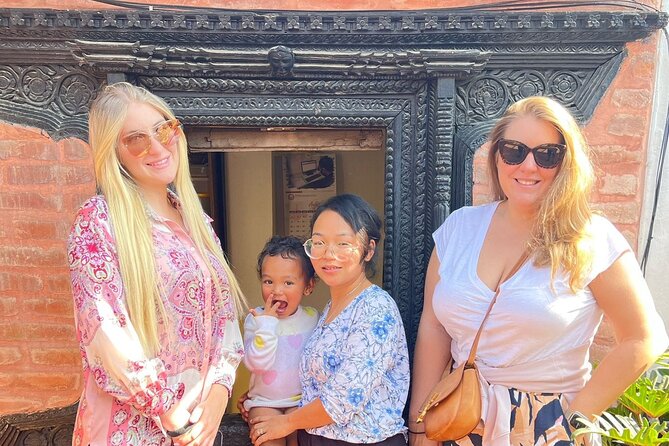
The class begins at Nagabahal, on Nyadha Galli in Lalitpur. This is a useful location for anyone who wants more than a cooking lesson in an anonymous kitchen. Patan, also called Lalitpur, has an old urban center, and the meeting point is about five minutes on foot from Patan Durbar Square.
The exact format begins with a visit to a local vegetable market. That matters because cooking here is tied to shopping, bargaining, seasonality, and the practical work of getting food onto the table. You do not simply arrive to find every ingredient measured into neat bowls. You get at least some sense of how the meal begins in an ordinary Nepali day.
The activity is confirmed at booking and uses a mobile ticket. It is near public transportation, though the supplied details do not specify the best route from Thamel or another part of Kathmandu. If you are staying outside Patan, allow extra time for the ride and for finding Nagabahal.
More Cooking Classes in Kathmandu
- Half day cooking class in Thamel kathmandu
★ 5.0 · 607 reviews - Kathmandu: Local Women-Led Nepali Cooking & Momo Class
★ 4.9 · 360 reviews - Kathmandu: Local Lead Nepali Cooking & Momo-Making Class
★ 5.0 · 212 reviews
The local market: where the meal really begins
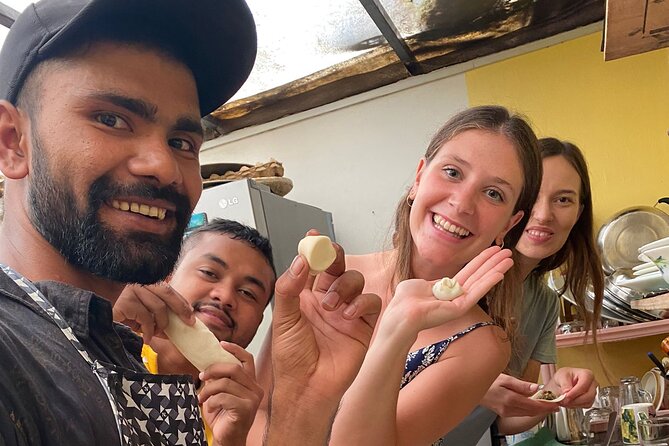
The market visit is one of the strongest parts of this class. Esther takes you to buy vegetables and other ingredients, and you can interact with local sellers. For a visitor, this is more revealing than a quick stop at a restaurant, because you see the raw materials before they become a polished dish.
You may notice how much of Nepali cooking begins with fresh produce, spices, lentils, meat, and careful preparation. The class information does not promise a fixed list of ingredients, so the market portion can reflect the chosen menu and the day’s supply. If you have a strong preference, ask Esther in advance what you will be cooking and which ingredients you will help select.
The market also gives Esther a chance to explain food in a wider setting. Her approach is not limited to recipes. The class is designed to introduce you to the Nepali kitchen and to local people, so conversation about family customs, food habits, and daily life forms part of the visit.
This portion may feel less polished than a professional food studio. That is a benefit if you want ordinary local contact, but it also means the pace may depend on the market and the group. You should come ready to walk, observe, and participate rather than expect a tightly timed demonstration.
Golden Temple and the Patan setting
The route includes Golden Temple, also known as Hiranya Varna Mahavihar, and the wider Patan area. The supplied schedule names this as a stop, but it does not say how long you spend there or whether a formal temple tour is included. Think of it as part of the cultural setting around the class, not a separate sightseeing visit with a detailed guide program.
Patan is a good match for this activity. The city’s old center brings you close to courtyards, religious buildings, and daily life, while the cooking class lets you move from seeing Nepali culture to handling its food traditions. The short walk from the meeting point to Patan Durbar Square makes it easy to pair the class with independent sightseeing before or after.
Golden Temple gives the morning an especially useful sense of place. A cooking lesson could happen anywhere, but a class close to one of Patan’s important religious sites feels connected to the neighborhood. If your schedule allows, plan to spend more time around Patan Durbar Square on your own, since the cooking class itself is only about three hours.
Do not assume that the temple stop replaces a full Patan tour. The published details do not promise an extended architectural walk, entry arrangements, or a separate lecture. The main focus remains food, with the historic surroundings adding context.
Learning momos, dal bhat, and thukpa
The core lesson covers three foods that are strongly associated with Nepal.
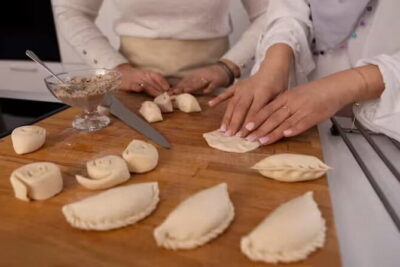
Momos are filled dumplings, and their appeal lies in the hands-on work. You can expect to learn how the filling is prepared and how the dough is shaped, filled, and folded. The exact filling is not fixed in the information provided, though one class included meat and another included chicken curry alongside dal bhat.
Dal bhat is the familiar Nepali combination of lentils and rice, often served with accompanying dishes. It is not just a restaurant order. Learning it in a home-style kitchen helps you understand how several simple elements become a complete meal. One class included chicken curry, and the food was praised as especially flavorful.
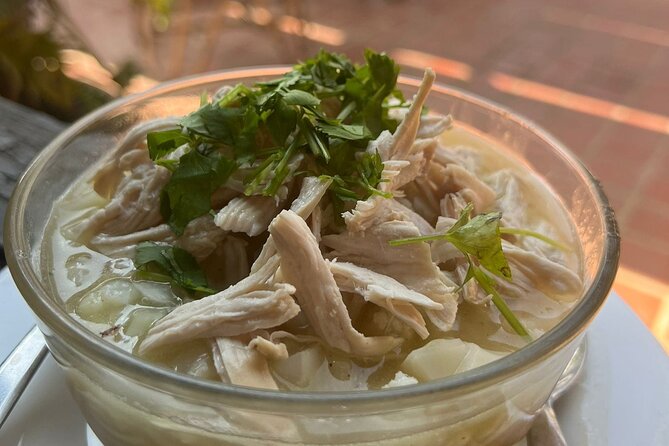
Thukpa is a noodle soup associated with Himalayan food traditions. It gives the menu a different texture and style from dal bhat and momos. The class description names thukpa as one of the main dishes, but the available comments focus more closely on momos, dal bhat, curry, and spices. If thukpa is especially important to you, confirm that it will be prepared during your session.
Esther also accepts menu requests. That flexibility is helpful if you have already tried one of the standard dishes or want to focus on a particular favorite. It also means the class may not look exactly the same for every group. Ask what is planned before you arrive, especially if you have dietary restrictions or want a fully hands-on lesson.
A completely different way to spend the day:
- Everest Base Camp Trek – 14 Days
★ 5.0 · 1,499 reviews - Private Kathmandu Sightseeing Tour | UNESCO World Heritage sites
★ 5.0 · 756 reviews - Everest Base Camp Helicopter Tour landing at Everest View Hotel
★ 5.0 · 668 reviews - Everest Base Camp Trekking
★ 5.0 · 485 reviews
Esther Rai and the family kitchen
The personality of the teacher is a major part of the value. Esther Rai says she grew up spending time in the kitchen with her mother and sister, watching and helping with the cooking. She later began the class during the COVID-19 period as a way to support her family.
That background gives the lesson a personal center. You are not only following a printed recipe. You are learning from someone who connects food with family, work, and hospitality. Esther’s stated aim is to share the whole experience of preparing food in Nepal, and the class includes conversation beyond the cooking itself.
The available feedback also identifies Amos and Esther’s collaborator as part of the teaching team. One account describes cooking with Esther and a collaborator, while another names Amos. The exact staffing may depend on the date and group size, but you can expect a friendly, informal teaching style rather than a large culinary school operation.
Food was the most praised part of the class. The dal bhat was singled out as exceptionally good, and the meal was repeatedly described as delicious. People also valued the chance to learn about Nepali customs, education, family life, and new spices while cooking.
That does not mean the class is perfect for every learner. One clear criticism was that many items had already been prepared. If you want to chop every vegetable, grind every spice, and make every component from raw ingredients, ask how much preparation will be done in advance. For many people, advance preparation keeps a three-hour class practical. For serious home cooks, it may reduce the amount of technique you take home.
The cooking space and shared meal
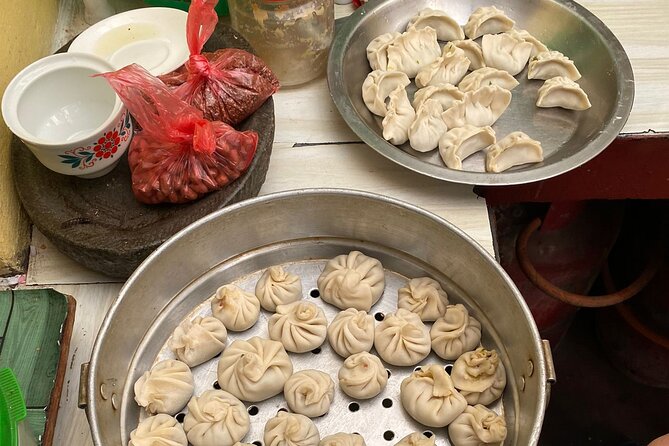
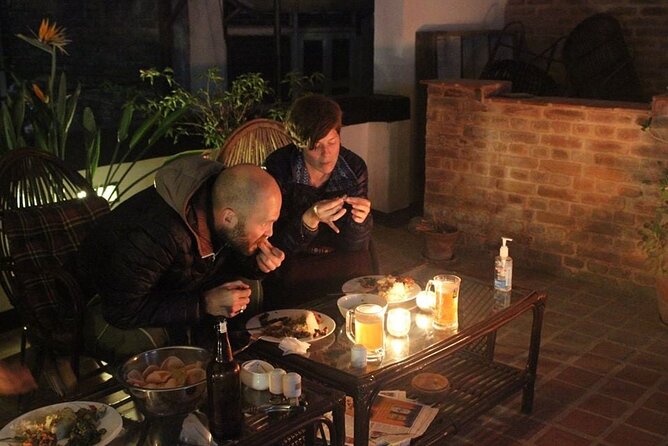
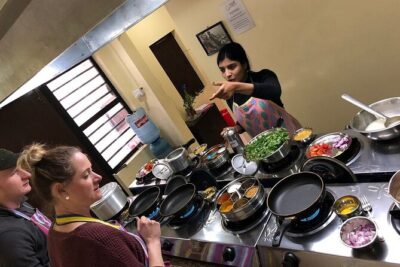
The cooking location is described as a rooftop in a home setting. That can make the class feel more personal than a commercial kitchen, and it fits Esther’s focus on welcoming people into Nepali food culture. A rooftop also adds a memorable setting, though the class requires good weather.
The weather rule is important. If poor weather causes cancellation, you are offered another date or a full refund. Because the activity takes place partly outdoors or in a rooftop setting, check the forecast before you go and keep some flexibility in your schedule.
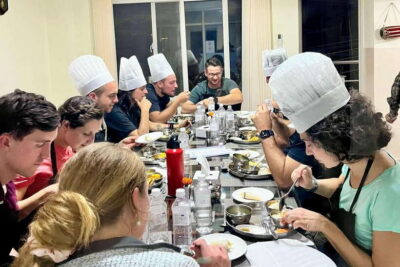
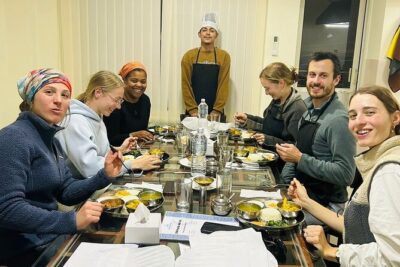
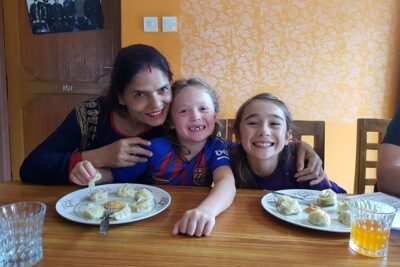
After the preparation, you eat the food you have made. This is a full payoff for the lesson. You can taste the difference between a dish explained in theory and one you have shaped, stirred, seasoned, and served yourself.
The meal also gives you time to ask questions and compare flavors. You may find new spices or combinations that are not obvious from a restaurant menu. The class is best understood as a shared home-style meal with instruction, not as a formal chef certification course.
Is $25 a good value in Kathmandu?
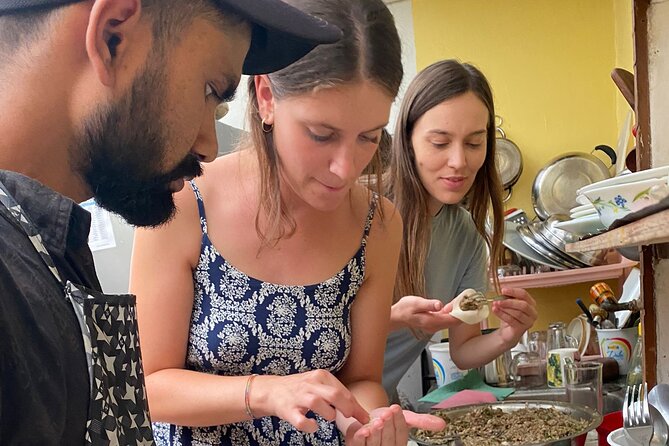
At $25 per person, the price is reasonable for a three-hour activity that includes a market visit, cooking instruction, and lunch or another complete meal. The value improves if you care about local contact and practical learning, rather than simply wanting to eat Nepali food.
A restaurant meal might cost less, especially if you choose a simple local place. But a restaurant will not take you to the market, explain the ingredients, or show you how to prepare momos and dal bhat. The class also places you near Patan’s cultural sights, which gives the morning more depth.
The price is less attractive if you mainly want a polished demonstration or a large number of dishes. The menu centers on a few familiar foods, and some preparation may be completed before the lesson. Your decision should depend on how much participation you want.
The maximum group size is 10. That is small enough to feel manageable, but it is not necessarily a private class. If you are in a full group, you may not have equal time at every task. The class is booked, on average, six days ahead, so reserve early if your Kathmandu dates are fixed.
Who will enjoy this class most?
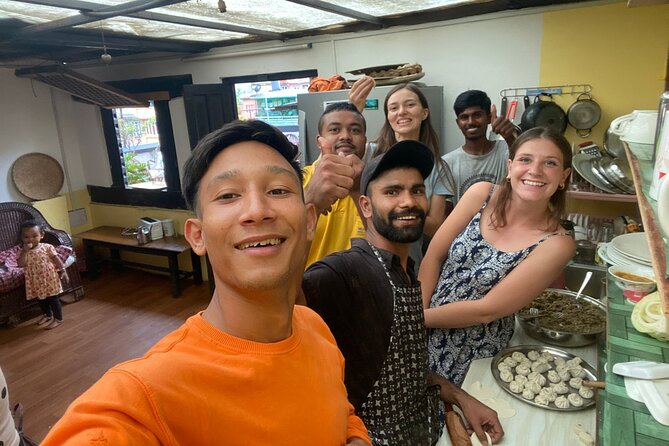
I would choose this experience if you want to connect food with place. It suits people who enjoy local markets, home cooking, informal conversation, and a meal that tells you something about the country.
It is also a good fit for first-time cooks. The available feedback describes the class as a first cooking experience for some participants, with clear explanations and a relaxed atmosphere. You do not need advanced kitchen skills to take part.
Families and couples may enjoy the shared format, provided everyone is comfortable with a small group and a three-hour session. Food lovers who have already tried momos and dal bhat in restaurants will gain a different view by learning the work behind them.
I would be more cautious if you have serious allergies, strict dietary rules, or a strong need to control every ingredient. The available information does not specify vegetarian, vegan, halal, gluten-free, or allergy procedures. Contact Esther before booking so you know whether the requested menu can be prepared safely.
Practical details before you book
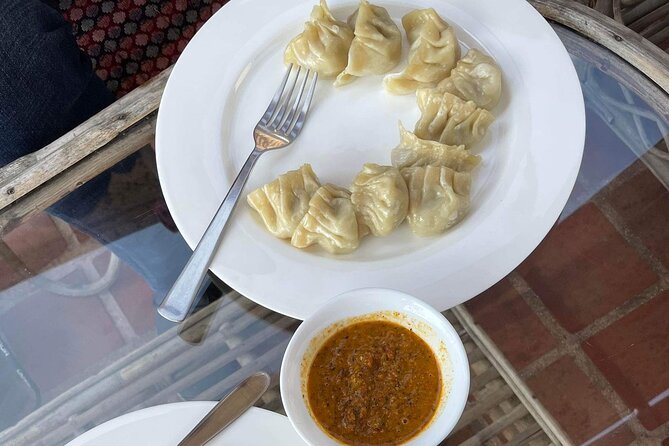
The meeting point is Nagabahal, Nyadha Galli, Lalitpur 44600, Nepal, and the class ends at the same point. It lasts about three hours and accepts a mobile ticket.
The activity is near public transportation, but the supplied details do not give a pickup service. You should plan your own route to Patan and allow time to locate the meeting point.
The class offers free cancellation with a full refund if you cancel at least 24 hours before the start time. Cancellations or changes made within 24 hours are not refunded or accepted. Cutoff times use local time in Nepal.
Because weather can affect the rooftop setting, a cancellation caused by poor weather results in either another date or a full refund. Keep your booking information handy and confirm the start time before setting out.
Should you book the Momo, Dal Bhat, and Thukpa class?
I would book it if you want a friendly, food-centered morning away from the usual Thamel routine. The market visit, Patan location, family connection, and homemade meal give the class more substance than a simple recipe demonstration. The food itself receives the strongest praise, especially the dal bhat, and the chance to learn new spices is a useful bonus.
I would ask two questions before paying: Which dishes will my group prepare, and how much of the work will be done in advance? If the answers suit you, $25 is a solid price for three hours of cooking, conversation, market time, and a complete Nepali meal.
FAQ
Where does the cooking class begin?
It begins at Nagabahal, Nyadha Galli, Lalitpur 44600, Nepal.
Where does the class end?
The activity ends back at the meeting point in Nagabahal.
How long does the experience last?
The class lasts approximately three hours.
What dishes can I learn to cook?
The main dishes are momos, dal bhat, and thukpa. Menu changes can be arranged by request, and one session included chicken curry with dal bhat.
Does the class include a market visit?
Yes. You visit a local vegetable market, interact with sellers, and buy ingredients before cooking.
Is Patan Durbar Square part of the experience?
The cooking location is about a five-minute walk from Patan Durbar Square, and Patan is included in the experience. Golden Temple, also called Hiranya Varna Mahavihar, is listed as a stop.
How many people can join?
The activity accepts a maximum of 10 people.
What happens after the food is cooked?
You eat the food you prepared during the class.
What is the cancellation policy?
You receive a full refund if you cancel at least 24 hours before the start time. Cancellations or changes made within 24 hours are not accepted and are not refunded. If poor weather causes cancellation, you are offered another date or a full refund.
New in the Kathmandu listings
- Traditional Momo Making Class★ 5.0 · 10 reviews
- Kathmandu: Ancient City Kirtipur & Pharping Monastery Tour★ 5.0 · 2 reviews
- Kathmandu to Pokhara Premium sofa bus ticket★ 4.0 · 17 reviews
- Women Empowerment Project(Nepali cooking class & jewelry workshop★ 5.0 · 15 reviews
- 7-Day Langtang Valley Trek from Kathmandu★ 5.0 · 1 review
- Kathmandu 2 Nights 3 Days Chitwan Jungle Safari Tour★ 5.0 · 9 reviews
- Yoga Experience Day Trip with Private Transfer From Kathmandu★ 4.0 · 2 reviews
- Wildlife Adventure in Chitwan Nepal★ 4.0 · 4 reviews
Cooking Classes, compared.
Nepalese Momos or Dal Bhat Cooking Class (Cook with Delight)
Read our review →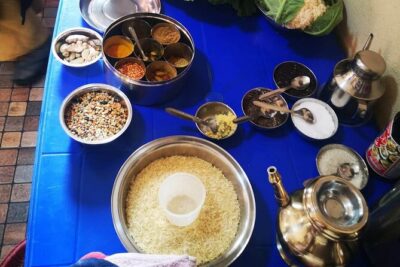
The best Private Nepali Cooking Class in Kathmandu
Read our review →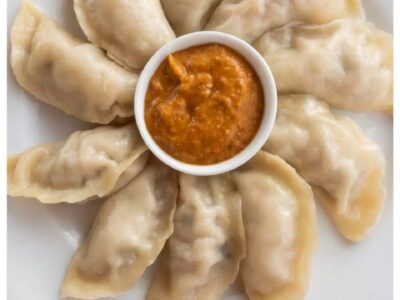
Nepalese Kitchen in Pokhara: Momos or Dal Bhat Cooking Class
Read our review →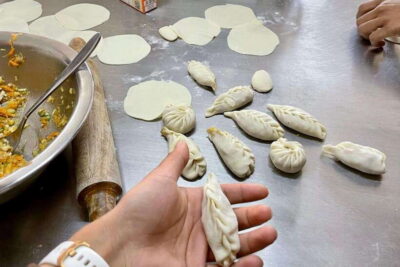
Browse the lists this tour appears in