
REVIEW · MARDI HIMAL TREKS
Pokhara: 4 Day Mardi Himal Base Camp Trek
Four days can reach the high Himalaya. This private Mardi Himal trek links Pokhara with rhododendron forests, mountain villages, alpine meadows, and a 4,500-meter base camp. I like the small private-group format and the clear route from Pokhara to Forest Camp, High Camp, Base Camp, and back. I also like that permits, transport, a licensed guide, and basic lodging are bundled into the $240 price.
The main caution is the pace. You climb high in a short time, then make the base-camp climb and return on Day 3. The final approach includes 200 steps, and the altitude can make even a short stretch feel serious. Good fitness and comfort with long uphill walks matter here.
In This Review
- Key points to know before booking
- Why this four-day Mardi Himal route works
- Day 1: Pokhara to Kande and Forest Camp
- Day 2: Forest Camp to High Camp
- Day 3: High Camp to Mardi Himal Base Camp and Low Camp
- Day 4: Low Camp to Siding and back to Pokhara
- What the $240 price really covers
- The guide and private-group advantage
- What to bring and what to leave behind
- Who should book this Mardi Himal trek?
- Should you book it?
- FAQ
- How long is the Mardi Himal Base Camp trek?
- Where does the trek begin?
- Where does the trek finish?
- What is the highest point of the trek?
- Are permits included?
- Is accommodation included?
- Are meals and drinks included?
- Is the trek private?
- What documents should I bring?
- Are large bags or drones allowed?
Key points to know before booking
- The 4,500-meter summit point: Mardi Himal Base Camp is the trek’s high point, reached after a steep approach and 200 steps.
- A compact route from Pokhara: You leave by vehicle for Kande and return from Siding, so this trip fits neatly into four days.
- Forests before high mountain views: The trail passes through oak and rhododendron woods, villages, and terraced fields before reaching alpine country.
- Private English-speaking guidance: A licensed guide stays with your group and helps with route finding and basic first aid needs.
- Simple teahouse lodging: Basic lodges or guesthouses are included, but food and drinks cost extra, at about NPR 2,500 per person each day.
- Guide Krishna gets a strong personal endorsement: Tobias from Germany specifically praised Krishna and described four days on the trek as excellent.
Why this four-day Mardi Himal route works
Mardi Himal is a good choice if you want a short Himalayan trek without committing to a much longer circuit. The route begins near Pokhara, Nepal’s well-known lakeside base for mountain trips, and moves quickly from low foothills to high ridges.
That short length is both the appeal and the challenge. You spend only four days on the trail, but the route does not ease you gently toward the high point. Day 2 takes you from Forest Camp to High Camp, and Day 3 sends you up to Mardi Himal Base Camp before bringing you back down to Low Camp.
I like the route’s variety. You begin among villages and cultivated terraces, walk under trees, and finish among open mountain views. The scenery changes often enough that the walking does not feel like one long repeated climb.
The trip is offered as a private group with an English-speaking guide. That matters on a compact itinerary. You are not trying to match the speed of a large mixed group, and you have one guide responsible for the route and day-to-day support.
More Mardi Himal treks:
- Pokhara: 4-Day Mardi Himal Trek
★ 4.9 · 59 reviews - Private Mardi Himal Trek
★ 5.0 · 42 reviews - Mardi Himal Trek
★ 5.0 · 41 reviews
Day 1: Pokhara to Kande and Forest Camp
The first morning starts with breakfast and hotel pickup in Pokhara. Transportation takes you to Kande, where the walking begins.
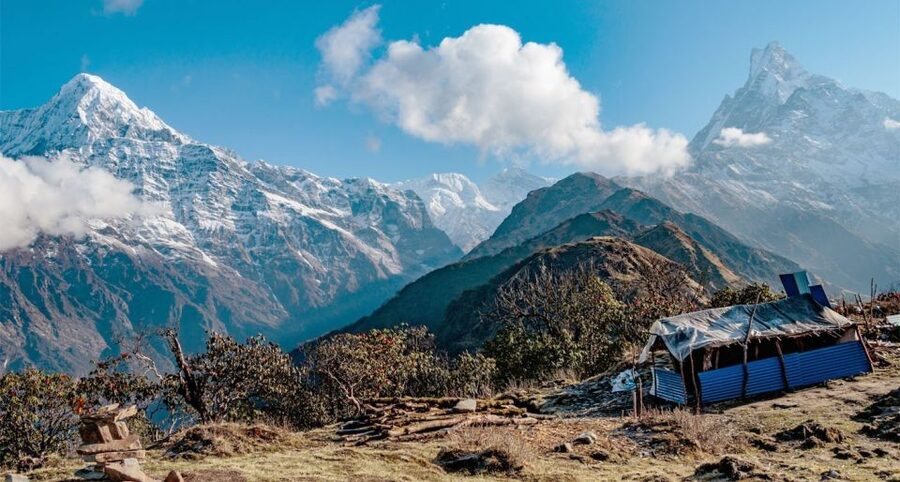
This opening section introduces the lower side of the route. You pass through lush forests, local villages, and terraced fields, with views toward the Annapurna range. It is a useful first day because the trail gives you a gradual change from Pokhara’s roads and hotels to the quieter rhythm of the mountains.
Forest Camp is your first overnight stop. The name tells you what to expect: a wooded setting rather than a bare high-altitude camp. Your accommodation is a basic teahouse lodge or guesthouse, included in the tour price.
Do not expect hotel comforts here. The supplied details describe simple lodging, not private luxury rooms or extensive facilities. That is normal for this kind of route, but you should be ready for a practical overnight stay where the mountain setting matters more than polished amenities.
Food and drinks are not included. Budget about NPR 2,500 per person per day for meals and beverages, according to the supplied estimate. Since this cost is separate, carry enough local currency or confirm payment arrangements with the operator before leaving Pokhara.
Day 2: Forest Camp to High Camp
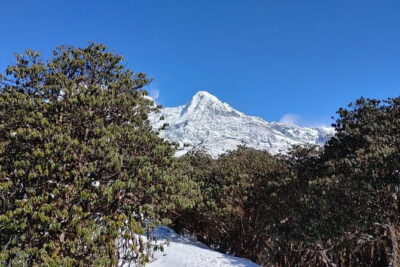
Day 2 takes you higher through rhododendron and oak forest. These trees give the route much of its character, with a shaded trail before the setting opens toward the upper ridges.
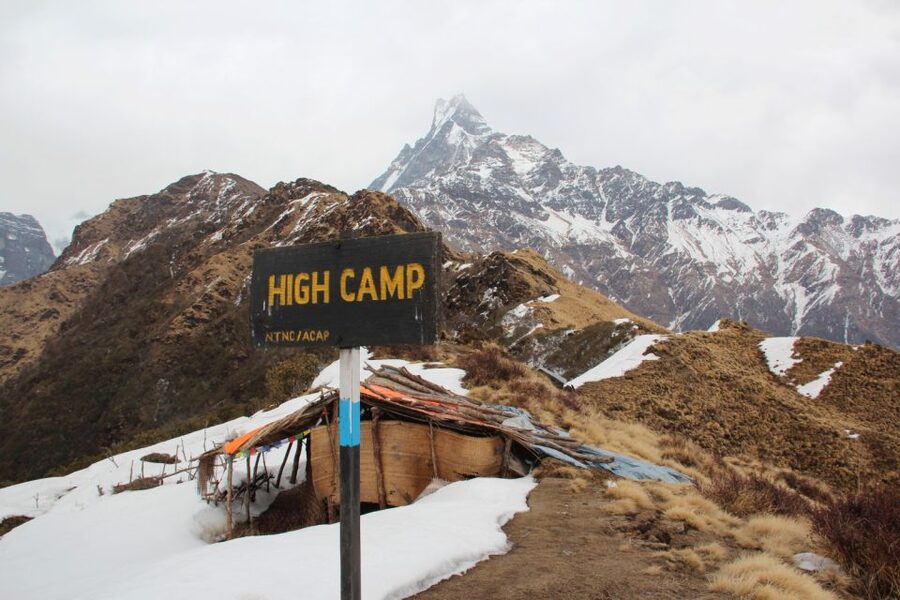
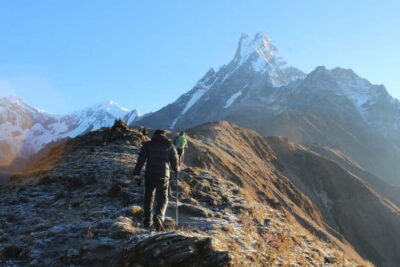
You may catch views of Mardi Himal and Machhapuchhre, also known as Fishtail Peak, as you climb. The mountain glimpses are part of the reward, but the walking remains the main event. This is an uphill day, and the altitude begins to matter more as you approach High Camp.
High Camp sits among alpine meadows, a noticeable change from the wooded slopes below. The open setting gives you a stronger sense of the surrounding peaks and prepares you for the next morning’s early mountain outing, although the exact departure time is not provided.
This is the day when pacing becomes important. You do not need to race to High Camp. A private guide can help you keep a steady rhythm, but you still need to speak up if you are struggling. The itinerary is fixed at four days, so conserving energy here helps on Day 3.
Again, lodging is in a basic teahouse or guesthouse. The price includes the room, while meals and drinks remain extra. The combination is straightforward: the tour handles the main logistics, and you pay for what you eat along the way.
Day 3: High Camp to Mardi Himal Base Camp and Low Camp
This is the central day of the trek. From High Camp, you walk to Mardi Himal Base Camp at 4,500 meters, then return to Low Camp for the night.
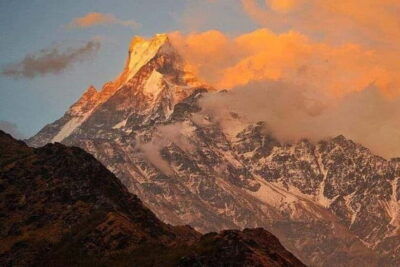
The base-camp section offers views toward Mardi Himal, Annapurna South, and Machhapuchhre. The position among high peaks is the reason to choose this route, and the mountain panorama is at its best during this part of the trip.
The practical warning is clear: the final route includes 200 steps to reach the top of Mardi Himal Base Camp. That detail should shape your expectations. Even if the total distance does not sound intimidating, the combination of steps, uphill walking, and altitude can make the approach demanding.
You should not treat the base camp as a casual viewpoint reached by a short stroll. At 4,500 meters, your body may respond differently than it does at lower elevations. The supplied information does not promise acclimatization days, so this four-day plan suits people who are already comfortable with strenuous mountain walking more than complete beginners.
After spending time at the base camp, you return to Low Camp. This out-and-back section makes the day particularly full. You gain height in the morning and then lose much of it later, so a sensible pace is more valuable than trying to arrive first.
The night at Low Camp breaks up the descent and keeps the return to Pokhara manageable. It also means you are not expected to go from Base Camp all the way to the road in one push.
More walking in the hills of Nepal:
- Everest Base Camp Trek – 14 Days
★ 5.0 · 1,499 reviews - Everest Base Camp Trekking
★ 5.0 · 485 reviews - Nagarkot Sunrise View and Day Hiking from Kathmandu
★ 5.0 · 471 reviews - Annapurna Circuit Trek with Tilicho Lake
★ 5.0 · 368 reviews
Day 4: Low Camp to Siding and back to Pokhara
The final walking day descends from Low Camp through forests and villages to Siding. You get a last look at the mountain panorama while moving back toward lower ground.
Siding is the end of the trekking section. From there, transportation takes you back to Pokhara, followed by hotel drop-off. This return arrangement is useful because you do not need to arrange a separate vehicle after the trek.
The descent has its own demands. Downhill walking can be hard on knees, especially after the long Day 3 outing. Trekking poles are not listed among the included equipment, so bring your own if you normally use them. That is practical advice rather than a promise about trail conditions.
Once back at your hotel, the activity ends. You have time to rest and think back over the route, from Kande’s fields to the high point above Low Camp.
What the $240 price really covers
At $240 per person, the package offers solid convenience if you want the main arrangements handled together. Hotel pickup and drop-off, transport to and from the trail, the Annapurna Conservation Area Permit, and the Trekkers’ Information Management System card are included.
The price also covers basic teahouse or guesthouse accommodation and a licensed, experienced trekking guide. A basic first aid kit is included as well. These details reduce the number of separate tasks you need to organize before setting out from Pokhara.
The value is strongest for someone who wants a private guided trek rather than a self-planned walk. Permits and transport can be a nuisance to arrange independently, and having a guide is useful on a route that rises quickly and includes a high-altitude base camp.
The price is not all-inclusive. Food and drinks cost extra, with an estimated budget of NPR 2,500 per person per day. Gratitude for the guide is optional, so there is no required tip listed, though you may choose to thank good service at the end.
You also need to bring the right personal items. A passport-sized photo and passport or ID card are specifically required. Drones are not allowed, and large bags or luggage are not permitted on the trek.
That last rule is important. Pack light and ask the provider how your larger luggage will be handled before departure. The information confirms that large bags cannot go on the trek, but it does not specify a luggage-storage arrangement.
The guide and private-group advantage
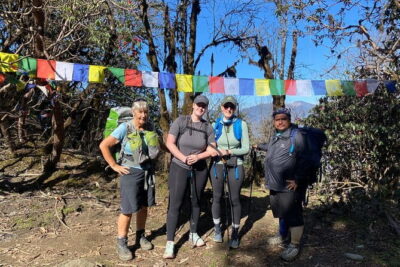
The tour includes an English-speaking, licensed guide who knows the route and assists throughout the trek. For a four-day schedule, that support is more than a pleasant extra. It can help you stay on the planned route, judge your pace, and manage the transitions between vehicle travel and hiking.
Guide Krishna receives especially strong praise from Tobias of Germany, who described his four days on the Mardi Himal trek as excellent and recommended Krishna for trekking in the Annapurna area. If Krishna is available for your departure, requesting him may be worthwhile.
The group type is private. The supplied information does not state the maximum number of people, so you should ask the operator for the exact group size before booking. Private does not always mean one guest and one guide, but it does mean you are not placed into a general shared group.
That setup suits couples, friends, and families with similar hiking abilities. It is less useful if one person wants to move quickly while another needs frequent rests. The itinerary still has fixed stages, and everyone needs to handle the high point on Day 3.
What to bring and what to leave behind
The required documents are simple: a passport-sized photo and a passport or ID card. You should also pack light because luggage and large bags are not allowed on the trekking route.
The supplied information does not provide a full equipment list, so I would confirm clothing and gear requirements with Worldwide Tourism Inc before departure. At minimum, think in terms of practical hiking clothing, footwear suitable for uphill and downhill walking, and protection for changing conditions. Do not assume the operator supplies personal trekking gear.
Carry money for food and drinks. The estimate is NPR 2,500 per person per day, and those costs are outside the $240 package.
Drones are prohibited, so leave yours at home. You can still bring a normal camera or phone if you wish, but the package does not promise charging facilities, connectivity, or equipment storage.
Who should book this Mardi Himal trek?
I would recommend this trek to someone who wants a short, guided mountain route from Pokhara and is comfortable with demanding uphill walking. The strongest match is a reasonably fit hiker who values scenery, simple lodging, and a private itinerary more than comfort or a slow schedule.
The trip also suits people who want logistics simplified. Pickup, transport, permits, lodging, guide service, and a first aid kit are bundled, which leaves you to focus on walking and food costs.
I would be cautious if you have limited mobility, are pregnant, or dislike steep climbs. The activity is specifically not suitable for pregnant women or people with mobility impairments. The 4,500-meter altitude and 200-step finish make that restriction understandable.
I would also think twice if you want a relaxed holiday with plenty of spare time. Four days is efficient, but Day 3 is the demanding centerpiece, and there is no extra acclimatization day listed.
The cancellation policy offers useful flexibility: you can cancel up to 24 hours ahead for a full refund. You can also reserve now and pay later, which helps if your Pokhara plans are not fully settled.
Should you book it?
Book this Mardi Himal trek if you want a compact, private route with impressive mountain viewpoints and the main logistics arranged for you. The $240 cost is reasonable for the included permits, transfers, guide, and basic accommodation, provided you budget separately for meals and drinks.
Do not book it simply because the route lasts four days. The schedule reaches 4,500 meters quickly, and the base-camp approach includes 200 steps. Ask about the exact start time, group size, luggage storage, and available guide before paying.
If you are fit, pack light, and accept basic teahouse lodging, this is a focused way to reach Mardi Himal from Pokhara. Guide Krishna’s strong personal recommendation adds confidence, and the private format gives the trip a more direct, less crowded feel.
FAQ
How long is the Mardi Himal Base Camp trek?
The trek lasts four days.
Where does the trek begin?
The walking begins at Kande, reached by vehicle from Pokhara after hotel pickup and breakfast.
Where does the trek finish?
The walking ends at Siding. From Siding, transportation returns you to Pokhara and your hotel.
What is the highest point of the trek?
Mardi Himal Base Camp is reached at 4,500 meters.
Are permits included?
Yes. The package includes the Annapurna Conservation Area Permit and the Trekkers’ Information Management System card.
Is accommodation included?
Yes. Basic teahouse lodges or guesthouses along the trekking route are included.
Are meals and drinks included?
No. Food and drinks cost extra. The estimated cost is about NPR 2,500 per person per day.
Is the trek private?
Yes. The group type is private, with an English-speaking live guide.
What documents should I bring?
Bring a passport-sized photo and a passport or ID card.
Are large bags or drones allowed?
No. Drones and luggage or large bags are not allowed on the trek.
New in the Nepal listings
- Traditional Momo Making Class★ 5.0 · 10 reviews
- Kathmandu: Ancient City Kirtipur & Pharping Monastery Tour★ 5.0 · 2 reviews
- Pokhara: Pokhara Highlights Tour by Bus★ 3.6 · 10 reviews
- One Day Tour inside Chitwan National Park★ 5.0 · 2 reviews
- Day Walk(8-10h.) inside Chitwan National Park.★ 5.0 · 1 review
- Private Jeep Safari (8-10 hrs.)inside Chitwan National Park.★ 5.0 · 3 reviews
- Jungle Towernight Stay: 4-Day Tour in Chitwan National Park★ 5.0 · 4 reviews
- Night Stay in Chitwan National Park, 2 Nights 3 Days Package★ 5.0 · 1 review
Mardi Himal Treks, compared.

Browse the lists this tour appears in