REVIEW · WORKSHOPS
Thangka Painting Workshop
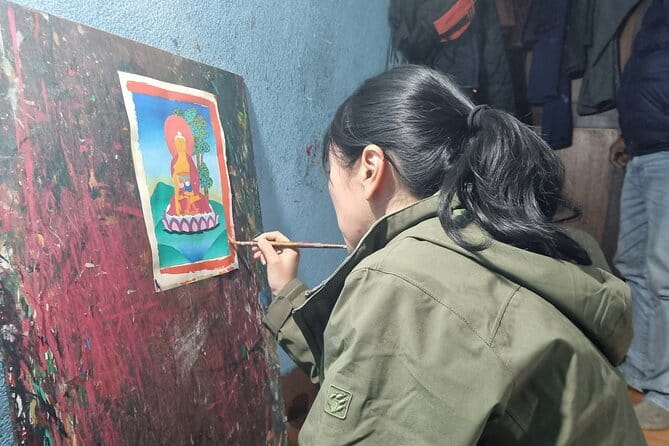
Slow art makes a lasting souvenir. This four to five hour thangka workshop takes you into an active artist studio, where you learn by working beside artists with three decades of experience. I like the chance to watch the full process and ask questions instead of guessing whether a painting in a shop is handmade or machine-printed. I also like choosing one design from three options and arranging a pickup location and time that suit your plans.
The main consideration is time. The standard activity is more than a quick coloring class, and one design may take longer if you want careful detail. Painters should allow extra time, while beginners may find the guided pace easier. Snacks are not included, so eat beforehand or bring something with you.
In This Review
- Key points to know before booking
- Why making a thangka beats buying a souvenir
- Arriving at the Kathmandu studio
- Choosing one of the three designs
- Learning from artists with three decades of experience
- What the four to five hours feel like
- Is $72 a fair price?
- Who will enjoy this workshop most?
- Practical tips for a better afternoon
- Should you book the Kathmandu thangka workshop?
- FAQ
- How much does the Thangka Painting Workshop cost?
- How long does the workshop last?
- What time does the workshop start?
- Is pickup available?
- What do I make during the class?
- Can I cancel for a full refund?
Key points to know before booking
- You paint beside working artists: The workshop is held in an artist studio with master painters and apprentices, not simply in a tourist classroom.
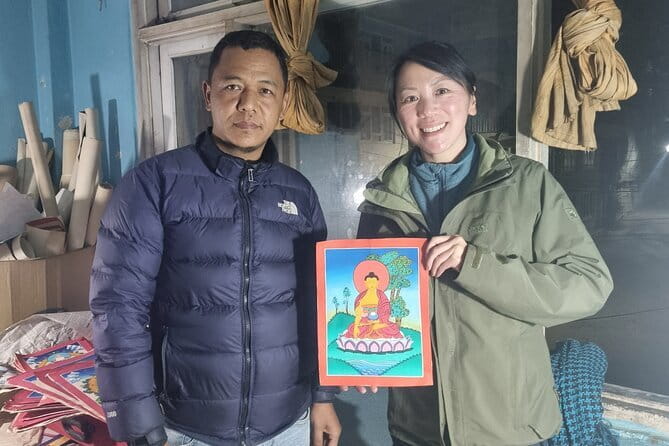
- You take home your own work: Your finished souvenir is included in the experience, giving you a personal alternative to buying a painting in a shop.
- Three designs are available: You choose one design, which gives the session a personal starting point without requiring you to invent a composition.
- The instruction is personal: An English-speaking guide helps throughout, and the artist can sit with you, correct mistakes, and adjust the help to your pace.
- The timing is flexible: Pickup location and timing can be chosen, although the stated start time is 12:45 pm.
- It is a private activity: Only your own group participates, which should make questions and individual instruction easier.
Why making a thangka beats buying a souvenir
Kathmandu offers plenty of opportunities to buy art, but a finished painting on a shop wall tells you little about how it was made. You may not know if it was painted by hand, printed, or finished with only limited craftwork. This workshop addresses that uncertainty by putting the making process in front of you.
You see artists and apprentices working in the studio, then try the process yourself. Even if your final work is not museum quality, you will understand far more about the patience and control involved in a traditional thangka. That knowledge changes the way you look at similar paintings for the rest of your time in Nepal.
The souvenir also has a story attached to it. Instead of carrying home an object chosen in a hurry, you carry the memory of sitting with an artist, asking questions, and fixing your own mistakes. For many people, that personal connection is worth more than a perfectly finished item bought from a shelf.
There is also an honest limit here. The experience described is primarily about painting and coloring a selected design. If you want to create every fine detail from the beginning, five hours may not be enough. One painter specifically noted that someone with more painting experience should allow more than two hours for detailed work, which is a useful warning for anyone who wants a highly finished result.
More hands-on classes in Kathmandu:
- Half day cooking class in Thamel kathmandu
★ 5.0 · 607 reviews - Kathmandu: Local Women-Led Nepali Cooking & Momo Class
★ 4.9 · 360 reviews - Kathmandu: Local Lead Nepali Cooking & Momo-Making Class
★ 5.0 · 212 reviews
Arriving at the Kathmandu studio
Pickup is offered, and you can choose the pickup location. The activity is also near public transportation, giving you a second way to reach it if you prefer to make your own way there. The vehicle provided is air-conditioned, and all fees and taxes are included in the $72 price.
The scheduled start time is 12:45 pm. Since the activity lasts about four to five hours, you should expect much of your afternoon to be occupied. This timing can work well after a morning of sightseeing, but it leaves less room for a late afternoon plan.
Because this is a private activity, only your group takes part. That matters in a hands-on class. You do not have to compete for the artist’s attention with a large room of strangers, and you can ask basic questions without feeling rushed.
The exact pickup arrangements are flexible, but you should confirm them carefully when booking. The supplied information does not name a specific studio address, so your meeting details matter. Plan to be ready before 12:45 pm rather than treating the start time as a loose suggestion.
Choosing one of the three designs
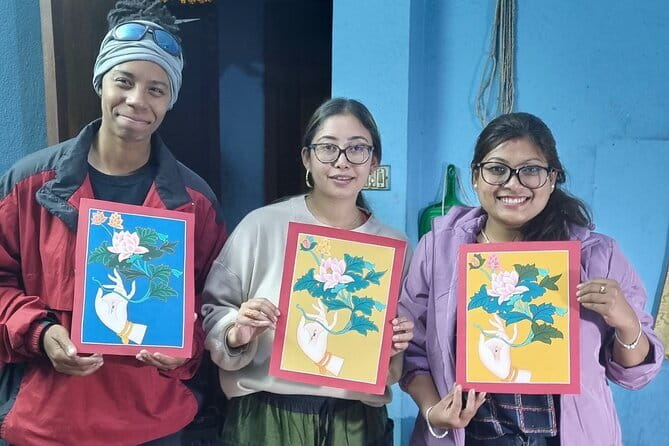
You choose one design from three options. That is a helpful middle ground. You get a personal choice, but you do not have to face a blank page or select from an overwhelming catalog.
The design choice also affects how ambitious your session will be. The information does not identify the three designs or explain their relative difficulty, so ask the guide which one is best for your available time and painting experience. If you are new to painting, the simplest option may leave you more time to practice clean color application. If you already paint, you may prefer a design with more detail.
This is one of the best moments to ask questions. Find out how much of the design will already be prepared and how much you will complete yourself. The available description says you learn to paint a traditional thangka, while one detailed account describes the session as mainly coloring. That difference is important: you should expect guided painting rather than a full professional production from an empty canvas.
Learning from artists with three decades of experience
The workshop is led by artists described as having about 30 years of experience. You also see master artists and apprentices working in the same setting. That gives the class a useful balance between instruction and observation.
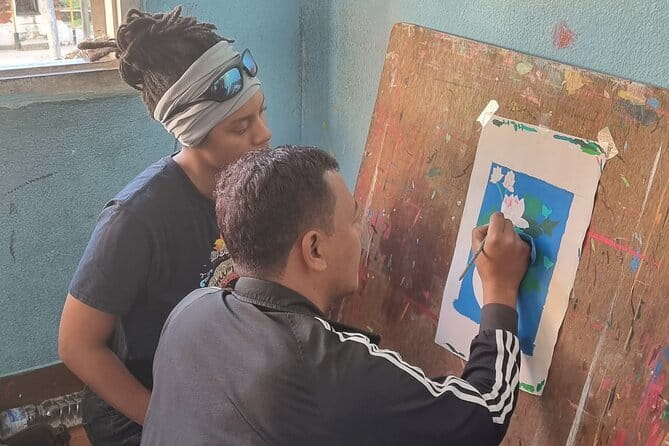
The strongest part of the activity is the one-to-one help. The artist assisting you is described as patient and willing to sit with you throughout the process. If you make an error, the artist helps correct it rather than letting a small mistake ruin the piece.
That patience makes this suitable for beginners. You do not need to arrive as a skilled painter. You can ask about the art form, clear up confusion, and work through the steps with support. An English-speaking guide is available throughout, which should help with both practical instructions and general questions.
Aayam is also named in connection with the personal support provided during the experience. The important point for you is that assistance is not limited to a short introduction. The format is designed around continued help while you work.
Still, you should keep your expectations realistic. The artists can guide and correct you, but they cannot turn a few hours into years of training. Your piece may look more like a meaningful handmade souvenir than a professional thangka. That is not a flaw, provided you book the workshop for the process and not only for the final appearance.
A short list of alternatives around Kathmandu
- Everest Base Camp Trek – 14 Days
★ 5.0 · 1,499 reviews - Private Kathmandu Sightseeing Tour | UNESCO World Heritage sites
★ 5.0 · 756 reviews - Everest Base Camp Helicopter Tour landing at Everest View Hotel
★ 5.0 · 668 reviews - Everest Base Camp Trekking
★ 5.0 · 485 reviews
What the four to five hours feel like
The session begins with the practical setup: reaching the workshop, meeting the artist and guide, and selecting one of the three designs. The exact sequence is not specified, so you should expect the guide to explain the design and the painting process at the start.
From there, the main block of time is spent painting. You work on the chosen design while the artist offers instruction and helps you correct mistakes. You also have a chance to watch the other artists and apprentices working nearby, which adds useful context that a short craft demonstration would miss.
The activity is not described as a rushed make-and-take class. Four to five hours gives you time to settle into the work and ask questions as they arise. It also explains why the price is higher than a simple souvenir-painting activity.
The pace may differ from person to person. A beginner may spend much of the time following instructions and building confidence. An experienced painter may move quickly through basic coloring and want extra time for detail. If you care about a polished finish, tell the guide at the start. The workshop can be flexible, but the total time is still limited.
At the end, you take home the souvenir you made. The information does not specify whether additional drying, packaging, or shipping arrangements are available, so ask about the condition of the painting before you leave. That is especially sensible if you have a long journey ahead.
Is $72 a fair price?
At $72 per person, this is not the cheapest creative activity in Kathmandu. The value comes from the combination of private instruction, transportation, an English-speaking guide, access to a working studio, and the finished piece you take home.
The price also includes the air-conditioned vehicle and all fees and taxes. Snacks are not included, so you should budget for food separately. Since the workshop begins at 12:45 pm and runs through much of the afternoon, eating before pickup is the simplest plan.
I see the best value for someone who wants more than a purchased object. You are paying for several hours of instruction and contact with experienced artists, not just for materials. The private format makes the cost easier to justify if two or more people in your group want personal help.
The value is weaker if you only want a quick introduction or a guaranteed professional-looking painting. The session may feel long if you are not interested in painting, and the final piece will reflect your own skill and the time available. Anyone hoping to complete intricate details should ask how much can realistically be finished in four to five hours.
Booking demand is another practical point. This activity is booked, on average, 115 days ahead. That does not guarantee it will sell out on your dates, but it suggests that advance planning is wise, especially if you need a particular pickup time.
Who will enjoy this workshop most?
I would recommend it most strongly to people who enjoy making things slowly. It suits couples, families with older children, friends, and solo visitors who would rather spend an afternoon learning than adding another monument or market to the schedule.
It is also a good choice if you want a personal Kathmandu souvenir but do not trust yourself to judge the quality of a painting in a random shop. You see the work being made, meet the people teaching you, and leave with something you helped create.
The private setting should appeal to anyone who dislikes large group classes. You can ask basic questions, request correction, and work at your own speed without an audience beyond your own group.
The activity requires a moderate level of physical fitness. No detailed physical demands are provided, so you should consider whether sitting and painting for several hours will be comfortable for you. The workshop is not a good match if you want a short, highly active outing or if you have no interest in concentrating on a small painting for an extended period.
Practical tips for a better afternoon
- Eat before pickup: Snacks are not included, and the activity can last until late afternoon or early evening.
- Ask about design difficulty: The three choices are not described in detail, so ask which one fits your skill and available time.
- Explain your priorities: Tell the artist if you care most about learning, speed, or fine detail.
- Allow the full afternoon: The session is listed at about four to five hours, not a brief stop.
- Confirm pickup details: You can choose a pickup location, but the exact arrangements should be settled before the 12:45 pm start.
- Protect the finished piece: Ask how your painting will be handled after completion if you still have transport or touring ahead.
Free cancellation is available if you cancel at least 24 hours before the local start time. Cancellations or changes made inside that window are not accepted for a refund, so keep the cutoff in mind when finalizing your Kathmandu plans.
Should you book the Kathmandu thangka workshop?
Book it if you want a quiet, hands-on afternoon, personal instruction, and a souvenir that carries your own effort. The patient artist support, private format, flexible pickup, and chance to observe master artists make this more meaningful than buying a painting without knowing how it was produced.
Skip it if you want a fast activity, dislike detailed coloring, or expect to complete a professional-level thangka in one sitting. For serious painters, the key question is time: five hours may cover the main coloring but not every fine detail.
At $72, I consider it a fair choice for someone who values instruction and an authentic making process. Choose your design carefully, arrive ready to focus, and treat the finished painting as a record of your afternoon in Kathmandu rather than a test of artistic perfection.
FAQ
How much does the Thangka Painting Workshop cost?
The price is $72 per person. An air-conditioned vehicle, all fees, and all taxes are included.
How long does the workshop last?
The workshop lasts approximately four to five hours.
What time does the workshop start?
The stated start time is 12:45 pm.
Is pickup available?
Yes. Pickup is offered, and you can choose your pickup location. The activity is also near public transportation.
What do I make during the class?
You learn to paint a traditional thangka and choose one design from three options. You take home the souvenir you make.
Can I cancel for a full refund?
Yes. You can cancel for a full refund up to 24 hours before the experience start time. Cancellations and changes made less than 24 hours before the start are not accepted for a refund.
New in the Kathmandu listings
- Traditional Momo Making Class★ 5.0 · 10 reviews
- Kathmandu: Ancient City Kirtipur & Pharping Monastery Tour★ 5.0 · 2 reviews
- Kathmandu to Pokhara Premium sofa bus ticket★ 4.0 · 17 reviews
- Women Empowerment Project(Nepali cooking class & jewelry workshop★ 5.0 · 15 reviews
- 7-Day Langtang Valley Trek from Kathmandu★ 5.0 · 1 review
- Kathmandu 2 Nights 3 Days Chitwan Jungle Safari Tour★ 5.0 · 9 reviews
- Yoga Experience Day Trip with Private Transfer From Kathmandu★ 4.0 · 2 reviews
- Wildlife Adventure in Chitwan Nepal★ 4.0 · 4 reviews
Workshops, compared.
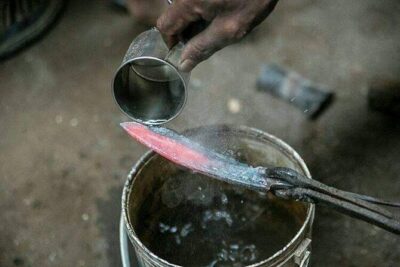
Knife (Khukuri) Making Workshop- Forge of the Gurkhas
Read our review →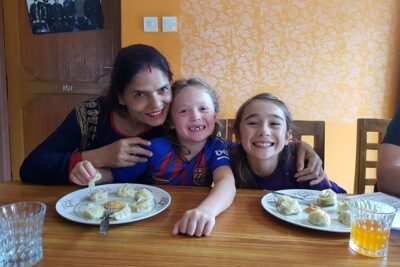
Nepalese Momos or Dal Bhat Cooking Class (Cook with Delight)
Read our review →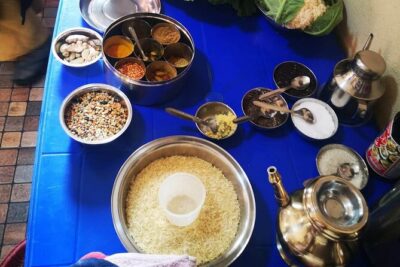
The best Private Nepali Cooking Class in Kathmandu
Read our review →
Nepalese Kitchen in Pokhara: Momos or Dal Bhat Cooking Class
Read our review →