
REVIEW · ANNAPURNA CIRCUIT TREKS
10 Days Annapurna Circuit Trek
This trek packs Nepal’s big scenery into ten days. Starting in Kathmandu, you travel by road toward Besisahar, walk through pine forests and mountain villages, cross the 5,416-meter Thorong La Pass, visit Muktinath, and fly from Jomsom to Pokhara. I like the strong mix of high mountain views and local village life, especially the time in Manang and the flight above the Kali Gandaki Gorge.
I also like that the $1,430 price includes meals, sleeping bags, guides, porters, transport, and the Jomsom to Pokhara flight. The main concern is the pace: this is a compressed version of a demanding high-altitude trek, with steep climbs, narrow trails, and little room for a slow acclimatization schedule.
In This Review
- Key Points at a Glance
- What This Annapurna Circuit Trek Really Covers
- Day 1: Kathmandu to Besisahar and Manakamana
- Day 2: Forest Trails Toward Chame
- Day 3: Bridges, Rock Walls, and Pisang
- Day 4: Approaching Manang Beneath Big Peaks
- Day 5: Manang and Gangapurna Lake
- Day 6: Manang to Yak Kharka and Ledar
- Day 7: Ledar to Thorung Phedi
- Day 8: Thorong La and Muktinath
- Day 9: Down Through the Kali Gandaki Valley
- Day 10: Jomsom to Pokhara by Air
- What the $1,430 Price Covers
- Guides, Porters, and Group Feel
- The Main Advantages and Drawbacks
- Who Should Book This Trek?
- Should You Book the 10-Day Annapurna Circuit?
- FAQ
- Where does the Annapurna Circuit Trek begin?
- How long is the trek?
- What is the highest point of the trek?
- Is the Jomsom to Pokhara flight included?
- Are meals included?
- Are guides and porters included?
- What is not included?
Key Points at a Glance
- Thorong La Pass at 5,416 meters: The trek’s toughest and most memorable day, with rocky ridges, cold air, and views toward the Dhaulagiri range.
- Manang and Gangapurna Lake: A valuable rest and culture day that lets you see village life before the hardest altitude gains.
- A real porter and guide setup: One porter is assigned to every two people, while the group can reach a maximum of 15.
- Mountain scenery changes fast: Pine forests, deep river valleys, dry Mustang country, Tibetan-style villages, and snow-covered peaks all appear in one trip.
- A practical finish: After reaching Jomsom, you fly to Pokhara instead of spending another long day on the road.
- Good package value: Ten breakfasts, ten lunches, ten dinners, transport, taxes, a sleeping bag, and the domestic flight are included.
What This Annapurna Circuit Trek Really Covers
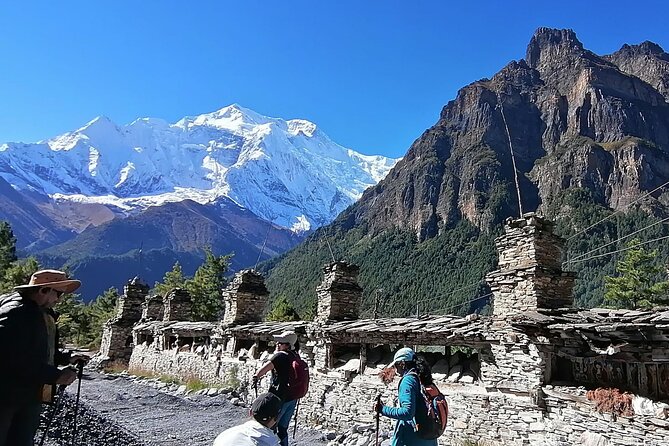
The Annapurna Circuit is not one steady mountain walk. It is a long change of scenery, altitude, weather, and culture. Over roughly 160 to 230 kilometers, depending on the precise roads and walking sections used, you move from lower Himalayan foothills toward the high Thorong La crossing and then down into Mustang.
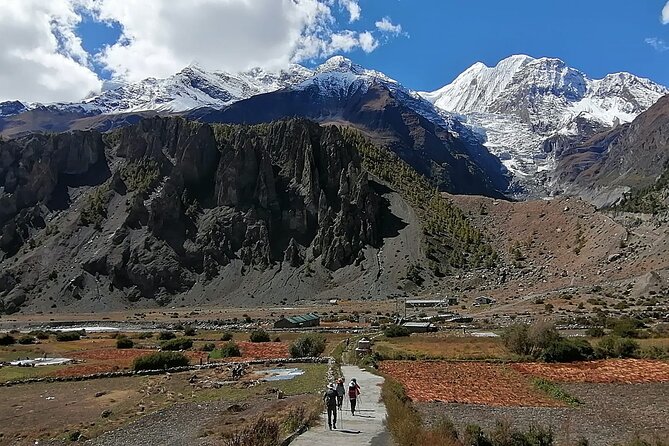
That variety is the chief appeal. One day you may be near a river under forest cover. A few days later, you are looking across bare, wind-cut slopes with Annapurna II, Annapurna III, Gangapurna, Tilicho, Chulu East, and Pisang Peak in view.
The ten-day format is efficient, but it is not gentle. You need a moderate level of fitness, and the schedule asks you to handle long transfers, steep ascents, and high altitude in quick succession. If you want a leisurely version with more rest days, this is not the right shape of trip.
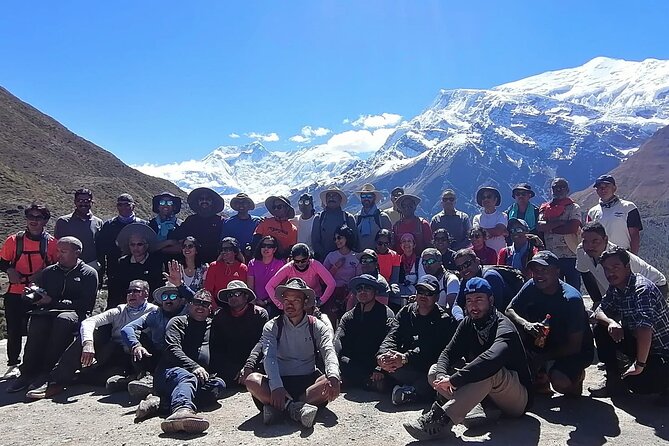
The company keeps groups to a maximum of 15 people. That is small enough for a guide to keep track of the group without making the trek feel like a marching parade. It also matters on narrow trails, where a very large group can slow everything down.
More Annapurna Circuit treks:
- Annapurna Circuit Trek with Tilicho Lake
★ 5.0 · 368 reviews - Annapurna Circuit Trek
★ 5.0 · 94 reviews - Annapurna Circuit Trek
★ 5.0 · 35 reviews
Day 1: Kathmandu to Besisahar and Manakamana
Pickup is scheduled from the tour office at 7:15 a.m., with the trekking staff arriving at your hotel around 7 a.m. The drive to Besisahar takes about seven hours and covers roughly 185 kilometers.
That is a full first day before the walking even begins. Road travel in the hills can be tiring, so do not treat this as a simple transfer. You are setting off from Kathmandu, passing through changing countryside, and finishing near the gateway to the Annapurna route.
The itinerary includes Manakamana Temple. The temple is a meaningful stop, but the supplied schedule does not explain how long you spend there or whether a cable car ride is part of the plan. Ask the company for the exact timing before departure.
You reach Besisahar with the first mountain views beginning to appear. The overnight location is useful because it places you near the start of the higher walking route, though the day itself offers more road than trail.
Day 2: Forest Trails Toward Chame
The route climbs toward Tyanja at about 2,360 meters, then continues through forest near the river to Kopar at approximately 2,590 meters. The day finishes at Chame, the headquarters of Manang District.
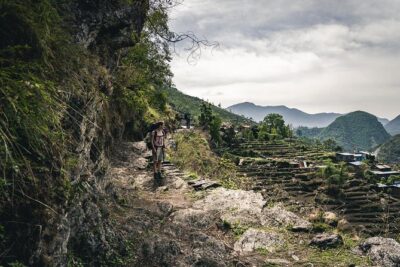
This is where the trek begins to feel like a proper mountain journey. Forest, river sounds, bridges, and rising peaks replace the long drive. The reward at Chame is a view of Annapurna II, one of the first major peaks to command your attention.
The exact walking distance is not given, so you should ask your guide for the expected start and finish times. The combination of climbing and altitude means the day may feel harder than the numbers suggest.
Chame is also an important transition point. You are no longer simply moving through the lower hills. The air gets thinner, the route becomes more rugged, and the peaks begin to define the day.
Day 3: Bridges, Rock Walls, and Pisang
The trail enters a deep forest in a steep, narrow valley. You cross a river on a long bridge at about 2,910 meters, then cross another bridge at around 3,040 meters.
The most striking feature is the Paungda Danda rock face. Its huge wall begins to appear as the route climbs, giving the day a dramatic sense of scale. This is one of those sections where the physical work of walking and the scenery constantly compete for your attention.
The route is not described as a flat stroll. You should expect sustained climbing, exposed sections, and the effects of higher altitude. Keep your pace steady and tell your guide early if you feel unwell.
Pisang is one of the most attractive points on the circuit because it sits among large peaks and changing mountain forms. The day gives you a strong taste of why this route is famous, but it also marks the point where preparation matters more than enthusiasm.
More walking in the hills of Kathmandu:
- Everest Base Camp Trek – 14 Days
★ 5.0 · 1,499 reviews - Everest Base Camp Trekking
★ 5.0 · 485 reviews - Nagarkot Sunrise View and Day Hiking from Kathmandu
★ 5.0 · 471 reviews - Everest Base Camp Trekking – 13 Day
★ 5.0 · 365 reviews
Day 4: Approaching Manang Beneath Big Peaks
The route begins through aromatic pine forest before continuing toward Manang. Along the way, you get close views of Gangapurna, Annapurna II and III, Tilicho, Chulu East, and Pisang Peak.
This is a superb scenery day. The peaks are not distant decorations. They frame the trail and make the walk feel like a steady approach into the heart of the Annapurna range.
The route toward Manang also brings a cultural change. Villages and buildings reflect the high mountain setting, and the valley feels more Tibetan in character than the lower sections near Besisahar and Chame.
The main drawback is that the schedule continues to move upward without much spare time. If you are still adjusting to the altitude, the views may be wonderful, but your body may be asking for a slower day.
Day 5: Manang and Gangapurna Lake
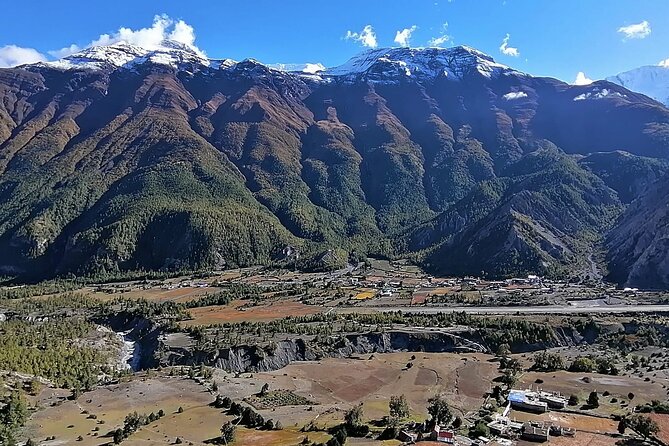
Day five is the most important recovery day in the program. You explore Manang village and walk to Gangapurna Lake, while spending time around local mountain life.
This break is valuable for two reasons. First, it gives you a chance to absorb the setting rather than simply passing through it. Second, it gives your body more time at altitude before the route climbs higher toward Thorong Phedi.
Gangapurna Lake is a natural highlight, with the surrounding peaks adding to the drama. The day is also a chance to interact with local people and see how life is organized in a high mountain village.
The itinerary lists this stop as lasting 20 hours, which appears to refer to the overnight period rather than the walking time. Confirm the day’s actual walking schedule with the guide. The tour information does not specify the distance to the lake or how much free time you have in Manang.
If you are choosing this trek because of the mountain culture as well as the pass, this is one of the most rewarding days. It is less about covering ground and more about understanding where you are.
Day 6: Manang to Yak Kharka and Ledar
Leaving Manang, the route climbs through the Marshyangdi Valley. You pass Gunsang village and continue toward Yak Kharka before reaching Ledar.
This is a strenuous day because the trail keeps gaining height. The scenery becomes more open and severe, with less forest and more bare mountain slopes. The sense of remoteness increases as the route approaches the pass.
The schedule says you should reach Ledar before sunset. That detail matters. At this altitude, arriving with daylight is safer and more comfortable than finishing in darkness, especially if weather or trail conditions slow the group.
You should pack the things you need for the day in your own bag. Your porter carries shared or larger luggage, but you will still need water, warm clothing, snacks, sun protection, and any personal medicine close at hand.
Day 7: Ledar to Thorung Phedi
The route follows the east bank of the Jorsang Khola toward Thorung Phedi. The trail becomes narrow in places, with unstable slopes and difficult sections.
This is not a day to rush. The route description itself warns that the paths can be tough, so careful footing matters more than keeping up with a fast group. Your guide’s role is especially important here, both for route management and for watching how the group is coping with altitude.
Thorung Phedi is the staging point for the pass crossing. The overnight stop puts you in position for an early start the next day.
There is no promise of luxury in the information provided. Accommodation and food are included, and the package receives praise for comfort and good meals, but mountain lodging remains basic compared with a city hotel. Bring patience, warm layers, and a flexible attitude.
Day 8: Thorong La and Muktinath
This is the hardest and most anticipated day. You climb toward Thorong La Pass at 5,416 meters, following rocky ridges before descending toward Muktinath.
From the pass, you can see across toward the Dhaulagiri range. The high point is physically demanding, and the combination of steep trail, cold conditions, wind, and thin air can make the crossing slow.
The tour information allows only 15 minutes at Thorong La and 10 minutes at Muktinath as listed stops. Those figures may represent the formal stop times rather than the full walking schedule, but you should ask for clarification. The day itself will take far longer than 25 minutes.
Muktinath is one of the major religious places in the Mustang region. The visit gives the day a cultural dimension after the physical challenge of the pass. Admission is not included, so carry some Nepalese currency for the temple.
This is also the day when altitude problems can become serious. A past trekker described needing help when the altitude caused trouble, with the guides responding to the situation. That is encouraging, but it is not a substitute for preparation. Tell the guide immediately about headache, nausea, unusual tiredness, or breathing trouble.
Day 9: Down Through the Kali Gandaki Valley
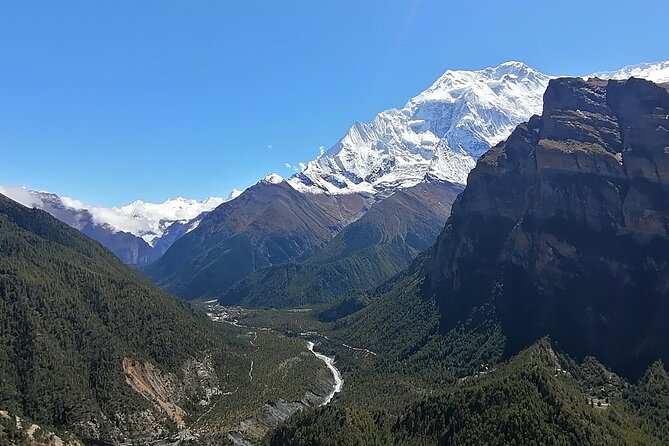
After the pass, the character of the route changes quickly. You descend through the dramatic Kali Gandaki Valley, where dry mountain country replaces the greener valleys lower on the route.
The trail passes through Jharkot and Khingar, described as typical Tibetan villages, then follows the valley floor toward Jomsom. These settlements offer a strong sense of the cultural shift on the far side of Thorong La.
The descent may feel easier than the climb, but it still places stress on knees and ankles. After a high pass, tired legs can make downhill walking surprisingly hard. Trekking poles can be useful, though they are not listed among the included equipment.
Jomsom is the practical end point for the mountain section. The itinerary does not give the exact overnight details, so confirm where you sleep and how early you need to be ready for the flight.
Day 10: Jomsom to Pokhara by Air
After breakfast, you take a morning flight to Pokhara. The flight passes above the Kali Gandaki Gorge and offers views of Dhaulagiri and the Annapurna ranges.
This flight is more than a convenient exit. It gives you one last look at the terrain you have just crossed, from a completely different angle. It also avoids another long road transfer after nine demanding days.
The plan includes free time in Pokhara, with boating at Fewa Lake listed as an option. The tour ends back at the Kathmandu meeting point according to the supplied details, but the day-by-day plan specifically describes arrival in Pokhara. Ask the operator to clarify whether transport back to Kathmandu is included, or if the experience ends in Pokhara.
That small logistical question matters. Pokhara and Kathmandu are not next door, and you should not assume an onward transfer without written confirmation.
What the $1,430 Price Covers
At $1,430 per person, the price is not just paying for a route and a guide. It covers private transportation, guide and porter support, a sleeping bag, all listed fees and taxes, ten breakfasts, ten lunches, ten dinners, and the domestic flight from Jomsom to Pokhara.
The porter arrangement is one porter for every two people. That is a reasonable setup for carrying shared luggage while keeping the load from falling on one person. You still need to carry your daily essentials yourself.
The food allowance is unusually clear: ten meals each for breakfast, lunch, and dinner, with breakfast also listed as 11 in one part of the information. Because of that discrepancy, confirm exactly how many breakfasts are included.
Coffee or tea is included. Bottled water and alcoholic drinks are not, so budget for drinking water along the route. An air-conditioned vehicle is also not included, which is hardly surprising for a mountain transfer, but it is worth noting if you are expecting private transport with city-style comfort.
The value is strongest if you want one company to manage the major pieces. Guides, porters, road travel, meals, sleeping equipment, and the flight can be difficult to arrange separately. The price is less attractive if you prefer to travel independently and already own your equipment.
Guides, Porters, and Group Feel
The strongest praise centers on organization and staff support. Guides named in the feedback include Babu, Resham, and Surya, with Babu receiving particular praise for being helpful, flexible, and attentive to local details. Porter Rojit is also singled out as friendly and accommodating.
One account describes the company handling a group of 35 hikers with different needs, even though this specific departure is capped at 15 people. That suggests the operator has experience dealing with complicated group logistics, but it does not guarantee that every departure will feel identical.
The staff support appears to be the tour’s strongest practical feature. Several comments praise the organization, food, accommodation, and personal care during difficult moments.
Still, ask direct questions before booking. Confirm the guide’s name, porter baggage limits, room arrangements, transport after Pokhara, and what happens if you cannot cross Thorong La. Good planning is especially important on a high pass trek.
The Main Advantages and Drawbacks
I like the route because it gives you an unusually broad taste of Nepal in a short time. You get forests, rivers, high peaks, Manang village life, Gangapurna Lake, a major religious site, dry Mustang country, and a scenic flight.
I also like the included support. Having meals, porters, a sleeping bag, road transport, and the Jomsom flight bundled together makes the trip easier to manage. The small maximum group size is another plus.
The drawbacks come from the same feature that makes the tour attractive: speed. Ten days is tight for a circuit that reaches 5,416 meters. You need to be comfortable with long days and quick altitude gains.
The information also contains a few details that need confirmation, including the breakfast count, the exact end point, and the unusually stated stop durations. These are not reasons to reject the trip, but they are reasons to ask questions before paying.
Who Should Book This Trek?
This trip suits you if you want a guided high-altitude adventure and have moderate physical fitness. It is a good match for first-time multi-day trekkers who want staff handling the practical work, provided they understand that the route itself is serious.
It also suits people who value cultural contact as much as mountain views. Manang, Gangapurna Lake, Muktinath, Jharkot, and Khingar give the route more character than a simple peak-to-peak hike.
You may want a longer itinerary if you are uneasy about altitude, prefer short walking days, or want more time in each village. You should also look elsewhere if you need guaranteed hotel-level comfort or dislike uncertain road and flight schedules.
The operator’s overall displayed rating is 5 from seven reviews, but the feedback includes comments about Everest Base Camp and Annapurna Base Camp as well as this circuit. Use the praise as evidence of the company’s service style, not as a precise score for this exact ten-day route.
Should You Book the 10-Day Annapurna Circuit?
I would book this trek if you want a well-supported, fast-moving route with the biggest Annapurna highlights built in. The combination of porters, guides, meals, sleeping bags, private transport, and the Jomsom to Pokhara flight gives the $1,430 price solid value.
Before booking, I would get four points confirmed in writing: the true walking distances, the breakfast count, the final destination after Pokhara, and the plan for altitude or weather delays. If those answers are clear and you are ready for the demanding Thorong La day, this is a strong choice.
Free cancellation is available when you cancel at least 24 hours before the scheduled start. After that cutoff, refunds and changes are not accepted.
FAQ
Where does the Annapurna Circuit Trek begin?
The experience begins at Himalayan Trekking and Tours on Yapikhya Marg 17 in Kathmandu, Nepal. Pickup from your hotel is scheduled around 7 a.m., with the stated start time at 7:15 a.m.
How long is the trek?
The experience lasts approximately 10 days. The full route covers roughly 160 to 230 kilometers, depending on the exact walking and transport sections used.
What is the highest point of the trek?
The highest point is Thorong La Pass at 5,416 meters.
Is the Jomsom to Pokhara flight included?
Yes. The domestic flight from Jomsom to Pokhara is included in the price.
Are meals included?
Yes. Breakfast, lunch, and dinner are included. The information lists ten breakfasts, ten lunches, and ten dinners, but also mentions 11 breakfasts in one place, so confirm the exact breakfast count before departure.
Are guides and porters included?
Yes. Guides and porters are included, with one porter assigned to every two people. The maximum group size is 15 people.
What is not included?
Bottled water and alcoholic beverages are not included. Admission fees for Thorong La and Muktinath are also listed as not included, and an air-conditioned vehicle is not part of the package.
New in the Kathmandu listings
- Kathmandu: Ancient City Kirtipur & Pharping Monastery Tour★ 5.0 · 2 reviews
- Traditional Momo Making Class★ 5.0 · 10 reviews
- Kathmandu to Pokhara Premium sofa bus ticket★ 4.0 · 17 reviews
- Women Empowerment Project(Nepali cooking class & jewelry workshop★ 5.0 · 15 reviews
- 7-Day Langtang Valley Trek from Kathmandu★ 5.0 · 1 review
- Kathmandu 2 Nights 3 Days Chitwan Jungle Safari Tour★ 5.0 · 9 reviews
- Yoga Experience Day Trip with Private Transfer From Kathmandu★ 4.0 · 2 reviews
- Wildlife Adventure in Chitwan Nepal★ 4.0 · 4 reviews
Annapurna Circuit Treks, compared.
15-Day Private Annapurna Circuit Trek from Kathmandu
Read our review →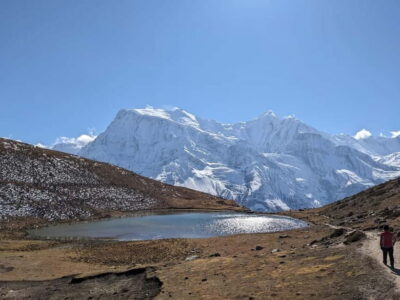
Browse the lists this tour appears in