
REVIEW · EVEREST BASE CAMP TREKS
12 Days Everest Base Camp Trek
The mountain views begin before the hard walking does. This 12-day Everest Base Camp trek takes you from Kathmandu into Nepal’s Khumbu region, with permits, teahouse rooms, meals, flights, a guide, and porter service arranged for $1,390 per person. I like the all-in-one planning and the chance to walk through Sherpa villages rather than simply visit a viewpoint. I also like that the route includes two acclimatization days, one in Namche Bazaar and one in Dingboche. The main concern is the tight schedule, especially the very long Base Camp day and the risk of delayed Lukla flights.
You should think of this as a demanding guided trek, not a sightseeing holiday with a few walks added. You will sleep in simple mountain lodges, walk for several hours most days, and reach elevations above 5,500 meters. The company, Himalayan Sanctuary Adventure Private Limited, handles much of the paperwork and transport, and past bookings earned strong praise for communication, organization, and support from Bishnu.
In This Review
- Key points to know before booking
- What $1,390 buys you in the Khumbu
- Day 1: Flying to Lukla and walking to Phakding
- Day 2: Suspension bridges and the climb to Namche Bazaar
- Day 3: Rest and mountain views around Namche
- Day 4: Tengboche Monastery and the first major ascent
- Day 5: Pangboche and the Imja Valley to Dingboche
- Day 6: A second acclimatization day in Dingboche
- Day 7: The stark route to Lobuche
- Day 8: Gorak Shep and Everest Base Camp
- Day 9: Kala Patthar and the descent to Pheriche
- Days 10 to 12: Returning through Namche and Lukla
- Accommodation, food, porters, and daily comfort
- Communication, planning, and company support
- Who should book this trek?
- Should you book the 12-day Everest Base Camp trek?
- FAQ
- How long is the Everest Base Camp trek?
- What is the starting time?
- Are domestic flights included?
- Is accommodation included?
- Are meals included?
- Is a guide provided?
- Is porter service included?
- Can Lukla flights be delayed or canceled?
Key points to know before booking
- Lukla flight timing can change: Weather can delay or cancel the Kathmandu to Lukla flight for one or more days, at either end of the trek.
- Two acclimatization stops help: Namche Bazaar and Dingboche provide planned pauses before the route climbs higher.
- Everest Base Camp is a long day: The Lobuche to Gorak Shep and Base Camp section is listed at up to 12 hours and 17 kilometers.
- The price covers the essentials: Domestic flights, permits, accommodation, three trek meals, a licensed guide, porter service, taxes, and staff costs are included.
- You still need a real budget: Insurance, drinks, hot showers, charging, laundry, tips, visa fees, and personal purchases are extra.
- The route includes more than Everest views: Tengboche Monastery, Sherpa villages, suspension bridges, glaciers, and sacred mountains give the trek its character.
What $1,390 buys you in the Khumbu
At $1,390, this trek offers good value if you want the practical pieces handled in advance. The price includes airport pickup and drop-off, domestic flights from Kathmandu to Lukla and back, teahouse accommodation, breakfast, lunch, and dinner during the trek, and a farewell dinner in Kathmandu.
You also receive an English-speaking, government-licensed trekking guide and porter service arranged at a ratio of two trekkers to one porter. Staff costs are covered, including salaries, insurance, equipment, food, accommodation, and domestic airfare. That matters because the porter and guide system is not a minor extra on a high-altitude trek. It is part of what makes the route manageable.
Permits are included too. The package covers the Sagarmatha National Park permit and TIMS paperwork, along with government and local taxes. Having these arranged saves time in Kathmandu and removes one layer of mountain bureaucracy.
The price does not cover everything. You pay for your Nepalese visa, international flights, travel and rescue insurance, sightseeing admission fees, and extra nights in Kathmandu. Personal costs such as laundry, phone calls, charging, showers, drinks, bottled or boiled water, and bar bills are also outside the package. Tips for guides, porters, and drivers are not included.
That distinction is important. The advertised price is a useful base cost, but you should set aside extra money for high-altitude basics and a contingency fund. The operator also warns that a delayed or canceled flight can create an extra night in Kathmandu or Lukla, and extra accommodation caused by schedule changes is not included.
More Everest Base Camp treks:
- Everest Base Camp Trek – 14 Days
★ 5.0 · 1,499 reviews - Everest Base Camp Trekking
★ 5.0 · 485 reviews - Everest Base Camp Trekking – 13 Day
★ 5.0 · 365 reviews
Day 1: Flying to Lukla and walking to Phakding
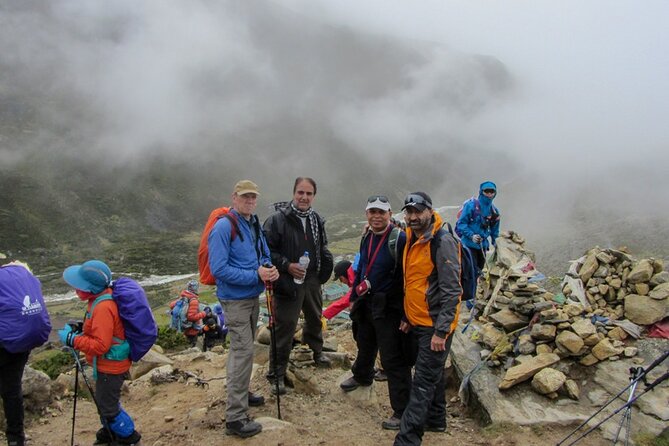
Your day begins early, with a 5:15 am start time listed for the experience. The flight from Kathmandu to Lukla takes about 30 minutes, assuming the weather cooperates. In Lukla, you meet the rest of the crew and begin walking toward Phakding.
The trek takes about three to four hours. The route passes through Cheplung village, with views toward Mount Khumbila, a sacred mountain that has never been climbed. That detail gives the first day a strong sense of place. You are not just walking toward Everest. You are entering a region where mountains carry religious meaning.
Phakding sits at about 2,651 meters, or 8,700 feet. This is a sensible first night because the walking day is fairly short compared with what follows. Still, do not treat the opening day as a guaranteed start. Lukla flights are highly dependent on weather, and a delay can alter the whole schedule.
Day 2: Suspension bridges and the climb to Namche Bazaar
The route follows the Benkar Valley, crossing the Dudh Koshi River and passing through Chumoa and Monjo. Monjo marks the entrance to Sagarmatha National Park, an important transition from low mountain villages into the protected Everest region.
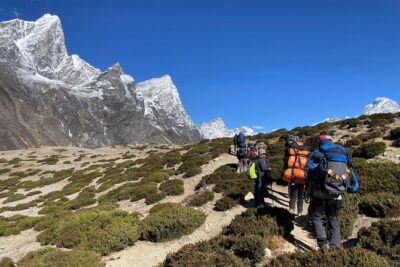
You cross suspension bridges and walk beside the Dudh Koshi and Bhote Koshi rivers before tackling a steeper climb to Namche Bazaar. The listed walking time is four to five hours, though the uphill sections can feel longer at this stage.
Namche sits around 3,438 meters, or 11,280 feet. The town is one of the key stops on the entire trek, not only for its shops and guesthouses but also because it is the first major altitude jump. You may feel the thinner air here. A slow pace and plenty of water are more useful than trying to prove your fitness.
Day 3: Rest and mountain views around Namche
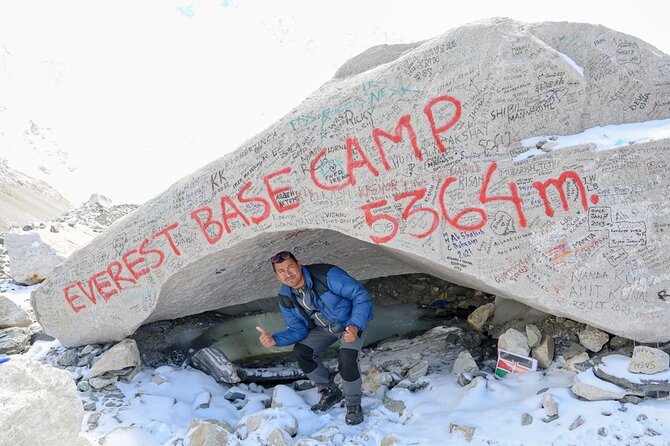
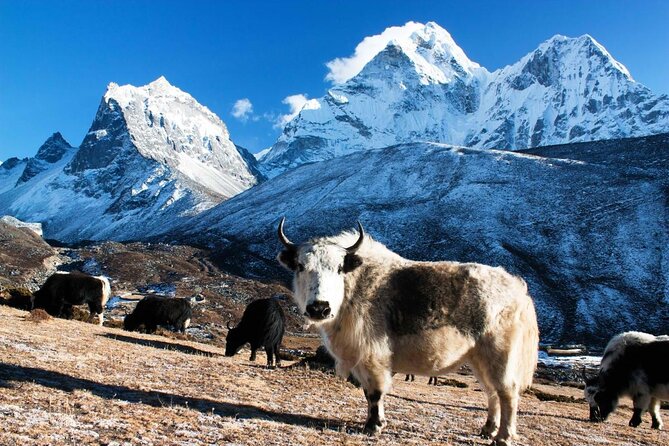
The third day is set aside for acclimatization. You stay in Namche and hike toward Sagarmatha National Park for views of Everest, Lhotse, Nuptse, Ama Dablam, Thamserku, and Kongde. The itinerary also suggests a possible walk to Khumjung village.
This is one of the smartest features of the route. An acclimatization day is not wasted time. It gives your body a chance to adjust before the trail climbs toward Tengboche and Dingboche. The suggested walk is also practical because gentle activity at altitude is generally more useful than remaining indoors all day.
Namche is a good place to get organized. Check your layers, batteries, water, and daypack before leaving. You should also ask your guide about the next day’s pace and the condition of the route.
More walking in the hills of Kathmandu:
- Nagarkot Sunrise View and Day Hiking from Kathmandu
★ 5.0 · 471 reviews - Annapurna Circuit Trek with Tilicho Lake
★ 5.0 · 368 reviews - Everest Base Camp Trek -14 Days
★ 5.0 · 321 reviews - Annapurna base camp trek 5 Days
★ 5.0 · 252 reviews
Day 4: Tengboche Monastery and the first major ascent
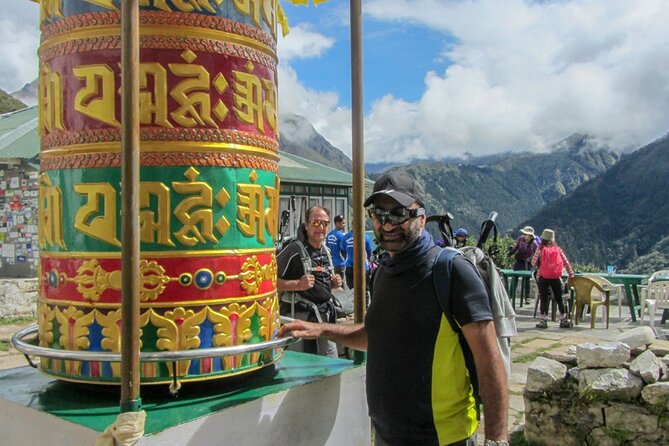
The walk toward Phunki is relatively easy, followed by a climb to Tengboche. The day takes about five to six hours and ends at roughly 3,870 meters, or 12,694 feet.
The main attraction is Tengboche Monastery, described as the largest monastery in the Everest region. It sits within Sagarmatha National Park and looks across a broad mountain view that includes Everest, Nuptse, Lhotse, Ama Dablam, and Thamserku.
The monastery opens at 3:00 pm. If you arrive around 4:00 pm, you may be able to observe a Buddhist religious ceremony. Timing is not guaranteed, so treat this as a possible benefit rather than a promised performance. Even without the ceremony, the monastery gives the route a cultural center that many high mountain treks lack.
Tengboche can feel cold once the sun drops. Keep warm layers accessible rather than buried in your duffel.
Day 5: Pangboche and the Imja Valley to Dingboche
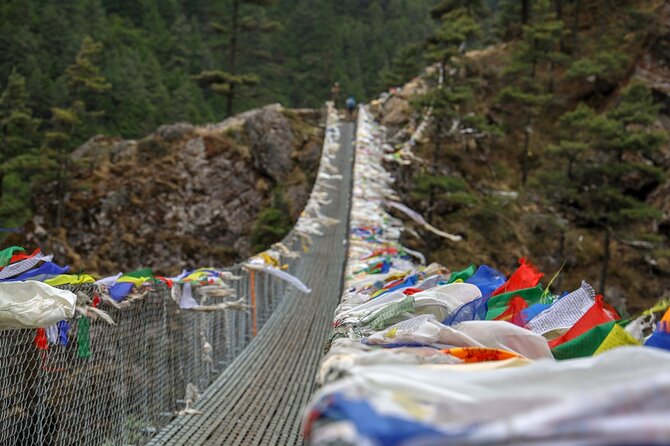
From Tengboche, you descend to Debuche and cross the Imja River toward Pangboche. The route passes the Pangboche Monastery before continuing through the Imja Valley and past the Lobuche River to Dingboche.
The walking time is about five to six hours. Dingboche is at 4,360 meters, or 14,300 feet, so the altitude becomes a serious part of the experience here. The scenery grows more open and severe, with less tree cover and more exposed mountain terrain.
This is a good point to rely on your guide’s judgment. The included guide is not merely there to lead the way. A licensed guide can help monitor pace, symptoms, and group progress. You should still speak up if you have a headache, unusual tiredness, nausea, or difficulty walking.
Day 6: A second acclimatization day in Dingboche
The second rest day is designed to prepare you for the higher section ahead. The suggested outing is a roughly four-hour hike behind Dingboche, with views toward Lhotse, Makalu, and Cho Oyu.
The listed stop duration is three hours, while the fuller description refers to a hike of about four hours. Expect the exact plan to depend on the group and conditions. The important point is that you gain height during the day and sleep again at Dingboche.
This pause is especially valuable because the following days lead to Lobuche, Gorak Shep, and Base Camp. The trek does not rush directly from the lower villages to the highest section. That makes the route more sensible than an itinerary that skips acclimatization.
Day 7: The stark route to Lobuche
The walk to Lobuche is listed at about seven hours and nine kilometers, though the stop summary gives four hours. You should plan for a full walking day, not a short transfer. The trail continues toward Dughla Pass and then reaches Lobuche at about 4,900 meters.
This is where the trek begins to feel more remote and physically serious. The route heads through high mountain terrain with wide views and fewer comforts. The reward is the sense that Everest Base Camp is no longer a distant idea. You are moving into the final approach.
Lobuche is not the place to spend energy late in the evening. Eat, drink, organize your warm clothing, and rest. The next day is the hardest section of the trip.
Day 8: Gorak Shep and Everest Base Camp
The route from Lobuche to Gorak Shep and then Everest Base Camp is the major test. The full description allows nearly 12 hours and about 17 kilometers, while the daily stop section lists six hours. The longer figure is the safer one for planning, particularly because the route includes the walk to Base Camp and the return to Gorak Shep.
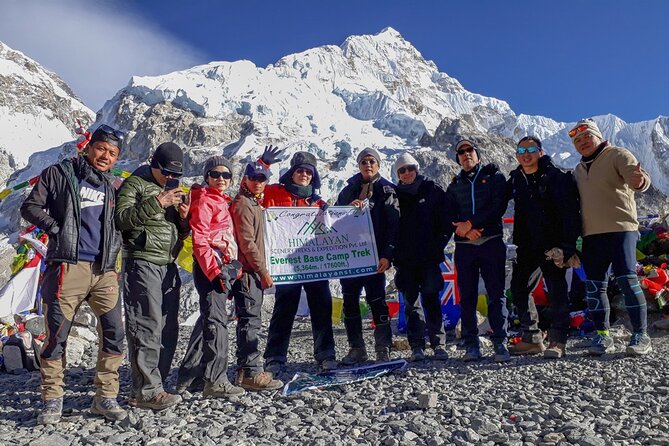
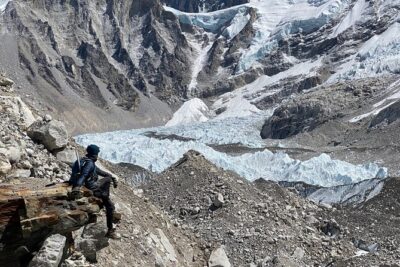
You first reach Gorak Shep at about 5,160 meters, check into the lodge, and have lunch. Then you walk to Everest Base Camp at approximately 5,365 meters. The views include Nuptse, Khumbutse, and Pumori.
Base Camp itself is the goal, but the approach is the real experience. You walk across rough, high ground with the knowledge that you have reached the foot of the world’s highest mountain. You then return to Gorak Shep for the night.
This day demands patience. The final miles can feel slow, and the altitude affects nearly everyone differently. Keep your pace steady, follow the guide, and do not measure success by how fast you arrive.
Day 9: Kala Patthar and the descent to Pheriche
You start early for Kala Patthar, the highest point of the trek at 5,555 meters. The climb takes about three hours, followed by a descent to Gorak Shep for lunch.
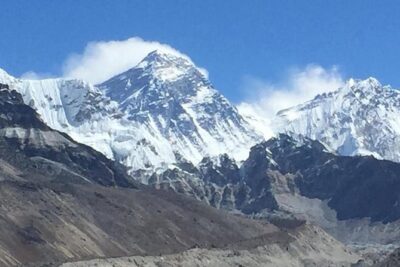
Kala Patthar is the route’s main viewpoint for Everest. The description also names Lingtren, Khumbutse, and Changtse among the surrounding mountains. This is likely to be one of the most rewarding moments of the trip, but it may also be one of the coldest. An early start means you need warm clothes, gloves, and a head for steep high-altitude walking.
After lunch, you descend to Pheriche at around 4,200 meters. Dropping lower after reaching the highest point should feel welcome. The return route is not easy, but the direction helps.
The day numbering in the supplied schedule contains a small inconsistency, with later entries labeled Day 11 twice. The practical route is clear: Kala Patthar, Gorak Shep, Pheriche, then Namche, Lukla, and Kathmandu.
Days 10 to 12: Returning through Namche and Lukla
From Pheriche, you descend through Pangboche and Tengboche before returning to Namche Bazaar. The walk is listed at about five to seven hours. You will recognize parts of the trail, but walking downhill does not always mean easy. Knees and feet can take a beating after the high section.
The next day takes you back to Lukla in about five to six hours. This final walking day offers time to reflect on the route and relax after arrival. The schedule allows a free afternoon in Lukla, with time for a hot shower and an evening of celebratory drinks and dancing with the group.
On Day 12, you take an early flight from Lukla to Kathmandu, followed by a transfer to your hotel. A cultural dinner is planned in Kathmandu, and the package also includes a farewell dinner.
Keep your post-trek plans flexible. The operator clearly warns that flights can be delayed or canceled for one, two, or more days because of weather. This can happen at the beginning, at the end, or both. Do not book an important international connection too soon after the planned return.
Accommodation, food, porters, and daily comfort
Teahouse accommodation gives you a practical place to sleep along the route, but it is not hotel comfort. Rooms are arranged in advance, and breakfast, lunch, and dinner are included during the trek. Drinks, bottled or boiled water, tea, coffee, soft drinks, showers, laundry, and battery charging cost extra.
The porter arrangement is one porter for every two trekkers. That lets you carry a lighter daypack, but you still need to manage your own daily essentials, such as water, warm layers, medication, snacks, and personal documents.
Meals are included, but mountain food choices can be more limited than in Kathmandu. Eat regularly even when your appetite drops at altitude. Your guide can help you understand the meal arrangements and timing each day.
Communication, planning, and company support
The strongest practical praise attached to this experience concerns organization and communication. Ash and Sam described clear communication from start to finish and appreciated the farewell dinner. Another booking had to be canceled during the COVID period, and Bishnu from the company authorized a refund quickly. That suggests a useful level of responsiveness, though no operator can control mountain weather.
The package is private, meaning only your group participates. That can make pacing and communication easier than a large mixed group, though the exact group size is not provided. You should ask before booking how many people will be in your party and who will lead the trek.
The company has also arranged transfers, permits, accommodation, guides, porters, and duffel bags on other Everest Base Camp departures. Duffel bags are referenced in the praise for the company, but they are not clearly listed in the included features for this exact package, so confirm that point directly.
Who should book this trek?
This route suits you if you want a structured Everest Base Camp experience and prefer not to arrange permits, lodges, flights, porters, and meals separately. It is also a good fit if you want cultural stops such as Tengboche and Pangboche Monasteries alongside the mountain views.
You need moderate physical fitness, according to the requirements. More importantly, you need patience, stamina, and comfort with simple accommodation. The long Base Camp day, early starts, high altitude, and uncertain Lukla flights make this unsuitable for anyone seeking a relaxed holiday.
The package is also a sensible choice for first-time high-altitude trekkers who want a guide and porter system in place. It does not remove the physical challenge, but it reduces the planning burden.
Should you book the 12-day Everest Base Camp trek?
I would consider booking this trek if you value practical organization and want a classic route with two acclimatization days. The price includes the costly and complicated essentials, and the company has received strong praise for planning, communication, and support.
I would hesitate only if your schedule cannot absorb flight delays or if you want more time in the mountains. The 12-day plan is efficient, but the Base Camp section is demanding, and weather can quickly disrupt the timetable.
Book it if you can arrive with flexible onward plans, suitable insurance, a realistic fitness level, and extra money for mountain expenses. You will get a well-supported route to Everest Base Camp, but you still have to earn every view.
FAQ
How long is the Everest Base Camp trek?
The experience lasts approximately 12 days, including flights between Kathmandu and Lukla, the trek to Everest Base Camp, the return to Lukla, and the flight back to Kathmandu.
What is the starting time?
The listed start time is 5:15 am. This early start is linked to the flight from Kathmandu to Lukla.
Are domestic flights included?
Yes. The package includes domestic flights between Kathmandu and Lukla in both directions.
Is accommodation included?
Yes. Teahouse accommodation during the trek is included, along with the scheduled hotel transfer in Kathmandu. Extra Kathmandu nights caused by early arrival, late departure, early return, or delays are not included.
Are meals included?
Breakfast, lunch, and dinner during the trek are included. A farewell or cultural dinner in Kathmandu is also included. Lunch and evening meals in Kathmandu are not included.
Is a guide provided?
Yes. The package includes an experienced, English-speaking, government-licensed trekking guide.
Is porter service included?
Yes. Porter service is included at a ratio of two trekkers to one porter.
Can Lukla flights be delayed or canceled?
Yes. Flights can be delayed or canceled for one or more days because of unfavorable weather. You should be prepared for extended waits in Kathmandu or Lukla and keep your onward plans flexible.
New in the Kathmandu listings
- Traditional Momo Making Class★ 5.0 · 10 reviews
- Kathmandu: Ancient City Kirtipur & Pharping Monastery Tour★ 5.0 · 2 reviews
- Kathmandu to Pokhara Premium sofa bus ticket★ 4.0 · 17 reviews
- Women Empowerment Project(Nepali cooking class & jewelry workshop★ 5.0 · 15 reviews
- 7-Day Langtang Valley Trek from Kathmandu★ 5.0 · 1 review
- Kathmandu 2 Nights 3 Days Chitwan Jungle Safari Tour★ 5.0 · 9 reviews
- Yoga Experience Day Trip with Private Transfer From Kathmandu★ 4.0 · 2 reviews
- Wildlife Adventure in Chitwan Nepal★ 4.0 · 4 reviews
Everest Base Camp Treks, compared.
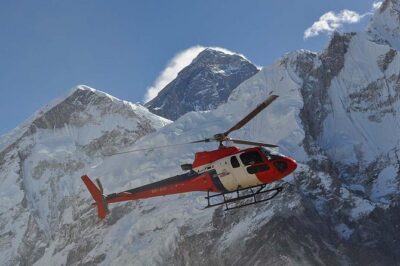
Everest Base Camp Trek with Helicopter Return from Gorakshep to Lukla
Read our review →Browse the lists this tour appears in