
REVIEW · EVEREST BASE CAMP TREKS
12 Days Everest Base Camp Trek from Kathmandu
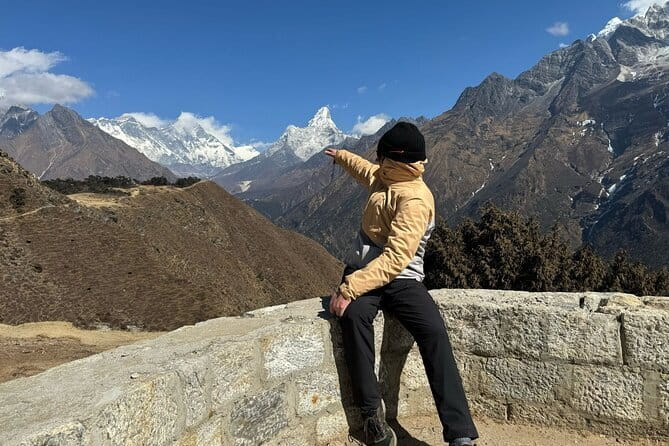
The Himalayas demand your full attention. This 12-day private trek from Kathmandu combines the classic Everest route with Sherpa villages, Buddhist monasteries, suspension bridges, and huge views of Everest, Lhotse, Nuptse, Ama Dablam, and Pumori. You fly to Lukla, walk through Sagarmatha National Park, spend acclimatization days in Namche Bazaar and Dingboche, then reach Everest Base Camp and Kala Patthar.
I especially like the well-spaced acclimatization days, which give your body time to adjust instead of treating altitude as an afterthought. I also like the personal guide service. Guides including Prakash, Milan, and Dev receive especially strong praise for safety, patience, local insight, and steady support. The main drawback is the demanding altitude and the limited comfort of guesthouse accommodation, so this is not a casual mountain holiday.
The price is $1,380 per person. That includes hotel transfers, flights between Kathmandu and Lukla, permits, a licensed English-speaking guide, guesthouse stays, and a private trek. You still pay for meals and drinks, estimated at about $25 per day, along with optional gratuities.
In This Review
- Five things to know before you book
- What the $1,380 price really covers
- Day 1: Kathmandu to Lukla, then Phakding
- Day 2: Phakding to Namche Bazaar
- Day 3: Acclimatization around Namche Bazaar
- Day 4: Forest trails and Tengboche Monastery
- Day 5: Tengboche to Dingboche
- Day 6: Dingboche and Nagarjun Hill
- Day 7: Dingboche to Lobuche
- Day 8: Lobuche to Everest Base Camp
- Day 9: Kala Patthar and the descent to Pheriche
- Day 10: Pheriche to Namche Bazaar
- Day 11: Namche Bazaar to Lukla
- Day 12: Lukla to Kathmandu and farewell dinner
- Guides, group size, and personal support
- Who should book this Everest trek
- Is the 12-day Everest Base Camp trek good value?
- FAQ
- How long is the Everest Base Camp trek?
- Where does the trek begin?
- Are flights between Kathmandu and Lukla included?
- Is this a private tour?
- Are acclimatization days included?
- What are the main sights on the route?
- Is food included in the price?
- What accommodation is provided?
- How far in advance can I cancel for a full refund?
Five things to know before you book
- The trek begins and ends with Lukla flights: These short mountain flights save days of walking, but they also make the route dependent on flight operations.
- Two acclimatization days are built in: You rest and take short hikes in Namche Bazaar and Dingboche before going higher.
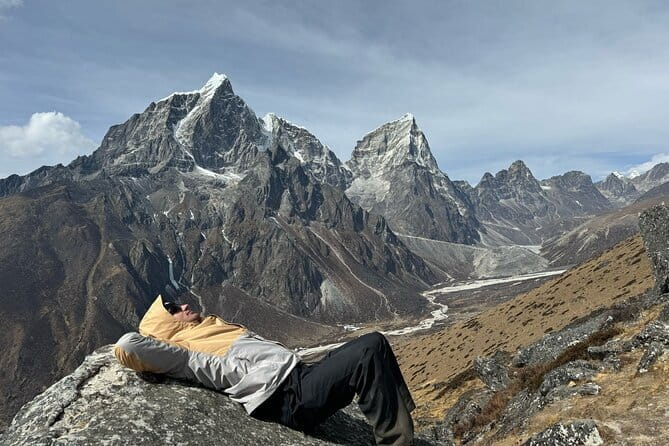
- Everest Base Camp is not the best summit viewpoint: The clearest panoramic view comes from the early hike to Kala Patthar on Day 9.
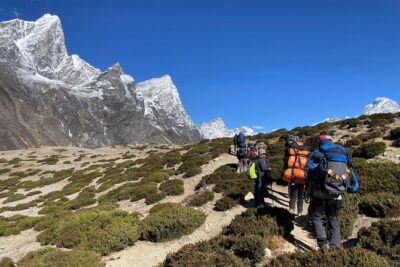
- The route changes dramatically: You move from rhododendron forest and river valleys to dry, high-altitude ground with sparse shrubs.
- This is a private trip: Only your own group participates, which allows a more personal pace and direct contact with your guide.
What the $1,380 price really covers
The cost looks reasonable for a 12-day private Himalayan trek because several expensive and necessary items are included. Your Kathmandu hotel pickup and drop-off are covered, as are the Kathmandu to Lukla and Lukla to Kathmandu flights. The package also handles trekking permits, official documents, a licensed English-speaking guide, guesthouse accommodation, and a basic emergency first-aid kit.
That bundled approach is useful in Nepal, where the practical pieces can otherwise become a puzzle. You do not need to arrange each flight, permit, or mountain lodge separately. The private format adds value if you want your own group rather than joining a large departure with a fixed pace.
The price does not include food or drinks. Plan on approximately $25 per day for those purchases, though the exact amount depends on what you order. Gratuities are optional. You should also expect guesthouse accommodation rather than full-service hotels once you leave Kathmandu.
This is a good package for someone who values organization and guide support. It is less attractive if you want a low-cost, independent walk or a more polished hotel experience.
More Everest Base Camp treks:
- Everest Base Camp Trek – 14 Days
★ 5.0 · 1,499 reviews - Everest Base Camp Trekking
★ 5.0 · 485 reviews - Everest Base Camp Trekking – 13 Day
★ 5.0 · 365 reviews
Day 1: Kathmandu to Lukla, then Phakding
Your trek begins with a short scenic flight from Kathmandu to Lukla. After meeting the rest of the crew, you walk from Lukla toward Phakding, following the Dudh Koshi River.
The first day takes about six hours. That may sound long for an opening walk, but the route helps you settle into the rhythm before the major altitude gains begin. You pass through mountain scenery and small settlements while the river provides a constant point of reference.
Phakding is a sensible first stop because the day is not designed to push you immediately toward high elevation. You get your first taste of the trail, the guesthouse routine, and the mountain environment without attempting the hardest sections too soon.
The Lukla flight is an important part of the day. It is included in the package, which removes one major planning task, but you should still recognize that the trek depends on this air connection. If the flight does not operate as planned, the schedule may need to change.
Day 2: Phakding to Namche Bazaar
The second day is one of the route’s major transitions. You walk through Monjo and enter Sagarmatha National Park, a protected area known for mountain scenery, wildlife, flowers, streams, and traditional villages.
The trail continues across suspension bridges and climbs toward Namche Bazaar. The walk takes about seven hours, making it one of the longer days. The final approach is a proper test of fitness, especially because the altitude begins to make each uphill section feel more serious.
Namche Bazaar is the main gateway to the Everest region. It is more than a stopping point. You use it to rest, look around, and prepare for the higher sections ahead. The village setting gives you a first close look at Sherpa life, while the surrounding ridges hint at the peaks to come.
If you are not used to long uphill walks, this is where preparation matters. Strong physical fitness is required, and you should not treat the trek as a simple sightseeing tour.
Day 3: Acclimatization around Namche Bazaar
You spend another night in Namche, but this is not a completely inactive rest day. The schedule includes a short excursion toward the Syangboche Airstrip or the Everest View Hotel, with mountain views as the reward.
The day takes about six hours. That is a useful reminder that acclimatization does not necessarily mean lying in bed. Short hikes help your body adjust while keeping your legs moving. Your guide can also use the day to watch how you are responding to the elevation.
This is one of the strongest parts of the program. A rushed itinerary might try to reach Tengboche immediately, but this plan gives you time in Namche before going higher. Follow your guide’s advice, drink regularly, and keep your pace controlled.
The exact feel of the day depends on conditions and your group’s strength. The key point is that the excursion supports the larger goal: reaching Everest Base Camp safely rather than simply reaching it quickly.
More walking in the hills of Kathmandu:
- Nagarkot Sunrise View and Day Hiking from Kathmandu
★ 5.0 · 471 reviews - Annapurna Circuit Trek with Tilicho Lake
★ 5.0 · 368 reviews - Everest Base Camp Trek -14 Days
★ 5.0 · 321 reviews - Annapurna base camp trek 5 Days
★ 5.0 · 252 reviews
Day 4: Forest trails and Tengboche Monastery
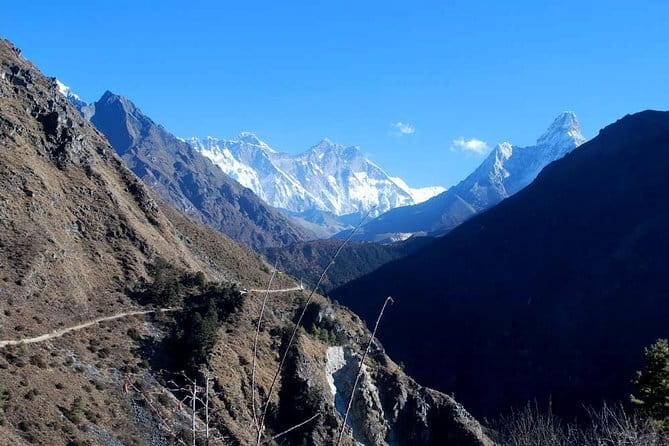
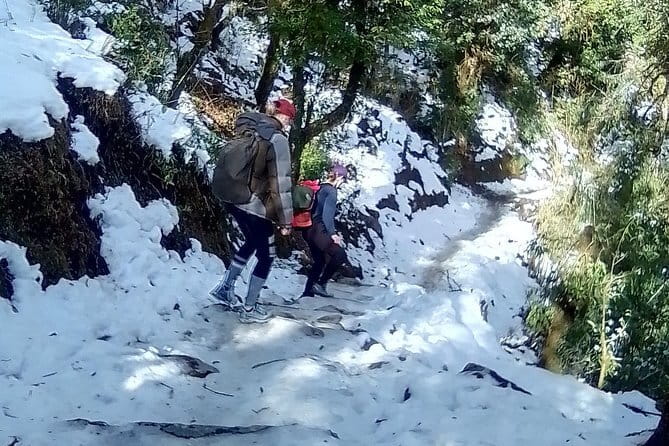
From Namche, the trail gradually climbs through rhododendron forest toward Tengboche. The route crosses the Imja Khola and takes about six hours.
The forest is a welcome change from the more open trails around Namche. Rhododendrons, streams, and mountain paths create a softer setting before the route becomes drier and more exposed. As you gain height, the views open toward the surrounding peaks.
Tengboche is known for its monastery, described as the oldest in the Khumbu region. You have time to explore the monastery and see prayer wheels, Buddhist features, and the setting beneath the Himalayan peaks. This is not just a scenic stop. It gives the trek cultural depth and shows how spiritual life remains tied to the mountains.
The monastery visit is included, unlike most of the free trail stops. Be respectful during Buddhist rituals and allow the setting to speak for itself. Tengboche is one of the most memorable places on the route because the cultural experience and mountain views arrive together.
Day 5: Tengboche to Dingboche
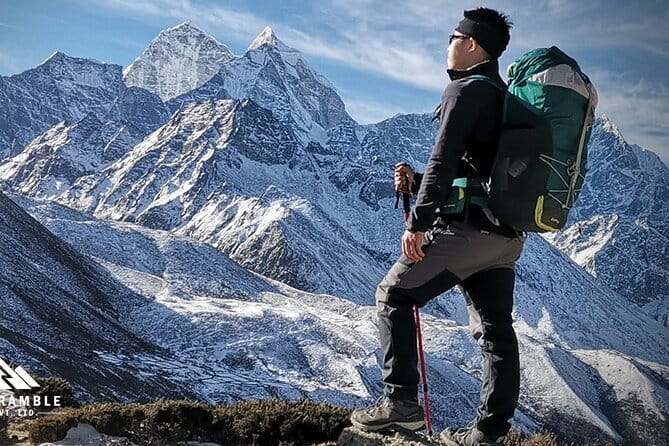
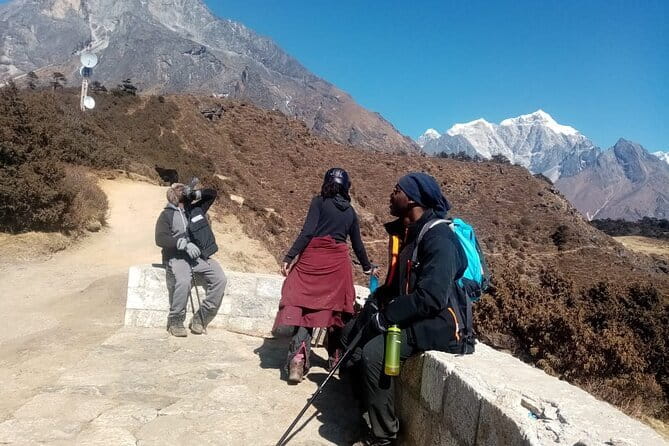
The trail continues across suspension bridges and through smaller settlements such as Pangboche and Orsho. You pass stupas, chortens, and mani stones as the route follows the valley toward Dingboche.
This six-hour day brings another clear change in scenery. The thick forest begins to thin, and the surroundings feel more open and severe. You are now moving into higher ground, where the air is thinner and the walking pace naturally slows.
Dingboche is an important overnight stop because it places you near the higher section without asking you to continue directly to Lobuche. The villages become more widely spaced, and the trail feels less sheltered than it did earlier.
The religious markers along the way deserve attention. Prayer stones and chortens are not decorative props. They are part of the local Buddhist culture, and your guide can help explain what you are seeing.
Day 6: Dingboche and Nagarjun Hill
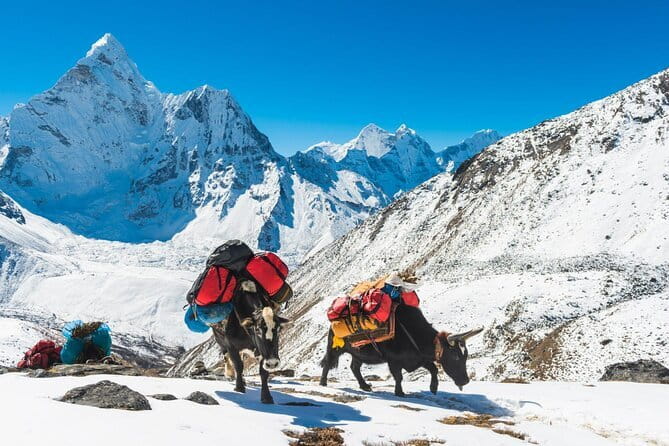
Another acclimatization day follows in Dingboche. You take a hike to Nagarjun Hill, with views toward Everest, Lhotse, Ama Dablam, Nuptse, Thamserku, and Pumori.
The listed activity lasts about six hours, so this is an active rest day rather than a free day. The uphill outing gives you a chance to test your condition before the trail reaches its highest overnight points.
The mountain views from Nagarjun Hill are a major payoff. You see several famous peaks in one broad sweep, and the changing light can make the same mountain look different from one hour to the next. This is also a good time to ask your guide about the peaks and the route ahead.
Altitude is the central issue here. Even fit people can feel tired, short of breath, or uncomfortable at elevation. The carefully placed rest day helps, but it cannot remove the physical challenge. Listen to your body and tell your guide if you feel unwell.
Day 7: Dingboche to Lobuche
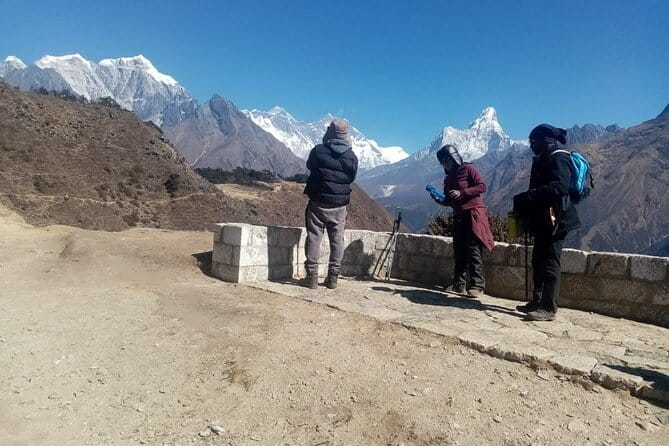
You leave Dingboche and continue through smaller villages as the ground becomes more exposed. The trail shifts from forest to sparse shrubs, making the altitude visible in the vegetation as well as in the effort required to walk.
This six-hour section takes you to Lobuche, positioned near the higher part of the route. The village is a staging point for the next day’s push to Everest Base Camp.
The walk may feel less varied than the lower trail because there are fewer trees and settlements. That is part of its appeal, though. The route feels increasingly remote, and the high mountain environment becomes the main subject.
You should keep your expectations realistic. Reaching Lobuche is an achievement, but it is not the summit of the trek. Save energy for the long day ahead.
Day 8: Lobuche to Everest Base Camp
You start early for the walk toward Everest Base Camp. The trail passes through Gorak Shep, the last human settlement on the route, before continuing to Base Camp.
This is the longest day of the trek at about eight hours. It is also the emotional high point for many people. The trail is demanding, the air is thin, and progress can be slow, but the goal is clear.
Gorak Shep has an important place in the route’s story because it was the initial base camp area before the present location was used. From there, you continue toward the glacier and the mountaineering area at Everest Base Camp.
Keep in mind that Base Camp is a working mountaineering site, not a town or a museum. Its appearance can vary with the season and climbing activity. The significance comes from standing at the point where expeditions prepare for the world’s highest mountain.
The Base Camp visit is included, and the day is one of the reasons people choose this trek. Still, the long return or overnight arrangement makes pacing essential. Follow your guide closely and do not race to the destination.
Day 9: Kala Patthar and the descent to Pheriche
The route saves one of its finest viewpoints for the morning. You hike to Kala Patthar, a famous viewpoint above Everest Base Camp, then continue toward Pheriche.
The climb and transfer take about seven hours. Kala Patthar is especially valuable because it provides a broad view of Everest and the surrounding peaks. If your goal is a clear, classic mountain photograph, this viewpoint may be more rewarding than Base Camp itself.
The early start is practical. Morning conditions often offer the best chance of clear mountain views, though the schedule and weather can affect what you see. The climb is steep enough to feel difficult at altitude, so take short steps and keep a steady rhythm.
After the viewpoint, the route begins the return journey. Pheriche feels like a welcome change after the high point of the trek, but you should not assume the descent is effortless. Tired knees and accumulated fatigue can make downhill walking demanding.
Day 10: Pheriche to Namche Bazaar
You retrace part of the route through Tengboche and descend toward Phungki Thanka before continuing to Namche. The trail follows the Imja River and then passes through forest and smaller villages.
This section takes about six hours. The lower altitude usually makes walking feel easier, although your legs may still be tired after Base Camp and Kala Patthar.
Returning through Tengboche gives you another chance to appreciate the monastery and the surrounding views. The route may look different in the opposite direction, especially when you notice details missed during the uphill walk.
Namche is a useful overnight stop before Lukla. It breaks up the descent and gives you a more comfortable base than trying to cover the entire return in one push.
Day 11: Namche Bazaar to Lukla
The final full walking day retraces the trail through forests, streams, villages, and Phakding before continuing to Lukla. The route takes about seven hours.
This is a long finish, but the direction is mostly downhill or rolling compared with the ascent. You can look back on the route with a different perspective, recognizing places that felt difficult only days earlier.
Lukla is more than a transport point. It marks the end of the walking portion and the return to air travel. Your guide and crew remain important here, helping the group prepare for the next morning’s flight.
Because the trek relies on the Lukla connection, keeping the final day organized matters. Your hotel transfer in Kathmandu is included after the return flight.
Day 12: Lukla to Kathmandu and farewell dinner
You take the flight back to Kathmandu and transfer to your hotel. The day is listed at about five hours, including the flight and transfer arrangements.
The farewell dinner gives the group a final chance to thank the guide and crew before preparing to leave Nepal. After nearly two weeks of walking, the return to city life may feel abrupt.
The package includes the return flight and hotel drop-off, which makes the last day simpler. It is a practical ending to a demanding route.
Guides, group size, and personal support
This is a private activity, so only your group participates. That is a meaningful advantage on a trek where people respond differently to altitude and fatigue. You are not locked into the pace of a large mixed group.
The guide is central to the experience. Prakash is praised for keeping people safe and comfortable while maintaining a positive attitude. Milan is described as patient, friendly, and helpful with acclimatization advice and local insight. Dev receives credit for taking care of a family throughout the trek, including accommodation, transport, and flights.
These details point to the service style you should expect: practical support, safety checks, route guidance, and help with the daily routine. The basic first-aid kit is included, but you should still take responsibility for your own preparation and medical needs.
Who should book this Everest trek
I would recommend this trip to you if you want the classic Everest Base Camp route with a private guide and the main logistics arranged in advance. It suits people who are comfortable walking for six to eight hours per day and who have a strong level of physical fitness.
It is also a good match if you care about Sherpa villages, monasteries, prayer wheels, chortens, and Buddhist culture as much as mountain photographs. Tengboche and the traditional settlements give the route more meaning than a simple point-to-point hike.
I would hesitate if you dislike basic lodging, long walking days, altitude, or uncertain mountain flights. The tour is organized, but it is not easy. You need patience, stamina, and a willingness to accept that conditions may shape the schedule.
Confirmation is provided at booking. You can cancel for a full refund up to three full days before the local start time. Changes or cancellations inside that period are not accepted.
Is the 12-day Everest Base Camp trek good value?
At $1,380 per person, the trip offers solid value if you want a private arrangement. Flights, permits, official documents, guide service, accommodation, and transfers make up a substantial part of the cost. The inclusion of both acclimatization days is also valuable because it supports a safer and more enjoyable pace.
You should budget separately for food and drinks at about $25 per day. The package does not turn the trek into a luxury trip, but it handles the parts that are hardest to organize from home.
I would book it if you want direct guide support, a private group, and a traditional route with cultural stops. I would not book it if you are looking for a relaxed holiday or a flexible independent trek. For the right person, this is a serious physical challenge with a memorable payoff: Everest views, high mountain valleys, Sherpa communities, and the satisfaction of reaching Base Camp under your own power.
FAQ
How long is the Everest Base Camp trek?
The experience lasts approximately 12 days, including the flights from Kathmandu to Lukla and back.
Where does the trek begin?
The walking route begins in Lukla after a flight from Kathmandu. The first walking stop is Phakding.
Are flights between Kathmandu and Lukla included?
Yes. The package includes the Kathmandu to Lukla and Lukla to Kathmandu flights.
Is this a private tour?
Yes. Only your own group participates in the activity.
Are acclimatization days included?
Yes. You spend an acclimatization day around Namche Bazaar on Day 3 and another in Dingboche on Day 6.
What are the main sights on the route?
Major stops include Namche Bazaar, Tengboche Monastery, Dingboche, Lobuche, Everest Base Camp, Kala Patthar, and Pheriche.
Is food included in the price?
No. Food and drinks are available for purchase, with an estimated cost of about $25 per day.
What accommodation is provided?
Accommodation during the trek is in guesthouses. Hotel pickup and drop-off in Kathmandu are included.
How far in advance can I cancel for a full refund?
You must cancel at least three full days before the experience start time for a full refund. Cancellations or changes inside that period are not accepted.
New in the Kathmandu listings
- Traditional Momo Making Class★ 5.0 · 10 reviews
- Kathmandu: Ancient City Kirtipur & Pharping Monastery Tour★ 5.0 · 2 reviews
- Kathmandu to Pokhara Premium sofa bus ticket★ 4.0 · 17 reviews
- Women Empowerment Project(Nepali cooking class & jewelry workshop★ 5.0 · 15 reviews
- 7-Day Langtang Valley Trek from Kathmandu★ 5.0 · 1 review
- Kathmandu 2 Nights 3 Days Chitwan Jungle Safari Tour★ 5.0 · 9 reviews
- Yoga Experience Day Trip with Private Transfer From Kathmandu★ 4.0 · 2 reviews
- Wildlife Adventure in Chitwan Nepal★ 4.0 · 4 reviews
Everest Base Camp Treks, compared.
Everest Base Camp Trek with Helicopter Return from Gorakshep to Lukla
Read our review →Browse the lists this tour appears in