
REVIEW · EVEREST BASE CAMP TREKS
12 Days Everest Base Camp Trek
Everest begins with a small mountain flight. This 12-day trek takes you from Kathmandu to Lukla, through Sherpa villages and the Khumbu Valley, to Everest Base Camp at 5,364 meters and Kala Patthar at 5,545 meters. I like the steady acclimatization plan, especially the rest days at Namche Bazaar and Dingboche, and I like that meals, permits, flights, porters, and a trained guide are included.
The $605 price is also appealing for a package that covers domestic flights, 11 nights of lodge accommodation, three meals each trekking day, and essential staff support. The main caution is altitude: this is described as suitable for beginners and seniors with moderate fitness, but the high passes, steep trails, rocky ground, and thin air still demand patience and sensible preparation.
In This Review
- Key details before you book
- Why this Everest Base Camp route works
- Day 1: Lukla to Phakding beside the Dudhkoshi
- Day 2: The long climb to Namche Bazaar
- Day 3: Acclimatizing above Namche
- Day 4: Namche to Tengboche monastery
- Day 5: Tengboche to Dingboche
- Day 6: Nagarjuna hill and a second acclimatization day
- Day 7: Dingboche to Lobuche
- Day 8: Gorakshep and Everest Base Camp
- Day 9: Kala Patthar at sunrise
- Day 10: The long return to Namche Bazaar
- Day 11: Namche to Lukla
- Day 12: Lukla flight back to Kathmandu
- Lodges, meals, porters, and guide support
- Who should book this trek?
- What to budget beyond $605
- Booking, cancellation, and group size
- Should you book the 12-day Everest Base Camp Trek?
- FAQ
- Where does the Everest Base Camp Trek begin?
- How long is the trek?
- How high is Everest Base Camp?
- How high is Kala Patthar?
- Are domestic flights included?
- Are meals included during the trek?
- Is accommodation included?
- Is a porter included?
- What fitness level is required?
- How many people can be in the group?
- Is personal travel insurance included?
- Can I cancel for a full refund?
Key details before you book
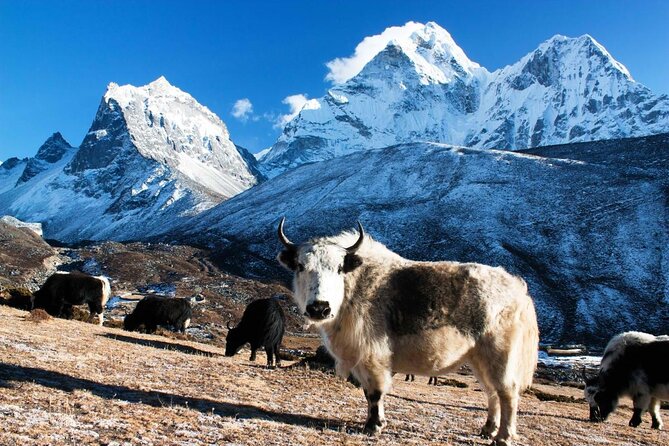
- The route reaches 5,545 meters at Kala Patthar, higher than Everest Base Camp itself.
- Two acclimatization periods are built in, one at Namche Bazaar and another at Dingboche.
- The package includes Kathmandu to Lukla flights, airport transfers, permits, meals, lodges, a guide, and one porter for every two trekkers.
- The group can reach up to 20 people, so ask about the expected group size if you prefer a quieter walk.
- Named guides praised in past trips include Gopal, Bikram, Rajesh Magar, and Narayan Ntc, though your assigned guide may be different.
- Lukla flight conditions can affect the schedule, so keep your wider Nepal plans flexible.
Why this Everest Base Camp route works
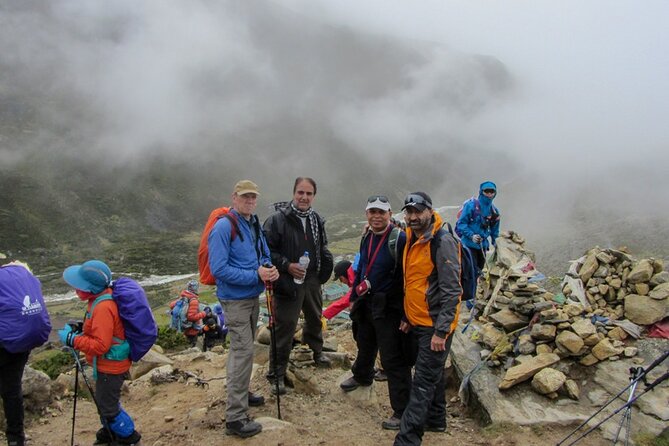
The classic Everest Base Camp path is not a technical climbing trip. You walk on established mountain trails, sleep in local lodges, and carry only a daypack if you use the included porter service. That makes the route possible for people who have never trekked in Nepal, provided they have reasonable fitness and respect the altitude.
I like the rhythm of this itinerary. The first days do not rush you straight toward the highest point. You begin near Lukla, follow the Dudhkoshi River, climb to Namche Bazaar, and spend time letting your body adjust. Later, Dingboche provides another acclimatization day before the trail rises toward Lobuche and Gorakshep.
The route is still hard. Walking times range from about three to eight hours, and the effort comes from repeated climbs, uneven rock, cold conditions, and altitude rather than from speed alone. The early flight to Lukla adds a touch of nerves before the walking even starts.
At $605 per person, the package offers strong value if the promised inclusions are important to you. Domestic flights alone can make a large difference to the cost of arranging the trek independently. You also receive permits, a licensed high-altitude-trained guide, a porter arrangement, meals, lodge rooms, a duffel bag, trekking pole, map, hat, first aid kit, and an oximeter.
You will still pay for personal insurance, snacks, drinks, gear, and tips. Those extras matter in Nepal, so do not treat $605 as your complete trip budget.
More Everest Base Camp treks:
- Everest Base Camp Trek – 14 Days
★ 5.0 · 1,499 reviews - Everest Base Camp Trekking
★ 5.0 · 485 reviews - Everest Base Camp Trekking – 13 Day
★ 5.0 · 365 reviews
Day 1: Lukla to Phakding beside the Dudhkoshi
Your morning starts with a roughly 45-minute flight from Kathmandu to Tenzing-Hillary Airport in Lukla. The flight itself gives you an early look at the mountains and makes the beginning feel properly adventurous.
From Lukla, the walking day is relatively gentle. You descend toward Phakding, following the Dudhkoshi, also called the Milk River. The route passes through villages and offers your first close look at daily life in the Khumbu region.
The walk takes about four hours after the flight. That is a useful opening stage, since your body is still adjusting to the change from Kathmandu to mountain conditions. The first day is less about covering distance and more about settling into the pace, the lodges, and the walking routine.
Day 2: The long climb to Namche Bazaar
Day two is one of the first serious tests. You leave Phakding early and follow the Dudhkoshi, crossing the river several times on steel suspension bridges. The trail moves from one side of the river to the other, with steady climbing toward Namche Bazaar.
The walking time is about seven hours. Namche is the main trading center of the Khumbu, and its location in a broad mountain bowl makes arrival feel like a genuine milestone. The climb is demanding, but the changing views and bridges break up the day.
This is also where the itinerary begins to show good judgment. Instead of pushing straight onward, you spend an acclimatization day here. That pause is not wasted time. It helps you adjust before the trail rises much higher.
Day 3: Acclimatizing above Namche
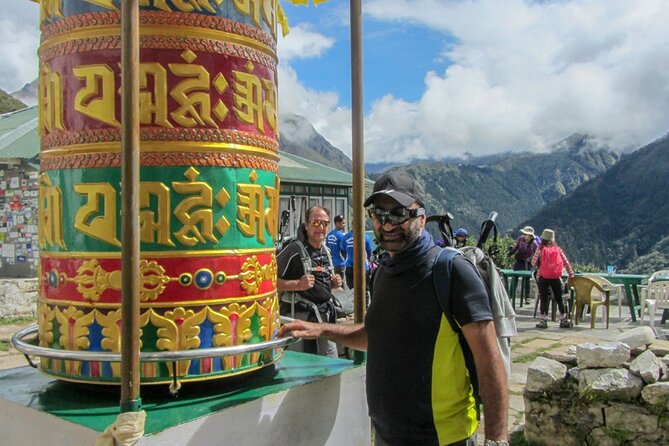
The planned outing goes to the Everest View Hotel by way of the Syangboche airstrip. The hike lasts about two hours and includes time for tea and mountain views.
This is an important kind of rest day. You are still walking uphill and gaining height, but you return to Namche to sleep at the lower elevation. The goal is to give your body a taste of higher ground without forcing it to spend the night there.
You may feel strong and wonder why you need a rest day. Do not skip the logic of the plan. Altitude problems can affect fit people as well as beginners, and a slower schedule gives the guide more room to respond if someone feels unwell.
More walking in the hills of Kathmandu:
- Nagarkot Sunrise View and Day Hiking from Kathmandu
★ 5.0 · 471 reviews - Annapurna Circuit Trek with Tilicho Lake
★ 5.0 · 368 reviews - Everest Base Camp Trek -14 Days
★ 5.0 · 321 reviews - Annapurna base camp trek 5 Days
★ 5.0 · 252 reviews
Day 4: Namche to Tengboche monastery
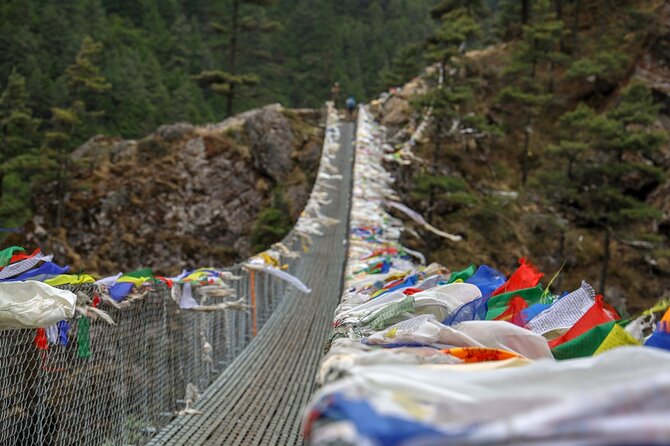
After roughly a day and a half around Namche, the path continues toward Tengboche. The day begins with a steep climb, followed by a more moderate section, for about five hours of walking.
Tengboche is one of the most memorable stops on the route because of its monastery and mountain setting. The next morning includes an early attempt to watch sunrise from the monastery, so this is more than just a place to sleep.
The trail also brings a shift in scenery. You move through forested sections and open mountain views, with the route continuing to feel connected to Sherpa villages rather than simply being a march toward Base Camp. That human element is one of the best parts of the trek.
Day 5: Tengboche to Dingboche
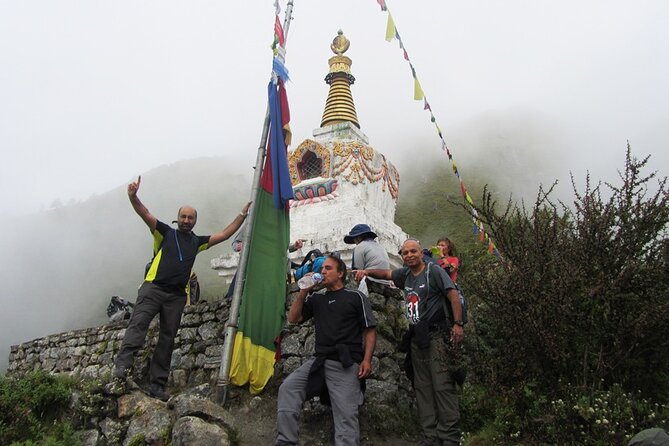
The day starts with a descent through rhododendron forest to Deboche at about 3,320 meters. From there, the route continues toward Dingboche, with about six hours of walking.
The morning descent offers some relief after the climb to Tengboche, but the overall route continues upward as you approach Dingboche. You are now moving into a higher, more exposed part of the Khumbu, and the air begins to feel different.
Dingboche is a key overnight stop because it sits above 4,400 meters. The itinerary wisely includes another acclimatization day here rather than adding a quick overnight push toward Lobuche.
Day 6: Nagarjuna hill and a second acclimatization day
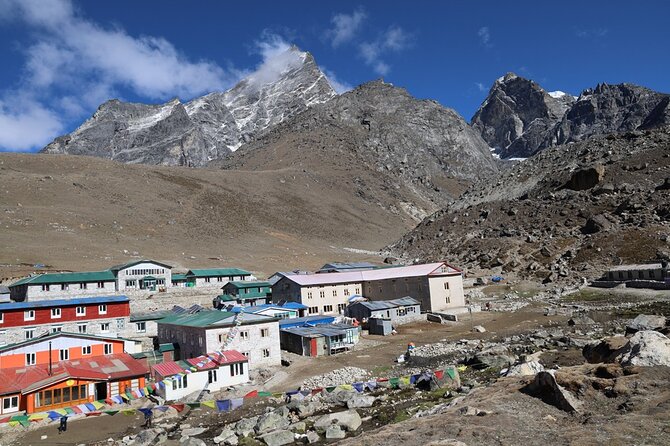
This is a shorter day, with about three hours of walking to a nearby hill called Nagarjuna. The aim is to gain some height, enjoy views toward the surrounding peaks, and then return to Dingboche to sleep.
I particularly like this part of the program. The daily distance is modest, but the day still gives you something to do. You are not confined to a lodge all day, yet you are not asked to cover a major stretch of trail.
For you, the practical lesson is simple: use this day to check how you feel. Pay attention to headaches, unusual fatigue, breathlessness, or poor sleep, and tell your guide. The guide carries an oximeter for checking pulse, oxygen saturation, and heart rate at higher altitude.
Day 7: Dingboche to Lobuche
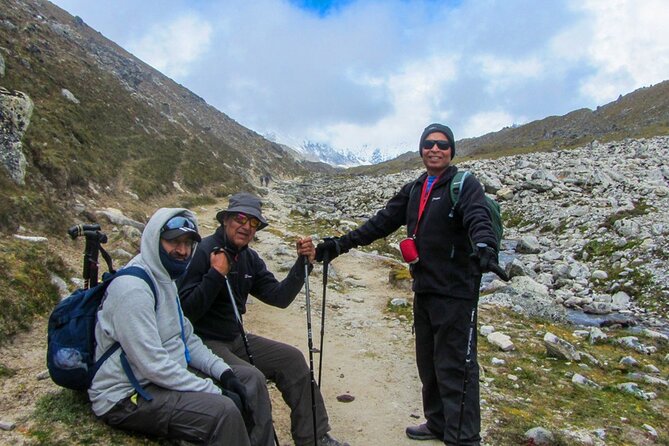
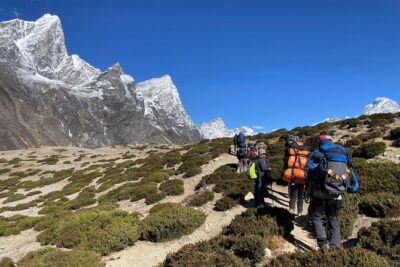
After the rest day, you head into a broad valley beneath Cholatse and Tawache peaks. The trail takes about six hours and leads to Lobuche.
This is a more serious mountain day. The terrain becomes rockier, and the surrounding peaks feel larger as the route approaches the high point of the trek. You are also getting close to the Khumbu Glacier and the final settlements before Base Camp.
Lobuche is not the finish line. It is the staging point for the most anticipated days, and you should save energy rather than treating the arrival as a reason to celebrate too hard. At this height, a quiet evening and plenty of water are more useful than a late night.
Day 8: Gorakshep and Everest Base Camp
You leave Lobuche for Gorakshep, walking for about three hours along a rocky ascent beside the Khumbu Glacier. The route passes the International Pyramid Laboratory before reaching the high settlement.
After reaching Gorakshep, the trail continues for roughly four more hours to Everest Base Camp and back. It is rocky, with downhill and uphill sections, so the total effort is greater than the simple distance might suggest.
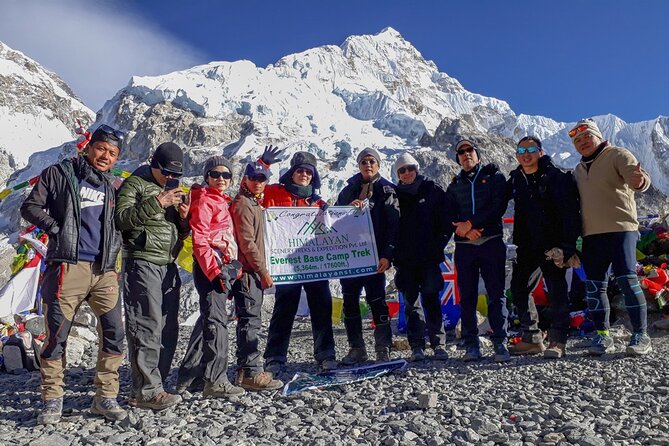
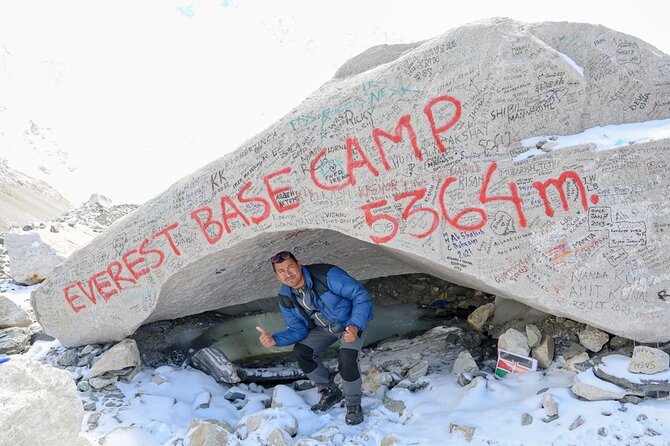
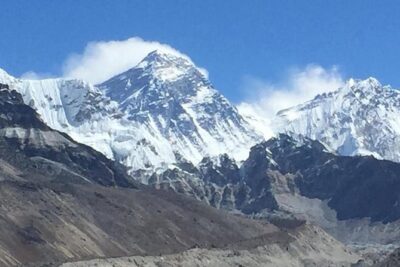
Base Camp sits at 5,364 meters. You are close to the foot of Mount Everest, but the view is shaped by the glacier, moraine, and surrounding peaks rather than by a clear, postcard-style view of Everest itself. That is why the next morning at Kala Patthar matters so much.
Even so, reaching Base Camp is the emotional center of the trek. You have spent a week walking through villages, forests, bridges, and high valleys to get there. Take time to enjoy the achievement, but remember that altitude and fatigue are still factors on the return to Gorakshep.
Day 9: Kala Patthar at sunrise
The early hike to Kala Patthar is the hardest and most rewarding morning for many trekkers. The trail is steep and rocky, and the full outing is listed at about eight hours.
The aim is to reach the viewpoint for sunrise over Mount Everest. At 5,545 meters, Kala Patthar is higher than Base Camp and gives you one of the best chances for a direct Everest panorama on this route.
This is not a casual viewpoint walk. The early start, cold air, steep ground, and altitude can make the climb slow. Your guide’s judgment matters here, especially if you have struggled with sleep or appetite.
After Kala Patthar, the route continues back toward lower ground. That descent brings welcome relief, even though the day remains long. You have reached the highest point, and from here the general direction is down.
Day 10: The long return to Namche Bazaar
After breakfast, you begin the six-hour walk back to Namche Bazaar. The route follows the same broad trail toward Panboche and lower villages, but it feels different now that you are descending.
The reduced elevation makes this day comparatively easier than the climb up. You still need to watch your knees on downhill sections, and the repeated trail can feel tiring after the high-altitude push.
Namche is a useful place to recover before the final walk to Lukla. The return route also gives you another chance to notice village life and views that may have passed quickly during the uphill journey.
Day 11: Namche to Lukla
The final trekking day takes about seven hours. You descend through forest, cross more bridges and streams, pass remote villages, and retrace the route through Monjo and Phakding before reaching Lukla.
This is a long day, but the lower elevation helps. The path can still be steep, and tired legs make familiar terrain less easy than it sounds.
Arriving in Lukla gives you a satisfying end to the walking portion. You are not quite finished, since the return flight remains, but the major physical challenge is behind you.
Day 12: Lukla flight back to Kathmandu
The flight from Lukla to Kathmandu takes about 35 minutes. You will get final mountain views before landing and transferring by vehicle to your hotel.
The remaining time in Kathmandu is free. The itinerary does not prescribe a final activity, so you can rest or make your own plans.
One practical caution deserves attention: mountain flights can be affected by conditions. The package includes the domestic flights, but the published schedule should not be treated as a guarantee of exact timing. If you are adding another flight or fixed appointment in Nepal, leave breathing room.
Lodges, meals, porters, and guide support
The package provides the best available twin-sharing lodge room during the trek. That wording is realistic rather than luxurious. You are paying for a functional mountain stay, not a city hotel.
Three meals a day are included for 11 trekking days. This removes much of the daily budgeting and ordering work, although snacks, drinks, and personal purchases remain your responsibility.
A porter is included for every two trekkers. That can make a major difference on a 12-day walk, since you can keep your personal daypack lighter. Pack carefully anyway, because the porter arrangement is shared and personal gear is not included.
The guide is described as government licensed, highly experienced, helpful, and trained for high altitude. The company also provides staff accident insurance, a first aid kit, an oximeter, and walkie-talkie communication for group trekkers.
Several guides connected with strong praise include Gopal, Bikram, Rajesh Magar, and Narayan Ntc. Gopal was especially praised for mountain knowledge and practical acclimatization advice, while Bikram was noted for adapting the walking schedule to a faster trekker. Those details suggest that guide flexibility is one of the company’s strengths, but you should confirm who will lead your departure.
Who should book this trek?
I would recommend this trip to you if you want the classic Everest Base Camp route with a clear schedule and many major costs already handled. It suits people with moderate fitness who can walk for several hours over uneven ground and accept a slower pace at altitude.
It may also work for older trekkers and first-time Himalayan walkers, but the label beginner-friendly should not be confused with easy. You need to prepare for long walking days, high elevation, basic lodge conditions, and the possibility that your body will not respond as expected.
This is less suitable if you want private rooms, flexible luxury, short walking days, or a guaranteed flight schedule. A group of up to 20 people may also feel large if you prefer one-to-one guiding.
What to budget beyond $605
The listed price includes a lot, but you should plan for costs outside the package:
- Personal travel insurance
- Trekking clothes, boots, and other gear
- Snacks and drinks
- Tips for guides, porters, and other team members
- Any service not specifically listed as included
The value is strongest for someone who needs the logistical basics arranged. If you already own all your gear and plan to organize flights, permits, meals, and porters yourself, the savings are harder to judge. For most first-time visitors, the convenience of having those pieces bundled together is meaningful.
Booking, cancellation, and group size
Confirmation is provided at booking, and pickup is available from Tribhuvan Airport in Kathmandu by private or shared vehicle. The experience begins and ends there, with a transfer to your hotel after the return flight.
You can cancel up to 24 hours before the start time for a full refund. Cancellations within 24 hours are not refunded, and late changes are not accepted. The local Nepal time cut-off applies.
The average booking lead time is about 38 days. That is a useful planning guide, especially for a trek that depends on domestic flights and a limited seasonal window.
Should you book the 12-day Everest Base Camp Trek?
You should book it if your priority is a classic, organized Everest Base Camp trek at a low advertised price, with permits, flights, meals, porters, and acclimatization days included. The strongest reasons to choose it are the sensible route, the high level of practical support, and the repeated praise for guides who adjust their approach to individual needs.
Before paying, confirm the expected group size, the name of your guide, the flight arrangements, the exact lodge standard, and what happens if weather disrupts the Lukla flight. Also buy personal travel insurance and prepare properly for altitude.
My call: a good-value choice for a prepared trekker, especially a first-time visitor who wants help with the complicated parts of Nepal travel. It is not an easy holiday, and the low price should not hide the physical demands. If you understand that, this route offers a powerful walk through Sherpa country to two unforgettable high points.
FAQ
Where does the Everest Base Camp Trek begin?
The experience begins at Tribhuvan Airport in Kathmandu, followed by a domestic flight to Lukla.
How long is the trek?
The full experience lasts approximately 12 days, including the flights from Kathmandu to Lukla and back.
How high is Everest Base Camp?
Everest Base Camp sits at 5,364 meters.
How high is Kala Patthar?
Kala Patthar reaches 5,545 meters and is the highest point listed on the route.
Are domestic flights included?
Yes. Flights between Kathmandu and Lukla are included.
Are meals included during the trek?
Yes. Breakfast, lunch, and dinner are included for 11 trekking days.
Is accommodation included?
Yes. Twin-sharing lodge accommodation is included during the trek, using the best available rooms.
Is a porter included?
Yes. The package includes one porter for every two trekkers.
What fitness level is required?
A moderate physical fitness level is required. The route includes walking days of approximately three to eight hours, steep climbs, rocky trails, and high altitude.
How many people can be in the group?
The maximum group size is 20 people.
Is personal travel insurance included?
No. You must arrange your own personal travel insurance.
Can I cancel for a full refund?
Yes, if you cancel at least 24 hours before the experience start time. Cancellations within 24 hours are not refunded.
New in the Kathmandu listings
- Traditional Momo Making Class★ 5.0 · 10 reviews
- Kathmandu: Ancient City Kirtipur & Pharping Monastery Tour★ 5.0 · 2 reviews
- Kathmandu to Pokhara Premium sofa bus ticket★ 4.0 · 17 reviews
- Women Empowerment Project(Nepali cooking class & jewelry workshop★ 5.0 · 15 reviews
- 7-Day Langtang Valley Trek from Kathmandu★ 5.0 · 1 review
- Kathmandu 2 Nights 3 Days Chitwan Jungle Safari Tour★ 5.0 · 9 reviews
- Yoga Experience Day Trip with Private Transfer From Kathmandu★ 4.0 · 2 reviews
- Wildlife Adventure in Chitwan Nepal★ 4.0 · 4 reviews
Everest Base Camp Treks, compared.
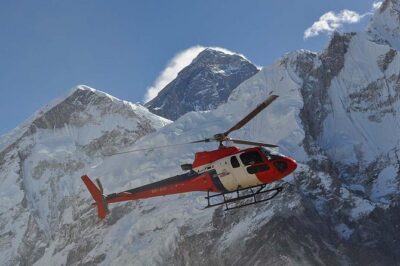
Everest Base Camp Trek with Helicopter Return from Gorakshep to Lukla
Read our review →Browse the lists this tour appears in