
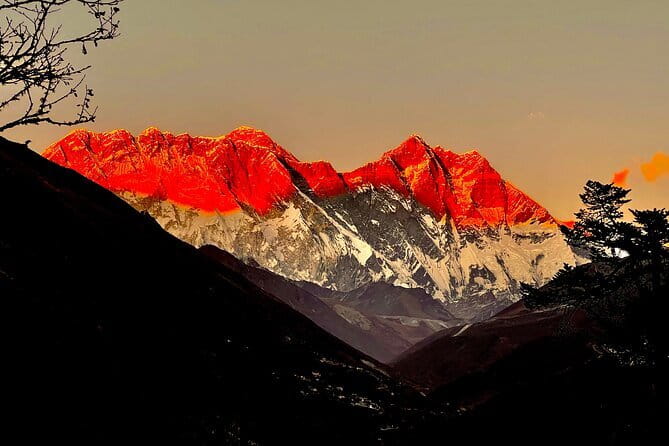
REVIEW · EVEREST BASE CAMP TREKS
14 Days Everest Base Camp Trekking
The world’s highest peak comes with a serious hike. This 14-day Everest Base Camp trek combines the classic Lukla route, Sherpa villages, suspension bridges, Buddhist monasteries, and two key acclimatization days. I like the careful pace and the useful package of permits, flights, guides, porters, meals, and lodge stays. I also like that the trip is private, so you can trek with your own group rather than being tied to strangers.
The main caution is the physical demand. Long walking days, thin air, rough trails, and basic mountain lodges are part of the deal. Kathmandu lodging, travel insurance, equipment, drinks, tips, and the Nepal visa are extra, so the advertised price is not your final bill.
In This Review
- Key points
- What the $1,420 Everest Trek Really Includes
- Kathmandu Arrival and the Early Start to Lukla
- Phakding to Namche Bazaar and the First Big Climb
- Namche’s Rest Day and the Everest View Walk
- Tengboche and the First Great Mountain Views
- Pangboche, Ama Dablam, and Dingboche
- Dingboche’s Second Acclimatization Day
- Lobuche and the Khumbu Glacier
- Gorak Shep and the Long Walk to Base Camp
- Kala Patthar and the Descent to Pheriche
- Returning Through Tengboche to Namche
- Lukla Celebration and the Flight Back
- Who Will Get the Most From This Trek
- Practical Details Before You Book
- Should You Book the Everest Base Camp Trek?
- FAQ
- How long is the Everest Base Camp trek?
- Where does the trek start?
- Are flights between Kathmandu and Lukla included?
- Are meals included during the trek?
- Is accommodation included?
- Do I need travel insurance?
- What fitness level is required?
Key points
- Lukla flight included: The trek begins with a flight to Lukla and ends with the return flight to Kathmandu.
- Two acclimatization stops: Rest days in Namche Bazaar and Dingboche help you adjust before the highest section.
- Kala Patthar viewpoint: The early hike to 5,565 meters offers one of the finest views of Everest, Nuptse, Ama Dablam, Pumori, and nearby peaks.
- Private group format: Only your group takes part, with an English-speaking guide and porter support.
- Meals and lodges covered: Breakfast, lunch, dinner, seasonal fruit, and twin-sharing lodge accommodation are included during the trek.
- Strong guide support: Guides named in past feedback include Hari, Kapil, and Namo, with particular praise for care, organization, and pacing.
What the $1,420 Everest Trek Really Includes
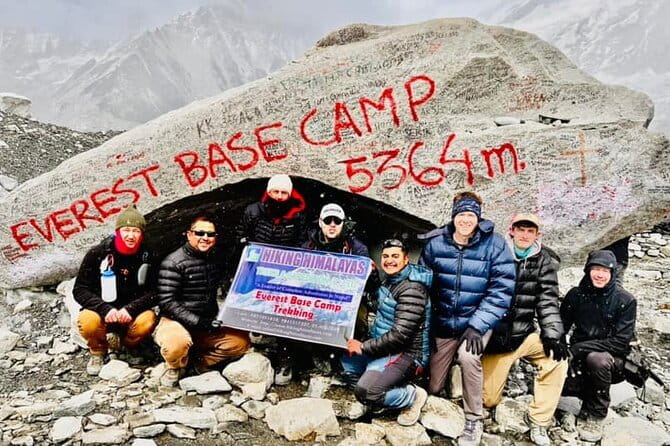
At $1,420, this is not a cheap walk, but it covers many of the costs that quickly add up in the Khumbu. You receive private ground transport between your Kathmandu hotel and the domestic airport, round-trip Kathmandu to Lukla flights, permits, a professional English-speaking guide, a porter arrangement, lodge accommodation, trekking meals, a first-aid kit, a map, and a completion certificate.
I consider the included Lukla flights especially important. Buying these separately can make your planning harder, and the flights are the gateway to the trek. The company also covers food, accommodation, insurance, and other basic costs for the guide and porter.
The package includes 13 breakfasts, 11 lunches, and 11 dinners. Seasonal fruit is also provided during the trek. You should still budget for drinks, snacks, hot showers, and personal purchases. A hot shower costs $5, and Kathmandu food and accommodation are listed at about $45 per day.
You will also need to pay for your international flights, travel insurance, personal trekking equipment, staff tips, and the Nepal entry visa. The visa can be obtained on arrival for $40 for 30 days. Add these items before deciding if the price fits your budget.
More Everest Base Camp treks:
- Everest Base Camp Trek – 14 Days
★ 5.0 · 1,499 reviews - Everest Base Camp Trekking
★ 5.0 · 485 reviews - Everest Base Camp Trekking – 13 Day
★ 5.0 · 365 reviews
Kathmandu Arrival and the Early Start to Lukla
The experience begins at Tribhuvan International Airport in Kathmandu, with a stated meeting time of 6:15 in the morning. Airport pickup is offered, and private vehicle transfers are included between the airport and your hotel.
Your arrival flight may offer fine views of snow-covered peaks on a clear day. The first day is mainly for reaching Kathmandu and getting settled, but that short pause matters. You are about to move from city streets to high mountain paths, with very different weather, food, sleep, and walking conditions.
On Day 2, you fly to Lukla at 2,850 meters. The airport sits beside a steep mountain runway, so the flight and landing are memorable before you take your first step. After meeting your support team, you follow the Dudh Koshi Valley to Phakding at 2,656 meters.
The walking time is listed as up to 10 hours, though the exact time will depend on the group’s pace and conditions. The first section introduces you to stone paths, river crossings, mountain lodges, and the steady rhythm of walking uphill and downhill.
Phakding to Namche Bazaar and the First Big Climb
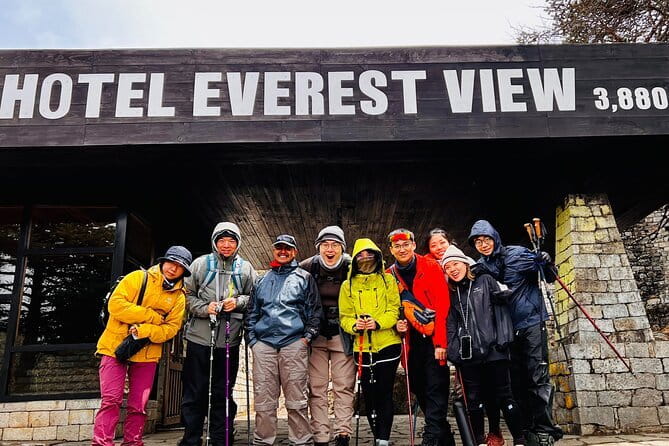
Day 3 brings the first demanding climb toward Namche Bazaar. You cross and recross the river on high suspension bridges, then pass through Monjo, where you enter Sagarmatha National Park.
The trail rises toward Namche Bazaar at about 3,440 meters. This is a key moment. The scenery changes, the air feels thinner, and the walking becomes more serious. Namche is the main trading and supply center of the Khumbu, with lodges, tea shops, and souvenir stores.
The day is listed at up to 10 hours, so you should not treat it as a casual village stroll. Good fitness is essential, and you will appreciate having a guide who watches the group’s pace and condition.
Past feedback gives special credit to guides such as Hari, Kapil, and Namo. Their reported strengths include calm support, careful organization, and attention to physical and mental well-being. Your assigned guide may differ, but the guide system is one of the strongest parts of this package.
Namche’s Rest Day and the Everest View Walk
Day 4 is for acclimatization in Namche. You do not simply sit in your lodge all day. The planned outing goes toward the Everest View Point, allowing you to walk higher and return to sleep at Namche.
This is exactly the kind of rest day you want on a high-altitude trek. Your body gets movement without the strain of gaining sleeping height. Namche also gives you time to adjust to the cold, the thinner air, and the slower pace needed above the tree line.
The village has shops and tea rooms, so it is one of the better places to check your supplies before the trail becomes more remote. Still, personal purchases are not included, so keep some Nepalese rupees available.
More walking in the hills of Kathmandu:
- Nagarkot Sunrise View and Day Hiking from Kathmandu
★ 5.0 · 471 reviews - Annapurna Circuit Trek with Tilicho Lake
★ 5.0 · 368 reviews - Everest Base Camp Trek -14 Days
★ 5.0 · 321 reviews - Annapurna base camp trek 5 Days
★ 5.0 · 252 reviews
Tengboche and the First Great Mountain Views
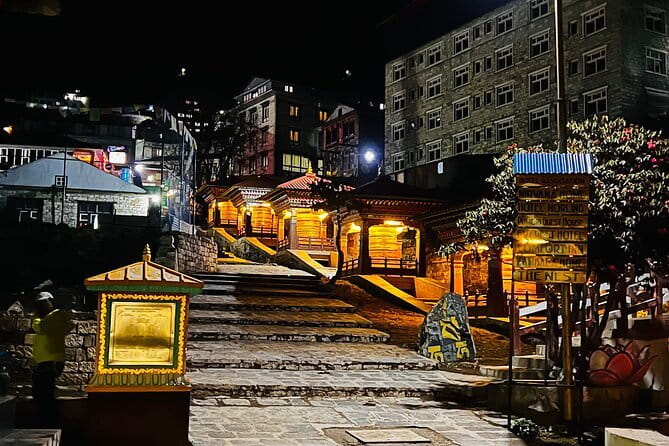
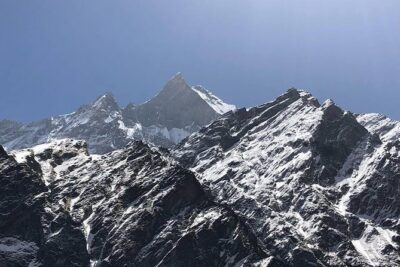
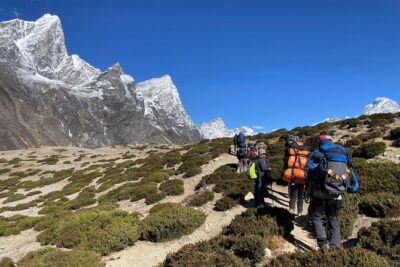
From Namche, the path follows the side of the valley high above the Dudh Kosi. This is where the mountain views become much more dramatic. You should see Everest, Lhotse, Nuptse, and Ama Dablam, along with several other major peaks.
The route continues to Tengboche, also written as Tyangboche, at about 3,860 meters. The village is known for its monastery and its broad mountain setting. The combination of Buddhist religious life, stone walls, forest, and high peaks gives this section a stronger cultural character than the earlier trail.
The day is again listed at about 10 hours. That is a long day at increasing altitude, and the route includes both climbing and descending. You should focus less on speed and more on steady breathing, regular water breaks, and listening to your guide.
Pangboche, Ama Dablam, and Dingboche
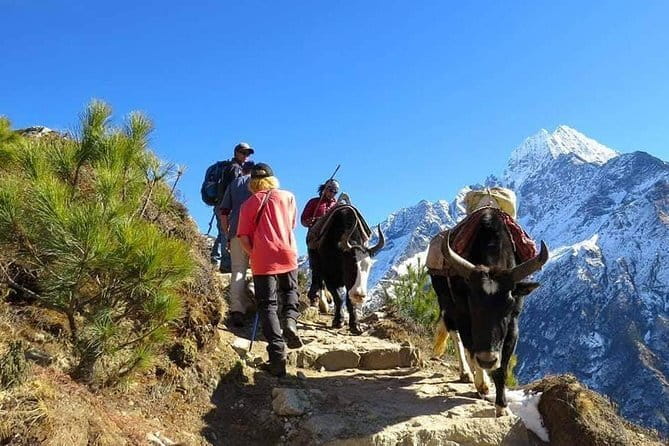
Day 6 starts with a descent through forest, followed by a crossing of the Imja Khola. The trail then climbs to Pangboche at roughly 3,985 meters.
Pangboche sits opposite Ama Dablam, one of the most recognizable mountains in the region. The village includes a gompa, Mani walls, and chortens, giving you a clear sense of Sherpa culture and local religious traditions.
From there, you continue toward Dingboche. The day is listed at up to 10 hours, so this is another section where fitness and pacing matter. The trail is no longer passing through lush lower valleys. You are moving toward a colder, barer alpine setting, with fewer trees and a stronger feeling of isolation.
Dingboche is an important overnight stop because it prepares you for the higher ground ahead. The lodge stays are described as the best available twin-sharing accommodation, but you should still expect basic mountain lodging rather than hotel comfort.
Dingboche’s Second Acclimatization Day
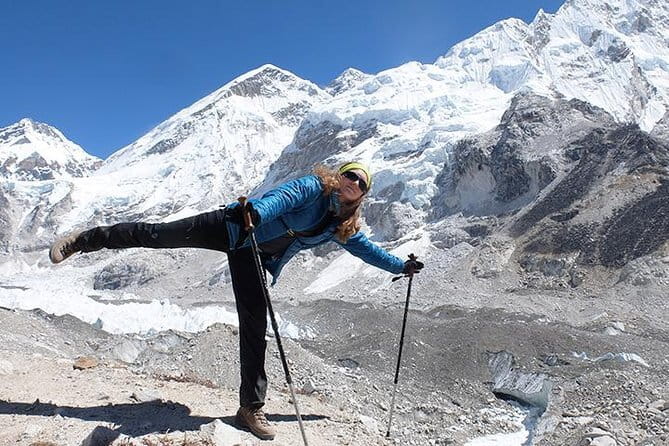
Day 7 is another rest and acclimatization day. The plan offers an optional walk up the valley toward Tshola Tsho Lake at about 4,510 meters, with views of the steep walls of Cholatse and Taboche.
You may also climb toward Nagarjun at around 5,100 meters. The benefit is simple: you walk high, then return to Dingboche to sleep lower. That pattern helps your body adjust before the trek reaches Gorak Shep and Base Camp.
This is not a wasted day. It is one of the most important parts of the route. Skipping rest days may look efficient on paper, but it can make the later stages much harder. You should use this time to eat well, stay hydrated, check your clothing, and tell your guide if you feel unwell.
Lobuche and the Khumbu Glacier
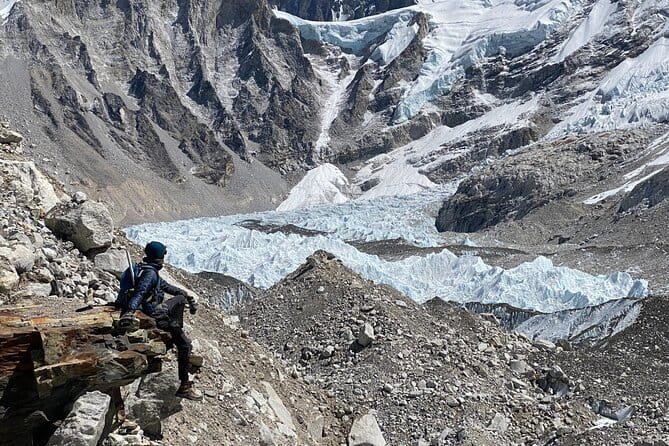
On Day 8, the trail follows a broad valley below Cholatse and Tawache. You then turn toward the foot of the Khumbu Glacier, with a steep climb near Duglha at about 4,620 meters.
Duglha is planned as a lunch stop before the trail continues to Lobuche. The surrounding terrain is now rugged and spare, with fewer trees and more rock, ice, and high ridges. This is the point when the trek feels less like a village-to-village hike and more like a serious mountain journey.
The listed walking time is up to 10 hours. At this altitude, the same distance feels much harder than it would near Lukla. You need warm layers, good boots, and patience. Personal trekking equipment is not included, so you are responsible for arriving prepared.
Gorak Shep and the Long Walk to Base Camp
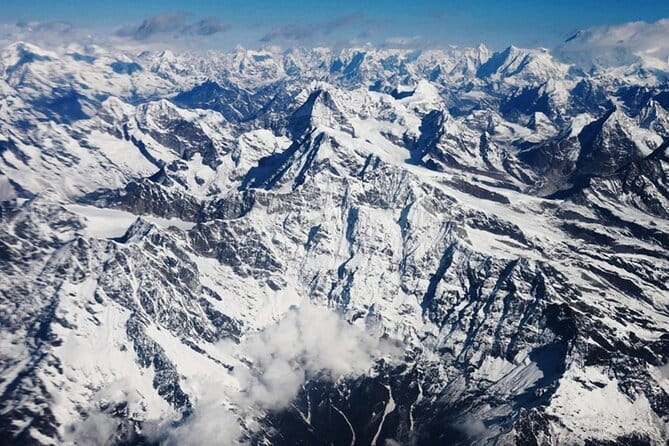
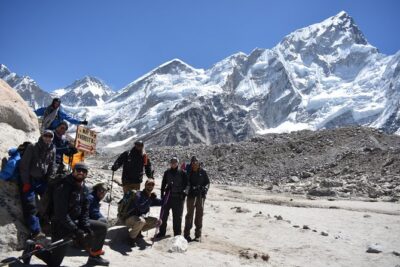
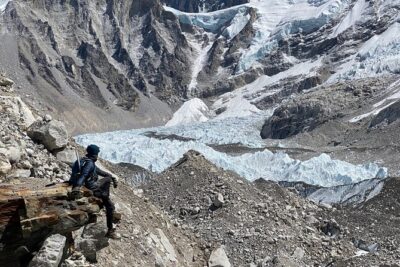
Day 9 takes you along the Khumbu Glacier toward Gorak Shep at about 5,164 meters. The route crosses difficult glacier terrain and rises over a tributary section, with strong views of the surrounding peaks.
The schedule lists one hour to Gorak Shep, followed later by a seven-hour section to Everest Base Camp and back. The timing may look neat on paper, but the trail conditions, altitude, and group pace can change the day. Treat this as one of the hardest parts of the trek.
Everest Base Camp sits at about 5,364 meters. You reach it by following a path through ice formations and beside crevasses in the Khumbu Glacier. Base Camp is a major personal milestone, but the famous summit view is not always visible from there because the camp sits among glacier features and surrounding ridges.
Your higher return route may offer broader views. The value of this day is not only the photograph at Base Camp. It is also the sense of reaching a place used by climbers preparing for the highest mountain on Earth.
Kala Patthar and the Descent to Pheriche
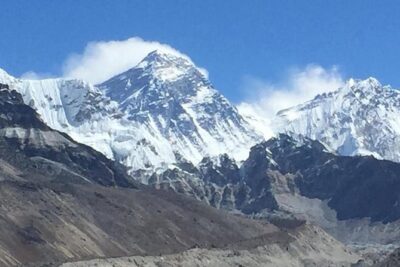
Day 10 begins early with the hike to Kala Patthar at 5,565 meters. This is often the visual high point of the route. From the viewpoint, you are positioned to see Everest, Nuptse, Ama Dablam, Pumori, Lobuche, and other major peaks.
The early start makes sense because the light can be especially clear around sunrise, though the exact conditions are never guaranteed. You should prepare for cold, darkness, and a steep climb before breakfast or soon after, depending on the group plan.
After Kala Patthar, the route is mostly downhill. You retrace the trail to Duglha and continue toward Pheriche. The descent may feel easier on your lungs, but downhill walking can be tiring on knees and ankles after several high-altitude days.
Returning Through Tengboche to Namche
Day 11 follows the river and climbs back through birch and rhododendron forest toward Tengboche. The return route gives you a different view of familiar ground, and the gradual return of trees is a welcome sign.
You then continue toward Namche Bazaar. The day is listed at up to 10 hours, so do not assume that descending makes it easy. Long downhill sections still demand strong legs, and the trail can be rough underfoot.
The route includes views of Kwangde, Tawache, Everest, Nuptse, Lhotse, Ama Dablam, Kantega, and Thamserku. Namche feels more comfortable after the high camps, with more lodge and shop options than the villages farther up the valley.
Lukla Celebration and the Flight Back
Day 12 follows the Dudh Kosi down to Lukla. This is the final trekking day, listed at about 10 hours. You pass back through the lower valley and finish where the walking began.
The evening includes a celebration with the Sherpa guide and support team. That gathering has real meaning after nearly two weeks of shared effort. The porter arrangement is one porter for two trekkers, and staff tips are not included, so plan to budget for gratuities.
Day 13 starts early with the flight from Lukla to Kathmandu. The rest of the day is free for shopping, packing, postcards, or simply resting. Flight schedules in mountain regions can be affected by conditions, so you should keep your international departure plans sensible and avoid an overly tight connection.
On Day 14, the Nepalese support team takes you to Tribhuvan International Airport. You may also extend your stay for other activities listed by the company, including national park game drives, rafting, a Tibet tour, or mountain biking.
Who Will Get the Most From This Trek
This trip suits you if you want the classic Everest Base Camp route with a private group, organized flights, guide support, and lodge accommodation. It is also a good fit if you value logistics being handled for you rather than arranging permits, transport, porters, and meals separately.
You should have a strong level of physical fitness. The program includes several days listed at up to 10 hours, plus walking above 5,000 meters. The altitude is not a minor detail, and the two rest days are important safeguards rather than optional decoration.
Families have used the service with guides Kapil and Namo, and the feedback describes the guides and porters as friendly and supportive. Still, the high altitude means every member of a family group needs to be ready for a demanding trek.
This is less suitable if you want private bathrooms, flexible sightseeing every day, or a short and gentle holiday. Mountain lodges are practical, not luxurious, and hot showers cost extra.
Practical Details Before You Book
Confirmation is provided at booking, and the tour is a private activity for your group only. Pickup is offered, with the stated starting point at Tribhuvan International Airport and a 6:15 a.m. start time.
Free cancellation is available up to 24 hours before the local start time. Changes or cancellations inside that period are not accepted for a refund.
The package includes a first-aid medical kit, but that does not replace travel insurance. You should buy insurance that covers trekking at the required altitude and check the terms carefully before departure.
The company has an overall rating of 4.8 from six submitted ratings. The strongest praise focuses on smooth arrangements, good lodge rooms and food, careful acclimatization, and guides who remain calm and attentive. Hari receives particular praise for cooperation and care, while Kapil and Namo are highlighted for family-friendly support.
Should You Book the Everest Base Camp Trek?
I would recommend this trek if you want a well-organized, private route to Everest Base Camp and value having the major logistics bundled into one price. The included Lukla flights, permits, meals, lodges, guide, and porter support make $1,420 a reasonable starting value.
Book it only after adding the real extras: Kathmandu accommodation and food, a $40 visa, insurance, equipment, drinks, showers, and tips. You should also be honest about your fitness. This is a demanding high-altitude trek, not a sightseeing tour with a little walking added.
If you are ready for long days, simple lodges, cold mornings, and a slow pace, this route gives you the classic Khumbu experience with strong support. If you want comfort above all else, choose a shorter or more hotel-based Nepal trip instead.
FAQ
How long is the Everest Base Camp trek?
The experience lasts approximately 14 days, including arrival in Kathmandu, the trek from Lukla, the return flight, and departure from Nepal.
Where does the trek start?
The stated meeting point is Tribhuvan International Airport in Kathmandu, Nepal. The start time is 6:15 a.m.
Are flights between Kathmandu and Lukla included?
Yes. Round-trip flights between Kathmandu and Lukla, including departure taxes, are included.
Are meals included during the trek?
Yes. The package includes 13 breakfasts, 11 lunches, and 11 dinners, along with seasonal fruit during the trek.
Is accommodation included?
Twin-sharing lodge accommodation during the trek is included. Food and accommodation in Kathmandu are not included and are listed at about $45 per day.
Do I need travel insurance?
Travel insurance is not included. The tour information specifically lists it as an additional cost, so you must arrange it yourself.
What fitness level is required?
A strong physical fitness level is required. The schedule includes several walking days listed at up to 10 hours, with the highest points reaching Kala Patthar at 5,565 meters and Everest Base Camp at 5,364 meters.
New in the Kathmandu listings
- Traditional Momo Making Class★ 5.0 · 10 reviews
- Kathmandu: Ancient City Kirtipur & Pharping Monastery Tour★ 5.0 · 2 reviews
- Kathmandu to Pokhara Premium sofa bus ticket★ 4.0 · 17 reviews
- Women Empowerment Project(Nepali cooking class & jewelry workshop★ 5.0 · 15 reviews
- 7-Day Langtang Valley Trek from Kathmandu★ 5.0 · 1 review
- Kathmandu 2 Nights 3 Days Chitwan Jungle Safari Tour★ 5.0 · 9 reviews
- Yoga Experience Day Trip with Private Transfer From Kathmandu★ 4.0 · 2 reviews
- Wildlife Adventure in Chitwan Nepal★ 4.0 · 4 reviews
Everest Base Camp Treks, compared.
Everest Base Camp Trek with Helicopter Return from Gorakshep to Lukla
Read our review →Browse the lists this tour appears in