
REVIEW · EVEREST BASE CAMP TREKS
Everest: 16 Day Trek to Everest Base Camp
Everest starts with a long climb. This 16-day trek takes you from Kathmandu to Everest Base Camp, with time in Sherpa villages, two acclimatization days, and a sunrise-style climb of Kala Patthar. I like the steady pace for first-time trekkers and the fact that meals, tea house lodging, flights, permits, a guide, and a porter are built into the $1,699 price.
I also like the personal care shown by Sujan, the trip contact, when a serious fall at about 5,100 meters required a return to Kathmandu. That kind of help matters in the high country. The main drawback is the altitude: Base Camp is listed at roughly 5,340 to 5,364 meters, while Kala Patthar reaches 5,555 meters, so this is still a demanding mountain trek despite the relaxed schedule.
In This Review
- Key points before you book
- What the $1,699 price really covers
- Days 1 and 2: Kathmandu gives you a soft landing
- Day 3: Flying to Lukla and walking to Phakding
- Day 4: Namche Bazaar brings the first serious climb
- Day 5: A needed acclimatization day in Namche
- Days 6 and 7: Pangboche and Dingboche
- Day 8: Another acclimatization night at 4,410 meters
- Day 9: Lobuche and the high mountain world
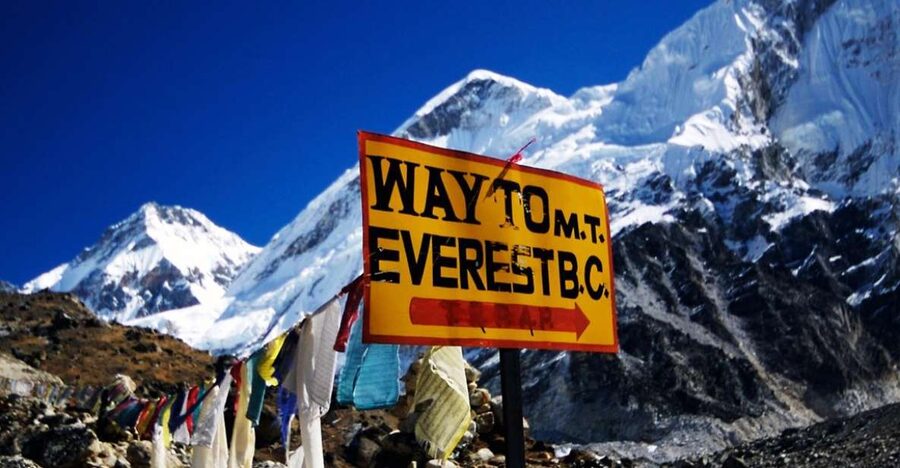
- Day 10: Gorak Shep and Everest Base Camp
- Day 11: Kala Patthar, then a large descent to Pheriche
- Days 12 to 14: Returning through Tengboche, Namche, and Lukla
- Day 15: The flight back to Kathmandu
- Day 16: Departure and the final practical details
- Guides, porters, and help when plans change
- Who should book this trek?
- Should you book the Everest Base Camp trek?
- FAQ
- How long is the Everest Base Camp trek?
- What is the price per person?
- Is airfare from Kathmandu to Lukla included?
- Are meals included during the trek?
- Is food included in Kathmandu?
- How many nights are spent in tea houses?
- Are a guide and porter included?
- Is the Everest National Park permit included?
- What should I bring?
- Is the trek suitable for wheelchair users?
Key points before you book
- Kala Patthar is the high point: At 5,555 meters, it offers the trip’s main viewing point for Everest and the surrounding peaks.
- Two acclimatization days are included: You spend a rest day in Namche and another in Dingboche before pushing higher.
- The price covers the costly essentials: Domestic flights, tea houses, meals, permits, guide, porter, jacket, sleeping bag, and airport transfers are included.
- Sherpa culture is part of the route: Nights in villages such as Namche, Pangboche, Dingboche, and Tengboche add a human side to the mountain scenery.
- Flights may use Ramechhap: The Kathmandu to Lukla flight plan can change, so leave room for transport adjustments.
- The safety support matters: Sujan and the trekking team handled an emergency that required someone to return to Kathmandu, a useful sign of hands-on support.
What the $1,699 price really covers
At $1,699 per person, this trek is not a bare-bones walking package. You receive three nights in a three-star Kathmandu hotel with breakfast, twelve nights in tea houses, an English-speaking guide, a porter, meals during the trek, Everest National Park permits, and return airfare between Kathmandu and Lukla.
The food plan covers breakfast, lunch, dinner, and a cup of tea each day on the trail. That removes one of the daily chores of a long trek, though you still pay separately for mineral water, desserts, Wi-Fi, and personal purchases. Lunch and dinner in Kathmandu are also outside the package.
The equipment loan is practical. A jacket and sleeping bag are provided, but you must return them after the trek. You also receive a kitbag and T-shirt. Bring your own warm clothing, hiking shoes, and hiking pants rather than treating the supplied items as a complete personal kit.
The price also includes fuel, road taxes, parking fees, airport and hotel transfers, and the national park permit. International airfare, Nepal entry visa fees, travel insurance, and departure taxes are not included. For a high-altitude route with domestic flights and twelve nights on the trail, the package offers solid value, particularly if you prefer one price for the main moving parts.
More Everest Base Camp treks:
- Everest Base Camp Trek – 14 Days
★ 5.0 · 1,499 reviews - Everest Base Camp Trekking
★ 5.0 · 485 reviews - Everest Base Camp Trekking – 13 Day
★ 5.0 · 365 reviews
Days 1 and 2: Kathmandu gives you a soft landing
Day 1 is your arrival in Kathmandu at about 1,400 meters. Airport and hotel transfers are included, and you stay in a three-star hotel. A welcome or farewell dinner is also part of the package, giving you one organized meal in the capital.
Day 2 is set aside for Kathmandu sightseeing, but the guided tour itself is not included. That distinction matters. You have a full day in the city, but you arrange and pay for any sightseeing guide, entrance fees, meals, or other personal expenses yourself.
This first stage is useful for settling in before the flight to Lukla. You can organize your personal items, confirm your trekking kit, and enjoy the lower altitude before the route rises sharply. The itinerary does not specify which Kathmandu sights are visited, so you should not assume a particular monument or museum is part of the day.
Day 3: Flying to Lukla and walking to Phakding
The mountain portion begins with a flight from Kathmandu to Lukla, at approximately 2,860 meters. From Lukla, you trek to Phakding, at about 2,610 meters.
This first walking day introduces the basic rhythm of the trip without immediately finishing at the highest point. The route takes you through the lower Khumbu region, where rivers, valleys, and village life begin to replace the city.
Flight conditions and airport arrangements can change. The plan may require using Ramechhap Airport instead of Kathmandu, so you need to stay flexible about the departure point. The package includes the airfare, but not every operational detail can be fixed in advance.
Day 4: Namche Bazaar brings the first serious climb
You trek from Phakding to Namche Bazaar, reaching about 3,440 meters. Namche is one of the key stops on the route and the place where the altitude begins to feel more serious.
The village is an important Sherpa center, so this is one of your best chances to see local life along the route rather than simply passing through empty mountain scenery. You also begin to understand why the itinerary does not rush upward every day.
The climb to Namche can be a demanding step for a first-time trekker. Your guide and porter are especially valuable here because you are still learning how to manage your pack, pace, clothing, food, and water at altitude.
More walking in the hills of Kathmandu:
- Nagarkot Sunrise View and Day Hiking from Kathmandu
★ 5.0 · 471 reviews - Annapurna Circuit Trek with Tilicho Lake
★ 5.0 · 368 reviews - Everest Base Camp Trek -14 Days
★ 5.0 · 321 reviews - Annapurna base camp trek 5 Days
★ 5.0 · 252 reviews
Day 5: A needed acclimatization day in Namche
You spend a second night at 3,440 meters instead of climbing higher. This is one of the strongest features of the itinerary. A planned acclimatization day makes the schedule less frantic and gives your body more time to adjust before the route rises above 4,000 meters.
The supplied information does not specify a particular side walk or sightseeing activity for this day. That is worth noting. You have time in Namche, but the exact plan may be set by the guide and local conditions.
I like this pause because it protects the overall rhythm of the trek. You are not simply racing toward Base Camp and hoping your body keeps up.
Days 6 and 7: Pangboche and Dingboche
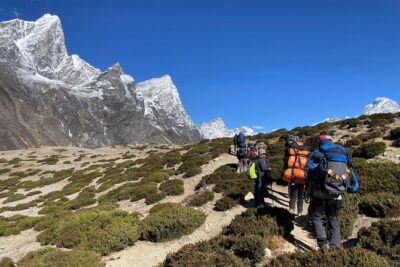
Day 6 takes you to Pangboche, at roughly 3,985 meters. The route continues through high valleys with views of soaring peaks, glaciers, and rivers. The villages become more closely tied to the mountain route, and the Sherpa side of the trip becomes more pronounced.
On Day 7, you continue to Dingboche at about 4,410 meters. This is a notable jump in altitude, and the air may feel thinner even if the walking distance seems manageable.
Dingboche is an important pause point because it is high enough for altitude adjustment but still before the final push toward Lobuche and Gorak Shep. Keep your schedule calm here. The goal is not to prove how fast you can walk, but to remain well enough to continue.
Day 8: Another acclimatization night at 4,410 meters
The second acclimatization day takes place in Dingboche. Spending two nights at this elevation helps break up the climb and gives you a buffer before reaching nearly 5,000 meters.
This day may feel less exciting than a new village or a famous viewpoint, but it is one of the most valuable parts of the schedule. You need time to rest, eat, drink, and listen to your guide if you feel unwell.
The trip description calls this a more relaxed pace designed for first-time trekkers. That does not make the trek easy. It means the itinerary gives you more time to adjust than a rushed schedule would.
Day 9: Lobuche and the high mountain world
You leave Dingboche for Lobuche, at approximately 4,940 meters. At this elevation, the route feels distinctly high and remote. The surrounding peaks, valleys, and glaciers become the main event, while ordinary comforts become less available.
Lobuche prepares you for the next day, which combines Gorak Shep and Everest Base Camp. You should think of this night as a staging point, not just another village stop.
The supplied information does not give daily walking times or distances. That makes it hard to predict exactly how long you will walk each day, so ask the operator for the current schedule before departure.
Day 10: Gorak Shep and Everest Base Camp
Day 10 takes you to Gorak Shep at about 5,164 meters, then onward to Everest Base Camp, listed at 5,364 meters in the day-by-day plan. The overview gives a slightly different Base Camp figure of 5,340 meters, so treat the altitude as approximately 5,300 meters rather than relying on a single exact number.
You return to Gorak Shep after reaching Base Camp. That makes this a long and demanding day, especially because you are already walking at an elevation where every uphill section can feel slow.
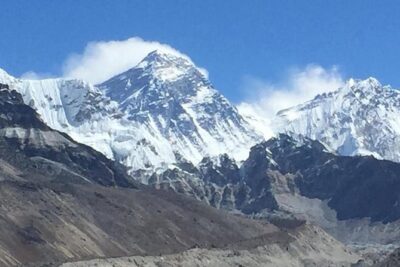
Base Camp is the emotional target of the trek, but it is important to understand the view you are seeking. The route brings you to the Everest Base Camp area, while Kala Patthar is the designated viewing point for Everest itself. The two stops serve different purposes, and the next morning provides the best chance for the broad mountain panorama.
Day 11: Kala Patthar, then a large descent to Pheriche
You climb Kala Patthar at 5,555 meters, listed elsewhere as approximately 18,193 to 18,225 feet. The summit is the trip’s highest point and the place to look across the Himalayan peaks from a major viewpoint.
After Kala Patthar, you descend to Pheriche at approximately 4,371 meters. That is a major drop in elevation, but the day still requires stamina because the climb comes first.
This is the day that best explains the appeal of the route. You get the high viewpoint and the Base Camp visit, then begin giving your body relief by losing altitude. Do not mistake the descent for an easy finish. Tired legs and uneven trails can still make it demanding.
Days 12 to 14: Returning through Tengboche, Namche, and Lukla
Day 12 takes you back to Tengboche at about 3,860 meters. The village adds another Sherpa cultural stop to the route and breaks up the return walk. It is a welcome change after the stark high-altitude section around Gorak Shep.
On Day 13, you continue to Namche Bazaar at 3,440 meters. Returning to a lower elevation can feel refreshing, though the route is not simply downhill all the way. Mountain trails often rise and fall, and you still need to manage your energy.
Day 14 brings you back to Lukla, at approximately 2,860 meters. This is the final trekking day, with the trail portion ending before your return flight. By now, the porter and guide have done more than carry equipment and lead the way. They have helped keep the group organized across changing altitude, villages, weather, and flight plans.
Day 15: The flight back to Kathmandu
You fly from Lukla back to Kathmandu on Day 15. As with the outward flight, the plan may involve Ramechhap Airport, so keep your schedule open to that possibility.
Your Kathmandu hotel stay totals three nights under the package, with breakfast included. The trip does not include lunch or dinner in the capital, so budget for those meals yourself.
A return flight gives you a fast end to a long trek. It also means flight operations matter. The package includes the airfare, but the information does not promise a fixed departure time or guarantee that every flight will use Kathmandu Airport.
Day 16: Departure and the final practical details
Day 16 is your departure from Kathmandu, with airport drop-off included. By this point, you will have spent sixteen days moving between the capital, the Khumbu villages, Base Camp, Kala Patthar, and Lukla.
The main personal costs are easy to identify: visa fees, international flights, insurance, Kathmandu meals, water, Wi-Fi, desserts, and personal expenses. Travel insurance deserves special attention because it is not included, and the trip reaches more than 5,000 meters.
The basic packing list says passport, warm clothing, hiking shoes, and hiking pants. In practice, warm layers are especially important because the route moves from 1,400 meters to the high mountain zone. The supplied jacket and sleeping bag help, but they are loan items, not gifts.
Guides, porters, and help when plans change
The package includes an English-speaking trekking guide and porter. That is useful on a route where altitude, flight changes, and long trail days can complicate an otherwise simple plan.
Sujan is specifically praised for being kind and helpful during an emergency. A participant suffered a fall at about 5,100 meters and needed to return to Kathmandu, and Sujan helped handle the situation. You should not book a high-altitude trek assuming problems will happen, but you should value a team that responds when they do.
The guide also helps with communication in the villages and keeps the walking plan moving. Since no group size is provided, ask how many people will be on your departure and how porter duties are arranged.
Who should book this trek?
I would recommend this route to a first-time high-altitude trekker who wants a structured plan rather than arranging every tea house, meal, permit, and domestic flight independently. The two acclimatization days are a real benefit, and the included guide and porter reduce the practical load.
It is not suitable for wheelchair users or people with mobility impairments. You also need to be comfortable with a long mountain route that reaches more than 5,000 meters. The itinerary is relaxed by Everest standards, not by ordinary holiday standards.
The trip suits someone who values local villages, basic tea house accommodation, dramatic peaks, and a clear route to Base Camp. It is less suitable if you need luxury lodging, a fully guided Kathmandu sightseeing program, fixed flight arrangements, or all drinks and personal costs included.
Should you book the Everest Base Camp trek?
Book it if you want a well-organized route with the major costs gathered into one package. The combination of Base Camp and Kala Patthar, Sherpa villages, two acclimatization days, meals, tea houses, permits, flights, and a guide gives the $1,699 price a sensible foundation.
Before paying, confirm the current flight plan, the possible use of Ramechhap Airport, the daily walking hours, group size, and what happens if weather delays a flight. Also arrange travel insurance and bring more than the short packing list suggests.
The strongest reason to choose this trip is the support. Sujan’s hands-on help during a serious high-altitude emergency adds weight to the promise of organized care. If you accept basic lodging, high altitude, and changing mountain logistics, this is a practical way to reach Everest Base Camp without planning every detail alone.
FAQ
How long is the Everest Base Camp trek?
The experience lasts 16 days, including arrival and departure days in Kathmandu, the trek, domestic flights, and Kathmandu sightseeing time.
What is the price per person?
The price is $1,699 per person.
Is airfare from Kathmandu to Lukla included?
Yes. The package includes the flight from Kathmandu to Lukla and the return flight to Kathmandu. The plan may require using Ramechhap Airport.
Are meals included during the trek?
Yes. Breakfast, lunch, dinner, and a cup of tea are included during the trekking portion.
Is food included in Kathmandu?
Breakfast is included with the three Kathmandu hotel nights. Lunch and dinner in Kathmandu are not included.
How many nights are spent in tea houses?
The package includes 12 nights in tea houses during the trek.
Are a guide and porter included?
Yes. An experienced English-speaking trekking guide and porter are included.
Is the Everest National Park permit included?
Yes. The package includes the National Park Permit for Everest.
What should I bring?
You should bring your passport, warm clothing, hiking shoes, and hiking pants. A jacket and sleeping bag are supplied for use during the trek and must be returned afterward.
Is the trek suitable for wheelchair users?
No. The experience is not suitable for wheelchair users or people with mobility impairments.
New in the Kathmandu listings
- Traditional Momo Making Class★ 5.0 · 10 reviews
- Kathmandu: Ancient City Kirtipur & Pharping Monastery Tour★ 5.0 · 2 reviews
- Kathmandu to Pokhara Premium sofa bus ticket★ 4.0 · 17 reviews
- Women Empowerment Project(Nepali cooking class & jewelry workshop★ 5.0 · 15 reviews
- 7-Day Langtang Valley Trek from Kathmandu★ 5.0 · 1 review
- Kathmandu 2 Nights 3 Days Chitwan Jungle Safari Tour★ 5.0 · 9 reviews
- Yoga Experience Day Trip with Private Transfer From Kathmandu★ 4.0 · 2 reviews
- Wildlife Adventure in Chitwan Nepal★ 4.0 · 4 reviews
Everest Base Camp Treks, compared.
Everest Base Camp Trek with Helicopter Return from Gorakshep to Lukla
Read our review →Browse the lists this tour appears in