
REVIEW · EVEREST BASE CAMP TREKS
Everest Base Camp trek- 11 days
The Himalaya makes ordinary walking feel heroic. This 11-day Everest Base Camp trek packs in a Lukla flight, Sherpa villages, high mountain views, Tengboche Monastery, Everest Base Camp, and sunrise from Kalapathar. I especially like that meals, porters, permits, flights, and local transport are included, and that the trip is private for your own group. The main caution is the pace: reaching 5,545 meters in just over a week requires solid fitness and careful attention to altitude.
I also like the practical support from Mount Face Nepal. Airport pickup and drop-off, a government-licensed guide, a porter for every two clients, and prearranged lodge bookings remove much of the daily hassle. Guide Dipu, also written as Deepu in some comments, receives especially warm praise for his steady help and good company on the trail. Still, Kathmandu lodging, travel insurance, drinks, tips, personal equipment, and some meals in the capital are extra.
In This Review
- Key points before you book
- What the $1,699 price really covers
- Day 1: Lukla to Phakding begins with a quick change of pace
- Day 2: The trail climbs toward Namche Bazaar
- Day 3: Namche provides the trip’s essential pause
- Day 4: Tengboche combines mountain views and faith
- Day 5: Dingboche marks the move into high country
- Day 6: Lobuche brings thin air and big expectations
- Day 7: Gorakshep and Everest Base Camp deliver the main goal
- Day 8: Kalapathar supplies the classic mountain view
- Days 9 and 10: The return route feels different
- Day 11: Lukla to Kathmandu closes the loop
- The guide and support make the difference
- Who should book this Everest trek?
- Should you book it?
- FAQ
- How long is the Everest Base Camp trek?
- Where does the trek start?
- Is transportation to Lukla included?
- Are meals included during the trek?
- Is accommodation included?
- Is a guide and porter provided?
- Is travel insurance included?
Key points before you book
- A dramatic start: The flight from Kathmandu to Lukla begins the mountain journey with a quick change from city life to the Khumbu region.
- A real acclimatization day: Day three in Namche Bazaar gives your body time to adjust before the trail climbs higher.
- Two major viewpoints: Everest Base Camp is the destination, but Kalapathar provides the clearest stated viewpoint for seeing the world’s highest peak.
- Sherpa culture along the way: Namche Bazaar, Tengboche Monastery, local homes, and multi-ethnic mountain communities add more than scenery.
- A private format: Only your group participates, which can make the pace and daily support feel more personal.
- A strong package price: At $1,699 per person, the cost includes domestic flights, full-board trekking meals, accommodation, permits, guide services, porter support, and taxes.
What the $1,699 price really covers
At first glance, $1,699 is not a small price. But this is not simply a walking tour with a guide. The package covers the Kathmandu to Lukla and Lukla to Kathmandu flights, airport transfers, trekking accommodation, breakfast, lunch, and dinner during the trek, a licensed guide, porter support, permits, the TIMS card, first-aid supplies, staff insurance and salaries, transportation, local taxes, and a farewell dinner.
That bundle matters in the Everest region. You are paying for a network of moving parts, not only for time on the trail. Flights, mountain lodges, staff, paperwork, meals, and local transport are handled together. Several comments praise the way the company manages those details, allowing the person on foot to focus on walking and the views.
The limits are clear. Your Kathmandu hotel is not included, nor are lunch and dinner in Kathmandu. Travel insurance, Nepal’s entry visa, international flights, airport departure tax, drinks, alcohol, laundry, shopping, gifts, and personal trekking equipment are also outside the package. Tips for the trekking staff are extra too, so budget for them before you arrive.
The company normally provides one porter for two clients. That is useful, but you should still pack sensibly and confirm the baggage arrangement before departure. If the number of trekking days changes, the cost may be recalculated. That clause is worth noting because weather, flights, and altitude can affect mountain schedules.
More Everest Base Camp treks:
- Everest Base Camp Trek – 14 Days
★ 5.0 · 1,499 reviews - Everest Base Camp Trekking
★ 5.0 · 485 reviews - Everest Base Camp Trekking – 13 Day
★ 5.0 · 365 reviews
Day 1: Lukla to Phakding begins with a quick change of pace
Your day starts at 7:15 am from Thamel in Kathmandu, followed by an airport transfer and a flight to Lukla at 2,850 meters. The flight is one of the trip’s headline moments. It places you near the trailhead and saves the long approach from lower elevations.
From Lukla, you walk to Phakding at about 2,660 meters. The listed walking distance is not provided, so do not judge this first day by mileage alone. The important point is that you begin walking soon after arriving at altitude. Keep your first day calm, drink regularly, and let your guide know if you feel unwell.
Phakding is your first overnight stop. The change from Kathmandu to a mountain settlement is part of the appeal, but the flight also brings a practical risk: mountain air travel can be affected by conditions. The program includes the return flight, yet you should keep travel insurance for trekking and flight disruption because it is not included.
Day 2: The trail climbs toward Namche Bazaar
The walk from Phakding to Namche Bazaar reaches 3,435 meters. This is a key day because the route begins to feel properly Himalayan, with the trail heading toward the Sherpa center that serves as the gateway to Everest Base Camp.
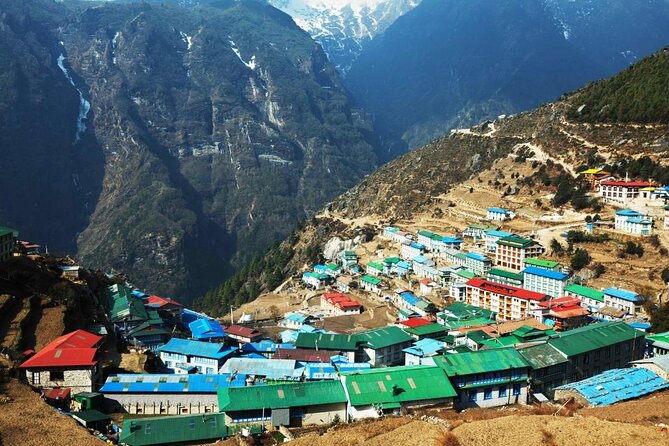
Namche is more than a place to sleep. It is described as a Sherpa hometown, and it gives you an early chance to see how communities in the Khumbu region support life, trade, and trekking at high elevation. The program also highlights monasteries, friendly multi-ethnic communities, and local culture, so the experience is not only about collecting mountain photographs.
The drawback is the altitude gain. You may be excited to reach Namche, but the correct goal is not speed. Walk at the guide’s pace and save energy for the higher days ahead.
Day 3: Namche provides the trip’s essential pause
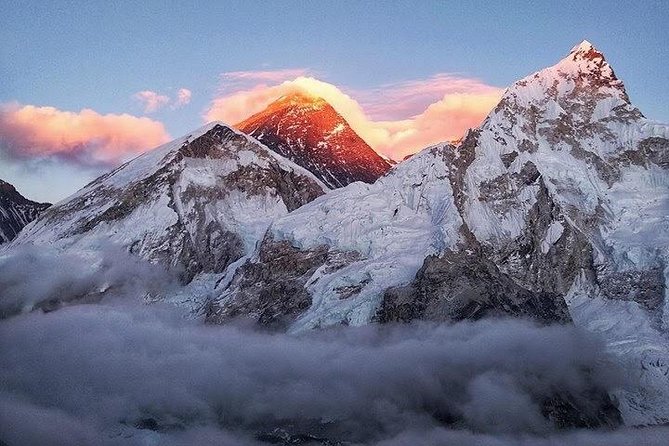
The third day is set aside for acclimatization in Namche at 3,435 meters. I consider this one of the strongest features of the schedule. A trek that rushes upward without a planned rest day gives your body less time to adjust, while this pause makes the later climb more sensible.
The supplied details do not specify exactly how the day is spent, so you should ask Mount Face Nepal what local walking or viewpoints are planned. You can expect the day to be less about covering distance and more about allowing your body to adapt.
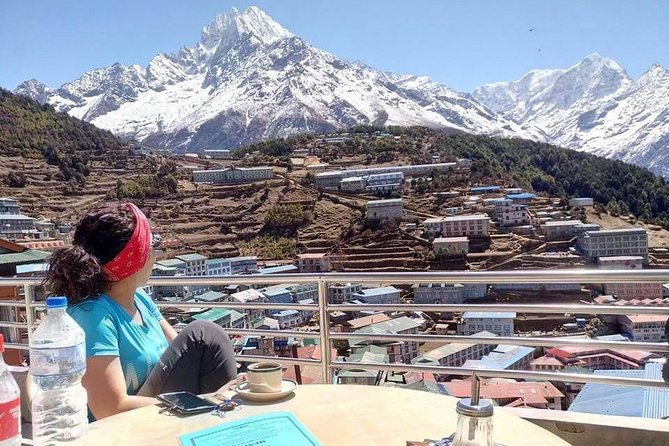
Namche is also an excellent place to appreciate the cultural side of the trek. The town is identified with the Sherpa community, and the surrounding area offers views toward Everest, Lhotse, Nuptse, Ama Dablam, and Thamserku. You may find that this is the point where the journey changes from a demanding hike into a serious high-altitude expedition.
More walking in the hills of Kathmandu:
- Nagarkot Sunrise View and Day Hiking from Kathmandu
★ 5.0 · 471 reviews - Annapurna Circuit Trek with Tilicho Lake
★ 5.0 · 368 reviews - Everest Base Camp Trek -14 Days
★ 5.0 · 321 reviews - Annapurna base camp trek 5 Days
★ 5.0 · 252 reviews
Day 4: Tengboche combines mountain views and faith
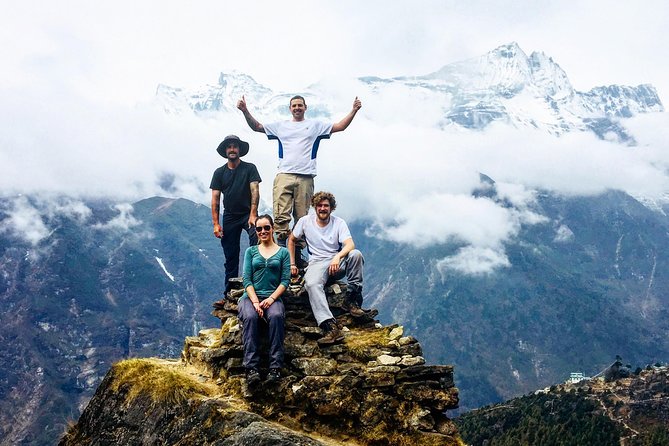
The trail from Namche to Tengboche climbs to 3,890 meters. Tengboche Monastery is one of the major cultural stops, and its setting gives the day a strong sense of place. The monastery offers a reminder that the Khumbu is a lived-in region with religious traditions, not an empty route built only for trekkers.
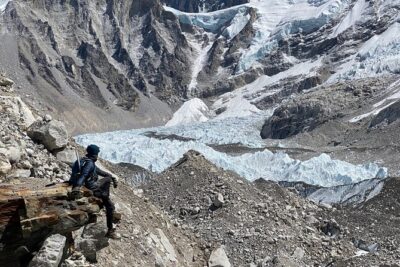
This stage also brings more of the famous peaks into view. Everest, Lhotse, Nuptse, Ama Dablam, and Thamserku are all named among the expected sights. You may also see views toward the Khumbu Icefall, one of the most striking features connected with the Everest route.
The practical issue is that the trek is now reaching higher ground each day. Even if you feel fit in Namche, altitude can affect you differently from one morning to the next. A guide who stays in close contact, as Dipu is praised for doing, is valuable here.
Day 5: Dingboche marks the move into high country
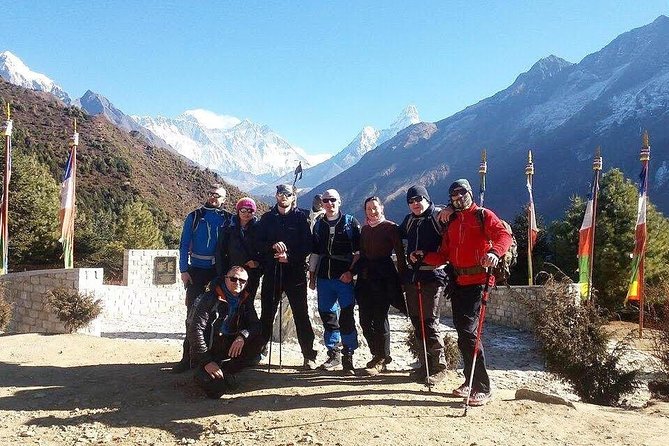
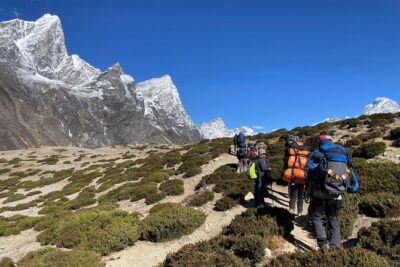
The walk from Tengboche to Dingboche reaches approximately 4,400 meters. This is a major step up from Namche and a point where fitness alone does not tell the whole story. You need patience, steady breathing, and the willingness to communicate with your guide.
Dingboche is important because it places you within the high-altitude section of the journey. The schedule does not list an additional acclimatization day here, so you should ask how the guide handles symptoms and pacing. The company states that a first-aid kit is carried, and guide support is included, but personal travel insurance remains your responsibility.
The reward is the sense of moving deeper into the Everest region. The villages become part of the experience, and the mountains feel less like a distant backdrop. At this height, a warm meal and a suitable lodge matter. Breakfast, lunch, and dinner are included during the trekking period, which helps keep daily budgeting simple.
Day 6: Lobuche brings thin air and big expectations
From Dingboche, you continue to Lobuche at about 4,910 meters. By now, the physical challenge is unmistakable. This is not a casual mountain holiday, and the description correctly asks for a moderate level of fitness.
Lobuche is a staging point before the push to Gorakshep and Base Camp. The schedule places that major day next, so use this overnight stop to rest rather than treat it as another chance to prove your speed. The porter support is useful because carrying a heavy pack at nearly 5,000 meters can make an already difficult day harder.
Accommodation is described as the best available during the trek. That wording is realistic. High-altitude lodge standards should not be confused with city hotels, and you should bring the personal trekking equipment you need because it is not supplied by the package.
Day 7: Gorakshep and Everest Base Camp deliver the main goal
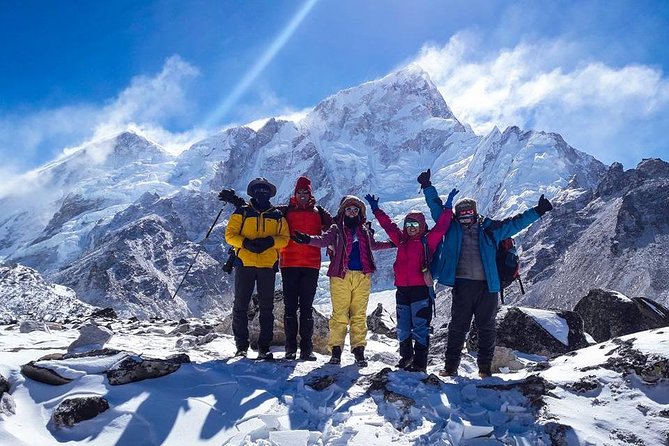
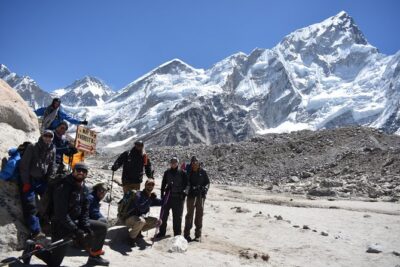
The route from Lobuche goes to Gorakshep at 5,180 meters, then continues to Everest Base Camp at 5,380 meters before returning to Gorakshep. This is the trek’s central achievement and likely its hardest full day.
Everest Base Camp has a powerful name, but it is important to understand what you are visiting. It is the base area used for Everest expeditions, not the summit and not the highest point on the trip. The achievement here comes from reaching the foot of the famous climbing route after days of walking through the Khumbu.
The altitude is the serious part. At 5,380 meters, you may move slowly and feel the cold or thin air. The provided schedule does not state how long you stay at Base Camp, so ask your guide for the expected timing. Returning to Gorakshep the same day means you need to protect your energy early on.
Day 8: Kalapathar supplies the classic mountain view
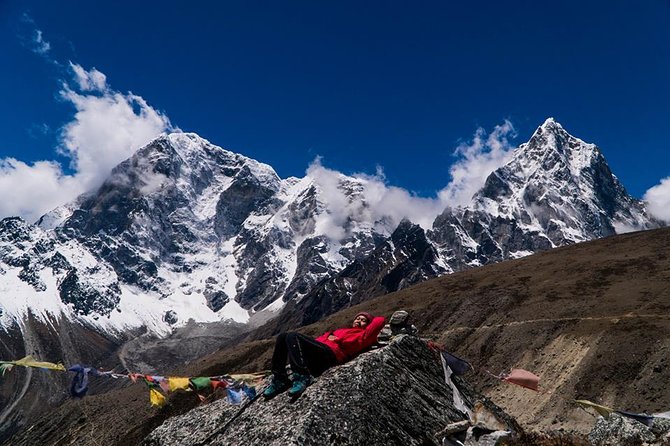
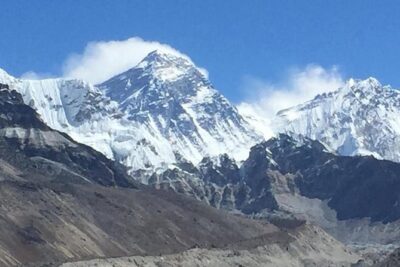
You leave Gorakshep for Kalapathar at 5,545 meters, the highest point in this schedule, then descend to Pheriche at approximately 4,320 meters. The early morning timing is designed for a sunrise view over snowcapped mountains, and Kalapathar is presented as the viewpoint for seeing Everest.
This is one of the trek’s best design choices. Base Camp gives you the satisfaction of arriving at a famous destination, while Kalapathar gives you the broad mountain view that many people picture when they think of Everest. You may see Everest, Lhotse, Nuptse, Ama Dablam, and Thamserku from the high viewpoints, along with the Khumbu Icefall.
The day is still demanding because it begins high and includes a long descent. The move to Pheriche is helpful, but do not assume going downhill makes the day easy. Knees and tired legs often complain on descents.
Days 9 and 10: The return route feels different
Day nine takes you from Pheriche back to Namche Bazaar. After the high section, the descent should feel like a release, though it remains a full walking day. You will pass again through places that may look different now that you have crossed the hardest portion of the route.
Day ten continues from Namche to Phakding and then Lukla at about 2,835 meters. This is a long return day according to the schedule, so it deserves careful attention. If the walk is tiring, that is normal. The benefit is that your porter, guide, meals, accommodation, and local arrangements are already part of the package.
The second night in Lukla keeps you ready for the flight to Kathmandu on day eleven. Since the program depends on domestic air travel, confirm the final flight arrangements with the company and keep your departure plans flexible enough to cope with a change.
Day 11: Lukla to Kathmandu closes the loop
The final flight returns you to Kathmandu, where the activity ends back at the Thamel meeting point. Airport pickup and drop-off for the Lukla flight are included, and ground transportation back to Kathmandu is also covered.
A farewell dinner is included before departure. That is a pleasant closing touch after 11 days of walking, although your Kathmandu hotel and city meals are still your own responsibility.
The guide and support make the difference
The strongest praise centers on organization and personal care. Dipu or Deepu is repeatedly singled out for help, communication, conversation, and support during the trek. The company is also credited with managing airport pickup, flight tickets, lodge bookings, and the wider schedule from the first contact through the return to Kathmandu.
That support matters most when you are tired. Having a guide who checks in, stays reachable, and helps with the practical side can make the difference between enjoying the route and worrying about every small detail. The private format also means only your own group takes part, rather than placing you in a large mixed party.
The package includes a government-licensed guide and a porter for two clients. Staff insurance, salaries, food, accommodation, equipment, transportation, and local taxes are covered for the guide and porters. Tips are not included, so plan for that separate cost.
Who should book this Everest trek?
I would recommend it to you if you want a tightly organized first visit to the Everest region and prefer having flights, meals, permits, accommodation, staff, and transfers arranged in one package. It suits people who want both the mountain goal and cultural stops such as Namche Bazaar and Tengboche Monastery.
You should also be comfortable with a demanding high-altitude walk. The schedule reaches 5,545 meters, asks for moderate physical fitness, and includes long days near the end of the ascent and return. If you want a slower program with more acclimatization time, ask for a modified plan before paying, since changing the number of trekking days can change the cost.
The private format is a good fit if you value close guide support or are traveling with friends. It may be less suitable if you want a very low-cost, independent trek or if you have no experience preparing for a high-altitude route.
Mount Face Nepal has a free cancellation policy up to 24 hours before the local start time. Passport name, number, expiry date, and country are required for every participant at booking.
Should you book it?
Book this trek if you want the classic Everest route in a compact 11-day package and value having the hard logistics handled. The $1,699 price is strong for what it includes, especially the Lukla flights, full-board meals, porter, guide, permits, accommodation, and transfers.
Think twice if you need a slow acclimatization schedule, private Kathmandu lodging, or a fully equipped package. Before booking, confirm the flight plan, porter baggage limits, lodge expectations, personal equipment list, and how the guide manages altitude concerns.
For a prepared walker, this is a well-supported way to reach Everest Base Camp, stand at Kalapathar for sunrise, and meet the Sherpa communities along the route without having to arrange every moving part yourself.
FAQ
How long is the Everest Base Camp trek?
The experience lasts approximately 11 days, beginning and ending in Kathmandu.
Where does the trek start?
The meeting point is in Thamel, Kathmandu, Nepal. The listed start time is 7:15 am.
Is transportation to Lukla included?
Yes. Airport pickup and drop-off for the Lukla flight are included, as are the Kathmandu to Lukla and Lukla to Kathmandu airfares.
Are meals included during the trek?
Breakfast, lunch, and dinner are included during the trekking period. Lunch and dinner in Kathmandu are not included.
Is accommodation included?
Yes, the package includes the best available accommodation during the trek. A hotel in Kathmandu is not included.
Is a guide and porter provided?
Yes. A government-licensed guide is included, along with porter support. The stated arrangement is normally one porter for two clients.
Is travel insurance included?
No. Travel insurance is not included, and tips, drinks, personal trekking equipment, visa fees, international airfare, and personal expenses are also separate.
New in the Kathmandu listings
- Traditional Momo Making Class★ 5.0 · 10 reviews
- Kathmandu: Ancient City Kirtipur & Pharping Monastery Tour★ 5.0 · 2 reviews
- Kathmandu to Pokhara Premium sofa bus ticket★ 4.0 · 17 reviews
- Women Empowerment Project(Nepali cooking class & jewelry workshop★ 5.0 · 15 reviews
- 7-Day Langtang Valley Trek from Kathmandu★ 5.0 · 1 review
- Kathmandu 2 Nights 3 Days Chitwan Jungle Safari Tour★ 5.0 · 9 reviews
- Yoga Experience Day Trip with Private Transfer From Kathmandu★ 4.0 · 2 reviews
- Wildlife Adventure in Chitwan Nepal★ 4.0 · 4 reviews
Everest Base Camp Treks, compared.
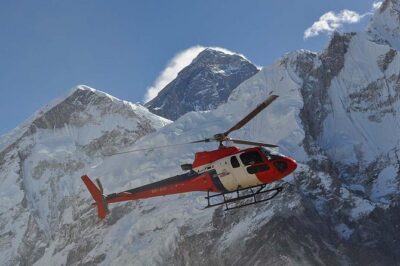
Everest Base Camp Trek with Helicopter Return from Gorakshep to Lukla
Read our review →Browse the lists this tour appears in