
REVIEW · EVEREST BASE CAMP TREKS
Everest Base Camp Trek 14 Days
Everest begins with a small plane. This 14-day Everest Base Camp trek combines a dramatic flight to Lukla, two proper acclimatization days, Sherpa villages, and the famous walk to the foot of the world’s highest mountain. I like the plan because it gives you time to adjust at Namche Bazaar and Dingboche instead of treating altitude as a minor detail.
I also like the private trip format and the care built into the arrangements. Airport pickup, local flights, permits, guide costs, and guide insurance are included, while guides such as Man Bahadur, Navraj, Roshan, and Raju have received warm praise for their patience and personal support. The main drawback is easy to miss: your accommodation and meals are not included, so the advertised $999 price is not the final cost of the trek.
In This Review
- Key points at a glance
- Why this 14-day route works
- Day 1: Kathmandu and Thamel
- Day 2: Lukla flight and Phakding
- Day 3: The river route to Namche Bazaar
- Day 4: Everest View Point and acclimatization
- Day 5: Tengboche Gompa
- Day 6: Ama Dablam and Island Peak near Dingboche
- Day 7: Second acclimatization day at Dingboche
- Day 8: Rocky trail to Lobuche
- Day 9: Everest Base Camp and Gorakshep
- Day 10: Kalapatthar and the descent to Pheriche
- Day 11: Returning to Namche Bazaar
- Day 12: Lukla and the final trail
- Day 13: Flight to Kathmandu and Thamel
- Day 14: Airport drop-off or more time in Nepal
- What the $999 price really covers
- Who will like this trek most
- Service and guide support
- Booking details and cancellation
- Should you book the Everest Base Camp Trek?
- FAQ
- Where does the Everest Base Camp trek start?
- How long is the trek?
- Is the Lukla flight included?
- Are accommodation and meals included?
- Does the trek include acclimatization days?
- What fitness level do I need?
- Can I cancel for a full refund?
Key points at a glance
- Two acclimatization days: You spend one day around Namche Bazaar and another at Dingboche, with optional higher hikes.
- Lukla flight included: The package covers flights between Kathmandu or Manthali and Lukla, plus airport transfers.
- Private trekking group: Only your own group participates, which allows more personal attention from the guide.
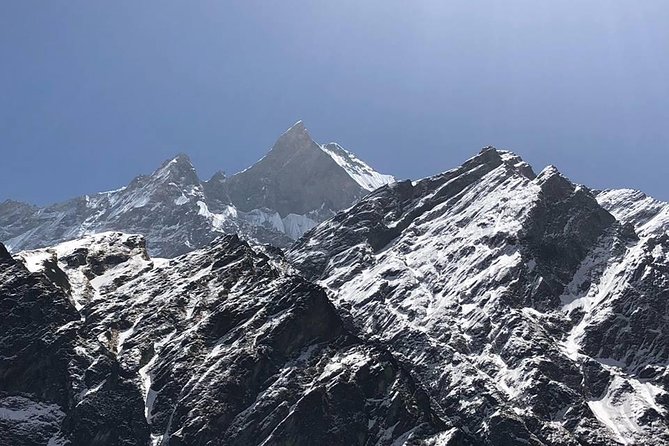
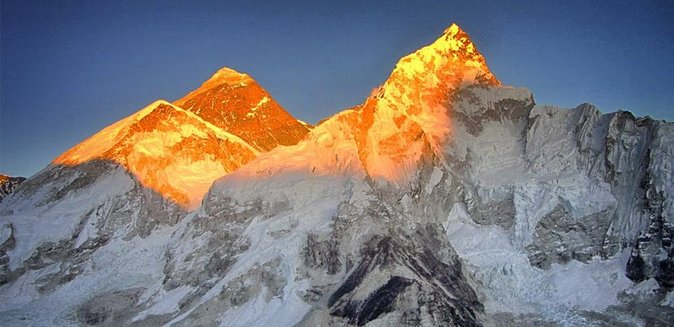
- Everest views from several angles: The route includes the Everest View Point, Everest Base Camp, and Kalapatthar.
- Sherpa culture along the trail: Tengboche, Namche, and the smaller villages provide more than mountain scenery.
- Extra costs matter: Food, lodging, international flights, visa, insurance, rescue, evacuation, and tips are separate.
Why this 14-day route works
The classic Everest Base Camp route is not just a walk toward a famous sign. It is a steady climb through river valleys, pine and rhododendron woods, high villages, glacial terrain, and thin mountain air. The route is demanding, but the schedule includes two rest and acclimatization days at the points where they matter most.
You begin at about 1,400 meters in Kathmandu and fly to Lukla, which sits far higher. From there, the trek climbs gradually toward Namche Bazaar, then Tengboche, Dingboche, Lobuche, Gorakshep, and Everest Base Camp. The return follows a quicker downhill rhythm, with nights at Pheriche, Namche, and Lukla before the flight back.
I see the pacing as sensible for a standard 14-day trip, though it is not a soft adventure. You need a moderate level of physical fitness, and several trekking days are described as full-day walks. The route includes uneven rocky paths, suspension bridges, repeated climbs, and high-altitude walking where even a short slope can feel serious.
This is a private activity, not a large group departure. That can be valuable if you want the guide to adjust the pace to your needs, especially if you are traveling alone, with a teenager, or with a mixed-ability group. The experience has also been arranged for solo trekkers and a parent traveling with a 14-year-old daughter, with strong praise for the personal attention provided.
More Everest Base Camp treks:
- Everest Base Camp Trek – 14 Days
★ 5.0 · 1,499 reviews - Everest Base Camp Trekking
★ 5.0 · 485 reviews - Everest Base Camp Trekking – 13 Day
★ 5.0 · 365 reviews
Day 1: Kathmandu and Thamel
Your airport representative meets you at Tribhuvan Airport and takes you to your hotel or hostel. The stated meeting point is Nepal Nirvana Trails at Saat Ghumti Marg in Kathmandu, though pickup can also take place at your hotel or the airport.
The first day is useful preparation, not filler. In the evening, you meet your guide and check your trekking equipment. That gear check gives you a chance to identify missing layers, unsuitable footwear, or anything that could become a nuisance once you are far from Kathmandu.
You have time to walk around Thamel, one of Kathmandu’s main visitor districts, but do not treat the day as a shopping marathon. You need rest before the early start. The listed start time is 5:45 am, so keeping your first evening quiet is practical.
Day 2: Lukla flight and Phakding
The trek starts with a flight to Tenzing Hillary Airport in Lukla. The flight is listed as about 35 minutes on the return journey, and the package includes the local air tickets in both directions. Depending on the operating schedule, flights may use Kathmandu or Manthali.
Lukla is the gateway to the Khumbu region. From here, you walk to Phakding for the night. This first trekking day is relatively short compared with what comes later, which helps your body begin adjusting after the flight.
The flight is part of the appeal, but it is also a part of the plan you should treat with flexibility. The package includes the flight schedule and transfers, yet mountain aviation depends on operating conditions and scheduling. If a change affects your plans, the included local arrangements and an experienced guide can be valuable.
Day 3: The river route to Namche Bazaar
You cross the Dudh Koshi River and pass through Monjo before entering Sagarmatha National Park. The path then follows forested sections and rises toward Namche Bazaar.
Namche is the main trading and service center of the Khumbu region. It is more than a sleeping stop. You get your first strong sense of the Sherpa communities that support life in the Everest region, along with a clear change in the scale of the mountains around you.
This is a demanding day because the route gains altitude and includes repeated uphill sections. The schedule describes a long trekking day, so you should expect tired legs on arrival. The reward is Namche’s setting, with mountain views opening as you approach the town.
More walking in the hills of Kathmandu:
- Nagarkot Sunrise View and Day Hiking from Kathmandu
★ 5.0 · 471 reviews - Annapurna Circuit Trek with Tilicho Lake
★ 5.0 · 368 reviews - Everest Base Camp Trek -14 Days
★ 5.0 · 321 reviews - Annapurna base camp trek 5 Days
★ 5.0 · 252 reviews
Day 4: Everest View Point and acclimatization
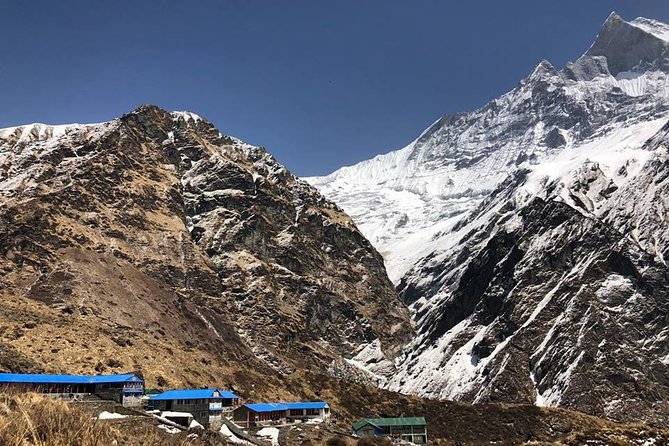
The first acclimatization day is spent around Namche. You hike toward the Everest Hotel and the Everest View Point, where the route provides views of Everest, Ama Dablam, Thamserku, and Lhotse.
This is one of the smartest parts of the schedule. You climb higher during the day, then return to sleep at Namche, helping your body adjust without pushing immediately to a higher overnight stop. It also gives you your first proper mountain-view day rather than asking you to rush onward.
I would use this day to ask your guide questions about altitude, the route, and the next few nights. Guides have been praised for tailoring the experience, encouraging cultural learning, and offering calm support when conditions become difficult. Names associated with especially positive feedback include Roshan, Abinash, Man Bahadur, Navraj, Bala, Bhairas, and Raju.
Day 5: Tengboche Gompa
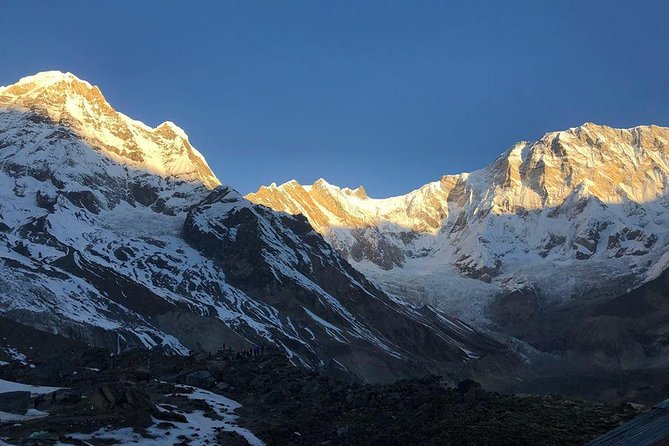
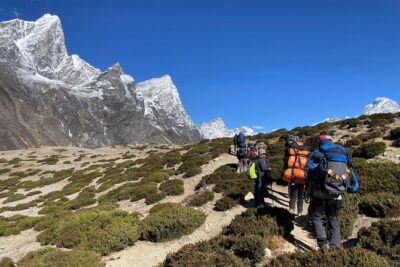
You leave Namche through juniper and rhododendron forests, with mountain views accompanying the trail. The destination is Tengboche, home to the well-known Tengboche Gompa.
The monastery gives this day a cultural focus. You are not simply moving from one altitude marker to another. You see a place connected with the spiritual life of the Khumbu and gain a better sense of the local communities that live beside the route to Everest.
The walk is long and includes a descent before the climb toward Tengboche. That pattern can surprise you. A downhill section may feel welcome early in the day, but it means your legs have more work to do later. The views of Ama Dablam and the surrounding peaks help make the effort worthwhile.
Day 6: Ama Dablam and Island Peak near Dingboche
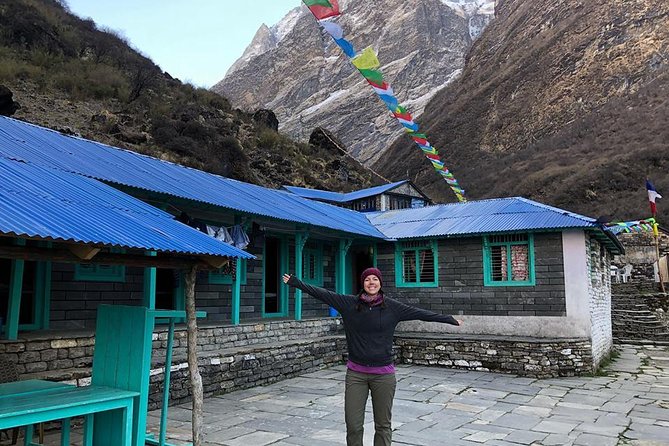
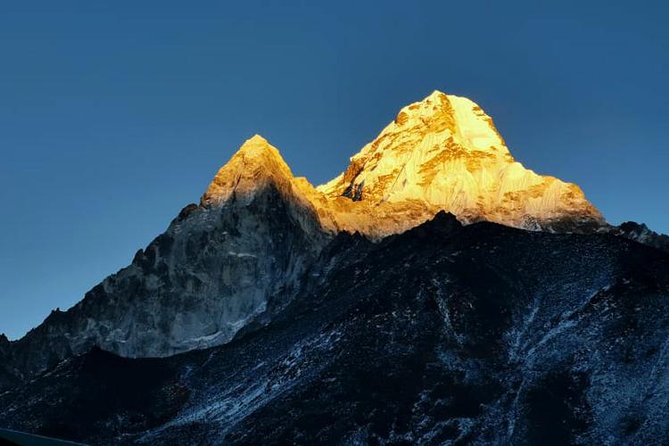
The route continues toward Dingboche, crossing the Imja Khola. The trail opens toward broad mountain views, including Ama Dablam and Island Peak.
Dingboche is an important turning point. The vegetation becomes less dominant, the air feels thinner, and the route begins to look more exposed and high. Your guide’s role becomes increasingly important here, not as a substitute for fitness, but as someone who can help you follow the planned pace and recognize when you need to slow down.
The provided schedule describes this as another full trekking day. You should not expect a casual village stroll. The scenery is a major reason to keep going, but the altitude means you may walk more slowly than you normally would.
Day 7: Second acclimatization day at Dingboche
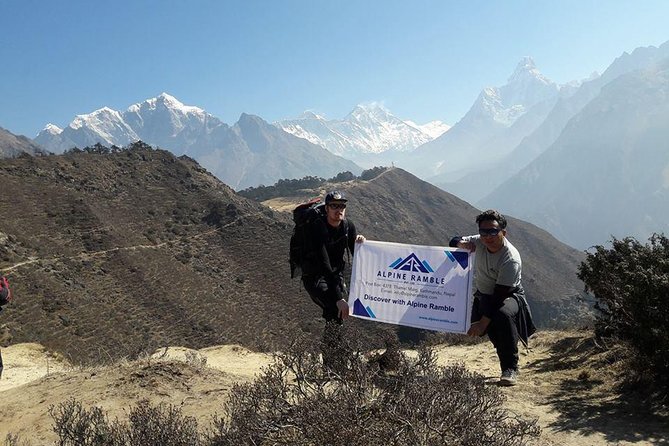
The second acclimatization day offers a choice of higher hikes. You may hike toward Nangkartshang Peak at 5,083 meters or Chhukung Ri at 5,546 meters, with views of Everest, Ama Dablam, Island Peak, and Pumori.
These options are not small walks. The higher choice in particular requires serious effort, and you should decide with your guide based on how you are feeling. The important point is not to collect the highest possible side trip. It is to prepare your body for the route ahead while returning to Dingboche to sleep.
This is also a good day for a slower look at the surrounding villages and mountains. The trek’s cultural side can be easy to overlook when you are focused on reaching Base Camp. Use the pause to talk with your guide and notice how life changes as the route climbs.
Day 8: Rocky trail to Lobuche
You continue along an uneven rocky path toward Lobuche. The route brings views of Pumori, Nuptse, and Lobuche Peak.
By now, the walking can feel more serious than the mileage suggests. Rough footing takes concentration, and high altitude can turn a normal uphill stretch into a slow, measured climb. Good boots and careful pacing matter more here than speed.
Lobuche is a practical overnight point before the Base Camp push. Do not spend the evening trying to prove that you still have your usual energy. You need to save it for the next day, which includes the walk to Base Camp and the return to Gorakshep.
Day 9: Everest Base Camp and Gorakshep
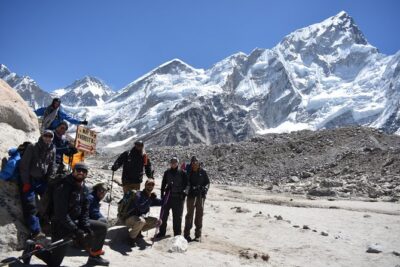
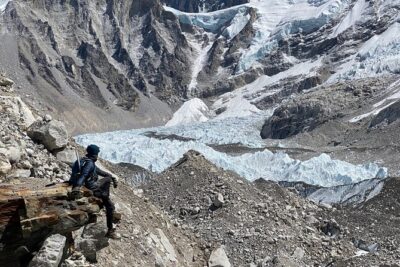
This is the goal day. You walk through the Khumbu Glacier area to Everest Base Camp, then return to Gorakshep for the night. From Base Camp, you can view the Khumbu Icefall.
The route is long and the terrain is rocky and glacial. Reaching Base Camp can feel less like a single dramatic finish and more like the final piece of a demanding multi-day effort. That is part of its appeal. You have already walked through villages, forests, river valleys, and high mountain country before arriving here.
One practical point is worth making: Everest Base Camp itself is not the summit, and the view of Everest is not always the main visual reward from the Base Camp location. The Khumbu Icefall and the surrounding peaks are central to the experience. The next morning’s Kalapatthar hike is the stronger viewpoint for seeing Everest.
Day 10: Kalapatthar and the descent to Pheriche
You hike to Kalapatthar for broad views of Mount Everest, then descend through the route toward Pheriche. The listed walking time for the Kalapatthar stop is brief, but the full day includes the ascent and the trek down, so you should think of this as another demanding mountain day.
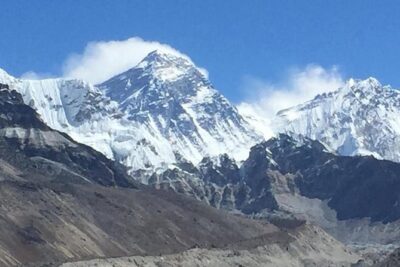
Kalapatthar is often the visual high point of the trek. You are positioned for a direct view of Everest and the surrounding peaks, making this the morning when you most clearly understand the scale of the region.
The descent to Pheriche changes the mood. Going downhill is usually welcome, but steep or rocky paths can still tire your knees. Trekking poles may be useful, though the tour information does not specify equipment rental, so you should ask the operator what is supplied before departure.
Day 11: Returning to Namche Bazaar
You leave the highest mountain section behind and make your way to Namche Bazaar. The route includes suspension bridges, villages, and familiar sections along the Dudh Koshi valley.
The return walk is not merely a transfer. Descending gives you a different view of the same places, and the lower altitude usually makes conversation and movement easier. You may also appreciate the small comforts of Namche more after the higher nights.
This is still listed as a long day. Do not assume that going downhill makes it effortless. The total distance and repeated bridge crossings can leave you ready for a substantial meal and an early night.
Day 12: Lukla and the final trail
You pass Jorsale and Monjo, reach Phakding, cross more bridges over the Dudh Koshi, and continue to Lukla.
This final walking day brings the trip back to its starting point in the mountains. The route may feel familiar, but your perspective has changed. Lukla now represents the end of the trail and the flight back to Kathmandu.
The schedule again describes a full trekking day. Keep some energy in reserve, and avoid assuming that the last day is automatically easy. You still need to manage uneven paths and the accumulated fatigue of nearly two weeks.
Day 13: Flight to Kathmandu and Thamel
You take an early morning flight of about 35 minutes back to Kathmandu, using the scheduled local flight service. The rest of the day is free for Thamel, shopping, and souvenirs.
This flexible day is useful because it gives you a buffer after the trek. You can rest, walk around Kathmandu, or handle last-minute purchases without squeezing city time into the trekking schedule.
The flight timing is important. Early departures mean you should be ready well before the day begins. The operator includes airport transfer services and the local flight arrangements, but you should still keep your plans flexible around mountain flight operations.
Day 14: Airport drop-off or more time in Nepal
On the final day, the representative takes you to the airport unless you choose to extend your stay in Nepal.
That simple arrangement is helpful after a tiring trek. If you want to add more time in Nepal, the tour allows for it, but the provided plan does not specify extra destinations or activities. You would need to arrange those separately.
What the $999 price really covers
At $999 per person, the price can be good value for a private Everest Base Camp trek, but only if you budget for the exclusions. The package includes airport transfers, local Lukla flights, guide salary, guide food, guide equipment, guide insurance, national park fees, local permits, government expenses, and tax or VAT.
That is a meaningful group of costs. Local flights and permits alone are important parts of the trip, and private guiding usually offers more personal attention than a large departure.
The price does not include your accommodation or food for the complete trip. It also excludes international flights, the Nepal entry visa, travel and health insurance, emergency rescue and evacuation cover, and tips for the trekking guide. I would not book until you have priced these items for your dates.
The insurance point deserves particular care. The package specifically requires you to arrange insurance that covers emergency rescue and evacuation. This is not an optional paperwork detail for a high-altitude trek. Check the policy wording before you travel.
Who will like this trek most
I think this trip suits you if you want the standard Everest Base Camp route with a private guide and a fixed 14-day structure. It is a good match for solo trekkers, couples, families with a fit older child, and small private groups that value personal support.
It also suits you if cultural contact matters. The route passes through Sherpa villages and includes Tengboche Gompa, while guides are encouraged to share information about local culture and daily life.
You should think carefully before booking if you dislike early starts, rocky paths, long walking days, or basic high-altitude trekking conditions. The tour is not presented as a luxury package, even though some private trips arranged by the company have been described as luxury experiences. Since lodging and food are excluded here, confirm exactly what standard of accommodation and meal arrangements you want.
Service and guide support
The strongest pattern in the feedback is personal care. The company’s team, led by KP Dhital, has been praised for airport coordination, flight problems, guide matching, and support from the first arrival through the return to Kathmandu.
Individual guides receive much of the credit. Roshan was valued for care, humor, and encouragement. Abinash was praised for professionalism, cultural conversation, and adapting the experience to the group. Raju was noted for warmth and concern for everyone in a Gokyo variation, while Man Bahadur and Navraj were also singled out for strong support.
That does not remove the need for your own preparation. A good guide can help you make sensible choices, but no guide can eliminate altitude, fatigue, weather changes, or the physical demands of the trail.
Booking details and cancellation
Confirmation is provided when you book. The activity is private, and public transportation is nearby in Kathmandu. Pickup is offered at the airport or your hotel, with the listed start time at 5:45 am.
Free cancellation is available up to 24 hours before the experience start time for a full refund. Cancellations or changes within 24 hours are not accepted for a refund. The cut-off follows local Nepal time, so check the timing carefully if you are booking from another country.
Should you book the Everest Base Camp Trek?
I would book this trek if you want a classic Everest route, private guiding, included local flights and permits, and a schedule that takes acclimatization seriously. The repeated praise for the company’s personal involvement is especially useful if you are nervous about going solo or traveling with a younger family member.
I would not choose it without first confirming the accommodation, food plan, insurance requirements, and current flight arrangements. The $999 price is attractive, but it is a starting price rather than an all-inclusive total.
For a prepared trekker who values steady support and wants Everest Base Camp without joining a large group, this is a strong option. Go in ready for long days, high altitude, and extra costs, and you will be better placed to enjoy the mountains, villages, monastery, and the hard-earned view from Kalapatthar.
FAQ
Where does the Everest Base Camp trek start?
The trek starts in Kathmandu, with airport pickup or pickup at the hotel where you are staying. The stated meeting point is Nepal Nirvana Trails on Saat Ghumti Marg, Kathmandu.
How long is the trek?
The experience lasts approximately 14 days, including arrival arrangements, the trek to Everest Base Camp, the return to Lukla, the flight back to Kathmandu, and airport drop-off.
Is the Lukla flight included?
Yes. Flights from Kathmandu or Manthali to Lukla and from Lukla back to Kathmandu or Manthali are included, along with the local flight schedule and airport transfer services.
Are accommodation and meals included?
No. Accommodation and food for the guests are not included in the stated price. Guide salary, guide food, guide equipment, and guide insurance are included.
Does the trek include acclimatization days?
Yes. There is an acclimatization day at Namche Bazaar with a hike to the Everest View Point, followed by another acclimatization day at Dingboche with optional hikes toward Nangkartshang Peak or Chhukung Ri.
What fitness level do I need?
The tour states that you should have a moderate level of physical fitness. The route includes full trekking days, uneven rocky paths, suspension bridges, altitude gains, and high-altitude walks.
Can I cancel for a full refund?
Yes, if you cancel at least 24 hours before the experience start time. Cancellations or changes made less than 24 hours before the start time are not eligible for a refund.
New in the Kathmandu listings
- Traditional Momo Making Class★ 5.0 · 10 reviews
- Kathmandu: Ancient City Kirtipur & Pharping Monastery Tour★ 5.0 · 2 reviews
- Kathmandu to Pokhara Premium sofa bus ticket★ 4.0 · 17 reviews
- Women Empowerment Project(Nepali cooking class & jewelry workshop★ 5.0 · 15 reviews
- 7-Day Langtang Valley Trek from Kathmandu★ 5.0 · 1 review
- Kathmandu 2 Nights 3 Days Chitwan Jungle Safari Tour★ 5.0 · 9 reviews
- Yoga Experience Day Trip with Private Transfer From Kathmandu★ 4.0 · 2 reviews
- Wildlife Adventure in Chitwan Nepal★ 4.0 · 4 reviews
Everest Base Camp Treks, compared.
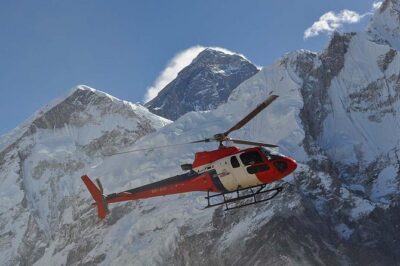
Everest Base Camp Trek with Helicopter Return from Gorakshep to Lukla
Read our review →Browse the lists this tour appears in