
REVIEW · EVEREST BASE CAMP TREKS
Everest Base Camp trek 14 days
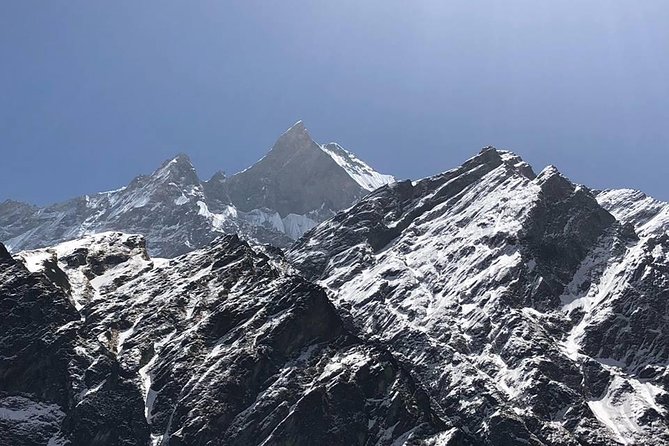
The mountains are the main event. This 14-day Everest Base Camp trek gives you a fixed route, domestic flights, lodging, meals, permits, and a guide, so you can focus on walking rather than arranging every detail. The reward is a steady climb through the Khumbu region, with views toward Everest, Ama Dablam, Lhotse, Makalu, and Cho Oyu.
I especially like the inclusion of a sleeping bag and down jacket, since warm gear can be costly and awkward to pack. I also like the two acclimatization days, which give your body a fighting chance at high altitude instead of treating the trek as one long uphill march.
The main consideration is the schedule itself. The trek reaches more than 5,500 meters, and several days involve six or seven hours of walking. The published day order around Tengboche and Dingboche appears slightly unclear, so I would confirm the exact sequence before paying.
In This Review
- Five things to know before you book
- What the $1,380 price really covers
- Kathmandu gives you a useful beginning and ending
- Lukla to Phakding, the trail begins gently
- Phakding to Namche Bazaar, the first real test
- Tengboche brings the first major mountain views
- Dingboche and Lobuche, where altitude takes over
- Everest Base Camp and Gorakshep
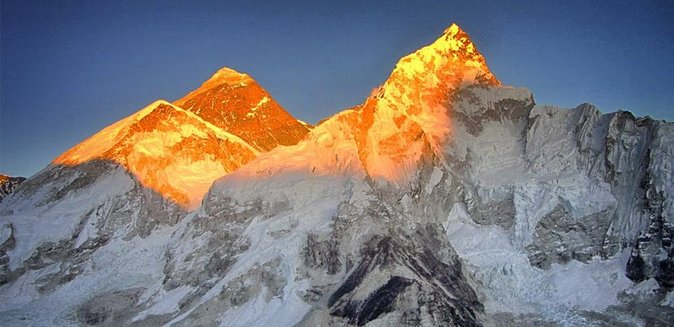
- Kalapatthar is the visual high point
- Returning through Namche and Lukla
- The guide team and group setup
- Food, equipment, and what you still need
- Who will get the most from this trek
- Practical booking points before you commit
- Should you book the 14-day Everest Base Camp trek?
- FAQ
- Where does the Everest Base Camp trek begin?
- How long does the experience last?
- Are flights between Kathmandu and Lukla included?
- Are meals included?
- Is accommodation included?
- Is trekking equipment provided?
- What is the cancellation policy?
Five things to know before you book
- Lukla flights are included: The package covers the Kathmandu to Lukla and Lukla to Kathmandu flights, plus airport transfers.
- The highest point is 5,550 meters: The Kalapatthar hike is the physical and visual high point of the trip.
- Three meals are included during the trek: Breakfast, lunch, and dinner are provided on the listed trekking days.
- The group can reach 18 people: That is small enough for a shared expedition, but not a private walk.
- The package includes practical support: Permits, TIMS card, guide costs, first aid supplies, a T-shirt, and an achievement certificate are covered.
- The finish is social: A cultural show and farewell dinner follow the mountain portion of the trip.
What the $1,380 price really covers
At $1,380 per person, this is not simply a guided walk. The price bundles several costs that quickly add up in Nepal: Kathmandu and Lukla flights, airport transfers, city transport, city lodging, trekking lodges, permits, a guide, guide insurance, guide meals, and most food during the route.
I see the strongest value in the domestic air tickets and the high-altitude equipment. Flights to Lukla can be a major part of an Everest trek budget, while a sleeping bag and down jacket save you from purchasing or renting bulky cold-weather gear before departure.
The package also includes transportation by air-conditioned car and tourist deluxe bus during the city portions. That matters most at the beginning and end, when you may be tired, carrying gear, and less interested in figuring out local transfers.
The price does not include international airfare, travel insurance, Kathmandu meals outside the included breakfast, entrance fees, bar bills, personal spending, or tips for the trekking crew. Those exclusions are normal for a package of this type, but you should build them into your budget before deciding that $1,380 is your final cost.
The package uses twin-sharing city hotels and trekking lodges. That keeps the cost down, but it also means you should expect practical accommodation rather than a luxury stay. On the mountain, the lodging is part of the trade-off for reaching Everest Base Camp without paying for a private expedition.
More Everest Base Camp treks:
- Everest Base Camp Trek – 14 Days
★ 5.0 · 1,499 reviews - Everest Base Camp Trekking
★ 5.0 · 485 reviews - Everest Base Camp Trekking – 13 Day
★ 5.0 · 365 reviews
Kathmandu gives you a useful beginning and ending
The trip starts in Kathmandu, where airport pickup is included. The first day is mainly for arrival, settling into the hotel, and getting ready for the trek. I like having this buffer instead of being rushed straight from an international flight to the mountains.
The return to Kathmandu comes after the Lukla flight on day 13. A farewell dinner and cultural show are planned before departure, giving the trip a clear finish instead of ending the moment you leave the trail.
Kathmandu meals beyond the included breakfast are not covered. That gives you freedom to choose your own food, but it also means you should carry some spending money for meals, drinks, and entrance fees.
Lukla to Phakding, the trail begins gently
Day two starts with a 40 to 45 minute flight from Kathmandu to Lukla, followed by a three to four hour walk to Phakding at 2,640 meters. The short flight saves a long overland approach and places you close to the start of the classic Everest route.
The first walk is useful as a warm-up. You begin adapting to the rhythm of carrying your day gear, walking with the group, and stopping for meals. It is still a mountain route, but the distance is more manageable than the days ahead.
Breakfast, lunch, and dinner are included on this day. The guide’s role is important here because the group needs to settle into a sensible pace early, before the altitude becomes a serious concern.
Phakding to Namche Bazaar, the first real test
The walk from Phakding to Namche Bazaar takes about five to six hours and rises to 3,440 meters. This is where the trek begins to feel like a serious high-altitude journey.
Namche is more than an overnight stop. It is the main settlement in the route’s early stages and the designated acclimatization base. The next day is set aside for getting used to the altitude, which is one of the most important features of the program.
I would treat this extra day as essential rather than optional free time. You may want to rest, but a short acclimatization outing can help you learn how your body is responding before the route climbs higher. The available information does not specify the exact acclimatization walk, so ask the guide what is planned when you arrive.
More walking in the hills of Kathmandu:
- Nagarkot Sunrise View and Day Hiking from Kathmandu
★ 5.0 · 471 reviews - Annapurna Circuit Trek with Tilicho Lake
★ 5.0 · 368 reviews - Everest Base Camp Trek -14 Days
★ 5.0 · 321 reviews - Annapurna base camp trek 5 Days
★ 5.0 · 252 reviews
Tengboche brings the first major mountain views
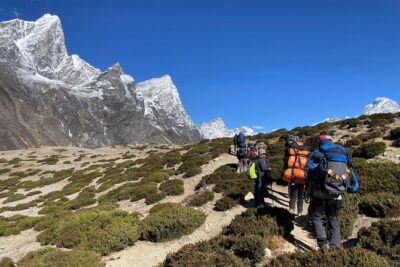
The route to Tengboche takes around six to seven hours and reaches 3,860 meters. This is one of the longer days, so you should start with a steady pace rather than trying to race the group.
Tengboche is associated with one of the best-known stops on the Everest Base Camp route, and the mountain setting becomes more dramatic as you gain height. This is a good point to keep your camera ready for views toward Ama Dablam and other major peaks named in the trip description.
The schedule then lists an acclimatization day at Dingboche, followed by a trek to Dingboche at 4,410 meters. Since Dingboche appears in both entries, the exact order and location of the acclimatization stop deserve confirmation. This is not a small detail. At this altitude, a rest day needs to be placed carefully.
Dingboche and Lobuche, where altitude takes over
The climb toward Dingboche is listed as five to six hours, reaching about 4,410 meters. Here, altitude becomes more important than simple fitness. You may be strong at sea level and still need to slow down, drink regularly, and pay attention to how you feel.
The following stage reaches Lobuche at 4,910 meters and takes about five hours. The walking time is shorter than some earlier days, but the height makes the effort harder. This is why the planned acclimatization days and the guide’s judgment matter so much.
The trek includes three meals each day during the mountain portion. That is practical because food access becomes part of the day’s planning. You are not left to arrange breakfast, lunch, and dinner separately after a long walk.
The package also includes first aid items. That is useful basic support, but it does not replace personal travel insurance. Insurance is specifically excluded, and I would not treat a high-altitude trek as a trip where you can skip it.
Everest Base Camp and Gorakshep
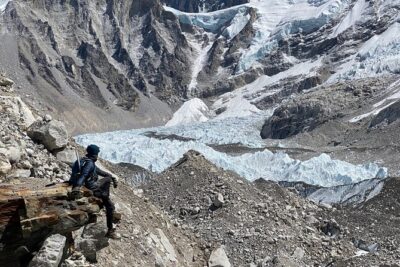
Day nine takes you to Everest Base Camp and back to Gorakshep at about 5,200 meters. This is the day many people have pictured for years, but it is also one of the most demanding points of the trek.
The achievement is reaching Base Camp, not simply taking a quick photograph. The route, height, cold, and return walk all matter. Because you go back to Gorakshep afterward, you need to save enough energy for the full day rather than treating Base Camp as the halfway point.
The exact walking time is not provided for this day, so you should ask the operator for an estimated start time and total distance. That information helps you judge the day’s difficulty and prepare your clothing, water, snacks, and camera before leaving.
Kalapatthar is the visual high point
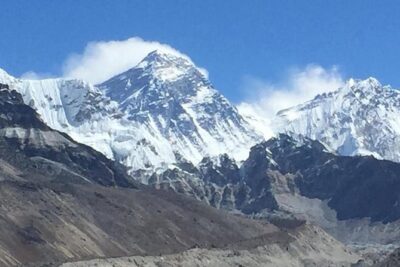
The next morning includes a two-and-a-half hour hike to Kalapatthar at 5,550 meters, followed by a seven-hour descent to Pheriche at about 4,200 meters. This is the highest point in the program and likely the best place for broad views of Everest and the surrounding peaks.
Many people find the summit viewpoint more visually rewarding than Base Camp itself. Base Camp is the symbolic goal, while Kalapatthar offers the high mountain panorama. I would consider this morning a central reason to choose the full trek rather than stopping at Base Camp.
The descent to Pheriche is long. Downhill walking can sound easy, but tired knees and uneven ground can make it demanding. Good footwear and trekking poles, if you use them, could be especially helpful, though poles are not listed as included.
Returning through Namche and Lukla
From Pheriche, the route returns to Namche Bazaar in about six hours. You will be descending, but your legs may still feel the accumulated effort from the ascent and Kalapatthar.
The next day is the seven-hour walk to Lukla. This is another full trekking day, and it is worth remembering that reaching the end of the route does not mean the trip is over. You still need to make the flight back to Kathmandu the following day.
The package includes the Lukla to Kathmandu flight and airport transfers. Domestic mountain flights can be affected by conditions, but no specific contingency arrangements are provided here. I would ask what happens if the flight is delayed, particularly if you have an international flight soon after the scheduled return.
The guide team and group setup
The tour allows a maximum of 18 people. That size can work well for a shared trek, giving you company and a chance to meet people without the scale of a large coach tour. It also means walking speeds and comfort levels may vary.
The guide’s salary, accommodation, meals, and insurance are included. That is a meaningful cost and also a sign that the operator has planned for the guide’s basic welfare rather than leaving those expenses vague.
Specific team members praised in the feedback include Suresh, Sobit, Ram, and Pasang Sherpa. Suresh was noted for keeping communication organized, while Ram guided a combined Everest Base Camp and Kathmandu cultural visit. Pasang Sherpa was described as an especially memorable member of the mountain team.
You should still ask who your assigned guide will be and how porters are arranged. The package spells out guide coverage, but it does not clearly state porter costs or porter insurance. That is a practical question to settle before departure.
Food, equipment, and what you still need
Three daily meals are included during the trek on the specified days. Kathmandu meals outside the included breakfast are not covered, and personal drinks or bar bills are extra.
A sleeping bag and down jacket can be provided if needed. This is one of the package’s most useful inclusions, especially for anyone who does not regularly travel with high-altitude cold-weather gear.
The trip also provides a T-shirt and a trip achievement certificate. Those are pleasant extras, but they should not influence your decision as much as the flights, lodging, permits, guide support, and acclimatization plan.
You should still arrange your own travel insurance, international flights, personal expenses, entrance fees, and tips for the trekking crew. The supplied information does not give a packing list, so confirm what clothing and personal equipment you need to bring.
Who will get the most from this trek
This trek suits you if you want Everest Base Camp with a set route and shared support rather than a self-planned expedition. It is also a good fit if you value having the permits, flights, accommodation, meals, and guide costs gathered into one price.
You need a moderate level of physical fitness. The program includes several five to seven hour walking days and reaches 5,550 meters. It is not a sightseeing holiday with a few mountain walks added.
The trek may suit first-time Himalayan hikers who want structure, but only if they take the altitude seriously. The two acclimatization days are helpful, though the unclear Dingboche sequence should be confirmed.
It is less suitable if you want private guiding, luxury accommodation, flexible dates, or a short and easy mountain break. The maximum group size is 18, and the route follows a demanding fixed schedule.
Practical booking points before you commit
Confirmation is provided at booking, and the ticket is mobile, so you can keep the reservation on your phone. The experience begins in Kathmandu, with airport pickup included.
Free cancellation is available if you cancel at least 24 hours before the local start time. Cancellations or changes made inside that window are not accepted for a refund.
I would ask these questions before booking:
- What is the exact order of the Tengboche and Dingboche days?
- Who will be the guide for my departure?
- Are porters included, and what porter support is provided?
- What happens if the Lukla flight is delayed?
- Which entrance fees are extra?
- What personal cold-weather gear must I bring if I use the provided sleeping bag and down jacket?
The strong feedback centers on organization, guide support, transportation, food, and mountain scenery. Names such as Suresh, Sobit, Ram, and Pasang Sherpa appear repeatedly in positive accounts, which gives the operator a human face rather than leaving you with an anonymous booking desk.
Should you book the 14-day Everest Base Camp trek?
I would book this tour if you want a practical, all-in-one Everest Base Camp package and accept shared lodging, long walking days, and a group of up to 18. The $1,380 price is attractive because it includes the two Lukla flights, guide expenses, permits, meals during the trek, lodging, transport, and cold-weather equipment.
I would not book until the Dingboche schedule and porter arrangements are clear. Those points do not necessarily make the trek a poor choice, but they are important enough to settle in writing.
For a fit person who wants mountain achievement without handling every Nepal detail alone, this looks like a strong-value option. Go for the views, the structure, and the support. Just remember that no company can make 5,550 meters feel like a stroll in the park.
FAQ
Where does the Everest Base Camp trek begin?
The trek begins in Kathmandu, Nepal. Airport pickup and departures in Kathmandu are included.
How long does the experience last?
The planned experience lasts 14 days and includes 13 nights of accommodation. The general duration is described as approximately 5 to 14 days.
Are flights between Kathmandu and Lukla included?
Yes. The package includes Kathmandu to Lukla and Lukla to Kathmandu flight tickets, along with airport transfers.
Are meals included?
Breakfast, lunch, and dinner are included during the trekking days specified in the schedule. Extra meals in Kathmandu, personal expenses, and bar bills are not included.
Is accommodation included?
Yes. City accommodation is provided in a standard twin-sharing hotel with breakfast, and trekking lodge accommodation is included during the mountain portion.
Is trekking equipment provided?
A sleeping bag and down jacket can be provided if you need them during the trek. A T-shirt and trip achievement certificate are also included.
What is the cancellation policy?
You can cancel for a full refund if you cancel at least 24 hours before the experience start time. Cancellations or changes made less than 24 hours in advance are not accepted for a refund.
New in the Kathmandu listings
- Traditional Momo Making Class★ 5.0 · 10 reviews
- Kathmandu: Ancient City Kirtipur & Pharping Monastery Tour★ 5.0 · 2 reviews
- Kathmandu to Pokhara Premium sofa bus ticket★ 4.0 · 17 reviews
- Women Empowerment Project(Nepali cooking class & jewelry workshop★ 5.0 · 15 reviews
- 7-Day Langtang Valley Trek from Kathmandu★ 5.0 · 1 review
- Kathmandu 2 Nights 3 Days Chitwan Jungle Safari Tour★ 5.0 · 9 reviews
- Yoga Experience Day Trip with Private Transfer From Kathmandu★ 4.0 · 2 reviews
- Wildlife Adventure in Chitwan Nepal★ 4.0 · 4 reviews
Everest Base Camp Treks, compared.
Everest Base Camp Trek with Helicopter Return from Gorakshep to Lukla
Read our review →Browse the lists this tour appears in