
REVIEW · EVEREST BASE CAMP TREKS
Everest Base Camp Trek 15 days | Local Guide | Flexible Itinerary
Everest begins with a small plane. This 15-day trek from Kathmandu follows the classic Sherpa route from Lukla to Everest Base Camp, with time built in at Namche Bazaar and Dingboche for altitude adjustment. I like the combination of local guides and private group travel, and I also like that flights, permits, meals, porters, sleeping bags, down jackets, and hiking poles are included.
The main concern is the pace. You need strong physical fitness, and the itinerary reaches 5,545 meters at Kala Patthar. Flights to Lukla can also be affected by weather, while hot showers, charging, snacks, drinks, travel insurance, and extra nights cost more.
In This Review
- Key details that shape the trek
- What the $1,890 price really covers
- Kathmandu arrival and the flight to Lukla
- Namche Bazaar and the first acclimatization test
- Tengboche and the upper Khumbu valley
- Dingboche at 4,410 meters
- Thukla, Lobuche, and the road to Base Camp
- Kala Patthar at 5,545 meters
- The quieter return through Phortse and Mong Danda
- Back to Lukla and Kathmandu
- Guides, porters, and the human side of the trip
- Food, lodges, and comfort at altitude
- Who should book this Everest trek?
- Should you book the 15-day Everest Base Camp trek?
- FAQ
- How long is the Everest Base Camp trek?
- Where does the trek begin?
- Is the trek private?
- Are flights to Lukla included?
- What baggage allowance is provided on the domestic flights?
- Are permits included?
- Are meals included?
- Is travel insurance included?
- Is a guide included?
- Are sleeping bags and down jackets provided?
Key details that shape the trek
- Kala Patthar reaches 5,545 meters, higher than Everest Base Camp, and provides the trip’s top mountain viewpoint.
- Two acclimatization days are included, one at Namche Bazaar and one at Dingboche.
- The route returns through Phortse and Mong Danda, adding quieter trails instead of simply retracing every step.
- Lukla flights, permits, meals, porters, and cold-weather gear are included in the $1,890 price.
- One porter carries 20 kilograms for two people, which means you should still pack carefully and keep your own day bag light.
- The trek is private, so only your group participates and the guide can adjust the pace within the planned route.
What the $1,890 price really covers
At $1,890 per person, this is not a bare-bones walking package. The price includes private transportation, domestic flights between Kathmandu or Ramechhap and Lukla, the Sagarmatha National Park permit, local area permits, and the TIMS permit. Those inclusions remove several expenses that can otherwise add up quickly.
You also receive breakfast on 14 days, lunch on 12 days, and dinner on 13 days. That makes sense for a trek with two Kathmandu days and one final evening in Lukla or Kathmandu, but you should still budget for food and drinks not covered by the meal plan.
The company supplies hiking poles, sleeping bags, and down jackets. You return them after the trek. That is useful if you do not own high-altitude gear, though you should confirm sizes and condition before departure.
A porter is assigned for every two people and carries up to 20 kilograms, or 10 kilograms of each person’s gear. You will still carry your water, camera, documents, and warm layers in a day pack. Pack light. The weight limit is helpful, but it is not an invitation to bring a full suitcase to the Himalayas.
The price does not include international airfare, a Nepal visa, tips, personal snacks, beverages, lunch or dinner in Kathmandu, extra nights, hot showers, or battery charging. Travel insurance covering trekking up to 6,000 meters is also excluded, with an indicated cost of about $200 per person. That insurance is not an optional luxury for this trip. It should cover high-altitude trekking and the kind of flight or evacuation problems that can arise in the Everest region.
For what is included, the price offers solid value. It is especially useful for anyone who wants a guide, porter support, organized permits, and domestic flights without arranging each part separately.
More Everest Base Camp treks:
- Everest Base Camp Trek – 14 Days
★ 5.0 · 1,499 reviews - Everest Base Camp Trekking
★ 5.0 · 485 reviews - Everest Base Camp Trekking – 13 Day
★ 5.0 · 365 reviews
Kathmandu arrival and the flight to Lukla
Day one is simple. You arrive at Tribhuvan International Airport in Kathmandu, where a Life Himalaya representative meets you and transfers you to your hotel. This airport pickup is a small but welcome touch after an international flight, particularly if you arrive late or are dealing with Nepal’s busy first impressions.
Day two begins early with a flight to Tenzing-Hillary Airport in Lukla, at 2,810 meters. The flight itself is short, listed at about one hour, but the early departure and mountain-airport setting make it one of the trip’s memorable moments.
Lukla is the gateway to the Everest trekking region. Once you land, the trek begins at once, so do not treat this as a relaxed sightseeing morning. Keep essential clothing, medication, documents, and water in your hand luggage. The domestic flight allowance is 10 kilograms for a large bag and 5 kilograms for hand carry, 15 kilograms total per person.
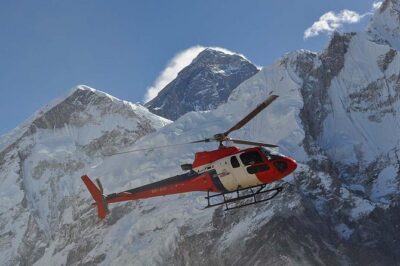
Weather can affect flights. The stated policy allows a different date or a full refund if the experience is canceled because of poor weather, but you should also expect that a delayed flight may affect the following schedule. An extra night in Kathmandu is not included if you need one.
Namche Bazaar and the first acclimatization test
The walk from the Lukla area toward Namche includes the Hillary Bridge and takes roughly five hours on the listed day. Namche Bazaar, at 3,440 meters, is the Sherpa capital and the first major altitude stop.
This section is not just a warm-up. You gain elevation while walking on a trail that includes bridges, uphill stretches, and changing mountain views. I like that the route does not rush straight through Namche. The body needs time to adjust, and the town gives you a useful pause before the higher valleys.
Day four is an acclimatization day. The plan includes a side excursion to the Hotel Everest View, with about an hour allocated to the stop. The admission ticket is not included, so ask your guide about the exact cost if you plan to enter.
The point of this day is not to conquer another peak. It is to climb higher for a while, return to Namche, and sleep at the same altitude. Staying active is generally more useful than spending the whole day in bed, but you should listen to your guide and your own body. Headache, nausea, unusual fatigue, or breathing trouble deserve prompt attention.
Tengboche and the upper Khumbu valley
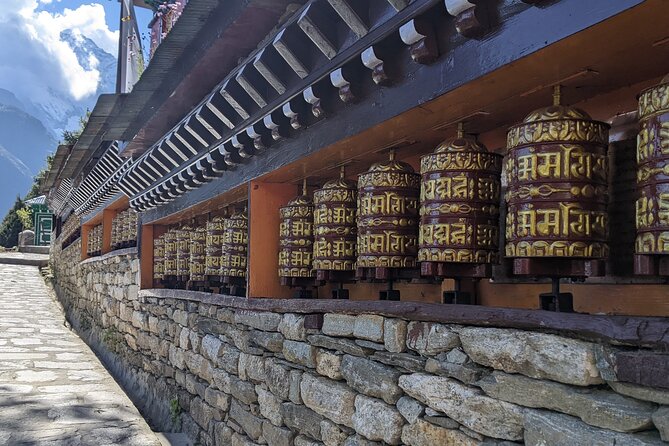
From Namche, the trail continues toward Tengboche, about a five-hour walk. Tengboche Gompa is one of the most meaningful stops on the route, not simply another mountain photo point. The monastery and the surrounding Sherpa communities give the trek a cultural center.
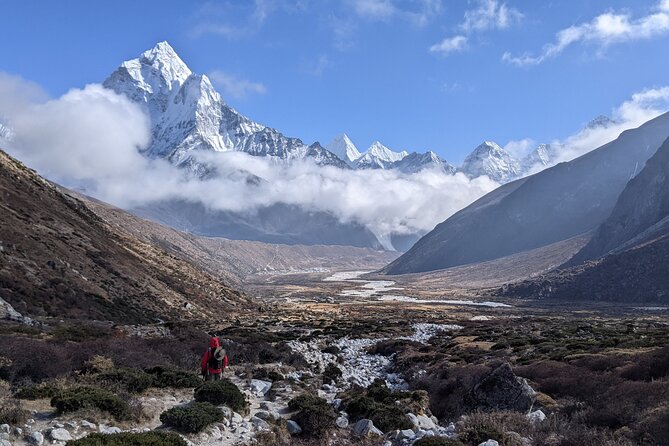
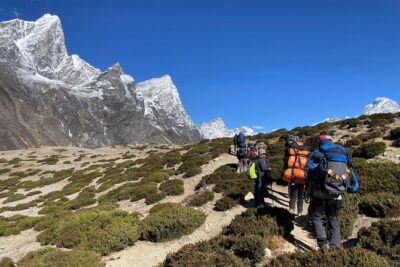
You will see views of peaks such as Ama Dablam and Thamserku, as well as the Tengboche monastery. The route has uphill sections, so the distance alone does not tell you how demanding the day will feel. At altitude, a steady pace matters more than speed.
The next day leads toward Dingboche in roughly four to five hours. The trail follows the Imja Khola and crosses a bridge before reaching Orsho, where the route separates toward Pheriche and Dingboche. You continue along the Lobuche direction toward Dingboche.
Dingboche is an important staging point because the air is thinner and the valley is more exposed. It is also a good place to appreciate the changing mountain scenery. The lower trail feels more settled and wooded, while the higher route becomes broader, drier, and more severe.
More walking in the hills of Kathmandu:
- Nagarkot Sunrise View and Day Hiking from Kathmandu
★ 5.0 · 471 reviews - Annapurna Circuit Trek with Tilicho Lake
★ 5.0 · 368 reviews - Everest Base Camp Trek -14 Days
★ 5.0 · 321 reviews - Annapurna base camp trek 5 Days
★ 5.0 · 252 reviews
Dingboche at 4,410 meters
Day seven is the second planned acclimatization day. Dingboche sits at about 4,410 meters, so this pause is not padding in the schedule. It is one of the reasons the route can be approached in a more sensible way.
The plan calls for a side excursion while keeping you active. The exact activity is not specified, so ask the guide what is appropriate for your group and the day’s conditions. You should expect a gradual outing rather than a full trekking day.
This extra night is one of my favorite parts of the program. A shorter schedule might look attractive on paper, but cutting acclimatization time can make the upper route much harder. The 15-day format gives you a better chance to enjoy the high valley instead of merely trying to endure it.
Thukla, Lobuche, and the road to Base Camp
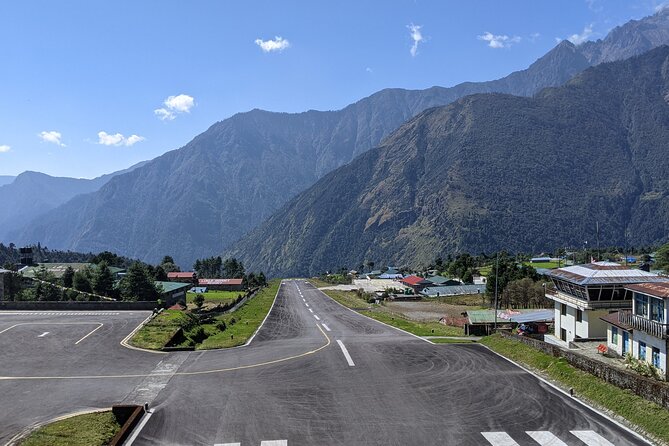
After Dingboche, you walk toward Thukla and onward to Lobuche. The day includes striking mountain views and a stop at Thukla, where the route toward Lobuche continues. This is a more serious section of the trek, with altitude becoming the main challenge rather than trail distance.
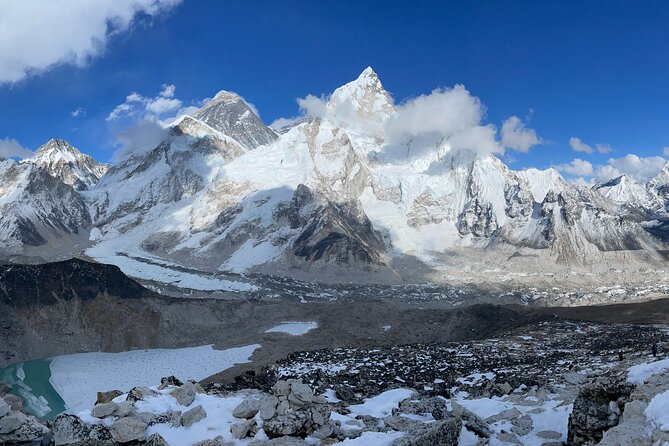
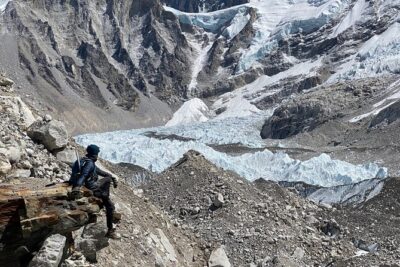
Day nine is the main goal: Everest Base Camp at 5,364 meters. The walk leads through the high Khumbu valley toward the base camp area, where glaciers and giant peaks frame the route. The listed stop at Everest Base Camp lasts about an hour, but the full walking day will feel much longer once you include the approach and return to the lodge.
Base Camp is not a permanent town or a comfortable visitor center. Conditions are high, cold, and basic. The famous camp area can look different depending on the season, and access conditions may change. Still, reaching 5,364 meters on foot is the point of the trek, and the journey through Sherpa villages and high mountain valleys gives the destination its meaning.
You should not expect to see climbers preparing for an expedition at every time of year. The reliable reward is the setting: the Khumbu Glacier, the high peaks, and the knowledge that you have followed the same broad approach used by mountaineering teams.
Kala Patthar at 5,545 meters
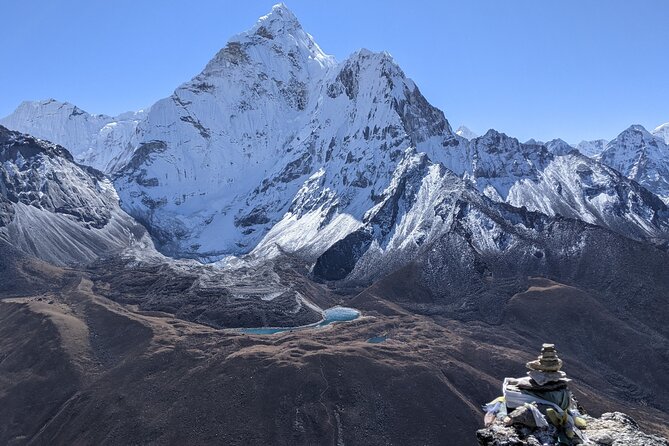
Day ten begins very early with the climb to Kala Patthar. At 5,545 meters, this is the highest point of the trip and higher than Everest Base Camp.
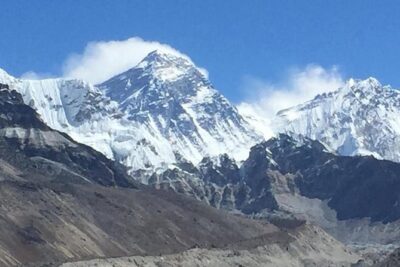
The early start is designed for mountain views, though weather can always change the result. From Kala Patthar, you may see Everest, Lhotse, Nuptse, and other Himalayan peaks. The viewpoint is listed as a 20-minute stop, but the climb itself is the real effort. Admission is free.
I would treat this morning as the physical high point, not just the scenic one. The air is thin, and even a short incline can feel demanding. Keep warm layers accessible, walk slowly, and do not let the excitement of the view push you into a careless pace.
Some itineraries return directly by the same route. This one adds a more unusual return through Pangboche, Phortse, and Mong Danda. That makes the descent more interesting, though it also means the trek remains active after Base Camp and Kala Patthar.
The quieter return through Phortse and Mong Danda
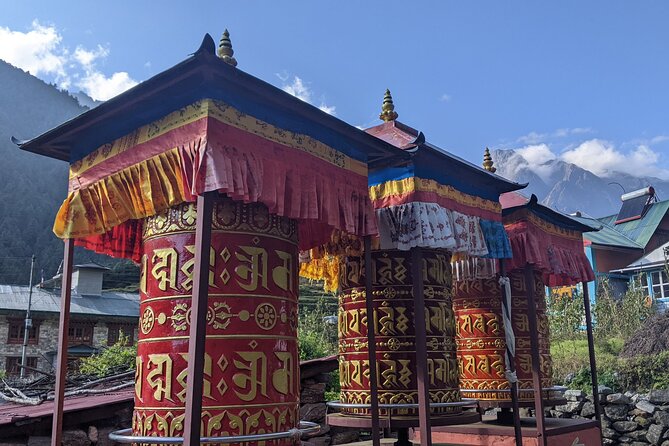
Day eleven takes you down to Pangboche and then along a less crowded route toward Phortse. You can expect views of Ama Dablam, Thamserku, and Tengboche monastery from different angles.
Phortse gives the return journey a more local feel than a simple reversal of the uphill route. The trail is not described with a precise walking time, so your guide will need to set the pace based on weather, trail conditions, and how your group feels after the high point.
Day twelve continues down toward the river that flows from the Gokyo area. At Phortse Thanga, around 3,680 meters, the route connects with the Gokyo trail before climbing toward Mong Danda.
This section is worth noting because the trip does not include the Gokyo Lakes, Gokyo Ri, Cho La, or Renjo La. You may touch part of the Gokyo route, but this is not a full Everest and Gokyo circuit. If you want those places, you need a different program or a custom change confirmed before booking.
The less crowded return route is a strong feature for anyone who wants more than a straight out-and-back trek. It does add some route complexity, so flexibility matters.
Back to Lukla and Kathmandu
Day thirteen follows the route through Toktok, Phakding, Ghat, and Cheplung before the final climb into Lukla. The last 200 meters up to Lukla can feel surprisingly tough after nearly two weeks on foot.
The evening in Lukla is your chance to recognize that the walking part is finished. It is also a sensible place to keep your plans flexible. The next morning’s flight to Kathmandu depends on weather and operating conditions.
Day fourteen includes an early flight back to Kathmandu or Ramechhap. Once you reach the hotel, the rest of the day is free. This buffer is useful before an international departure, but it is not a guarantee against disruption. If the Lukla flight is delayed and you need another night, extra accommodation is not included.
Day fifteen ends with a transfer to Tribhuvan International Airport according to your flight schedule. The farewell dinner is included during the program, although the exact evening is not stated. Confirm that detail if it matters to your plans.
Guides, porters, and the human side of the trip
The package includes an English-speaking, licensed, and experienced local guide. Groups of five or more receive an assistant guide. The trek is private, so your group is not combined with strangers.
That setup matters on a high-altitude route. A local guide can help with pacing, lodge choices, trail decisions, and signs of altitude sickness. The company specifically presents safety, comfort, and an itinerary designed to reduce altitude problems as priorities.
Past 15-day accounts identify Raj as a guide, with Suren and Sonam serving as porters. Other names connected with Life Himalaya include Sagar, Jal, Rabin, Ganesh, Vijay, Teeras, and Prakash. Staff assignments can change, so do not assume a particular person will lead your departure.
The strongest praise across the supplied comments focuses on support and care. People describe guides and porters as attentive, encouraging, and helpful when the trek became tough. That is important here because the best guide is not the one who simply pushes you onward. It is the one who knows when to slow down, check on you, and adjust the day.
Tips for guides, porters, and drivers are not included. Carry enough local currency for that customary expense, but the amount is not specified in the tour details.
Food, lodges, and comfort at altitude
Accommodation is in clean and comfortable lodge rooms, with hygienic food selected from the lodge menu. This is tea house trekking, not a hotel-based mountain holiday.
Meals are included for most trekking days, but snacks and drinks are yours to buy. Hot showers and battery charging cost extra. Those small comforts become more valuable as you climb, so budget for them if you want regular showers or a charged phone and camera.
You receive a sleeping bag and down jacket, but you still need suitable personal clothing. The tour does not provide a full clothing list, so confirm what temperatures and equipment the company recommends before you leave Kathmandu.
Who should book this Everest trek?
I would recommend this trek to someone who wants the classic Everest route with a local guide, porter support, and a private group. The two acclimatization days, included permits, and return via Phortse make it more thoughtful than a rushed high-altitude schedule.
You need strong physical fitness. The data does not provide daily distances, total walking hours for every day, or a technical difficulty grade, so ask for those details before paying. This is a demanding trek, not a casual walking tour.
It also suits someone who values cultural contact. The route passes through Sherpa villages, includes Tengboche monastery, and follows established tea house trails where you meet local people. If you mainly want luxury, reliable showers, and easy internet, this will feel basic.
The 100 percent recommendation rate and 5-star score across 27 submitted ratings point to a very strong service record, especially for guide and porter support. I would still read the fine print, arrange high-altitude insurance, and confirm flight and gear details before booking.
Should you book the 15-day Everest Base Camp trek?
Book it if you want a well-supported classic EBC route and appreciate having the major logistics handled. The $1,890 cost is fair for the flights, permits, meals, porter, guide, cold-weather gear, private transport, and two acclimatization days.
Think twice if you need a fixed schedule, dislike basic lodge accommodation, or cannot allow for weather delays. Also remember that Kala Patthar is the highest point, the walking is strenuous, and several everyday comforts cost extra.
For a fit person who wants Everest Base Camp without organizing every permit, flight, meal, and porter alone, this is a practical choice. Confirm your insurance, baggage allowance, guide assignment, equipment sizes, and weather backup plan. Then pack light, walk slowly, and let the mountains set the pace.
FAQ
How long is the Everest Base Camp trek?
The experience lasts approximately 15 days, including arrival and departure days in Kathmandu, flights to and from Lukla, acclimatization days, and the trek.
Where does the trek begin?
The experience begins with pickup at Tribhuvan International Airport in Kathmandu, Nepal.
Is the trek private?
Yes. This is a private tour or activity, and only your group participates.
Are flights to Lukla included?
Yes. Flights from Kathmandu or Ramechhap to Lukla and from Lukla back to Kathmandu or Ramechhap are included for all group members and staff.
What baggage allowance is provided on the domestic flights?
The stated allowance is 10 kilograms for a large bag and 5 kilograms for hand carry, for 15 kilograms total per person.
Are permits included?
Yes. The Sagarmatha National Park permit, local rural area permit, and TIMS permit are included.
Are meals included?
Breakfast is included on 14 days, lunch on 12 days, and dinner on 13 days. Lunch and dinner in Kathmandu are not included.
Is travel insurance included?
No. Travel insurance is not included. The tour specifies insurance covering trekking up to 6,000 meters, with an indicated cost of $200 per person.
Is a guide included?
Yes. An English-speaking, experienced, licensed guide is included. Groups of five or more also receive an assistant guide.
Are sleeping bags and down jackets provided?
Yes. Hiking poles, sleeping bags, and down jackets are provided for the trek and must be returned afterward.
New in the Kathmandu listings
- Traditional Momo Making Class★ 5.0 · 10 reviews
- Kathmandu: Ancient City Kirtipur & Pharping Monastery Tour★ 5.0 · 2 reviews
- Kathmandu to Pokhara Premium sofa bus ticket★ 4.0 · 17 reviews
- Women Empowerment Project(Nepali cooking class & jewelry workshop★ 5.0 · 15 reviews
- 7-Day Langtang Valley Trek from Kathmandu★ 5.0 · 1 review
- Kathmandu 2 Nights 3 Days Chitwan Jungle Safari Tour★ 5.0 · 9 reviews
- Yoga Experience Day Trip with Private Transfer From Kathmandu★ 4.0 · 2 reviews
- Wildlife Adventure in Chitwan Nepal★ 4.0 · 4 reviews
Everest Base Camp Treks, compared.
Everest Base Camp Trek with Helicopter Return from Gorakshep to Lukla
Read our review →Browse the lists this tour appears in