
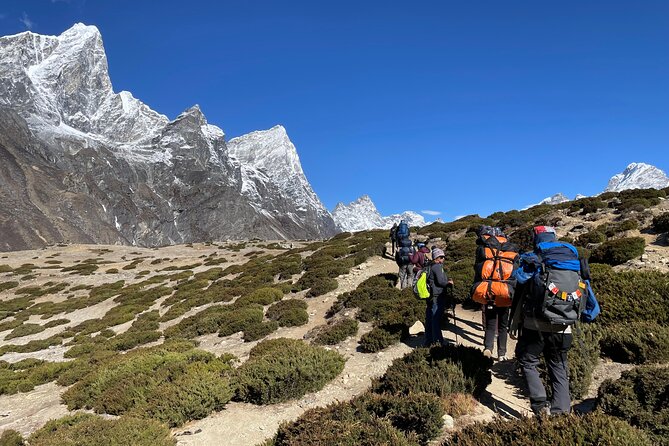
REVIEW · EVEREST BASE CAMP TREKS
Everest Base Camp Trek
The mountains begin with a small plane. This 12-day Everest Base Camp Trek combines the famous Lukla flight, guided hiking, tea-house stays, permits, meals, and domestic transport into one package, which makes a major Himalayan trip easier to manage. I especially like the two acclimatization days at Namche Bazaar and Dingboche, and I like that emergency helicopter arrangements are handled if needed.
The main caution is the cost and the package wording. At $1,300 per person, the trip covers a lot, but you still need money for a visa, insurance, drinks, hot showers, battery charging, tips, personal expenses, and possibly a porter. The details also say porters are included in the overview but list porter service as an extra $220, so confirm exactly what your price includes before paying.
In This Review
- The trek at a glance
- What the $1,300 price really covers
- Day 1: Kathmandu to Lukla, then Phakding
- Day 2: The long approach to Namche Bazaar
- Day 3: Acclimatization in Namche Bazaar
- Day 4: Namche to Tyangboche
- Day 5: Tyangboche to Dingboche
- Day 6: A second acclimatization day
- Day 7: Dingboche to Lobuche
- Day 8: Gorakshep and Everest Base Camp
- Day 9: Kala Patthar, then the descent to Pheriche
- Days 10 and 11: Returning to Namche and Lukla
- Day 12: The flight back to Kathmandu
- Guides, porters, and group size
- Tea houses, food, and practical comfort
- Weather, insurance, and cancellation rules
- Who should book this Everest trek?
- Should you book it?
- FAQ
- How long is the Everest Base Camp Trek?
- Where does the trek begin?
- Are flights between Kathmandu and Lukla included?
- Are meals included during the trek?
- Is accommodation included?
- Are guides and porters included?
- What fitness level is required?
- What happens if bad weather cancels the trek?
The trek at a glance
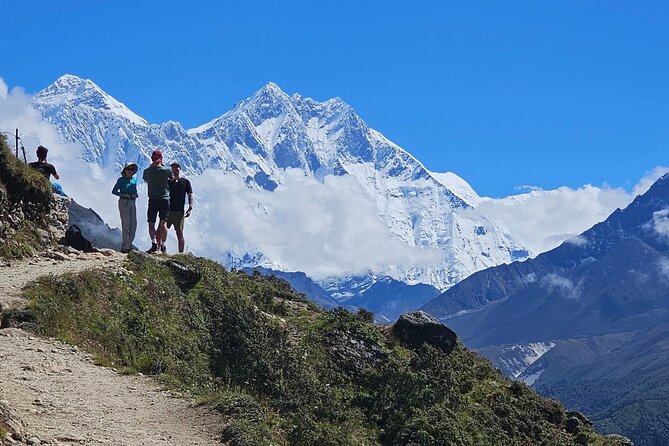
- Lukla by domestic flight: Your mountain journey begins with the short flight from Kathmandu to Lukla, followed by a gentle first walk to Phakding.
- Two useful acclimatization stops: You spend a rest day in Namche Bazaar and another in Dingboche, both important pauses before reaching higher ground.
- Everest Base Camp on day eight: The route reaches Base Camp through Gorakshep, with a long six to seven-hour walking day.
- Kala Patthar viewpoint: The next morning includes a climb to 5,545 meters, followed by a descent toward Pheriche.
- Meals and mountain lodging included: Breakfast, lunch, dinner, and tea-house accommodation are part of the trekking package.
- Small group format: The maximum group size is 14 people, a manageable number for a demanding route.
What the $1,300 price really covers
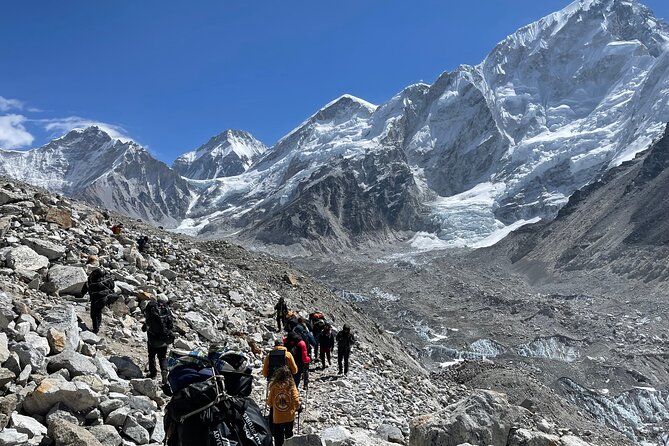
The price is not simply paying for a walk. It bundles the parts of a Himalayan trek that are hardest to arrange from abroad: the Kathmandu to Lukla and Lukla to Kathmandu flights, domestic airport tax, ground transfers, permits and paperwork, a guide, tea-house lodging, and three daily meals during the trek.
You also receive a sleeping bag, down jacket, duffle bag, and trekking map for use during the trip. These items matter because buying or renting high-altitude gear can add cost and planning time. You return the equipment after the trek.
The guide’s salary, meals, accommodation, transport, and insurance are covered. That is a useful safeguard in a remote area where a guide is not just someone who points out peaks. Your guide helps manage the pace, daily plans, lodging arrangements, and changing conditions.
The package has a few important holes. Nepal’s one-month entry visa is listed at $40, and travel insurance is compulsory. You pay for your Kathmandu hotel and food according to the exclusions, although another part of the package description says four nights in Kathmandu are included. That contradiction needs a written answer before you book.
You also pay for drinking water, soft drinks, hot showers, battery charging, chocolate and other snacks, tips, and personal expenses. A porter is listed at $20 per day, or $220 for the trek. Since the main description says guides and porters are included, ask whether the porter is included only for certain bookings or whether the extra fee is outdated.
The $40 Everest Base Camp entrance fee is also listed separately. Add these extras to the headline price before deciding if the package fits your budget.
More Everest Base Camp treks:
- Everest Base Camp Trek – 14 Days
★ 5.0 · 1,499 reviews - Everest Base Camp Trekking
★ 5.0 · 485 reviews - Everest Base Camp Trekking – 13 Day
★ 5.0 · 365 reviews
Day 1: Kathmandu to Lukla, then Phakding
The first day begins early, with a 6:15 a.m. meeting time at Tribhuvan Airport in Kathmandu. You fly to Lukla at 2,886 meters and then walk for about four hours to Phakding at 2,610 meters.
This is a smart opening day because the walk is shorter than the later stages. You begin adjusting to mountain air without immediately forcing yourself into a huge climb. Lunch and dinner are included, and you sleep in a tea house.
The flight is also the first point where weather can affect the plan. The trip requires good weather, and poor conditions may lead to a new date or a full refund if the operator cancels the experience. Keep your schedule flexible around this trek.
Day 2: The long approach to Namche Bazaar
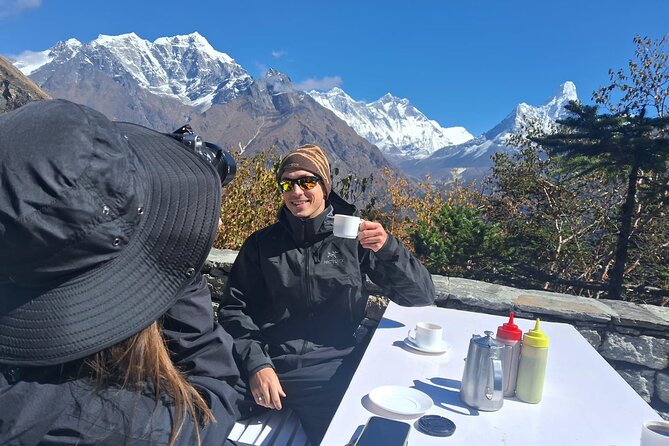
From Phakding, you walk for about six hours to Namche Bazaar at 3,440 meters. This is one of the first demanding days, since the route gains height and reaches the main settlement of the Khumbu region.
Namche is more than a place to sleep. It is the key trading and rest center before the higher valleys, and the planned rest day here gives your body time to adjust. I like that the schedule does not try to rush straight from Lukla to the upper valley.
You should treat this day as a steady effort, not a race. Your guide can help set a pace that keeps the group together, while the porters, if included in your booking, carry the heavier load.
Day 3: Acclimatization in Namche Bazaar
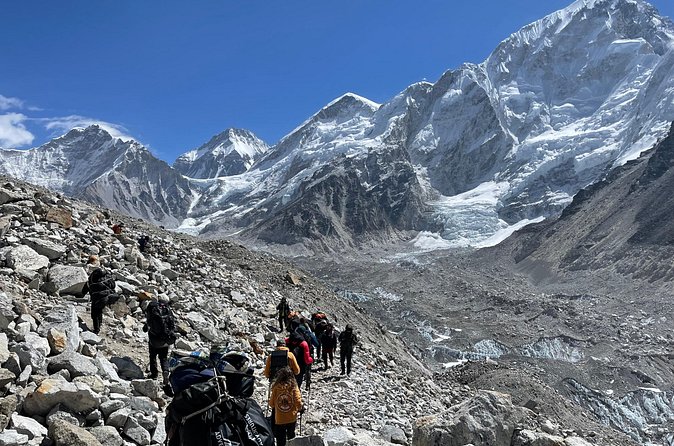
The third day is set aside for acclimatization at 3,440 meters. You do not lose a day here. You gain a better chance of handling the climb that follows.
The schedule does not specify the exact activities for this rest day, so do not expect a fixed sightseeing program unless the operator confirms one. The value is the pause itself. You can rest, explore the town, and prepare for the higher trail without adding another full walking day.
More walking in the hills of Kathmandu:
- Nagarkot Sunrise View and Day Hiking from Kathmandu
★ 5.0 · 471 reviews - Annapurna Circuit Trek with Tilicho Lake
★ 5.0 · 368 reviews - Everest Base Camp Trek -14 Days
★ 5.0 · 321 reviews - Annapurna base camp trek 5 Days
★ 5.0 · 252 reviews
Day 4: Namche to Tyangboche
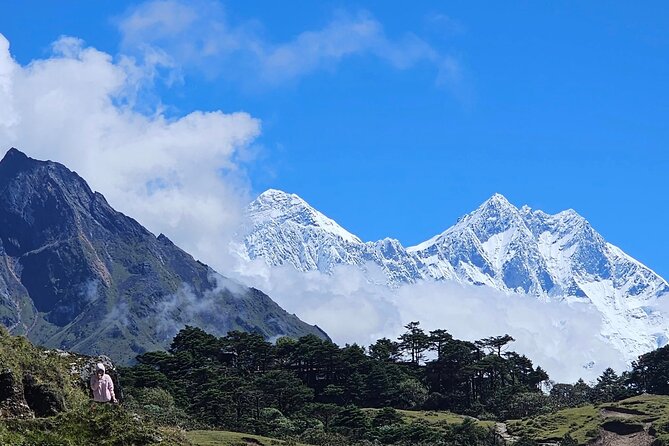
The trail continues from Namche to Tyangboche at 3,867 meters, taking about five hours. This is a shorter walking day than the route to Namche, but the increasing altitude changes how hard each climb feels.
Tyangboche gives you a mountain setting that feels very different from the lower trail. The overnight stop breaks up the route before Dingboche and keeps the daily distances reasonable. You receive breakfast, lunch, and dinner as part of the trekking plan.
At this point, the cold and thinner air can make ordinary routines slower. You will want the included down jacket and sleeping bag, though the package does not specify their exact warmth rating. Ask about sizes and condition before departure.
Day 5: Tyangboche to Dingboche
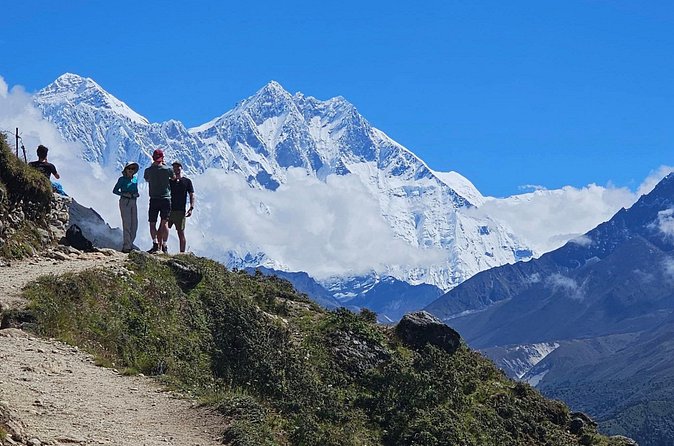
The walk to Dingboche takes about five hours and ends at 4,260 meters. You are now well above the lower valleys, and the altitude becomes a serious part of the experience.
Dingboche is another practical stop rather than a quick overnight waypoint. The next day is reserved for acclimatization, giving you time before the route climbs toward Lobuche and the high point near Kala Patthar.
The trek is described as suitable for people with moderate physical fitness. That should not be read as easy. You need to manage repeated five to seven-hour walking days, high altitude, early starts, and basic tea-house conditions.
Day 6: A second acclimatization day
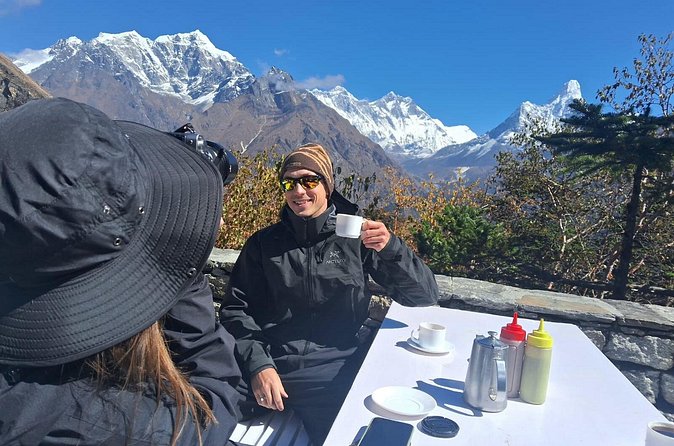
The second rest day takes place in Dingboche at 4,260 meters. This pause is one of the strongest parts of the schedule because the route soon moves close to 5,000 meters.
You should use the day to rest and monitor how you feel. The itinerary does not promise a particular excursion, so the main benefit is time at altitude rather than a special included activity.
Your guide is especially important here. The supplied feedback gives the guides unusually strong praise. Kiran was described as handling difficult conditions well, Dinish helped throughout a 10-day trek, and Arjun was noted for patience and for bringing fresh fruit as a small dessert. Those details suggest that the human side of the trip can make a hard route feel more manageable.
Day 7: Dingboche to Lobuche
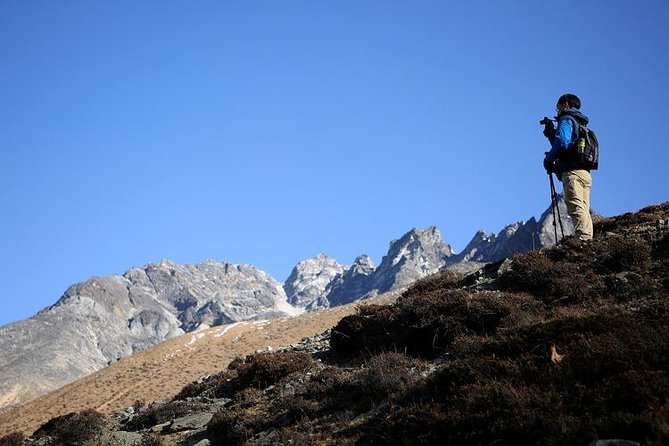
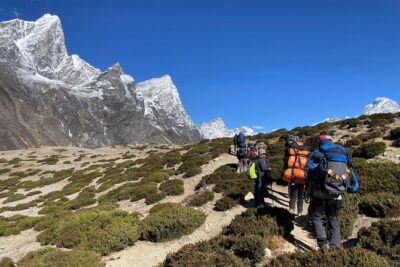
The trail from Dingboche to Lobuche reaches 4,930 meters and takes about five hours. You are now entering the high section of the trek, where the distance may look modest on paper but feels more serious in practice.
Lobuche is a staging point for the following day. The overnight stop matters because the route to Base Camp includes Gorakshep and takes six to seven hours. Your guide can help keep the day controlled, but no guide can remove the effects of altitude. You should be ready for a physically demanding stretch.
Day 8: Gorakshep and Everest Base Camp
This is the big day. You walk from Lobuche to Everest Base Camp via Gorakshep, with six to seven hours on the trail. The route reaches the destination many people picture when they think of Nepal, but Base Camp is not the end of the physical effort.
Gorakshep is part of the route rather than a separate sightseeing stop. The day involves reaching this high settlement, continuing to Base Camp, and returning for the night. The itinerary gives no exact elevation for Gorakshep in the day heading, so ask the operator for the current details if you want to track the altitude closely.
The achievement comes from the whole sequence, not just a single photograph. You have already walked from Lukla through Phakding, Namche, Tyangboche, Dingboche, and Lobuche, with two planned acclimatization days. By Base Camp, the route has asked for patience as much as strength.
Day 9: Kala Patthar, then the descent to Pheriche
The next day begins with a climb from Gorakshep to Kala Patthar at 5,545 meters, followed by a walk to Pheriche at 4,243 meters. The total walking time is about seven hours.
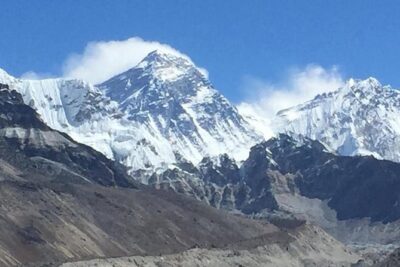
Kala Patthar is the highest point on this route and the place to focus on if your main goal is a broad view toward Mount Everest. Base Camp is the symbolic destination, but Kala Patthar is the major viewpoint. The early climb can be tiring after the previous day, so you should expect a demanding morning.
The move to Pheriche brings you lower, which is welcome after spending time above 4,900 meters. The descent is not effortless, but it usually feels different from climbing at altitude. Your knees may complain even when your lungs feel better.
Days 10 and 11: Returning to Namche and Lukla
Day 10 takes you from Pheriche back to Namche Bazaar in about six hours. This is a long return day, but the lower elevation changes the rhythm of the walk.
On day 11, you continue from Namche to Lukla, again for about six hours. The route is not merely a simple downhill stroll. You still need to handle uneven ground, tired legs, and the final push to the airport settlement.
The return route also gives you a chance to notice places you passed quickly on the way up. With the main altitude goal behind you, you may have more energy for the villages and mountain views.
Day 12: The flight back to Kathmandu
The final day includes the flight from Lukla to Kathmandu and a transfer to your hotel. Breakfast is included.
As on the way in, the flight depends on weather and operating conditions. If you have an international flight immediately afterward, leave plenty of room in your schedule. The package does not promise a fixed flight time beyond the day itself, and mountain aviation can require flexibility.
Guides, porters, and group size
The group maximum is 14 people. That is small enough for a guide to keep track of the group, but it is not a private trek. Walking speeds differ, especially after Dingboche, so ask how the operator handles a mixed-pace group.
An experienced and friendly guide is included. The guide’s expenses and insurance are covered, which helps you avoid the awkward question of who pays for food and lodging on the trail.
Porter coverage needs special attention. The overview says guides and porters are included, but the detailed cost section says a porter costs $20 per day, or $220 per person. Get this clarified in writing. If you carry your own duffle, the trek becomes more demanding. If a porter is included, the price becomes easier to justify.
The strongest praise attached to this experience is for the guide support. The names Kiran, Dinish, and Arjun appear with specific examples of patience, problem solving, and personal care. Arjun bringing fresh fruit each night is a small touch, but on a difficult trek, small touches count.
Tea houses, food, and practical comfort
Accommodation is provided in lodges or tea houses during the trek. These are functional mountain stays, not city hotels. You receive breakfast, lunch, and dinner, but drinks are not included.
Budget extra money for bottled or treated water, hot showers, charging your phone or camera, and snacks. Chocolate bars are specifically excluded, and you should not assume that every comfort will be available at the same price in the high valleys.
A sleeping bag, down jacket, duffle bag, and trekking map are supplied for the trek and returned afterward. Confirm the equipment sizes and pickup process before you arrive, especially if you are tall, small-framed, or particular about sleeping gear.
Four nights in Kathmandu are described as included in the main package, while the exclusions say Kathmandu hotel and food are not included. That may mean accommodation is included but meals are not, or it may reflect inconsistent wording. Clarify the number of nights, hotel standard, and meal coverage.
Weather, insurance, and cancellation rules
This trek requires good weather, especially because of the Lukla flights. If the operator cancels because of poor weather, you are offered another date or a full refund. The same applies if the minimum group size is not reached.
Your own cancellation is different. The experience is non-refundable and cannot be changed for any reason. Travel insurance is compulsory, and it should cover trekking at the planned altitude as well as emergency helicopter evacuation.
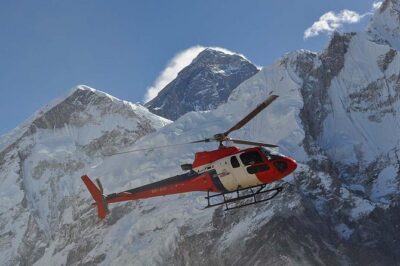
The operator will arrange emergency helicopter service, but the cost is paid by your insurance company. Check the policy wording before you go. Do not assume a standard holiday policy covers high-altitude trekking or evacuation.
Who should book this Everest trek?
I would choose this trip if you want the classic Everest Base Camp route without arranging flights, permits, tea houses, meals, gear, and transfers yourself. It suits you best if you have moderate fitness, can handle several long walking days, and accept basic lodging and changing flight conditions.
It is also a good fit if you value organized support more than a private, tailor-made schedule. The 14-person maximum keeps the group within a reasonable size, though you should still ask how walking pace and porter arrangements are managed.
I would hesitate if you need luxury, fixed flight times, or a fully transparent all-in price. The extra costs are normal for Nepal, but the porter and Kathmandu accommodation wording should be settled before booking. The strong 5-star rating from 123 ratings and a 100 percent recommendation record suggest a well-liked operation, but no rating removes the physical challenge or weather risk.
Should you book it?
Book this trek if you want a structured path to Everest Base Camp and appreciate having the hard logistics handled. The two acclimatization days, included guide, meals, tea-house lodging, domestic flights, and loaned gear make the $1,300 starting price potentially good value.
Before paying, ask three direct questions: Is a porter included, are four Kathmandu hotel nights included, and what exact costs remain beyond the listed $1,300? If the answers are clear and your insurance covers the trek, this is a sensible way to tackle one of Nepal’s great routes.
FAQ
How long is the Everest Base Camp Trek?
The trip lasts approximately 12 days, including flights between Kathmandu and Lukla, the trek to Everest Base Camp, the return walk to Lukla, and the flight back to Kathmandu.
Where does the trek begin?
The experience begins at Tribhuvan Airport in Kathmandu, Nepal. The listed meeting time is 6:15 a.m.
Are flights between Kathmandu and Lukla included?
Yes. The Kathmandu to Lukla and Lukla to Kathmandu flights, including domestic airport tax, are included.
Are meals included during the trek?
Breakfast, lunch, and dinner are included during the trekking portion. Food in Kathmandu is listed as excluded.
Is accommodation included?
Accommodation in lodges or tea houses during the trek is included. The package description also says four nights in Kathmandu are included, but the exclusions say Kathmandu hotel is not included, so you should confirm this detail before booking.
Are guides and porters included?
An experienced guide is included, along with the guide’s salary, food, drinks, lodging, transportation, and insurance. The details also list a porter as an extra cost of $20 per day, or $220 per person, despite the general description referring to guides and porters. Confirm the porter arrangement directly.
What fitness level is required?
A moderate physical fitness level is required. The itinerary includes several five to seven-hour walking days and reaches Kala Patthar at 5,545 meters.
What happens if bad weather cancels the trek?
If the operator cancels the experience because of poor weather, you are offered another date or a full refund. The same choice applies if the minimum number of participants is not reached. Your own cancellation is non-refundable.
New in the Kathmandu listings
- Traditional Momo Making Class★ 5.0 · 10 reviews
- Kathmandu: Ancient City Kirtipur & Pharping Monastery Tour★ 5.0 · 2 reviews
- Kathmandu to Pokhara Premium sofa bus ticket★ 4.0 · 17 reviews
- Women Empowerment Project(Nepali cooking class & jewelry workshop★ 5.0 · 15 reviews
- 7-Day Langtang Valley Trek from Kathmandu★ 5.0 · 1 review
- Kathmandu 2 Nights 3 Days Chitwan Jungle Safari Tour★ 5.0 · 9 reviews
- Yoga Experience Day Trip with Private Transfer From Kathmandu★ 4.0 · 2 reviews
- Wildlife Adventure in Chitwan Nepal★ 4.0 · 4 reviews
Everest Base Camp Treks, compared.
Everest Base Camp Trek with Helicopter Return from Gorakshep to Lukla
Read our review →Browse the lists this tour appears in