
REVIEW · EVEREST BASE CAMP TREKS
Everest Base Camp Trek
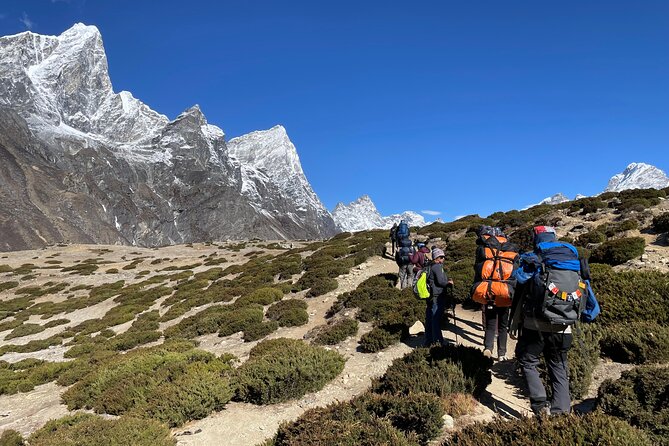
The mountain is only half the story. The Everest Base Camp Trek combines huge Himalayan views with Sherpa villages, Buddhist monasteries, suspension bridges, and the daily rhythm of walking from lodge to lodge. I especially like that Lukla flights, permits, meals, and trek lodging are included, and I like the careful acclimatization stops in Namche Bazaar and Dingboche.
The strongest praise centers on the guiding team, especially Buddhi and Pawan. Their support, care, and steady encouragement seem to make the hard days more manageable. The main drawback is the cost of extras: insurance, a porter, Kathmandu lodging, bottled water, hot showers, laundry, phone calls, and battery charging are not included. This is a high-altitude trek, not a cheap sightseeing tour.
At $1,799.27 per person, the package offers reasonable value if you use the included flights, meals, equipment, permits, and 11 nights of mountain lodging. Still, you need good physical fitness, patience with weather delays, and enough spare money for the mountain expenses that quickly add up.
In This Review
- Key Things to Know Before You Go
- What the $1,799 Price Really Covers
- Day 1: A Soft Landing in Kathmandu
- Day 2: The Short Flight to Lukla
- Day 3: From Phakding to Namche Bazaar
- Day 4: Acclimatizing Around Namche
- Day 5: Tengboche and Big Mountain Views
- Day 6: Tengboche to Dingboche
- Day 7: A Second Acclimatization Pause
- Day 8: Along the Khumbu Glacier
- Day 9: Gorak Shep and Everest Base Camp
- Day 10: Kala Patthar and the Best View of Everest
- Days 11 and 12: The Long Return Through Pheriche and Namche
- Days 13 and 14: Back to Kathmandu
- The Guides and Support Team
- Who Should Book This Trek?
- Should You Book the Everest Base Camp Trek?
- FAQ
- How long does the Everest Base Camp Trek last?
- Where does the trek begin?
- Are flights between Kathmandu and Lukla included?
- Are meals included?
- Is accommodation included?
- Is a porter included?
- What equipment is provided?
- Do I need travel and rescue insurance?
- Can I cancel for a full refund?
Key Things to Know Before You Go
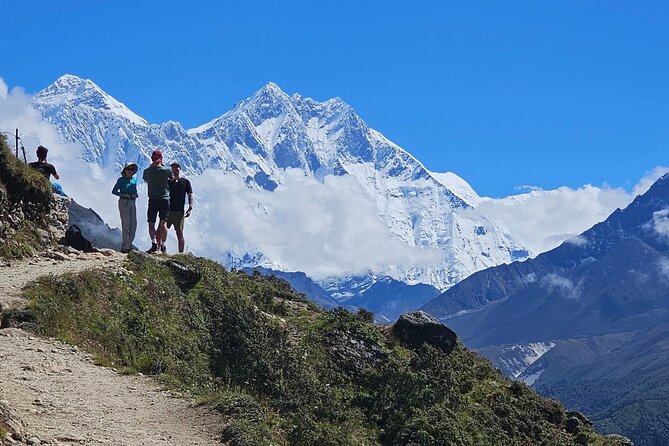
- Fourteen days from Kathmandu to Everest Base Camp: The route includes Lukla, Namche Bazaar, Tengboche, Dingboche, Gorak Shep, Kala Patthar, and the return to Lukla.
- Acclimatization is built into the route: You spend a rest day in Namche and another in Dingboche, both important pauses before going higher.
- The guide team earns the best praise: Buddhi and Pawan are singled out for their care, encouragement, planning, and calm support.
- Lukla flights are included both ways: Weather can affect mountain flights, so keep your schedule flexible and protect your trip with insurance.
- Useful gear is supplied: A sleeping bag, down jacket, duffel bag, and medical kit are provided.
- You pay extra for a porter: The package includes a licensed guide, but porter service is not part of the listed price.
What the $1,799 Price Really Covers
The price looks substantial, but the inclusions are broad. You receive airport pickup and drop-off, both flights between Kathmandu and Lukla, a government-licensed mountain guide, national park and local entrance fees, 11 nights of accommodation during the trek, and meals throughout the walking portion.
The meal allowance is listed as 12 breakfasts, 12 lunches, and 11 dinners, with additional entries showing 13 lunches, 14 breakfasts, and 13 dinners. Because those figures do not perfectly match, I would ask the operator to confirm the exact meal count before paying. The important point is that meals are intended to be covered for the trek and return period.
The supplied sleeping bag, down jacket, and duffel bag help reduce the amount of specialist gear you need to purchase. Three cups of hot tea during the trek are also included. That sounds minor, but warm drinks matter on cold walking days.
The price does not include your Kathmandu hotel, travel and rescue insurance, porter service, tips, or personal mountain costs. You also pay for showers, hot water, bottled water, laundry, phone calls, and battery charging. Delays, strikes, or canceled flights can create more costs if they fall outside the scheduled plan.
For a private experience, the package is appealing. Only your own group participates, rather than joining a large mixed party. That can make the pace and daily decisions more personal, though the price may be higher than a basic group departure.
More Everest Base Camp treks:
- Everest Base Camp Trek – 14 Days
★ 5.0 · 1,499 reviews - Everest Base Camp Trekking
★ 5.0 · 485 reviews - Everest Base Camp Trekking – 13 Day
★ 5.0 · 365 reviews
Day 1: A Soft Landing in Kathmandu
After arriving at Tribhuvan International Airport, a representative from Nepal High Trek and Expedition receives you and takes you to the arranged hotel. The plan includes dinner and a short introduction to the trek.
The first day is less about sightseeing and more about getting organized. You can meet the support team, check your equipment, and settle your luggage before the early mountain departure. The itinerary lists Mount Everest as the first stop, but the practical experience described is an airport transfer, hotel arrival, and dinner in Kathmandu.
The airport pickup is a useful inclusion. After a long international flight, not having to negotiate transport immediately is a relief. Your Kathmandu hotel is not included, however, so confirm where you will stay and how many nights you need before and after the trek.
Day 2: The Short Flight to Lukla
After breakfast, you transfer to Kathmandu’s domestic terminal for the scheduled flight to Lukla. This small mountain airstrip marks the start of the walking route.
The flight is included in both directions, which makes the package easier to budget. It is also one of the parts least worth treating as fixed. The tour notes that weather can cancel the experience or force a different date, and other delays can create expenses outside the planned itinerary.
Lukla is more than a transport stop. It is where the journey changes from city travel to foot travel. You spend the night in a guesthouse and prepare for the first full walking day.
Day 3: From Phakding to Namche Bazaar
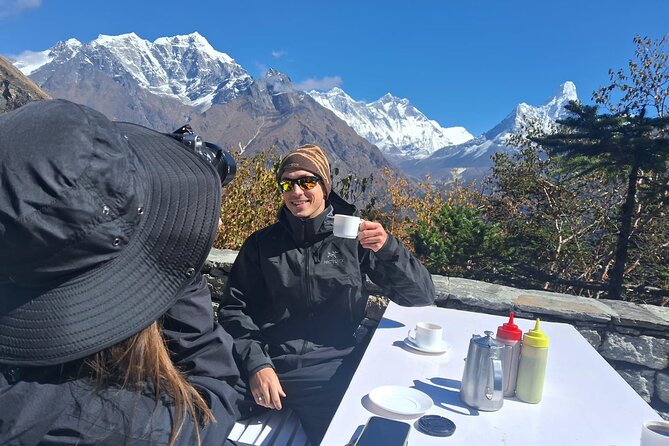
The route from Phakding to Namche Bazaar follows the Dudh Koshi River and crosses several suspension bridges. The view toward Mount Thamserku, rising to 6,618 meters, gives you an early taste of the scale ahead.
The distance is not the only challenge. The trail climbs steadily toward Namche, and the itinerary wisely describes walking slowly. This is a place to protect your energy rather than race the group. Namche is the main trading and supply center of the route, with banks, ATMs, internet cafés, and other useful services.
That access makes Namche a good place to check your spending money and contact home. It is also one of the last places where services feel relatively plentiful. After this point, personal items such as charging, showers, and hot water become more costly and less dependable.
More walking in the hills of Kathmandu:
- Nagarkot Sunrise View and Day Hiking from Kathmandu
★ 5.0 · 471 reviews - Annapurna Circuit Trek with Tilicho Lake
★ 5.0 · 368 reviews - Everest Base Camp Trek -14 Days
★ 5.0 · 321 reviews - Annapurna base camp trek 5 Days
★ 5.0 · 252 reviews
Day 4: Acclimatizing Around Namche
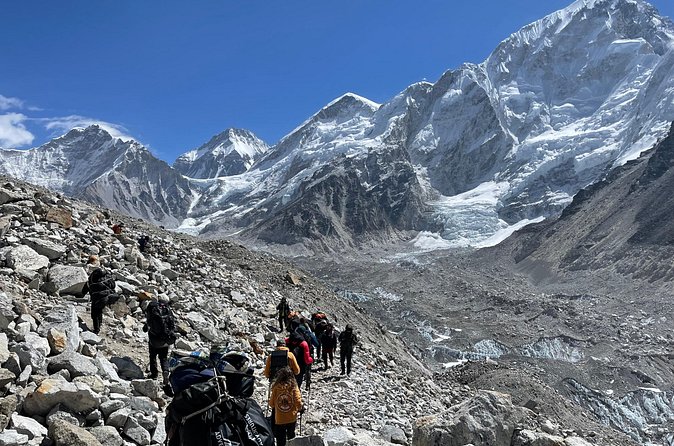
The schedule gives you a full acclimatization day in Namche, with around two hours of exploration. That pause is one of the route’s best features. You gain altitude gradually instead of pushing upward every day.
The itinerary includes a stop at the Irish Pub, but the real value of the day is time at altitude and a chance to explore the surrounding area. You may want to use the ATMs, internet cafés, or shops while they are available. Do not treat this as a wasted rest day. It is part of the safety plan.
The exact activity can vary, but the purpose is clear: recover, walk gently, and let your body adjust. A private group may also find it easier to keep the day relaxed rather than follow a rigid large-group schedule.
Day 5: Tengboche and Big Mountain Views
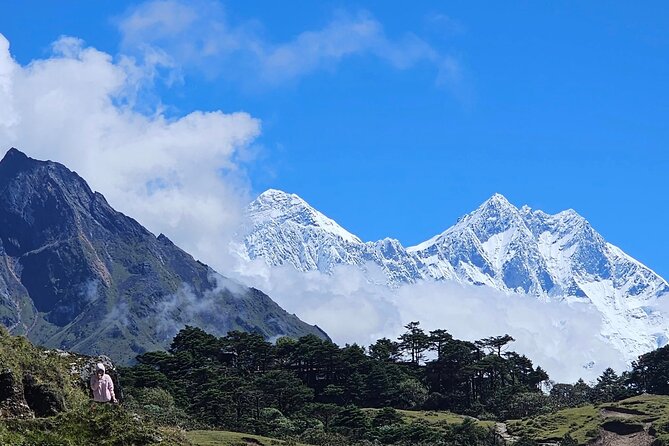
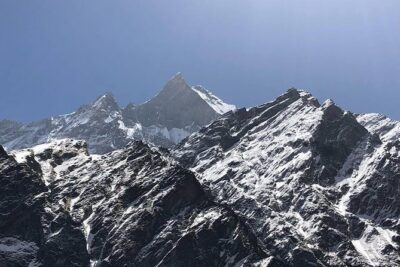
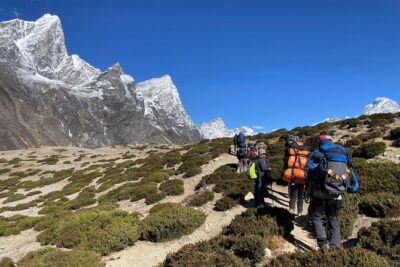
From Namche, the trail brings views of Everest, Nuptse, Lhotse, and Ama Dablam. The route leads to Tengboche Gompa, one of the most meaningful cultural stops on the trek.
Tengboche is not just a scenic viewpoint. The monastery gives the day a spiritual dimension, with Buddhist architecture and a dramatic wall of snow peaks behind it. The itinerary allows a short visit to the gompa and time for photographs.
The listed stop is about one hour, but the walking day itself can feel much longer because the route continues through high mountain terrain. You should expect the scenery to improve as the air gets thinner, which is a fair trade but not an easy one.
Day 6: Tengboche to Dingboche
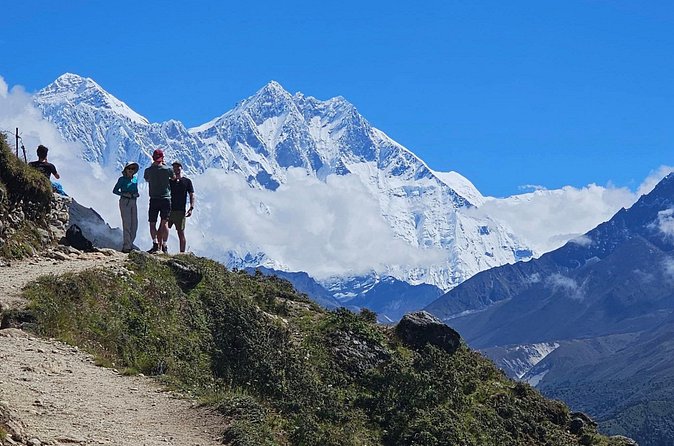
The morning begins with another short visit to Tengboche and its monastery before the trail continues toward Dingboche. The itinerary mentions a Dingboche viewpoint and about three hours at the listed stop.
Dingboche is an important base for the higher section of the trek. From here, the surrounding peaks feel closer and the walking becomes more demanding. The route follows mountain valleys and offers wide views of the white summits.
Do not judge this day only by the stated stop duration. The full walking schedule is more important than the time attached to a particular attraction. Your guide should explain the day’s pace and rest points clearly.
Day 7: A Second Acclimatization Pause
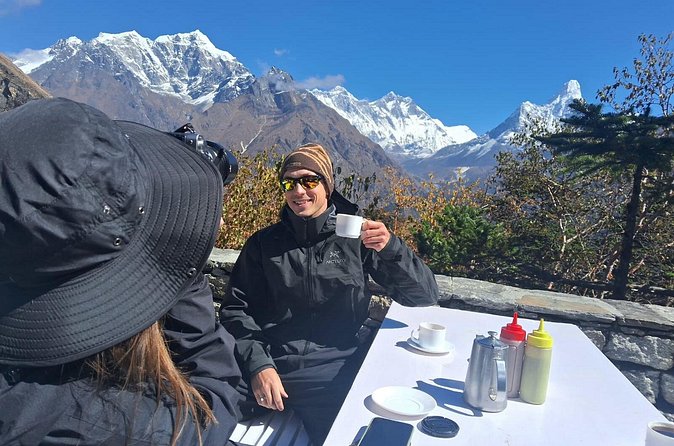
Dingboche provides another acclimatization day. The planned short hike toward Chhukung follows the Imja Khola valley and includes views toward Lhotse.
This is a smart use of time. You climb a little, return to Dingboche, and prepare for the even higher settlements ahead. The itinerary also lists a Dingboche stupa, adding a cultural detail to the day.
The walk is around three hours at the listed stop. You should still take the day seriously. Altitude affects people differently, and the trip information specifically requires a strong level of physical fitness. The guide’s support matters here, but you remain responsible for telling the guide if you feel unwell.
Day 8: Along the Khumbu Glacier
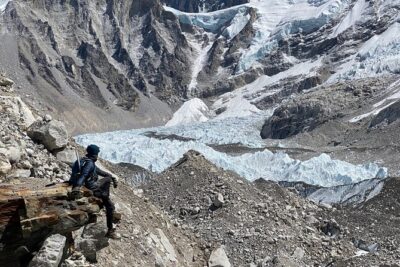
The trail now follows the lateral moraine of the Khumbu Glacier. You pass stone memorials honoring climbers who died on nearby summits before continuing toward Lobuche.
This is one of the trek’s most solemn sections. The memorials remind you that Everest is not simply a scenic backdrop or a personal challenge. It is a serious high-altitude environment with real risks.
The listed glacier stop lasts about two hours. Expect rough ground, cold conditions, and a more exposed feeling than on the lower trail. The supplied down jacket and sleeping bag become especially useful as the route climbs.
Day 9: Gorak Shep and Everest Base Camp
After breakfast, you walk to Gorak Shep and then continue toward Everest Base Camp. The route offers views of high peaks, including Everest, and gives you the main achievement promised by the trip.
The entry for the Everest Camp stop shows only four minutes, which is clearly not a realistic measure of the entire walk or time spent at the destination. I would treat that figure as an administrative listing error and ask the operator for the expected walking hours, distance, and time at base camp.
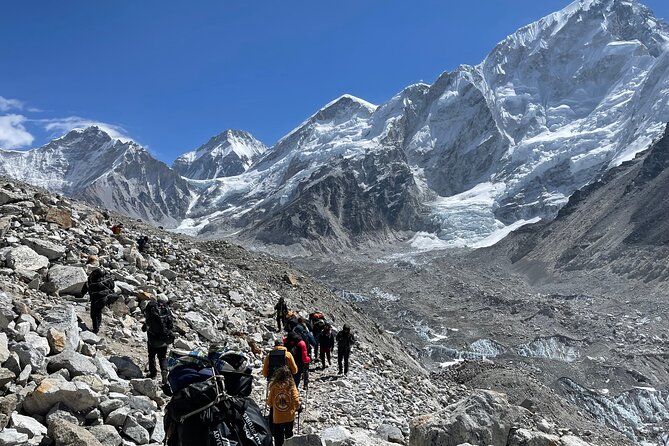
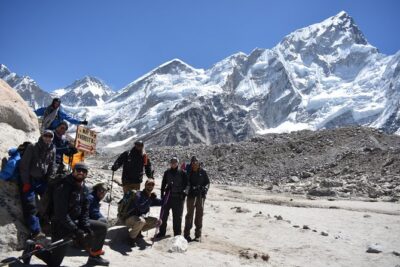
The base camp itself is the emotional center of the trek. You reach the place used by Everest expeditions, see the Khumbu Glacier area, and take photographs surrounded by some of the world’s highest mountains. The route is demanding, and the thin air can make even a short walk feel slow.
You return to Gorak Shep rather than spending the night at base camp. That is an important practical detail when planning your expectations.
Day 10: Kala Patthar and the Best View of Everest
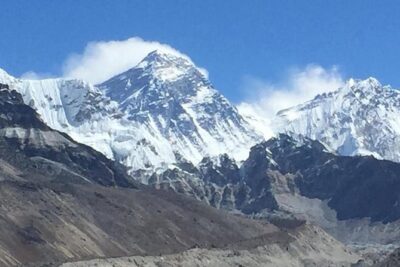
The itinerary calls this the key day, and it is easy to see why. You start early for Kala Patthar, climbing for several hours to catch sunlight striking the snow and clouds around Everest.
This is usually the viewpoint day of the trek. Base camp gives you the sense of reaching the expedition route, while Kala Patthar provides the broad mountain view many people picture when they think of Everest. The climb is short compared with the full trek, but altitude makes it hard.
The stop at Gorak Shep is listed as 30 minutes, though the day includes the early ascent and descent. Ask for a clear schedule before departure, especially if you want to understand how much time is available for photographs and rest.
Days 11 and 12: The Long Return Through Pheriche and Namche
The return route begins through Pheriche and takes a slightly different path toward Orsho and Pangboche. Pangboche offers a chance to visit an old monastery, with local stories connected to the scalp and bones of the yeti.
That detail adds a touch of Himalayan folklore to a serious walking day. The itinerary lists seven hours for the day, so this is not a gentle stroll after reaching base camp. Your knees may find the descent harder than expected, even though breathing becomes easier at lower altitude.
From Namche, you continue back to Lukla, with about three hours listed for the stop. Once in Lukla, you have leisure time to explore the valley before staying overnight in a guesthouse.
The return gives you a different view of familiar ground. You also have time to notice how much the route has changed in your mind since the first walk from Lukla. That sense of progress is part of the reward.
Days 13 and 14: Back to Kathmandu
The flight from Lukla returns you to Kathmandu within a few hours. After landing, the schedule allows time to visit Kathmandu, including Kathmandu Durbar Square, with about two hours listed for the stop.
The city visit is a pleasant contrast to the high mountains. The itinerary is not detailed enough to promise a full guided sightseeing program, so think of this as available free time rather than a guaranteed city tour.
The final night is spent in Kathmandu before an airport transfer the next day. You are expected to reach Tribhuvan International Airport three hours before your flight, followed by a small farewell program arranged by the company.
The Guides and Support Team
The human side of this trek receives the strongest praise. Buddhi is repeatedly described as caring, encouraging, attentive, and positive. Pawan is also praised for leading a group through the Everest Base Camp route via Gokyo Lakes and Cho La, although that route is different from the standard 14-day plan described here.
That distinction matters. You should confirm the exact route before booking if you expect Gokyo Lakes or the Cho La pass. The listed itinerary follows the classic Lukla, Namche, Tengboche, Dingboche, Gorak Shep route.
The guide is not simply there to point out peaks. On a trek like this, good support means helping with pace, answering cultural questions, watching how you are coping, and dealing with changes. Several comments praise the team for backup plans and strong support on difficult days.
Who Should Book This Trek?
You should consider this trek if you want a demanding mountain experience with the main logistics arranged. It suits people who value a private group, want a licensed guide, and prefer not to organize flights, permits, meals, and mountain lodging separately.
You need strong physical fitness and a willingness to walk for many hours over uneven, high-altitude terrain. You also need patience. Lukla flights depend on weather, and the tour warns that delays or cancellations can lead to extra expenses.
This is not the best fit if you want a comfortable holiday, a fully inclusive price, or guaranteed city sightseeing. It is also less suitable if you dislike early starts, basic mountain accommodation, or paying separately for everyday services.
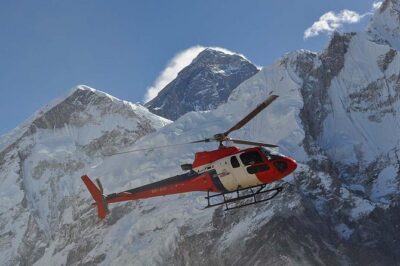
Cancellation is free up to 24 hours before the scheduled start time. If poor weather cancels the experience, you are offered another date or a full refund. Travel and rescue insurance remains essential because emergency helicopter service is arranged but paid through your insurance company.
Should You Book the Everest Base Camp Trek?
I would book this trek if the standard route, private format, and strong guide support match what you want. The included Lukla flights, permits, meals, equipment, and mountain lodging make the $1,799.27 price easier to justify, especially for a first visit to the Everest region.
Before booking, ask three questions: What exactly is included in the conflicting meal counts? How are flight delays handled? What are the expected walking hours for Days 9 and 10? Also budget separately for a porter, insurance, tips, Kathmandu lodging, charging, showers, water, and possible delays.
The best reason to choose this trip is the support system. Buddhi, Pawan, and the wider team receive consistent praise for care and encouragement. If you are ready for a serious physical challenge and want the mountain experience organized by a local company, this is a strong option.
FAQ
How long does the Everest Base Camp Trek last?
The trek lasts approximately 14 days, including arrival in Kathmandu, flights to and from Lukla, the mountain route, and departure from Kathmandu.
Where does the trek begin?
The experience begins in Kathmandu, Nepal. After an airport pickup and overnight arrangements, you fly to Lukla, where the walking portion starts.
Are flights between Kathmandu and Lukla included?
Yes. The package includes a return flight ticket between Kathmandu and Lukla.
Are meals included?
Yes. Meals are included during the trek, with breakfast, lunch, and dinner listed. The supplied information gives different totals in separate sections, so confirm the exact count with the provider.
Is accommodation included?
The package includes 11 nights of accommodation during the trek. Hotel accommodation in Kathmandu is not included.
Is a porter included?
No. Porter costs are not included in the price. You need to arrange and pay for porter service separately if you want it.
What equipment is provided?
A sleeping bag, down jacket, duffel bag, and medical kit are provided.
Do I need travel and rescue insurance?
Yes. Travel and rescue insurance is not included. Emergency helicopter service can be arranged, but payment is made through your travel insurance company.
Can I cancel for a full refund?
You can cancel up to 24 hours before the experience start time for a full refund. If poor weather causes the experience to be canceled, you are offered a different date or a full refund.
New in the Kathmandu listings
- Traditional Momo Making Class★ 5.0 · 10 reviews
- Kathmandu: Ancient City Kirtipur & Pharping Monastery Tour★ 5.0 · 2 reviews
- Kathmandu to Pokhara Premium sofa bus ticket★ 4.0 · 17 reviews
- Women Empowerment Project(Nepali cooking class & jewelry workshop★ 5.0 · 15 reviews
- 7-Day Langtang Valley Trek from Kathmandu★ 5.0 · 1 review
- Kathmandu 2 Nights 3 Days Chitwan Jungle Safari Tour★ 5.0 · 9 reviews
- Yoga Experience Day Trip with Private Transfer From Kathmandu★ 4.0 · 2 reviews
- Wildlife Adventure in Chitwan Nepal★ 4.0 · 4 reviews
Everest Base Camp Treks, compared.
Everest Base Camp Trek with Helicopter Return from Gorakshep to Lukla
Read our review →Browse the lists this tour appears in