
REVIEW · EVEREST BASE CAMP TREKS
Everest Base Camp Trek
The trail ends beneath the world’s highest mountain. This 14-day Everest Base Camp Trek combines a dramatic Lukla flight, Sherpa villages, Buddhist monasteries, and the Khumbu Glacier in one demanding journey. I especially like the built-in acclimatization day at Namche Bazaar and the second rest day at Dingboche, both vital pauses before the high country.
I also like that the $1,300 price includes flights, meals, airport transfers, two Kathmandu hotel nights, and a guide. The main caution is simple: Lukla flights can be delayed or canceled by weather, and the trek reaches 5,550 meters at Kala Patthar. You need moderate fitness, patience, and some tolerance for basic mountain travel.
In This Review
- Key points to know before booking
- What the 14-day Everest trek really involves
- Day 1: Kathmandu keeps the first day practical
- Days 2 and 3: Lukla, Phakding, and the first climb
- Day 4: Namche offers a useful pause
- Days 5 and 6: Tengboche and Dingboche
- Day 7: Dingboche is more than a day off
- Days 8 and 9: Memorials, glacier views, and Base Camp
- Day 10: Kala Patthar delivers the best Everest view
- Days 11 and 12: Returning through Sherpa country
- Days 13 and 14: Flying out and leaving room for change
- What the $1,300 price covers
- The human side: guides, porters, and support
- Who should book this trek?
- Booking, cancellation, and practical checks
- Should you book the Everest Base Camp Trek?
- FAQ
- Where does the Everest Base Camp Trek begin?
- How long does the trek take?
- Is the Lukla flight included?
- Why might I fly from Ramechhap?
- What is the highest point reached?
- Is Everest Base Camp included?
- What meals are included?
- How large can the group be?
- What happens if bad weather cancels the experience?
Key points to know before booking
- Lukla flights shape the whole trip: Weather and air traffic can delay the start or return, with Ramechhap used during busy periods.
- Namche and Dingboche provide two acclimatization breaks: These rest days make the steady climb more manageable.
- Kala Patthar is the visual high point: The pre-dawn climb reaches 5,550 meters and gives the best sunrise view of Everest.
- The $1,300 package covers major costs: Flights, meals, airport transfers, guide flights, and two Kathmandu hotel nights are included.
- Small groups keep the trek personal: The maximum group size is eight people.
- Guides receive strong personal praise: Names connected with especially warm feedback include Ram, Amer, Bishnu, Rajesh, Prakash, Tilak, Binode, Sanjay, and Gore.
What the 14-day Everest trek really involves
This is not a sightseeing tour with a few walks added. It is a sustained mountain trek with long days, thin air, changing weather, and simple overnight stops. The route reaches Everest Base Camp at about 5,364 meters, then climbs higher to Kala Patthar.
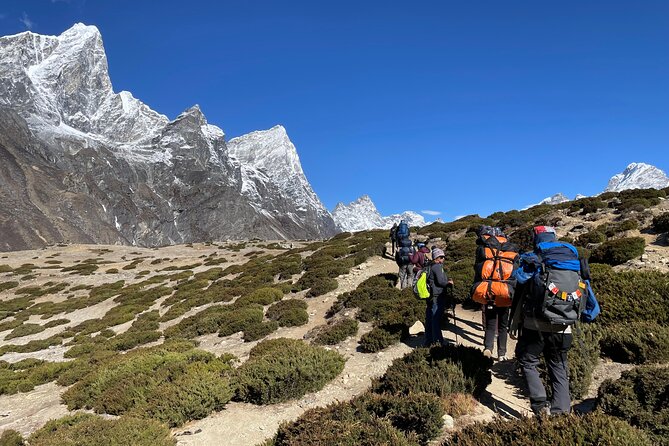
The reward is a remarkable sequence of settings. You move from Kathmandu’s urban streets to Lukla’s mountain airstrip, then through pine and rhododendron woodland, Sherpa settlements, high pasture, glacial streams, and bare rock above the tree line.
The group size matters. With no more than eight people, the guide should be able to keep track of the group more easily than on a large commercial departure. It also gives you a better chance to get to know the people walking beside you, which matters on a trek where everyone shares the same cold mornings and tired legs.
More Everest Base Camp treks:
- Everest Base Camp Trek – 14 Days
★ 5.0 · 1,499 reviews - Everest Base Camp Trekking
★ 5.0 · 485 reviews - Everest Base Camp Trekking – 13 Day
★ 5.0 · 365 reviews
Day 1: Kathmandu keeps the first day practical
An airport pickup takes you to a hotel near Thamel. The first day is deliberately light, with time for a pre-trip meeting and preparation for the flight and trek ahead.
Two Kathmandu hotel nights are included on a bed-and-breakfast basis. The named hotel is Hotel Kailash Kutee or a similar category, so you have a settled base before heading into the mountains and again after returning.
Do not expect a full day of sightseeing on arrival. The value here is practical: airport transport, a hotel, and a chance to meet the team without having to solve local logistics while jet-lagged.
Days 2 and 3: Lukla, Phakding, and the first climb
The flight from Kathmandu or Ramechhap to Lukla takes around 40 minutes. The views from the aircraft are a memorable introduction to the Himalayas, but the flight is also the first lesson in flexibility. Poor weather and local operating conditions can cause cancellations or delays.
During peak periods, you may first travel by road to Ramechhap Airport because of air traffic at Kathmandu. That adds a separate transfer before the flight, so keep your schedule flexible and avoid planning an important connection immediately after the trek.
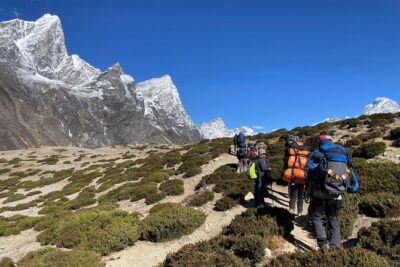
From Lukla, the route heads toward Phakding. This first walking day lasts about three hours and gives you time to adjust to the rhythm of the trail. The stop near Phakding is also a gentle introduction to the local communities along the route.
On Day 3, you follow the Dudh Koshi and cross small suspension bridges before reaching Monjo and continuing to Namche Bazaar. The day takes about six hours. The walking is not yet at the highest altitude, but the steady uphill sections begin to show you what the next week will demand.
Namche is more than a place to sleep. It is the main entrance to the Everest region and a Sherpa cultural center. Its position in a natural bowl makes arrival feel like a real milestone.
Day 4: Namche offers a useful pause
The acclimatization day at Namche is one of the strongest parts of the schedule. You climb to the Everest View Point, at roughly 3,880 meters, then return to Namche rather than gaining sleeping altitude.
The listed walk takes about two hours, leaving time to explore the town and visit the Sherpa Museum. The museum connects local culture with the history of Himalayan mountaineering, giving more meaning to the peaks you are beginning to recognize.
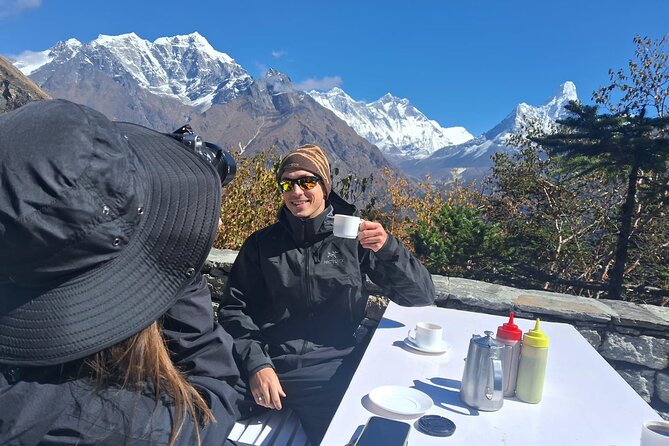
The viewpoint is also linked with Hotel Everest View, described as the highest-placed hotel. You can expect broad mountain views, including Everest and nearby summits, though cloud can change the scene quickly.
I would not treat this as a wasted day. Resting at Namche helps you prepare for the harder sections ahead, and the short climb followed by a return to the same bed is a sensible way to introduce your body to altitude.
More walking in the hills of Kathmandu:
- Nagarkot Sunrise View and Day Hiking from Kathmandu
★ 5.0 · 471 reviews - Annapurna Circuit Trek with Tilicho Lake
★ 5.0 · 368 reviews - Everest Base Camp Trek -14 Days
★ 5.0 · 321 reviews - Annapurna base camp trek 5 Days
★ 5.0 · 252 reviews
Days 5 and 6: Tengboche and Dingboche
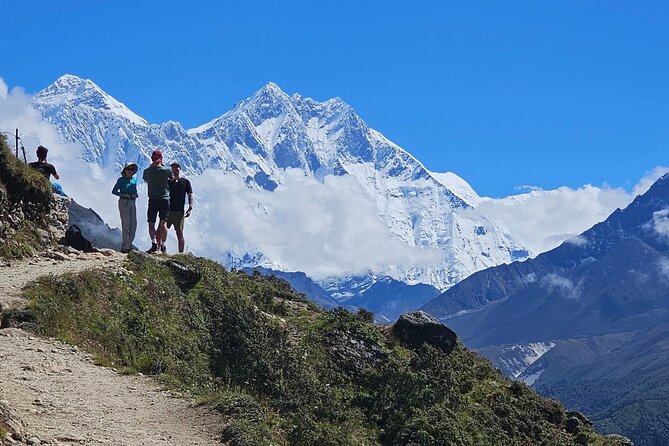
The trail to Tengboche takes about five hours and follows a high path above the Dudh Koshi. The mountain views become more impressive here, with Everest, Nuptse, Lhotse, Thamserku, and Kwangde appearing along the route.
Tengboche Monastery gives this stop its character. The setting is quiet and spiritual, and the monastery offers a welcome change from simply walking, eating, and sleeping. The route also passes through rhododendron woodland, which softens the approach before the trail becomes more exposed.
The next day leads to Dingboche in about five hours. You pass Deboche, a Buddhist nunnery, then cross the Imja Khola. Island Peak and Amphu Laptsa Peak come into view in this area, adding scale to an already dramatic route.
Dingboche marks a change in the trek. The air is thinner, the vegetation is more limited, and the daily walking feels more serious. Food and drink are not included beyond the stated meals, so budget for personal beverages and any extra purchases along the way.
Day 7: Dingboche is more than a day off
The second acclimatization day is scheduled at Dingboche. You can rest for the full day or take a shorter walk before returning to the same accommodation.
This pause comes at exactly the right point. The following days bring longer hours, higher elevations, and colder conditions. A quiet day now is a better investment than pushing too hard and struggling later.
The schedule does not promise a particular side hike, so I would view the optional walking as flexible rather than as a separate included excursion. Let your guide help decide how much movement makes sense for you.
Days 8 and 9: Memorials, glacier views, and Base Camp
The route from Dingboche to Lobuche takes about six hours. It passes through Dughla and climbs toward a hill lined with memorials to Sherpas who died during Everest expeditions.
This is a sobering section of the trail. The memorials remind you that the mountains are not simply a backdrop for photographs. They also give the trek a human dimension, connecting your walk with the people who work and climb in this region.
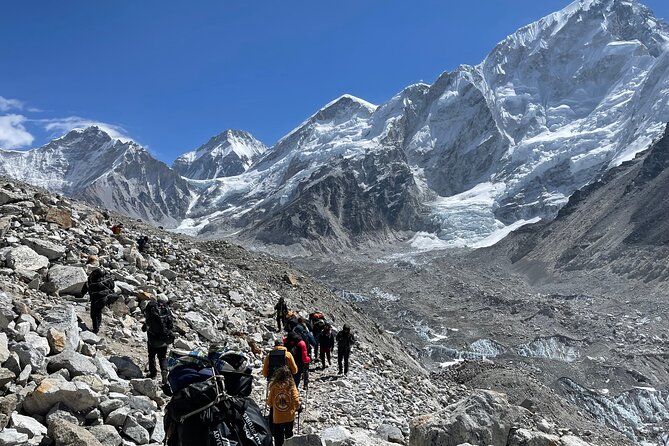
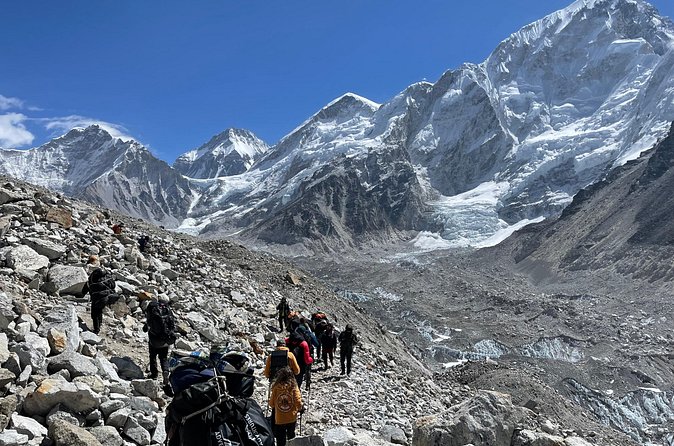
From there, the trail follows the Khumbu Glacier moraine, with views toward Kala Patthar and Pumori. The surface becomes stony and uneven, and the lack of oxygen makes even moderate slopes feel demanding.
Day 9 is the goal many people have been waiting for. After walking from Lobuche toward Gorak Shep, you continue after lunch to Everest Base Camp. The six-hour Base Camp section crosses rocky ground, moraines, and streams before reaching the camp and the Khumbu Icefall area.
Base Camp itself is not a permanent village or a polished attraction. It is a high mountaineering site surrounded by glacial rock and ice. The exact appearance changes with the climbing season, and access around the area can vary, but the setting gives you a close view of the Khumbu Glacier and Icefall.
The return to Gorak Shep includes a short initial climb, a steeper section of about 30 minutes, and then a descent to the lodge. This is a very full day. You should expect fatigue, cold, and a basic overnight stop.
Day 10: Kala Patthar delivers the best Everest view
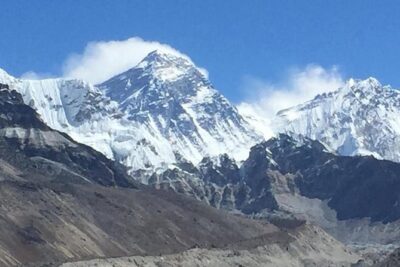
Kala Patthar is the highest point of the trek at 5,550 meters. The climb takes about two hours, usually timed for sunrise, and it is the place on this route for the broadest Everest panorama.
The climb is short on paper but serious in practice. At this elevation, every step can feel slow. You return to Gorak Shep for breakfast, then descend toward Pheriche, with about six hours of walking for the full day.
The descent is welcome, but it is not effortless. Tired knees and loose rock can make downhill walking harder than expected. Still, the drop in altitude usually brings a noticeable lift in energy, and Pheriche feels much more forgiving after Gorak Shep.
Days 11 and 12: Returning through Sherpa country
The route back to Namche takes about six hours. The return path includes Pangboche, where you can visit the area’s oldest monastery, then continues through Tengboche and toward Kyanjunga before reaching Namche.
You see familiar places from a different angle on the descent. The mountains may look less distant now because you understand how far you have walked, and the return journey gives you more time to notice villages and everyday Sherpa life.
Day 12 continues for about six hours toward Lukla. You walk through greener surroundings, pass mountain villages, and cross the Hillary Suspension Bridge before arriving back at the airport town.
Lukla is both a destination and a buffer. You spend the night there before the return flight, which is sensible because mountain aviation rarely rewards tight planning.
Days 13 and 14: Flying out and leaving room for change
The flight from Lukla takes about 30 minutes. During the busy season, the route may use Ramechhap instead of Kathmandu, followed by a drive onward.
The schedule allows for weather-related changes, and that flexibility is essential. A delayed flight can affect the final day, so I would avoid booking a nonrefundable international connection too close to the expected arrival unless you have a backup plan.
On Day 14, airport transport is provided for your departure from Tribhuvan International Airport. You may also have time for another activity or personal plans before leaving Nepal, depending on flight timing and any changes caused by weather.
What the $1,300 price covers
At $1,300, the package offers solid value if you want the major transport and meal arrangements handled. Included costs are:
- Airport pickup and departure drop-off
- All listed fees and taxes
- Round-trip flights between Kathmandu or Ramechhap and Lukla
- The guide’s round-trip flight
- Two Kathmandu hotel nights with breakfast
- Thirteen breakfasts
- Eleven lunches
- Eleven dinners
That is a meaningful amount of coverage for a 14-day mountain trip. Flights alone can be a major part of the cost, especially when schedules change or peak-season operations use Ramechhap.
You still need money for personal expenses, drinks, alcoholic beverages, and tips for the guide and driver. The package does not promise every meal in Kathmandu, nor does it cover personal gear or other purchases.
The price is best judged as a guided trekking package, not as an all-inclusive holiday. You are paying for the route structure, flights, guide support, accommodation arrangements, and meals on the walking days. Ask for a clear breakdown of accommodation and porter arrangements before paying, since the supplied details specifically identify the guide’s flight but do not spell out every porter service.
The human side: guides, porters, and support
The strongest personal praise goes to the staff. Ram is repeatedly described as calm, encouraging, and attentive, including helping a nervous trekker stay focused and teaching a card game to a younger family member. Amer, named as a porter, is praised for practical support.
Bishnu, Rajesh, Prakash, Tilak, Binode, Sanjay, and Gore are also associated with very positive experiences. Gore is singled out for sharing gear, repairing shoes, helping with meals and health concerns, and making careful decisions during a surprise snowstorm.
These details matter more than polished promises. On a high-altitude trek, a guide who notices when you are struggling, keeps the group calm, and makes sensible calls can change the entire experience. I would ask who your guide will be and how porter support is arranged before departure.
Who should book this trek?
This route suits you if you want a famous Himalayan goal but also care about villages, monasteries, local culture, and the steady progression of the trail. The maximum group size of eight is a good fit for people who want company without joining a large crowd.
You should have moderate physical fitness and be ready for walking days of up to six hours. The challenge is not one single technical climb. It is the combination of distance, altitude, cold, uneven ground, and several consecutive days on foot.
Families can do it with the right preparation, as shown by the positive account of a couple trekking with their granddaughter. Still, the high altitude and long days require an honest assessment of each person’s fitness and comfort.
This is less suitable if you need fixed flight times, luxury accommodation, or a relaxed holiday pace. Weather can disrupt the Lukla schedule, and the route includes basic high-altitude lodging.
Booking, cancellation, and practical checks
Confirmation is received at booking. The experience runs Monday through Friday from 9:15 AM to 5:15 PM during the stated operating period of September 1, 2024 through August 12, 2026.
You can cancel for a full refund up to three full days before the start time. Cancellations or changes made less than three full days before departure are not accepted for a refund.
Poor weather can cancel the experience, in which case you are offered another date or a full refund. The same applies if the minimum number of people is not met. Since the group maximum is eight, ask how the minimum is defined before you commit to flights and other Nepal plans.
Should you book the Everest Base Camp Trek?
I would book this trek if reaching Base Camp matters to you and you want the major logistics gathered into one package. The included Lukla flights, meals, Kathmandu hotel nights, airport transfers, and small group limit make the $1,300 price attractive.
I would book only after confirming the guide, porter arrangements, accommodation standards, and the plan for flight delays. The route is demanding, and the schedule is approximate in places because mountain weather controls the final word.
For a first Himalayan trek, the Namche and Dingboche acclimatization days are a real strength. Add the warm, practical staff support associated with guides such as Ram and Gore, and this looks like a well-supported way to reach Everest Base Camp without trying to organize every moving part yourself.
FAQ
Where does the Everest Base Camp Trek begin?
The experience begins in Kathmandu, Nepal, with airport pickup and transfer to a hotel near Thamel.
How long does the trek take?
The full experience lasts approximately 14 days, including arrival, the trek, return flights, and departure arrangements.
Is the Lukla flight included?
Yes. The package includes the client’s round-trip flight between Kathmandu and Lukla, or between Ramechhap and Lukla when that route is used.
Why might I fly from Ramechhap?
During the busy season, air traffic at Kathmandu Airport may mean that the flight operates from Ramechhap instead. A drive to Ramechhap is then required.
What is the highest point reached?
Kala Patthar is the highest point, at approximately 5,550 meters.
Is Everest Base Camp included?
Yes. Day 9 includes the walk to Everest Base Camp and the Khumbu Icefall area.
What meals are included?
The package includes 13 breakfasts, 11 lunches, and 11 dinners. Personal expenses and beverages are not included.
How large can the group be?
The maximum group size is eight people.
What happens if bad weather cancels the experience?
You are offered a different date or a full refund if poor weather causes cancellation. A full refund is also offered if the minimum number of participants is not met.
New in the Kathmandu listings
- Traditional Momo Making Class★ 5.0 · 10 reviews
- Kathmandu: Ancient City Kirtipur & Pharping Monastery Tour★ 5.0 · 2 reviews
- Women Empowerment Project(Nepali cooking class & jewelry workshop★ 5.0 · 15 reviews
- Kathmandu to Pokhara Premium sofa bus ticket★ 4.0 · 17 reviews
- 7-Day Langtang Valley Trek from Kathmandu★ 5.0 · 1 review
- Kathmandu 2 Nights 3 Days Chitwan Jungle Safari Tour★ 5.0 · 9 reviews
- Yoga Experience Day Trip with Private Transfer From Kathmandu★ 4.0 · 2 reviews
- Wildlife Adventure in Chitwan Nepal★ 4.0 · 4 reviews
Everest Base Camp Treks, compared.
Everest Base Camp Trek with Helicopter Return from Gorakshep to Lukla
Read our review →Browse the lists this tour appears in