
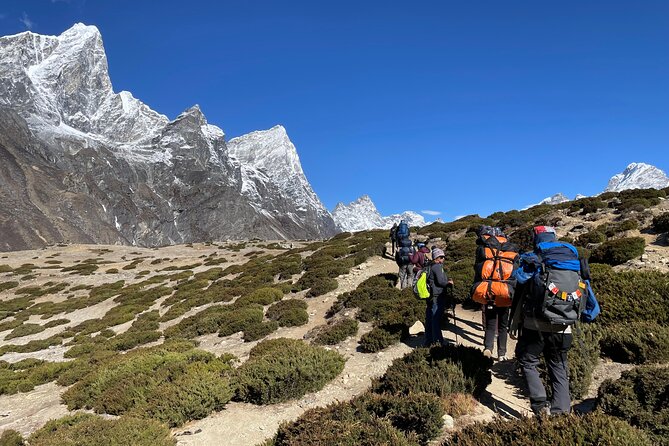
REVIEW · EVEREST BASE CAMP TREKS
Everest Base Camp Trek
The Himalaya reward patience, not haste. This 14-day Everest Base Camp Trek gives you Sherpa culture in Namche Bazaar, monastery time at Tengboche, and huge mountain views from Kala Patthar. I like that airport transfers, lodges, meals on the trail, a guide, porters, and the Lukla flights are built into the $1,500 price. I also like the two acclimatization days, which make the high-altitude schedule more sensible.
The catch is that this remains a serious trek, not a scenic walk. You reach 5,545 meters at Kala Patthar, sleep in basic tea houses, and may face Lukla flight delays. The schedule also contains one point worth confirming before booking: Day 11 is labeled Pheriche to Namche, but its description refers to Tengboche. Ask the operator to clarify the exact route.
In This Review
- Key points to know before booking
- What the $1,500 price really buys you
- Kathmandu arrival and the early Lukla flight
- Phakding to Namche Bazaar, the first real test
- Tengboche monasteries and the climb toward Dingboche
- Dingboche to Lobuche, where the air gets thin
- Everest Base Camp via Gorak Shep
- Kala Patthar, the highest viewpoint of the trek
- The return through Namche and Lukla
- Guides, porters, food, and daily comfort
- Who should book this trek?
- Should you book the Everest Base Camp Trek?
- FAQ
- Where does the Everest Base Camp Trek begin?
- How long does the trek last?
- What is the highest point on the itinerary?
- Is the flight from Kathmandu to Lukla included?
- Are airport transfers included?
- Are Kathmandu hotels included?
- What meals are included?
- Is travel insurance included?
- How much luggage can I take on the domestic flight?
Key points to know before booking
- Kala Patthar is the visual high point: At 5,545 meters, it gives you the trek’s highest viewpoint and a direct mountain panorama.
- Two rest days protect the schedule: You acclimatize at Namche Bazaar and Dingboche rather than rushing higher every day.
- Porters carry the main luggage: You carry a smaller day pack, while one porter is provided for every two people.
- The support team receives strong praise: Guides named Pradip, also called Master Zi or Big Z, and Laxman are singled out for humor, care, route knowledge, and safety.
- The price covers a lot: Kathmandu hotels, trail lodging, meals, guide services, porter services, permits, airport transfers, and flights between Kathmandu and Lukla are included.
- Lukla can disrupt the plan: A canceled flight may mean waiting another day or paying at least $500 per person for a helicopter, depending on group size.
What the $1,500 price really buys you
At first glance, $1,500 may look like a strong price for a two-week Himalayan trek. The value becomes clearer when you separate the mountain logistics from the personal costs.
The package includes two nights in a standard three-star hotel in Kathmandu, one on arrival and one after the trek. It also includes tea house or lodge accommodation throughout the route, airport pickup and drop-off by private vehicle, an experienced guide, porters, guide and porter wages, food, lodging, transport, insurance for the staff, the TIMS card fee, a first-aid kit, taxes, and service charges.
It also lists flights from Kathmandu to Lukla and back as part of the transport plan. That is important, since Lukla is the gateway to the trek and not a place you reach by road in this itinerary.
Meals are covered during the mountain portion. The package lists 14 breakfasts, 11 lunches, and 11 dinners. Lunch and dinner in Kathmandu are not included, nor are alcoholic drinks, soft drinks, bottled water, boiled water, snacks, hot showers, battery charging, or personal purchases.
You should also budget for tips. The suggested amount is 10 to 15 percent of the tour cost, or about $150 to $225 per person. That is not a compulsory fee, but it is a useful figure to have in mind when working out your true budget.
The value is strongest if you want a managed trip rather than a do-it-yourself trek. You do not need to organize local permits, find a porter, arrange airport transfers, or negotiate each night’s lodge. The tradeoff is less independence and a set schedule built around flights and group movement.
More Everest Base Camp treks:
- Everest Base Camp Trek – 14 Days
★ 5.0 · 1,499 reviews - Everest Base Camp Trekking
★ 5.0 · 485 reviews - Everest Base Camp Trekking – 13 Day
★ 5.0 · 365 reviews
Kathmandu arrival and the early Lukla flight
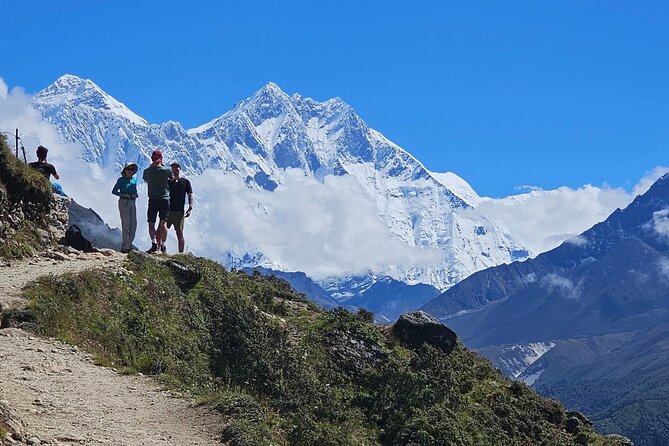
Day 1 begins at Tribhuvan International Airport in Kathmandu. A representative meets you after customs, with your name on a sign, then transfers you to the hotel. The airport meeting service is practical after a long international flight, especially if you have never visited Nepal.
You need to send your international flight details after booking. If you arrange your own Kathmandu hotel instead of using the included accommodation, you need to send that hotel information so the meeting can be arranged.
Day 2 starts early with the flight from Kathmandu to Lukla at 2,886 meters. After landing, you begin walking toward Phakding at 2,640 meters. The trek takes about four hours, making this a relatively gentle introduction to the route.
The important issue here is not the walking time. It is the flight. Lukla weather can affect the plan, and the operator says a canceled flight will be moved to the following day, subject to availability. A group may also use a helicopter, but that costs at least $500 per person and comes out of your pocket.
For this reason, travel insurance covering flight cancellation is not a minor extra. The operator specifically advises coverage of at least $500 per day for this problem. You should also avoid booking a tight international connection immediately after the trek.
Phakding to Namche Bazaar, the first real test
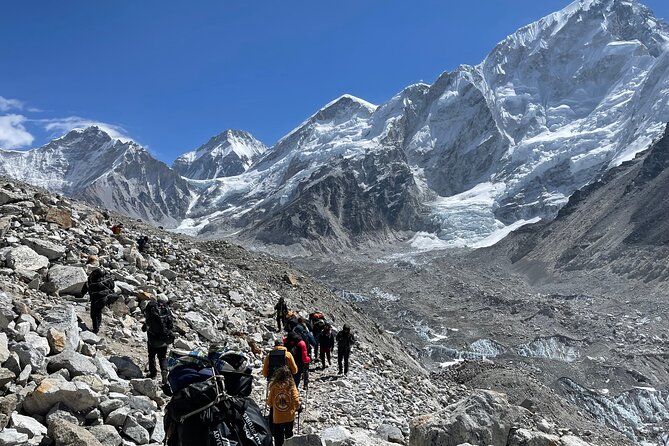
On Day 3, you walk from Phakding to Namche Bazaar at 3,440 meters. The day takes about six hours and is the first substantial test of your legs and breathing.
Namche is more than a stop for the night. It is the main Sherpa town on this route and the place where the trek begins to feel properly Himalayan. The itinerary uses Irish Pub as the listed stop on Days 3, 4, and 12, though the accommodation and meal arrangements are described more generally as local lodges and tea houses.
Day 4 is set aside for acclimatization in Namche. That rest day is one of the best choices in the schedule. You are not simply losing a day of progress. You are giving your body time to adjust before the route climbs toward Tengboche and Dingboche.
The itinerary describes about six hours for the acclimatization day, suggesting that rest may include a walk rather than staying indoors all day. The exact outing is not specified, so ask the guide what the planned activity will be. Either way, Namche is a useful place to sort your day pack, charge devices if power is available, and buy small supplies.
Tengboche monasteries and the climb toward Dingboche
Day 5 takes you from Namche Bazaar to Tengboche, written as Tyangboche in parts of the schedule, at 3,867 meters. The walk takes about six hours.
Tengboche is the spiritual pause in the route. Its monastery gives the day a different character from the long ridgeline walking and stone paths. The tour description places real emphasis on the monastery, and rightly so. It adds a cultural reason to the trek, not just another overnight stop.
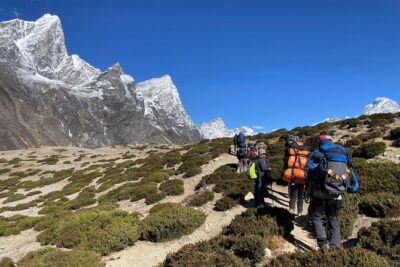
Day 6 continues to Dingboche at 4,260 meters. The walking time is again about six hours. At this height, you should expect the schedule to feel harder even if the daily distance looks familiar. The itinerary includes a Dingboche viewpoint stop, which offers a reason to look beyond the path and take in the changing mountain surroundings.
Day 7 is another acclimatization day at Dingboche. The schedule mentions the Chhukhung path and returning to Dingboche to rest. This is a valuable buffer before the route moves above 4,500 meters.
The two acclimatization days, at Namche and Dingboche, are among the strongest features of the trip. You still need to take altitude symptoms seriously, but the plan does not force you to gain height every day. Tell your guide promptly if you feel unwell. A good itinerary helps, but it cannot remove the effects of altitude.
More walking in the hills of Kathmandu:
- Nagarkot Sunrise View and Day Hiking from Kathmandu
★ 5.0 · 471 reviews - Annapurna Circuit Trek with Tilicho Lake
★ 5.0 · 368 reviews - Everest Base Camp Trek -14 Days
★ 5.0 · 321 reviews - Annapurna base camp trek 5 Days
★ 5.0 · 252 reviews
Dingboche to Lobuche, where the air gets thin
Day 8 runs from Dingboche to Lobuche at 4,930 meters. The walk takes about six hours, with lunch at Dugla, at 4,595 meters.
This is a demanding day because the route keeps moving higher and the overnight elevation is close to 5,000 meters. Your day pack should stay light. The operator recommends carrying water, a camera, sunscreen, a spare jacket, and similar essentials while porters carry the main luggage.
Water is available in several forms. You can use normal water with purification tablets, or buy bottled or boiled water along the route. Purification tablets are a sensible way to control costs, but you should still plan for regular hydration.
Electricity is available in some villages, with solar power in certain places. Charging costs extra and may not always be possible if the power supply is limited. Bring spare batteries and do not assume you will recharge your phone or camera every night.
The tea houses are described as clean and comfortable, but they are still basic mountain accommodation. Rooms are generally twin-share. A single supplement is available for an additional $200, though the schedule does not promise single rooms at every stop.
Everest Base Camp via Gorak Shep
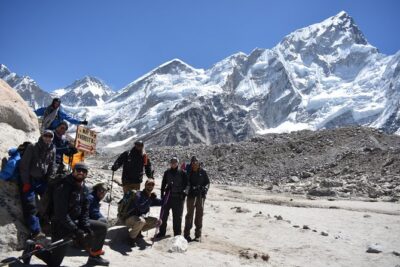
Day 9 is the emotional center of the trek. You leave Lobuche, pass through Gorak Shep at 5,140 meters, and continue to Everest Base Camp at 5,364 meters. The day takes about six hours.
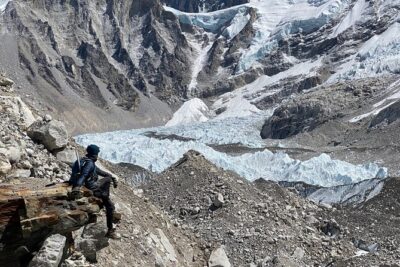
The route is rocky, and the thin air makes every uphill section feel longer. You should not expect to arrive at a polished visitor center. Base Camp is a working point connected with climbing expeditions, and the experience is tied to the stories of effort, risk, and persistence that surround the mountain.
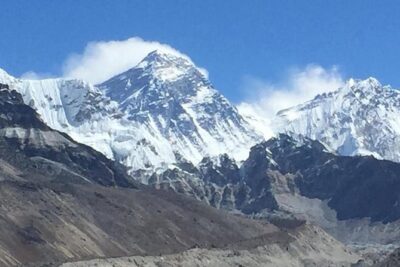
A useful distinction: you do not get the classic broad summit view of Everest from Base Camp itself. The next morning’s climb to Kala Patthar is the key viewpoint portion of this itinerary. Base Camp gives you the destination and the atmosphere. Kala Patthar gives you the stronger high mountain panorama.
You spend the night at Gorak Shep, according to the route sequence. At 5,140 meters, this is likely to be one of the hardest nights of the trip. Basic lodging, cold conditions, and altitude can make sleep difficult. That is part of the challenge, not a flaw in the operator’s service.
Kala Patthar, the highest viewpoint of the trek
Day 10 begins with the climb from Gorak Shep to Kala Patthar at 5,545 meters, followed by a descent to Pheriche at 4,243 meters. The walking time is about six hours.
Kala Patthar is the physical high point of the itinerary and the place to focus your camera. The reward comes from reaching a high ridge with views toward the Everest range. You should start with enough time for the climb, keep your pace steady, and let the guide set a safe rhythm.
The descent to Pheriche is welcome, but it is not effortless. Descending on rocky ground after reaching the trek’s highest point can test your knees and concentration. The drop in elevation should make the night more comfortable than Gorak Shep.
The guides receive the warmest praise in the supplied comments. Pradip, also known as Master Zi or Big Z, is described as funny, helpful, experienced, and good at spotting wildlife. Another account names Laxman and gives the guide more than 22 years of mountain experience. These details matter because a patient guide can make a hard day feel manageable, while good route judgment matters when conditions change.
The return through Namche and Lukla
Day 11 takes you from Pheriche to Namche Bazaar in about six hours. The written description, however, says you trek from Tengboche to Namche. Since Pheriche and Tengboche are different stops, you should confirm this detail before departure.
The likely purpose of the day is a long return through the lower part of the Khumbu route, but the exact overnight plan should be clear in your final itinerary. This is the one scheduling issue I would put in writing before paying the balance.
Day 12 takes you from Namche to Lukla, again in about six hours. After the long descent and return walk, you reach Lukla for a shower or rest, with hot water and charging available in some places at additional cost.
Day 13 is the return flight to Kathmandu. The transfer from the airport to the hotel is included, giving you a final night in the city before departure. Day 14 provides a private transfer to Tribhuvan International Airport.
The plan is tidy on paper, but Lukla remains the wild card at both ends. Keep your international flight timing sensible and retain some flexibility. The helicopter option exists, but it is expensive and depends on group size and availability.
Guides, porters, food, and daily comfort
You receive one porter for every two people. The porter carries your main luggage, while you carry a day pack. The domestic flight allowance is listed as 15 kilograms, including your hand luggage, and excess weight costs extra.
Pack a soft trek bag for the main load and leave nonessential city clothing in a small locked bag at the Kathmandu hotel. The operator says this storage is free. Keep valuables and important documents with you rather than in the porter’s load.
Breakfast and dinner are taken at the lodge where you sleep. Lunch is arranged at an available stop along the day’s route. The food plan is convenient, but drinks are not included. Carry cash for water, tea, snacks, showers, charging, and tips.
The group size is capped at 15 people. That is small enough to feel organized without promising a private trek. If you want a personal pace or a single room, ask about a private arrangement and the extra cost.
The tour requires a strong level of physical fitness. That phrase should be taken seriously. Six-hour walking days, steep trails, high altitude, and basic lodging demand preparation. The operator does not provide a medical guarantee, so you should discuss altitude travel with your doctor if you have health concerns.
Who should book this trek?
I would recommend this trip if you want the classic Everest route with local staff handling the main practical work. It suits people who value a guide, porter support, set lodging, included trail meals, and built-in acclimatization days.
It is less suitable if you need luxury, flexible daily distances, private rooms throughout, or a fixed arrival and departure schedule. It also may not suit a casual walker who has not trained for long uphill days.
The strongest reasons to choose it are the complete support package, the two acclimatization stops, the Sherpa communities along the route, and the guide team’s reputation for care and humor. The main cautions are altitude, tea house simplicity, extra personal costs, possible Lukla delays, and the Day 11 route wording.
Before booking, confirm three things in writing: the exact domestic flight arrangements, the Day 11 overnight stop, and what happens if the group uses a helicopter. Also ask for the current packing guidance and the final meal count.
Should you book the Everest Base Camp Trek?
Book it if reaching Base Camp and Kala Patthar is a serious goal and you want local support from airport arrival through the return flight. At $1,500, the package offers solid value because it combines transport, accommodation, meals on trek, porters, guides, permits, and transfers.
Skip it if you want a soft adventure or cannot allow flexibility around Lukla flights. This is a demanding Himalayan trek with basic rooms and thin air, but for a fit and prepared walker, the route offers a powerful mix of mountain views, Sherpa life, monastery culture, and a hard-earned sense of achievement.
FAQ
Where does the Everest Base Camp Trek begin?
The trek begins with airport pickup at Tribhuvan International Airport in Kathmandu, Nepal.
How long does the trek last?
The full program lasts approximately 14 days, including arrival and departure days in Kathmandu.
What is the highest point on the itinerary?
Kala Patthar is the highest point, at 5,545 meters.
Is the flight from Kathmandu to Lukla included?
The transport details state that flights from Kathmandu to Lukla and back are provided as part of the trek.
Are airport transfers included?
Yes. Airport pickup and drop-off by private car, van, or bus are included.
Are Kathmandu hotels included?
Two nights of standard three-star accommodation in Kathmandu are included, one on arrival and one after the trek.
What meals are included?
The package lists 14 breakfasts, 11 lunches, and 11 dinners. Lunch and dinner in Kathmandu are not included.
Is travel insurance included?
No. You must arrange your own travel insurance. Coverage for Lukla flight cancellation is especially important because a helicopter may cost at least $500 per person.
How much luggage can I take on the domestic flight?
The stated allowance is 15 kilograms, including your hand luggage. Excess weight costs extra. Porters carry the main luggage during the trek, while you carry a day pack.
New in the Kathmandu listings
- Traditional Momo Making Class★ 5.0 · 10 reviews
- Kathmandu: Ancient City Kirtipur & Pharping Monastery Tour★ 5.0 · 2 reviews
- Kathmandu to Pokhara Premium sofa bus ticket★ 4.0 · 17 reviews
- Women Empowerment Project(Nepali cooking class & jewelry workshop★ 5.0 · 15 reviews
- 7-Day Langtang Valley Trek from Kathmandu★ 5.0 · 1 review
- Kathmandu 2 Nights 3 Days Chitwan Jungle Safari Tour★ 5.0 · 9 reviews
- Yoga Experience Day Trip with Private Transfer From Kathmandu★ 4.0 · 2 reviews
- Wildlife Adventure in Chitwan Nepal★ 4.0 · 4 reviews
Everest Base Camp Treks, compared.
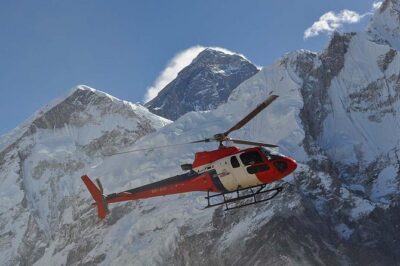
Everest Base Camp Trek with Helicopter Return from Gorakshep to Lukla
Read our review →Browse the lists this tour appears in