
REVIEW · EVEREST BASE CAMP TREKS
Everest Base Camp Trek
Everest rewards patience, stamina, and early mornings. This 15-day trek takes you from Kathmandu to Lukla, through Sherpa villages and Sagarmatha National Park, then up to Everest Base Camp at 5,364 meters. I like the careful acclimatization plan, especially the rest days in Namche Bazaar and Dingboche. I also like that the price includes meals, lodges, permits, porter support, trekking gear, and the Lukla flights.
The main concern is altitude, not the walking alone. The route reaches 5,545 meters at Kala Patthar, and the thin air can turn a manageable hike into hard work. Winter can be especially cold, although direct feedback praises guide Krishna for handling the practical details well. The group is limited to 12 people, which should make the long days easier to manage.
In This Review
- Key points before you book
- Why this Everest trek works for many first-time trekkers
- Kathmandu arrival and the 7:15 am start
- Lukla to Phakding, the gentle opening
- Namche Bazaar and the first real altitude test
- Tengboche and the monastery route
- Pangboche and Dingboche at higher altitude
- Lobuche and the memorial ridge
- Gorak Shep and Everest Base Camp at 5,364 meters
- Kala Patthar sunrise and the long return
- Retracing the trail to Lukla
- Lukla flights, Kathmandu, and the weather buffer
- What the $1,800 price covers
- Guides, porters, and the human side of the trip
- Cold, comfort, and preparation
- Should you book this Everest Base Camp Trek?
- FAQ
- How long is the Everest Base Camp Trek?
- Where does the trek begin?
- What is the highest point on the trek?
- Are meals included?
- Is accommodation included?
- Are the Lukla flights included?
- What is not included in the price?
Key points before you book
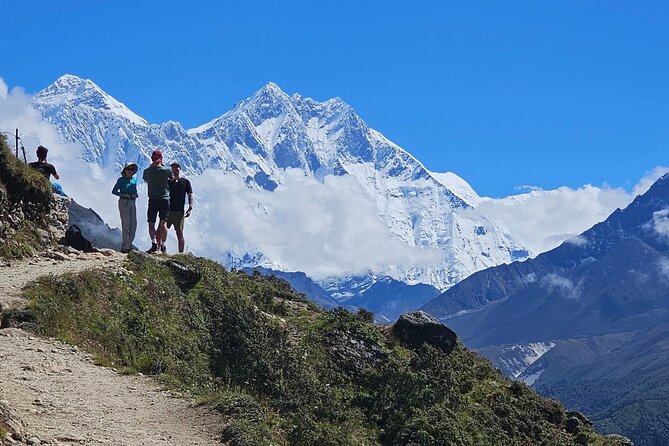
- Kala Patthar at 5,545 meters: The sunrise climb gives you the clearest high view of Everest on the route, but it is also the trek’s highest and most demanding point.
- Two useful acclimatization days: You spend one full day in Namche Bazaar and another in Dingboche, with short hikes instead of simply sitting still.
- Price includes the major trek costs: At $1,800 per person, the package covers meals, lodging, permits, porter support, equipment, ground transport, and flights between Kathmandu and Lukla.
- A weather buffer is built in: Day 14 is held open for possible Lukla flight delays, a practical safeguard in a mountain region where weather can change quickly.
- Sherpa culture is part of the route: Villages, monasteries, prayer wheels, mani walls, markets, and the Sherpa Museum give the walk a human side beyond the mountain views.
- Cold-weather planning matters: Winter conditions can be bitterly cold, so warm layers and a good sleeping setup are not optional extras.
Why this Everest trek works for many first-time trekkers
The appeal is simple: you get a guided route to the foot of the world’s highest mountain without having to arrange every permit, flight, meal, porter, and lodge yourself. That matters in the Everest region, where the route is remote and logistics can be as tiring as the walking.
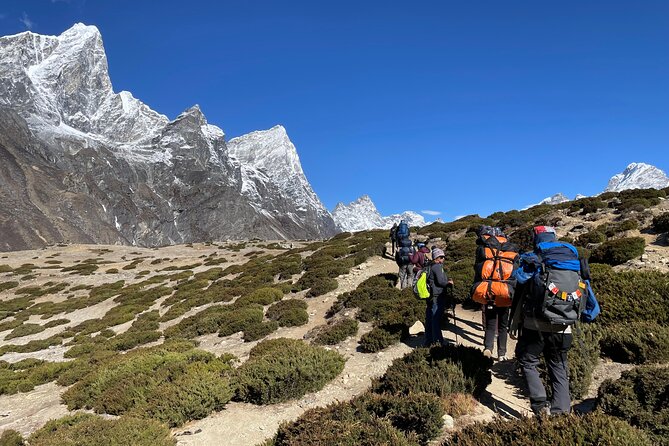
I like the way the schedule builds upward in stages. You begin with a relatively gentle walk from Lukla to Phakding, then spend several days gaining height before the route becomes rocky and severe. The plan includes an acclimatization day in Namche and another in Dingboche. Those pauses are not wasted time. They give your body a better chance to adjust before Gorak Shep and Kala Patthar.
The trek is listed for people with a moderate fitness level. That phrase should not be treated lightly. You will spend many days walking for five to seven hours, often on uneven ground, with long ascents and descents. The highest sections are difficult because of altitude, even when the trail itself is not especially technical.
The group limit of 12 is another plus. It is small enough for the guide to keep the group together without creating the feel of a private trek. The package also provides one porter for every two trekkers, so you can carry a daypack rather than your full load.
More Everest Base Camp treks:
- Everest Base Camp Trek – 14 Days
★ 5.0 · 1,499 reviews - Everest Base Camp Trekking
★ 5.0 · 485 reviews - Everest Base Camp Trekking – 13 Day
★ 5.0 · 365 reviews
Kathmandu arrival and the 7:15 am start
Day 1 is deliberately easy. You arrive at Tribhuvan International Airport, meet a representative, transfer to your hotel, and rest. A guide briefing later in the day gives you time to ask questions before the mountain portion begins.
That first night matters. The next morning starts early, with a flight to Lukla. The meeting point is Tribhuvan Airport, and the stated start time is 7:15 am. You should treat this as a firm early start, not a relaxed breakfast appointment.
Your Kathmandu hotel nights are included, with three nights in the city during the full program. The extra time on the return gives you a chance to rest after the trek before your international flight.
Lukla to Phakding, the gentle opening
The flight from Kathmandu to Lukla is one of the memorable parts of the trip. The route offers Himalayan views before you even begin walking, then the trail starts with a descent through Sherpa villages.
The three-hour walk to Phakding is a sensible introduction. You pass prayer wheels, mani walls, and villages where local religious customs are part of daily life. The trail is not yet at its most demanding, giving you time to settle into your boots, walking rhythm, and guide relationship.
Phakding is more than a place to sleep. It marks the change from city travel to a foot journey through the Khumbu region. Your first lodge night also lets you see what the included accommodation means in practice: simple mountain lodging rather than hotel comfort.
Namche Bazaar and the first real altitude test
Day 3 follows the Dudh Koshi River for about six hours. You cross suspension bridges decorated with prayer flags, pass through pine forest, and enter Sagarmatha National Park. The national park entrance is included in the package, along with the required trekking permits.
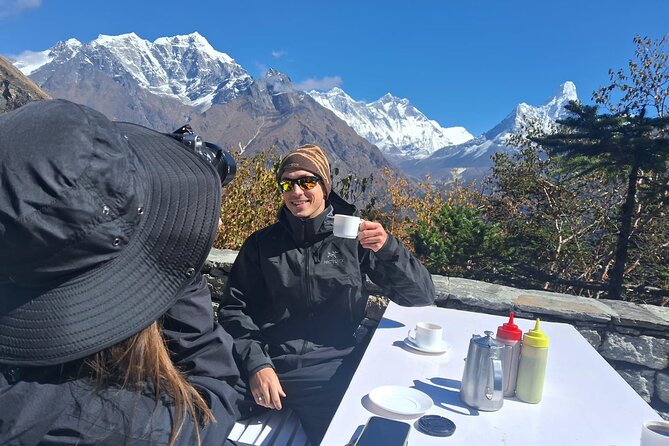
The approach to Namche Bazaar is a serious step up from Phakding. The trail climbs toward the main Sherpa trading center, and the altitude becomes noticeable. Namche is a useful overnight stop because it offers more than scenery. You can find local bakeries, browse the market, and visit the Sherpa Museum.
Day 4 is an acclimatization day in Namche. The plan includes a short hike toward the Everest View Hotel or Khumjung village, with broad views of Everest and nearby peaks. I like this format because you still move your body while keeping the night at the same altitude.
Do not judge the day by its shorter walking time. The purpose is adjustment. Namche is also one of the best places to appreciate how the trek connects mountain tourism with Sherpa life, trade, religion, and local communities.
More walking in the hills of Kathmandu:
- Nagarkot Sunrise View and Day Hiking from Kathmandu
★ 5.0 · 471 reviews - Annapurna Circuit Trek with Tilicho Lake
★ 5.0 · 368 reviews - Everest Base Camp Trek -14 Days
★ 5.0 · 321 reviews - Annapurna base camp trek 5 Days
★ 5.0 · 252 reviews
Tengboche and the monastery route
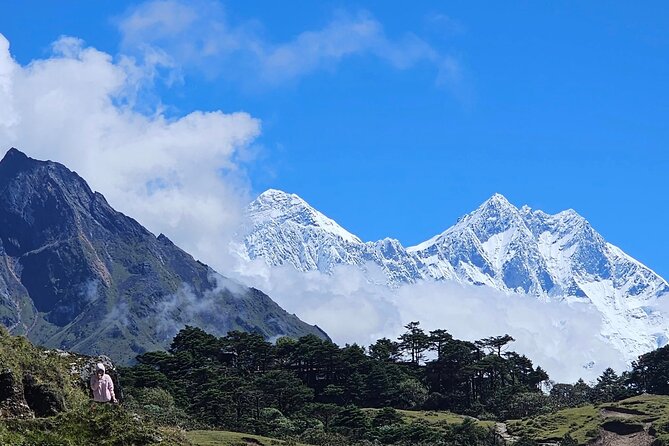
Leaving Namche, the trail climbs with views of Everest, Lhotse, and Ama Dablam. You walk through rhododendron and pine forest, then descend toward the Dudh Koshi River before crossing a suspension bridge.
The six-hour day to Tengboche has a familiar mountain pattern: an enjoyable section followed by a climb that feels harder than expected. Tengboche is known for its monastery setting and mountain views. The stop adds a spiritual dimension to the route, especially after several days of prayer flags and mani walls.
The package does not list separate monastery activities or special ceremonies, so you should think of this as a cultural stop along the trek rather than a formal religious tour. Even so, the setting helps explain why this route feels like more than a long walk to a famous photograph.
Pangboche and Dingboche at higher altitude
Day 6 begins with a descent through forest to Debuche, followed by a crossing of the Imja Khola River. The trail then rises past Pangboche, described as the highest permanent settlement in the area, before continuing to Dingboche.
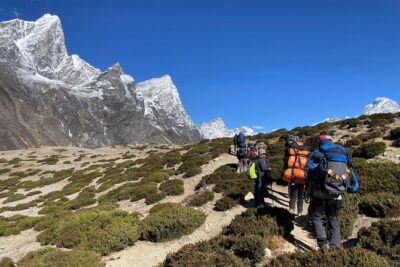
This six-hour section brings a noticeable change in scenery. The forest thins, the ground becomes more open and rocky, and the air feels less forgiving. You are now moving into the part of the route where pacing is crucial. A slow, steady walk is far more useful than trying to keep the speed you had near Lukla.
Dingboche provides the second full acclimatization day. The planned hike reaches Nagarjun Hill at about 5,100 meters, with views toward Makalu, Lhotse, and Island Peak. That is a high side trip, even though you return to Dingboche for lunch and rest.
This is one of the strongest parts of the schedule, but it also reveals the physical demands ahead. If you feel unwell, tell the guide. A planned acclimatization hike should not become a test of pride.
Lobuche and the memorial ridge
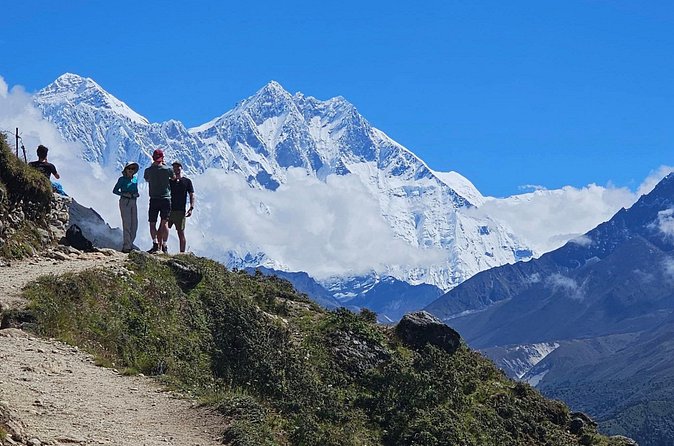
The five-hour walk to Lobuche takes you through a rocky area with very little plant life. The route passes Dughla and then climbs to a memorial ridge honoring climbers who died on Everest.
This section changes the mood. The memorials bring a sober reminder that the mountain is beautiful but not harmless. The trail is no longer framed by dense forest, and the combination of altitude, wind, and exposed rock can make the day feel long.
Lobuche is an important overnight point because it places you close to the final approach. The accommodation remains lodge-based, and the supplied package includes 11 lodge nights during the trek. Expect basic comfort and a practical place to recover, not a luxury retreat.
Gorak Shep and Everest Base Camp at 5,364 meters
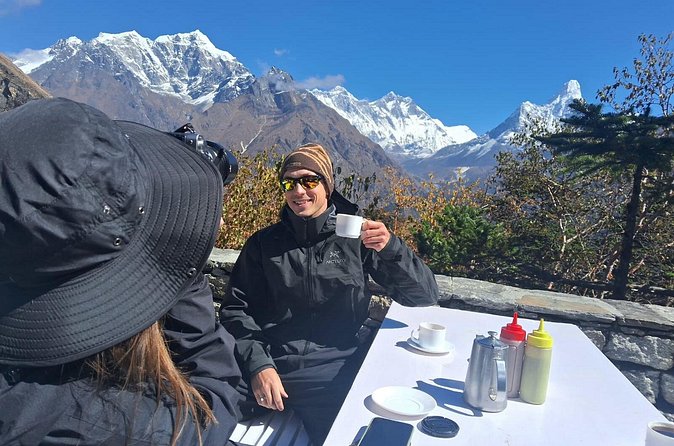
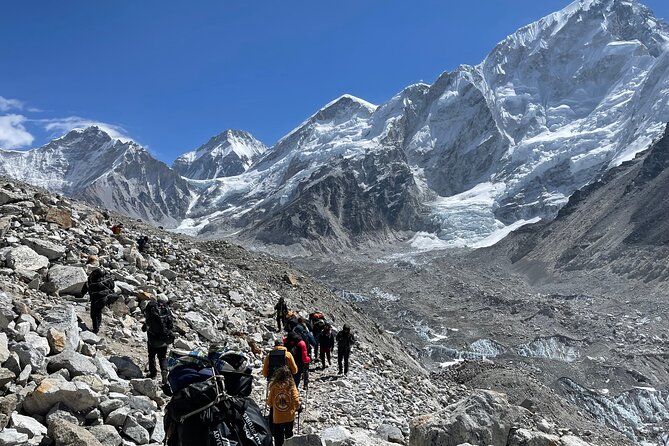
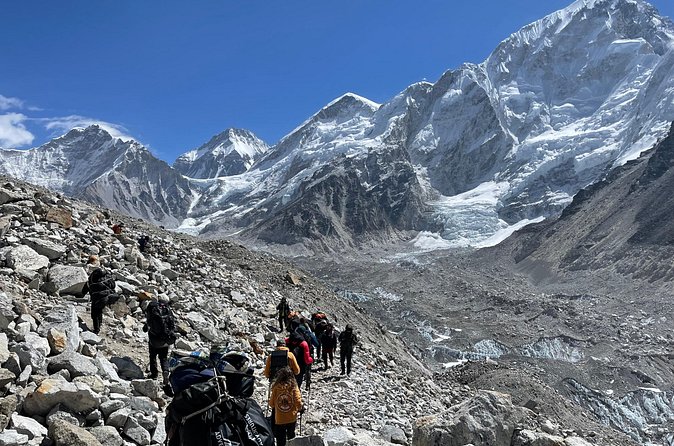
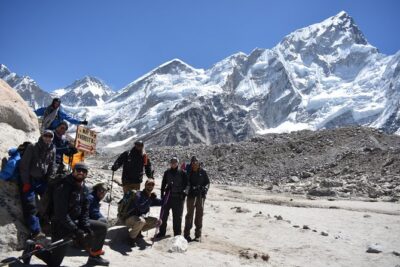
Day 9 is one of the trek’s longest and most important days. You walk gradually to Gorak Shep, the last settlement before Base Camp, then continue across rocky ground and glacier moraines after lunch.
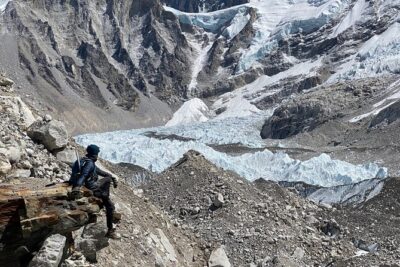
The full day is listed at seven hours. The Base Camp walk is not simply a short stroll for a photograph. At this altitude, every rise can feel larger, and the moraine terrain requires attention. You reach Everest Base Camp at 5,364 meters, take in the surroundings, and return to Gorak Shep for the night.
The route does not promise a view from Base Camp itself comparable to the postcard images of Everest. The great summit panorama comes more clearly from Kala Patthar. Base Camp is valuable for the sense of place, the glacier terrain, and the knowledge that you have reached the point used by Everest expeditions.
Kala Patthar sunrise and the long return
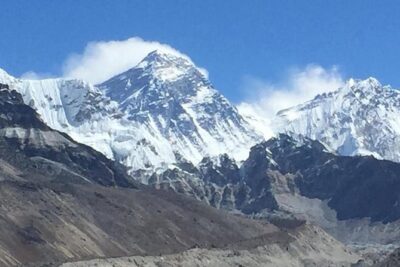
Day 10 begins early with the climb to Kala Patthar, at 5,545 meters. This is the highest point on the program and the main viewpoint for sunrise over Everest and the surrounding Himalayan peaks.
The climb is steep, and the thin air makes the effort more serious than the distance suggests. You return to Gorak Shep for breakfast, then descend toward Pheriche. The total walking time is listed at seven hours, so this is not just a quick sunrise outing.
I like the order of this section. You reach Base Camp first, then climb higher for the clearest mountain view. It gives the trek two distinct goals instead of treating Base Camp as the only finish line.
The descent to Pheriche begins the return in earnest. Going downhill is usually easier on the lungs, but it can be tough on knees and tired legs. Walking poles are included, and they should be useful here.
Retracing the trail to Lukla
Day 11 returns to Namche Bazaar through Pangboche and Tengboche. The seven-hour route follows familiar ground, but descending gives you new angles on the mountains and lets you notice details missed during the upward push.
You pass through forest, cross suspension bridges, and follow the Dudh Koshi River. The route is not a new trail, but that is not a major weakness. On the way up, your attention is often fixed on breathing and pacing. On the way down, you can pay more attention to villages, birds, prayer wheels, and the shape of the valleys.
Day 12 is the final trekking day. You descend through pine forest and cross more high suspension bridges before reaching Lukla. After several days at altitude, arriving back in town can feel like a real achievement, even though the route is mostly familiar.
The final walking days are still long, at about seven hours each. Plan your energy carefully. Reaching Lukla is not the time to discover that you have spent all your strength on the descent.
Lukla flights, Kathmandu, and the weather buffer
Day 13 starts with an early flight from Lukla to Kathmandu. The flight itself is short, listed at about 45 minutes, and gives you one last chance to see the Himalayan peaks from above.
The schedule includes Day 14 as a buffer for delays or cancellations caused by mountain weather. This is one of the most sensible features of the program. Lukla flights can be affected by conditions, and an itinerary with no spare day could put an international departure at risk.
If the flight runs on time, Day 14 is free for rest in Kathmandu. The program ends with an airport transfer on Day 15. Your international airfare and Nepal visa are not included, so you need to arrange those separately.
What the $1,800 price covers
At $1,800 per person, the price is attractive because it covers the costly and complicated parts of a guided Everest trek. Included items are:
- Three meals a day during the trek
- Kathmandu to Lukla and return flights
- Three Kathmandu hotel nights
- Eleven lodge nights during the trek
- All necessary trekking permits and conservation fees
- Ground transportation
- One porter for every two trekkers
- Sleeping bag, duffel bag, and walking pole
- A maximum group size of 12
The meal arrangement is especially useful. Breakfast, lunch, and dinner are included, so you do not need to make daily food decisions while walking. The listed inclusions also specify 11 lunches, 12 dinners, and 14 breakfasts, which broadly matches the full schedule.
The price does not include international airfare, a Nepal visa, personal travel insurance, or tips for the guide and porter. You should also keep personal spending money available for anything outside the included meals and lodging.
The value is strongest if you want one company to handle the permits, flights, equipment, accommodation, meals, and porter arrangement. Independent trekkers may spend less in some areas, but they take on more planning and more responsibility if plans change.
Guides, porters, and the human side of the trip
A guided trek is useful here because the route includes high altitude, changing conditions, remote lodges, and flight uncertainty. You are not simply paying for someone to point toward Everest. You are paying for help with timing, pacing, route decisions, and the daily practical work of a long mountain journey.
The supplied feedback gives particular praise to Krishna, who helped keep a winter trek organized despite subzero conditions. Another direct account credits Babu and his team for making a couple’s journey feel well handled. Those names are useful if you are comparing guide arrangements and want to ask the operator who will lead your departure.
A porter is assigned between every two trekkers. That is a practical balance: you still carry your personal day needs, but your main luggage does not have to come with you on every climb.
Tips are not included. Set aside money for the guide and porter, and ask the operator for current guidance before departure if you are unsure about local expectations.
Cold, comfort, and preparation
Winter can be exceptionally cold on this route. One direct account describes the conditions as extremely cold but unforgettable, while another praises the guide support during winter walking. That should encourage you, but not lull you into casual packing.
The included sleeping bag is helpful, as are the duffel bag and walking pole. Still, the data does not specify the sleeping bag’s temperature rating, lodge heating, room arrangements, or shower facilities. Ask those questions before booking if comfort standards matter to you.
The operator lists a moderate fitness requirement, but you should prepare for repeated six and seven-hour walking days. The highest section is not technical climbing, yet altitude makes ordinary walking harder. Personal travel insurance is required at your own expense, and it is particularly important for a high-altitude trip.
Should you book this Everest Base Camp Trek?
I would choose this tour if you want a structured, guided route with major costs bundled into one price. The two acclimatization days, porter support, included equipment, and extra weather day all improve the practical value. The small group cap is another welcome feature.
I would hesitate if you want a private itinerary, high-end lodging, flexible dates, or a relaxed mountain holiday. This is a demanding trek with basic lodge accommodation, early starts, long walking days, cold conditions, and a fixed non-refundable booking policy.
For a first Everest Base Camp trek, the package offers a sensible framework. Go in prepared, allow time for the altitude, confirm the guide assignment, check the winter equipment details, and buy suitable insurance before paying the $1,800. If you can handle the physical demands and basic comforts, this route gives you a strong blend of Himalayan scenery, Sherpa culture, and careful logistical support.
FAQ
How long is the Everest Base Camp Trek?
The full program lasts approximately 15 days, including arrival and departure days, trekking days, acclimatization days, and a buffer day for possible Lukla flight delays.
Where does the trek begin?
The program begins at Tribhuvan International Airport in Kathmandu, Nepal. The stated start time is 7:15 am.
What is the highest point on the trek?
The highest point is Kala Patthar, at approximately 5,545 meters. Everest Base Camp is reached at about 5,364 meters.
Are meals included?
Yes. Breakfast, lunch, and dinner are included during the trek. The package lists three meals per day and specifies 11 lunches, 12 dinners, and 14 breakfasts.
Is accommodation included?
Yes. The package includes three nights in a Kathmandu hotel and 11 nights in lodges during the trek.
Are the Lukla flights included?
Yes. The price includes the flight from Kathmandu to Lukla and the return flight from Lukla to Kathmandu.
What is not included in the price?
International airfare, the Nepal visa fee, personal travel insurance, and tips for the guide and porter are not included.
New in the Kathmandu listings
- Traditional Momo Making Class★ 5.0 · 10 reviews
- Kathmandu: Ancient City Kirtipur & Pharping Monastery Tour★ 5.0 · 2 reviews
- Kathmandu to Pokhara Premium sofa bus ticket★ 4.0 · 17 reviews
- Women Empowerment Project(Nepali cooking class & jewelry workshop★ 5.0 · 15 reviews
- 7-Day Langtang Valley Trek from Kathmandu★ 5.0 · 1 review
- Kathmandu 2 Nights 3 Days Chitwan Jungle Safari Tour★ 5.0 · 9 reviews
- Yoga Experience Day Trip with Private Transfer From Kathmandu★ 4.0 · 2 reviews
- Wildlife Adventure in Chitwan Nepal★ 4.0 · 4 reviews
Everest Base Camp Treks, compared.
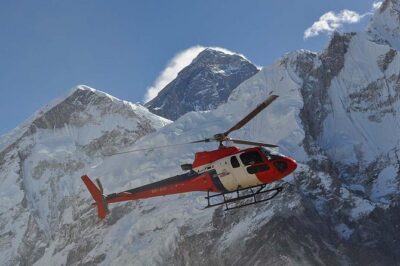
Everest Base Camp Trek with Helicopter Return from Gorakshep to Lukla
Read our review →Browse the lists this tour appears in