
REVIEW · EVEREST BASE CAMP TREKS
Everest Base Camp Trek and Kathmandu Tour: 15 Days
The world’s highest mountains come with a long walking bill. This 15-day trip combines Kathmandu’s sacred sites with the classic route from Lukla to Everest Base Camp, giving you Sherpa villages, mountain monasteries, Khumbu Glacier, and close Himalayan views in one organized package. The dramatic flight to Lukla and the climb to Kala Patthar are the main prizes.
I like that the price includes return flights to Lukla, a licensed trekking guide, porter support, park permits, airport transfers, Kathmandu hotel nights, and most meals. I also like the built-in acclimatization day at Namche Bazaar, which is essential rather than decorative. The main drawback is the tight schedule and the high altitude. You must bring your own trekking equipment, and the plan appears to include Kala Patthar activities on two consecutive days, so you should confirm the exact daily program before paying.
The package costs $1,799 per person and allows groups of up to 15 people. That is a useful structure for anyone who wants help with permits, flights, hotels, food, and mountain logistics instead of arranging every piece alone. The published experience has a 4.7 rating from three reviews, with particular praise for the guides, porters, punctual pickups, and communication.
In This Review
- Key points to know before booking
- Why this 15-day route works
- Kathmandu begins with temples and practical preparation
- Lukla and the first walk to Manjo
- Namche’s acclimatization day is time well spent
- Tengboche brings the monastery and mountain views
- Dingboche marks the real altitude challenge
- Lobuche and the memorial stupas
- Gorak Shep and Everest Base Camp
- Kala Patthar at 5,644 meters
- The return to Pheriche, Namche, and Lukla
- Flight timing and the final Kathmandu night
- What the $1,799 price really covers
- Who should book this trek?
- Should you book the Everest Base Camp package?
- FAQ
- How long is the Everest Base Camp and Kathmandu tour?
- What flights are included?
- Is a trekking guide provided?
- Is porter support included?
- Are Kathmandu sightseeing entrance fees included?
- What meals are included?
- Do I need to bring my own trekking equipment?
Key points to know before booking
- Lukla flight included: The package covers flights from Kathmandu or Ramechhap to Lukla and back, a major practical saving.
- Namche acclimatization day: You spend a full day in Namche Bazaar before climbing higher.
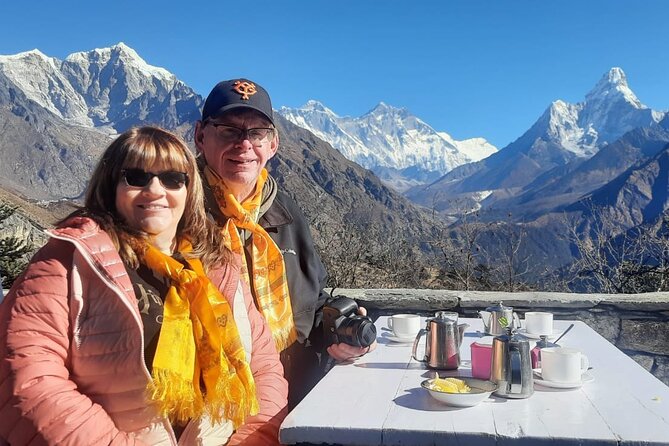
- Kala Patthar at 5,644 meters: This is the high point of the route and the place for sweeping views of Everest and nearby peaks.
- Kathmandu’s four major sights: Swayambhunath, Patan Durbar Square, Pashupatinath Temple, and Boudhanath Stupa are included in the city tour.
- Porter arrangement: One porter is provided for every two people, so pack with shared baggage limits in mind.
- Small maximum group: The group limit is 15 people, large enough for company but not a giant convoy.
Why this 15-day route works
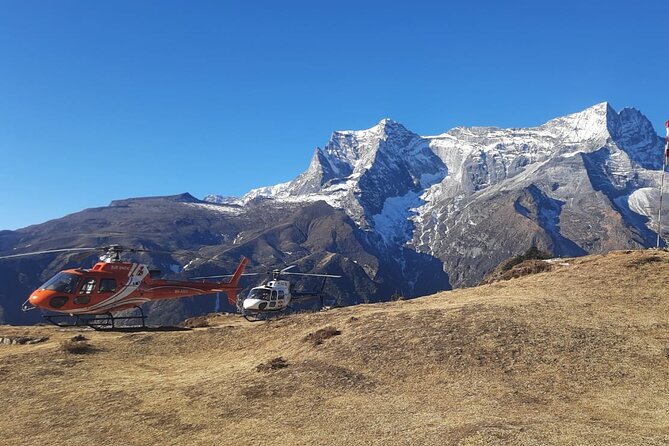
This trip divides its time between two very different Nepals. The first and last sections focus on Kathmandu, with temples, stupas, airport transfers, and hotel stays. The middle is a demanding mountain trek through Sagarmatha National Park.
That combination suits you if you want more than a fast airport transfer and a hiking holiday. Kathmandu gives you cultural context before the trek, while the trail supplies the big mountain drama: rhododendron woods, suspension bridges, Sherpa settlements, Tengboche Monastery, and the Khumbu Glacier.
The route is not a casual walk. The itinerary lists several days of four to six hours of trekking, with rough paths, steep climbs, and increasing altitude. You need a good level of physical fitness, and you should understand that high altitude can make an ordinary walking day feel much harder.
A licensed guide is included, and the company assigns one porter for two trekkers. That matters on a route where carrying a full pack can turn a difficult day into a miserable one. The strongest praise connected with this trip centers on the mountain staff. One named guide, Rajan, was singled out for making the trek memorable, while the porter was described as kind and strong.
More Everest Base Camp treks:
- Everest Base Camp Trek – 14 Days
★ 5.0 · 1,499 reviews - Everest Base Camp Trekking
★ 5.0 · 485 reviews - Everest Base Camp Trekking – 13 Day
★ 5.0 · 365 reviews
Kathmandu begins with temples and practical preparation
After landing at Tribhuwan International Airport, a representative meets you and takes you to your hotel. The transfer is listed at about 30 minutes, though actual road time can vary. Your first day is deliberately light, giving you time to check in, freshen up, and rest.
Day two brings four important Kathmandu Valley stops. At Swayambhunath, also called the Monkey Temple, you spend about an hour among one of the city’s best-known religious sites. The visit is short, but it gives you an early look at Kathmandu’s blend of Buddhist and Hindu traditions.
Patan Durbar Square follows. Patan is known as the city of fine arts, and the square is filled with temples and monuments. The entrance fee is not included, so allow an extra $20 per person for the Kathmandu UNESCO World Heritage sites listed in the package details.
At Pashupatinath Temple, the focus shifts to Hindu worship and the Bagmati River. The itinerary notes that you may see an open cremation ceremony along the riverbank. This is a significant religious practice, not a staged attraction, so approach the visit quietly and respectfully.
The final stop is Boudhanath Stupa, described as Nepal’s largest Buddhist temple and the second largest in the world. Together, these four stops create a useful introduction to the country before you head into the mountains.
Your Kathmandu hotel nights include breakfast. You should check what room arrangements, hotel standard, and exact meal schedule apply, since those details are not specified.
Lukla and the first walk to Manjo
On day three, you fly from Kathmandu or Ramechhap to Lukla. The itinerary calls this a roller-coaster mountain flight with a dramatic landing, and it is one of the trip’s memorable transitions. The flight is included in the price, but weather can affect mountain aviation.
From Lukla, you begin walking toward Manjo. This first trekking day helps you move from city travel into the rhythm of the trail. The route is not described in detail for the full day, so ask the operator for the expected walking time and overnight arrangements before departure.
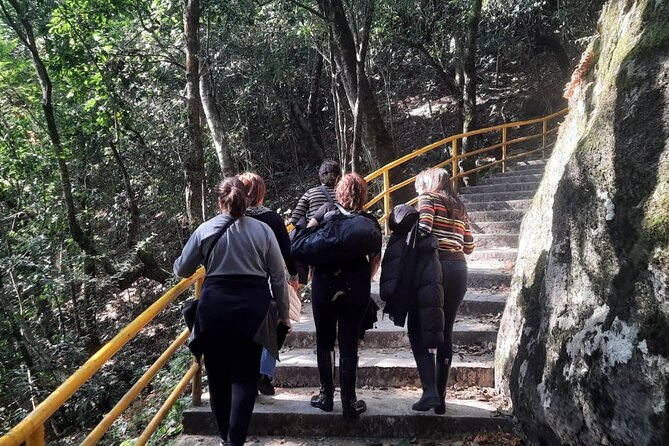
Day four continues from Manjo toward Namche Bazaar. The trail passes through woods filled with rhododendron, magnolia, and large fir trees. You cross several bridges before reaching Namche, with about four hours of walking listed.
Namche is one of the key settlements on the route. It sits in a large bowl-shaped area and serves as an important stop before the trail climbs higher. Reaching it is a physical achievement, but the real value comes on the following day.
Namche’s acclimatization day is time well spent
Day five is set aside for acclimatization. You should not treat this as a wasted day or an optional extra. At altitude, a slower ascent gives your body time to adjust, and the schedule wisely pauses in Namche before heading toward Tengboche.
The listed activities take about two hours, with the rest of the day available for rest and local exploration. The package description also highlights an Everest viewpoint and Hotel Everest View as attractions connected with the wider route. Confirm whether both are part of your scheduled acclimatization walk, since the day-by-day text does not spell out every stop.
Namche is also where the trip begins to feel less like a standard hiking tour and more like a journey through the Khumbu region. You see mountain villages, meet the realities of high-altitude life, and begin to understand why the guide and porter setup matters.
More walking in the hills of Kathmandu:
- Nagarkot Sunrise View and Day Hiking from Kathmandu
★ 5.0 · 471 reviews - Annapurna Circuit Trek with Tilicho Lake
★ 5.0 · 368 reviews - Everest Base Camp Trek -14 Days
★ 5.0 · 321 reviews - Annapurna base camp trek 5 Days
★ 5.0 · 252 reviews
Tengboche brings the monastery and mountain views
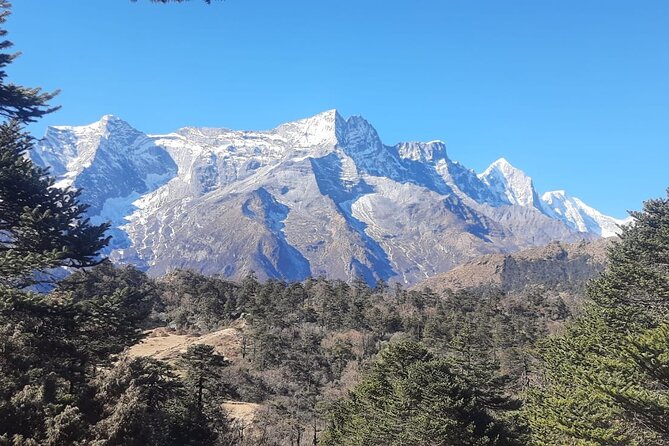
On day six, you walk from the Phunki area toward Tengboche. The early portion is described as an easy walk, followed by a climb to the village. The total walking time is about six hours, making this one of the longer days so far.
Tengboche Monastery is the main cultural stop. It is described as the biggest monastery in the Everest region, and its setting gives the day a strong sense of place. You are not simply ticking off another viewpoint. You are walking through a religious center that remains part of local life.
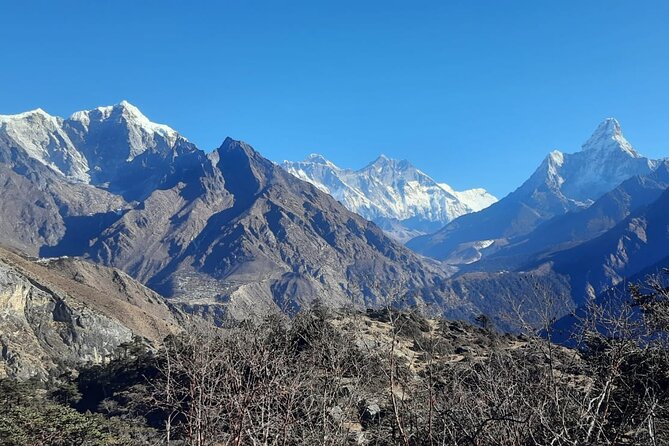
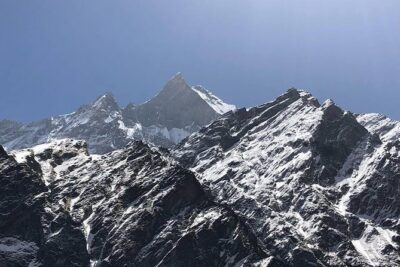
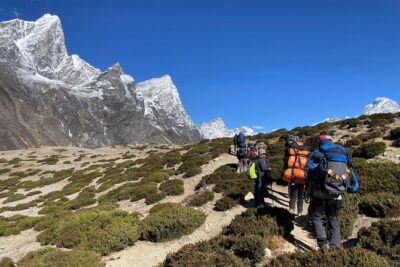
The route also brings increasingly impressive views of Everest, Lhotse, and Ama Dablam. The scenery becomes more open as you gain height, but you should expect the effort to rise too. Six hours on a mountain trail is a serious day, especially after several earlier walking days.
Dingboche marks the real altitude challenge
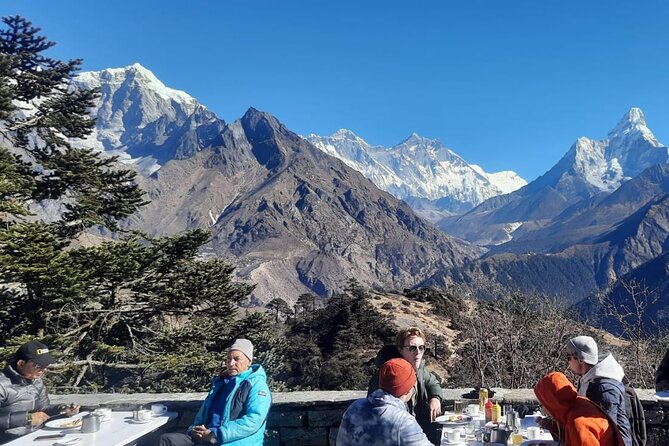
Day seven takes you toward Dingboche through birch woods and rhododendron trees. The path descends in places, and the route description notes views of Everest, Lhotse, and Ama Dablam. About five hours of walking are scheduled.
Dingboche is an important turning point because the itinerary warns that the trek becomes more challenging from here. The higher you go, the more carefully you need to manage your pace. Your guide should help set a steady rhythm, but you still need to speak up if you feel unwell.
The itinerary does not list a separate acclimatization day in Dingboche. That makes it especially important to clarify how the operator handles altitude concerns, rest periods, and itinerary changes if someone cannot continue at the planned speed.
Lobuche and the memorial stupas
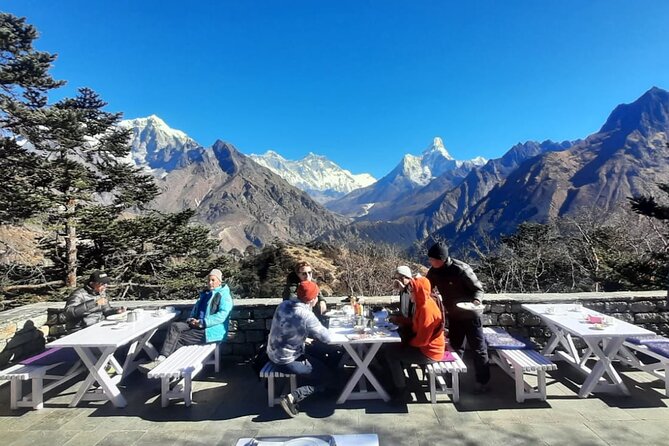
Day eight covers about five hours to Lobuche. The higher altitude makes the route harder, and the trail includes a steep climb after passing Dungla. At the top, you see memorial stupas dedicated to climbers who died on Himalayan expeditions.
This is one of the most sobering points on the route. The Everest region is famous for achievement, but the memorials remind you that the mountain is also dangerous. Take your time here and treat the site with respect.
The physical pattern is clear: steep sections, thin air, and rough ground. You should not measure progress only by distance. A short climb at this altitude may take more effort than a much longer walk at home.
Gorak Shep and Everest Base Camp
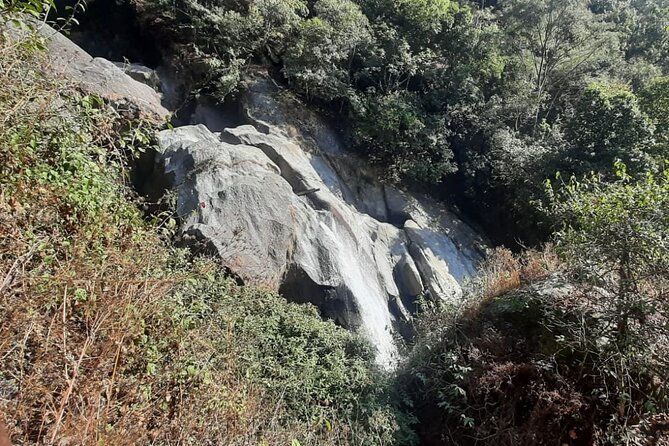
Day nine continues toward Gorak Shep, with roughly five hours of walking. The route includes ascents and descents over a glacier path and rough, winding ground. This is the kind of terrain where good footwear and trekking equipment become essential.
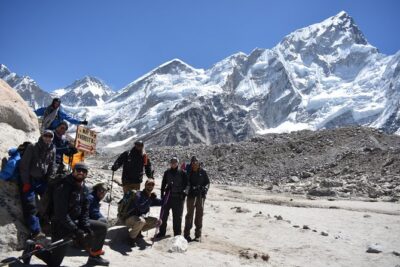
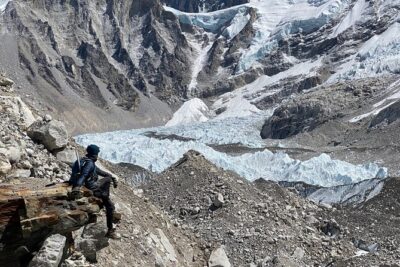
The itinerary then takes you to Everest Base Camp. The route is not a simple straight walk to a signpost. Expect uneven ground and a demanding approach, with the Khumbu Glacier and Khumbu Icefall forming part of the wider mountain setting.
Base Camp itself is an important goal, but the view of Everest is not always the best from the camp. That is why Kala Patthar matters so much. The high point provides the wider panorama that many people picture when they think of Everest.
Kala Patthar at 5,644 meters
Day ten is described as a walk toward Kala Patthar on a fairly steep trail at a comfortable pace. As you climb, you can see Lingtren, Khumbutse, and Changtse. The summit reaches 5,644 meters, making it the highest point named in the program.
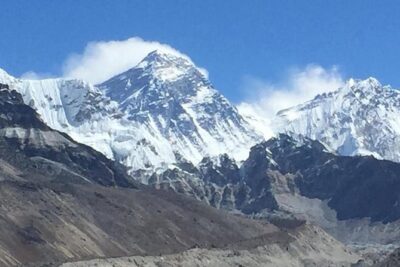
The summit view is the visual reward of the trek. You have the chance to see Everest and the surrounding Himalayan range from a powerful vantage point, along with the Khumbu Glacier below.
There is an important planning detail here. Day eleven also describes a morning hike to Kala Patthar for sunrise, with the Everest massif turning golden as the sun rises behind it. Since the published schedule appears to place Kala Patthar on both days, ask the company whether day ten is the Base Camp visit and day eleven is the sunrise summit, or whether the wording reflects an alternate arrangement.
The early sunrise option may be the most memorable part of the trek, but it also requires a very early start in severe cold and at extreme altitude. You should be ready for that effort, not just the postcard view.
The return to Pheriche, Namche, and Lukla
Day eleven takes you to Pheriche, with around five hours listed. The return route is not simply a relaxed downhill stroll. Descending still puts pressure on your knees, and uneven stone paths require attention.
Day twelve returns you to Namche Bazaar. The trail includes many ups and downs and loses nearly 2,000 feet in altitude. You cross a bridge over the Dudh Koshi River and pass through rhododendron country again.
The return to Namche should feel easier from an altitude perspective, but tired legs can make it demanding. This is another reason to use the porter service wisely. Carry only what you need for the day and keep your main load with the porter.
Day thirteen continues to Lukla over a rocky path with several suspension bridges, followed by a surfaced section. You may notice warmer air as you descend. After the long approach to Base Camp, reaching Lukla marks the practical end of the trek.
Flight timing and the final Kathmandu night
On day fourteen, the flight from Lukla to Kathmandu is scheduled for early morning. Mountain flights can be affected by weather, so you should keep the final day flexible if your onward plans are important.
Once back in Kathmandu, you are taken to the hotel. The rest of the day is open for further exploration if time remains, followed by a farewell dinner. The package includes three nights in Kathmandu with breakfast, and the meal schedule lists 11 dinners, 13 breakfasts, and 11 lunches.
Day fifteen is departure day. The company provides airport drop-off, and the instructions advise leaving for the airport at least three hours before your scheduled flight. You can also use the day to continue with another program, according to the package details.
What the $1,799 price really covers
The $1,799 price is not just paying for a guided walk. It bundles the Lukla flights, Everest National Park permit, guide, porter arrangement, Kathmandu accommodations, airport transfers, sightseeing, and most meals.
That makes the price potentially good value for you if you want one company coordinating the complicated parts. The flights alone are an important inclusion, and the permit, guide, and porter would otherwise need separate planning.
You still need to budget for several exclusions:
- Nepal visa
- Travel insurance
- Trekking equipment
- Kathmandu heritage site entrance fees, listed as $20 per person
- Alcohol and most drinks
- Beverages beyond one cup of tea per day
The equipment exclusion is especially important. You must bring your own trekking gear, so the final cost depends on what you already own. Travel insurance is not optional in practical terms for a high-altitude trek. Make sure your policy covers the kind of mountain activity you are undertaking.
Who should book this trek?
I would consider this package if you want a classic Everest route with a guide, porter support, organized meals, and Kathmandu sightseeing. It suits someone who prefers a structured group experience and does not want to arrange the Lukla flight, permits, hotel transfers, and mountain support alone.
It is less suitable if you want a relaxed holiday, a private itinerary, or a great deal of schedule flexibility. The group can reach 15 people, and the trekking days are fixed around altitude, flights, and overnight stops.
The company’s strengths appear to be its organization and staff. Direct praise focuses on experienced guides, a kind and strong porter, punctual transfers, and steady communication. Another detailed trip account praised the agency for staying in touch and arranging transport smoothly, while also noting that communication was only possible through certain channels. You should confirm how you will contact the office and guide before departure.
The cancellation terms are strict. The booking is non-refundable and cannot be changed for any reason, although poor weather or failure to meet the minimum group size can lead to another date, another experience, or a full refund.
Should you book the Everest Base Camp package?
Book it if you want the major Everest Base Camp milestones in a single 15-day plan and value help with transport, permits, food, and staff. The included Lukla flights and porter support make the $1,799 price easier to justify, while the Kathmandu tour gives you a fuller Nepal experience.
Before paying, ask three direct questions: How exactly are days ten and eleven arranged around Kala Patthar? Which Kathmandu entrance fees are covered by the listed $20 allowance? What trekking equipment must you bring yourself?
If you are fit, prepared for altitude, and comfortable with a group of up to 15, this is a strong practical choice. If you need a slower ascent or more flexibility, ask for a modified itinerary before booking rather than trying to change it later.
FAQ
How long is the Everest Base Camp and Kathmandu tour?
The tour lasts approximately 15 days, including Kathmandu sightseeing, the trek from Lukla to the Everest region, the return walk to Lukla, and departure arrangements.
What flights are included?
Return flights from Kathmandu or Ramechhap Airport to Lukla are included in the package price.
Is a trekking guide provided?
Yes. The package includes a government-licensed trekking guide.
Is porter support included?
Yes. One porter is provided for every two people.
Are Kathmandu sightseeing entrance fees included?
No. Entrance fees for the Kathmandu UNESCO World Heritage sites are not included. The listed cost is $20 per person.
What meals are included?
The package lists 11 dinners, 13 breakfasts, and 11 lunches. Drinks and beverages are not included apart from one cup of tea per day.
Do I need to bring my own trekking equipment?
Yes. The tour information says you are required to bring your own trekking equipment. Travel insurance and a Nepal visa are also not included.
New in the Kathmandu listings
- Traditional Momo Making Class★ 5.0 · 10 reviews
- Kathmandu: Ancient City Kirtipur & Pharping Monastery Tour★ 5.0 · 2 reviews
- Kathmandu to Pokhara Premium sofa bus ticket★ 4.0 · 17 reviews
- Women Empowerment Project(Nepali cooking class & jewelry workshop★ 5.0 · 15 reviews
- 7-Day Langtang Valley Trek from Kathmandu★ 5.0 · 1 review
- Kathmandu 2 Nights 3 Days Chitwan Jungle Safari Tour★ 5.0 · 9 reviews
- Yoga Experience Day Trip with Private Transfer From Kathmandu★ 4.0 · 2 reviews
- Wildlife Adventure in Chitwan Nepal★ 4.0 · 4 reviews
Everest Base Camp Treks, compared.
Everest Base Camp Trek with Helicopter Return from Gorakshep to Lukla
Read our review →Browse the lists this tour appears in