
REVIEW · EVEREST BASE CAMP TREKS
Everest Base Camp with Gokyo Lake 17 Days
The high Himalaya rewards patient feet. This Everest Base Camp and Gokyo Lake trek links two of Nepal’s finest mountain areas, taking you through Sagarmatha National Park, across Cho La Pass, and up to views of Everest. I like the rare combination of Gokyo’s sacred lakes and the classic Everest route. I also like that the $1,480 price includes guides, porters, permits, meals during the trek, lodging, airport transfers, and domestic flights. The main catch is the altitude: you reach 5,550 meters at Kala Patthar, and the route demands a solid level of fitness.
The plan gives you two famous goals in one trip: Everest Base Camp and Gokyo Ri. You also spend an acclimatization day in Namche Bazaar, which is essential rather than wasted time. Guide Pemba earned especially warm praise for being helpful and friendly, while Pasang was noted for good support on another trek.
In This Review
- Key points before you book
- Why the Gokyo and Everest combination works
- Kathmandu to Lukla, then the first steps to Phakding
- Namche Bazaar and the first acclimatization test
- Dole, Machhermo, and the approach to Gokyo Lake
- Gokyo Ri and the demanding Cho La crossing
- Lobuche, Gorak Shep, and the Everest goal
- The return through Tengboche, Monjo, and Lukla
- What the $1,480 price really covers
- Guides, porters, and the human side of the trek
- Fitness, equipment, and the altitude question
- Small details that make the package practical
- Who should book this trek?
- Should you book the Everest Gokyo trek?
- FAQ
- How long does the Everest Base Camp and Gokyo Lake trek take?
- What is the highest point on the route?
- Are meals included during the trek?
- Is accommodation included?
- Are guides and porters included?
- What is the cancellation policy?
Key points before you book
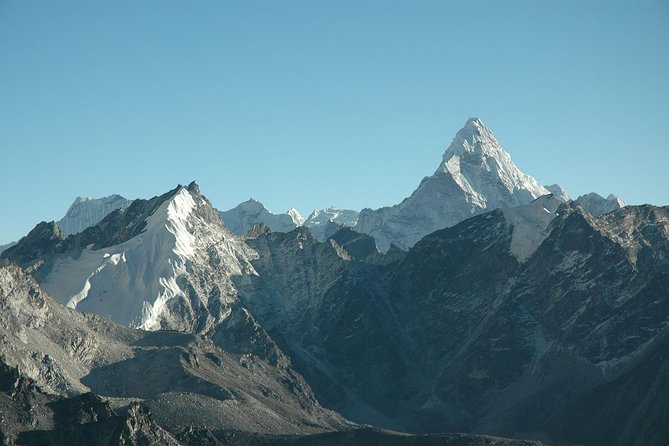
- Gokyo and Everest in one route: You see the turquoise Gokyo lakes, climb Gokyo Ri, then cross the demanding Cho La Pass toward Everest Base Camp.
- A serious high-altitude itinerary: The route reaches 5,420 meters at Cho La Pass and 5,550 meters at Kala Patthar, so preparation matters.
- A strong package for $1,480: Airport transfers, Kathmandu lodging, trekking lodges, flights to and from Lukla, meals on trek, permits, guide, porter, and some equipment are included.
- Useful acclimatization built in: You spend a full rest and exploration day in Namche Bazaar before going higher.
- Small enough to feel manageable: The maximum group size is 18 people, with one Sherpa porter assigned for every two guests.
- Flexible final objective: On the morning from Gorak Shep, the plan allows a hike to Everest Base Camp or Kala Patthar, depending on conditions and the route decision.
Why the Gokyo and Everest combination works
The standard Everest Base Camp route is famous, but the Gokyo variation gives you more range and a quieter sense of progression. You first approach the high country through Namche, then turn toward Dole, Machhermo, and Gokyo before joining the Everest route across Cho La Pass.
That change matters. Gokyo is not simply an extra stop added to a familiar trek. It gives you a second mountain setting, with high lakes and a climb to Gokyo Ri before the route reaches the Khumbu’s best-known villages and viewpoints.
I also appreciate the trip’s rhythm. The first week builds altitude in stages, and the Namche rest day gives your body time to adjust. Later, the route becomes much harder, with long days, thin air, and basic lodging. You get a broad look at the region, but this is not a casual walking holiday.
The route is listed as a 17-day program, with an approximate total duration of 14 to 19 days. That range is worth taking seriously. Mountain weather, especially around Lukla, can affect flight plans, and the actual pace can vary with health, weather, and trail conditions.
More Everest Base Camp treks:
- Everest Base Camp Trek – 14 Days
★ 5.0 · 1,499 reviews - Everest Base Camp Trekking
★ 5.0 · 485 reviews - Everest Base Camp Trekking – 13 Day
★ 5.0 · 365 reviews
Kathmandu to Lukla, then the first steps to Phakding
Day one is devoted to arrival in Kathmandu and transfer to your hotel. The city accommodation is described as a three-star hotel in a twin-sharing room, with breakfast included. You also receive airport pickup and departure transport, which removes some early planning work after a long international flight.
On day two, you fly to Lukla and trek to Phakding at 2,620 meters. This is a useful first walking day because it is relatively short compared with what follows. The flight gets you quickly into the Khumbu, but it also means your trek begins at altitude rather than from a low valley.
Phakding is your first trekking lodge stop. The package includes breakfast, lunch, dinner, and tea or coffee during the trekking portion. That full-board setup is practical because food options become simpler and more costly as you go higher.
Namche Bazaar and the first acclimatization test
Day three takes you to Namche Bazaar at 3,420 meters. This is one of the most important stops on the route. The trek is not just a transfer between villages. You gain a significant amount of altitude, and your body begins the real adjustment process here.
Day four is set aside for rest and exploration in Namche. I would treat this as a working rest day, not an excuse for a long excursion. Short walks and a gentle look around can help you get used to the height, while pushing too hard can make the next stages much less pleasant.
Namche is also the last point on this plan where you have a larger mountain hub before the route grows more remote. Use the opportunity to check your layers, sleeping bag, water supply, and personal gear. A sleeping bag and down jacket can be provided if needed, which is a useful inclusion for anyone who does not want to buy bulky cold-weather equipment.
Dole, Machhermo, and the approach to Gokyo Lake
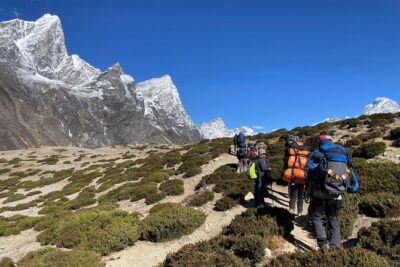
On day five, you trek to Dole at 4,110 meters. The listed walking time is about six hours. This is a demanding day because the route has now moved well above Namche, and each climb feels harder in thin air.
Day six is shorter, around three to five hours, and ends at Machhermo at 4,410 meters. The shorter schedule gives you some breathing room, though it does not remove the altitude challenge. At this height, you should pay attention to how you feel and tell your guide quickly if symptoms develop.
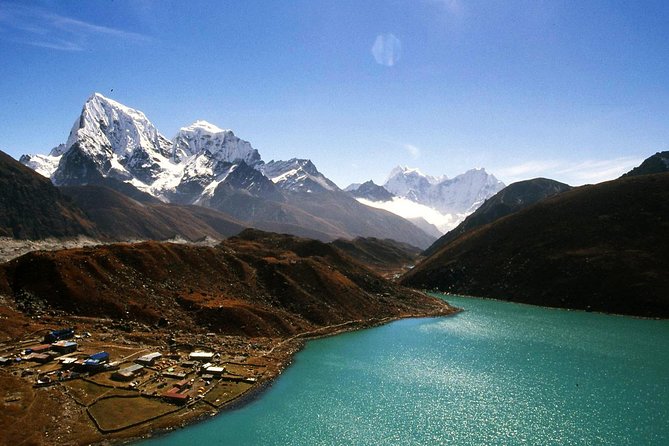
Day seven brings you to Gokyo at 4,760 meters. This is one of the trip’s major rewards. The Gokyo lakes are sacred waters set among high Himalayan peaks, and the setting offers a very different mood from the busier Everest corridor.
The accommodation throughout the trek is in trekking lodges. You should expect useful shelter and meals, not hotel comfort. The package covers lodging, but it does not promise private rooms, premium facilities, or unlimited personal extras.
A short list of alternatives around Kathmandu
- Private Kathmandu Sightseeing Tour | UNESCO World Heritage sites
★ 5.0 · 756 reviews - Everest Base Camp Helicopter Tour landing at Everest View Hotel
★ 5.0 · 668 reviews - Half day cooking class in Thamel kathmandu
★ 5.0 · 607 reviews - Nagarkot Sunrise View and Day Hiking from Kathmandu
★ 5.0 · 471 reviews
Gokyo Ri and the demanding Cho La crossing
Day eight starts with a hike to Gokyo Ri before the trek continues to Thagnak at 4,678 meters. Gokyo Ri is one of the best viewpoints in the itinerary because it lets you look across the high peaks from above the lake area.
This is also a day that can feel longer than the timetable suggests. You climb to the viewpoint, return, then continue to another lodge. Rest and pacing are important. The route does not give you much spare energy, so keep your pack light and follow the guide’s instructions.
Day nine is the trip’s toughest-looking stage on paper: Thagnak to Dzonglha via Cho La Pass at 5,420 meters. The pass is the link between the Gokyo side and the Everest Base Camp route. It is also the point where the trek becomes a serious high-altitude crossing rather than a sequence of ordinary village walks.
The description does not provide trail-surface or weather details, so you should not assume an easy crossing. Conditions can change, and your guide may need to adjust the day’s plan. Good boots, warm layers, gloves, and careful pacing are important. The tour includes a first-aid kit and guide support, but your own fitness and preparation still matter.
Lobuche, Gorak Shep, and the Everest goal
Day ten leads from Dzonglha to Lobuche at 4,940 meters. By now, the route has a stark, high-country feel, and the altitude becomes a constant part of the experience. Even simple walking can take concentration.
Day eleven continues to Gorak Shep at 5,147 meters. Gorak Shep is the launch point for the trip’s most famous objective. Sleeping there also means you spend a night at very high altitude, so this part of the plan deserves careful attention.
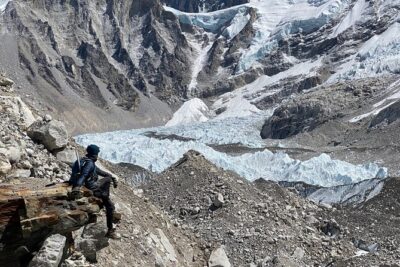
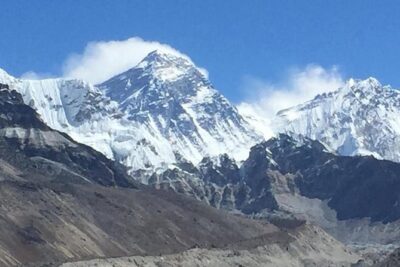
On day twelve, you take a morning hike toward either Everest Base Camp at 5,365 meters or Kala Patthar at 5,550 meters. These are related but different goals. Everest Base Camp gives you the satisfaction of reaching the starting point for major summit expeditions. Kala Patthar is the higher viewpoint and offers the classic mountain panorama associated with the Everest region.
The plan allows one or the other, not clearly both. If reaching the highest viewpoint matters most to you, ask the operator before booking how that choice is made. After the morning objective, you descend to Pheriche at 3,950 meters. That drop in elevation should feel welcome after Gorak Shep and the upper route.
The return through Tengboche, Monjo, and Lukla
Day thirteen takes you to Tengboche at 3,860 meters. Tengboche is known for its large monastery, described here as Khumbu’s biggest. It gives the return journey a cultural focus after several days centered on altitude and mountain views.
Day fourteen continues to Monjo at 2,635 meters. The lower elevation should make walking and sleeping easier, though the downhill route can be hard on knees. Trekking poles may be useful, but they are not listed among the included equipment, so bring your own if you use them.
Day fifteen ends at Lukla at 2,840 meters. This is your final trekking day and a chance to take stock of the route. You have crossed the Gokyo side, Cho La Pass, and the upper Everest area, then returned through the Khumbu villages.
Day sixteen is the flight back to Kathmandu, with breakfast and dinner included that day. Day seventeen is departure. Because the total duration can range from 14 to 19 days, keep flexibility in your international travel plans. The package does not include your international airfare, and weather-related changes could affect your schedule.
What the $1,480 price really covers
At $1,480 per person, this is a substantial package with a useful list of inclusions. You receive:
- Airport pickup and departure service
- Transportation in an air-conditioned car and tourist deluxe bus during city transfers
- Kathmandu hotel with breakfast
- Trekking lodge accommodation
- Flights between Kathmandu and Lukla
- Breakfast, lunch, and dinner during the trek
- Tea or coffee with trekking meals
- Trekking permits and TIMS card
- A guide, with salary, lodging, meals, and insurance covered
- Porters, with one Sherpa porter for every two guests
- First-aid medicine items
- Sleeping bag and down jacket if needed
- A T-shirt and trip achievement certificate
- One cultural show and farewell dinner
- Government tax and official expenses
The value is strongest if you need the full support package. Paying separately for a guide, porter, permits, meals, lodges, airport transfers, and Lukla flights can make a self-arranged trek complicated. Here, the major operational pieces are grouped together.
The price does not cover extra meals in Kathmandu, bar bills, entrance fees, international airfare, travel insurance, or tips for the trekking crew. Those exclusions are normal enough, but you should budget for them before departure. The package also says twin-sharing in Kathmandu, so do not expect a private city room unless you confirm that arrangement.
Guides, porters, and the human side of the trek
The most warmly praised part of the service is the trekking team. Pemba is described as helpful, friendly, and brilliant, while Pasang is also praised for support. Dawa receives similar appreciation for guiding a separate Manaslu trip with the same company.
That gives you a useful point to consider: the route is difficult, so the guide relationship matters. You need clear communication about pace, rest, weather, and health. A friendly guide is pleasant, but practical judgment at altitude is even more important.
The porter arrangement is one porter for two guests. That keeps your day pack lighter, which can make a real difference on Cho La Pass and the climb toward Kala Patthar. Pack responsibly, though. A shared porter should not become a reason to bring a full suitcase into the mountains.
The group limit is 18 people. That is not a private trek, but it is still controlled enough to avoid the feel of a huge expedition. Ask how the group is divided if walking speeds vary, since the provided information does not explain that procedure.
Fitness, equipment, and the altitude question
You need a moderate physical fitness level for this experience, but I would interpret that requirement seriously. The itinerary includes multiple six-hour days, high passes, repeated climbs, and altitudes above 5,000 meters.
You do not need to be a mountaineer, but you should be comfortable walking for several hours on consecutive days. The challenge is not only distance. It is the combination of steep sections, cold, basic lodge conditions, and reduced oxygen.
The operator can provide a sleeping bag and down jacket if needed. That is especially helpful for anyone flying from a warm climate. Still, confirm what is supplied, what condition it is in, and whether there are any rental charges before departure.
The included first-aid items are reassuring, but they do not replace travel insurance. Insurance is specifically excluded, so arrange coverage that addresses trekking at the heights shown in the itinerary.
Small details that make the package practical
The mobile ticket is convenient for keeping booking details on your phone, though you should also keep offline copies of essential information. Confirmation is received at booking, and the meeting point is in Kathmandu.
Free cancellation is available if you cancel at least 24 hours before the local start time. Cancellations made inside that window are not refunded, and late changes are not accepted. That policy is worth noting before you commit to flights and other nonrefundable arrangements.
The cultural show and farewell dinner add a bit of Kathmandu context, but they are not the reason to choose this trip. The real value lies in the route, the guide and porter support, and the inclusion of meals and transport.
Who should book this trek?
I would recommend it to you if you want both Gokyo Lake and Everest Base Camp, prefer a guided trip, and appreciate having permits, meals, porters, and domestic flights arranged. It suits people who want a demanding but organized route rather than a fully independent trek.
I would hesitate if you have limited walking experience, dislike shared lodges, need a fixed return date, or want to avoid very high altitude. The 14 to 19-day range also makes this a poor match for a tightly scheduled holiday.
Before paying, ask three practical questions: Can the plan include both Everest Base Camp and Kala Patthar if conditions allow? What exactly is supplied as sleeping gear? How are Lukla flight delays handled? Those answers will help you judge the real value more accurately than the headline price alone.
Should you book the Everest Gokyo trek?
Book this tour if the two-part route is your priority. Gokyo Lake, Gokyo Ri, Cho La Pass, Tengboche, and the Everest Base Camp area give you a fuller view of the Khumbu than a simple out-and-back route.
The package is especially appealing for first-time high-altitude trekkers who want support without arranging every detail themselves. I would book only after checking the exact summit-day plan, insurance requirements, equipment details, and schedule flexibility. If your fitness is ready for long days above 4,000 meters, this is a strong-value way to see Nepal’s most famous mountain region.
FAQ
How long does the Everest Base Camp and Gokyo Lake trek take?
The listed itinerary runs for 17 days, while the approximate duration is given as 14 to 19 days. The schedule includes arrival and departure days, flights between Kathmandu and Lukla, and 12 trekking days.
What is the highest point on the route?
Cho La Pass reaches 5,420 meters. Kala Patthar reaches 5,550 meters, which is the highest point listed in the itinerary. Everest Base Camp is listed at 5,365 meters.
Are meals included during the trek?
Yes. Breakfast, lunch, and dinner are included during the trekking days shown in the itinerary. Tea or coffee is also included. Extra meals in Kathmandu are not included.
Is accommodation included?
Yes. The package includes a three-star Kathmandu hotel with breakfast in a twin-sharing room and trekking lodge accommodation during the route.
Are guides and porters included?
Yes. The guide’s salary, accommodation, meals, and insurance are included. One Sherpa porter is provided for every two guests to carry baggage.
What is the cancellation policy?
You can receive a full refund by canceling at least 24 hours before the experience start time. Cancellations or changes made less than 24 hours before the local start time are not accepted for a refund.
New in the Kathmandu listings
- Traditional Momo Making Class★ 5.0 · 10 reviews
- Kathmandu: Ancient City Kirtipur & Pharping Monastery Tour★ 5.0 · 2 reviews
- Kathmandu to Pokhara Premium sofa bus ticket★ 4.0 · 17 reviews
- Women Empowerment Project(Nepali cooking class & jewelry workshop★ 5.0 · 15 reviews
- 7-Day Langtang Valley Trek from Kathmandu★ 5.0 · 1 review
- Kathmandu 2 Nights 3 Days Chitwan Jungle Safari Tour★ 5.0 · 9 reviews
- Yoga Experience Day Trip with Private Transfer From Kathmandu★ 4.0 · 2 reviews
- Wildlife Adventure in Chitwan Nepal★ 4.0 · 4 reviews
Everest Base Camp Treks, compared.
Everest Base Camp Trek with Helicopter Return from Gorakshep to Lukla
Read our review →Browse the lists this tour appears in