
REVIEW · EVEREST BASE CAMP TREKS
From Kathmandu: 14-Day Everest Base Camp (EBC) Trek
Everest begins with a small plane. This private 14-day EBC trek combines the famous Lukla flight, Sherpa villages, two acclimatization days, and a carefully paced route to Everest Base Camp. I like the personal service, especially the evening planning meetings with guide Pratip, and I like that the price includes flights, permits, meals, lodging, airport transfers, and a porter. The main drawback is the altitude: long walking days above 4,000 meters can be tough, even with a sensible schedule.
You will start and finish in Kathmandu, but most of your time is spent on foot between Lukla and the high Khumbu villages. The route reaches Everest Base Camp at 5,364 meters and Kala Patthar at 5,545 meters, so this is a serious mountain trek, not a simple sightseeing trip. The private format gives you more direct support, but you still need good fitness, travel insurance, suitable clothing, and patience for basic mountain guesthouses.
In This Review
- Key points at a glance
- Why this 14-day route works
- Day 1: Kathmandu at 1,350 meters
- Day 2: Lukla and the short walk to Phakding
- Day 3: Phakding to Namche Bazaar
- Day 4: Namche acclimatization and Hotel Everest View
- Day 5: Namche to Tengboche
- Day 6: Tengboche to Dingboche
- Day 7: Dingboche acclimatization
- Day 8: Dingboche to Lobuche
- Day 9: Lobuche to Everest Base Camp and Gorakshep
- Day 10: Kala Patthar and the descent to Pheriche
- Days 11 and 12: Pheriche back to Namche and Lukla
- Days 13 and 14: Kathmandu and departure
- What the $1,455 price covers
- The guide and service style
- Who should book this trek
- Should you book it?
- FAQ
- How long is the Everest Base Camp trek from Kathmandu?
- Are flights between Kathmandu and Lukla included?
- What accommodation is included?
- Are meals included?
- Who leads the trek?
- What are the highest points on the route?
- Is travel insurance included?
Key points at a glance
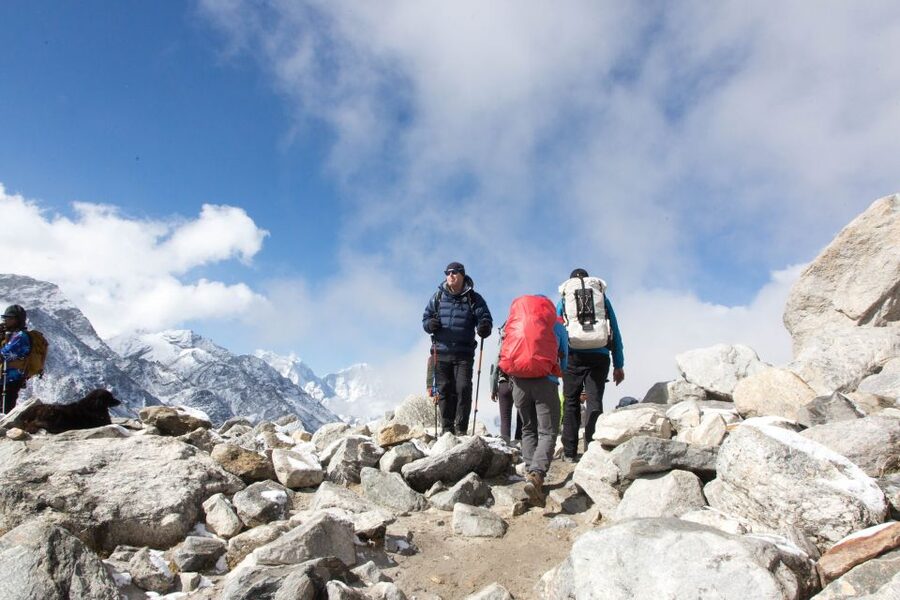
- Two acclimatization days: Spend one day around Namche Bazaar and another in Dingboche, with a hike to Hotel Everest View on the first rest day.
- Lukla flights included: The price covers round-trip domestic flights between Kathmandu and Lukla, plus airport transfers at both ends.
- Personal Sherpa support: An English-speaking Sherpa guide leads the private group, with one porter provided for every two people.
- The big pair of viewpoints: Reach Everest Base Camp at 5,364 meters, then climb higher to Kala Patthar at 5,545 meters for mountain views.
- Full board in the mountains: Breakfast, lunch, and dinner are included during the 11 trekking nights, along with mountain guesthouse lodging.
- A practical service touch: Guide Pratip held evening meetings to explain the next day and helped arrange suitable rooms when possible.
Why this 14-day route works
The route is built around a basic rule of high-altitude walking: go up gradually and allow your body time to adjust. You sleep at 2,610 meters in Phakding, then 3,440 meters in Namche Bazaar, 4,410 meters in Dingboche, and nearly 5,000 meters in Lobuche before reaching Base Camp.
That gradual rise matters more than speed. You may still feel headaches, tiredness, or shortness of breath, but the schedule gives you two planned acclimatization days instead of treating rest as wasted time. I consider that one of the strongest parts of the plan.
The trek also has a clear rhythm. Forest paths and suspension bridges come first. Stone villages and Buddhist monasteries follow. Near the end, the route becomes colder, higher, and more exposed, with glacial rivers and rocky mountain terrain replacing the lower forests.
The private format is useful if you want daily decisions explained in plain language. Pratip reportedly met with the group each evening to discuss the next day, answer questions, and prepare everyone for the route ahead. That sort of routine can reduce worry when the altitude, weather, or tiredness begins to affect your judgment.
More Everest Base Camp treks:
- Everest Base Camp Trek – 14 Days
★ 5.0 · 1,499 reviews - Everest Base Camp Trekking
★ 5.0 · 485 reviews - Everest Base Camp Trekking – 13 Day
★ 5.0 · 365 reviews
Day 1: Kathmandu at 1,350 meters
Your first day is for arrival in Kathmandu, where a driver meets you at the airport holding a sign with your full name. Airport pickup is included, which is helpful after an international flight, especially if this is your first visit to Nepal.
The package includes two nights in Kathmandu at a three-star hotel, based on twin sharing. It also includes a welcome dinner with a cultural program. Lunch and dinner in Kathmandu are not included beyond that welcome event, so you should budget separately for city meals and personal spending.
This first night is also your chance to check your passport, camera, cash, outdoor clothing, and daypack before leaving for the mountains. Travel insurance is mandatory and is not included. Make sure your policy covers trekking at the elevations reached on this route.
Day 2: Lukla and the short walk to Phakding
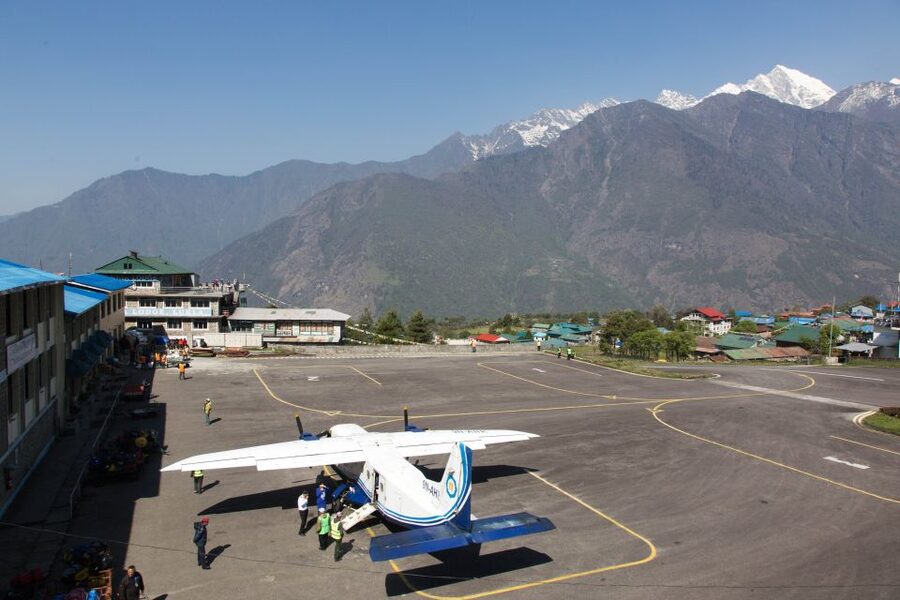
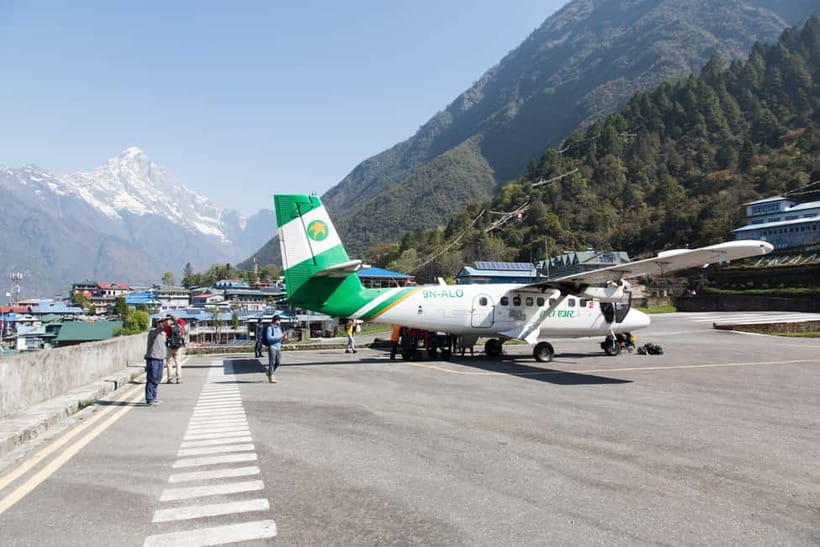
The mountain section begins with a flight from Kathmandu to Lukla at 2,860 meters. Lukla Airport is part of the experience itself, since it is the main air gateway to the Khumbu region and the starting point for this trek.
After landing, you walk to Phakding, a route of about three to four hours. The first day is deliberately short compared with later stages. That gives you a gentle introduction to the walking pace and starts the altitude gain without immediately demanding a major effort.
Phakding sits lower than Lukla, at 2,610 meters, so this overnight stop is a sensible first step. You stay in a mountain guesthouse, with meals included from this point through the trekking days. Conditions are more basic than in Kathmandu, and you should think of the guesthouses as practical shelters rather than hotel stays.
Day 3: Phakding to Namche Bazaar
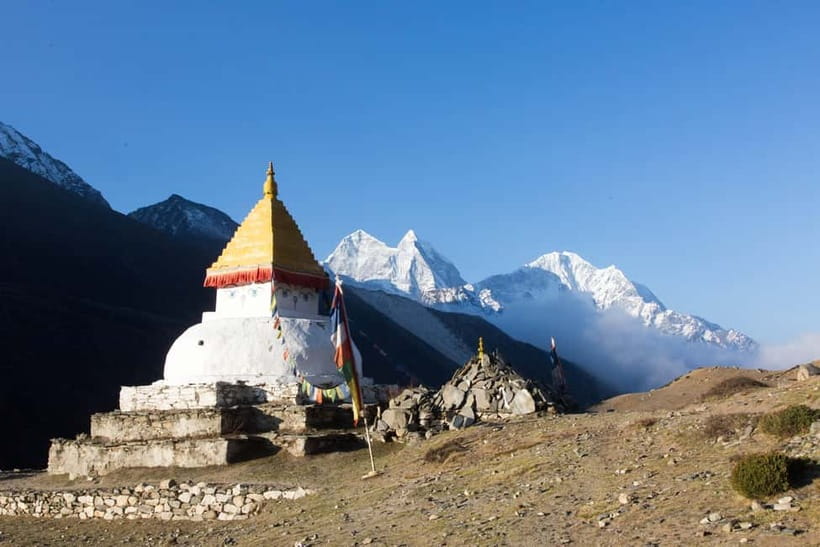
The walk to Namche Bazaar takes about five to six hours and brings you to 3,440 meters. This is one of the first days when the trek begins to feel like a real mountain journey, with suspension bridges, prayer flags, river valleys, and Sherpa villages.
Namche is more than a stop for the night. It is the main service center on this route and a key point for adjusting to higher ground. The village has a strong Sherpa identity and gives you a first close look at the communities that support life in the Everest region.
The climb can feel demanding because you gain a good amount of height in one day. Keep your pace steady and avoid racing ahead simply because the trail looks manageable. You will appreciate conserving energy once the route becomes higher and colder.
More walking in the hills of Kathmandu:
- Nagarkot Sunrise View and Day Hiking from Kathmandu
★ 5.0 · 471 reviews - Annapurna Circuit Trek with Tilicho Lake
★ 5.0 · 368 reviews - Everest Base Camp Trek -14 Days
★ 5.0 · 321 reviews - Annapurna base camp trek 5 Days
★ 5.0 · 252 reviews
Day 4: Namche acclimatization and Hotel Everest View
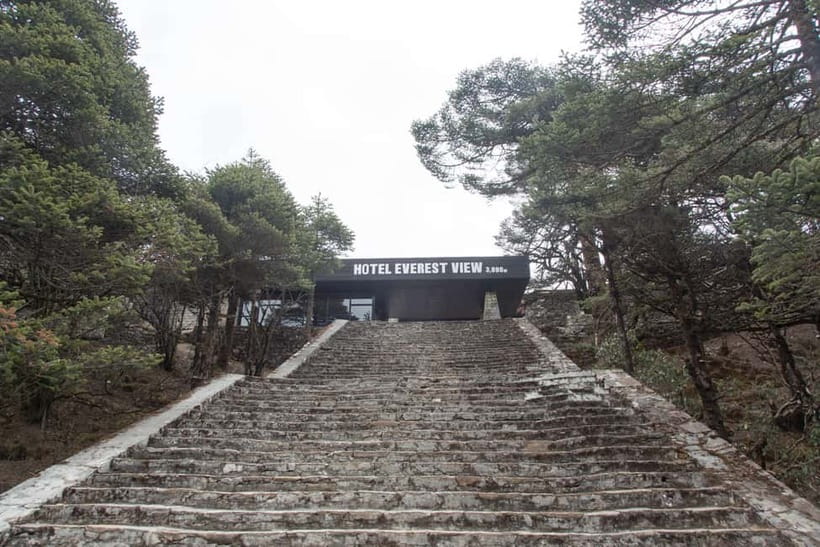
The first rest day includes a round trip to Hotel Everest View at 3,880 meters. This is not a day spent doing nothing. A short climb followed by a return to Namche helps your body adjust while giving you an early mountain panorama.
The planned viewpoint is also a useful test. You can see how your breathing feels at a higher elevation, ask your guide about any symptoms, and learn how much water and rest you need. Pratip’s evening briefings are especially useful here because the next stages require more attention to your health.
Namche is one of the most memorable villages on the route, but it is also a place where altitude can catch up with you. If you feel unwell, tell your guide directly. Private guiding means you do not need to keep pace with a large group, which is a real advantage.
Day 5: Namche to Tengboche
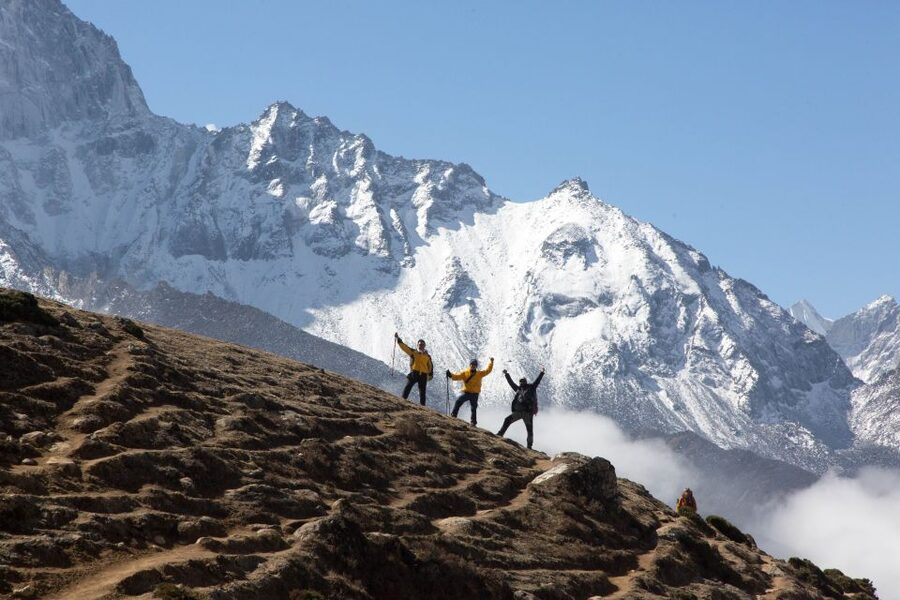
The trek to Tengboche takes about five to six hours and finishes at 3,860 meters. The altitude gain is modest on paper, but the walking remains active, with mountain paths and changing views across the Khumbu.
Tengboche is known for its monastery and spiritual atmosphere. Ancient monasteries, prayer flags, and the steady presence of the mountains give this stop a different character from Namche. You are not simply moving from one bed to another. The route connects you with Sherpa culture in places where religion remains part of daily life.
The village setting is also a reminder that comfort becomes simpler as you go higher. Pack only what you need for the day and keep warm layers easy to reach. Your porter carries the main load, but you still need a daypack with outdoor clothing, water, a camera, and personal essentials.
Day 6: Tengboche to Dingboche
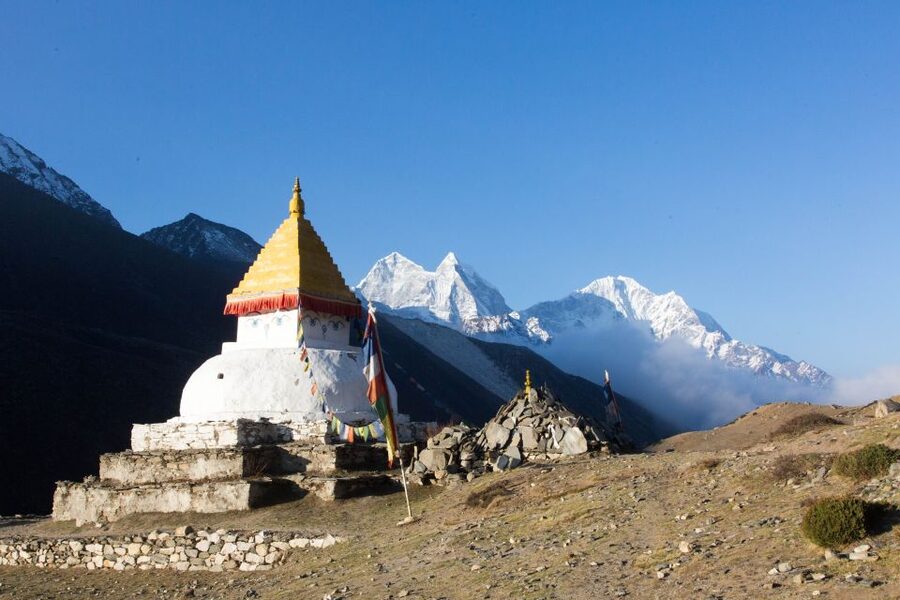
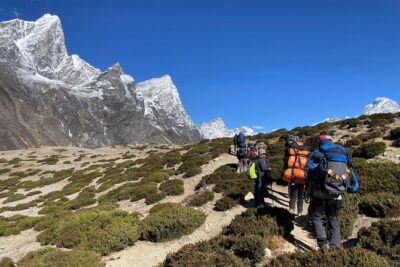
The walk from Tengboche to Dingboche takes roughly five to six hours and ends at 4,410 meters. Here, the trees begin to thin and the route feels more open and exposed. The river crossings, stone paths, and mountain views become more dramatic as you leave the lower villages behind.
Dingboche is an important stop because the elevation is now high enough for acclimatization to become central, not optional. You will likely notice that ordinary tasks take more effort. Walk slowly, drink regularly, and follow the guide’s instructions rather than trying to prove your fitness.
The package includes a night in a mountain guesthouse and full board meals. Food at this stage is functional fuel, and you should value warm meals and regular eating more than variety. Alcohol is not included and is not allowed as part of the activity. Avoiding it is also sensible at altitude.
Day 7: Dingboche acclimatization
The second acclimatization day is spent at 4,410 meters. The schedule leaves room for a higher walk and a lower sleeping level, but the supplied plan does not specify a separate destination for this day.
That flexibility can be useful. Your guide can help judge how much activity makes sense based on how you feel. A rest day is especially valuable before the route climbs toward Lobuche and Gorakshep, where the air is thinner and the nights are colder.
This is also a good point to review your personal supplies. Keep cash with you, since personal expenses are not included. Check your camera, clothing, and daypack, and tell the guide promptly if you have health concerns. The guide and porter have meals, accommodation, salary, and insurance covered by the package, while you remain responsible for your own travel insurance.
Day 8: Dingboche to Lobuche
The walk to Lobuche takes about five to six hours and reaches 4,910 meters. This is a major step toward the main goal, but it is not the day to spend all your energy admiring every view.
The route becomes more rugged, with glacial rivers and high mountain terrain. You are now close enough to Everest Base Camp for the destination to feel real, yet the physical demands are also more serious. Take short, regular pauses and keep your pace controlled.
Lobuche is a high overnight stop, and the simple accommodation is part of the tradeoff for reaching Base Camp in a practical number of days. The itinerary avoids adding unnecessary detours, but that means some days are long and the sleeping conditions are basic.
Day 9: Lobuche to Everest Base Camp and Gorakshep
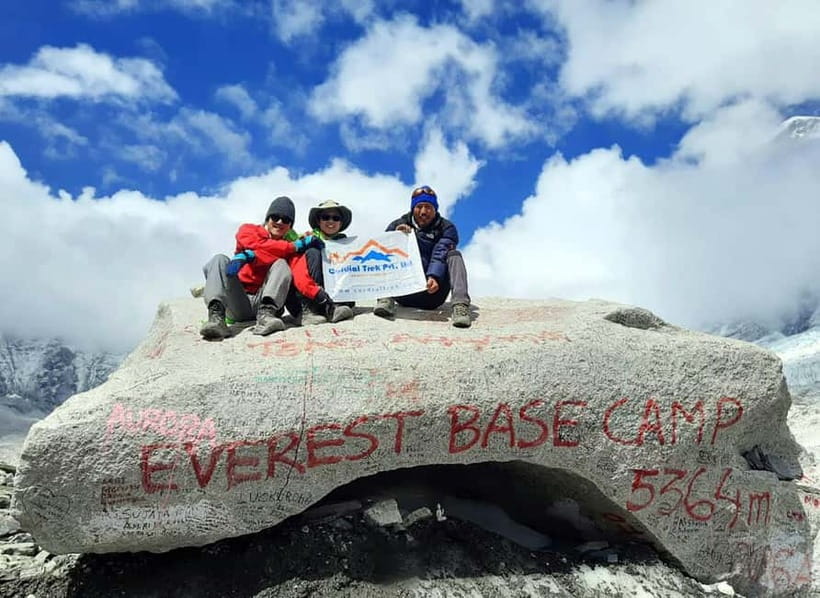
This is the central day of the trek. You walk from Lobuche to Everest Base Camp at 5,364 meters, then return to Gorakshep at 5,140 meters. The total walking time is about six to eight hours.
Everest Base Camp is the symbolic prize, but the walk there is not just a quick photo stop. At this height, even a gradual path can feel hard. You should expect a slower pace, frequent pauses, and a full day on rocky mountain ground.
The camp itself is also seasonal and practical rather than polished. Its importance comes from its role in Everest expeditions and its position beneath the high peaks. You will see the rougher side of the region, where glaciers, rocks, cold, and altitude shape the experience.
Sleeping at Gorakshep after reaching Base Camp keeps the route efficient, but it also means you finish the day at very high elevation. Follow the guide’s advice closely. This is one of the clearest reasons to choose a private trip, since your pace and support can be handled more directly.
Day 10: Kala Patthar and the descent to Pheriche
The day begins with a hike to Kala Patthar at 5,545 meters, higher than Everest Base Camp. You then trek down to Pheriche at 4,240 meters, with a total walking time of about five to seven hours.
Kala Patthar is often the visual high point of the route. From this ridge, you get a strong view toward Everest and the surrounding ranges. Base Camp gives you the destination; Kala Patthar gives you the elevated viewpoint that many people picture when they imagine an Everest trek.
The descent to Pheriche is welcome, but do not assume going downhill makes the day easy. Tired legs, loose ground, and the early start can still make this a demanding section. The lower sleeping elevation should help you recover before returning along the same broad route.
Days 11 and 12: Pheriche back to Namche and Lukla
Day 11 takes you from Pheriche to Namche Bazaar in about five to six hours. After the highest points of the trek, the lower altitude can feel easier, and the return route lets you see familiar villages from a new direction.
On Day 12, you walk from Namche to Lukla for about six to seven hours. This is the longest stated walking day, so keep some energy in reserve. The route is a fitting final test, with a mix of climbs and descents before you reach the airport town.
The return to Lukla also brings a change in mood. You have completed the hardest sections, but the trip is not fully finished until you fly back to Kathmandu. Keep your essentials ready and listen for any schedule updates from your guide.
Days 13 and 14: Kathmandu and departure
Day 13 is the return flight from Lukla to Kathmandu. The package includes the domestic ticket and transfer services, including the airport drop for your final departure.
Day 14 is departure day. You should have a final airport transfer arranged through the included service, but keep personal expenses, visa costs, and any extra city meals separate from the package price.
The two Kathmandu nights provide a useful buffer around the mountain portion. Still, you should not treat the flight schedule as completely within your control. The supplied information confirms the flights and transfers, but it does not promise a specific flight time or describe a weather backup plan. Ask the provider how delays are handled before you leave home.
What the $1,455 price covers
At $1,455 per person, the value depends on how much support you want. The price includes round-trip Kathmandu to Lukla flights, two Kathmandu hotel nights, 11 nights in mountain guesthouses, trekking meals, an English-speaking Sherpa guide, a porter for every two people, permits, national park fees, airport transfers, first aid if needed, government tax, and service charges.
That is a substantial package for a 14-day private trek. You are not paying only for a room and a route. You are also paying for local staff, mountain logistics, food at remote stops, required permits, and help with the parts of the trip that can be difficult to arrange independently.
The main exclusions are important. You pay for your Nepal visa, travel insurance, alcohol, lunch and dinner in Kathmandu, and personal expenses. The guide and porter’s meals, lodging, salary, and insurance are included, which keeps the stated cost clearer than packages that add staff costs later.
I would still compare the exact room setup and porter load before booking. Twin sharing is specified for Kathmandu, while mountain guesthouse room arrangements are not described in detail. One porter for two people is practical, but you should pack carefully and carry your own daypack each day.
The guide and service style
The strongest personal detail attached to this trip is the role of Pratip, the guide. Evening meetings to discuss the following day can make a major difference on a high-altitude route, since you know what walking time, elevation, and conditions to expect before leaving.
The service also includes help with rooms and support during a health problem. Pratip reportedly woke during the night to provide assistance, showing the kind of direct care that matters more than polished sales language when you are sick at altitude.
That does not remove the need for self-reliance. You still need insurance, suitable clothing, cash, and the ability to walk for several hours a day. But a private English-speaking guide gives you a clear person to speak with when your body or the route raises questions.
Who should book this trek
I would recommend this trip to someone who wants the classic Everest route with a private guide and the main costs bundled together. It suits you especially well if you value personal attention, prefer a fixed plan, and want help with flights, permits, meals, and transfers.
It is also a good fit for a first trek in Nepal if you understand that support does not mean luxury. The verified five-star experience from December 2024 praised the organization, food, accommodation, transport, and the personal care provided by Pratip. That is encouraging, but one excellent account is not enough reason to ignore the physical demands.
You should think twice if you have limited walking ability, use a wheelchair, or want a relaxed holiday with short walks. The activity is not suitable for people with mobility impairments, wheelchair users, or people over 80. The route also reaches 5,545 meters, so medical preparation and insurance deserve serious attention.
Free cancellation up to 24 hours before departure and the reserve-now, pay-later option make the booking less rigid. Those terms are helpful, but they do not replace checking your insurance conditions or asking what happens if the Lukla flight is delayed.
Should you book it?
Book this trek if you want Everest Base Camp without arranging every permit, flight, meal, porter, and transfer yourself. The 14-day plan gives you the classic villages, the Namche and Dingboche acclimatization stops, Everest Base Camp, and Kala Patthar, while the private setup allows more personal guidance than a large group.
I would choose it for the strong service structure and the inclusion of the major costs at $1,455. I would not choose it if you expect hotel comfort in the mountains or if you are not ready for long days at high elevation. Before paying, confirm your insurance, ask about Lukla flight delays, and discuss porter luggage limits. If those points suit you, this is a focused and well-supported way to reach the foot of Everest.
FAQ
How long is the Everest Base Camp trek from Kathmandu?
The trip lasts 14 days, including arrival and departure days, two nights in Kathmandu, the trek, and the flights between Kathmandu and Lukla.
Are flights between Kathmandu and Lukla included?
Yes. The package includes return domestic flight tickets between Kathmandu and Lukla.
What accommodation is included?
You receive two nights in a three-star Kathmandu hotel on a twin-sharing basis and 11 nights in mountain guesthouses during the trek.
Are meals included?
Breakfast, lunch, and dinner are included during the trekking days. Lunch and dinner in Kathmandu are not included, except for the welcome dinner.
Who leads the trek?
An English-speaking Sherpa guide leads the private group. The package also includes one porter for every two people.
What are the highest points on the route?
Everest Base Camp is at 5,364 meters, while Kala Patthar reaches 5,545 meters.
Is travel insurance included?
No. Travel insurance is mandatory but must be arranged and paid for separately.
New in the Kathmandu listings
- Traditional Momo Making Class★ 5.0 · 10 reviews
- Kathmandu: Ancient City Kirtipur & Pharping Monastery Tour★ 5.0 · 2 reviews
- Kathmandu to Pokhara Premium sofa bus ticket★ 4.0 · 17 reviews
- Women Empowerment Project(Nepali cooking class & jewelry workshop★ 5.0 · 15 reviews
- 7-Day Langtang Valley Trek from Kathmandu★ 5.0 · 1 review
- Kathmandu 2 Nights 3 Days Chitwan Jungle Safari Tour★ 5.0 · 9 reviews
- Yoga Experience Day Trip with Private Transfer From Kathmandu★ 4.0 · 2 reviews
- Wildlife Adventure in Chitwan Nepal★ 4.0 · 4 reviews
Everest Base Camp Treks, compared.
Everest Base Camp Trek with Helicopter Return from Gorakshep to Lukla
Read our review →Browse the lists this tour appears in