
REVIEW · EVEREST BASE CAMP TREKS
From Kathmandu/Lukla: Everest Base Camp (EBC) 10-Day Trek
The mountain gets bigger with every step. This 10-day Everest Base Camp trek combines the famous Khumbu route with careful acclimatization, Sherpa villages, Tengboche Monastery, Kala Patthar, and a private English or Hindi-speaking guide. I like the included down jacket, sleeping bag, trekking poles, permits, and first-aid support. I also like that the route includes two acclimatization stops, not just a hurried push toward base camp.
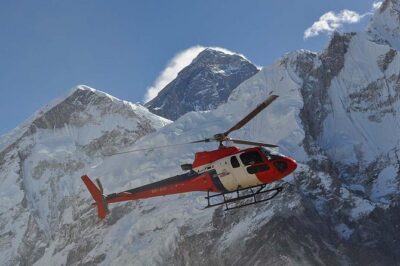
The main consideration is the price. At $322 per person, this is a low advertised rate for a high-altitude trek, but meals, porter service, hot showers, Wi-Fi, charging, drinks, snacks, insurance, and some flight arrangements cost extra. You also need to prepare seriously for altitude. One trekker, Sarah from Qatar, reached Everest Base Camp but later needed a helicopter from the helipad because exhaustion at altitude became too severe.
In This Review
- Six details that matter before you book
- What the $322 price really covers
- Day 1: Lukla to Phakding, an easy opening walk
- Day 2: Phakding to Namche Bazaar, the first serious climb
- Day 3: Namche and Hotel Everest View
- Day 4: Tengboche Monastery and the quiet village of Deboche
- Day 5: Dingboche and views of Ama Dablam
- Day 6: Dingboche to Lobuche, where the air gets thin
- Day 7: Gorak Shep and Everest Base Camp
- Day 8: Sunrise at Kala Patthar and the descent to Pheriche
- Days 9 and 10: Returning through Namche to Lukla
- Guesthouses, gear, and daily comfort
- Who should choose this private trek?
- Should you book the Everest Base Camp trek?
- FAQ
- How long is the Everest Base Camp trek?
- What is the highest point on the trek?
- Is Everest Base Camp included?
- Is the Kathmandu to Lukla flight included?
- What equipment does Cordial Trek provide?
- Are meals included?
- Is porter service included?
- What languages does the guide speak?
- What documents are needed before the trek?
Six details that matter before you book
- Lukla is the true starting point: You either fly from Kathmandu or meet the guide at Lukla Airport, where the guide waits with a name card.
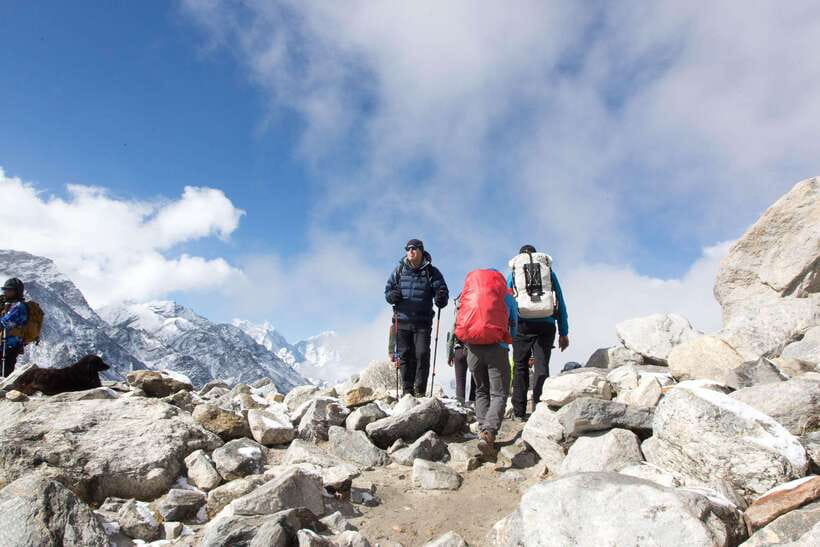
- The route reaches 5,364 meters: Everest Base Camp is the goal, but Kala Patthar rises higher at 5,545 meters.
- Namche gets a full acclimatization day: The hike to Hotel Everest View gives you a useful high-altitude outing without changing guesthouse.
- The package includes useful cold-weather gear: Cordial Trek provides a down jacket, sleeping bag, trekking poles, and water purification tablets.
- Meals are not included: Budget for food, drinks, snacks, and other personal costs in mountain villages.
- This is a private group: You receive a dedicated Sherpa guide, with English and Hindi available.
What the $322 price really covers
The $322 rate can look surprisingly modest for a 10-day Himalayan trek. Its value comes from the items that are included: mountain guesthouse accommodation for 10 nights, an experienced Sherpa guide, trekking permits, a down jacket, trekking poles, a sleeping bag, first-aid help if needed, and water purification tablets.
For the from-Kathmandu option, the price also includes Kathmandu to Lukla and Lukla to Kathmandu flights, plus airport transfers. That makes the package more useful for someone who wants the main transport arranged rather than piecing together the trek alone.
Still, you need to read the cost carefully. Meals are not included, and neither are hot or cold drinks, alcoholic drinks, snacks, showers, Wi-Fi, battery charging, travel insurance, or personal purchases. Porter service is an add-on. If you choose the from-Lukla option, the flights are also extra unless you add them separately.
I would treat the listed price as the starting cost, not the complete cost of the trek. You should also carry money for food and basic services along the route. Travel insurance is mandatory, and given the altitude, insurance that addresses emergency evacuation deserves serious attention.
More Everest Base Camp treks:
- Everest Base Camp Trek – 14 Days
★ 5.0 · 1,499 reviews - Everest Base Camp Trekking
★ 5.0 · 485 reviews - Everest Base Camp Trekking – 13 Day
★ 5.0 · 365 reviews
Day 1: Lukla to Phakding, an easy opening walk
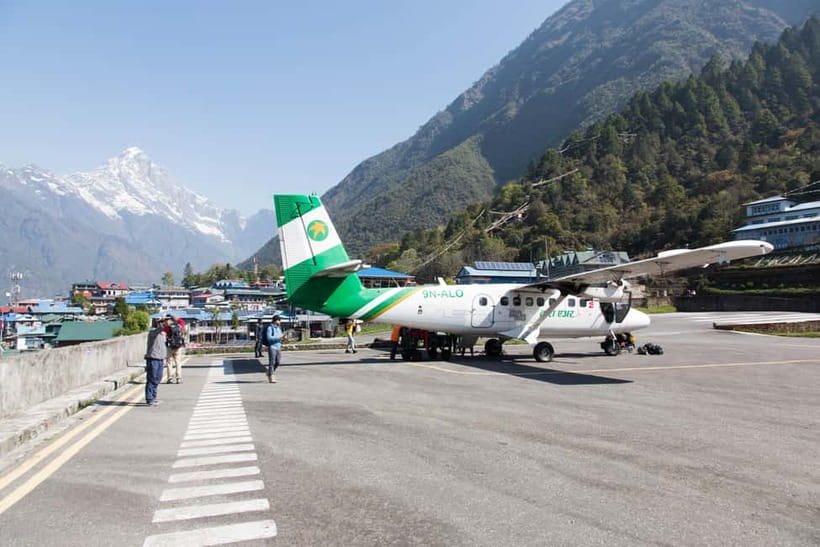
The trip begins with an early morning flight from Kathmandu to Lukla, unless you are already in Lukla and meeting the guide there. For the Kathmandu option, a driver can collect you from your hotel or apartment entrance and take you to the domestic terminal at Tribhuvan International Airport.
At Lukla, look for the guide holding your name card near the exit terminal. After a pre-trek briefing, you walk for roughly three to four hours to Phakding, reaching a maximum altitude of 2,800 meters.
This first day is short by Himalayan standards, which is helpful. You are adjusting to the trail, the pace, and the thinner air without trying to prove anything. Phakding is your first mountain guesthouse stop, and it gives you a gentle start before the route gains more height.
Day 2: Phakding to Namche Bazaar, the first serious climb
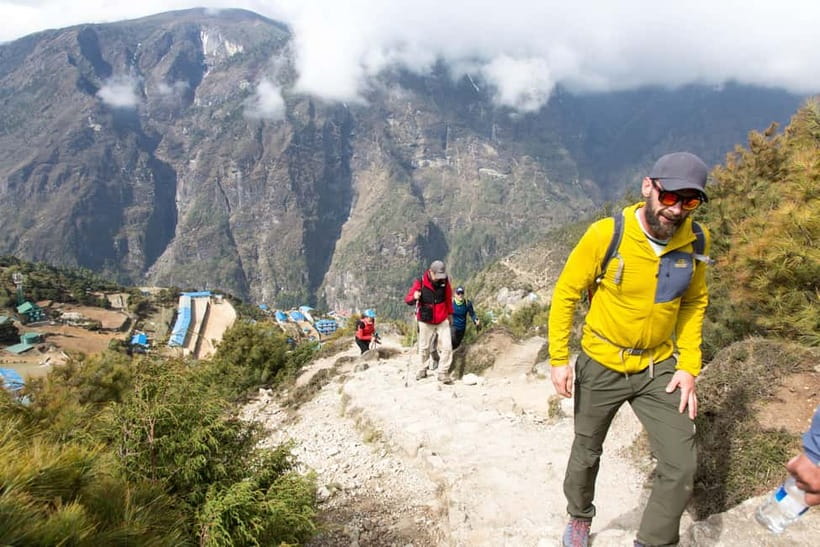
The walk to Namche Bazaar takes about five to six hours and reaches 3,440 meters. You follow the route toward the main Sherpa center of the Khumbu, passing through villages and mountain scenery as the trail begins to feel more demanding.
Namche is known as the Gateway to Everest, and the name fits. It is the first major settlement on the route and your first important acclimatization stop. The approach involves a substantial uphill section, so you should keep your pace steady and avoid racing ahead early in the day.
Namche is more than a place to sleep. It is where the route changes character. The valley feels more remote, the mountains appear closer, and the practical value of a rest day becomes clear.
Day 3: Namche and Hotel Everest View
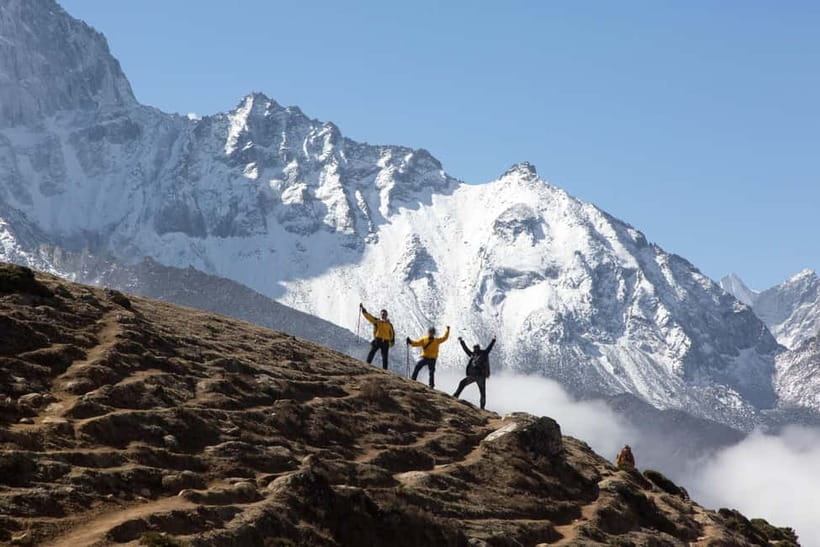
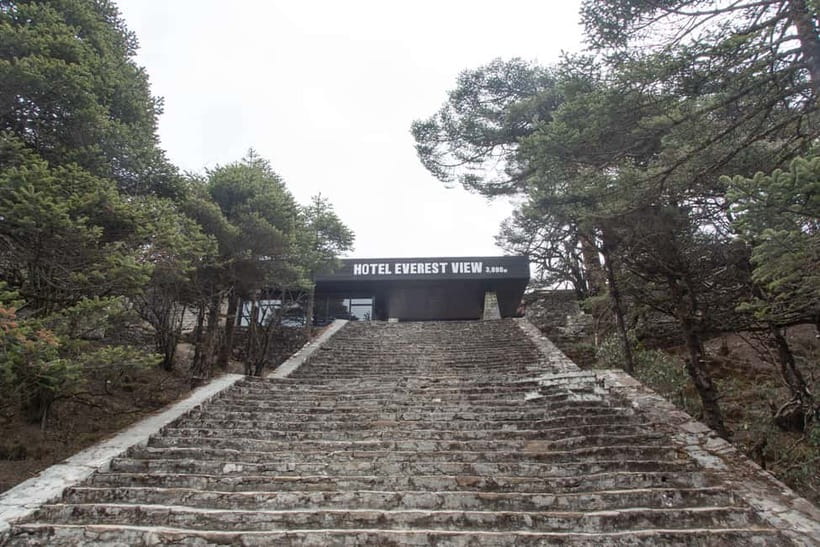
The acclimatization day in Namche is one of the strongest parts of this plan. You do not simply sit around waiting for your body to adjust. Instead, you take a short hike to Hotel Everest View at 3,880 meters, enjoy broad Himalayan views, and return to Namche.
That up-and-down pattern is useful because you sleep lower than the highest point reached during the day. It also lets you see more of the area without packing your bag and changing guesthouses.
I especially like this stop for first-time high-altitude trekkers. You get a mountain viewpoint, a manageable walking day, and time to notice how your body responds. If you develop a headache, unusual exhaustion, or other altitude concerns, this is an important moment to tell your guide rather than quietly pushing onward.
More walking in the hills of Kathmandu:
- Nagarkot Sunrise View and Day Hiking from Kathmandu
★ 5.0 · 471 reviews - Annapurna Circuit Trek with Tilicho Lake
★ 5.0 · 368 reviews - Everest Base Camp Trek -14 Days
★ 5.0 · 321 reviews - Annapurna base camp trek 5 Days
★ 5.0 · 252 reviews
Day 4: Tengboche Monastery and the quiet village of Deboche
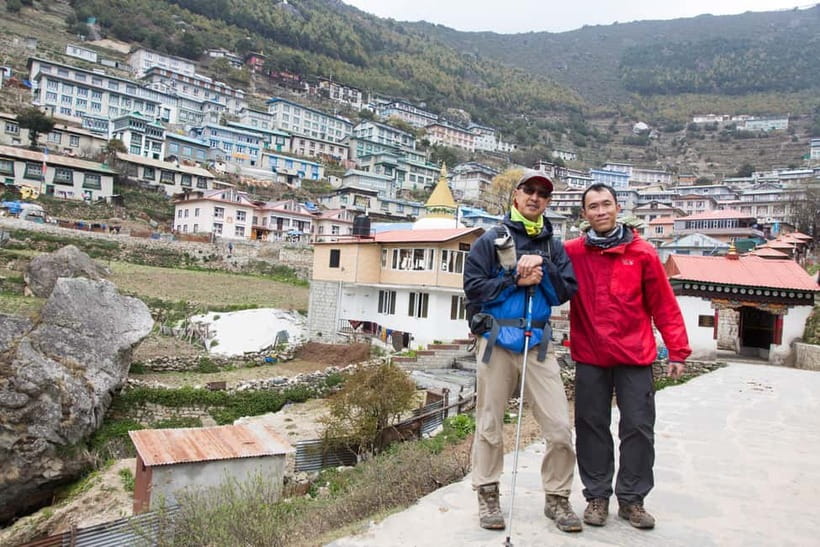
The route from Namche to Deboche takes around five to six hours and reaches about 3,820 meters. You walk through rhododendron forest and pass the famous Tengboche Monastery before continuing to Deboche.
Tengboche gives the trek a strong cultural element. This is not only a march toward a famous mountain. You are moving through Sherpa communities, where monasteries and villages remain part of daily life in the high valleys.
Deboche is presented as a peaceful Sherpa village, and its quieter setting is welcome after the activity around Namche. The day still includes a steady amount of walking, so do not mistake the word peaceful for easy. At this point, the cold and altitude begin to matter more than they did near Lukla.
Day 5: Dingboche and views of Ama Dablam
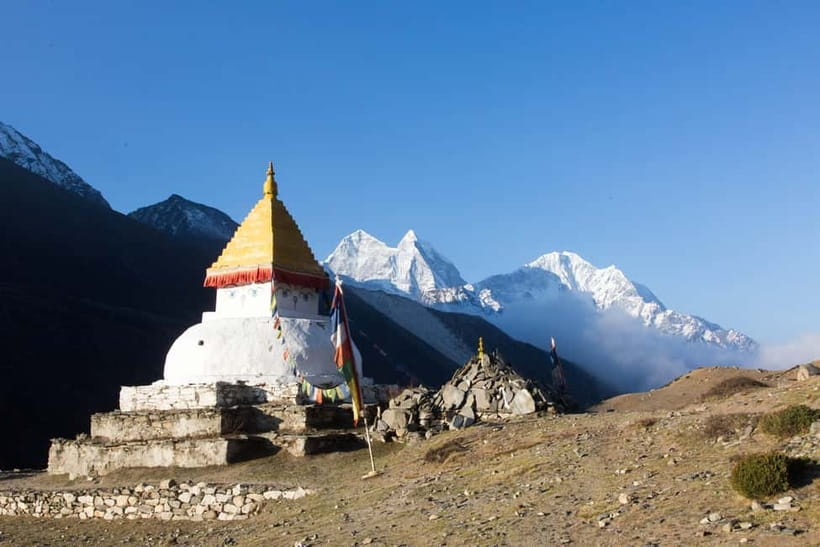
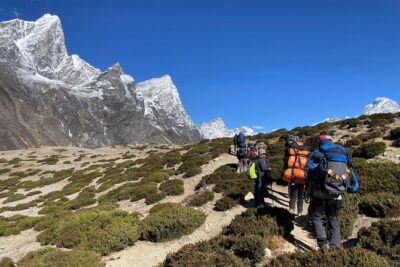
The five to six-hour walk from Deboche to Dingboche reaches 4,410 meters. Dingboche is a traditional Sherpa village with stone-walled fields and impressive views of Ama Dablam.
The stone walls are practical, protecting small cultivated plots in a difficult environment. They also make the settlement feel distinct from the lower villages. Ama Dablam becomes a major visual companion here, giving you one of the route’s most memorable mountain scenes.
This is a high point in the trek, literally and physically. You should walk slowly, drink regularly, and stay alert to how you feel. The package supplies purification tablets, but you still need a water bottle. Food is your responsibility on this tour, so plan for meals that give you enough energy for the next day’s climb.
Day 6: Dingboche to Lobuche, where the air gets thin
The ascent to Lobuche takes about five to six hours and reaches 4,940 meters. The settlement is small, but its location makes it an important stop before Gorak Shep and base camp.
You can expect a more demanding day as the route climbs above 4,500 meters. Views of Nuptse help make the effort worthwhile, but the scenery does not remove the physical strain. At this height, a short walk can take much longer than expected.
This is where the trek’s acclimatization plan earns its keep. The schedule does not race from Namche straight to base camp. It gives you several nights to gain height in stages, though no schedule can eliminate altitude risk. Sarah’s experience is a useful warning: reaching base camp is possible, but getting back down can still become difficult.
Day 7: Gorak Shep and Everest Base Camp
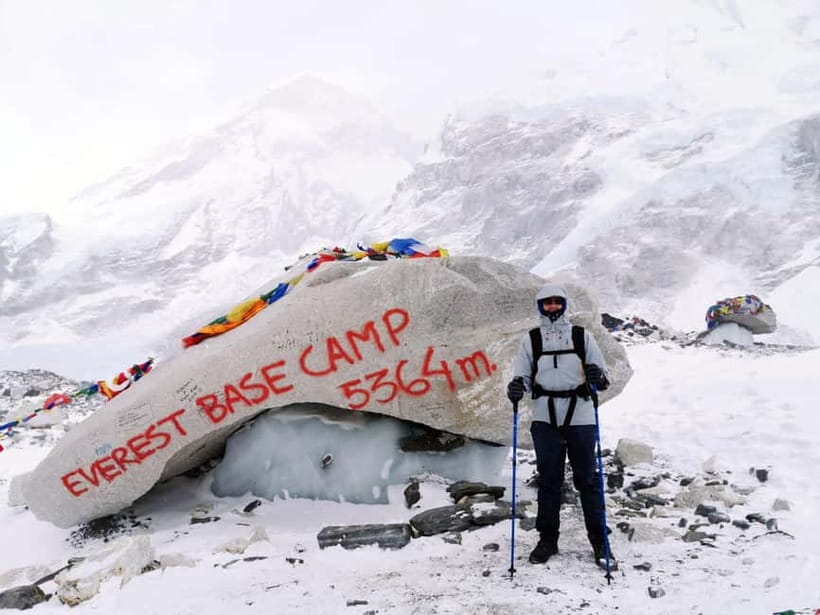
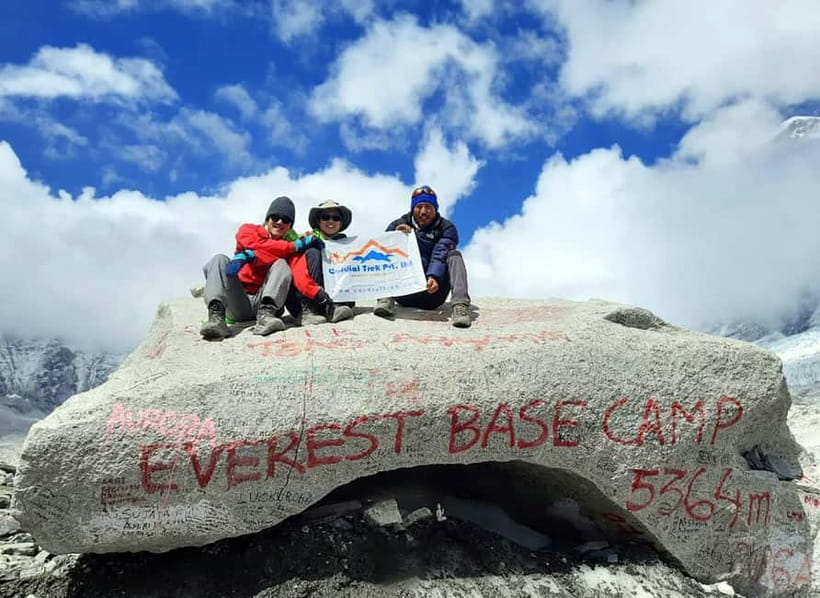
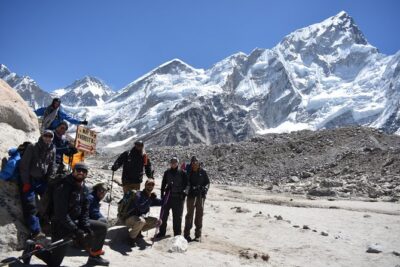
You leave Lobuche early for the four to five-hour hike to Gorak Shep. After a break, you continue toward Everest Base Camp, reaching 5,364 meters, or 17,599 feet.
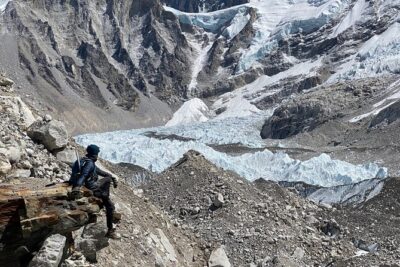
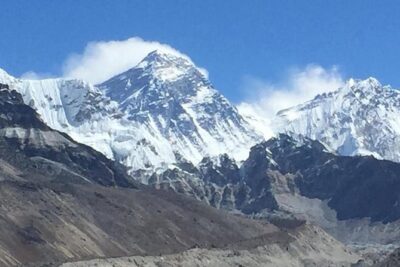
The route to base camp brings you into the high Khumbu, with the Khumbu Icefall forming the great visual prize. The base camp itself is the emotional high point for many trekkers, but you should keep expectations realistic. It is a working mountaineering site rather than a permanent town, and conditions can be cold, windy, and tiring.
The walk from Lobuche to Gorak Shep, followed by the return from base camp, makes this a long day at high altitude. The stated return from base camp to Gorak Shep takes another three to four hours. That timing can vary with pace, weather, and how your body reacts.
You do not sleep at Everest Base Camp. You return to Gorak Shep for the night, which is a demanding but sensible arrangement.
Day 8: Sunrise at Kala Patthar and the descent to Pheriche
The pre-sunrise hike to Kala Patthar takes roughly two to three hours and reaches 5,545 meters, higher than Everest Base Camp. This is the highest point of the trek and the place to go for the famous sunrise view toward Everest.
The early start is not comfortable, but it serves a purpose. Morning light can bring out the mountain shapes in a way that daytime haze may not. You then return to Gorak Shep for breakfast before walking four to five hours down to Pheriche.
This day combines the trek’s greatest viewpoint with a meaningful loss of altitude. That matters. Once you descend to Pheriche, you may feel some relief simply because the air is thicker and the body has less work to do.
Days 9 and 10: Returning through Namche to Lukla
Day 9 takes you from Pheriche back to Namche Bazaar in about five to six hours. Much of the route is downhill, but downhill walking can be hard on tired knees, especially after the high-altitude section.
Returning to Namche gives you a final chance to enjoy the main Sherpa center before the last walking day. Day 10 continues from Namche to Lukla via Phakding and takes around five to six hours.
The trek ends in Lukla, where you can celebrate with the guide and team before the flight back. For those using the Kathmandu flight option, the return flight is scheduled for the next morning, with airport transfer provided. Lukla flights are an important practical detail, so you should keep your wider Nepal plans flexible around the flight schedule. The information provided does not promise same-day arrival in Kathmandu after reaching Lukla.
Guesthouses, gear, and daily comfort
The package provides 10 nights in mountain guesthouses. That gives you a roof and a bed along the route, but it does not mean hotel-style comfort. Hot showers, Wi-Fi, and battery charging are excluded, as are drinks and meals.
Cordial Trek supplies several bulky or expensive items: a down jacket, sleeping bag, trekking poles, and a duffle bag if you choose the porter option. You still need a 20 to 25-liter daypack, warm clothing, thermal layers, hats or a beanie, gloves, a neck gaiter, hiking boots, warm socks, hiking pants, a towel, toiletries, sunscreen, sunglasses, and a headlamp.
A larger backpack or duffle is useful for the porter arrangement, but porter service itself is not included. Crampons are needed only if snowfall is expected, so ask about conditions before setting out rather than carrying specialized gear without a reason.
The equipment list is sensible, but you remain responsible for personal medications and preparation. Sarah specifically advises carrying medication and having a contingency plan. Her need for a helicopter descent after reaching base camp shows why a high-altitude trek should never be treated like an ordinary walking holiday.
Who should choose this private trek?
This experience suits someone who wants the classic Everest Base Camp route with a private group and a dedicated Sherpa guide. The English and Hindi language options are useful, especially when discussing pace, symptoms, gear, or daily plans.
It is a good fit if you value an organized route, included trekking equipment, permits, guesthouses, and airport transfers. The two acclimatization periods, at Namche and during the gradual climb beyond Dingboche, also make the schedule more sensible than a rushed version.
It is not suitable for people with mobility impairments, and the stated age restriction excludes people over 95. More broadly, you need to be ready for long uphill and downhill walks at extreme altitude. The operator does not include meals or porter service, so you should also be comfortable managing those extra costs.
Cancellation is flexible up to 24 hours before departure for a full refund, and you can reserve now and pay later. You must provide a passport copy and recent passport photograph at least one day before the trek so permits can be prepared.
Should you book the Everest Base Camp trek?
I would book this trek if you want a private, guided route and understand that the $322 price does not cover every daily expense. The included flights for the Kathmandu option, guesthouses, permits, gear, guide, and transfers give the package real value.
I would not book it casually. Prepare your body, bring medication, buy mandatory travel insurance, and make a clear plan for altitude problems. Sarah reached the goal but needed a helicopter down, a powerful reminder that base camp is only half the challenge.
For a prepared trekker, the rewards are substantial: Sherpa villages, Tengboche Monastery, Ama Dablam, Nuptse, the Khumbu Icefall, a Kala Patthar sunrise, and the quiet satisfaction of walking back into Lukla under your own power. The highest praise belongs to the route’s gradual pacing and the guide support, not to luxury. This is a demanding mountain journey with practical comforts, not a pampered holiday.
FAQ
How long is the Everest Base Camp trek?
The trek lasts 10 days, beginning at Lukla and ending at Lukla. The from-Kathmandu option includes flights and airport transfers.
What is the highest point on the trek?
Kala Patthar is the highest point at 5,545 meters. Everest Base Camp is at 5,364 meters.
Is Everest Base Camp included?
Yes. The route includes a hike from Gorak Shep to Everest Base Camp and a return to Gorak Shep the same day.
Is the Kathmandu to Lukla flight included?
The Kathmandu option includes Kathmandu to Lukla and Lukla to Kathmandu flights with airport transfers. For the from-Lukla option, flights are not included unless added separately.
What equipment does Cordial Trek provide?
The package provides a down jacket, sleeping bag, trekking poles, first-aid support if needed, and water purification tablets. A duffle bag is provided if you choose the porter option.
Are meals included?
No. Meals, hot and cold drinks, alcoholic drinks, and additional snacks are not included. A meal add-on is available.
Is porter service included?
No. Porter service is an add-on. A duffle bag is provided for the porter option.
What languages does the guide speak?
The live guide service is available in English and Hindi.
What documents are needed before the trek?
You must provide a copy of your passport and a recent passport-sized photograph at least one day before departure. These documents are needed to process the trekking permits.
New in the Kathmandu listings
- Traditional Momo Making Class★ 5.0 · 10 reviews
- Kathmandu: Ancient City Kirtipur & Pharping Monastery Tour★ 5.0 · 2 reviews
- Kathmandu to Pokhara Premium sofa bus ticket★ 4.0 · 17 reviews
- Women Empowerment Project(Nepali cooking class & jewelry workshop★ 5.0 · 15 reviews
- 7-Day Langtang Valley Trek from Kathmandu★ 5.0 · 1 review
- Kathmandu 2 Nights 3 Days Chitwan Jungle Safari Tour★ 5.0 · 9 reviews
- Yoga Experience Day Trip with Private Transfer From Kathmandu★ 4.0 · 2 reviews
- Wildlife Adventure in Chitwan Nepal★ 4.0 · 4 reviews
Everest Base Camp Treks, compared.
Everest Base Camp Trek with Helicopter Return from Gorakshep to Lukla
Read our review →Browse the lists this tour appears in